More like The Missing
anchored on:horrorour worldcontemporarymiddle gradeghost stories
but
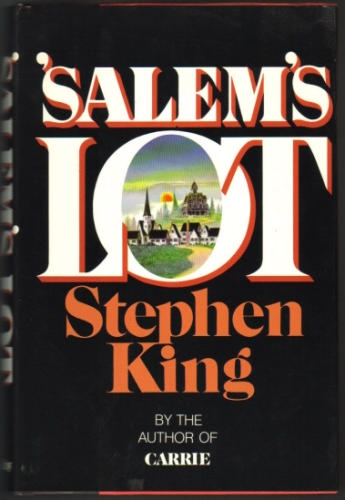
- Jerusalem's Lot
series3 books1975
similar bycontemporaryhorroreerietenseour world+1 more
Stephen King's 1975 novel 'Salem's Lot follows writer Ben Mears as he returns to his childhood town of Jerusalem's Lot, Maine, only to discover that its residents are being turned into vampires by a newly arrived stranger. It transplants Gothic vampire horror into a small New England community, tracking that community's collapse under a supernatural siege. It is a single, self-contained novel.
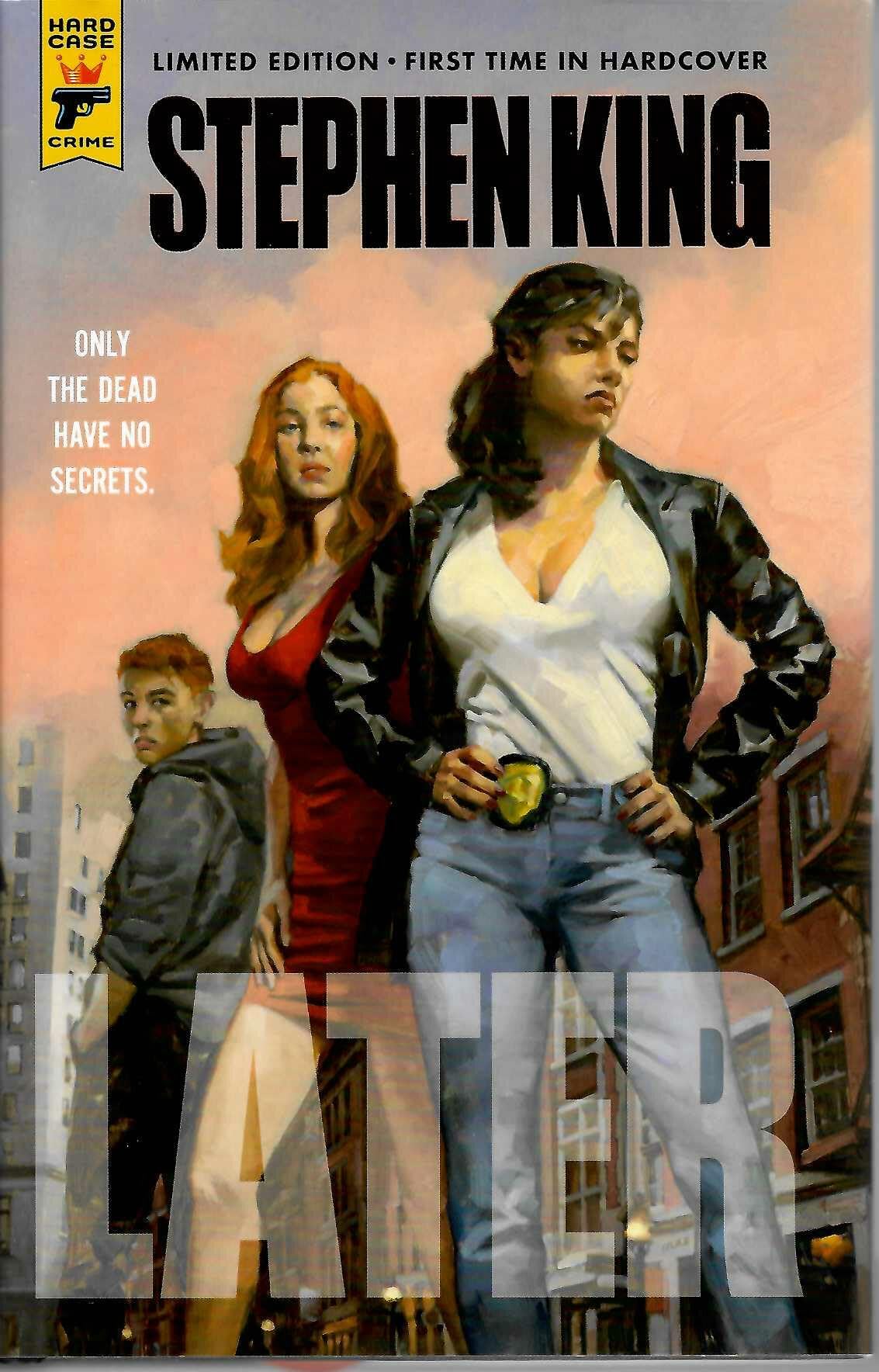
- Later
Stephen Kingstandalone novel2021
similar bycontemporaryhorroreerietenseour worldghost stories+2 more
A young boy, with the power of seeing and talking with the recently deceased, and his single mother try to avoid personal and financial disasters.
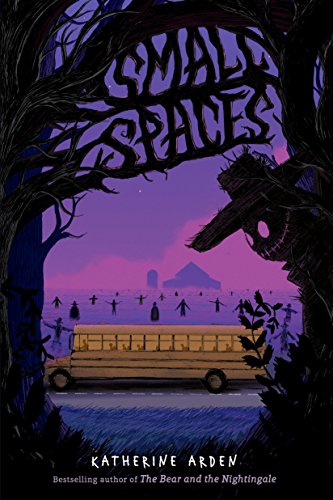
- Small Spaces
series4 books2018
similar bysurvivalcontemporaryhorroreerietenseghost storiesour worldmiddle grade
- Cell
Stephen Kingstandalone novel2006
similar bysurvivalcontemporaryhorrortenseour world+1 more
In Cell, King taps into readers fears of technological warfare and terrorism. Mobile phones deliver the apocalypse to millions of unsuspecting humans by wiping their brains of any humanity, leaving only aggressive and destructive impulses behind. Those without cell phones, like illustrator Clayton Riddell and his small band of "normies," must fight for survival, and their journey to find Clayton's estranged wife and young son rockets the book toward resolution.
- The Hunting Ground
Cliff McNishstandalone novel2011
similar bysurvivalcontemporaryhorroreerietenseour worldghost stories
When Elliott and his brother, Ben, move into the old and crumbling Glebe House they don't expect to find themselves sharing it with ghosts. But soon sinister events are unfolding. An old diary reveals glimpses of the mansion's past - and of a terrible tragedy. A mysterious woman talks to the dead. And evil lurks in the East Wing - a hideous labyrinth of passageways devised by a truly twisted mind. Can Elliott and his family escape the clutches of Glebe House? Or will they be trapped in the maze of corridors, forever hunted by the dead?
- Wait Till Helen Comes
Mary Downing Hahnstandalone novel1986
similar bycontemporaryhorroreerietenseghost storiesmiddle grade+1 more
"Molly and Michael dislike their spooky new stepsister Heather but realize that they must try to save her when she seems ready to follow a ghost child to her doom." (source: Open Library.
- Southern Reach Trilogy
series4 books2014
similar bycontemporaryeerieour worldhorror+2 more
The Southern Reach Series is a series of novels by the American author Jeff VanderMeer first published in 2014—Annihilation, Authority, Acceptance, and Absolution. The series takes its name from the secret agency that is central to the plot. In 2013, Paramount Pictures bought the movie rights for the series, and a film adaptation of Annihilation was made with Alex Garland as writer-director. The film was released in 2018. The most recent book in the series, Absolution, was released on 22 October 2024.
- The Haunting of Blackwood House
Darcy Coatesstandalone novel2015
similar bysurvivalcontemporaryhorroreerietenseour worldghost stories
"Could you survive a week in a haunted house? Mara is the daughter of spiritualists. Her childhood was filled with séances, scam mediums and talk of ghostly presences. When Mara finally left her family's home, she vowed she would never allow superstition or false religion into her life again. Now she's ready to start over with her fiancé, Neil, in a world based on rationality and facts. But her past isn't ready to let her go just yet. Mara and Neil purchase Blackwood House, a derelict property outside of town. They're warned about strange occurrences in the crumbling building. Doors open by themselves, voices whisper in the night, bloody handprints appear on the walls, and cold spots linger in the basement, where the house's original owner was murdered. But Blackwood was dirt-cheap and came with a large plot of overgrown land. Mara loves her new home, and disregards the warnings. Because ghosts aren't real...are they?" – quoted from this book's product page on Amazon.com as of 2018-01-20.
- The Haunting of Rookward House
Darcy Coatesstandalone novel2017
similar bycontemporaryhorroreerietenseour worldghost stories+1 more
"She's always watching ... When Guy finds the deeds to a house in his mother's attic, it seems like an incredible stroke of luck. Sure, the building hasn't been inhabited in forty years and vines strangle the age-stained walls, but Guy is convinced he can clean it up and sell it. He'd be crazy to turn down free money. Right? The house is hours from any other habitation, and Guy can't get phone reception in the old building. He decides to camp there while he does repairs. Surely nothing too bad can happen in the space of a week. But there's a reason no one lives in Rookward House, and the dilapidated rooms aren't as empty as they seem...A deranged woman tormented a family in Rookward forty years before. Now her ghost clings to the building like rot. She's bitter, obsessive, and jealous...and once Guy has moved into her house, she has no intention of ever letting him leave." – quoted from this book's product page on Amazon.com as of 2018-01-20.
- The House Next Door
Darcy Coatesstandalone novel2017
similar bycontemporaryhorroreerietenseour worldghost stories+1 more
I live next to a haunted house. I began to suspect something was wrong with the gothic building when its family fled in the middle of the night, the children screaming, the mother crying. They never came back to pack up their furniture. No family stays long. Animals avoid the place. Once, I thought I saw a woman’s silhouette pacing through the upstairs room… but that seems impossible; no one was living there at the time. A new occupant, Anna, has just moved in. I paid her a visit to warn her about the building. I didn’t expect us to become friends, but we did. And now that Marwick House is waking up, she’s asked me to stay with her. I never intended to become involved with the building or its vengeful, dead inhabitant. But now I have to save Anna… before it’s too late for the both of us.
- Breathe
Cliff McNishstandalone novel2006
similar bysurvivalcontemporaryhorroreerietenseghost stories
Breathe: A Ghost Story is a novel by English author Cliff McNish published in 2006 as McNish's first stand-alone novel. It is about a group of ghost children trapped inside an old farmhouse by a malignant spirit known as the Ghost Mother. Twelve-year-old Jack, suffering from chronic asthma, has just moved into the old house with his widowed mother, and discovers that the Ghost Mother wants him to herself.
- A Deadly Game of Magic
Joan Lowery Nixonstandalone novel1983
similar bycontemporaryhorroreerietenseour worldghost stories+1 more
On their way home from a dramatics competition, Lisa and her friends are caught by a storm and take refuge in a deserted house. The house is strewn with the paraphernalia of a practiced magician. At first, Lisa is fascinated, then the fascination turns to horror. The phones go dead; doors slam shut; a ghostly hand creeps across the mantel. The tricks become more sinister. Lisa is sure it must all be an illusion, but what if the evil behind it is real?
- The Carrow Haunt
Darcy Coatesstandalone novel2018
similar bysurvivalcontemporaryhorroreerietenseour worldghost stories
"The dead are restless here... Remy is a tour guide for Carrow House, a notoriously haunted building. When she's asked to host seven guests for a week-long stay to research Carrow's phenomena, she hopes to finally experience some of the sightings that made the house famous. At first, it's everything they hoped for. Then a storm moves in, cutting off their contact with the outside world, and things quickly become twisted. Doors open on their own. Séances go disastrously wrong. Red liquid seeps from behind the wallpaper. Their spirit medium wanders through the house during the night, seemingly in a trance. Then one of the guests dies under strange circumstances, and Remy is forced to consider the possibility that the ghost of the house's original owner, a twisted serial killer, still walks the halls. But by then it's too late to escape." — quoted from this book's product page on Amazon as of 2018-03-29.
- The Folcroft Ghosts
Darcy Coatesstandalone novel2017
similar bysurvivalcontemporaryhorroreerietenseour worldghost stories
"Tara and her brother Kyle are sent to stay with their estranged grandparents when their mother is hospitalized. May and Peter Folcroft seem warm and charming at first, and the house, hidden in the base of the mountains, is idyllic. But strange things keep happening. The swing moves on its own. Peter paces around the house late at night. Doors slam and curtains shift when no one is inside. Tara begins to suspect the old house is haunted. When a storm cuts the phone line, May shifts from doting to obsessive. Tara and Kyle must try to keep up the pretext of a happy family, but an empty journal and locked room provide clues to the unforgivable lies, secrets and decades-old murders entwined with the Folcrofts' history. And the ghosts are growing restless..." – quoted from this book's product page on Amazon.com as of 2018-01-21.
- The Fog
James Herbertstandalone novel1975
similar bysurvivalcontemporaryhorrortenseour world
The Fog is a horror novel by English writer James Herbert, published in 1975. It is about a deadly fog that drives its victims insane when they come into contact with it.
- Goosebumps
universe234 books1992
Start hereRevenge of the Living Dummy · The connected HorrorLand story
similar bycontemporaryhorrorour worldmiddle grade+3 more
Reader beware — you're in for a scare. That promise has been kept, book after book, since a boy first knocked on the door of the Dead House and found the whole neighborhood grinning too widely. Goosebumps is R. L. Stine's carnival of small-town dread, where the horror is always sized just right for a kid: a haunted ventriloquist dummy, a camera that photographs disasters before they happen, a mask that won't come off, a basement that hums. Each book is its own self-contained nightmare, narrated by an ordinary boy or girl whose ordinary street has quietly turned against them — and every one snaps shut on a twist that pulls the rug out one last time before the lights come up. The shelf is deep. The original run of paperbacks gave way to Series 2000, then the branching, choose-your-doom gamebooks of Give Yourself Goosebumps, the story-collections Tales to Give You Goosebumps, and villain showcases in Most Wanted. HorrorLand strung the standalones into a single running arc set inside a monstrous theme park, and SlappyWorld and House of Shivers keep the lights flickering for new readers, hosted by Slappy, the wooden fiend who considers himself the star of the whole show. The tone is mock-scary and knowing — spooky enough to thrill, silly enough to laugh off before bed, always short and always cliffhung. No reading order binds them; open any cover. Newcomers usually meet the dummy first, in Night of the Living Dummy, or start where it all began, in Welcome to Dead House.
- Rats
series4 books1974
completed
similar bysurvivalcontemporaryhorrortensebig city+1 more
The Rats, James Herbert's 1974 debut novel, imagines a plague of giant mutant rats overrunning London, told through a rotating cast of victims and survivors in the tradition of British disaster horror. It was followed by two sequels, Lair and Domain, which widen the outbreak first to the countryside and then to a besieged, apocalyptic city, completing a three-book trilogy.
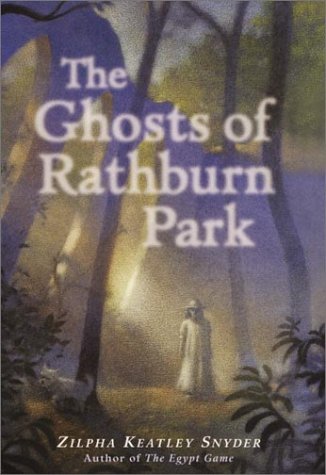
- The Ghosts of Rathburn Park
Zilpha Keatley Snyderstandalone novel2002
similar bysurvivalcontemporaryeerietenseour worldghost storiesmiddle grade
Lost in the woods of Rathburn Park, eleven-year-old Matthew weighs the odds of dying from thirst, embarrassment, or at the hands of the forest's reputed ghostly inhabitants.
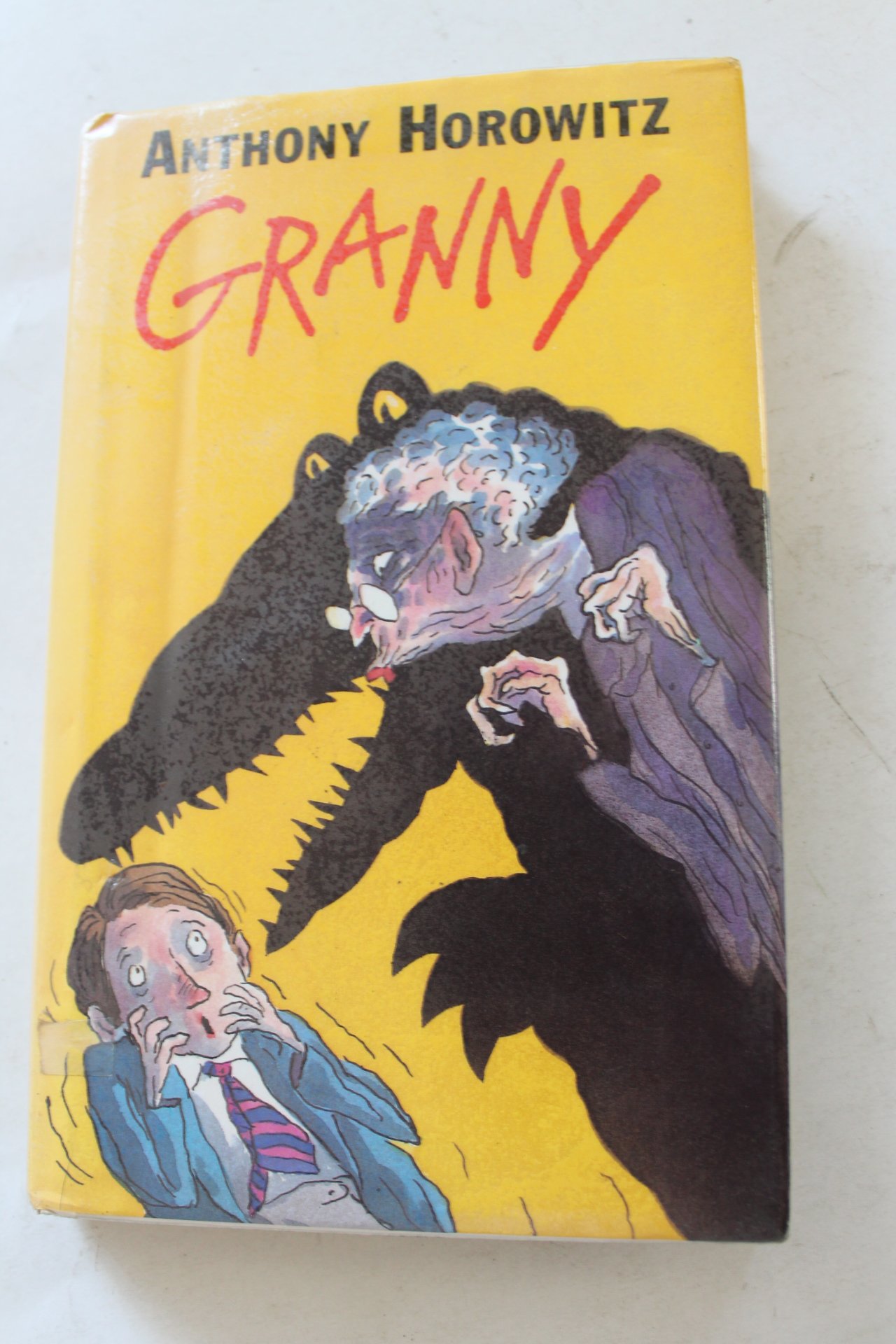
- Granny
Anthony Horowitzstandalone novel1994
similar bysurvivalcontemporaryhorrortenseour worldmiddle grade
Twelve-year-old Joe Warden isn't happy. Sure, he's rich, but his parents don't care about him. His grandmother should make everything better, except that Joe's granny is a nightmare. She's not just physically repulsive, she's horribly mean. Everyone thinks she's just a dotty old woman, but Joe knows the truth. He's seen behind her mask and glimpsed the wicked glimmer in her eyes—she is pure evil. And now she's out to get Joe, unless he can stop her and her band of nasty grannies first.
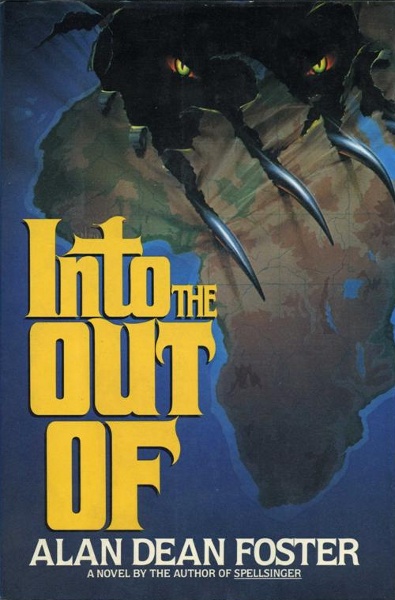
- Into the Out of
Alan Dean Fosterstandalone novel1986
similar bycontemporaryhorroreerietense+2 more
Into the Out Of (1986) is a horror-science fiction novel by American writer Alan Dean Foster.
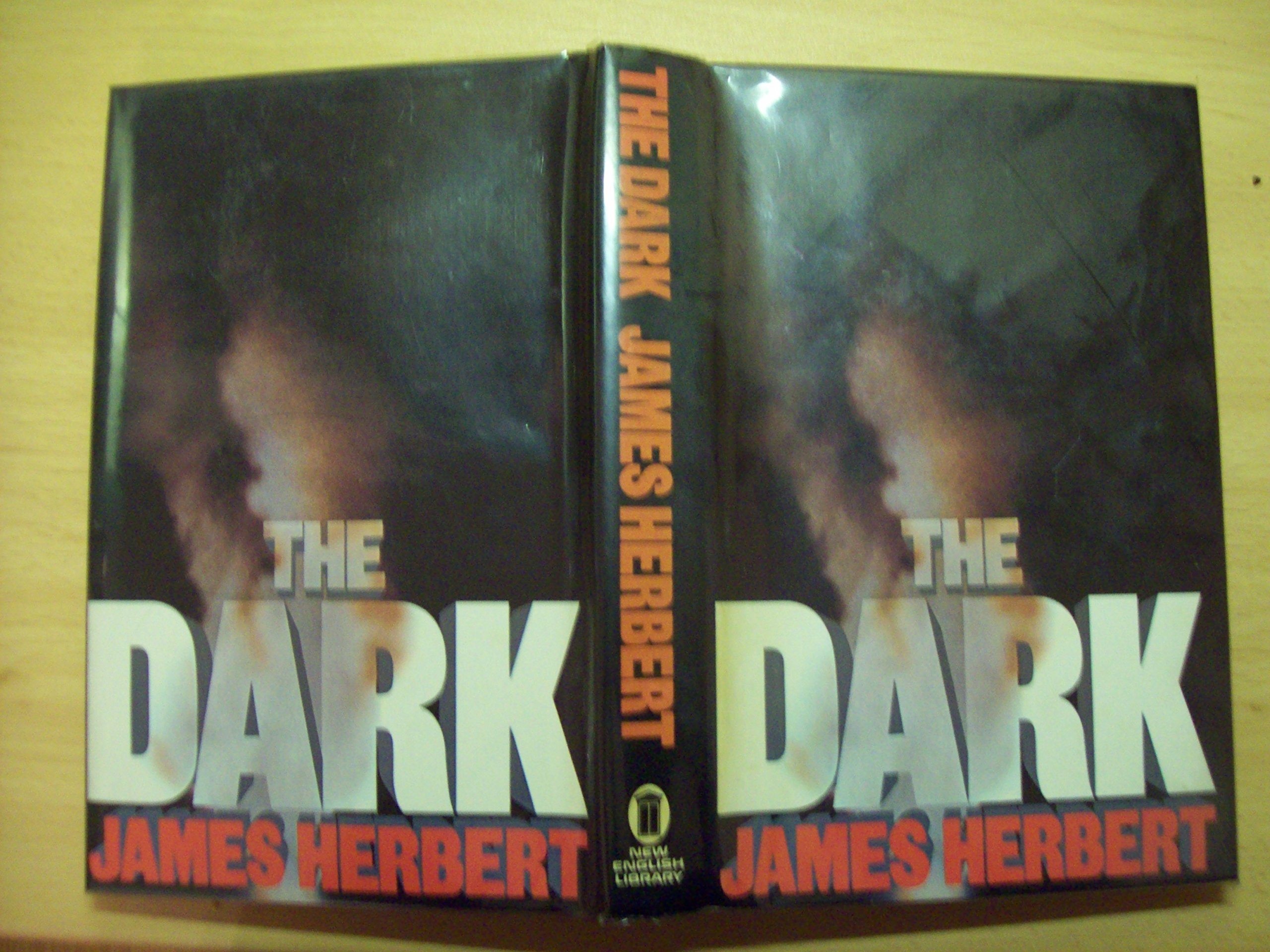
- The Dark
James Herbertstandalone novel1980
similar bysurvivalcontemporaryhorrortenseour world
WorldCat: It came like a malignant shadow with seductive promises of power. And somewhere in the night, a small girl smiled as her mother burned. Asylum inmates slaughtered their attendants. In slimy tunnels, once-human creatures gathered. Madness raged as the lights began to fade and humanity was attacked by an ancient, unstoppable evil.
- Black Light
Patrick Melton, Marcus Dunstan & Stephen Romanostandalone novel2011
similar bycontemporaryhorroreerietenseghost stories+1 more
A psychic for hire, who disposes of malignant ghosts by absorbing them then excreting them, in the process experiences enhanced spiritual vision, the "Black light". He is hired by an enormously wealthy and powerful industrialist to defend the trial run of a bullet train from Los Angeles to Las Vegas, which passes through an area of the desert particularly notorious for powerfully evil ghost presences; the same area which took the lives of his father and mother when he was a child.
- Bury Me Deep
Christopher Pikestandalone novel1991
similar bycontemporaryhorrortenseghost stories+2 more
THE DEAD BOY WOULD NOT GO AWAY. Jean is on her way to Hawaii for a week of fun in the sun. But the vacation gets off to a gruesome start. The boy sitting beside her on the plane suddenly chokes and dies. Jean tries to push the incident out of her mind when she arrives on the island, but that's impossible. Part of the reason is because Mike keeps coming back to her in her dreams. Horrible dreams filled with cold blood. Two of Jean's friends are waiting for her in Hawaii -- Mandy and Michele. They have already made friends with two young men who teach scuba diving at the hotel -- Dave and Johnny. Jean and Johnny quickly become friends. But there are problems in paradise. Dave and Johnny have recently lost a partner in the ocean. No one knows how he died. No one can find his body. But then Jean finds Mike's body. It isn't where it's supposed to be, and it seems as if it's still got some life in it.