Loreful
HomeDiscover
Search series, authors…⌘K
Loreful

Reading orders for SF/F series and shared universes — with your place kept in every one.

Explore

UniversesSeriesWorksAuthorsAtlas

Help

FAQAboutSite map

Account & legal

Sign inCreate accountPrivacyTerms

Data

Built on ISFDB, Wikipedia, Wikidata and Open Library. Curated reading orders carry their reasoning on the page; the rest follow publication order. Data sources & licenses

© Loreful · data: ISFDB · CC BY

More like The Names

anchored on:literary & generaleuropelate 20th centuryidentitybooks and readingmurder investigation+4 more

but

Mood

The mood the book leaves you in.

  • The reading experience is propelled by journeys, exploration, and physical risk; excitement and forward momentum dominate over dread or introspection.
  • Joy and loss are deliberately mixed; the resolution grants characters something real while taking something else away, leaving warmth and sorrow together.
  • The book demands work from the reader — dense prose, difficult structure, unfamiliar ideas, or morally uncomfortable material — as part of its intended effect.
  • Grim events, cruelty, or despair dominate the atmosphere, and the book does not soften them with comfort or comic relief.
  • The atmosphere is quietly unsettling — wrongness, unease, and the uncanny pervade the book without necessarily escalating into overt horror.
  • The book is built to move the reader; character feeling is foregrounded and major scenes aim at a strong emotional response.
  • Humor is a primary aim and the prose plays for laughs — comic situations, wit, or dialogue produce sustained comedy, not occasional levity.
  • The book insists that things can improve; effort and decency are shown to matter, and the arc bends toward better outcomes even through hardship.
  • The book teaches as it goes — real facts, history, science, or craft are conveyed in enough depth that learning is part of the reading experience.
  • The book is designed to uplift and motivate, presenting perseverance or achievement in a way that invites the reader to aspire or act.
  • The overall register is cheerful and easygoing; stakes are kept gentle and the book avoids dwelling on pain or dread.
  • Withheld information drives the experience; the book sustains enigmas and secrets the reader wants resolved, whatever its genre.
  • The book is contemplative and inward-looking, giving more weight to thought, memory, and meaning than to external events.
  • The book works as comfort reading — low tension, a soothing pace, and an atmosphere the reader can unwind in.
  • Grief, loss, or melancholy set the dominant register, and the book lets sorrow stand rather than resolving it into comfort.
  • Sustained suspense is the point; the book keeps the reader braced for what happens next through danger, pressure, or impending revelation.
  • Playful invention and charm define the register — fanciful conceits, light absurdity, and a narration that delights in its own oddity.

About

What the story runs on.

  • Stories in which extraterrestrial beings are central — as characters, cultures, or the object of the plot.
  • Stories about minds with paranormal abilities — telepathy, telekinesis, precognition, empathy — and how societies handle those who have them.
  • Stories structured as a quest — a journey undertaken to find, deliver, or destroy something of great import.
  • Stories in which staying alive against nature, catastrophe, or scarcity is the central problem.
  • Stories of lovers kept apart by law, family, faith, or station, where the obstacle to love is the plot.
  • Stories of growing up — a young protagonist crossing from childhood into adult knowledge and responsibility.
  • Stories about who a character truly is — self-discovery, doubled lives, and the search for a self.
  • Stories about mourning — living through the death of a loved one and what loss does to the survivors.
  • Stories in which a buried family truth — hidden parentage, crimes, or shames — surfaces and reorders the present.
  • Stories driven by maneuvering for power — factions, conspiracies, and statecraft conducted in shadow.
  • Stories in which war itself is the subject — combat, occupation, and what warfare does to soldiers and civilians.
  • Stories organized around investigating a killing — the case, the clues, and the pursuit of the killer, in any genre's clothing.

Shelf

Where it sits in the library.

    • Fiction built on magic or other supernatural elements that have no scientific explanation.
    • Secondary-world fantasy at large scale, where the fate of nations or the world turns on the protagonists' struggle.
    • Fantasy set in a recognizably modern city or contemporary world where the supernatural intrudes on everyday life.
    • Fantasy that blends in horror's atmosphere and imagery, keeping a fantastical frame around grim or frightening material.
    • Action-driven fantasy following warriors or rogues with personal stakes against sorcerous threats, rather than world-spanning conflicts.
    • Fantasy set in a real historical period or a close analogue of one, with magic woven into the era.
    • Fantasy in which protagonists cross from the ordinary world into another world through a portal or similar passage.
    • Fiction that retells or reworks a traditional fairy tale in a new form or setting.
    • Fantasy drawing directly on myths, legends, and folklore, retelling them or building on their figures and logic.
    • Fantasy of ghosts, vampires, shapeshifters, psychics, and similar phenomena, usually set in an otherwise ordinary world.
    • Fiction mixing science-fictional trappings with overtly magical or impossible elements in one setting.
    • Low-stakes fantasy emphasizing comfort, community, and everyday pleasures over conflict and peril.
    • Speculative fiction of pervasive moral ambiguity, violence, and cynicism that rejects heroic conventions — fantasy and SF alike.
      • Fiction that extrapolates from science and technology — future societies, space travel, or speculative inventions — within at least nominally natural laws.
      • Science fiction of interstellar scope — starships, galactic polities, and adventure across star systems.
      • Science fiction committed to scientific rigor, where technical plausibility constrains the story.
      • Science fiction centered on armed forces and warfare, told largely from a military point of view.
      • Science fiction of networked, corporate-dominated near futures, pairing high technology with social decay.
      • Science fiction styled on nineteenth-century steam-powered technology, often in a Victorian or pseudo-Victorian setting.
      • Fiction depicting an oppressive or catastrophic society, presented as a warning.
      • Fiction set after civilization's collapse, following survivors in the ruins of the old world.
      • Fiction in which characters move between past and future, and the mechanics or consequences of that travel drive the plot.
      • Fiction exploring a world where a historical event went differently and history diverged from ours.
      • Science fiction about humanity's first encounter and communication with an alien intelligence.
      • Science fiction in which extraterrestrial forces attack or occupy Earth and humanity resists.
      • Fiction whose primary aim is to frighten or unsettle the reader through dread, menace, or the monstrous.
      • Horror of vast, indifferent, incomprehensible entities before which humanity is insignificant, in the Lovecraft tradition.
      • Horror of decaying houses, buried family secrets, and oppressive atmosphere in the Gothic literary tradition.
      • Horror centered on hauntings and the returning dead.
      • Horror located in the mind — paranoia, obsession, and unreliable perception rather than external monsters.
      • Horror built around the reanimated dead and survival amid their outbreaks.
      • Horror defined by explicit, transgressive gore that refuses to cut away from violence.
      • Speculative fiction of the strange and uncanny that resists both natural explanation and standard genre categories.
      • Fiction organized around solving a crime or puzzle, typically following an investigator toward the identification of a culprit.
      • A puzzle-first mystery that lays out clues so the culprit's identity can be deduced before the reveal.
      • Crime fiction of moral ambiguity, fatalism, and hard-edged style, set among the corrupt and the doomed.
      • A mystery following the realistic routines of police work — forensics, interviews, and case-building.
      • A gentle mystery with an amateur sleuth, a small community, and violence kept off the page.
      • A mystery set in a past era, where the investigation works within that period's methods and society.
      • Fast-paced fiction driven by imminent danger, pursuit, or high-stakes conspiracy, built to sustain tension.
      • A thriller of espionage — agents, tradecraft, and intelligence services in conflict.
      • A thriller centered on lawyers and the courtroom, where litigation carries the suspense.
      • A thriller driven by detailed contemporary or near-future technology, often military or scientific.
      • A thriller whose tension comes from mental states and manipulation between characters rather than external action.
      • Fiction whose central plot is a romantic relationship and its development toward an emotionally satisfying resolution.
      • Romance in which one or both partners are supernatural beings, blending fantasy elements into the love story.
      • A fantasy-romance hybrid in which the romantic arc and the fantasy plot carry equal weight.
      • Romance set in a past era, with courtship shaped by the period's society and manners.
      • Romance set in the present day, without supernatural or historical elements.
      • Fiction set in a real past period, where the historical setting materially shapes characters and events.
        • General and literary fiction emphasizing prose style, character interiority, or formal ambition over genre plot conventions.
        • Fiction in a realistic world where magical events occur and are treated as ordinary, in the tradition of Latin American literature.
        • Fiction that ridicules people, institutions, or society in order to criticize them.
        • Fiction of dreamlike, irrational imagery and logic that breaks from realistic representation.
        • Fiction that plays with narrative convention through metafiction, fragmentation, and self-reference.
        • Fiction propelled by journeys, exploration, and physical peril, where action and survival carry the plot.
        • Adventure fiction of ships and seafaring — naval engagements, voyages, and life at sea.
        • Fiction of the American frontier West — gunmen, ranchers, and lawmen, typically in the late nineteenth century.
        • Fiction centered on soldiers, campaigns, and the experience of warfare, historical or imagined.
          • Fiction written primarily to amuse, using comedic situations, wit, or parody as its organizing principle.
            • Multi-generational fiction following a family or dynasty across decades, with inheritance and kinship as the through-line.
              • Fiction whose world runs on explicit game mechanics — levels, stats, and skills that characters can see and exploit.
                • Fiction about costumed or superpowered heroes and their conflicts with comparable villains.

                Practical

                How long a commitment, whether it stands alone, and whether it has finished.

                Tap a chip to ask for it · tap again to rule it out · once more to clear. Numbers show what would be left.

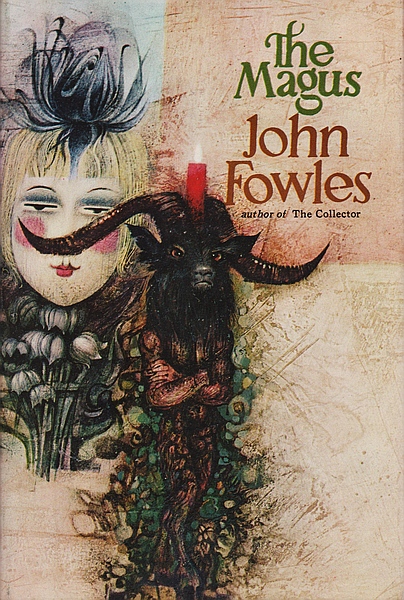
                • Cover of The Magus
                  The Magus

                  John Fowles · standalone novel · 1965

                  similar byliterary & generaleuropeidentitychallengingmysteriousmediterranean

                  The Magus (1965) is a postmodern novel by British author John Fowles, telling the story of Nicholas Urfe, a young British graduate who is teaching English on a small Greek island. Urfe becomes embroiled in the psychological illusions of a master trickster, which become increasingly dark and serious. Considered an example of metafiction, it was the first novel written by Fowles but his third book to be published. A revised edition was published in 1977.

                • Cover of Freddie Montgomery
                  Freddie Montgomery

                  series · 1 book · 1989

                  similar byliterary & generaleuropeidentitymurder investigationreflectivemystery & detective

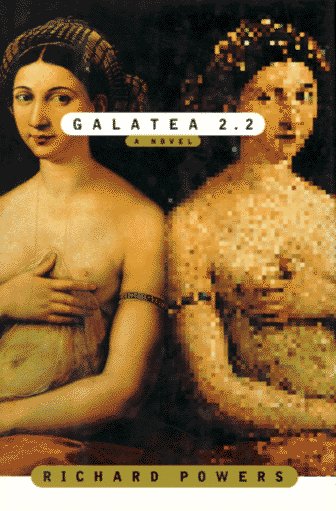
                • Cover of Galatea 2.2
                  Galatea 2.2

                  Richard Powers · standalone novel · 1995

                  similar bylate 20th centuryliterary & generalidentityreflective+2 more

                  Galatea 2.2 is a 1995 pseudo-autobiographical novel by American writer Richard Powers and a contemporary reworking of the Pygmalion myth. The book's narrator shares the same name as Powers, with the book referencing events and books in the author's life while mentioning other events that may or may not be based upon Powers' life.

                • Cover of The Edible Woman
                  The Edible Woman

                  Margaret Atwood · standalone novel · 1969

                  similar bylate 20th centuryliterary & generalidentityreflective

                  The Edible Woman is the first published novel by Canadian writer Margaret Atwood, published in 1969. It is the story of a young woman, Marian, whose sane, structured, consumer-oriented world starts to slip out of focus. Following her engagement, Marian feels her body and her self are becoming separated. Marian begins endowing food with human qualities that cause her to identify with it, and finds herself unable to eat, repelled by metaphorical cannibalism. In a foreword written in 1979 for the Virago edition of the novel, Atwood described it as a protofeminist rather than feminist work.

                • Cover of The Day of Creation
                  The Day of Creation

                  J. G. Ballard · standalone novel · 1987

                  similar bylate 20th centuryliterary & generalchallengingreflective

                  Dr. John Mallory has spent six purposeless months running a WHO clinic in a corner of Central Africa gutted by guerrilla war, with almost no patients to treat, when he throws himself into a project: bringing water to the parched land, with dreams of blooming the Sahara. When his drilling improbably succeeds and unleashes a river, Mallory's fixation curdles into obsession -- he begins to identify with the river as an extension of himself, and assembles an expedition, including a girl he takes for a water spirit and a half-blind documentary filmmaker, to follow it upstream toward its source. A visionary novel by J. G. Ballard.

                • Cover of Climbers
                  Climbers

                  M. John Harrison · standalone novel · 1989

                  similar bylate 20th centuryliterary & generalidentitychallengingreflective

                  Climbers is a literary novel by the British author M. John Harrison. First published in 1989 and apparently set several years earlier, the book had been out of print for several years but was reissued in paperback by Phoenix in 2004. It has attracted considerable critical acclaim and won the Boardman Tasker Prize for Mountain Literature in 1989. It was not, however, universally popular with the British climbing public, and received at least one negative review in the popular magazine Climber.

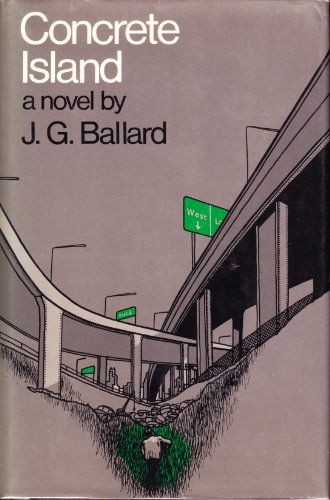
                • Cover of Concrete Island
                  Concrete Island

                  J. G. Ballard · standalone novel · 1974

                  similar byliterary & generalidentitychallengingreflectiveeurope

                  Architect Robert Maitland crashes his car onto a stretch of wasteland trapped between three converging motorways -- visible from thousands of cars, reachable by none of them. Injured and unable to climb back to the road, Maitland adapts to life on what he starts calling the Island, scavenging food thrown from car windows, and discovers he isn't alone: a runaway sex worker hiding in a bunker, and a brain-damaged former circus acrobat, both long past expecting rescue. What begins as a survival story turns into a question of whether Maitland even wants to leave. A J. G. Ballard novel of urban isolation, grouped with Crash and High-Rise.

                • Cover of Phases of Gravity
                  Phases of Gravity

                  Dan Simmons · standalone novel · 1989

                  similar bylate 20th centuryliterary & generalidentityreflective

                  Follows Richard Baedecker, an Apollo astronaut who walked on the moon, through his midlife crisis. He meanders through India, Glen Oak Illinois, the mountains of Colorado, and the coastline of Oregon, checking up on his son and his former Apollo crewmates.

                • Cover of American Psycho
                  American Psycho

                  Bret Easton Ellis · standalone novel · 1991

                  similar bylate 20th centuryliterary & generalchallengingmurder investigation+1 more

                  American Psycho is a horror novel by American writer Bret Easton Ellis, published in 1991. The story is told in the first-person by Patrick Bateman, a wealthy, narcissistic, and vain Manhattan investment banker who lives a double life as a serial killer. Alison Kelly of The Observer notes that while "Some countries [deem it] so potentially controversial that it only to be sold as shrink-wrapped", "critics rave about it" and "academics revel in its transgressive and postmodern qualities".

                • Cover of Alias Grace
                  Alias Grace

                  Margaret Atwood · standalone novel · 1996

                  similar byliterary & generalidentitymurder investigationmysteriousreflective

                  Alias Grace is a historical fiction novel by Canadian writer Margaret Atwood. First published in 1996 by McClelland & Stewart, it won the Giller Prize and was shortlisted for the Booker Prize.

                • Cover of Nights at the Circus
                  Nights at the Circus

                  Angela Carter · standalone novel · 1984

                  similar bylate 20th centuryliterary & generalidentityeurope

                  Nights at the Circus is a novel by British writer Angela Carter, first published in 1984 and the winner of the 1984 James Tait Black Memorial Prize for fiction. The novel focuses on the life and exploits of Sophie Fevvers, a woman who is – or so she would have people believe – a Cockney virgin, hatched from an egg laid by unknown parents and ready to develop fully fledged wings. At the time of the story, she has become a celebrated aerialiste. She captivates the young journalist Jack Walser, who runs away with the circus and falls into a world that his journalistic exploits had not prepared him to encounter.

                • Cover of A Landing on the Sun
                  A Landing on the Sun

                  Michael Frayn · standalone novel · 1991

                  similar bylate 20th centuryliterary & generalidentitymysteriousreflective

                  A Landing On The Sun is a 1991 novel by Michael Frayn, and was the Sunday Express Book of the Year. It was adapted into a 1994 BBC TV fim with a screenplay written by the author.

                • Cover of The Brief Wondrous Life of Oscar Wao
                  The Brief Wondrous Life of Oscar Wao

                  Junot Díaz · standalone novel · 2007

                  similar bylate 20th centuryliterary & generalidentitychallenging

                  Dark fantasy novel. A young man who dreams of being “the Dominican J.R.R. Tolkien” is doomed by a family curse, traced across generations.

                • Cover of Running Dog
                  Running Dog

                  Don DeLillo · standalone novel · 1978

                  similar bylate 20th centuryliterary & generalmurder investigationthriller & suspense+2 more

                  Running Dog is a 1978 novel by Don DeLillo. The book concerns Moll Robbins, a reporter for the eponymous magazine – a fictional underground, once-radical magazine which satirizes Rolling Stone – whose investigation into the suspicious activities of a member of the U.S. Senate uncover the possible existence of a pornographic film of Adolf Hitler, purportedly filmed in his bunker in the climactic days of Berlin's fall. As Robbins digs deeper into the film's existence and whereabouts, more and more individuals become obsessed with finding it, including underground art collectors and the Mafia, leading to a surreal and violent series of events.

                • Cover of Infinite Jest
                  Infinite Jest

                  David Foster Wallace · standalone novel · 1996

                  similar bylate 20th centuryliterary & generalidentitychallenging+1 more

                  Infinite Jest is a 1996 novel by American writer David Foster Wallace. Often considered Wallace’s magnum opus, the book has been categorized as an encyclopedic novel due to its unconventional narrative structure and hundreds of extensive endnotes, some with footnotes of their own.

                • Cover of Travels in the Scriptorium
                  Travels in the Scriptorium

                  Paul Auster · standalone novel · 2007

                  similar byliterary & generalidentitybooks and readingchallengingmysterious

                  Travels in the Scriptorium is a novel by Paul Auster first published in 2006.

                • Cover of Brazzaville Beach
                  Brazzaville Beach

                  William Boyd · standalone novel · 1990

                  similar bylate 20th centuryliterary & generalidentityreflective

                  Brazzaville Beach is a novel by William Boyd, for which he was awarded the James Tait Black Memorial Prize for 1990, and the McVitie's Prize for Scottish Writer of the Year. The book tells the story of a woman, Hope Clearwater, researching chimpanzees, and the circumstances that brought her to Africa. It is Boyd's first novel with a female protagonist and the first to be written, at least in part, from a first person female perspective. Boyd said that rather than try to consider how a woman, as opposed to a man, would respond to certain situations he focused on developing and understanding Hope's character and personality.

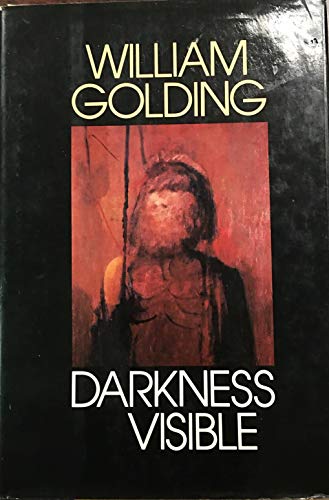
                • Cover of Darkness Visible
                  Darkness Visible

                  William Golding · standalone novel · 1979

                  similar bylate 20th centuryliterary & generalidentitychallenging

                  Darkness Visible is a 1979 novel by British author William Golding. The book won the James Tait Black Memorial Prize. The title comes from Paradise Lost, from the line, "No light, but rather darkness visible". It marked Golding's re-emergence as a novelist, eight years after the publication of the collection The Scorpion God.

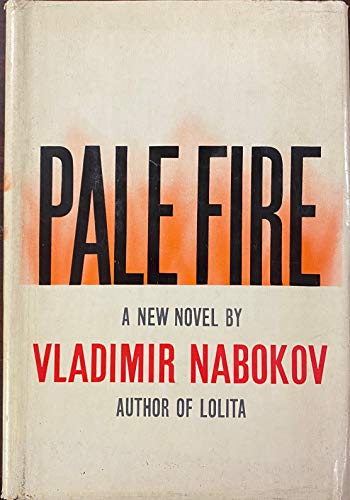
                • Cover of Pale Fire
                  Pale Fire

                  Vladimir Nabokov · standalone novel · 1962

                  similar byliterary & generalidentitybooks and readingchallengingmysterious

                  Novel, written in the form of an epic poem by a fictional author, and scholarly commentary by a fictional biographer.

                • Cover of Mother Night
                  Mother Night

                  Kurt Vonnegut & Jr. · standalone novel · 1962

                  similar byliterary & generalidentityreflectiveeurope

                  Howard W. Campbell Jr., an American playwright who grew up in Germany, writes his memoirs from an Israeli prison cell awaiting trial for war crimes. As the Nazis rose to power, Campbell stayed on, married a German actress, and was recruited by an American agent to serve as a double agent, broadcasting Nazi propaganda over the radio while secretly passing coded intelligence to the Allies. The catch, as Campbell tells it, is that he became one of the war's most effective propagandists in the process, whatever his loyalties. Kurt Vonnegut's darkest novel asks what a person becomes when the mask he wears for a cause is indistinguishable from his face.

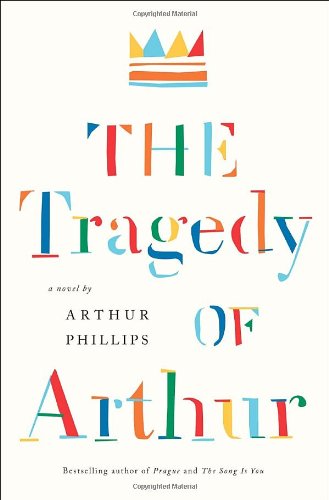
                • Cover of The Tragedy of Arthur
                  The Tragedy of Arthur

                  Arthur Phillips · standalone novel · 2011

                  similar byliterary & generalidentitybooks and readingmysteriousreflective

                  The Tragedy of Arthur is a 2011 novel by the American author Arthur Phillips. The narrative concerns the publication of a recently discovered Arthurian play attributed to William Shakespeare, which the main narrator, "Arthur Phillips", believes to be a forgery produced by his father. It was published by Random House.

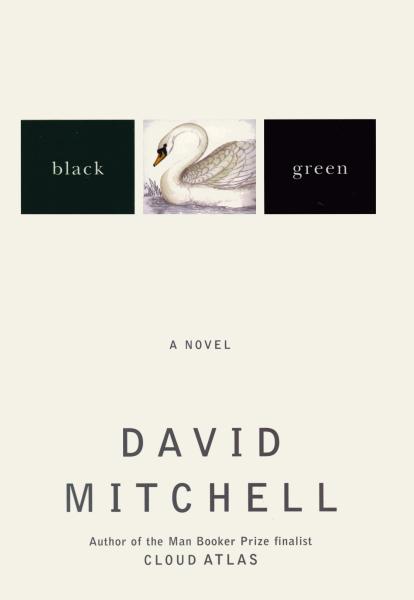
                • Cover of Black Swan Green
                  Black Swan Green

                  David Mitchell · standalone novel · 2006

                  similar bylate 20th centuryliterary & generalidentityreflective

                  Black Swan Green is a semi-autobiographical novel written by David Mitchell, published in April 2006 in the U.S. and May 2006 in the UK. The bildungsroman's thirteen chapters each represent one month—from January 1982 through January 1983—in the life of 13-year-old Worcestershire boy Jason Taylor. The novel is written from the perspective of Taylor and employs many teen colloquialisms and popular-culture references from early-1980s England.

                • Cover of The Colorado Kid
                  The Colorado Kid

                  Stephen King · standalone novel · 2005

                  similar byidentitymurder investigationmysteriousreflectivemystery & detective

                  The Colorado Kid is a mystery novel by American writer Stephen King, published by the Hard Case Crime imprint in 2005. The book was initially issued in one paperback-only edition by the specialty crime and mystery publishing house. King's next novel for Hard Case Crime was Joyland, which was published in June 2013. Hard Case Crime reissued The Colorado Kid in an illustrated paperback edition in May 2019.

                • Cover of The Research Magnificent
                  The Research Magnificent

                  H. G. Wells · standalone novel · 1915

                  similar byliterary & generaleuropeidentityreflective+1 more

                  The Research Magnificent is a 1915 novel by H. G. Wells.