Loreful
HomeDiscover
Search series, authors…⌘K
Loreful

Series-first reading tracker: what you've read, what's next, and what you're missing.

Explore

UniversesSeriesWorksAuthorsAtlas

Help

FAQAboutSite map

Account & legal

Sign inCreate accountPrivacyTerms

Data

Built on ISFDB, Wikipedia, Wikidata and Open Library. Every reading order is hand-picked, with a rationale on the page. Data sources & licenses

© Loreful · data: ISFDB · CC BY

More like The Phantom

anchored on:adventurerevengeour worldadventurouspiratesat sea

but

Mood

The mood the book leaves you in.

  • The reading experience is propelled by journeys, exploration, and physical risk; excitement and forward momentum dominate over dread or introspection.
  • Joy and loss are deliberately mixed; the resolution grants characters something real while taking something else away, leaving warmth and sorrow together.
  • The book demands work from the reader — dense prose, difficult structure, unfamiliar ideas, or morally uncomfortable material — as part of its intended effect.
  • Grim events, cruelty, or despair dominate the atmosphere, and the book does not soften them with comfort or comic relief.
  • The atmosphere is quietly unsettling — wrongness, unease, and the uncanny pervade the book without necessarily escalating into overt horror.
  • The book is built to move the reader; character feeling is foregrounded and major scenes aim at a strong emotional response.
  • Humor is a primary aim and the prose plays for laughs — comic situations, wit, or dialogue produce sustained comedy, not occasional levity.
  • The book insists that things can improve; effort and decency are shown to matter, and the arc bends toward better outcomes even through hardship.
  • The book teaches as it goes — real facts, history, science, or craft are conveyed in enough depth that learning is part of the reading experience.
  • The book is designed to uplift and motivate, presenting perseverance or achievement in a way that invites the reader to aspire or act.
  • The overall register is cheerful and easygoing; stakes are kept gentle and the book avoids dwelling on pain or dread.
  • Withheld information drives the experience; the book sustains enigmas and secrets the reader wants resolved, whatever its genre.
  • The book is contemplative and inward-looking, giving more weight to thought, memory, and meaning than to external events.
  • The book works as comfort reading — low tension, a soothing pace, and an atmosphere the reader can unwind in.
  • Grief, loss, or melancholy set the dominant register, and the book lets sorrow stand rather than resolving it into comfort.
  • Sustained suspense is the point; the book keeps the reader braced for what happens next through danger, pressure, or impending revelation.
  • Playful invention and charm define the register — fanciful conceits, light absurdity, and a narration that delights in its own oddity.

About

What the story runs on.

  • Stories in which extraterrestrial beings are central — as characters, cultures, or the object of the plot.
  • Stories about venturing into space to explore — survey missions, astronauts, and the frontier of the unknown beyond Earth.
  • Stories structured as a quest — a journey undertaken to find, deliver, or destroy something of great import.
  • Stories in which staying alive against nature, catastrophe, or scarcity is the central problem.
  • Stories of lovers kept apart by law, family, faith, or station, where the obstacle to love is the plot.
  • Stories in which a friendship — its making, testing, or loss — is the emotional center.
  • Stories of growing up — a young protagonist crossing from childhood into adult knowledge and responsibility.
  • Stories about who a character truly is — self-discovery, doubled lives, and the search for a self.
  • Stories in which a buried family truth — hidden parentage, crimes, or shames — surfaces and reorders the present.
  • Stories driven by maneuvering for power — factions, conspiracies, and statecraft conducted in shadow.
  • Stories in which war itself is the subject — combat, occupation, and what warfare does to soldiers and civilians.
  • Stories organized around investigating a killing — the case, the clues, and the pursuit of the killer, in any genre's clothing.

Shelf

Where it sits in the library.

    • Fiction built on magic or other supernatural elements that have no scientific explanation.
    • Secondary-world fantasy at large scale, where the fate of nations or the world turns on the protagonists' struggle.
    • Fantasy set in a recognizably modern city or contemporary world where the supernatural intrudes on everyday life.
    • Fantasy that blends in horror's atmosphere and imagery, keeping a fantastical frame around grim or frightening material.
    • Action-driven fantasy following warriors or rogues with personal stakes against sorcerous threats, rather than world-spanning conflicts.
    • Fantasy set in a real historical period or a close analogue of one, with magic woven into the era.
    • Fantasy in which protagonists cross from the ordinary world into another world through a portal or similar passage.
    • Fiction that retells or reworks a traditional fairy tale in a new form or setting.
    • Fantasy drawing directly on myths, legends, and folklore, retelling them or building on their figures and logic.
    • Fantasy of ghosts, vampires, shapeshifters, psychics, and similar phenomena, usually set in an otherwise ordinary world.
    • Fiction mixing science-fictional trappings with overtly magical or impossible elements in one setting.
    • Low-stakes fantasy emphasizing comfort, community, and everyday pleasures over conflict and peril.
    • Speculative fiction of pervasive moral ambiguity, violence, and cynicism that rejects heroic conventions — fantasy and SF alike.
      • Fiction that extrapolates from science and technology — future societies, space travel, or speculative inventions — within at least nominally natural laws.
      • Science fiction of interstellar scope — starships, galactic polities, and adventure across star systems.
      • Science fiction committed to scientific rigor, where technical plausibility constrains the story.
      • Science fiction centered on armed forces and warfare, told largely from a military point of view.
      • Science fiction of networked, corporate-dominated near futures, pairing high technology with social decay.
      • Science fiction styled on nineteenth-century steam-powered technology, often in a Victorian or pseudo-Victorian setting.
      • Fiction depicting an oppressive or catastrophic society, presented as a warning.
      • Fiction set after civilization's collapse, following survivors in the ruins of the old world.
      • Fiction in which characters move between past and future, and the mechanics or consequences of that travel drive the plot.
      • Fiction exploring a world where a historical event went differently and history diverged from ours.
      • Science fiction about humanity's first encounter and communication with an alien intelligence.
      • Science fiction in which extraterrestrial forces attack or occupy Earth and humanity resists.
      • Fiction whose primary aim is to frighten or unsettle the reader through dread, menace, or the monstrous.
      • Horror of vast, indifferent, incomprehensible entities before which humanity is insignificant, in the Lovecraft tradition.
      • Horror of decaying houses, buried family secrets, and oppressive atmosphere in the Gothic literary tradition.
      • Horror centered on hauntings and the returning dead.
      • Horror located in the mind — paranoia, obsession, and unreliable perception rather than external monsters.
      • Horror built around the reanimated dead and survival amid their outbreaks.
      • Horror defined by explicit, transgressive gore that refuses to cut away from violence.
      • Speculative fiction of the strange and uncanny that resists both natural explanation and standard genre categories.
      • Fiction organized around solving a crime or puzzle, typically following an investigator toward the identification of a culprit.
      • A puzzle-first mystery that lays out clues so the culprit's identity can be deduced before the reveal.
      • Crime fiction of moral ambiguity, fatalism, and hard-edged style, set among the corrupt and the doomed.
      • A mystery following the realistic routines of police work — forensics, interviews, and case-building.
      • A gentle mystery with an amateur sleuth, a small community, and violence kept off the page.
      • A mystery set in a past era, where the investigation works within that period's methods and society.
      • Fast-paced fiction driven by imminent danger, pursuit, or high-stakes conspiracy, built to sustain tension.
      • A thriller of espionage — agents, tradecraft, and intelligence services in conflict.
      • A thriller centered on lawyers and the courtroom, where litigation carries the suspense.
      • A thriller driven by detailed contemporary or near-future technology, often military or scientific.
      • A thriller whose tension comes from mental states and manipulation between characters rather than external action.
      • Fiction whose central plot is a romantic relationship and its development toward an emotionally satisfying resolution.
      • Romance in which one or both partners are supernatural beings, blending fantasy elements into the love story.
      • A fantasy-romance hybrid in which the romantic arc and the fantasy plot carry equal weight.
      • Romance set in a past era, with courtship shaped by the period's society and manners.
      • Romance set in the present day, without supernatural or historical elements.
      • Fiction set in a real past period, where the historical setting materially shapes characters and events.
        • General and literary fiction emphasizing prose style, character interiority, or formal ambition over genre plot conventions.
        • Fiction in a realistic world where magical events occur and are treated as ordinary, in the tradition of Latin American literature.
        • Fiction that ridicules people, institutions, or society in order to criticize them.
        • Fiction of dreamlike, irrational imagery and logic that breaks from realistic representation.
        • Fiction that plays with narrative convention through metafiction, fragmentation, and self-reference.
        • Fiction propelled by journeys, exploration, and physical peril, where action and survival carry the plot.
        • Adventure fiction of ships and seafaring — naval engagements, voyages, and life at sea.
        • Fiction of the American frontier West — gunmen, ranchers, and lawmen, typically in the late nineteenth century.
        • Fiction centered on soldiers, campaigns, and the experience of warfare, historical or imagined.
          • Fiction written primarily to amuse, using comedic situations, wit, or parody as its organizing principle.
            • Multi-generational fiction following a family or dynasty across decades, with inheritance and kinship as the through-line.
              • Fiction whose world runs on explicit game mechanics — levels, stats, and skills that characters can see and exploit.
                • Fiction about costumed or superpowered heroes and their conflicts with comparable villains.

                Practical

                How long a commitment, whether it stands alone, and whether it has finished.

                Tap a chip to ask for it · tap again to rule it out · once more to clear. Numbers show what would be left.

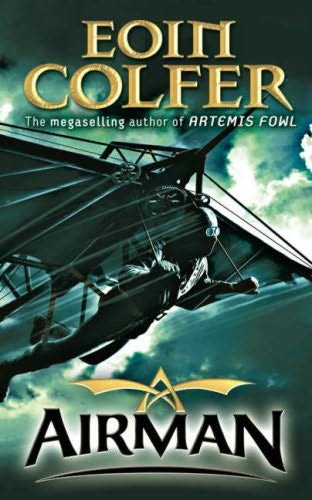
                • Airman

                  Eoin Colfer · standalone novel · 2008

                  similar byadventureadventurousrevengeour worldtense

                  Airman, by Eoin Colfer, is a best-selling historical adventure novel set in the 19th century. It was released in the UK, Ireland and US in January 2008. The novel was shortlisted for the 2009 Carnegie Medal.

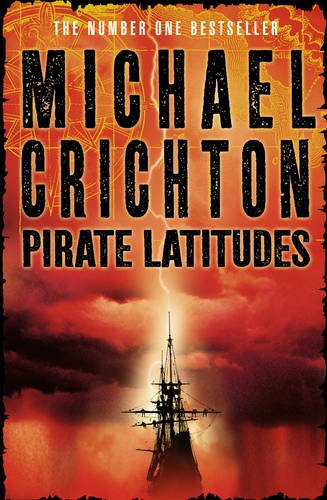
                • Pirate Latitudes

                  Michael Crichton · standalone novel · 2009

                  similar byadventureadventurouspiratestenseat sea

                  Pirate Latitudes is an action-adventure novel by Michael Crichton, the sixteenth novel to be published under his own name and first to be published after his death, concerning 17th-century piracy in the Caribbean. HarperCollins published the book posthumously on November 26, 2009. The story stars the fictional privateer Captain Charles Hunter who, hired by Jamaica's governor Sir James Almont, plots to raid a Spanish galleon for its treasure.

                • Scarface

                  Andre Norton · standalone novel · 1948

                  similar byadventureadventurousrevengepiratesour worldat sea

                  "Being the story of one Justin Blade, late of the pirate isle of Tortuga, and how fate did justly deal with him, to his great profit."

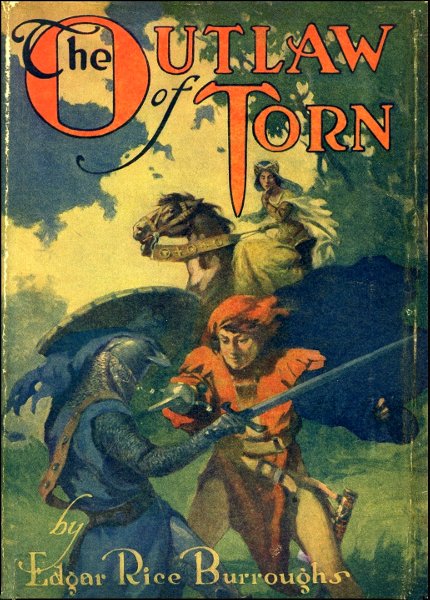
                • The Outlaw of Torn

                  Edgar Rice Burroughs · standalone novel · 1927

                  similar byadventureadventurousour worldtense

                  Raised from childhood by a vengeful royal fencing master who wants him turned into a weapon against the English crown, Norman of Torn grows up in 13th-century England knowing only combat and contempt for the nobility. By nineteen he leads the kingdom's largest band of outlaws and carries a king's ransom on his head, yet a priest's influence has left him with a streak of chivalry. Amid rebellion against King Henry III, Norman joins Simon de Montfort's rebels, and finds himself drawn to de Montfort's daughter despite a startling resemblance to the crown prince. An early adventure novel from Edgar Rice Burroughs.

                • Tarzan

                  series · 50 books · 1912

                  part of Tarzan Universe

                  similar byadventureadventurous

                  Tarzan is a series of 24 adventure novels written by Edgar Rice Burroughs (1875–1950) and published between 1912 and 1966, followed by several novels either co-written by Burroughs, or officially authorized by his estate. There are also two works written by Burroughs especially for children that are not related to the main series.

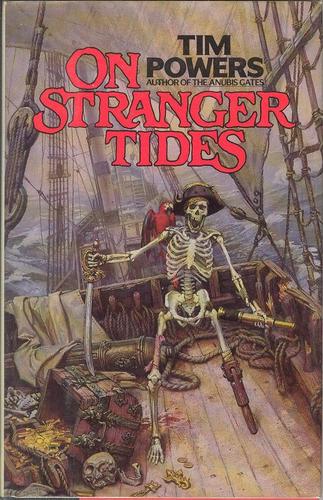
                • On Stranger Tides

                  Tim Powers · standalone novel · 1987

                  similar byadventureadventurouspiratesat sea

                  On Stranger Tides is a 1987 historical fantasy supernatural novel by American writer Tim Powers. It was nominated for the World Fantasy Award for Best Novel, and placed second in the annual Locus poll for best fantasy novel.

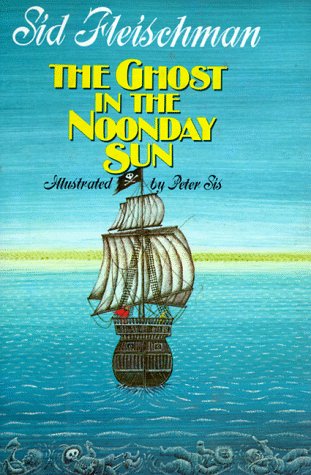
                • The Ghost in the Noonday Sun

                  Sid Fleischman · standalone novel · 1965

                  similar byadventureadventurouspiratesat sea

                  "Because Captain Scratch thinks Oliver Finch can see ghosts, he shanghais the boy abroad a pirate ship bound from Nantucket in search of buried treasure. Devious methods enable Oliver to outwit Scratch." --summary, Worldcat library record {{OCLC|429575904}} "firmly rooted in fantasy and exaggeration" --Mark Taylor LA Times 1965-12-26 m25 "this rollicking tale has more than enough humor and suspense" --Robert Berkvist NY Times 1965-10-24 pBR34

                • Allan Quatermain

                  series · 25 books · 1885

                  similar byadventureadventurous

                  Allan Quatermain is the protagonist of H. Rider Haggard's 1885 novel King Solomon's Mines, its one sequel Allan Quatermain (1887), twelve prequel novels and four prequel short stories, totalling eighteen works. An English professional big game hunter and adventurer, in film and television he has been portrayed by Richard Chamberlain, Sean Connery, Cedric Hardwicke, Patrick Swayze and Stewart Granger among others.

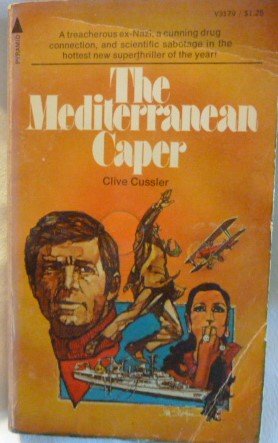
                • Dirk Pitt

                  series · 12 books · 1973

                  completed

                  similar byadventureadventurousour worldtense+1 more

                  Clive Cussler's Dirk Pitt novels follow the title character, a two-fisted marine engineer and de facto field agent for the fictional National Underwater and Marine Agency, through globe-spanning adventures mixing undersea salvage, historical mystery, and international conspiracy. The run collected here spans The Mediterranean Caper (1973) through Valhalla Rising (2001), the earlier stretch of a series Cussler continued for decades with later co-authors.

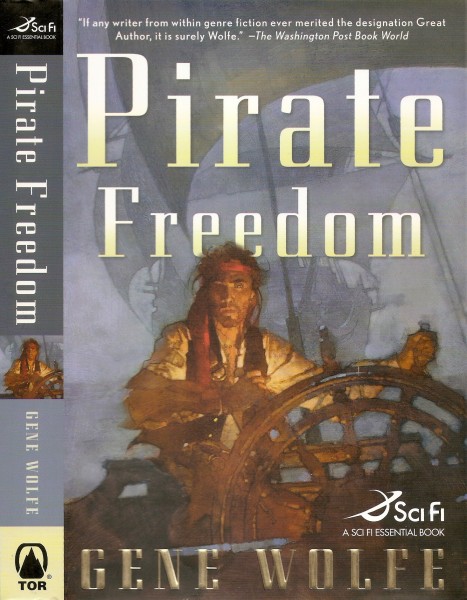
                • Pirate Freedom

                  Gene Wolfe · standalone novel · 2007

                  similar byadventureadventurouspiratesour worldat sea

                  Pirate Freedom (2007) is a fantasy novel by Gene Wolfe about a young man who is transported back in time and becomes a pirate.

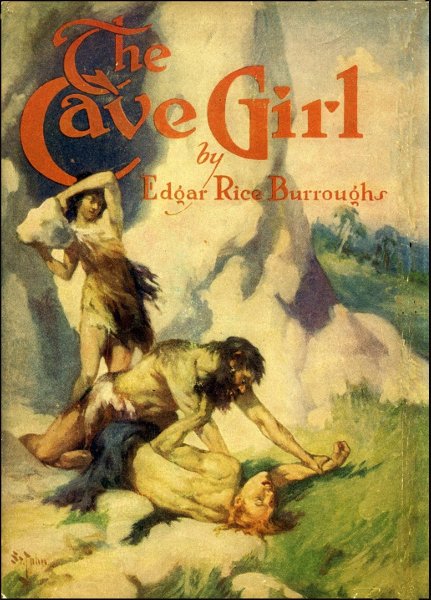
                • The Cave Girl

                  Edgar Rice Burroughs · standalone novel · 1925

                  similar byadventureadventurousour world

                  The Cave Girl is a lost world novel by American writer Edgar Rice Burroughs. Originally published in two separate stories, The Cave Girl begun in February 1913 and published by "All-Story" in July, August, and September 1913; and The Cave Man begun in 1914 and published by "All-Story Weekly" throughout March and April 1917. The book version was first published by A. C. McClurg on 1925-03-21. In August 1949, Dell Paperback published a version with a map captioned "Wild Island Home of Nadara the Cave Girl Where Violence and Bloodshed Rule."

                • Jack Howard

                  series · 8 books · 2005

                  similar byadventureadventuroustenseour world

                • The Lad and the Lion

                  Edgar Rice Burroughs · standalone novel · 1938

                  similar byadventureadventurousour world

                  The Lad and the Lion is an adventure novel by American writer Edgar Rice Burroughs, written in February 1914. His working title for the piece was "Men and Beasts." It was first published as a three-part serial in All-Story Weekly in the issues for June 30, July 7, and July 14, 1917. The story was the first by Burroughs adapted to film, the movie appearing about the same time as the print serial. Despite this distinction, the story did not appear in book form for over twenty years; only after a remake of the film appeared was the first book edition published, by Burroughs's own publishing firm, Edgar Rice Burroughs, Inc., in February 1938. The text was apparently expanded for book publication, as certain incidentals of the story reflect the political situation of Europe in the late 1930s rather than the mid-1910s. The book was reprinted by Grosset & Dunlap in 1939 and Canaveral Press in 1964. The first paperback edition was issued by Ballantine Books in September 1964, with a second appearing from Ace Books in May 1974, reprinted in June 1982.

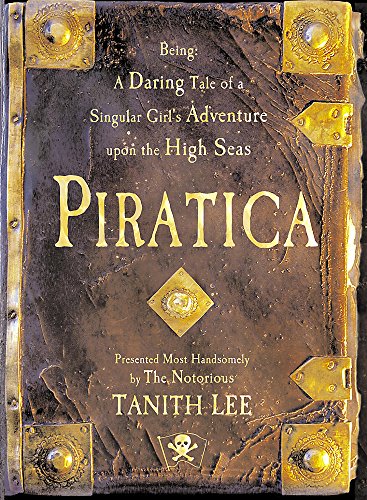
                • Piratica

                  series · 3 books · 2004

                  completed

                  similar byadventureadventurouspiratesat sea

                  The Piratica Series is a series of young adult fantasy novels by Tanith Lee.

                • Philip Mercer

                  series · 2 books · 1998

                  similar byadventureadventurousour worldtense

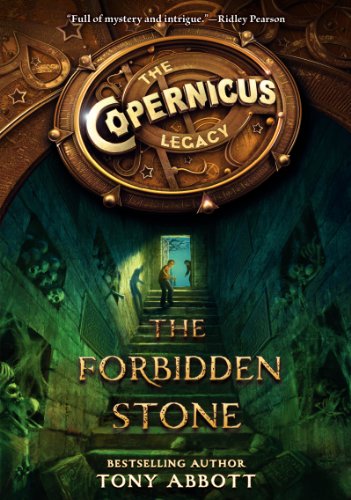
                • The Copernicus Legacy

                  series · 6 books · 2014

                  similar byadventureadventurous+2 more

                  The Copernicus Legacy is a book series written by Tony Abbott. It is about the adventures of Wade Kaplan, Darrell Kaplan, Lily, Becca Moore, Roald Kaplan, and Sara Kaplan as they try to destroy a time machine made by Ptolemy but discovered and used by Nicolaus Copernicus, from the dangerous Teutonic Order of Ancient Prussia. It currently has four books in the main series, but two are in a series diverted from The Copernicus Legacy called Copernicus Archives. While a work of fiction, it does incorporate some facts about Copernicus's history.

                • The Princess Bride

                  William Goldman · standalone novel · 1973

                  similar byadventurerevengeadventurous

                  The Princess Bride: S. Morgenstern's Classic Tale of True Love and High Adventure, The "Good Parts" Version is a 1973 fantasy romance novel by American writer William Goldman. The book combines elements of comedy, adventure, fantasy, drama, romance, and fairy tale. It is metafictionally presented as an abridgment of a longer work by the fictional S. Morgenstern, and Goldman's commentary asides are constant throughout. It was originally published in the United States by Harcourt Brace, then later by Random House, while in the United Kingdom it was later published by Bloomsbury.

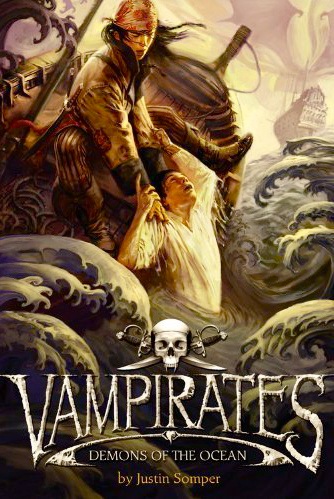
                • Vampirates

                  series · 7 books · 2005

                  similar byadventureadventurouspiratesat sea

                  Vampirates is a series of books by British author Justin Somper about a set of twin children, Connor and Grace Tempest, who get separated at sea and are picked up by two very different ships. The term Vampirate refers to a vampire living on the pirate ship Nocturne, later changed to Nocturnal to differentiate themselves from rebellious and uncontrolled Vampirates.

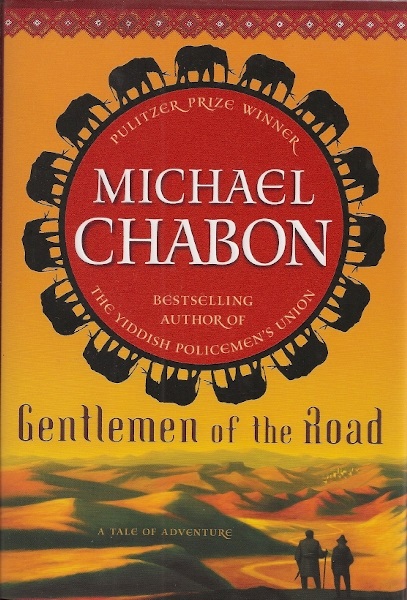
                • Gentlemen of the Road

                  Michael Chabon · standalone novel · 2007

                  similar byadventureadventurousour world

                  Gentlemen of the Road is a 2007 serial novel by American author Michael Chabon. It is a "swashbuckling adventure" set in the khaganate of Khazaria around AD 950. It follows two Jewish bandits who become embroiled in a rebellion and a plot to restore a displaced Khazar prince to the throne.

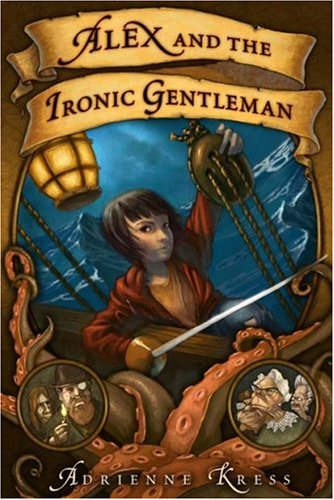
                • Ironic Gentleman

                  series · 2 books · 2007

                  similar byadventureadventurouspirates+1 more

                • Daughter of the Deep

                  Rick Riordan · standalone novel · 2021

                  similar byadventureadventurousour world

                  Daughter of the Deep is a middle grade fantasy-adventure novel by Rick Riordan. It was published on October 26, 2021, by Disney-Hyperion, and entered The New York Times Best Seller list.

                • Thunderbirds

                  series · 23 books · 1966

                  similar byadventureadventurousour worldtense

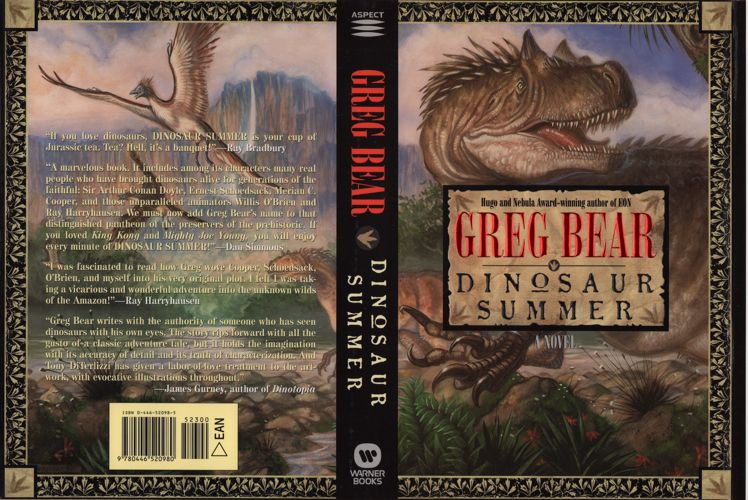
                • Dinosaur Summer

                  Greg Bear · standalone novel · 1998

                  similar byadventureadventuroustense

                  From the flaps of the Warner first edition: "It's the year 1947, and nobody's interested in dinosaurs anymore. Less than fifty years after Professor Challenger's famed journey to the Lost World, America's last dinosaur circus is closing down... but the adventure of a lifetime is about to begin. In a dramatic change of pace, multiple Hugo and Nebula award-winning science fiction master Greg Bear, ... presents a lavishly illustrated thriller that is certain to become a new classic adventure beyond time... Peter Belzoni is dreading summer in Manhattan. Then his father, photojournalist Anthony Belzoni, offers the youth a job, a byline in National Geographic... and a trip to South America. For the Lothar Gluck Circus, once the world's foremost dinosaur attraction, had gone bankrupt. Left behind is a menagerie of avisaurs, centrosaurs, and ankylosaurs, as well as one large predatory raptor named Dagger. And now two filmmakers and the circus trainer plan to return the giants to the wild - with Peter and his dad chronicling the odyssey for Geographic. The task seems impossible. Many have died trying to bring beasts our of the Lost World, the plateau of El Grande in Venezuela, but nobody has ever attempted to transport nearly a dozen full-grown, multiton prehistoric creatures across continents, down rivers, through jungles, and up mountains that has been isolated for 70,000,000 years... The trek will strain the technologies of trains, cargo ships, barges, trucks... en route lurk robbers and hostile, trigger-happy soldiers... and each mile toward freedom excites Dagger toward an unstoppable primal killing frenzy. When the unthinkable threatens to strand Peter and the rest of the crew in an uncharted realm, four modern Americans will face all the unknown dangers, mysteries, and terrors of El Grande..."

                • TL
                  The Lighthouse at the End of the World

                  Jules Verne · standalone novel · 1905

                  similar byadventureadventurouspiratestenseat sea

                  The Lighthouse at the End of the World is an adventure novel by French author Jules Verne. Verne wrote the first draft in 1901. The edited version was first published posthumously in 1905. The unaltered original manuscript was published in 1999. The plot of the novel involves piracy in the South Atlantic during the mid-19th century, with a theme of survival in extreme circumstances, and events centering on an isolated lighthouse. Verne was inspired by the real lighthouse at the Isla de los Estados, Argentina, near Tierra del Fuego and Cape Horn.