Loreful
HomeDiscover
Search series, authors…⌘K
Loreful

Reading orders for SF/F series and shared universes — with your place kept in every one.

Explore

UniversesSeriesWorksAuthorsAtlas

Help

FAQAboutSite map

Account & legal

Sign inCreate accountPrivacyTerms

Data

Built on ISFDB, Wikipedia, Wikidata and Open Library. Curated reading orders carry their reasoning on the page; the rest follow publication order. Data sources & licenses

© Loreful · data: ISFDB · CC BY

More like The Philosopher's Apprentice

anchored on:science fictiongenetic engineeringcontemporaryliterary & generalamnesiaidentity+2 more

but

Mood

The mood the book leaves you in.

  • The reading experience is propelled by journeys, exploration, and physical risk; excitement and forward momentum dominate over dread or introspection.
  • Joy and loss are deliberately mixed; the resolution grants characters something real while taking something else away, leaving warmth and sorrow together.
  • The book demands work from the reader — dense prose, difficult structure, unfamiliar ideas, or morally uncomfortable material — as part of its intended effect.
  • Grim events, cruelty, or despair dominate the atmosphere, and the book does not soften them with comfort or comic relief.
  • The atmosphere is quietly unsettling — wrongness, unease, and the uncanny pervade the book without necessarily escalating into overt horror.
  • The book is built to move the reader; character feeling is foregrounded and major scenes aim at a strong emotional response.
  • Humor is a primary aim and the prose plays for laughs — comic situations, wit, or dialogue produce sustained comedy, not occasional levity.
  • The book insists that things can improve; effort and decency are shown to matter, and the arc bends toward better outcomes even through hardship.
  • The book teaches as it goes — real facts, history, science, or craft are conveyed in enough depth that learning is part of the reading experience.
  • The book is designed to uplift and motivate, presenting perseverance or achievement in a way that invites the reader to aspire or act.
  • The overall register is cheerful and easygoing; stakes are kept gentle and the book avoids dwelling on pain or dread.
  • Withheld information drives the experience; the book sustains enigmas and secrets the reader wants resolved, whatever its genre.
  • The book is contemplative and inward-looking, giving more weight to thought, memory, and meaning than to external events.
  • The book works as comfort reading — low tension, a soothing pace, and an atmosphere the reader can unwind in.
  • Grief, loss, or melancholy set the dominant register, and the book lets sorrow stand rather than resolving it into comfort.
  • Sustained suspense is the point; the book keeps the reader braced for what happens next through danger, pressure, or impending revelation.
  • Playful invention and charm define the register — fanciful conceits, light absurdity, and a narration that delights in its own oddity.

About

What the story runs on.

  • Stories in which extraterrestrial beings are central — as characters, cultures, or the object of the plot.
  • Stories structured as a quest — a journey undertaken to find, deliver, or destroy something of great import.
  • Stories in which staying alive against nature, catastrophe, or scarcity is the central problem.
  • Stories of lovers kept apart by law, family, faith, or station, where the obstacle to love is the plot.
  • Stories in which a friendship — its making, testing, or loss — is the emotional center.
  • Stories of growing up — a young protagonist crossing from childhood into adult knowledge and responsibility.
  • Stories about who a character truly is — self-discovery, doubled lives, and the search for a self.
  • Stories about mourning — living through the death of a loved one and what loss does to the survivors.
  • Stories in which a buried family truth — hidden parentage, crimes, or shames — surfaces and reorders the present.
  • Stories driven by maneuvering for power — factions, conspiracies, and statecraft conducted in shadow.
  • Stories in which war itself is the subject — combat, occupation, and what warfare does to soldiers and civilians.
  • Stories organized around investigating a killing — the case, the clues, and the pursuit of the killer, in any genre's clothing.

Shelf

Where it sits in the library.

    • Fiction built on magic or other supernatural elements that have no scientific explanation.
    • Secondary-world fantasy at large scale, where the fate of nations or the world turns on the protagonists' struggle.
    • Fantasy set in a recognizably modern city or contemporary world where the supernatural intrudes on everyday life.
    • Fantasy that blends in horror's atmosphere and imagery, keeping a fantastical frame around grim or frightening material.
    • Action-driven fantasy following warriors or rogues with personal stakes against sorcerous threats, rather than world-spanning conflicts.
    • Fantasy set in a real historical period or a close analogue of one, with magic woven into the era.
    • Fantasy in which protagonists cross from the ordinary world into another world through a portal or similar passage.
    • Fiction that retells or reworks a traditional fairy tale in a new form or setting.
    • Fantasy drawing directly on myths, legends, and folklore, retelling them or building on their figures and logic.
    • Fantasy of ghosts, vampires, shapeshifters, psychics, and similar phenomena, usually set in an otherwise ordinary world.
    • Fiction mixing science-fictional trappings with overtly magical or impossible elements in one setting.
    • Low-stakes fantasy emphasizing comfort, community, and everyday pleasures over conflict and peril.
    • Speculative fiction of pervasive moral ambiguity, violence, and cynicism that rejects heroic conventions — fantasy and SF alike.
      • Fiction that extrapolates from science and technology — future societies, space travel, or speculative inventions — within at least nominally natural laws.
      • Science fiction of interstellar scope — starships, galactic polities, and adventure across star systems.
      • Science fiction committed to scientific rigor, where technical plausibility constrains the story.
      • Science fiction centered on armed forces and warfare, told largely from a military point of view.
      • Science fiction of networked, corporate-dominated near futures, pairing high technology with social decay.
      • Science fiction styled on nineteenth-century steam-powered technology, often in a Victorian or pseudo-Victorian setting.
      • Fiction depicting an oppressive or catastrophic society, presented as a warning.
      • Fiction set after civilization's collapse, following survivors in the ruins of the old world.
      • Fiction in which characters move between past and future, and the mechanics or consequences of that travel drive the plot.
      • Fiction exploring a world where a historical event went differently and history diverged from ours.
      • Science fiction about humanity's first encounter and communication with an alien intelligence.
      • Science fiction in which extraterrestrial forces attack or occupy Earth and humanity resists.
      • Fiction whose primary aim is to frighten or unsettle the reader through dread, menace, or the monstrous.
      • Horror of vast, indifferent, incomprehensible entities before which humanity is insignificant, in the Lovecraft tradition.
      • Horror of decaying houses, buried family secrets, and oppressive atmosphere in the Gothic literary tradition.
      • Horror centered on hauntings and the returning dead.
      • Horror located in the mind — paranoia, obsession, and unreliable perception rather than external monsters.
      • Horror built around the reanimated dead and survival amid their outbreaks.
      • Horror defined by explicit, transgressive gore that refuses to cut away from violence.
      • Speculative fiction of the strange and uncanny that resists both natural explanation and standard genre categories.
      • Fiction organized around solving a crime or puzzle, typically following an investigator toward the identification of a culprit.
      • A puzzle-first mystery that lays out clues so the culprit's identity can be deduced before the reveal.
      • Crime fiction of moral ambiguity, fatalism, and hard-edged style, set among the corrupt and the doomed.
      • A mystery following the realistic routines of police work — forensics, interviews, and case-building.
      • A gentle mystery with an amateur sleuth, a small community, and violence kept off the page.
      • A mystery set in a past era, where the investigation works within that period's methods and society.
      • Fast-paced fiction driven by imminent danger, pursuit, or high-stakes conspiracy, built to sustain tension.
      • A thriller of espionage — agents, tradecraft, and intelligence services in conflict.
      • A thriller centered on lawyers and the courtroom, where litigation carries the suspense.
      • A thriller driven by detailed contemporary or near-future technology, often military or scientific.
      • A thriller whose tension comes from mental states and manipulation between characters rather than external action.
      • Fiction whose central plot is a romantic relationship and its development toward an emotionally satisfying resolution.
      • Romance in which one or both partners are supernatural beings, blending fantasy elements into the love story.
      • A fantasy-romance hybrid in which the romantic arc and the fantasy plot carry equal weight.
      • Romance set in a past era, with courtship shaped by the period's society and manners.
      • Romance set in the present day, without supernatural or historical elements.
      • Fiction set in a real past period, where the historical setting materially shapes characters and events.
        • General and literary fiction emphasizing prose style, character interiority, or formal ambition over genre plot conventions.
        • Fiction in a realistic world where magical events occur and are treated as ordinary, in the tradition of Latin American literature.
        • Fiction that ridicules people, institutions, or society in order to criticize them.
        • Fiction of dreamlike, irrational imagery and logic that breaks from realistic representation.
        • Fiction that plays with narrative convention through metafiction, fragmentation, and self-reference.
        • Fiction propelled by journeys, exploration, and physical peril, where action and survival carry the plot.
        • Adventure fiction of ships and seafaring — naval engagements, voyages, and life at sea.
        • Fiction of the American frontier West — gunmen, ranchers, and lawmen, typically in the late nineteenth century.
        • Fiction centered on soldiers, campaigns, and the experience of warfare, historical or imagined.
          • Fiction written primarily to amuse, using comedic situations, wit, or parody as its organizing principle.
            • Multi-generational fiction following a family or dynasty across decades, with inheritance and kinship as the through-line.
              • Fiction whose world runs on explicit game mechanics — levels, stats, and skills that characters can see and exploit.
                • Fiction about costumed or superpowered heroes and their conflicts with comparable villains.

                Practical

                How long a commitment, whether it stands alone, and whether it has finished.

                Tap a chip to ask for it · tap again to rule it out · once more to clear. Numbers show what would be left.

                • Cover of Dhalgren
                  Dhalgren

                  Samuel R. Delany · standalone novel · 1975

                  similar bychallengingcontemporaryscience fictionliterary & generalnorth americaidentity+1 more

                  Dhalgren is a 1975 science fiction novel by American writer Samuel R. Delany. It features an extended trip to and through Bellona, a fictional city in the American Midwest cut off from the rest of the world by an unknown catastrophe. It is number 33 on the 20th Century's Greatest Hits: 100 English-Language Books of Fiction list.

                • Cover of Stranger in a Strange Land
                  Stranger in a Strange Land

                  Robert A. Heinlein · standalone novel · 1961

                  similar byscience fictionchallengingnorth americareflectiveidentitycoming of age

                  Stranger in a Strange Land is a 1961 science fiction novel by the American author Robert A. Heinlein. It tells the story of Valentine Michael Smith, a human who comes to Earth in early adulthood after being born on the planet Mars and raised by Martians, and explores his interaction with and eventual transformation of Terran culture.

                • Cover of Flowers for Algernon
                  Flowers for Algernon

                  Daniel Keyes · standalone novel · 1966

                  similar bycontemporaryscience fictionnorth americagenetic engineeringidentitycoming of age

                  A man with a low IQ becomes the subject of an experimental medical procedure which raises his IQ well over genius level.

                • Cover of Breakfast of Champions
                  Breakfast of Champions

                  Kurt Vonnegut & Jr. · standalone novel · 1973

                  similar bychallengingcontemporaryliterary & generalnorth americaidentity+1 more

                  The author decides to liberate the characters he created, including an author who decides to try to help a mentally ill reader who was driven over the edge by the book's assertion that he was the only creature with free will in a universe of preprogrammed automatons.

                • Cover of Half Life
                  Half Life

                  Shelley Jackson · standalone novel · 2006

                  similar bychallengingcontemporarygenetic engineeringscience fictionliterary & generalnorth americaidentity+1 more

                  Half Life is the 2006 debut novel of American writer and artist Shelley Jackson. The novel presupposes an alternate history in which the atomic bomb resulted in a genetic preponderance of conjoined twins, who eventually become a minority subculture.

                • Cover of VALIS
                  VALIS

                  series · 4 books · 1981

                  completed

                  similar bychallengingscience fictionreflectiveidentity+3 more

                  The VALIS trilogy is a set of science fiction/philosophical novels by author Philip K. Dick which include VALIS (1981), The Divine Invasion (1981), and The Transmigration of Timothy Archer (1982). Dick's first novel about the VALIS concept originally titled "VALISystem A", was published as Radio Free Albemuth after Dick's death in 1985.

                • Cover of Generosity: An Enhancement
                  Generosity: An Enhancement

                  Richard Powers · standalone novel · 2009

                  similar bychallengingcontemporaryscience fictionliterary & generalnorth americareflectivegenetic engineeringidentity

                  Generosity: An Enhancement is the tenth novel by American author Richard Powers. Like other Powers novels it is idea-driven, strongly focusing on social alienation and scientific progress. The novel employs metafiction, including real-time intrusions by the narrator who explicitly sets the novel in a "parallel" Chicago.

                • Cover of Whileaway
                  Whileaway

                  series · 4 books · 1972

                  completed

                  similar bychallengingscience fictioncontemporaryreflective+2 more

                  Joanna Russ's The Female Man (1975) is a single feminist science fiction novel, not a multi-book series, built around four women from parallel timelines with very different gender arrangements. One of them, Janet, comes from Whileaway, an all-female utopian Earth ten centuries in the future where men died out in a plague; the other three come from realities closer to Russ's own, and their collisions are used to interrogate what womanhood and equality could mean under different social rules.

                • Cover of The Dreaming Jewels
                  The Dreaming Jewels

                  Theodore Sturgeon · standalone novel · 1950

                  similar bycontemporaryscience fictiongenetic engineeringidentity+2 more

                  The Dreaming Jewels (1950), also known as The Synthetic Man, is a science fiction novel by American writer Theodore Sturgeon. It was his first published novel.

                • Cover of Dying Inside
                  Dying Inside

                  Robert Silverberg · standalone novel · 1972

                  similar bycontemporaryscience fictionnorth americareflectiveidentity

                  Dying Inside is a 1972 science fiction novel by American writer Robert Silverberg. It was first serialized in Galaxy in 1972 and published in book form by Charles Scribner's Sons later that year. The novel follows David Selig, a middle-aged telepath in contemporary New York City, as the mind-reading ability that has shaped his life begins to disappear.

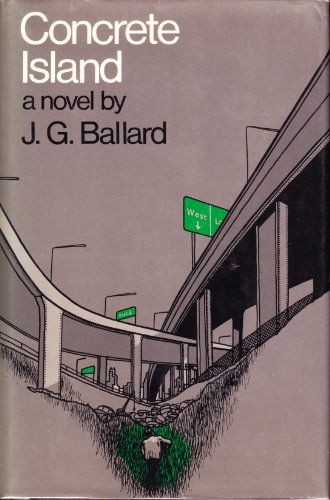
                • Cover of Concrete Island
                  Concrete Island

                  J. G. Ballard · standalone novel · 1974

                  similar bychallengingcontemporaryliterary & generalreflectiveidentity

                  Architect Robert Maitland crashes his car onto a stretch of wasteland trapped between three converging motorways -- visible from thousands of cars, reachable by none of them. Injured and unable to climb back to the road, Maitland adapts to life on what he starts calling the Island, scavenging food thrown from car windows, and discovers he isn't alone: a runaway sex worker hiding in a bunker, and a brain-damaged former circus acrobat, both long past expecting rescue. What begins as a survival story turns into a question of whether Maitland even wants to leave. A J. G. Ballard novel of urban isolation, grouped with Crash and High-Rise.

                • Cover of Severance
                  Severance

                  Ling Ma · standalone novel · 2018

                  similar bycontemporaryscience fictionliterary & generalnorth americareflectiveidentity

                  Severance is a 2018 post-apocalyptic novel by Chinese American author Ling Ma. It follows Candace Chen, an unfulfilled Bible product coordinator, before and after an incurable infection slowly obliterates global civilization. Severance explores themes of nostalgia, modern office culture, monotony, and intimate relationships. The novel, Ma's debut, won the 2018 Kirkus Prize for Fiction and was included on many prominent Best Books of 2018 lists.

                • Cover of HARM
                  HARM

                  Brian W. Aldiss · standalone novel · 2007

                  similar bychallengingcontemporaryscience fictionliterary & generalidentity

                  "... a young writer of light fiction with a Muslim heritage has been arrested for no compelling reason. He is held as Prisoner B, in HARM ... and isolated. To evade this misery Prisoner B escapes - through his split personality - to a science fiction-like planet ruled by insects. But gradually the two worlds start to converge ..."

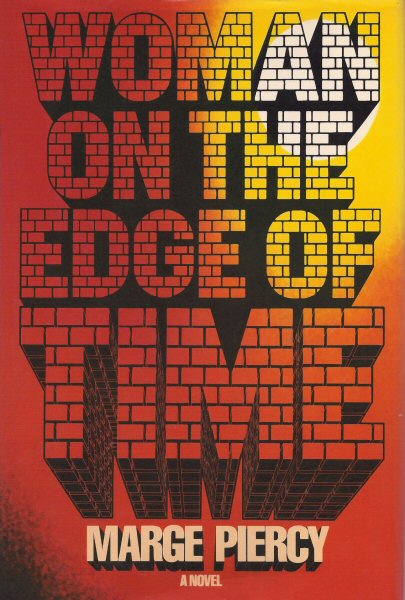
                • Cover of Woman on the Edge of Time
                  Woman on the Edge of Time

                  Marge Piercy · standalone novel · 1976

                  similar bychallengingcontemporaryscience fictionnorth america

                  Woman on the Edge of Time is a 1976 feminist science fiction novel by American writer Marge Piercy. The novel was originally published by Alfred A. Knopf. Piercy draws on several inspirations to write this novel such as utopian studies, technoscience, socialization, and female fantasies. One of Piercy's main inspirations for her utopian novels is Plato's Republic. Piercy describes the novel as, "if only…"

                • Cover of Things
                  Things

                  series · 3 books · 2002

                  completed

                  similar bycontemporaryliterary & generalnorth americaidentitycoming of age+2 more

                • Cover of The Satanic Verses
                  The Satanic Verses

                  Salman Rushdie · standalone novel · 1988

                  similar bychallengingcontemporaryliterary & generalidentity+1 more

                  The Satanic Verses is the fourth novel by British–Indian writer Salman Rushdie. First published in September 1988, the book was inspired by the life of the Islamic prophet Muhammad. As with his previous books, Rushdie used magical realism and relied on contemporary events and people to create his characters. The title refers to the Satanic Verses, a group of Quranic verses about three pagan Meccan goddesses: Allāt, Al-Uzza, and Manāt. The part of the story that deals with the satanic verses was based on accounts from the historians al-Waqidi and al-Tabari.

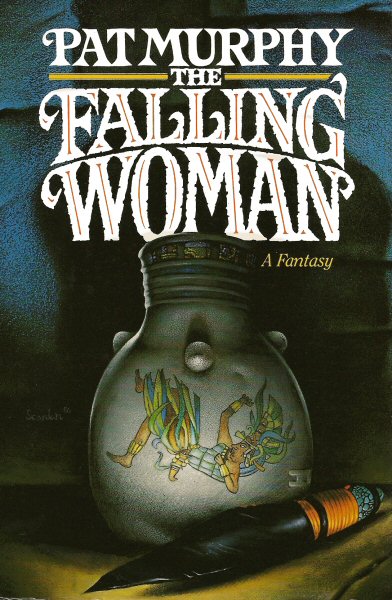
                • Cover of The Falling Woman
                  The Falling Woman

                  Pat Murphy · standalone novel · 1986

                  similar bycontemporaryliterary & generalnorth americareflectiveidentity+1 more

                  The Falling Woman is a 1986 contemporary psychological fantasy novel by Pat Murphy. The book won the Nebula Award for Best Novel in 1987.

                • Cover of The Terminal Experiment
                  The Terminal Experiment

                  Robert J. Sawyer · standalone novel · 1995

                  similar bycontemporaryscience fictionnorth americaidentity+1 more

                  The Terminal Experiment is a science fiction novel by Canadian writer Robert J. Sawyer. The book won the 1995 Nebula Award for Best Novel, and was nominated for the Hugo Award for Best Novel in 1996. Sawyer received a writer's reserve grant from the Ontario Arts Council in 1993 in support of his writing the novel.

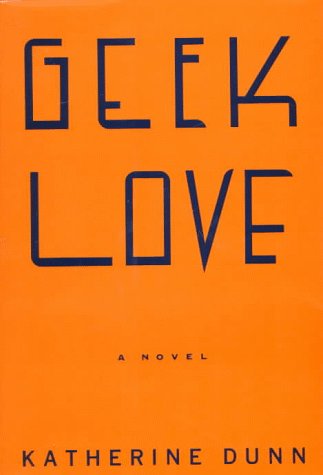
                • Cover of Geek Love
                  Geek Love

                  Katherine Dunn · standalone novel · 1989

                  similar bychallengingcontemporaryliterary & generalnorth americaidentity

                  Geek Love is a novel by American writer Katherine Dunn, published completely by Alfred A. Knopf in 1989. Dunn published parts of the novel in Mississippi Mud Book of Days (1983) and Looking Glass Bookstore Review (1988). It was a finalist for the National Book Award.

                • Cover of Venus Plus X
                  Venus Plus X

                  Theodore Sturgeon · standalone novel · 1960

                  similar bychallengingscience fictionreflectiveidentity+1 more

                  Charlie Johns wakes in a featureless silver room with no memory of how he got there and a watch that's inexplicably running backward. He's been brought, how and by whom is never explained to him, to Ledom, an isolated, technologically advanced society whose members are all both male and female and have done away with fixed sex roles entirely. Guides walk him through Ledom's customs and machinery while making clear he's there to judge them before he can go home. Interwoven with Charlie's tour are chapters following an ordinary mid-century American family, setting the utopia against the world it's implicitly critiquing. Theodore Sturgeon's provocative novel about gender and social design.

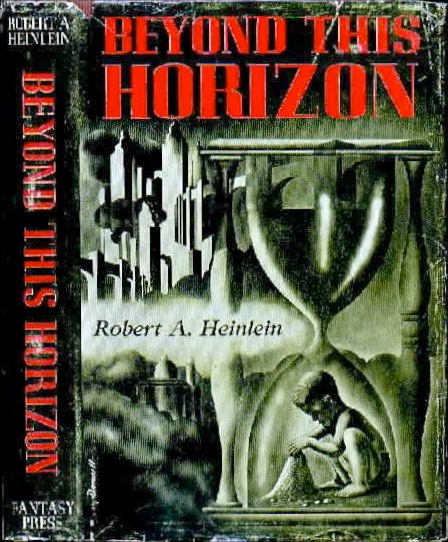
                • Cover of Beyond This Horizon
                  Beyond This Horizon

                  Robert A. Heinlein · standalone novel · 1948

                  similar byscience fictiongenetic engineeringnorth americareflective+1 more

                  From the front flap of a 2001 Baen reprint: "Utopia has been achieved. For centuries, disease, hunger, poverty, and war have been things found only in the history tapes. And applied genetics has given men and women the bodies of athletes and a lifespan of over a century. They should all have been very happy... But Hamilton Felix is bored. And he is the culmination of a star line, each of his last thirty ancestors chosen for superior genes. Hamilton is, as far as genetics can produce one, the ultimate man. And this ultimate man can see no reason why the human race should survive, and has no intention of continuing the pointless comedy. However, Hamilton's life is about to become less boring. A secret cabal of revolutionaries who find utopia not just boring, but desperately in need of leaders who know just What Needs to be Done, are planning to revolt and put themselves in charge. Knowing of Hamilton's disenchantment with the modern world, they have recruited him to join their Glorious Revolution. Big mistake! The revolutionaries are about to find out that recruiting a superman was definitely not a good idea..."

                • Cover of Gladiator
                  Gladiator

                  Philip Wylie · standalone novel · 1930

                  similar byscience fictiongenetic engineeringnorth americaidentity+1 more

                  Gladiator is a science fiction novel by American author Philip Wylie, first published in 1930. The story concerns a scientist who invents an "alkaline free-radical" serum to "improve" humankind by granting the proportionate strength of an ant and the leaping ability of the grasshopper. The scientist injects his pregnant wife with the serum and his son Hugo Danner is born with superhuman strength, speed, and bulletproof skin. Hugo spends much of the novel hiding his powers, rarely getting a chance to openly use them.

                • Cover of Making History
                  Making History

                  Stephen Fry · standalone novel · 1996

                  similar bychallengingcontemporaryscience fiction+2 more

                  Making History (1996) is the third novel by Stephen Fry. Its plot involves the creation of an alternative historical timeline in which Adolf Hitler never existed. While most of the book is written in standard prose, a couple of chapters are written in the format of a screenplay. The book won the Sidewise Award for Alternate History.

                • Cover of Man in the Dark
                  Man in the Dark

                  Paul Auster · standalone novel · 2008

                  similar bycontemporaryliterary & generalnorth americareflectiveidentity+1 more

                  An insomniac makes up a story about a man transported to an alternate reality in which a US civil war erupted after the 2000 election.