More like The Plotters
anchored on:science fictioncontemporarytime travelpolitical intrigueadventurous
but
- The Future of Another Timeline
Annalee Newitzstandalone novel2019
similar bypolitical intrigueadventurouscontemporaryscience fictiontime travel
The Future of Another Timeline is a 2019 science fiction novel by Annalee Newitz. The feminist time-travel adventure follows Tess, a professional time traveler, geoscientist, and secretly a member of the Daughters of Harriet (Tubman), who are working to make the future better for women.
- The Moon Is a Harsh Mistress
Robert A. Heinleinstandalone novel1966
similar bypolitical intrigueadventurousscience fiction
A technician discovers that the massive computer that operates everything on Luna (a prison colony) has become self-aware. He befriends it, but when he accompanied a beautiful girl to a dissident meeting, he encounters people who want to throw off the yoke of their Earth rulers.
- D. O. D. O. (Department of Diachronic Operations)
series2 books2017
similar bypolitical intrigueadventurousscience fictiontime travel
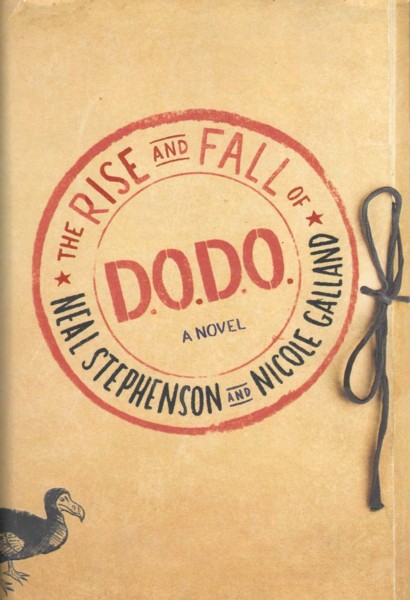
Neal Stephenson and Nicole Galland's D.O.D.O. novels center on the Department of Diachronic Operations, a covert U.S. government agency that discovers magic vanished from the world in the nineteenth century and sets out to use time travel to bring it back. The Rise and Fall of D.O.D.O. (2017) is followed by Master of the Revels, continuing the pair's earlier collaboration on The Mongoliad.
- Double Star
Robert A. Heinleinstandalone novel1956
similar bypolitical intrigueadventurousscience fiction
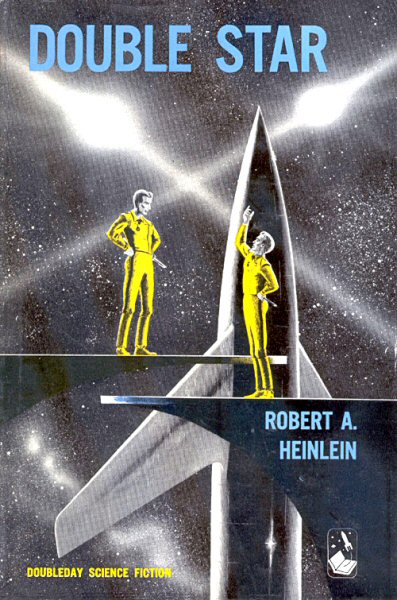
Lorenzo Smythe, the excellent yet unemployed actor, meets Dak Broadbent in a bar. Broadbent hires Lorenzo for an unspecified role, and hustles him onto a rocket ship. Broadbent turns out to be an assistant to the famous interplanetary politician and leader of the Expansionist party: John J. Bonforte. Bonforte, however, has been kidnapped by the political opposition on Mars, and due to Lorenzo's physical similarity to Bonforte, his staff wants Lorenzo to impersonate the politician for an important Martian ceremony.
- Podkayne of Mars
Robert A. Heinleinstandalone novel1963
similar bypolitical intrigueadventurousscience fiction
From the back cover of the Baen 1995 edition: "Meet Podkayne Fries, a thoroughly modern Martian Ms. who thinks that Earth is not really fit for habitation and that humanity evolved in the now-exploded Fifth Planet. Poddy has one goal in life, to be the first female starship captain. She has her strategy all scoped out, and with her determination, looks and I.Q. she'll get there, never you doubt! But all work and no play would make Poddy a Dull Girl, so when a chance comes her way to travel to distant Earth via Venus with her elderly uncle, Poddy jumps at it, even if it does mean having her loathsome little brother along for the trip: Travel, Adventure, the chance to cuddle up (in a nice way) with real spaceship officers and ruthlessly pump their brains - she'll have it all. What Poddy doesn't know is that "Unca Tom" is more than her warmly supportive relative: he is also the Ambassador Plenipotentiary from Mars to the Three Planets Conference (travelling not quite incognito enough) and that certain people will stop at nothing to gain control of his vote - including kidnapping and doing terrible things to sweetly innocent Poddy Fries..."
- Snow Crash
Neal Stephensonstandalone novel1992
similar bypolitical intrigueadventurousscience fiction
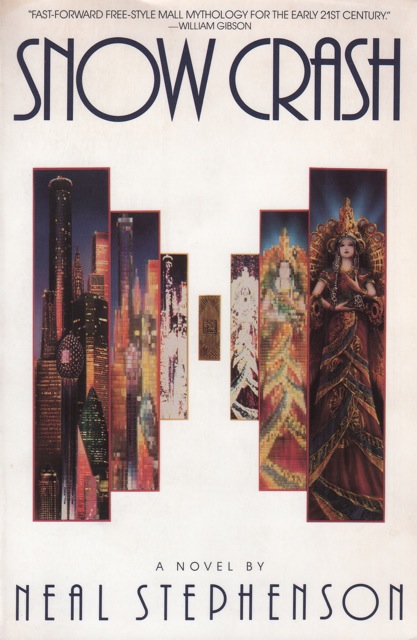
Snow Crash is a 1992 science fiction novel by Neal Stephenson. Like many of Stephenson's novels, its themes include history, linguistics, anthropology, archaeology, religion, computer science, politics, cryptography, memetics, and philosophy.
- Whipping Star
Frank Herbertstandalone novel1970
similar bypolitical intrigueadventurousscience fiction
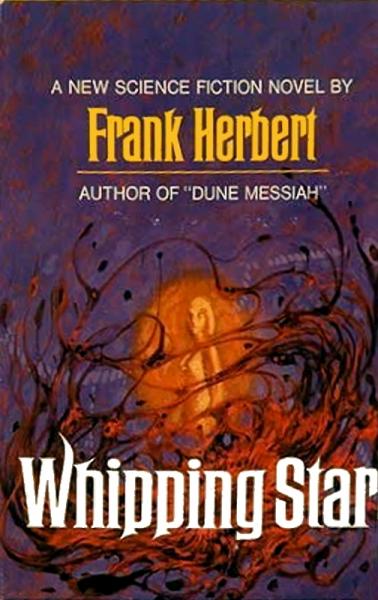
From Amazon: In the far future, humankind has made contact with numerous other species: Gowachin, Laclac, Wreaves, Pan Spechi, Taprisiots, and Caleban, and has helped to form the ConSentiency to govern among the species. After suffering under a tyrannous pure democracy, the sentients of the galaxy find the need for a Bureau of Sabotage (BuSab) to slow the wheels of government, thereby preventing it from legislating recklessly. BuSab is allowed to sabotage and harass the governmental, administrative, and economic powers in the ConSentiency. Private citizens must not be harassed, and vital functions of society are also exempt. Jorj X. McKie is a born troublemaker who has become one of BuSab's best agents. Drafted for the impossible task of establishing meaningful communication with an utterly alien entity who defies understanding, McKie finds himself racing against time to prevent a mad billionairess from wiping out all life in the ConSentiency.
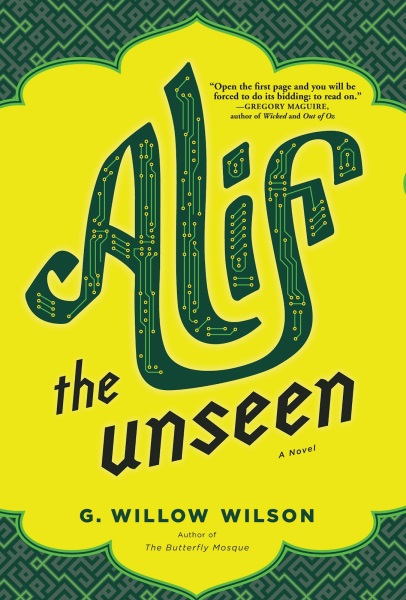
- Alif the Unseen
G. Willow Wilsonstandalone novel2012
similar bypolitical intrigueadventurouscontemporaryscience fiction
Alif the Unseen is a 2012 cyberpunk fantasy novel by American writer G. Willow Wilson. In the novel, a Middle Eastern hacker named Alif discovers a book of djinn tales which may lead to a new age of quantum computing. The novel won the 2013 World Fantasy Award for Best Novel.
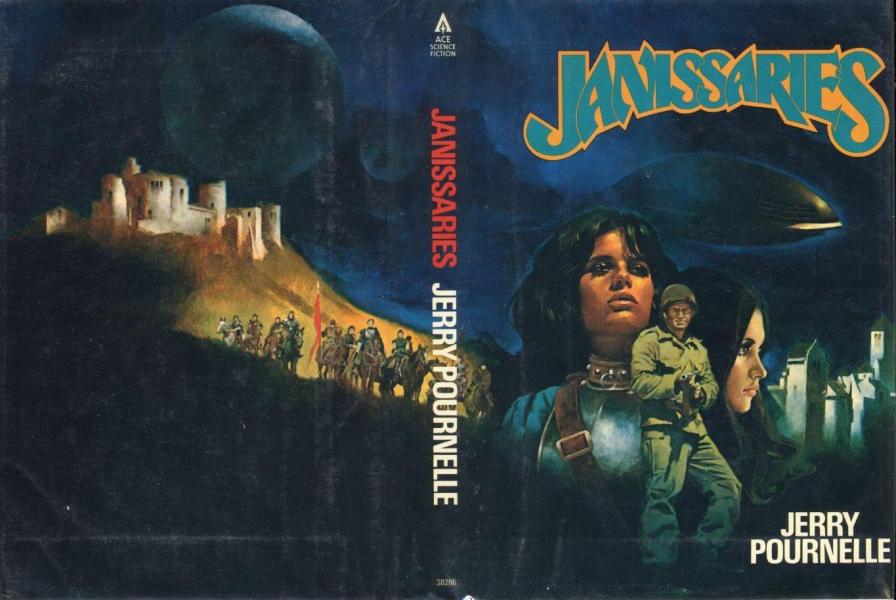
- Janissaries
series4 books1979
similar bypolitical intrigueadventurousscience fiction
Janissaries are an American series of military and political-based science fiction novels are set in an interstellar confederation of races, in which humans are a slave race entrusted with military affairs and law enforcement. They were written by Jerry Pournelle, with Roland J. Green co-authoring the second two books.
- Chanur
series7 books1982
part of Alliance-Union Universe
similar bypolitical intrigueadventurousscience fiction
The Chanur novels are a series of five science fiction novels, forming three separate stories, written by American author C. J. Cherryh and published by DAW Books between 1982 and 1992. The first novel in the series is The Pride of Chanur (1982), which was nominated for both the Hugo and Locus Awards in 1983. The Pride of Chanur, originally a stand-alone story, was followed by the Chanur's Venture trilogy, Chanur's Venture (1984), which was shortlisted for a Locus Award in 1985; The Kif Strike Back (1985) and Chanur's Homecoming (1986). These were followed by a later sequel, Chanur's Legacy (1992). The five novels were also published in two omnibus editions: the first three in The Chanur Saga in 2000 and the next two in Chanur's Endgame in 2007.
- The Algebraist
Iain M. Banksstandalone novel2004
similar bypolitical intrigueadventurousscience fiction
The Algebraist is a science fiction novel by Scottish writer Iain M. Banks, published in print in 2004. It was nominated for a Hugo Award for Best Novel in 2005.
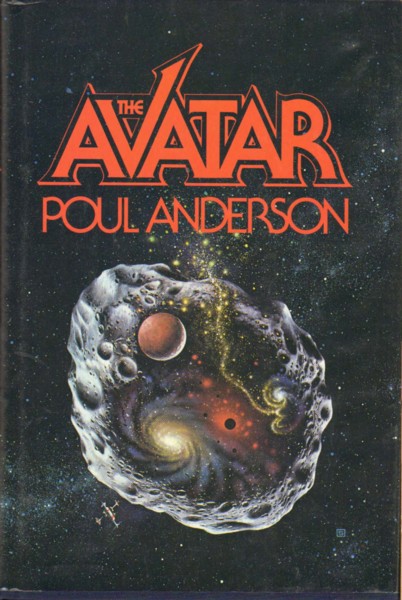
- The Avatar
Poul Andersonstandalone novel1978
similar bypolitical intrigueadventurousscience fiction
After humanity discovers portals that transport a space vessel through time and space, a crew which has visited the planet of another species returns to Earth, only to find a political faction in power which seeks to conceal this knowledge in the name of social stability. With the aid of the political opposition, they escape and journey through the portal in search of knowledge, and perhaps even to meet those who created the portal system.
- Sten
series11 books1982
completed
similar bypolitical intrigueadventurousscience fiction
The Sten Chronicles, also called The Sten Adventures, are a series of eight military science fiction and space opera novels by Chris Bunch and Allan Cole published from 1982 to 1993. The series was originally published by Del Rey and then re-released by Orbit.
- Imperial Galaxy
series2 books2012
similar bypolitical intrigueadventurousscience fiction
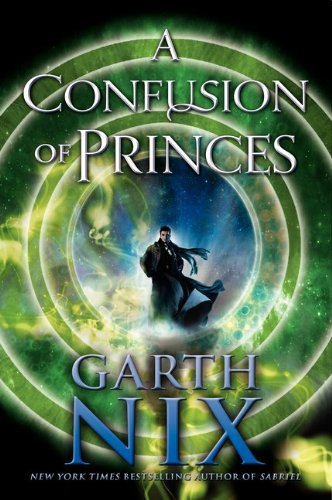
Prince Khemri has spent his life as one of ten thousand princes bred and trained by a sprawling galactic empire, expecting eventual rule -- until he learns just how disposable princes actually are, and how routinely they're assassinated by their own siblings. Garth Nix's A Confusion of Princes follows Khemri through the empire's ruthless military, its secret intelligence service, and a deadly, decades-long competition to determine who might one day take the throne. It's a single, self-contained space opera rather than an ongoing series.
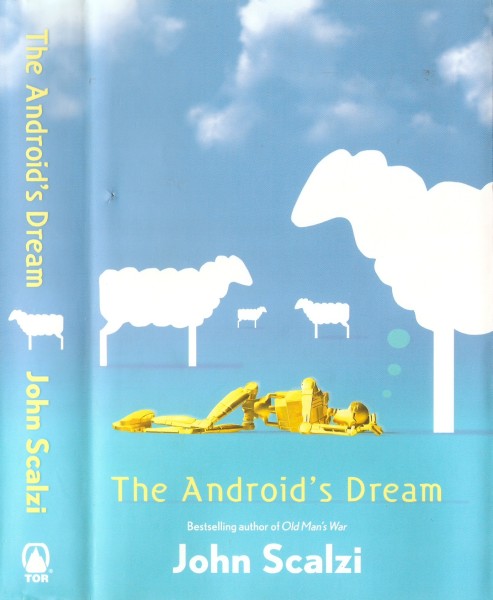
- The Android's Dream
series2 books2006
similar bypolitical intrigueadventurousscience fiction
A minor diplomatic insult with a genetically engineered sheep breed spirals into a full interstellar crisis when the last surviving specimen of the 'Android's Dream' breed, needed for a critical ceremony with the alien Nidu, turns out to have been hunted to extinction by a Nidu faction bent on provoking war. John Scalzi's The Android's Dream follows ex-soldier Harry Creek as the hunt for a replacement leads him to Robin Baker, an ordinary woman carrying hidden sheep DNA that makes her the key to avoiding a war. It's a standalone comic space opera rather than an ongoing series.
- Pattern for Conquest
George O. Smithstandalone novel1949
similar bypolitical intrigueadventurousscience fiction
Pattern for Conquest is a science fiction novel by American writer George O. Smith. It was published in 1949 by Gnome Press Reprinted circa 1952 in paper wrappers for distribution to US military personnel. Although a later printing, the first edition statement is retained on the copyright page. [Currey] isfdb Currey
- Wolfling
Gordon R. Dicksonstandalone novel1969
similar bypolitical intrigueadventurousscience fiction
From the flaps of the Baen/SFBC edition: "Is Earth merely the lost colony of a superior race? - She was well over six feet tall, and beautiful in a sculpted, abstract way. She had skin the color of white onyx, and her eyes... her eyes were large and feline - a startling lemon yellow in color. She was the Princess Afuan, one of the High-born, and she had chosen the Earthman Kim Keil to return to the Throne World with her - for she had decided that his performance in the bull-ring might amuse the Emperor. She didn't know that Jim was a bull-fighter only by virtue of six months' intensive training, nor that the bull was programmed - his behavior following and impressively fierce but unswerving pattern. Jim was just another wolfling to Afuan - a lesser being from a backward colony world. Jim, however, was keenly aware that he was playing a role, one which might prove to be extremely dangerous. Up until 10 years earlier, when their first ship had reached Alpha Centauri, the people of Earth hadn't even known that the vast Empire of human-occupied worlds existed. The discovery had been a profound shock. Had we evolved independently? Or were we merely descendants of the Empire's first space pioneers - a lost colony found at last, perhaps with devastating consequences? That's what Jim Keil had to find out. Chosen from among numerous highly qualified candidates - an anthropologist trained, mentally and physically, beyond the limits of his profession - it was his mission to observe the Throne World and the High-born... to determine whether or not they posed a threat to Earth. One thing was apparent from the start. The High-born were superior beings - physically taller and stronger than other humans, endowed with faster reflexes, superior mental capacity... and extraordinary technological resources. Their contempt for the new wolfling in their midst was open, their intrigues complex. An enormous gulf separated the people of the Throne World from Earthlings. But that gulf was not so wide that Jim couldn't recognize an enemy when he met one. Clearly, if he remained merely a passive observer of the High-born, he'd never survive among them."
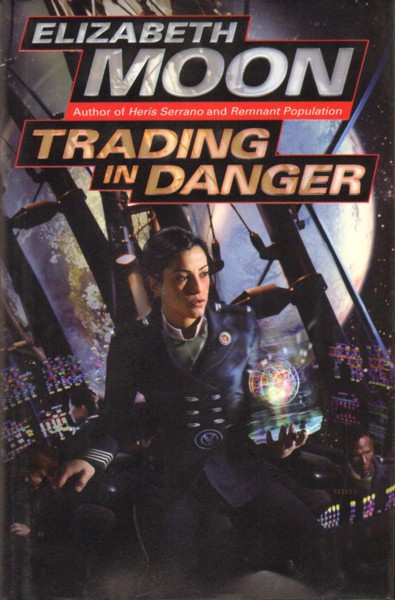
- Vatta's War
series6 books2003
part of Vatta
similar bypolitical intrigueadventurousscience fiction
Vatta's War is a science fiction series by American writer Elizabeth Moon, comprising five books: Trading in Danger (2003), Marque and Reprisal, Engaging the Enemy (2006), Command Decision (2007), and Victory Conditions (2008). They have been characterized as military science fiction similar in style to the works of Lois McMaster Bujold, David Weber and Walter Jon Williams.
- Hellhole
series3 books2011
similar bypolitical intrigueadventurousscience fiction
Brian Herbert and Kevin J. Anderson's Hellhole trilogy follows the settlers of a harsh penal-colony planet who discover it hides a far stranger secret beneath its surface, even as a former general turned governor plots rebellion against the ruling Constellation. Hellhole: Awakening and Hellhole: Inferno escalate both the political revolt and the planet's own hidden nature. It's an original setting for the two authors, separate from their Dune continuation work.
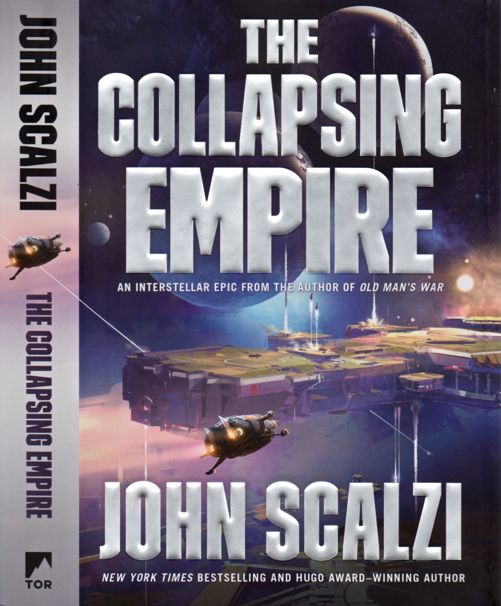
- The Interdependency
series3 books2017
similar bypolitical intrigueadventurousscience fiction
The Interdependency follows the collapse of a wormhole-linked network called the Flow that connects humanity's scattered, otherwise-uninhabitable colonies, forcing an emperox, a scientist studying the collapse, and a scheming trading family to confront a looming interstellar crisis. John Scalzi's trilogy, beginning with The Collapsing Empire, follows the political and personal fallout as the empire's foundations unravel.
- The Door Into Summer
Robert A. Heinleinstandalone novel1957
similar byadventurousscience fictiontime travel+1 more
From the first page of the Signet 6th printing: "An electronics engineer invents a wizard robot... only to find himself shanghaied by his ruthless partner and his gold-digging fiancee. The crafty pair forces him to submit to the "long sleep" - suspended animation for thirty years. But when he wakes up in the year 2000 A.D. the inventor makes a startling discovery. He learns that it is possible now to twist time forwards or backwards. And so he returns to the past bent on a mission... of revenge."
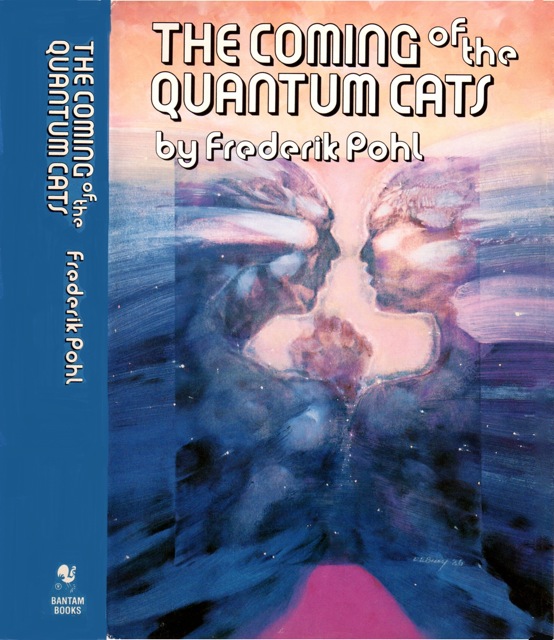
- The Coming of the Quantum Cats
Frederik Pohlstandalone novel1986
similar bypolitical intriguecontemporaryscience fiction+1 more
The Coming of the Quantum Cats is a 1986 science fiction novel by American writer Frederik Pohl. It was originally serialized in Analog science-fiction magazine, January–April 1986.
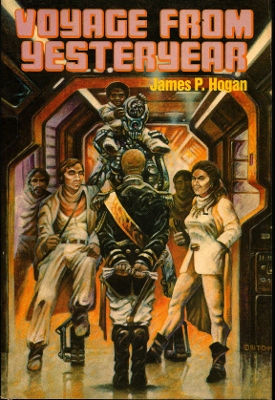
- Voyage from Yesteryear
James P. Hoganstandalone novel1982
similar bypolitical intrigueadventurousscience fiction
Voyage from Yesteryear is a 1982 science fiction novel by British writer James P. Hogan.
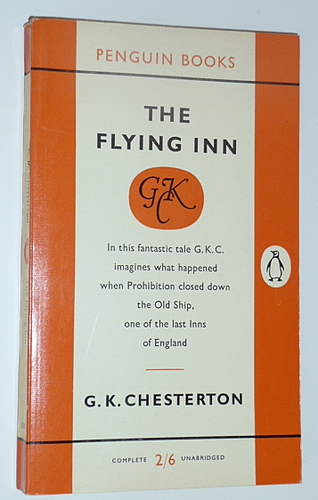
- The Flying Inn
G. K. Chestertonstandalone novel1914
similar bypolitical intrigueadventurous+1 more
The Flying Inn is a 1914 novel by English writer G. K. Chesterton. It is set in a future England where the temperance movement has allowed a bizarre form of Progressive Islam to dominate the political and social life of the country. Because of this, alcohol sales to the poor are effectively prohibited, while the rich can get alcoholic drinks "under a medical certificate". The plot centres on the adventures of Humphrey Pump and Captain Patrick Dalroy, who roam the country in their cart with a barrel of rum in an attempt to evade prohibition, exploiting loopholes in the law to temporarily prevent the police taking action against them. Eventually the heroes and their followers foil an attempted coup by an Islamic military force.