More like The Reply
anchored on:science fictionfirst contactaliensour worldnear futurespace exploration+1 more
but
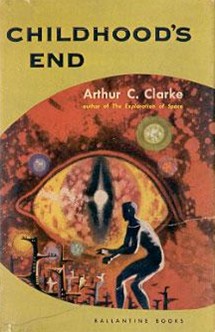
- Childhood's End
Arthur C. Clarkestandalone novel1953
similar byreflectivealiensour worldnear futurescience fictionfirst contact+1 more
Childhood's End is a 1953 science fiction novel by the British author Arthur C. Clarke. The story follows a peaceful alien invasion of Earth by mysterious Overlords, whose arrival begins decades of apparent utopia under indirect alien rule, at the cost of human identity and culture.
- Stranger in a Strange Land
Robert A. Heinleinstandalone novel1961
similar byreflectivealiensnear futurescience fictionfirst contactour world
Stranger in a Strange Land is a 1961 science fiction novel by the American author Robert A. Heinlein. It tells the story of Valentine Michael Smith, a human who comes to Earth in early adulthood after being born on the planet Mars and raised by Martians, and explores his interaction with and eventual transformation of Terran culture.
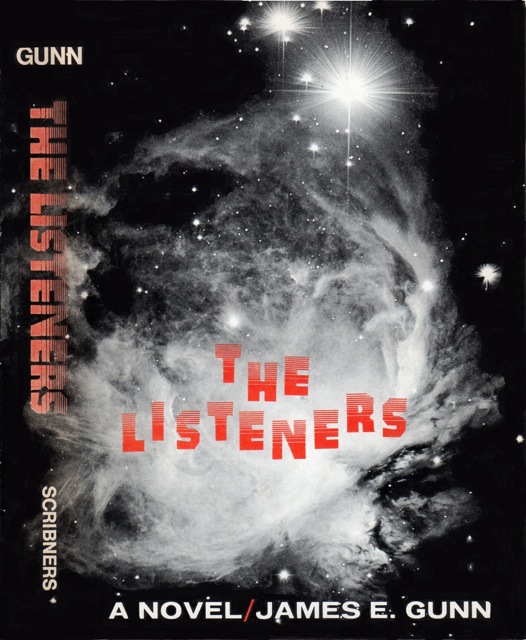
- The Listeners
series7 books1968
completed
similar byreflectivealiensnear futureour worldscience fictionfirst contactspace exploration
The Listeners is James E. Gunn's 1972 science fiction novel about a decades-spanning project searching for a signal from another civilization, and the toll that long, uncertain listening takes on the scientists and their families across generations. Structured as a linked sequence of episodes and documents rather than one continuous plot, it follows the project's staff more than any single hero. It stands as a single novel rather than a multi-book series.
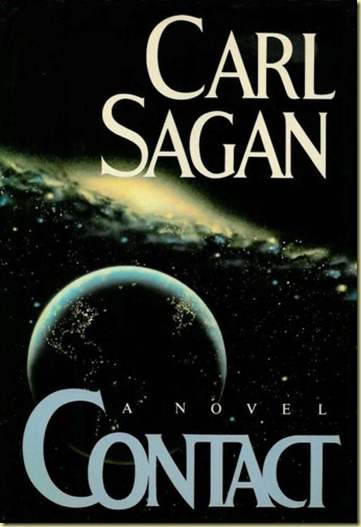
- Contact
Carl Saganstandalone novel1985
similar byreflectivealiensspace explorationscience fictionfirst contactour world
From the front flap of the Simon and Schuster first edition: For centuries humanity has dreamed of life and intelligence beyond the Earth; for decades scientists have searched for it in every corner of the sky; for years Project Argus, a vast, sophisticated complex of radio telescopes, has listened for a signal indicating the existence, somewhere in the universe, of extraterrestrial intelligence. Then, one afternoon, the course of human history is changed, abruptly and forever. The Message, awaited for so long, its very possibility doubted by so many, arrives. Contact has been made. Life, intelligence, someone, something beyond Earth, 26 light-years away, in the vicinity of the star Vega, is calling, beaming across space a wholly unexpected message to say that we are not - have never been - alone. In Contact, Carl Sagan, whose Cosmos enthralled millions of readers and television viewers, has brilliantly employed the freedom of fiction to imagine the greatest adventure of all - humanity's first encounter with other intelligent beings. But the novel is not only about contact between humans and extraterrestrials; it is also about contact, down here on Earth, with each other and ourselves. At its center is a brilliant scientist, Eleanor Arroway, director of Project Argos, who is the first to realize that chapter one of human history is over. It is she who is instrumental in decoding the Message - and in persuading world leaders not to treat it as a threat - she who finds her own life changed by the immense challenge of responding to the Message; she who finally journeys out to experience, in circumstances at once profoundly religious and scientific, the most fateful encounter in human history.
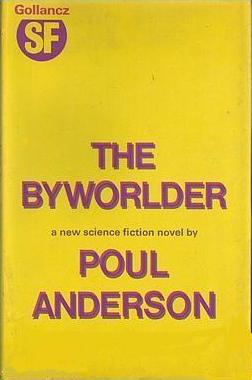
- The Byworlder
Poul Andersonstandalone novel1971
similar byreflectivealiensour worldnear futurescience fictionfirst contact
From the front flap of the Gregg Press edition: "In The Byworlder, Poul Anderson sings the praises of the byworlders, a counterculture people who try to do their own thing in a regimented, near-future society. One of the byworlders, Skip Wayburn (a sigaroon, or 21st-century version of a bohemian drifter, craftsman, musician, and artist) make an intuitive connection with the emissary aboard the first interstellar starship orbiting Earth, a breakthrough that has been eluding the best efforts of the scientific establishment for three years. Wayburn alone knows why the alien has come, but no one in the establishment will listen to the byworlder, despite his terrifying message. ... This first American hardcover edition includes a new introduction on The Byworlder by the author."
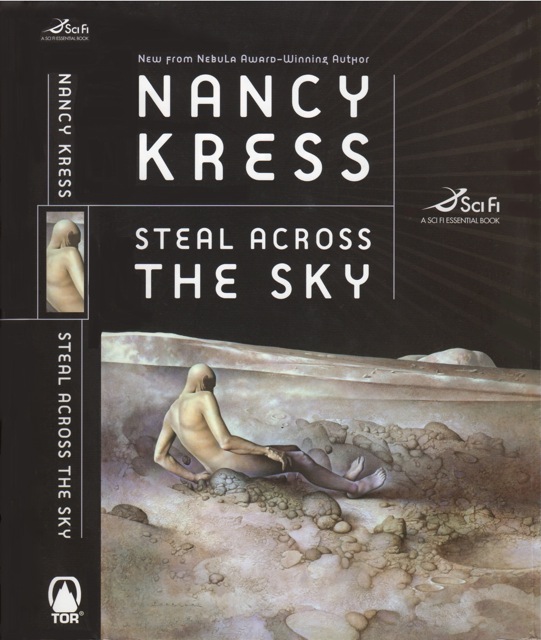
- Steal Across the Sky
Nancy Kressstandalone novel2009
similar byreflectivealiensnear futurespace explorationscience fictionfirst contact
The aliens appeared one day, built a base on the moon, and put an ad on the internet. At first, everyone thought it was a joke. But it wasn't. This is the story of three volunteers who answered that ad, and what they found on Kular A and Kular B.
- The Hercules Text
Jack McDevittstandalone novel1986
similar byreflectivealiensour worldspace explorationscience fictionfirst contact
The Hercules Text is a 1986 science fiction novel by American writer Jack McDevitt. It tells the story of a message of intelligent extraterrestrial origin received by SETI scientists. The Hercules Text was nominated for the Philip K. Dick Award in 1986.
- The Man Who Fell to Earth
Walter Tevisstandalone novel1963
similar byreflectivealiensour worldscience fiction+1 more
The Man Who Fell to Earth is a 1963 science-fiction novel by American writer Walter Tevis. Published by Gold Medal Books as a paperback original, it was Tevis's second novel, following The Hustler. The novel follows Thomas Jerome Newton, an extraterrestrial from the drought-stricken planet Anthea, who comes to Earth hoping to build a spacecraft that can save the surviving members of his species.
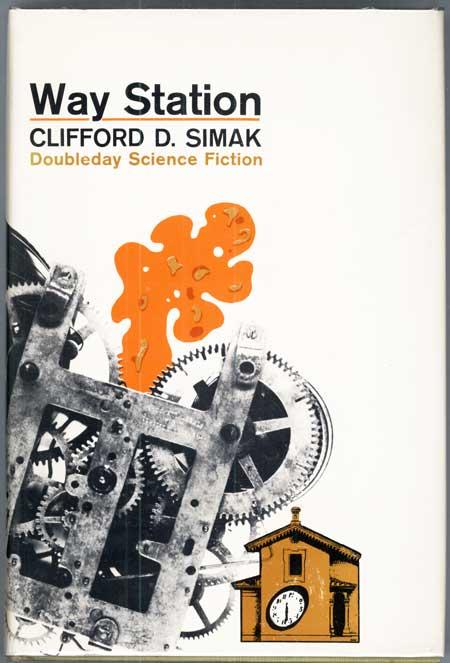
- Way Station
Clifford D. Simakstandalone novel1963
similar byreflectivealiensspace explorationscience fictionfirst contact
The human operator of a transfer station for aliens traveling between planets, kept secret from the human race, deals with discovery by the US government and interplanetary political crisis, as well as his own emotional issues.
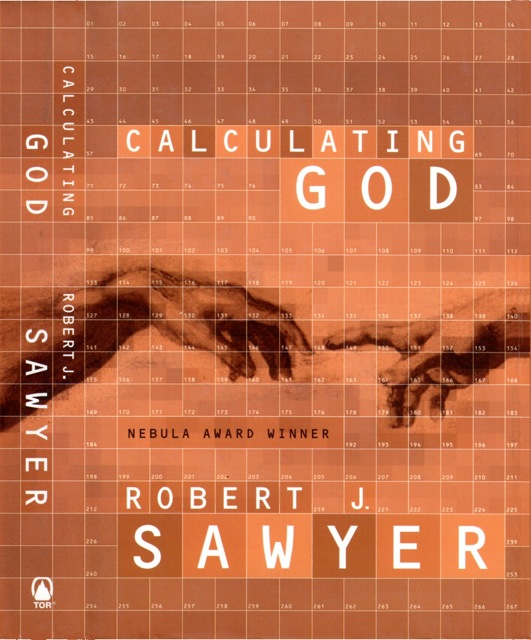
- Calculating God
Robert J. Sawyerstandalone novel2000
similar byreflectivealiensour worldscience fictionfirst contact
Calculating God is a 2000 science fiction novel by Canadian writer Robert J. Sawyer. It takes place in the present day and describes the arrival of sentient aliens on Earth. The bulk of the novel covers the many discussions and arguments on this topic, as well as the nature of belief, religion, and science. Several planetary civilizations illustrate the logical conclusion of the Fermi paradox.
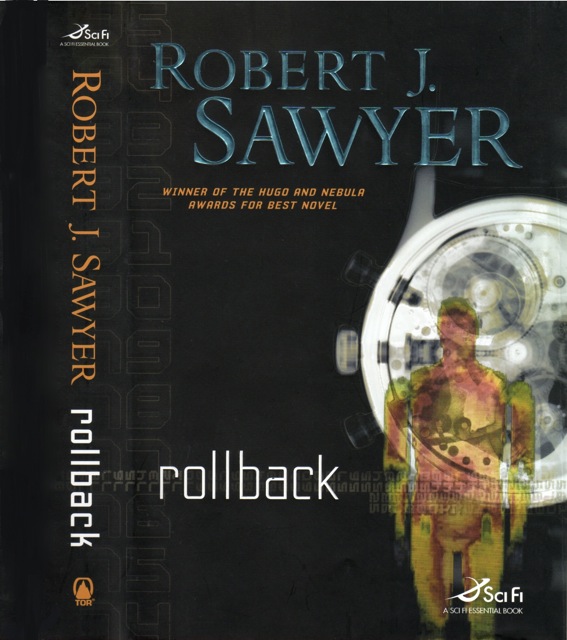
- Rollback
Robert J. Sawyerstandalone novel2007
similar byreflectiveour worldnear futurealiensscience fictionfirst contact
Rollback is a 2007 science fiction novel by Canadian author Robert J. Sawyer that was serialized in four parts in Analog Science Fiction and Fact from October 2006 to January 2007. It deals primarily with the social effects of drastic age rejuvenation technology and first contact theory. In 2008 the novel was nominated for a Hugo Award and a Campbell Award.
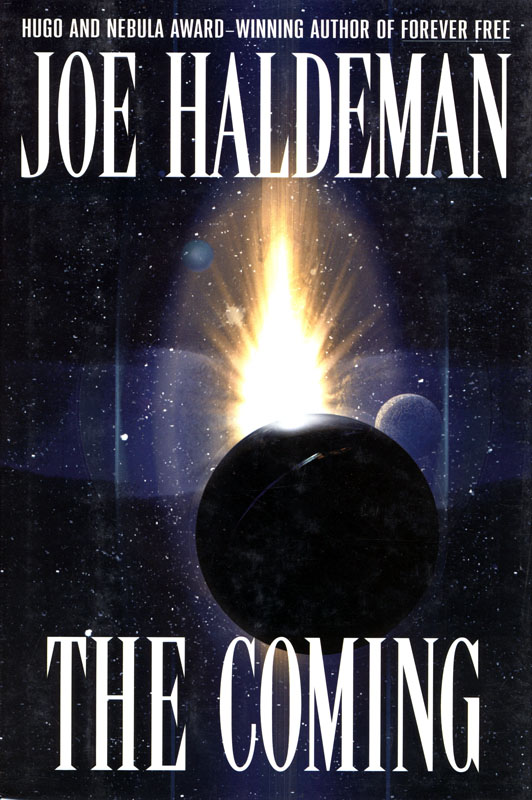
- The Coming
Joe Haldemanstandalone novel2000
similar byaliensour worldnear futurescience fictionfirst contact+1 more
An astronomy professor in Florida in a mid-21st century suffering from climate change and international hostilities detects an apparent interstellar vehicle headed directly for earth at near light speed but decelerating dramatically; it transmits the message "We're coming". The effect this discovery has on her, those close to her, and the surrounding circles of contacts is followed, as the impending event plays out on the larger stage of national and international affairs until it comes to an unpredictable ending. The dedication page says in part "The author gratefully acknowledges the influence of James Gunn's beautiful novel The Listeners, on this book."
- Brain Wave
Poul Andersonstandalone novel1954
similar byreflectiveour worldnear futurescience fiction+1 more
Brain Wave is a science fiction novel by American writer Poul Anderson, first published in serial form in Space Science Fiction in 1953, and then as a novel in 1954. Anderson had said that he could consider it one of his top five books. This is one of many science fiction works written at this time on the theme of heightened intelligence.
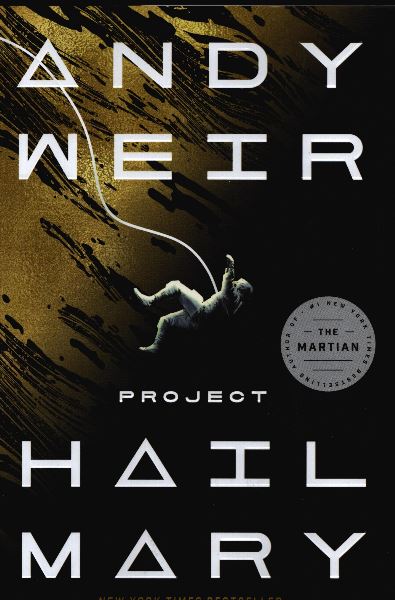
- Project Hail Mary
Andy Weirstandalone novel2021
similar bynear futurealiensspace explorationscience fictionour worldfirst contact
Project Hail Mary is a 2021 hard science fiction novel by American writer Andy Weir. It centers on science teacher and former biologist Ryland Grace, who wakes up aboard a spacecraft, afflicted with amnesia.
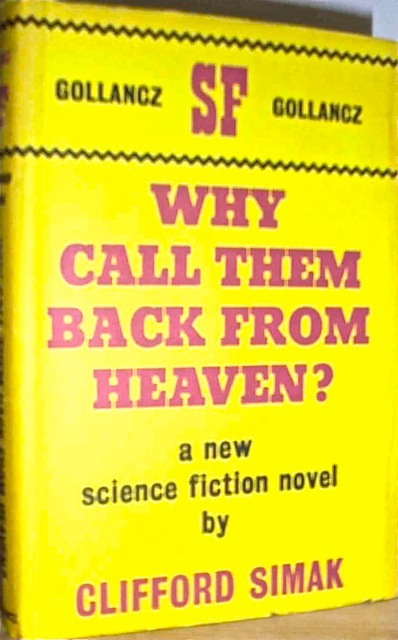
- Why Call Them Back from Heaven?
Clifford D. Simakstandalone novel1967
similar byreflectiveour worldnear futurescience fiction+1 more
Why Call them Back From Heaven? is a 1967 science fiction novel by American writer Clifford D. Simak. It was the initial volume in the Ace Science Fiction Specials line.
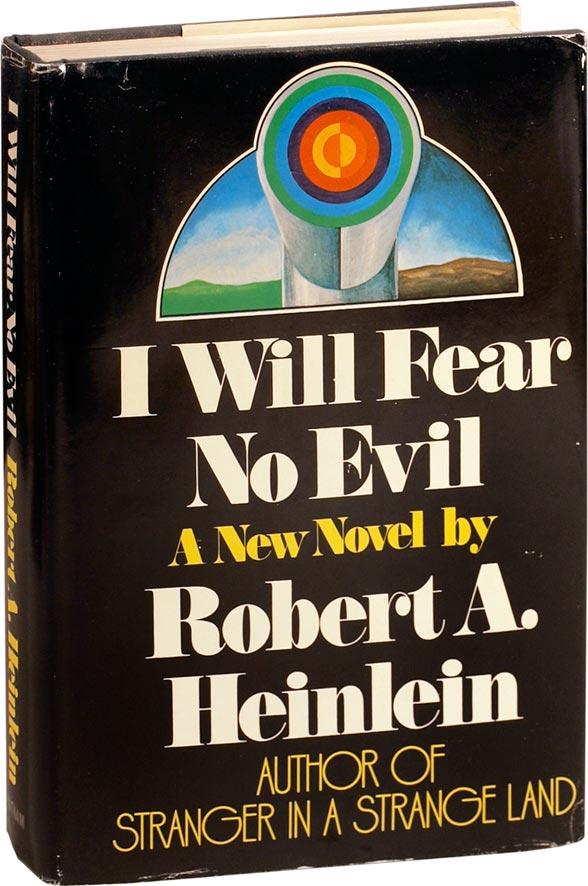
- I Will Fear No Evil
Robert A. Heinleinstandalone novel1970
similar byreflectivenear futurescience fictionour world
I Will Fear No Evil is a science fiction novel by American writer Robert A. Heinlein, originally serialised in Galaxy and published in hardcover in 1970. The title is taken from Psalm 23:4.
- The Star Beast
Robert A. Heinleinstandalone novel1954
similar byaliensour worldnear futurescience fictionfirst contact
A talking alien pet has grown to the size of a small dinosaur. She repeatedly gets her teenage owner in trouble whenever she leaves the backyard, but he continues to care for her, as did his father and grandfather before him. When an alien delegation lands on Earth and demands custody, he fights to protect her.
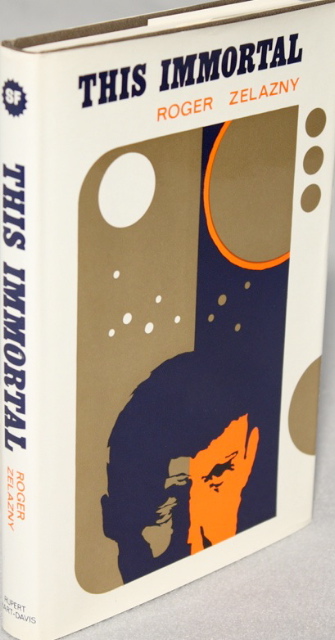
- This Immortal
series2 books1966
similar byreflectiveour worldaliensscience fiction
This Immortal is a single science fiction novel by Roger Zelazny, expanded from his 1965 serial ...And Call Me Conrad. In a depopulated future Earth largely toured by an alien race, its long-lived, secretive protagonist Conrad Nomikos is assigned to guide and protect a visiting alien across the ruins of Greece and Egypt, uncovering old grudges and assassination plots along the way. The novel shared the 1966 Hugo Award for Best Novel with Frank Herbert's Dune.
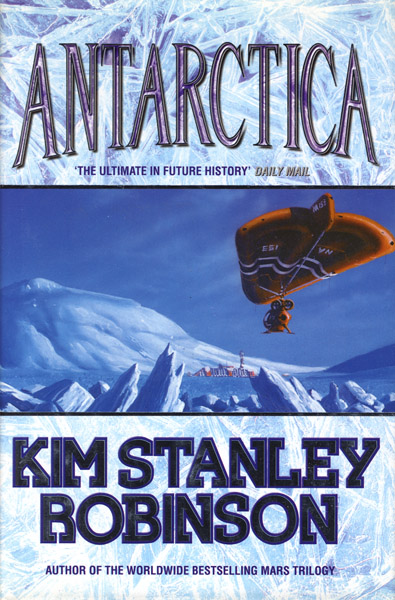
- Antarctica
Kim Stanley Robinsonstandalone novel1997
similar byreflectiveour worldnear futurescience fiction
Antarctica (1997) is a science fiction novel by American writer Kim Stanley Robinson. It deals with a variety of characters living at or visiting an Antarctic research station. The novel incorporates many of Robinson's frequent themes, including scientific process and the importance of environmental protection.
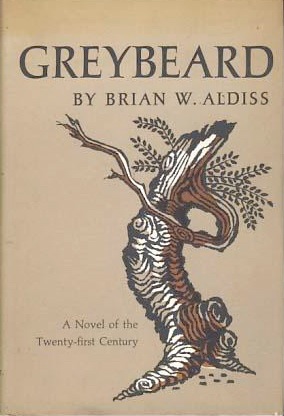
- Greybeard
Brian W. Aldissstandalone novel1964
similar byreflectiveour worldnear futurescience fiction
Long after a catastrophe that has sterilized humans and most other mammals, the 54-year-old protagonists—Greybeard and Martha—take a tour of entropic England. In scattered self contained communities only the old survive, while outside these enclaves nature comes back into its own, peopling the land with new animal life.
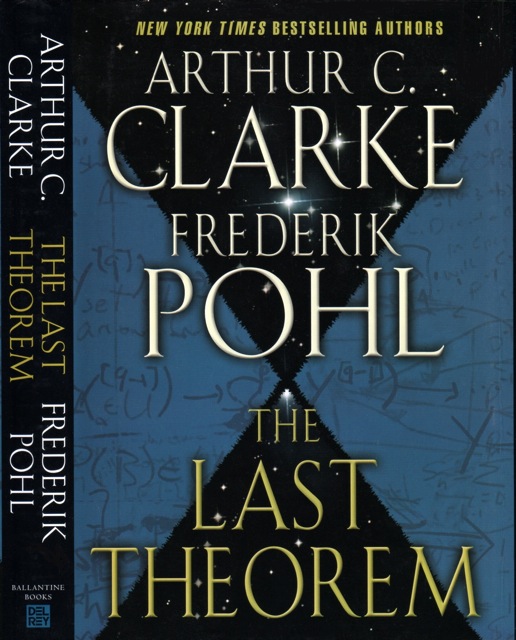
- The Last Theorem
Arthur C. Clarke & Frederik Pohlstandalone novel2008
similar byaliensour worldnear futurescience fictionfirst contact
The Last Theorem is a 2008 science fiction novel by Arthur C. Clarke and Frederik Pohl. It was first published in the United Kingdom by HarperVoyager in July 2008, and in the United States by Del Rey Books in August 2008. The book is about a young Sri Lankan mathematician who finds a short proof of Fermat's Last Theorem, while an alien invasion of Earth is in progress.
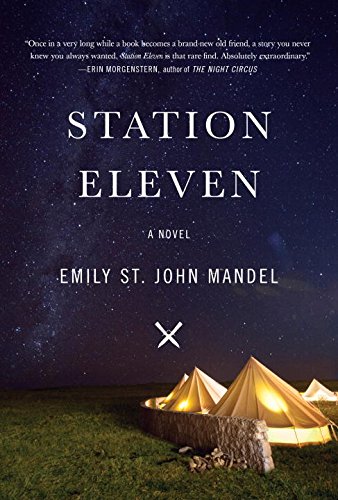
- Station Eleven
Emily St. John Mandelstandalone novel2014
similar byreflectiveour worldnear futurescience fiction
"Set in the days of civilization's collapse, Station Eleven tells the story of a Hollywood star, his would-be savior, and a nomadic group of actors roaming the scattered outposts of the Great Lakes region, risking everything for art and humanity. One snowy night a famous Hollywood actor slumps over and dies onstage during a production of King Lear. Hours later, the world as we know it begins to dissolve. Moving back and forth in time — from the actor's early days as a film star to fifteen years in the future, when a theater troupe known as the Traveling Symphony roams the wasteland of what remains — this suspenseful, elegiac, spellbinding novel charts the strange twists of fate that connect five people: the actor, the man who tried to save him, the actor's first wife, his oldest friend, and a young actress with the Traveling Symphony, caught in the crosshairs of a dangerous self-proclaimed prophet." (source: Goodreads.com)
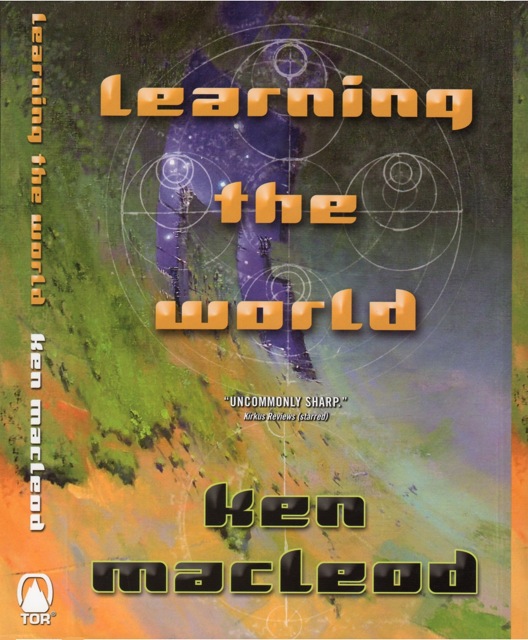
- Learning the World
Ken MacLeodstandalone novel2005
similar byreflectivealiensspace explorationscience fictionfirst contact
From the front flap of the Tor first printing: "Humanity has spread to every star within 500 light-years of its half-forgotten origin, coloring the sky with a haze of habitats. Societies rise and fall. Incautious experiments burn fast and fade. On the fringes, less modified humans get on with the job of settling a universe that has, so far, been empty of intelligent life. The ancient starship But the Sky, My Lady! The Sky! is entering orbit around a promising new system after a four hundred year journey. For its long-lived inhabitants, the centuries have been busy. Now a younger generation is eager to settle the system. The ship is a seed-pod ready to burst. Then they detect curious electromagnetic emissions from the system's Earth-like world. As the nature of the signals becomes clear, the choices facing the humans become stark. On Ground, second world from the sun, a young astronomer searches for his system's outermost planet. A moving point of light thrills, then disappoints him. It's only a comet. His physicist colleague Orro takes time off from trying to invent a flying-machine to calculate the comet's trajectory. Something is very odd about that comet's path. They are not the only ones for whom the world has changed. "We are not living in the universe we thought we lived in yesterday. We have to start learning the world all over again.""
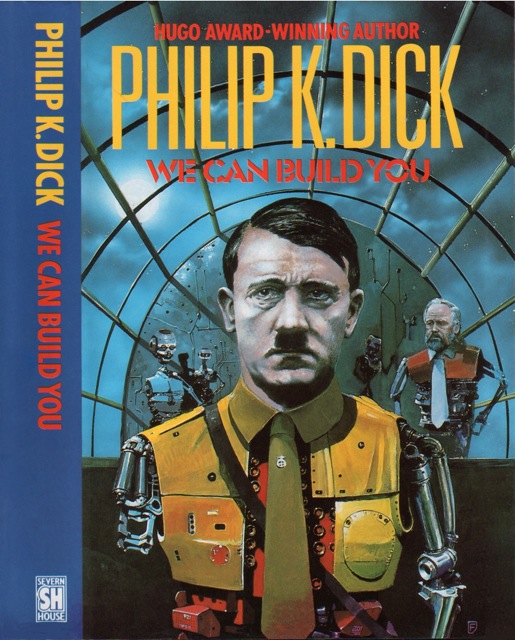
- We Can Build You
Philip K. Dickstandalone novel1972
similar byreflectiveour worldnear futurescience fiction
We Can Build You is a 1972 science fiction novel by American writer Philip K. Dick. Written in 1962 as The First in Our Family, it remained unpublished until appearing in serial form as A. Lincoln, Simulacrum in the November 1969 and January 1970 issues of Amazing Stories magazine, re-titled by editor Ted White. The novel was issued as a mass market paperback original by DAW Books in 1972, its final title provided by publisher Donald A. Wollheim. Its first hardcover edition was published in Italy in 1976, and Vintage issued a trade paperback in 1994.