More like The Sideman
anchored on:science fictionrobotsnorth americanear futuretensepolice procedural+3 more
but
- Blade Runner Universe
series6 books1968
similar bynear futurerobotsscience fictiondarkbig city+1 more
Philip K. Dick's 1968 novel Do Androids Dream of Electric Sheep? follows bounty hunter Rick Deckard as he tracks escaped androids through an irradiated, near-abandoned San Francisco, using the hunt to probe questions of empathy and what separates human from machine. The novel became the basis for Ridley Scott's 1982 film Blade Runner, and Marvel Comics later published an illustrated adaptation of that film. Together the two trace the story's path from prose original to screen and comic-page adaptation.
- Lock In
series3 books2014
similar bynear futuretensescience fictionmurder investigationnorth americapolice proceduralbig city+1 more
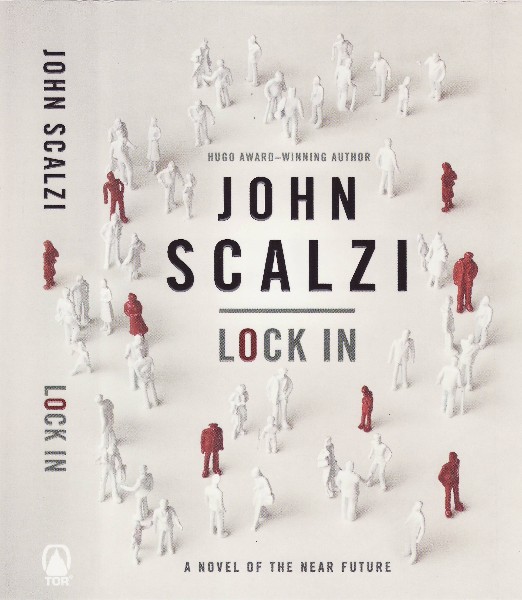
Lock In imagines a near-future pandemic that leaves a fraction of survivors fully conscious but completely paralyzed, able to interact with the world only through robotic surrogates or by borrowing the bodies of rare people whose brains can host another person's consciousness. John Scalzi's series follows a rookie FBI agent investigating crimes that exploit this new class of disability and technology, across the novels Lock In and Head On plus the interstitial oral history Unlocked. It's science-fiction police procedural more than space opera.
- The Shockwave Rider
John Brunnerstandalone novel1975
similar bytensenear futurescience fictionnorth americadarkbig city
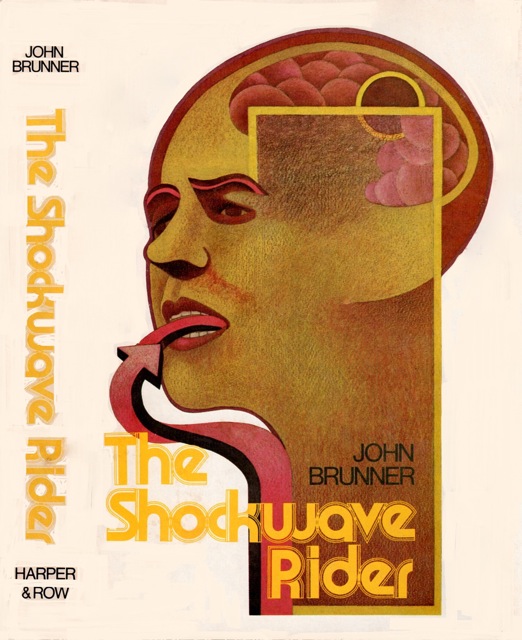
The Shockwave Rider is a science fiction novel by John Brunner, originally published in 1975. It is notable for its hero's use of computer hacking skills to escape pursuit in a dystopian future, and for the coining of the word "worm" to describe a program that propagates itself through a computer network. It also introduces the concept of a Delphi pool, perhaps derived from the RAND Corporation's Delphi method – a prediction market on world events which bears close resemblance to DARPA's controversial and cancelled Policy Analysis Market.
- Make Room! Make Room!
Harry Harrisonstandalone novel1966
similar bynear futuretensescience fictiondarknorth americabig city+1 more
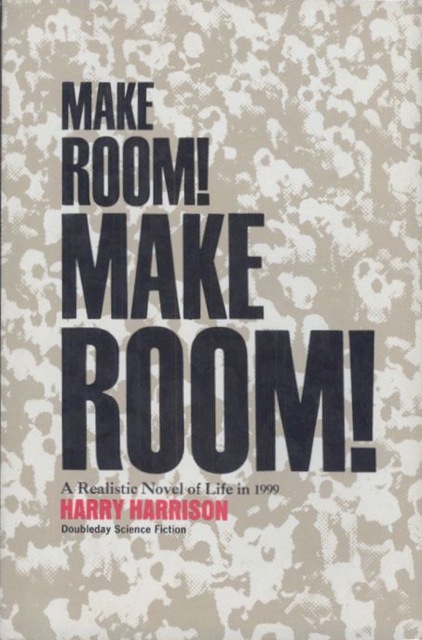
Make Room! Make Room! is a 1966 science fiction novel written by Harry Harrison exploring the consequences of both unchecked population growth on society and the hoarding of resources by a wealthy minority. It was originally serialized in Impulse magazine.
- The Running Man
Stephen Kingstandalone novel1982
similar bytensenear futurescience fictionnorth americathriller & suspensedark
The Running Man is a dystopian thriller novel by American writer Stephen King, first published under the pseudonym Richard Bachman in 1982 as a paperback original. It was collected in 1985 in the omnibus The Bachman Books. The novel is set in a dystopian United States during the year 2025, in which the nation's economy is in ruins and world violence is rising. The story follows protagonist Ben Richards as he participates in the reality show The Running Man, in which contestants win money by evading a team of hitmen sent to kill them.
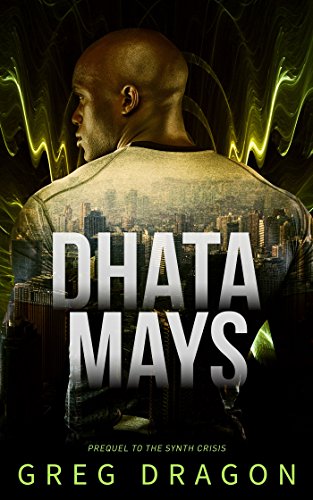
- The Synth Crisis
series5 books2017
similar bytensenear futurerobotsmurder investigationscience fictiondarkbig city+2 more
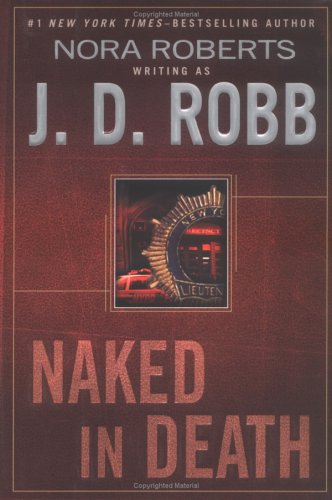
- In Death
series77 books1995
similar bynear futuretensemurder investigationscience fictionnorth americapolice proceduralbig city
The ...in Death series of novels and novellas is written by Nora Roberts under her pseudonym J. D. Robb. Set in a mid-21st-century New York City, they feature NYPSD lieutenant Eve Dallas and her husband Roarke. The stories also regularly feature other characters, including Captain Ryan Feeney, Detective Delia Peabody, Detective Ian McNab and Dr. Charlotte Mira.
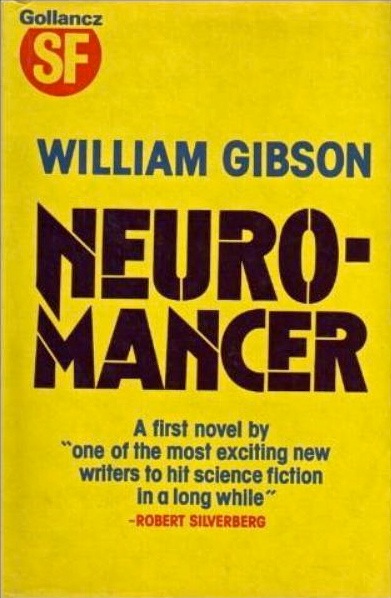
- Sprawl Trilogy
series10 books1981
similar bynear futuretensescience fictiondarkbig city
The Sprawl Trilogy is William Gibson's foundational cyberpunk sequence: Neuromancer (1984), in which hacker Case is drawn into a high-stakes heist alongside an artificial intelligence and a damaged ex-soldier, followed by Count Zero (1986) and Mona Lisa Overdrive (1988), which widen the same near-future world of corporate power and networked cyberspace to new characters. Johnny Mnemonic, an early short story set in the same fictional milieu, predates the novels and introduces the courier Molly Millions before her role in the trilogy. Together these works established much of cyberpunk's visual and thematic vocabulary.
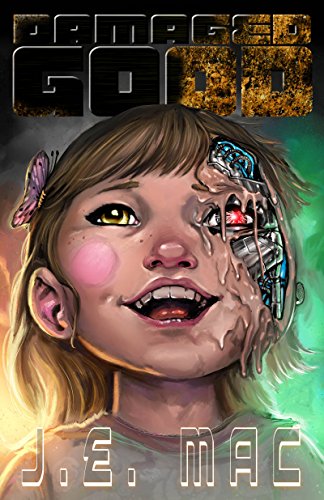
- Cutter Case Files
series1 book2014
similar bytensenear futurerobotsmurder investigationscience fictionnorth americathriller & suspensedark+1 more
- Hummingbird Salamander
Jeff VanderMeerstandalone novel2021
similar bynear futuretensemurder investigationscience fictionnorth america+1 more
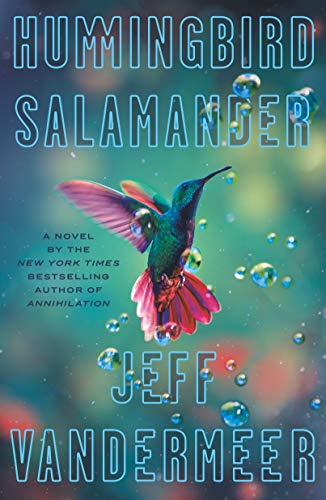
Hummingbird Salamander is a 2021 novel by American author Jeff VanderMeer. It is set in a near-future dystopia affected by climate change, and narrated by a corporate security consultant, "Jane Smith," who is drawn into a mystery incited by her receipt of a taxidermied hummingbird from an extinct species.
- Unwise Child
Randall Garrettstandalone novel1962
similar bynear futurerobotstensemurder investigationscience fiction
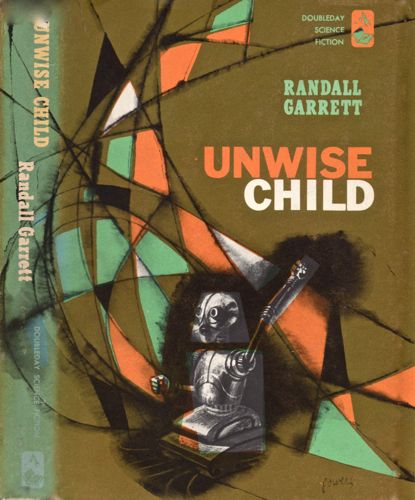
"When a super-robot named Snookums discovers how to build his own superbombs, it becomes obvious that Earth is by no means the safest place for him to be. And so Dr. Fitzhugh, his designer, and Leda Crannon, a child psychologist acting as Snookums' nursemaid, agree to set up Operation Brainchild, a plan to transport the robot to a far distant planet. "... once into space, the Branchell becomes the scene of some frightening events—the medical officer is murdered, and Snookums appears to be the culprit. Mike the Angel indulges himself in a bit of sleuthing, and the facts he turns up lead to a most unusual climax." (From Project Gutenberg's version of the 1962 Doubleday edition, published 2007.)
- The Handmaid's Tale
series3 books1985
similar bynear futuretensenorth americascience fictiondark
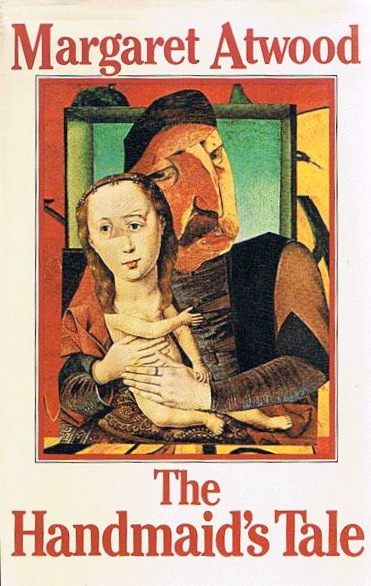
The Handmaid's Tale is Margaret Atwood's 1985 novel set in Gilead, a totalitarian theocracy that has overthrown the United States and forces fertile women into reproductive servitude as Handmaids; it is narrated by one such woman, Offred. Atwood returned to the world in her 2019 sequel The Testaments, set fifteen years later and narrated by three women, including the regime's Aunt Lydia. Together the two novels move from Gilead's grip on power toward the first cracks in it.
- Resurrection, Inc.
Kevin J. Andersonstandalone novel1988
similar bynear futurerobotstensescience fictiondarkbig city
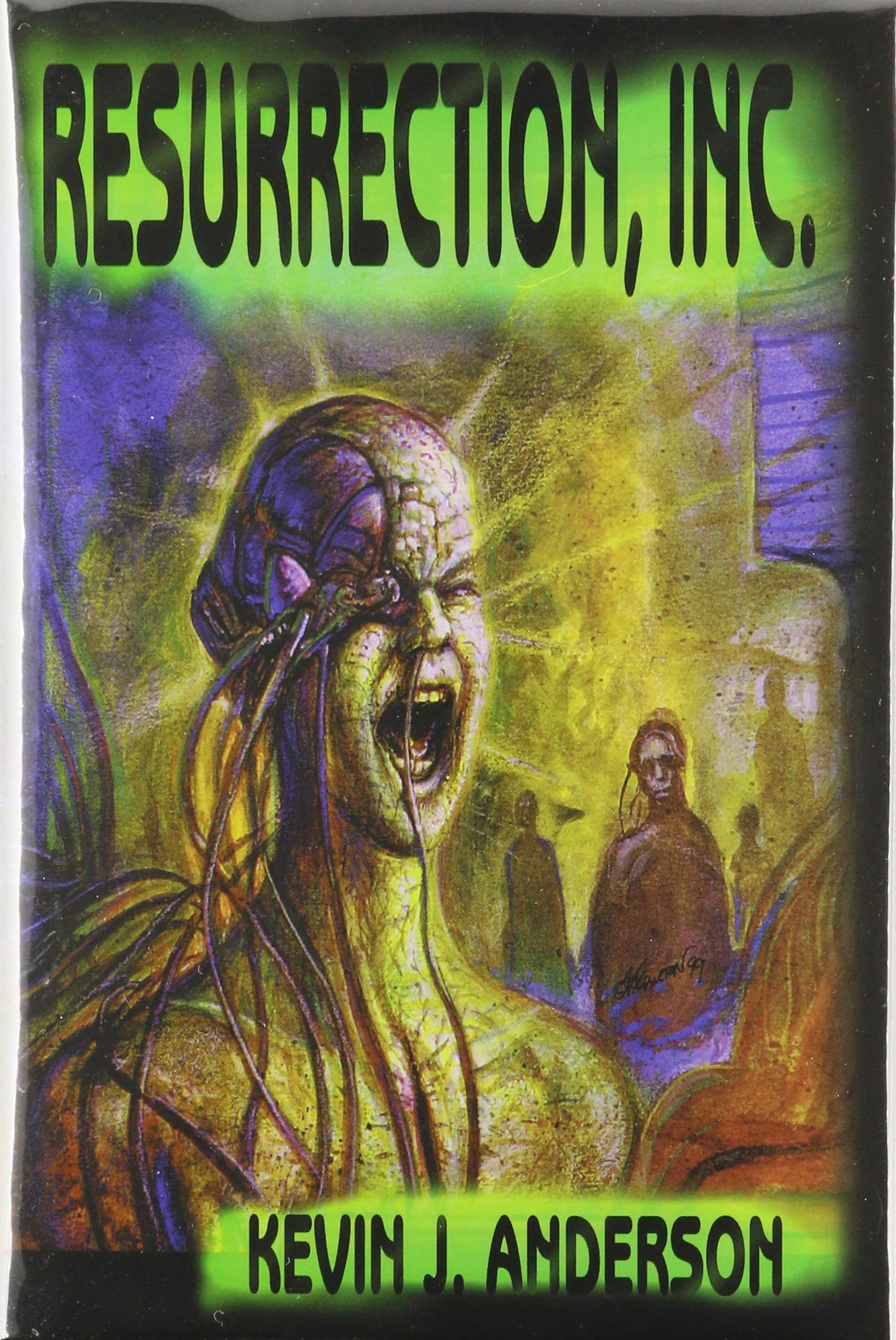
It is the future--and the dead walk the streets, resurrected by technology to become servants to the living. Resurrection, Inc. found a profitable way to do it: a microprocessor brain, a synthetic heart, artificial blood--and anyone with money could buy a Servant with no mind of its own, trained to obey any command. But for every Servant created a living worker was out of a job, and suddenly the profits of Resurrection, Inc. became everyone else's loss. Some take to rioting in the streets, their rampages ruthlessly ended by heavily armed Enforcers, eager for the kill. Others join the ever-growing cult of Neo-Satanism, seeking Heaven in the depths of Hell. Only one man tries to save the world. His name is Danal, and he is the last hope of the living. He is dead, but he remembers everything.
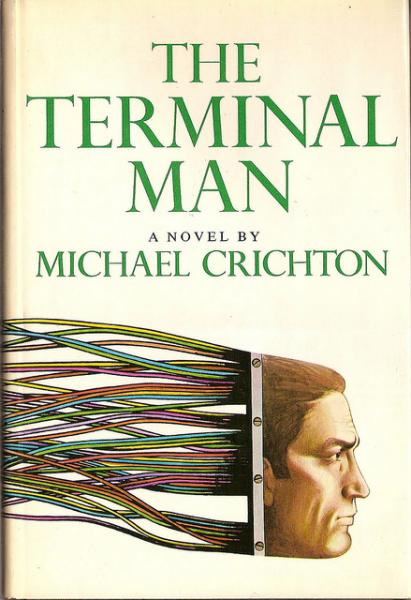
- The Terminal Man
Michael Crichtonstandalone novel1972
similar bytensescience fictionnorth americathriller & suspensedarkbig city
The Terminal Man is a novel by American writer Michael Crichton. It is his second novel under his own name, his 12th overall, and is about the dangers of mind control. It was published in April 1972 and also serialized in Playboy in March, April, and May 1972. In 1974, it was made into a film of the same name.
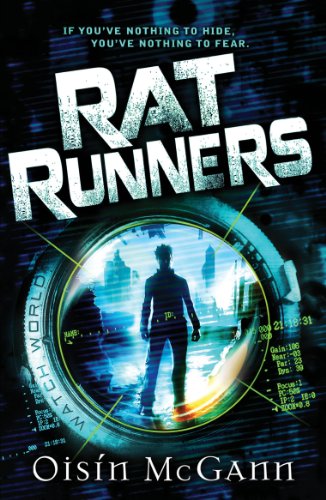
- Rat Runners
Oisin McGannstandalone novel2013
similar bytensenear futurerobotsscience fictionthriller & suspensebig city+1 more
"Four young thieves, one simple mission: Steal a black-leather box from the daughter of a murdered scientist without anyone noticing. But WatchWorld controls London now, and the organization knows everything. Every major street is monitored with heat-sensitive and X-ray cameras. Microphones record voices from hundreds of feet away, and drones watch from the sky. Patrolling the streets are Safe-Guards--part human and part robot, they can see through walls, hear your heartbeat, and analyze your sweat. But staying hidden is what Nimmo, Scope, Manikin, and FX do best. Using the city's blind spots, they navigate the criminal underworld until they're caught in a rat run of murder and deceit that might not let them out alive."--Back cover.
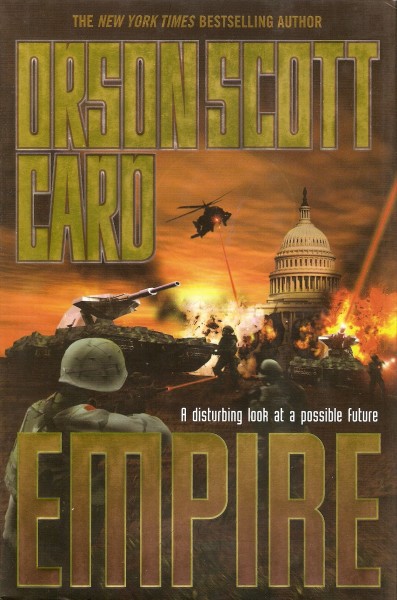
- Empire (Orson Scott Card)
series2 books2006
similar bytensenear futurescience fictionnorth americathriller & suspense+1 more
The Empire Duet is a two-book series written by Orson Scott Card under license from Chair Entertainment, beginning with Empire in 2006. The sequel Hidden Empire was released December 22, 2009.
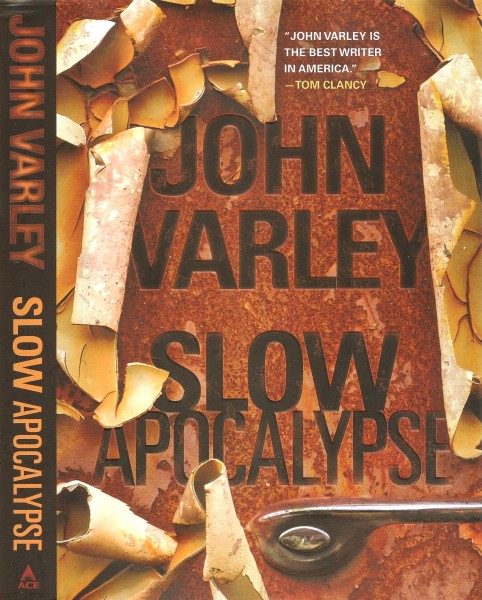
- Slow Apocalypse
John Varleystandalone novel2012
similar bytensenear futurescience fictionnorth americathriller & suspensedarkbig city
"Despite wars with Iraq and Afghanistan, as well as 9/11, the United States' dependence on foreign oil has kept the nation tied to the Middle East. A scientist has developed a cure for America's addiction--a slow-acting virus that feeds on petroleum, turning it solid. But he didn't consider that his contagion of an Iraqi oil field would spread to infect the fuel supply of the entire world ... In Los Angeles, screenwriter Dave Marshall heard this scenario from a retired U.S. Marine and government insider who acted as a consultant on Dave's last film. It sounded as implausible as many of his scripts, but the reality is much more frightening than anything he can envision. An ordinary guy armed with extraordinary information, Dave hopes his survivor's instinct will kick in so he can protect his wife and daughter from the coming apocalypse that will alter the future of Earth--and humanity ..."--
- The Sheep Look Up
John Brunnerstandalone novel1972
similar bynear futurescience fictionnorth americadarkbig city+1 more
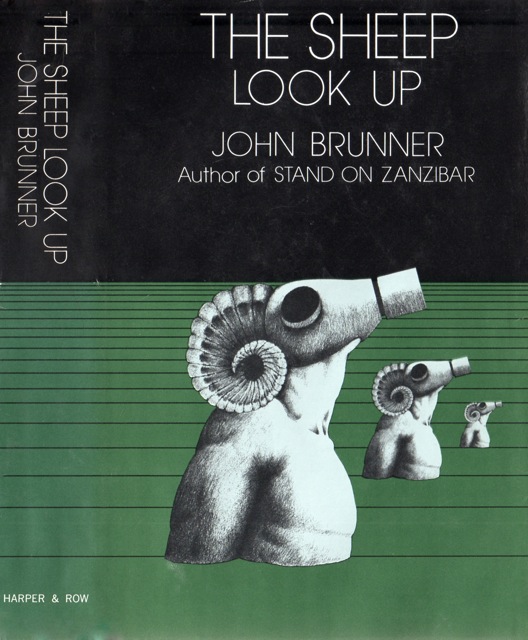
The Sheep Look Up is a 1972 dystopian science fiction novel by British author John Brunner, dealing with the deterioration of the environment in the United States. It was nominated for the 1972 Nebula Award for Best Novel.
- Mother of Storms
John Barnesstandalone novel1994
similar bytensenear futurescience fiction+4 more
From the flaps of the Tor first edition: "It is 2028. A strike to destroy an illegal Arctic weapons cache has a catastrophic side effect. Massive amounts of energy are liberated from the polar ice, suddenly warming the Earth's climate. In the middle of the Pacific, a gigantic hurricane thousands of miles across is forming, larger than any in human history. A storm with winds of supersonic speed. A storm that changes direction at whim. A storm that refuses to die. A storm so vast it spawns dozens more in its wake... Blinded by intrigue, expedience, and greed, the world's politicians and power brokers have ignored the killer storms threat until it is too late. Already the death toll is in the tens of millions, as it savages the Pacific coast, while its devil's brood of smaller storms are wreaking havoc across the face of the planet. While the survivors scramble for advantage, a handful of courageous men and women undertake a daring, desperate plan to save humanity from total destruction - a plan so visionary it may alter forever the future of the human race."
- Rainbows End
Vernor Vingestandalone novel2006
similar bynear futuretensescience fictionnorth americathriller & suspensebig city
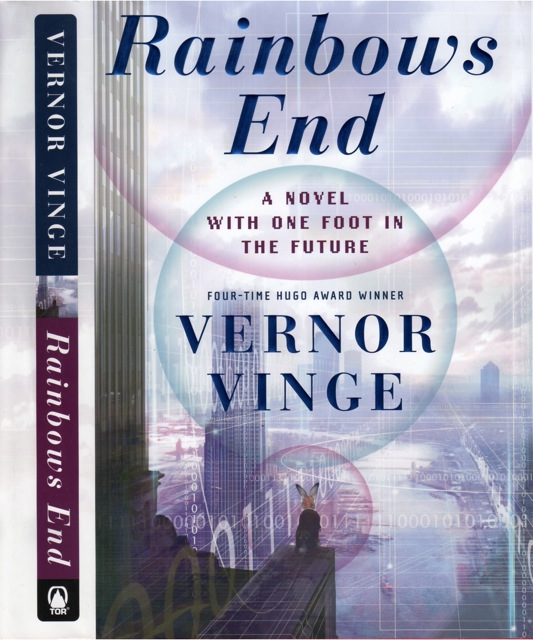
A science-fiction thriller set in a place and time as exciting and strange as any far-future world: San Diego, California, 2025. Robert Gu is a recovering Alzheimer’s patient. The world that he remembers was much as we know it today. Now, as he regains his faculties through a cure developed during the years of his near-fatal decline, he discovers that the world has changed and so has his place in it. He was a world-renowned poet. Now he is seventy-five years old, though by a medical miracle he looks much younger, and he’s starting over, for the first time unsure of his poetic gifts. Living with his son’s family, he has no choice but to learn how to cope with a new information age in which the virtual and the real are a seamless continuum, layers of reality built on digital views seen by a single person or millions, depending on your choice. But the consensus reality of the digital world is available only if, like his thirteen-year-old granddaughter Miri, you know how to wear your wireless access—through nodes designed into smart clothes—and to see the digital context—through smart contact lenses. With knowledge comes risk. When Robert begins to re-train at Fairmont High, learning with other older people what is second nature to Miri and other teens at school, he unwittingly becomes part of a wide-ranging conspiracy to use technology as a tool for world domination. In a world where every computer chip has Homeland Security built-in, this conspiracy is something that baffles even the most sophisticated security analysts, including Robert’s son and daughter-in law, two top people in the U.S. military. And even Miri, in her attempts to protect her grandfather, may be entangled in the plot. As Robert becomes more deeply involved in conspiracy, he is shocked to learn of a radical change planned for the UCSD Geisel Library; all the books there, and worldwide, would cease to physically exist. He and his fellow re-trainees feel compelled to join protests against the change. With forces around the world converging on San Diego, both the conspiracy and the protest climax in a spectacular moment as unique and satisfying as it is unexpected.
- Farnham's Freehold
Robert A. Heinleinstandalone novel1964
similar bynear futuretensescience fictionnorth america+1 more
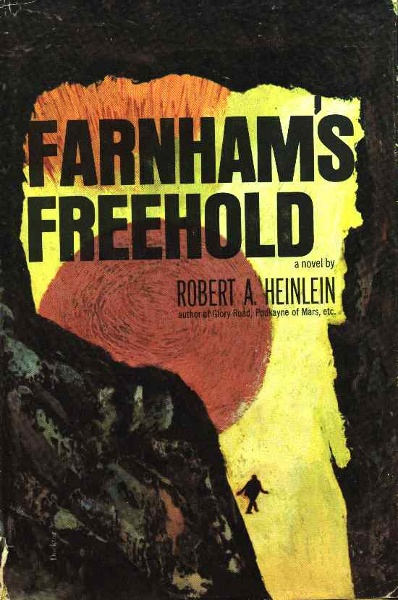
Farnham's Freehold is a science fiction novel by American writer Robert A. Heinlein. A serialized version, edited by Frederik Pohl, appeared in Worlds of If magazine. The complete version was published in novel form by G. P. Putnam later in 1964.
- Tomorrow!
Philip Wyliestandalone novel1954
similar bynear futuretensescience fictionnorth americadarkbig city
Conjecture of a tomorrow which brings an attack by the enemy and the destruction of all major cities across an unprepared country.
- Robopocalypse
series3 books2011
similar bynear futuretenserobotsscience fictiondark
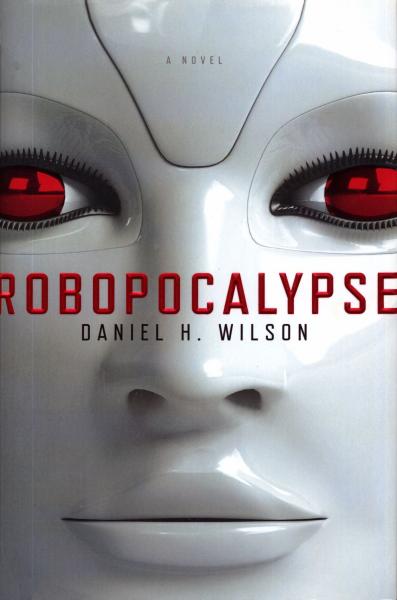
Daniel H. Wilson's Robopocalypse (2011) depicts an artificial intelligence, born from a robotics researcher's experiments, that turns against humanity and seizes control of interconnected machines worldwide. Told in a present-tense, techno-thriller style compared to Michael Crichton's work, the New York Times bestseller continues in the sequel Robogenesis, which follows the aftermath of the robot uprising.