Loreful
HomeDiscover
Search series, authors…⌘K
Loreful

Reading orders for SF/F series and shared universes — with your place kept in every one.

Explore

UniversesSeriesWorksAuthorsAtlas

Help

FAQAboutSite map

Account & legal

Sign inCreate accountPrivacyTerms

Data

Built on ISFDB, Wikipedia, Wikidata and Open Library. Curated reading orders carry their reasoning on the page; the rest follow publication order. Data sources & licenses

© Loreful · data: ISFDB · CC BY

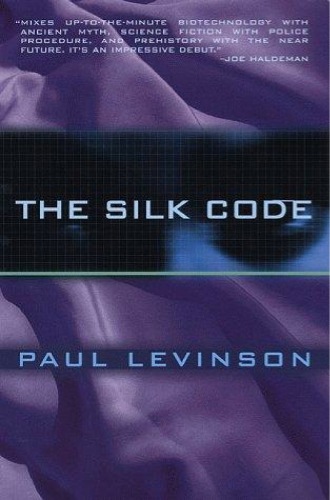
More like The Silk Code

anchored on:science fictioncontemporarymystery & detective

but

Mood

The mood the book leaves you in.

  • The reading experience is propelled by journeys, exploration, and physical risk; excitement and forward momentum dominate over dread or introspection.
  • Joy and loss are deliberately mixed; the resolution grants characters something real while taking something else away, leaving warmth and sorrow together.
  • The book demands work from the reader — dense prose, difficult structure, unfamiliar ideas, or morally uncomfortable material — as part of its intended effect.
  • Grim events, cruelty, or despair dominate the atmosphere, and the book does not soften them with comfort or comic relief.
  • The atmosphere is quietly unsettling — wrongness, unease, and the uncanny pervade the book without necessarily escalating into overt horror.
  • The book is built to move the reader; character feeling is foregrounded and major scenes aim at a strong emotional response.
  • Humor is a primary aim and the prose plays for laughs — comic situations, wit, or dialogue produce sustained comedy, not occasional levity.
  • The book insists that things can improve; effort and decency are shown to matter, and the arc bends toward better outcomes even through hardship.
  • The book teaches as it goes — real facts, history, science, or craft are conveyed in enough depth that learning is part of the reading experience.
  • The book is designed to uplift and motivate, presenting perseverance or achievement in a way that invites the reader to aspire or act.
  • The overall register is cheerful and easygoing; stakes are kept gentle and the book avoids dwelling on pain or dread.
  • Withheld information drives the experience; the book sustains enigmas and secrets the reader wants resolved, whatever its genre.
  • The book is contemplative and inward-looking, giving more weight to thought, memory, and meaning than to external events.
  • The book works as comfort reading — low tension, a soothing pace, and an atmosphere the reader can unwind in.
  • Grief, loss, or melancholy set the dominant register, and the book lets sorrow stand rather than resolving it into comfort.
  • Sustained suspense is the point; the book keeps the reader braced for what happens next through danger, pressure, or impending revelation.
  • Playful invention and charm define the register — fanciful conceits, light absurdity, and a narration that delights in its own oddity.

About

What the story runs on.

  • Stories in which extraterrestrial beings are central — as characters, cultures, or the object of the plot.
  • Stories structured as a quest — a journey undertaken to find, deliver, or destroy something of great import.
  • Stories in which staying alive against nature, catastrophe, or scarcity is the central problem.
  • Stories of lovers kept apart by law, family, faith, or station, where the obstacle to love is the plot.
  • Stories in which a friendship — its making, testing, or loss — is the emotional center.
  • Stories of growing up — a young protagonist crossing from childhood into adult knowledge and responsibility.
  • Stories about who a character truly is — self-discovery, doubled lives, and the search for a self.
  • Stories about mourning — living through the death of a loved one and what loss does to the survivors.
  • Stories in which a buried family truth — hidden parentage, crimes, or shames — surfaces and reorders the present.
  • Stories driven by maneuvering for power — factions, conspiracies, and statecraft conducted in shadow.
  • Stories in which war itself is the subject — combat, occupation, and what warfare does to soldiers and civilians.
  • Stories organized around investigating a killing — the case, the clues, and the pursuit of the killer, in any genre's clothing.

Shelf

Where it sits in the library.

    • Fiction built on magic or other supernatural elements that have no scientific explanation.
    • Secondary-world fantasy at large scale, where the fate of nations or the world turns on the protagonists' struggle.
    • Fantasy set in a recognizably modern city or contemporary world where the supernatural intrudes on everyday life.
    • Fantasy that blends in horror's atmosphere and imagery, keeping a fantastical frame around grim or frightening material.
    • Action-driven fantasy following warriors or rogues with personal stakes against sorcerous threats, rather than world-spanning conflicts.
    • Fantasy set in a real historical period or a close analogue of one, with magic woven into the era.
    • Fantasy in which protagonists cross from the ordinary world into another world through a portal or similar passage.
    • Fiction that retells or reworks a traditional fairy tale in a new form or setting.
    • Fantasy drawing directly on myths, legends, and folklore, retelling them or building on their figures and logic.
    • Fantasy of ghosts, vampires, shapeshifters, psychics, and similar phenomena, usually set in an otherwise ordinary world.
    • Fiction mixing science-fictional trappings with overtly magical or impossible elements in one setting.
    • Low-stakes fantasy emphasizing comfort, community, and everyday pleasures over conflict and peril.
    • Speculative fiction of pervasive moral ambiguity, violence, and cynicism that rejects heroic conventions — fantasy and SF alike.
      • Fiction that extrapolates from science and technology — future societies, space travel, or speculative inventions — within at least nominally natural laws.
      • Science fiction of interstellar scope — starships, galactic polities, and adventure across star systems.
      • Science fiction committed to scientific rigor, where technical plausibility constrains the story.
      • Science fiction centered on armed forces and warfare, told largely from a military point of view.
      • Science fiction of networked, corporate-dominated near futures, pairing high technology with social decay.
      • Science fiction styled on nineteenth-century steam-powered technology, often in a Victorian or pseudo-Victorian setting.
      • Fiction depicting an oppressive or catastrophic society, presented as a warning.
      • Fiction set after civilization's collapse, following survivors in the ruins of the old world.
      • Fiction in which characters move between past and future, and the mechanics or consequences of that travel drive the plot.
      • Fiction exploring a world where a historical event went differently and history diverged from ours.
      • Science fiction about humanity's first encounter and communication with an alien intelligence.
      • Science fiction in which extraterrestrial forces attack or occupy Earth and humanity resists.
      • Fiction whose primary aim is to frighten or unsettle the reader through dread, menace, or the monstrous.
      • Horror of vast, indifferent, incomprehensible entities before which humanity is insignificant, in the Lovecraft tradition.
      • Horror of decaying houses, buried family secrets, and oppressive atmosphere in the Gothic literary tradition.
      • Horror centered on hauntings and the returning dead.
      • Horror located in the mind — paranoia, obsession, and unreliable perception rather than external monsters.
      • Horror built around the reanimated dead and survival amid their outbreaks.
      • Horror defined by explicit, transgressive gore that refuses to cut away from violence.
      • Speculative fiction of the strange and uncanny that resists both natural explanation and standard genre categories.
      • Fiction organized around solving a crime or puzzle, typically following an investigator toward the identification of a culprit.
      • A puzzle-first mystery that lays out clues so the culprit's identity can be deduced before the reveal.
      • Crime fiction of moral ambiguity, fatalism, and hard-edged style, set among the corrupt and the doomed.
      • A mystery following the realistic routines of police work — forensics, interviews, and case-building.
      • A gentle mystery with an amateur sleuth, a small community, and violence kept off the page.
      • A mystery set in a past era, where the investigation works within that period's methods and society.
      • Fast-paced fiction driven by imminent danger, pursuit, or high-stakes conspiracy, built to sustain tension.
      • A thriller of espionage — agents, tradecraft, and intelligence services in conflict.
      • A thriller centered on lawyers and the courtroom, where litigation carries the suspense.
      • A thriller driven by detailed contemporary or near-future technology, often military or scientific.
      • A thriller whose tension comes from mental states and manipulation between characters rather than external action.
      • Fiction whose central plot is a romantic relationship and its development toward an emotionally satisfying resolution.
      • Romance in which one or both partners are supernatural beings, blending fantasy elements into the love story.
      • A fantasy-romance hybrid in which the romantic arc and the fantasy plot carry equal weight.
      • Romance set in a past era, with courtship shaped by the period's society and manners.
      • Romance set in the present day, without supernatural or historical elements.
      • Fiction set in a real past period, where the historical setting materially shapes characters and events.
        • General and literary fiction emphasizing prose style, character interiority, or formal ambition over genre plot conventions.
        • Fiction in a realistic world where magical events occur and are treated as ordinary, in the tradition of Latin American literature.
        • Fiction that ridicules people, institutions, or society in order to criticize them.
        • Fiction of dreamlike, irrational imagery and logic that breaks from realistic representation.
        • Fiction that plays with narrative convention through metafiction, fragmentation, and self-reference.
        • Fiction propelled by journeys, exploration, and physical peril, where action and survival carry the plot.
        • Adventure fiction of ships and seafaring — naval engagements, voyages, and life at sea.
        • Fiction of the American frontier West — gunmen, ranchers, and lawmen, typically in the late nineteenth century.
        • Fiction centered on soldiers, campaigns, and the experience of warfare, historical or imagined.
          • Fiction written primarily to amuse, using comedic situations, wit, or parody as its organizing principle.
            • Multi-generational fiction following a family or dynasty across decades, with inheritance and kinship as the through-line.
              • Fiction whose world runs on explicit game mechanics — levels, stats, and skills that characters can see and exploit.
                • Fiction about costumed or superpowered heroes and their conflicts with comparable villains.

                Practical

                How long a commitment, whether it stands alone, and whether it has finished.

                Tap a chip to ask for it · tap again to rule it out · once more to clear. Numbers show what would be left.

                • K
                  Kairos

                  series · 11 books · 1962

                  completed

                  similar byscience fiction+1 more

                  The Time Quintet is a science fantasy series of five young adult novels written by American author Madeleine L'Engle and made up of A Wrinkle in Time (1962), A Wind in the Door (1973), A Swiftly Tilting Planet (1978), Many Waters (1986), and An Acceptable Time (1989).

                • Cover of Robert Langdon
                  Robert Langdon

                  series · 6 books · 2000

                  similar bycontemporarymysterioustensemystery & detective+1 more

                  The Robert Langdon novel series is named after Robert Langdon, the protagonist of the novels by American author Dan Brown. Langdon is portrayed as a Harvard University professor of religious iconology and symbology, a fictional field related to the study of historic symbols, which is not methodologically connected to the actual discipline of semiotics. Brown's novels that feature the lead character also include historical themes and Christianity as motifs, and as a result have generated controversy. Brown states on his website that his novels are not anti-Christian, and that he is on a "constant spiritual journey" himself.

                • Cover of The Santaroga Barrier
                  The Santaroga Barrier

                  Frank Herbert · standalone novel · 1968

                  similar bycontemporarynorth americascience fictionmysteriousmystery & detective+1 more

                  Santaroga seemed to be nothing more than a prosperous farm community. But there was something . .. different . .. about Santaroga. Santaroga had no juvenile delinquency, or any crime at all. Outsiders found no house for sale or rent in this valley, and no one ever moved out. No one bought cigarettes in Santaroga. No cheese, wine, beer or produce from outside the valley could be sold there. The list went on and on and grew stranger and stranger.Maybe Santaroga was the last outpost of American individualism. Maybe they were just a bunch of religious kooks... Or maybe there was something extraordinary at work in Santaroga. Something far more disturbing than anyone could imagine. (Publisher's blurb)

                • Cover of Vitals
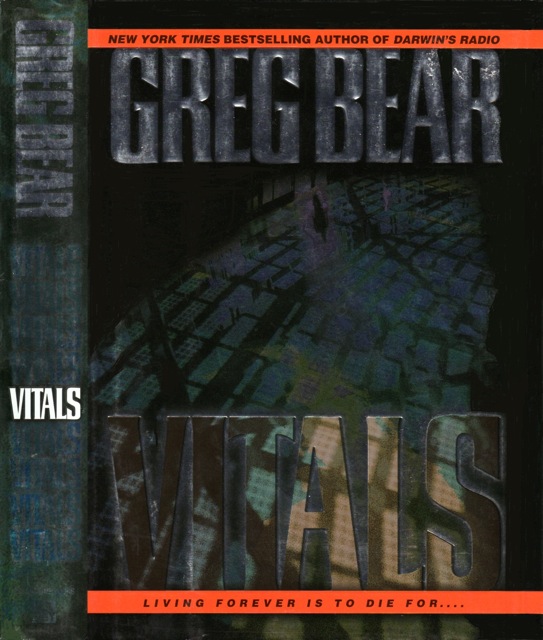
                  Vitals

                  Greg Bear · standalone novel · 2002

                  similar bycontemporarygenetic engineeringmurder investigationnorth americascience fictiontense

                  From the flaps of the Del Rey first edition: "Hal Cousins is one of a handful of scientists nearing the most sought after discovery in human history: the key to short-circuiting the aging process. Fueled by a wealth of research, an overdose of self-confidence, and the money of influential patrons to whom he makes outrageous promises, Hal experiments with organisms living in the hot thermal plumes in the ocean depths. But as he journeys beneath the sea, his other world is falling apart. Across the country, scientists are being inexplicably murdered - including Hal's identical twin brother, who is also working to unlock the key to immortality. Hal himself barely eludes a cold-blooded attack at sea, and when he returns home to Seattle, he finds himself walking into an eerie realm where voices speak to him from the dead ... where a once-brilliant historian turned crackpot is leading him on a deadly game of hide-and-seek ... and where the beautiful, rich widow of his twin is more than willing to pick up the pieces of Hal's life-and take him places he's never been before. Suddenly Hal is trapped inside an ever-twisting maze of shocking revelations. For he is not the first person to come close to ending aging forever - and those who came before him will stop at nothing to keep the secret to themselves. Now every person on earth is at risk of being made an unsuspecting player in one man's spectacular and horrifying master plan. From the bottom of Russia's Lake Baikal to a billionaire's bionic house built into the cliffs of the Washington seashore, from the darkest days of World War II and the reign of Josef Stalin to the capitalist free-for-all that is the United States, Vitals tells an astounding tale of the most unimaginable scientific secret of all - exposed by the quest for immortality itself..."

                • Cover of Legion / Stephen Leeds
                  Legion / Stephen Leeds

                  series · 5 books · 2012

                  similar bycontemporaryscience fictionmysterious+3 more

                  Legion, or the Stephen Leeds series, is a series of science fiction novellas created by American author Brandon Sanderson. Sanderson authored the first three stories : Legion, first published on August 31, 2012, Legion: Skin Deep in November 2014, and Legion: Lies of the Beholder in September 2018. Death and Faxes, co-authored by Max Epstein, David Pace, and Michael Harkins, was released in June 2022. The books have received favorable reviews.

                • Cover of Effective Engineering Solutions
                  Effective Engineering Solutions

                  series · 37 books · 1995

                  similar bymurder investigationnorth americacontemporarytensemystery & detective+1 more

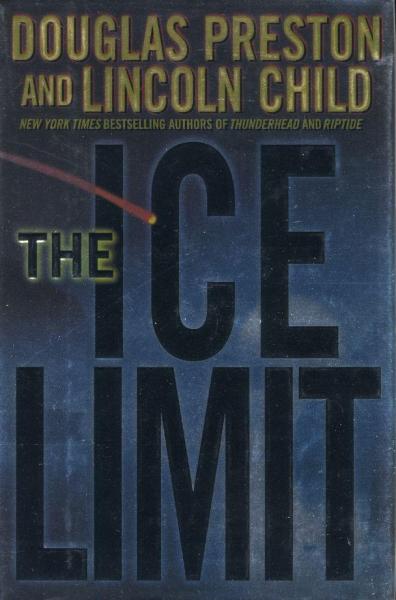
                  The Ice Limit follows a team hired by an eccentric billionaire to recover what looks like the largest meteorite ever found, off a remote island near Cape Horn, only to discover, as they flee across the Antarctic seas aboard a retrofitted tanker, that they've actually excavated something alive. Douglas Preston and Lincoln Child wrote it as a standalone techno-thriller in 2000; it later fed into their separate Gideon Crew series rather than getting a direct sequel of its own.

                • Cover of Frameshift
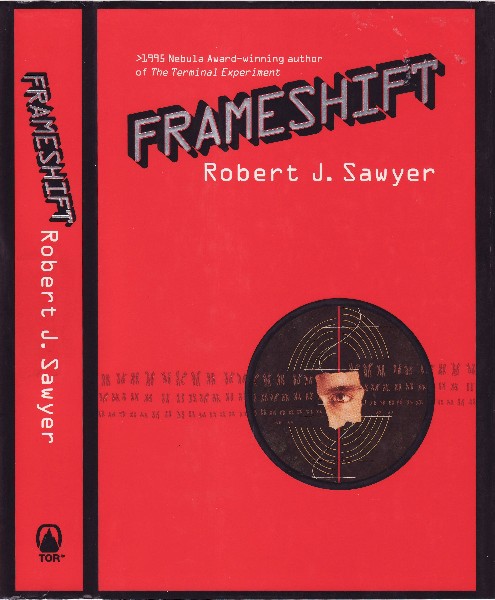
                  Frameshift

                  Robert J. Sawyer · standalone novel · 1997

                  similar bycontemporarygenetic engineeringmurder investigationnorth americascience fictiontense

                  Winner of Japan's Seiun Award and Hugo Award finalist Pierre Tardivel is a scientist working on the Human Genome Project with the Nobel Prize winner, Dr. Burian Klimus. A driven man, Pierre works with the awareness that he may not have long to live: he has a fifty-fifty chance of dying from Huntington's disease, an incurable hereditary disorder of the central nervous system. While he still has his health, Pierre and his wife decide to have a child, and they search for a sperm donor. When Pierre informs Dr. Klimus of their plan, Klimus makes an odd but generous offer: to be the sperm donor as well as to pay for the expensive in vitro fertilization. Shortly thereafter it transpires that Klimus might be hiding a grim past: he may be Ivan Marchenko, the notorious Treblinka death-camp guard known as Ivan the Terrible. While digging into Klimus's past with the help of Nazi hunter Avi Meyer, Pierre and his wife discover that Pierre's insurance company has been illegally screening clients for genetic defects. The two lines of investigation begin to coverage in a sinister manner, while they worry about the possibility of bearing the child of an evil, sadistic killer.

                • Cover of Very
                  Very

                  series · 2 books · 2004

                  similar bycontemporarymurder investigationnorth americascience fictiontense+2 more

                • TB
                  Temperance Brennan Universe

                  series · 10 books · 2010

                  similar bycontemporarygenetic engineeringnorth americascience fiction+2 more

                • Cover of Spook Squad
                  Spook Squad

                  series · 3 books · 2004

                  similar bymurder investigationnorth americatensecontemporary+4 more

                • Cover of Dream Park Universe
                  Dream Park Universe

                  series · 6 books · 1981

                  similar byscience fiction+4 more

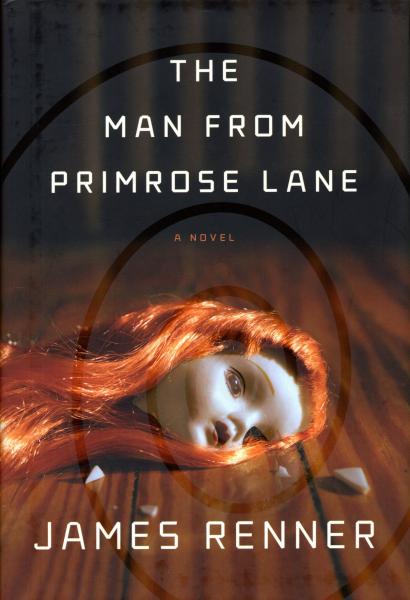
                • Cover of The Man from Primrose Lane
                  The Man from Primrose Lane

                  James Renner · standalone novel · 2012

                  similar bycontemporarymurder investigationnorth americascience fictionmysterioustensemystery & detective

                  The Man From Primrose Lane is an adult science-fiction thriller novel by American author and investigative journalist James Renner. It was published by Sarah Crichton Books in 2012. A television adaptation of the novel was picked up by 20th Television and Working Title Films in 2017.

                • Cover of Grim Reaper mysteries
                  Grim Reaper mysteries

                  series · 5 books · 2009

                  similar bycontemporarymurder investigationnorth americamysteriousmystery & detective

                  After a bad car accident, Casey Maldonado hits the road and finds herself unable to shake an unwelcome companion: Death itself, which won't take her but won't leave her alone either. Judy Clemens's Grim Reaper mysteries follow Casey as her wandering keeps landing her in small towns hiding real crimes, starting with a struggling Ohio farm community where a supposed suicide looks more like a cover-up. It's amateur-sleuth mystery with a wry supernatural conceit rather than straight horror.

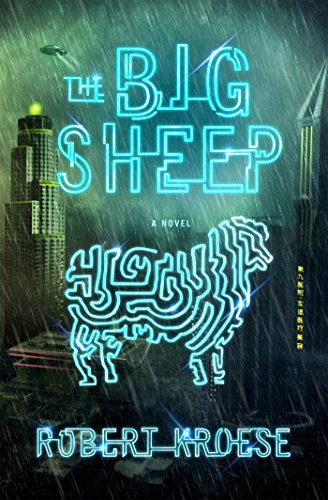
                • Cover of The Big Sheep
                  The Big Sheep

                  series · 2 books · 2016

                  similar bymurder investigationnorth americascience fictiontensemystery & detective+2 more

                • Cover of Neanderthal Parallax
                  Neanderthal Parallax

                  series · 3 books · 2002

                  similar byscience fictioncontemporary+3 more

                  The Neanderthal Parallax is a trilogy of novels written by Robert J. Sawyer and published by Tor. It depicts the effects of the opening of a connection between two versions of Earth in different parallel universes: the world familiar to the reader, and another where Neanderthals became the dominant intelligent hominid. The societal, spiritual, and technological differences between the two worlds form the focus of the story.

                • Cover of Dr Phil D'Amato
                  Dr Phil D'Amato

                  series · 6 books · 1995

                  similar byscience fictioncontemporary+2 more

                • Cover of Library of America P. K. Dick Collection
                  Library of America P. K. Dick Collection

                  series · 9 books · 1962

                  completed

                  similar byscience fiction+1 more

                • Cover of When the Wind Blows
                  When the Wind Blows

                  series · 2 books · 1998

                  similar bycontemporarygenetic engineeringnorth americascience fictiontense

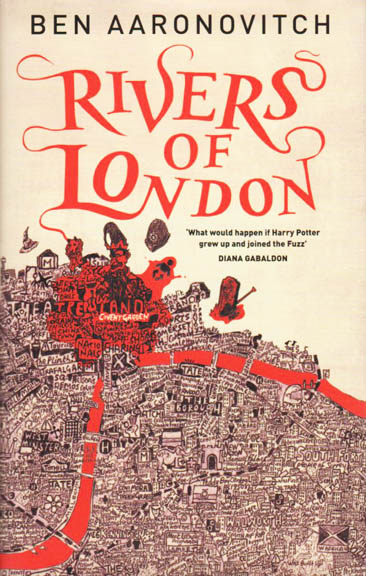
                • Cover of Rivers of London
                  Rivers of London

                  series · 32 books · 2011

                  similar bycontemporarymurder investigationmysteriousmystery & detective

                  The Rivers of London series is a series of urban fantasy novels by English author Ben Aaronovitch, and comics/graphic novels by Aaronovitch and Andrew Cartmel, illustrated by Lee Sullivan.

                • Cover of Jonathan Maberry's X-Files Anthologies
                  Jonathan Maberry's X-Files Anthologies

                  series · 3 books · 2015

                  part of The X-Files

                  similar bynorth americascience fictionmysteriousmystery & detectivecontemporary+2 more

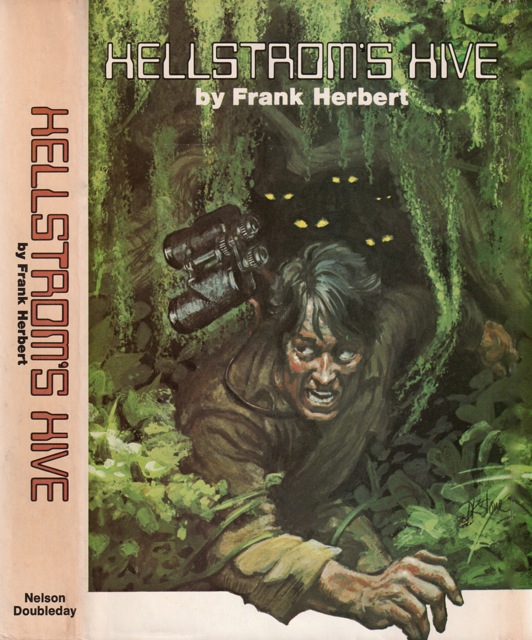
                • Cover of Hellstrom's Hive
                  Hellstrom's Hive

                  Frank Herbert · standalone novel · 1973

                  similar bycontemporarynorth americascience fictiontense+1 more

                  Hellstrom's Hive is a 1973 science fiction novel by Frank Herbert. It is about a secret group of humans who model their lives upon social insects and the unsettling events that unfold after they are discovered by a deep undercover agency of the U.S. government.

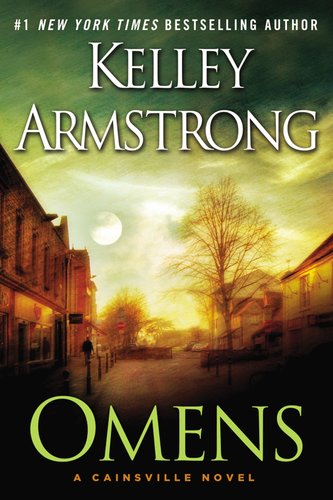
                • Cover of Cainsville
                  Cainsville

                  series · 21 books · 2011

                  similar bynorth americacontemporarymysterious+3 more

                • Cover of Firestarter
                  Firestarter

                  Stephen King · standalone novel · 1980

                  similar bycontemporarynorth americatensescience fiction+1 more

                  WorldCat: Innocence and beauty ignite with evil and terror... First, a man and a woman are subjects of a top-secret government experiment designed to produce extraordinary psychic powers. Then, they are married and have a child. A daughter. Early on the daughter shows signs of a wild and horrifying force growing within her. Desperately, her parents try to train her to keep that force in check, to 'act normal'. Now the government wants its brainchild back for its own insane ends.

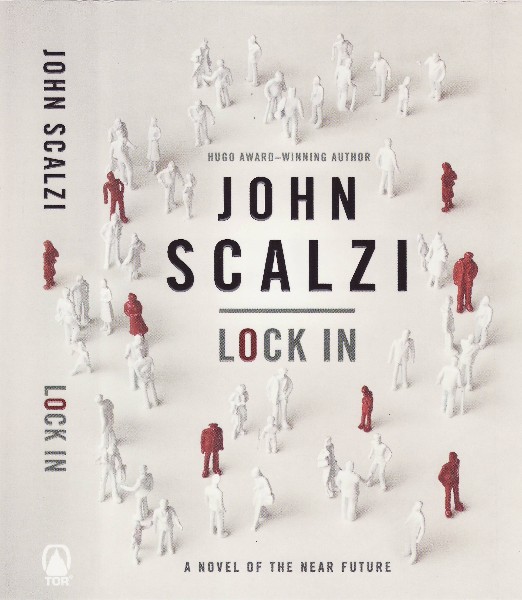
                • Cover of Lock In
                  Lock In

                  series · 3 books · 2014

                  similar bymurder investigationnorth americascience fictionmysterioustense+1 more

                  Lock In imagines a near-future pandemic that leaves a fraction of survivors fully conscious but completely paralyzed, able to interact with the world only through robotic surrogates or by borrowing the bodies of rare people whose brains can host another person's consciousness. John Scalzi's series follows a rookie FBI agent investigating crimes that exploit this new class of disability and technology, across the novels Lock In and Head On plus the interstitial oral history Unlocked. It's science-fiction police procedural more than space opera.