Loreful
HomeDiscover
Search series, authors…⌘K
Loreful

Reading orders for SF/F series and shared universes — with your place kept in every one.

Explore

UniversesSeriesWorksAuthorsAtlas

Help

FAQAboutSite map

Account & legal

Sign inCreate accountPrivacyTerms

Data

Built on ISFDB, Wikipedia, Wikidata and Open Library. Curated reading orders carry their reasoning on the page; the rest follow publication order. Data sources & licenses

© Loreful · data: ISFDB · CC BY

More like The Spring

anchored on:fantasynorth americamid 20th centurymythic fantasymusiceerie

but

Mood

The mood the book leaves you in.

  • The reading experience is propelled by journeys, exploration, and physical risk; excitement and forward momentum dominate over dread or introspection.
  • Joy and loss are deliberately mixed; the resolution grants characters something real while taking something else away, leaving warmth and sorrow together.
  • The book demands work from the reader — dense prose, difficult structure, unfamiliar ideas, or morally uncomfortable material — as part of its intended effect.
  • Grim events, cruelty, or despair dominate the atmosphere, and the book does not soften them with comfort or comic relief.
  • The atmosphere is quietly unsettling — wrongness, unease, and the uncanny pervade the book without necessarily escalating into overt horror.
  • The book is built to move the reader; character feeling is foregrounded and major scenes aim at a strong emotional response.
  • Humor is a primary aim and the prose plays for laughs — comic situations, wit, or dialogue produce sustained comedy, not occasional levity.
  • The book insists that things can improve; effort and decency are shown to matter, and the arc bends toward better outcomes even through hardship.
  • The book teaches as it goes — real facts, history, science, or craft are conveyed in enough depth that learning is part of the reading experience.
  • The book is designed to uplift and motivate, presenting perseverance or achievement in a way that invites the reader to aspire or act.
  • The overall register is cheerful and easygoing; stakes are kept gentle and the book avoids dwelling on pain or dread.
  • Withheld information drives the experience; the book sustains enigmas and secrets the reader wants resolved, whatever its genre.
  • The book is contemplative and inward-looking, giving more weight to thought, memory, and meaning than to external events.
  • The book works as comfort reading — low tension, a soothing pace, and an atmosphere the reader can unwind in.
  • Grief, loss, or melancholy set the dominant register, and the book lets sorrow stand rather than resolving it into comfort.
  • Sustained suspense is the point; the book keeps the reader braced for what happens next through danger, pressure, or impending revelation.
  • Playful invention and charm define the register — fanciful conceits, light absurdity, and a narration that delights in its own oddity.

About

What the story runs on.

  • Stories structured as a quest — a journey undertaken to find, deliver, or destroy something of great import.
  • Stories in which staying alive against nature, catastrophe, or scarcity is the central problem.
  • Stories of lovers kept apart by law, family, faith, or station, where the obstacle to love is the plot.
  • Stories in which a friendship — its making, testing, or loss — is the emotional center.
  • Stories of growing up — a young protagonist crossing from childhood into adult knowledge and responsibility.
  • Stories about who a character truly is — self-discovery, doubled lives, and the search for a self.
  • Stories about mental unraveling — descent into madness, delusion, and minds at war with themselves.
  • Stories about mourning — living through the death of a loved one and what loss does to the survivors.
  • Stories in which a buried family truth — hidden parentage, crimes, or shames — surfaces and reorders the present.
  • Stories driven by maneuvering for power — factions, conspiracies, and statecraft conducted in shadow.
  • Stories in which war itself is the subject — combat, occupation, and what warfare does to soldiers and civilians.
  • Stories organized around investigating a killing — the case, the clues, and the pursuit of the killer, in any genre's clothing.

Shelf

Where it sits in the library.

    • Fiction built on magic or other supernatural elements that have no scientific explanation.
    • Secondary-world fantasy at large scale, where the fate of nations or the world turns on the protagonists' struggle.
    • Fantasy set in a recognizably modern city or contemporary world where the supernatural intrudes on everyday life.
    • Fantasy that blends in horror's atmosphere and imagery, keeping a fantastical frame around grim or frightening material.
    • Action-driven fantasy following warriors or rogues with personal stakes against sorcerous threats, rather than world-spanning conflicts.
    • Fantasy set in a real historical period or a close analogue of one, with magic woven into the era.
    • Fantasy in which protagonists cross from the ordinary world into another world through a portal or similar passage.
    • Fiction that retells or reworks a traditional fairy tale in a new form or setting.
    • Fantasy drawing directly on myths, legends, and folklore, retelling them or building on their figures and logic.
    • Fantasy of ghosts, vampires, shapeshifters, psychics, and similar phenomena, usually set in an otherwise ordinary world.
    • Fiction mixing science-fictional trappings with overtly magical or impossible elements in one setting.
    • Low-stakes fantasy emphasizing comfort, community, and everyday pleasures over conflict and peril.
    • Speculative fiction of pervasive moral ambiguity, violence, and cynicism that rejects heroic conventions — fantasy and SF alike.
      • Fiction that extrapolates from science and technology — future societies, space travel, or speculative inventions — within at least nominally natural laws.
      • Science fiction of interstellar scope — starships, galactic polities, and adventure across star systems.
      • Science fiction committed to scientific rigor, where technical plausibility constrains the story.
      • Science fiction centered on armed forces and warfare, told largely from a military point of view.
      • Science fiction of networked, corporate-dominated near futures, pairing high technology with social decay.
      • Science fiction styled on nineteenth-century steam-powered technology, often in a Victorian or pseudo-Victorian setting.
      • Fiction depicting an oppressive or catastrophic society, presented as a warning.
      • Fiction set after civilization's collapse, following survivors in the ruins of the old world.
      • Fiction in which characters move between past and future, and the mechanics or consequences of that travel drive the plot.
      • Fiction exploring a world where a historical event went differently and history diverged from ours.
      • Science fiction about humanity's first encounter and communication with an alien intelligence.
      • Science fiction in which extraterrestrial forces attack or occupy Earth and humanity resists.
      • Fiction whose primary aim is to frighten or unsettle the reader through dread, menace, or the monstrous.
      • Horror of vast, indifferent, incomprehensible entities before which humanity is insignificant, in the Lovecraft tradition.
      • Horror of decaying houses, buried family secrets, and oppressive atmosphere in the Gothic literary tradition.
      • Horror centered on hauntings and the returning dead.
      • Horror located in the mind — paranoia, obsession, and unreliable perception rather than external monsters.
      • Horror built around the reanimated dead and survival amid their outbreaks.
      • Horror defined by explicit, transgressive gore that refuses to cut away from violence.
      • Speculative fiction of the strange and uncanny that resists both natural explanation and standard genre categories.
      • Fiction organized around solving a crime or puzzle, typically following an investigator toward the identification of a culprit.
      • A puzzle-first mystery that lays out clues so the culprit's identity can be deduced before the reveal.
      • Crime fiction of moral ambiguity, fatalism, and hard-edged style, set among the corrupt and the doomed.
      • A mystery following the realistic routines of police work — forensics, interviews, and case-building.
      • A gentle mystery with an amateur sleuth, a small community, and violence kept off the page.
      • A mystery set in a past era, where the investigation works within that period's methods and society.
      • Fast-paced fiction driven by imminent danger, pursuit, or high-stakes conspiracy, built to sustain tension.
      • A thriller of espionage — agents, tradecraft, and intelligence services in conflict.
      • A thriller centered on lawyers and the courtroom, where litigation carries the suspense.
      • A thriller driven by detailed contemporary or near-future technology, often military or scientific.
      • A thriller whose tension comes from mental states and manipulation between characters rather than external action.
      • Fiction whose central plot is a romantic relationship and its development toward an emotionally satisfying resolution.
      • Romance in which one or both partners are supernatural beings, blending fantasy elements into the love story.
      • A fantasy-romance hybrid in which the romantic arc and the fantasy plot carry equal weight.
      • Romance set in a past era, with courtship shaped by the period's society and manners.
      • Romance set in the present day, without supernatural or historical elements.
      • Fiction set in a real past period, where the historical setting materially shapes characters and events.
        • General and literary fiction emphasizing prose style, character interiority, or formal ambition over genre plot conventions.
        • Fiction in a realistic world where magical events occur and are treated as ordinary, in the tradition of Latin American literature.
        • Fiction that ridicules people, institutions, or society in order to criticize them.
        • Fiction of dreamlike, irrational imagery and logic that breaks from realistic representation.
        • Fiction that plays with narrative convention through metafiction, fragmentation, and self-reference.
        • Fiction propelled by journeys, exploration, and physical peril, where action and survival carry the plot.
        • Adventure fiction of ships and seafaring — naval engagements, voyages, and life at sea.
        • Fiction of the American frontier West — gunmen, ranchers, and lawmen, typically in the late nineteenth century.
        • Fiction centered on soldiers, campaigns, and the experience of warfare, historical or imagined.
          • Fiction written primarily to amuse, using comedic situations, wit, or parody as its organizing principle.
            • Multi-generational fiction following a family or dynasty across decades, with inheritance and kinship as the through-line.
              • Fiction whose world runs on explicit game mechanics — levels, stats, and skills that characters can see and exploit.
                • Fiction about costumed or superpowered heroes and their conflicts with comparable villains.

                Practical

                How long a commitment, whether it stands alone, and whether it has finished.

                Tap a chip to ask for it · tap again to rule it out · once more to clear. Numbers show what would be left.

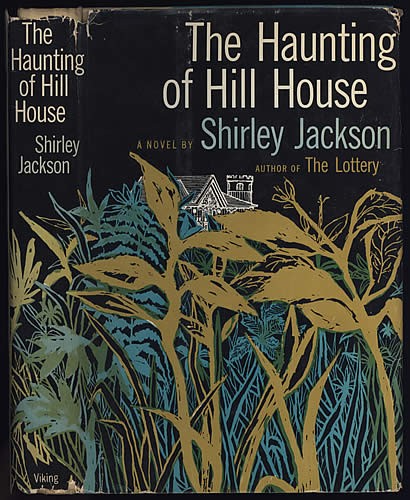
                • Cover of The Haunting of Hill House
                  The Haunting of Hill House

                  Shirley Jackson · standalone novel · 1959

                  similar byeeriemid 20th centurynorth americahorror+1 more

                  The Haunting of Hill House is a 1959 gothic horror novel by American author Shirley Jackson. It was a finalist for the National Book Award and has been made into two feature films, a play, and is the basis of a Netflix series.

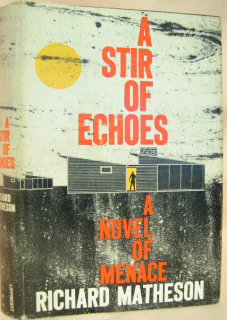
                • Cover of A Stir of Echoes
                  A Stir of Echoes

                  Richard Matheson · standalone novel · 1958

                  similar byeeriemid 20th centurynorth americafantasyhorror

                  A Stir of Echoes is a supernatural novel by American writer Richard Matheson, published in 1958. It served as the inspiration for the 1999 film Stir of Echoes.

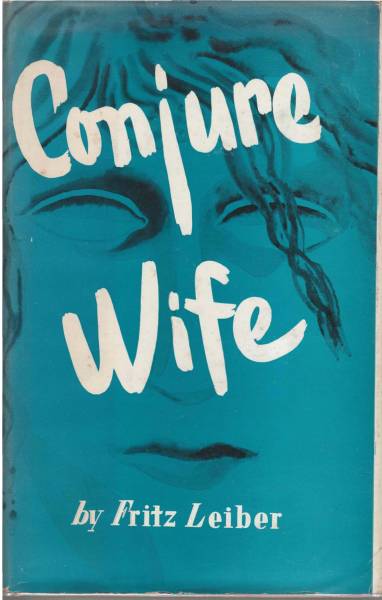
                • Cover of Conjure Wife
                  Conjure Wife

                  Fritz Leiber · standalone novel · 1943

                  similar byeeriemid 20th centurynorth americahorror+1 more

                  From the front cover of the Lion first paperback: "Potions in the house... evil in the air... and a witch in his bed." From the back cover of the Lion first paperback: ""Conjure Wife... is easily the most frightening (and necessarily) the most thoroughly convincing of all modern horror stories. Its premise is that witchcraft still flourishes, or at any rate survives, an open secret among women, a closed book to men. Under the rational overlay of 20th-century civilization this sickly growth, uncultivated, unsuspected, still manages to propagate itself. Leiber develops this theme with the utmost dexterity, piling up alternate layers of the mundane and outre, until at the story's real climax, the shocker at the end of chapter 14, I am not ashamed to say that I jumped an inch out of my seat. From that point onward the story anticlimax so skillfully managed that I am not really certain I touched the slipcover again until after the last page. Leiber has never written anything better... which perhaps is all that needed to be said." Damon Knight, Science Fiction Adventures"

                • Cover of John the Balladeer
                  John the Balladeer

                  series · 38 books · 1951

                  completed

                  similar byeerienorth americamid 20th centuryfantasy+2 more

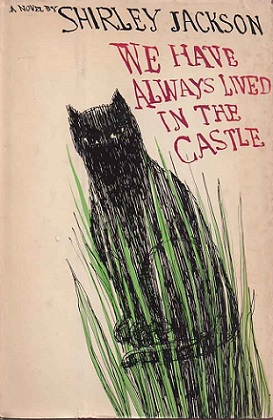
                • Cover of We Have Always Lived in the Castle
                  We Have Always Lived in the Castle

                  Shirley Jackson · standalone novel · 1962

                  similar byeeriemid 20th centurynorth americahorror

                  A young woman lives with her older sister and sickly uncle in their old family house, after a mysterious tragedy turns the townsfolk against them.

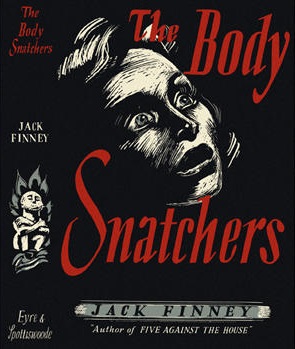
                • Cover of The Body Snatchers
                  The Body Snatchers

                  Jack Finney · standalone novel · 1955

                  similar byeerienorth americamid 20th centuryhorror

                  The Body Snatchers is a science fiction horror novel by American writer Jack Finney, originally serialized in Collier's magazine in November–December 1954 and published in book form the following year.

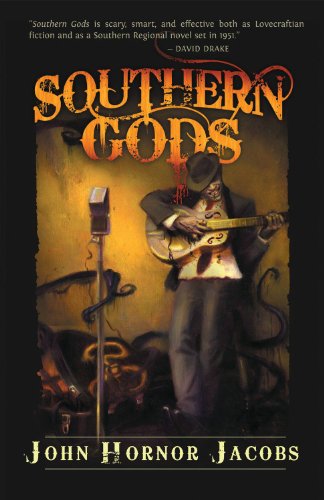
                • Cover of Southern Gods
                  Southern Gods

                  John Hornor Jacobs · standalone novel · 2011

                  similar byeeriemusicnorth americamid 20th centuryhorror

                  Recent World War II veteran Bull Ingram is working as muscle when a Memphis DJ hires him to find Ramblin' John Hastur. The mysterious blues man's dark, driving music broadcast at ever-shifting frequencies by a phantom radio station is said to make living men insane and dead men rise.

                • Cover of Peace
                  Peace

                  Gene Wolfe · standalone novel · 1975

                  similar byeeriemid 20th centurynorth america+2 more

                  Peace is a 1975 psychological fantasy/ghost story novel by American writer Gene Wolfe. It is the story of a man from a small Midwestern town in the early to mid-20th century, Alden Dennis Weer, who narrates various memories from different parts of his life, including his childhood, early adulthood, and middle to old age.

                • Cover of Witchcraft for Wayward Girls
                  Witchcraft for Wayward Girls

                  Grady Hendrix · standalone novel · 2025

                  similar byeerienorth americamid 20th centuryhorror

                  Witchcraft for Wayward Girls is a 2025 horror novel by American writer Grady Hendrix. It was first published in January 2025 in the United States by Berkley Books, an imprint of Penguin Random House, and in the United Kingdom by Tor Books. The novel is set in Florida in 1970, and is about a group of pregnant teenage girls living in a maternity home for unwed girls who discover a book on witchcraft.

                • Cover of Lewis Barnavelt
                  Lewis Barnavelt

                  series · 12 books · 1973

                  similar byeerienorth americafantasy+1 more

                  Lewis Barnavelt is a lonely orphan who moves in with his uncle Jonathan, an amateur wizard, in a rambling old house that turns out to hide a doomsday clock built into its walls by a previous, malevolent owner. John Bellairs introduced the character in The House with a Clock in Its Walls (1973), illustrated by Edward Gorey, and after Bellairs's death Brad Strickland continued the series from his notes and outlines for most of its later volumes. It blends gothic horror atmosphere with a gentler, more whimsical strain of children's fantasy.

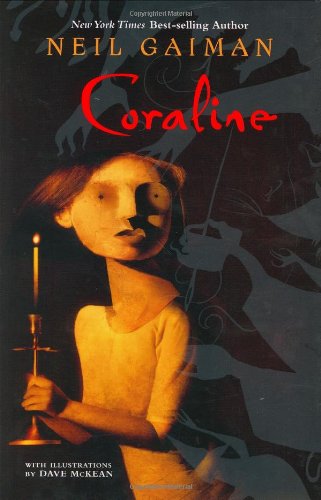
                • Cover of Coraline
                  Coraline

                  series · 2 books · 2002

                  similar byeeriefantasynorth americahorror

                • Cover of Tufa
                  Tufa

                  series · 8 books · 2011

                  similar bymusicnorth americamythic fantasy+2 more

                • Cover of The Armageddon Rag
                  The Armageddon Rag

                  George R. R. Martin · standalone novel · 1983

                  similar bymusicnorth americafantasy+1 more

                  The Armageddon Rag is a 1983 mystery/fantasy novel by American author George R. R. Martin, first co-published in hardcover by both Poseidon Press and The Nemo Press. The novel contains subdued and hidden fantasy elements and is structured in the form of a murder mystery; it is also a meditation on the rock music era of the 1960s and what became of both by the mid-1980s. The novel contains a detailed account of the history and repertoire of its imaginary rock band, including concert setlists and album track timings. Each of the novel's chapter headings open with actual famous rock lyrics, whose meanings resonate throughout that chapter.

                • Cover of Death Is a Lonely Business
                  Death Is a Lonely Business

                  Ray Bradbury · standalone novel · 1985

                  similar byeerienorth americamid 20th century

                  Death Is a Lonely Business is a mystery novel by American writer Ray Bradbury, published in 1985. The story, set in 1949, is about a series of murders that happen in Venice, California, then a declining seaside community in Los Angeles where Bradbury lived from 1942 to 1950. The main character and narrator is a sensitive, modest writer, with a girlfriend studying in Mexico City. In the course of the story he meets Elmo Crumley, a detective who helps him solve the mystery behind all the semi-murders occurring among a series of eccentric characters in the forgotten town.

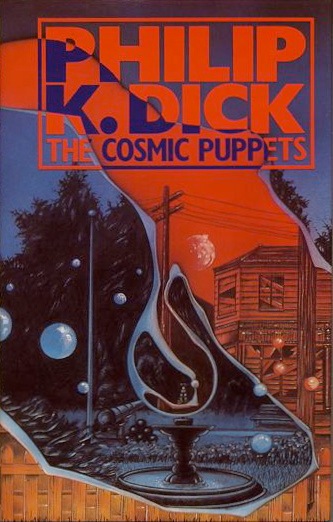
                • Cover of The Cosmic Puppets
                  The Cosmic Puppets

                  Philip K. Dick · standalone novel · 1957

                  similar byeerienorth americamid 20th century

                  The Cosmic Puppets is a science fiction novel by American author Philip K. Dick, published in 1957. It is a novelization of a short story initially published in the December 1956 issue of Satellite Science Fiction. The Cosmic Puppets was first published as a novel by Ace Books as one half of Ace Double D-249, bound dos-à-dos with Sargasso of Space by Andrew North .The story follows Ted Barton, a man who returns to his childhood hometown of Millgate, Virginia, only to discover that it has been erased from all official records and is now a surreal place where the laws of reality are distorted. Barton learns that the town is a battleground in a cosmic struggle between two ancient beings, a conflict that has twisted the fabric of his home and the memories of its inhabitants.

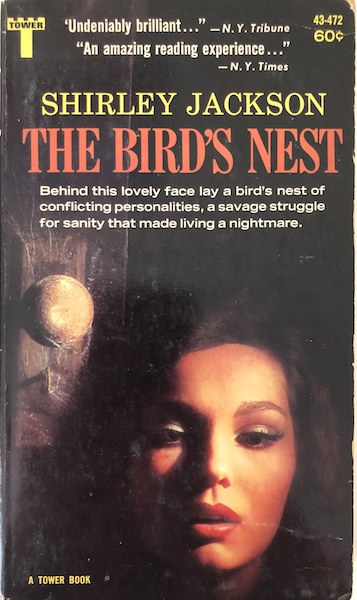
                • Cover of The Bird's Nest
                  The Bird's Nest

                  Shirley Jackson · standalone novel · 1954

                  similar byeerienorth americamid 20th century

                  The Bird's Nest is a 1954 novel by Shirley Jackson. The plot concerns a young woman, Elizabeth Richmond, with multiple personality disorder.

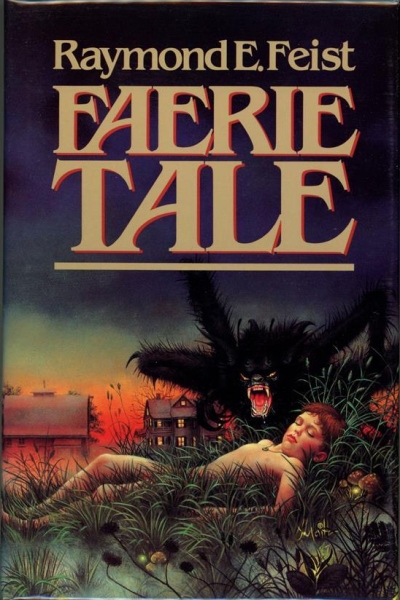
                • Cover of Faerie Tale
                  Faerie Tale

                  Raymond E. Feist · standalone novel · 1988

                  similar byeerienorth americafantasy+1 more

                  Faerie Tale is a supernatural thriller, falling within the subgenre of contemporary fantasy, by American writer Raymond E. Feist, first published in 1988.

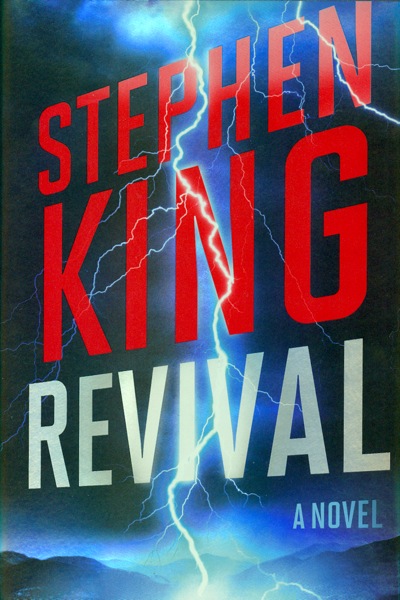
                • Cover of Revival
                  Revival

                  Stephen King · standalone novel · 2014

                  similar byeerienorth americahorror+1 more

                  The protagonist details how his life keeps intersecting with that of the man he first met as the pastor of his church in childhood, whose experiments with electricity lead to mastery of a cosmic power which he uses to help people, until his obsession leads to physical and spiritual disaster for all.

                • Cover of Eye in the Sky
                  Eye in the Sky

                  Philip K. Dick · standalone novel · 1957

                  similar byeeriemid 20th centurynorth america

                  Eight visitors touring a particle-accelerator facility are caught in a catastrophic malfunction, a collapsing platform, a burst of radiation, that leaves them all unconscious. When protagonist Jack Hamilton, an engineer recently fired over Red Scare-era suspicions about his wife's politics, comes to, the world around him is subtly, then not so subtly, wrong: physics bends to fit one fellow victim's religious convictions, then to another's paranoid fears, as the group cycles through what turn out to be shared hallucinations built from each other's private belief systems. Philip K. Dick's early novel about how differently people actually see the same world.

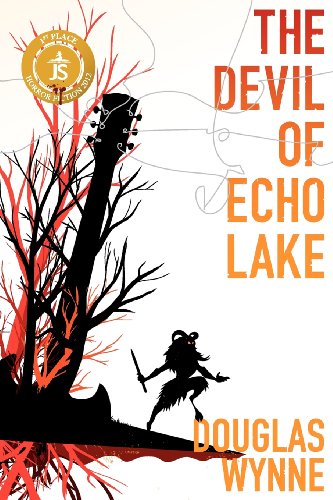
                • Cover of The Devil of Echo Lake
                  The Devil of Echo Lake

                  Douglas Wynne · standalone novel · 2012

                  similar byeeriemusicnorth americahorror

                  Billy Moon would have given his life for rock 'n' roll stardom, but the Devil doesn't come that cheap. Goth rock idol Billy Moon has it all: money, fame, and a different girl in every city. But he also has a secret, one that goes all the way back to the night he almost took his own life. The night Trevor Rail, a shadowy record producer with a flair for the dark and esoteric, agreed to make him a star ... for a price. Now Billy has come to Echo Lake Studios to create the record that will make him a legend. A dark masterpiece like only Trevor Rail can fashion. But the woods of Echo Lake have a dark past, a past that might explain the mysterious happenings in the haunted church that serves as Rail's main studio. As the pressure mounts on Billy to fulfill Rail's vision, it becomes clear that not everyone will survive the project. It's time the Devil of Echo Lake had his due, and someone will have to pay.

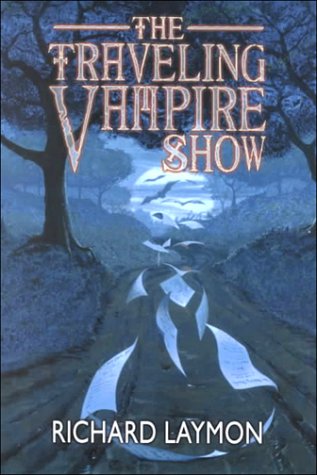
                • Cover of The Traveling Vampire Show
                  The Traveling Vampire Show

                  Richard Laymon · standalone novel · 2000

                  similar byeerienorth americamid 20th centuryhorror

                  From the front flap of the Headline first edition: "It's a day like any other in the hot August of 1963. Sleepy little Grandville holds few excitements for three thrill-seeking teenagers with time on their hands. Except for the posters. They've appeared on the streets overnight and for Dwight, Rusty and Slim the message is irresistible - The Travelling Vampire Show is coming to town. Not that getting in is going to be easy. For a start, the show's only for over-18s and they can't pass for that. And the performance begins at midnight, way past their parents' curfew. There's also the price of admission - ten bucks each will take some finding. But the whole day stretches ahead of them. What's to stop them taking off for Janks Field, the spooky venue for the show, and watching the crew set up? Maybe they can get some idea of what the performance will be like - even catch a glimpse of 'gorgeous, stunning' Valeria, billed as 'the only known vampire in captivity'. There can't be any harm in that - can there? The Travelling Vampire Show is the story of what happens to Dwight, Rusty and their tomboy pal Slim on the day they hike to Janks Field. Three teenagers who go where they shouldn't go, do what they shouldn't do - and run into big trouble."

                • Cover of Boys of Blur
                  Boys of Blur

                  N. D. Wilson · standalone novel · 2014

                  similar byeerienorth americafantasymythic fantasy+1 more

                  Boys of Blur is a 2014 young adult novel by N. D. Wilson, published by Random House. It is set in the Florida Everglades, where boys play football and chase rabbits through burning sugarcane fields. According to Booklist, "Wilson brings the stuff of folklore to life in this novel, as elements of Beowulf, voodoo, and zombie mythos combine with the everyday to fantastic effect. The story moves at heart-pounding speeds, furthered by magic and mystery and rooted in ideas of familial bonds and self-discovery."

                • Cover of Hangsaman
                  Hangsaman

                  Shirley Jackson · standalone novel · 1951

                  similar byeerienorth americamid 20th century

                  Hangsaman is a 1951 gothic novel by American author Shirley Jackson. The second of Jackson's published novels, Hangsaman is a bildungsroman centering on lonely college freshman Natalie Waite, who descends into madness after enrolling in a liberal arts college.

                • Cover of Our Lady of Darkness
                  Our Lady of Darkness

                  Fritz Leiber · standalone novel · 1977

                  similar byeerienorth americafantasyhorror

                  Our Lady of Darkness (1977) is an urban fantasy novel by American author Fritz Leiber. The novel is distinguished for three elements: the heavily autobiographical elements in the story, the use of Jungian psychology that informs the narrative, and its detailed description of "megapolisomancy", a fictional occult science. It was originally published in shorter form as The Pale Brown Thing.