Loreful
HomeDiscover
Search series, authors…⌘K
Loreful

Reading orders for SF/F series and shared universes — with your place kept in every one.

Explore

UniversesSeriesWorksAuthorsAtlas

Help

FAQAboutSite map

Account & legal

Sign inCreate accountPrivacyTerms

Data

Built on ISFDB, Wikipedia, Wikidata and Open Library. Curated reading orders carry their reasoning on the page; the rest follow publication order. Data sources & licenses

© Loreful · data: ISFDB · CC BY

More like The Step

but

Mood

The mood the book leaves you in.

  • The reading experience is propelled by journeys, exploration, and physical risk; excitement and forward momentum dominate over dread or introspection.
  • Joy and loss are deliberately mixed; the resolution grants characters something real while taking something else away, leaving warmth and sorrow together.
  • The book demands work from the reader — dense prose, difficult structure, unfamiliar ideas, or morally uncomfortable material — as part of its intended effect.
  • Grim events, cruelty, or despair dominate the atmosphere, and the book does not soften them with comfort or comic relief.
  • The atmosphere is quietly unsettling — wrongness, unease, and the uncanny pervade the book without necessarily escalating into overt horror.
  • The book is built to move the reader; character feeling is foregrounded and major scenes aim at a strong emotional response.
  • Humor is a primary aim and the prose plays for laughs — comic situations, wit, or dialogue produce sustained comedy, not occasional levity.
  • The book insists that things can improve; effort and decency are shown to matter, and the arc bends toward better outcomes even through hardship.
  • The book teaches as it goes — real facts, history, science, or craft are conveyed in enough depth that learning is part of the reading experience.
  • The book is designed to uplift and motivate, presenting perseverance or achievement in a way that invites the reader to aspire or act.
  • The overall register is cheerful and easygoing; stakes are kept gentle and the book avoids dwelling on pain or dread.
  • Withheld information drives the experience; the book sustains enigmas and secrets the reader wants resolved, whatever its genre.
  • The book is contemplative and inward-looking, giving more weight to thought, memory, and meaning than to external events.
  • Grief, loss, or melancholy set the dominant register, and the book lets sorrow stand rather than resolving it into comfort.
  • Sustained suspense is the point; the book keeps the reader braced for what happens next through danger, pressure, or impending revelation.
  • Playful invention and charm define the register — fanciful conceits, light absurdity, and a narration that delights in its own oddity.

About

What the story runs on.

  • Stories in which extraterrestrial beings are central — as characters, cultures, or the object of the plot.
  • Stories driven by a curse laid on a person, family, or place, and the struggle to live under it or break it.
  • Stories in which staying alive against nature, catastrophe, or scarcity is the central problem.
  • Stories of growing up — a young protagonist crossing from childhood into adult knowledge and responsibility.
  • Stories about who a character truly is — self-discovery, doubled lives, and the search for a self.
  • Stories about mental unraveling — descent into madness, delusion, and minds at war with themselves.
  • Stories about mourning — living through the death of a loved one and what loss does to the survivors.
  • Stories in which a buried family truth — hidden parentage, crimes, or shames — surfaces and reorders the present.
  • Stories driven by maneuvering for power — factions, conspiracies, and statecraft conducted in shadow.
  • Stories in which war itself is the subject — combat, occupation, and what warfare does to soldiers and civilians.
  • Stories about empire — conquest, colonial rule, and its legacies for colonizer and colonized.
  • Stories organized around investigating a killing — the case, the clues, and the pursuit of the killer, in any genre's clothing.

Shelf

Where it sits in the library.

    • Fiction built on magic or other supernatural elements that have no scientific explanation.
    • Secondary-world fantasy at large scale, where the fate of nations or the world turns on the protagonists' struggle.
    • Fantasy set in a recognizably modern city or contemporary world where the supernatural intrudes on everyday life.
    • Fantasy that blends in horror's atmosphere and imagery, keeping a fantastical frame around grim or frightening material.
    • Action-driven fantasy following warriors or rogues with personal stakes against sorcerous threats, rather than world-spanning conflicts.
    • Fantasy set in a real historical period or a close analogue of one, with magic woven into the era.
    • Fantasy in which protagonists cross from the ordinary world into another world through a portal or similar passage.
    • Fiction that retells or reworks a traditional fairy tale in a new form or setting.
    • Fantasy drawing directly on myths, legends, and folklore, retelling them or building on their figures and logic.
    • Fantasy of ghosts, vampires, shapeshifters, psychics, and similar phenomena, usually set in an otherwise ordinary world.
    • Fiction mixing science-fictional trappings with overtly magical or impossible elements in one setting.
    • Low-stakes fantasy emphasizing comfort, community, and everyday pleasures over conflict and peril.
    • Speculative fiction of pervasive moral ambiguity, violence, and cynicism that rejects heroic conventions — fantasy and SF alike.
      • Fiction that extrapolates from science and technology — future societies, space travel, or speculative inventions — within at least nominally natural laws.
      • Science fiction of interstellar scope — starships, galactic polities, and adventure across star systems.
      • Science fiction committed to scientific rigor, where technical plausibility constrains the story.
      • Science fiction centered on armed forces and warfare, told largely from a military point of view.
      • Science fiction of networked, corporate-dominated near futures, pairing high technology with social decay.
      • Science fiction styled on nineteenth-century steam-powered technology, often in a Victorian or pseudo-Victorian setting.
      • Fiction depicting an oppressive or catastrophic society, presented as a warning.
      • Fiction set after civilization's collapse, following survivors in the ruins of the old world.
      • Fiction in which characters move between past and future, and the mechanics or consequences of that travel drive the plot.
      • Fiction exploring a world where a historical event went differently and history diverged from ours.
      • Science fiction about humanity's first encounter and communication with an alien intelligence.
      • Science fiction in which extraterrestrial forces attack or occupy Earth and humanity resists.
      • Fiction whose primary aim is to frighten or unsettle the reader through dread, menace, or the monstrous.
      • Horror of vast, indifferent, incomprehensible entities before which humanity is insignificant, in the Lovecraft tradition.
      • Horror of decaying houses, buried family secrets, and oppressive atmosphere in the Gothic literary tradition.
      • Horror centered on hauntings and the returning dead.
      • Horror located in the mind — paranoia, obsession, and unreliable perception rather than external monsters.
      • Horror built around the reanimated dead and survival amid their outbreaks.
      • Horror defined by explicit, transgressive gore that refuses to cut away from violence.
      • Speculative fiction of the strange and uncanny that resists both natural explanation and standard genre categories.
      • Fiction organized around solving a crime or puzzle, typically following an investigator toward the identification of a culprit.
      • A puzzle-first mystery that lays out clues so the culprit's identity can be deduced before the reveal.
      • Crime fiction of moral ambiguity, fatalism, and hard-edged style, set among the corrupt and the doomed.
      • A mystery following the realistic routines of police work — forensics, interviews, and case-building.
      • A gentle mystery with an amateur sleuth, a small community, and violence kept off the page.
      • A mystery set in a past era, where the investigation works within that period's methods and society.
      • Fast-paced fiction driven by imminent danger, pursuit, or high-stakes conspiracy, built to sustain tension.
      • A thriller of espionage — agents, tradecraft, and intelligence services in conflict.
      • A thriller centered on lawyers and the courtroom, where litigation carries the suspense.
      • A thriller driven by detailed contemporary or near-future technology, often military or scientific.
      • A thriller whose tension comes from mental states and manipulation between characters rather than external action.
      • Fiction whose central plot is a romantic relationship and its development toward an emotionally satisfying resolution.
      • Romance in which one or both partners are supernatural beings, blending fantasy elements into the love story.
      • A fantasy-romance hybrid in which the romantic arc and the fantasy plot carry equal weight.
      • Romance set in a past era, with courtship shaped by the period's society and manners.
      • Romance set in the present day, without supernatural or historical elements.
      • Fiction set in a real past period, where the historical setting materially shapes characters and events.
        • General and literary fiction emphasizing prose style, character interiority, or formal ambition over genre plot conventions.
        • Fiction in a realistic world where magical events occur and are treated as ordinary, in the tradition of Latin American literature.
        • Fiction that ridicules people, institutions, or society in order to criticize them.
        • Fiction of dreamlike, irrational imagery and logic that breaks from realistic representation.
        • Fiction that plays with narrative convention through metafiction, fragmentation, and self-reference.
        • Fiction propelled by journeys, exploration, and physical peril, where action and survival carry the plot.
        • Adventure fiction of ships and seafaring — naval engagements, voyages, and life at sea.
        • Fiction of the American frontier West — gunmen, ranchers, and lawmen, typically in the late nineteenth century.
        • Fiction centered on soldiers, campaigns, and the experience of warfare, historical or imagined.
          • Fiction written primarily to amuse, using comedic situations, wit, or parody as its organizing principle.
            • Multi-generational fiction following a family or dynasty across decades, with inheritance and kinship as the through-line.
              • Fiction whose world runs on explicit game mechanics — levels, stats, and skills that characters can see and exploit.
                • Fiction about costumed or superpowered heroes and their conflicts with comparable villains.

                Practical

                How long a commitment, whether it stands alone, and whether it has finished.

                Tap a chip to ask for it · tap again to rule it out · once more to clear. Numbers show what would be left.

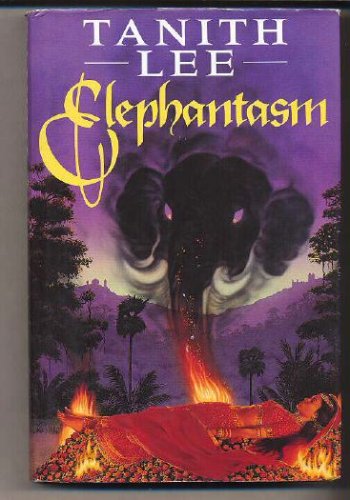
                • Cover of Elephantasm
                  Elephantasm

                  Tanith Lee · standalone novel · 1993

                  similar bycolonialism+1 more

                  Synopsis - Annie Ember lives in hopeless poverty with her sister Rose and her wicked brother-in-law...until the day that Annie discovers the mysterious exotic shop where she buys, for one penny, a tiny and ancient ivory elephant. Soon afterwards a grisly murder leaves Annie without home or family, but employment is found for her in a country house far away. Sir Hampton Smolte made his fortune out in India, and has brought back not only his wealth but also an obsessive hatred towards that conquered land where he once commanded a mercenary army. His mansion is fanciful and extraordinary, all scarlet and gold, like a fairy tale raja’s palace set down in green English parkland. There Annie is to become a drudge – a scullery maid in this house full of stuffed animals, eccentric servants, and the even more peculiar Smolte family. But soon she catches the eye of the handsome Rupert who, like his father, retains a fascination with India. Entranced, she succumbs to his attentions – till one night she learns in disgust and terror just what his lovemaking entails... Annie’s fear and helpless fury provide the catalyst which will turn this dream house into a place of panic and the impossible – letting in all the power of the jungle, and unlocking the darkest secrets of Hampton Smolte’s beginnings.

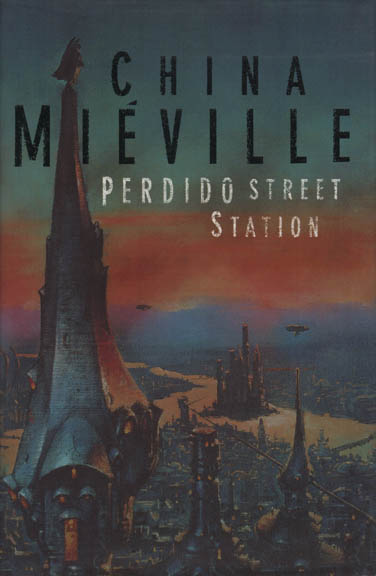
                • Cover of New Crobuzon
                  New Crobuzon

                  series · 4 books · 2000

                  similar by+1 more

                  The New Crobuzon books are three standalone novels by China Miéville set in and around New Crobuzon, a vast, corrupt industrial city in his invented world of Bas-Lag where magic, biopunk technology, and several sentient species coexist. Perdido Street Station follows a renegade scientist and his lover after an experiment unleashes something monstrous on the city, while The Scar and Iron Council return to the same setting with different casts and only loose continuity between books.

                • Cover of The Island of Dr. Moreau
                  The Island of Dr. Moreau

                  series · 12 books · 1896

                  similar by+1 more

                  H. G. Wells's 1896 novel The Island of Doctor Moreau follows a shipwrecked man stranded on a remote island where a reclusive scientist creates human-animal hybrids through vivisection, using the scenario to probe questions of cruelty, control, and what separates humanity from the beasts it experiments on. The premise has drawn later reimaginings gathered alongside it here, including Brian Aldiss's Moreau's Other Island and Silvia Moreno-Garcia's The Daughter of Doctor Moreau, each transplanting Wells's central idea into a new setting and voice. Taken together, the group traces one unsettling premise across more than a century of speculative fiction rather than forming a single ongoing story.

                • Cover of Exorcist
                  Exorcist

                  series · 6 books · 1971

                  similar byhorror+1 more

                  William Peter Blatty's The Exorcist (1971) follows two Catholic priests trying to save a twelve-year-old girl from a violent demonic possession, and became the basis of the acclaimed 1973 film. Blatty returned to the story in 1983 with Legion, in which police detective Bill Kinderman's investigation of a string of ritual murders leads him back to the aftermath of that exorcism and the fate of Father Karras; Legion was later filmed as The Exorcist III. Other Exorcist books are tie-in and franchise material rather than further novels by Blatty himself.

                • Cover of Blood Meridian; or, The Evening Redness in the West
                  Blood Meridian; or, The Evening Redness in the West

                  Cormac McCarthy · standalone novel · 1985

                  similar by+2 more

                  "Based on incidents that took place in the southwestern United States and Mexico around 1850, this novel chronicles the crimes of a band of desperados, with a particular focus on one, "the kid," a boy of fourteen." (cited from the OCLC entry for the first edition)

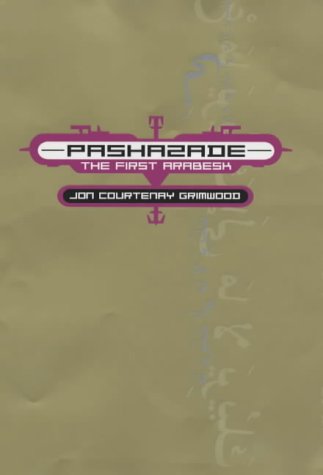
                • Cover of Arabesk
                  Arabesk

                  series · 3 books · 2001

                  similar bymiddle east+1 more

                  The Arabesk trilogy is a sequence of alternate history novels by the British author Jon Courtenay Grimwood.

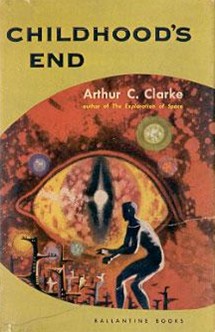
                • Cover of Childhood's End
                  Childhood's End

                  Arthur C. Clarke · standalone novel · 1953

                  similar by+1 more

                  Childhood's End is a 1953 science fiction novel by the British author Arthur C. Clarke. The story follows a peaceful alien invasion of Earth by mysterious Overlords, whose arrival begins decades of apparent utopia under indirect alien rule, at the cost of human identity and culture.

                • Cover of Pharos the Egyptian
                  Pharos the Egyptian

                  Guy Boothby · standalone novel · 1898

                  similar byhorror+1 more

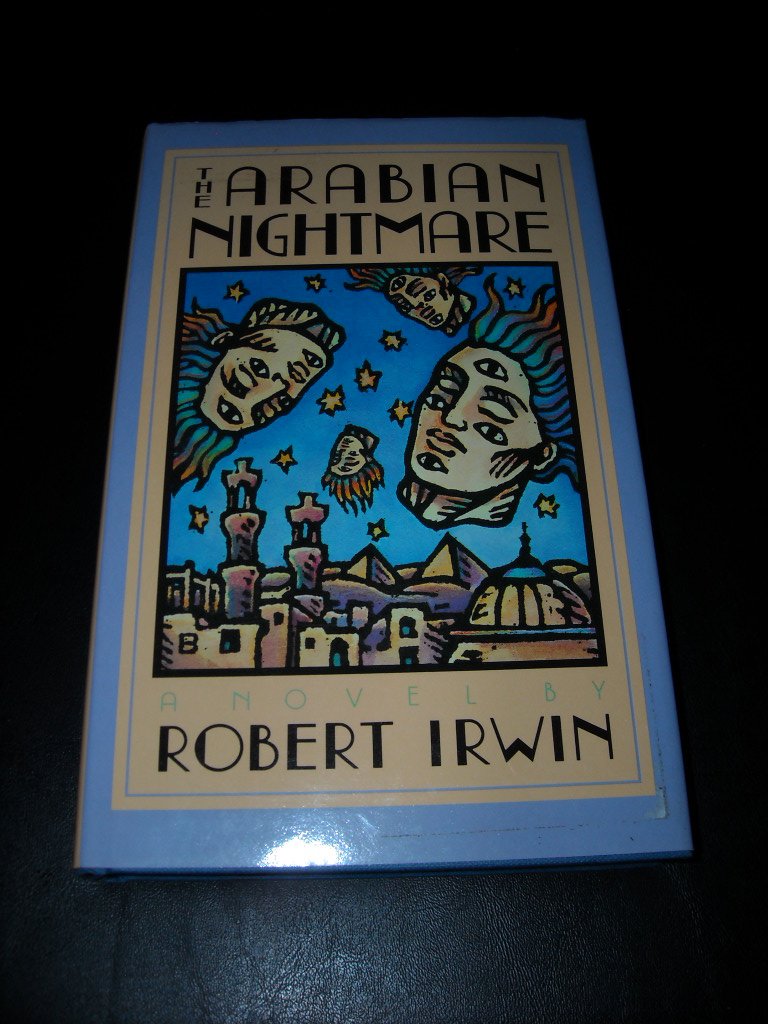
                • Cover of The Arabian Nightmare
                  The Arabian Nightmare

                  Robert Irwin · standalone novel · 1983

                  similar byhorrormiddle east

                  The Arabian Nightmare is a novel by Robert Irwin published in 1983. The Arabian Nightmare was inspired by The Arabian Nights, as well as the novel The Manuscript Found in Saragossa by Jan Potocki.

                • Cover of Dracula
                  Dracula

                  universe · 144 books · 1897

                  Start hereDracula · Start here

                  similar byhorror

                  "Come freely. Go safely. And leave something of the happiness you bring" — so the Count greets his guest at the threshold of the Carpathians, and the great door shuts behind. Bram Stoker's Dracula (1897) is the wellspring of the modern vampire: the account of a centuries-old Transylvanian nobleman who quits his crumbling castle for the crowded lodging-houses of London, and the handful of ordinary people — a young solicitor, a doctor of the mad, a professor of stranger learning — who must piece together what he is before he makes the whole city his fold. It is told wholly in fragments: journal entries, letters, telegrams, ships' logs, phonograph cylinders, each hand recording only its own sliver of the dark. Around that single novel a whole crypt of continuations has grown, raised by many writers across a century. Fred Saberhagen's Dracula Sequence hands the Count the microphone, retelling the old events from his own wry, aggrieved lips and following him into later intrigues. Robert Lory's brisk 1970s Dracula Horror Series revives him as a reluctant weapon turned against fouler things; Peter Tremayne's trilogy reaches back along his bloodline; and further sequels, a Quincey Morris spin-off, and Dracula's Children carry the shadow onward. This is a loose shared world built upon a public-domain figure, not one governed continuity — each author remakes him as villain, antihero, or sympathetic narrator. Begin, always, with Stoker's original; the letters and the mounting dread stand entirely on their own. From there follow whichever door tempts you — Saberhagen's The Dracula Tape for the monster's own confession, Lory or Tremayne for tales that never glance back at the Borgo Pass again.

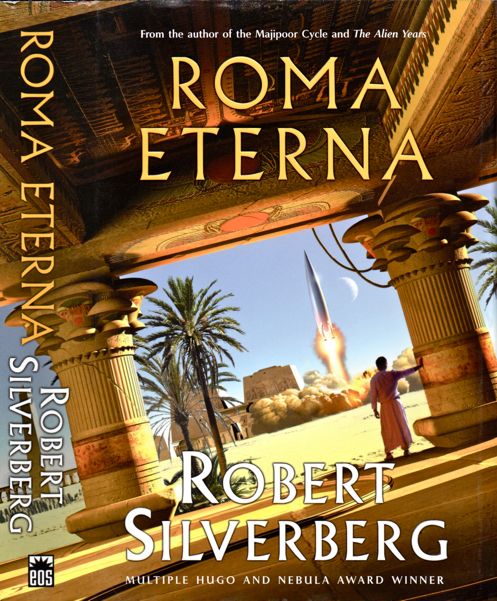
                • Cover of Roma Eterna
                  Roma Eterna

                  series · 11 books · 1989

                  similar by+1 more

                  Robert Silverberg's Roma Eterna imagines an alternate history in which the Roman Empire never fell and endures into the present day, tracing its long, uneven survival through a sequence of pivotal moments across two millennia. Rather than one continuous plot, the book is a fix-up of ten linked stories, most first published in Asimov's Science Fiction over a fourteen-year span, each set in a different era of this unbroken Rome. It reads as the chronicle of a civilization rather than a story following a single cast of characters.

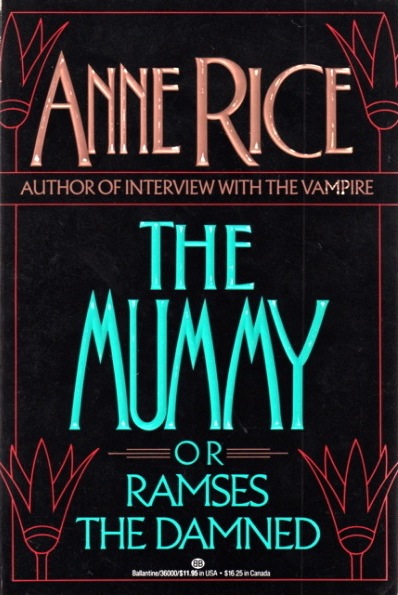
                • Cover of Ramses the Damned
                  Ramses the Damned

                  series · 3 books · 1989

                  similar byhorror+1 more

                • Cover of Ben Walker
                  Ben Walker

                  series · 3 books · 2017

                  similar byhorror+1 more

                • Cover of The Vampire Chronicles
                  The Vampire Chronicles

                  series · 15 books · 1976

                  completed

                  similar byhorror

                  The Vampire Chronicles is a series of Gothic vampire novels and a media franchise, created by American author Anne Rice, that revolves around the fictional character Lestat de Lioncourt, a French nobleman turned into a vampire in the 18th century.

                • Cover of This Immortal
                  This Immortal

                  series · 2 books · 1966

                  similar bycolonialism

                  This Immortal is a single science fiction novel by Roger Zelazny, expanded from his 1965 serial ...And Call Me Conrad. In a depopulated future Earth largely toured by an alien race, its long-lived, secretive protagonist Conrad Nomikos is assigned to guide and protect a visiting alien across the ruins of Greece and Egypt, uncovering old grudges and assassination plots along the way. The novel shared the 1966 Hugo Award for Best Novel with Frank Herbert's Dune.

                • TD
                  The Devourers

                  Indrapramit Das · standalone novel · 2015

                  similar byhorror+1 more

                  The Devourers is a 2015 debut novel by Indian writer, artist, and editor Indra Das. It takes place in Kolkata, India, where Das grew up, and is considered South Asian speculative fiction and dark fantasy, incorporating aspects of historical fiction, fantasy, and horror. It was originally published by Penguin India in 2015, followed by release in North America by Ballantine Del Rey of Penguin Random House in July 2016.

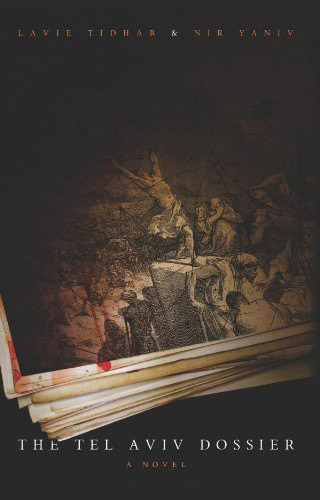
                • Cover of The Tel Aviv Dossier
                  The Tel Aviv Dossier

                  Lavie Tidhar & Nir Yaniv · standalone novel · 2009

                  similar byhorrormiddle east

                  Through a city torn apart by a violence they cannot comprehend, three disparate people—a documentary film-maker, a yeshiva student, and a psychotic fireman—must try to survive, and try to find meaning: even if it means being lost themselves. As Tel Aviv is consumed, a strange mountain rises at the heart of the city, and shows the outline of what may be another, alien world beyond. Can there be redemption there? Can the fevered rumours of a coming messiah be true? As the city loses contact with the outside world and closes in on itself, as the few surviving children play and scavenge in the ruins, can innocence survive, and is it possible for hope to spring amid such chaos? A potent mixture of biblical allusions, Lovecraftian echoes, and contemporary culture, The Tel Aviv Dossier is part supernatural thriller, part meditation on the nature of belief—an original and involving novel painted on a vast canvas in which, beneath the despair, humour is never absent. Experience the last days of Tel Aviv...

                • Cover of Herland
                  Herland

                  series · 2 books · 1915

                  completed

                  similar bycolonialism

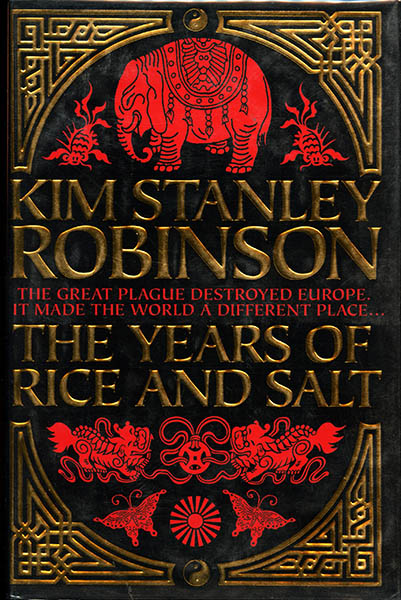
                • Cover of The Years of Rice and Salt
                  The Years of Rice and Salt

                  Kim Stanley Robinson · standalone novel · 2002

                  similar bycolonialism

                  What if the Black Death had killed nearly everyone in Europe instead of a third of it? Kim Stanley Robinson opens on that premise with a Mongol scout named Bold, who finds a Hungarian city emptied by plague and only narrowly escapes execution meant to contain the contagion; sold into slavery, he ends up serving aboard a Chinese treasure fleet alongside a young African companion. From there the novel follows a recurring cast of souls, reincarnated across centuries and identifiable book to book by the first letter of their names, through an alternate history in which Islamic and Chinese civilizations, not a devastated Europe, shape the world's future.

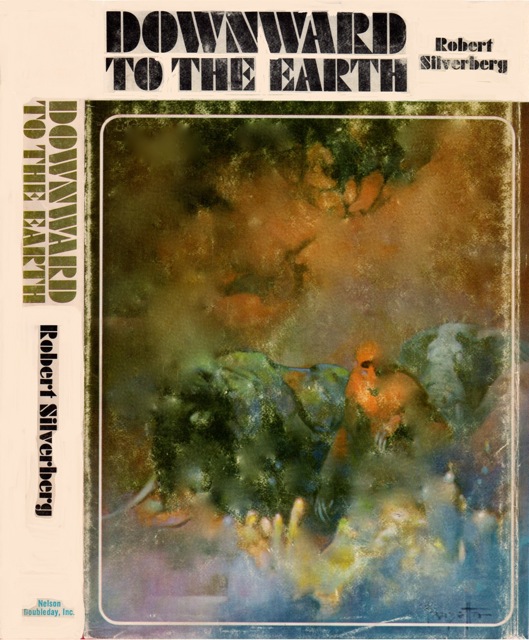
                • Cover of Downward to the Earth
                  Downward to the Earth

                  Robert Silverberg · standalone novel · 1969

                  similar bycolonialism

                  Edmund Gunderson was the Terran administrator of the colony world of Belzagor, and he returns to it after it has gained independence, feeling a sense of guilt for the way he has treated its dominant species, the elephant-like nildoror, whose animalistic appearance had kept Gunderson from taking them seriously as sentient beings. On his return, he feels a new sense of kinship with the natives, perhaps more than for the Terran tourists. The nildoror undergo a process of rebirth, and Gunderson's greatest guilt comes from having denied rebirth to seven nildoror to make them help him repair flood damage.(From Wikipedia)

                • Cover of Bioterror
                  Bioterror

                  Tim Curran · standalone novel · 2021

                  similar byhorrormiddle east

                  ● "Six years ago – Nkudbkah, Iraq. A small Republican Guard mechanized infantry unit and the isolated village near it is chosen by the CIA for a dreadful purpose: to test the potential of Project BioGenesis—a genetically modified organism designed to be a viable method of biological warfare. It was an unmitigated failure. When the team sent in for reconnaissance is attacked and eventually infected by the weaponized parasites, only one plan exists for such a result—utter annihilation of all infected organisms under a blanket of napalm and phosphorus, burning it with a cleansing fire...or so they thought." ― quoted from this book's Amazon product page as of 2021-05-16.
                • Cover of Outpost Universe
                  Outpost Universe

                  series · 4 books · 2011

                  similar byhorror+1 more

                • Cover of The Romancist and Novelist's Library
                  The Romancist and Novelist's Library

                  series · 16 books · 1764

                  similar by+1 more

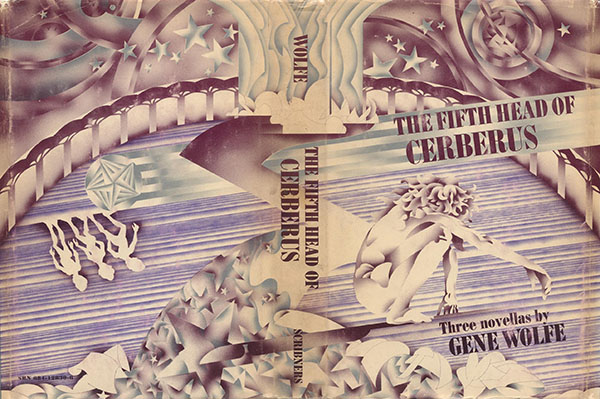
                • Cover of The Fifth Head of Cerberus
                  The Fifth Head of Cerberus

                  series · 4 books · 1972

                  similar by+1 more