More like The Third Bubble
anchored on:science fictionmid 20th century
but
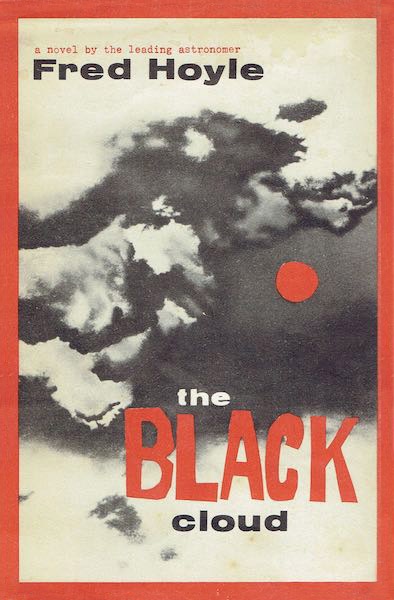
- The Black Cloud
Fred Hoylestandalone novel1957
similar byscience fictionour worldmid 20th century
The Black Cloud is a 1957 science fiction novel by British astrophysicist Fred Hoyle. It details the arrival of an enormous cloud of gas that enters the Solar System and appears about to destroy most of the life on Earth by blocking the Sun's radiation.
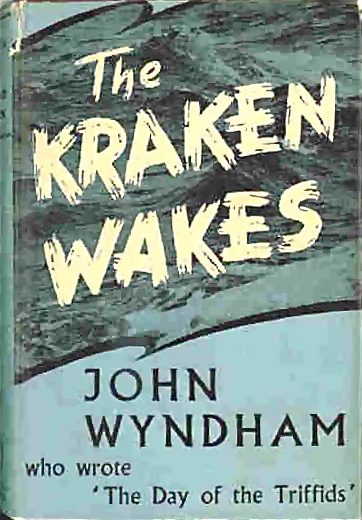
- The Kraken Wakes
John Wyndhamstandalone novel1953
similar byscience fictionour worldmid 20th century
" Behind a spectacular meteor shower actually hides the beginning of an invasion by a mysterious and powerful alien race. Earth's life is disrupted by the attacks of extraterrestrials whose war machines, emerging from the depths of the oceans, seem indestructible. The coalitioned forces of the whole world are worthless, powerless in the face of the indecipherable and deadly plans of a superior intelligence, capable of bringing the entire planet to the brink of catastrophe" Goodreads May 20, 2022
- The Man Who Fell to Earth
Walter Tevisstandalone novel1963
similar byscience fictionour worldmid 20th century
The Man Who Fell to Earth is a 1963 science-fiction novel by American writer Walter Tevis. Published by Gold Medal Books as a paperback original, it was Tevis's second novel, following The Hustler. The novel follows Thomas Jerome Newton, an extraterrestrial from the drought-stricken planet Anthea, who comes to Earth hoping to build a spacecraft that can save the surviving members of his species.
- Venus Plus X
Theodore Sturgeonstandalone novel1960
similar byscience fictionmid 20th century+1 more
Charlie Johns wakes in a featureless silver room with no memory of how he got there and a watch that's inexplicably running backward. He's been brought, how and by whom is never explained to him, to Ledom, an isolated, technologically advanced society whose members are all both male and female and have done away with fixed sex roles entirely. Guides walk him through Ledom's customs and machinery while making clear he's there to judge them before he can go home. Interwoven with Charlie's tour are chapters following an ordinary mid-century American family, setting the utopia against the world it's implicitly critiquing. Theodore Sturgeon's provocative novel about gender and social design.
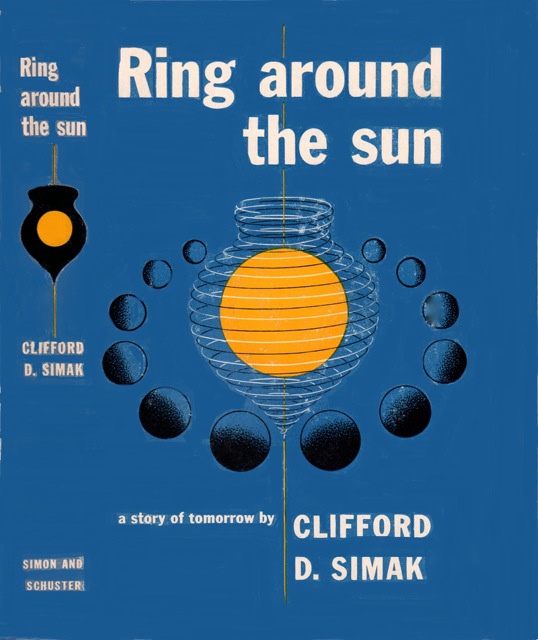
- Ring Around the Sun
Clifford D. Simakstandalone novel1953
similar byscience fictionour worldmid 20th century
Ring Around the Sun is a science fiction novel by American writer Clifford D. Simak. Its anti-urban and pro-agrarian sentiments are typical of much of Simak's work.
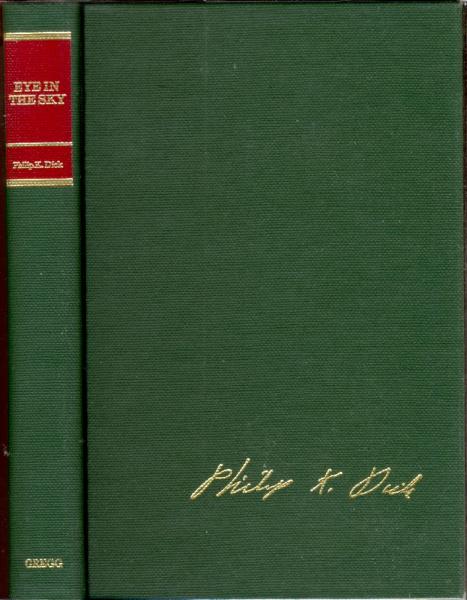
- Eye in the Sky
Philip K. Dickstandalone novel1957
similar byscience fictionour worldmid 20th century
Eight visitors touring a particle-accelerator facility are caught in a catastrophic malfunction, a collapsing platform, a burst of radiation, that leaves them all unconscious. When protagonist Jack Hamilton, an engineer recently fired over Red Scare-era suspicions about his wife's politics, comes to, the world around him is subtly, then not so subtly, wrong: physics bends to fit one fellow victim's religious convictions, then to another's paranoid fears, as the group cycles through what turn out to be shared hallucinations built from each other's private belief systems. Philip K. Dick's early novel about how differently people actually see the same world.
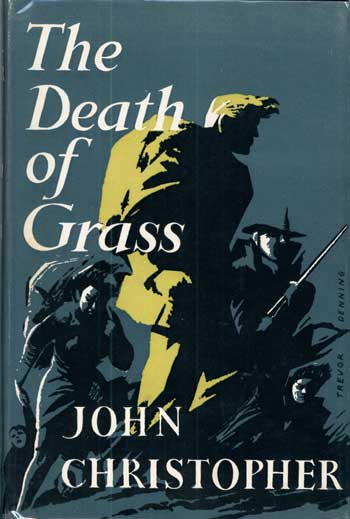
- The Death of Grass
John Christopherstandalone novel1956
similar byscience fictionour worldmid 20th century
The Death of Grass is a 1956 post-apocalyptic science fiction novel written by the English author Sam Youd under the pen name John Christopher. The plot concerns a virus that kills off grass species, including rice and wheat. The Death of Grass was the first of several post-apocalyptic novels written by Youd. The novel was written in a matter of weeks and liberated him from his day job.
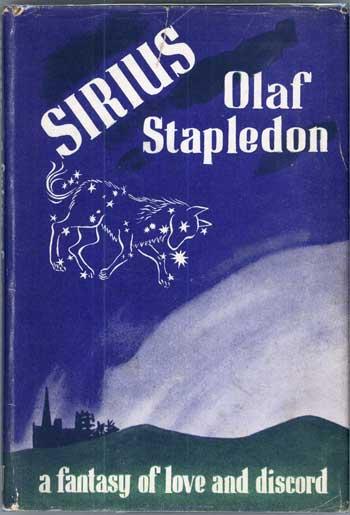
- Sirius: A Fantasy of Love and Discord
Olaf Stapledonstandalone novel1944
similar byscience fictionour worldmid 20th century
Sirius is a 1944 science fiction novel by the British philosopher and author Olaf Stapledon, whose title character is a dog named Sirius with humanlike intelligence. A sense of existential questioning suffuses the book, as the author delves into aspects of Sirius's psyche. The novel deals with many human issues through Sirius and his experiences, his unusual nature, his ideas and his relationships with humans. The characters go to great lengths to prevent Sirius from becoming a circus-type wonderdog, and instead, they seek to develop Sirius's character much like a family would create and foster that of a human child.
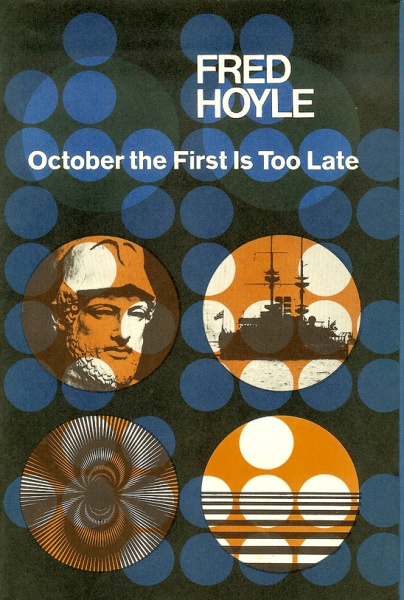
- October the First Is Too Late
Fred Hoylestandalone novel1966
similar byscience fictionour worldmid 20th century
October the First is Too Late is a science fiction novel by astrophysicist Fred Hoyle. It was first published in 1966.
- The Disappearance
Philip Wyliestandalone novel1951
similar byscience fictionour worldmid 20th century
One ordinary moment, the world splits in two: every man on Earth finds every woman gone without a trace, and at the same instant every woman finds herself in a world emptied of men -- two parallel realities on the same planet, each population convinced the other has vanished. Philip Wylie follows both worlds afterward, one sliding into authoritarian collapse without women to share or restrain power, the other building something more equal and freer, using the split to interrogate mid-century assumptions about sex, marriage and the double standards separating what men and women were each allowed to be. A speculative novel years ahead of the feminist movement it anticipates.
- The House That Stood Still
A. E. van Vogtstandalone novel1950
similar byscience fictionour worldmid 20th century
A California estate lawyer takes a case involving a decaying mansion built atop a pre-Toltec stone structure, and discovers, following a secretive cult in the house, that the ancient foundation confers immortality on those who know how to use it. Drawn in through his attraction to a cult member, the lawyer learns the group possesses technology beyond its disguise, including spacecraft, and is preparing to relocate the house's stones off-world to escape a coming war. He finds himself trying to stop a catastrophe, expose an ancient secret, and win the woman's trust, all at once. A. E. van Vogt's blend of hardboiled mystery and cosmic science fiction.
- Cat's Cradle
Kurt Vonnegut & Jr.standalone novel1963
similar byscience fictionour worldmid 20th century
Cat's Cradle is a satirical postmodern novel, with science fiction elements, by American writer Kurt Vonnegut. Vonnegut's fourth novel, it was first published on March 18, 1963, exploring and satirizing issues of science, technology, the purpose of religion, and the arms race, often through the use of morbid humor. The novel was nominated for the Hugo Award for Best Novel in 1964.
- I Am Legend
Richard Mathesonstandalone novel1954
similar byscience fictionour worldmid 20th century
The last human survivor of the vampire epidemic has to maintain his defences against their onslaught, while attempting to research the cause and possibly solution to the plague. Robert Neville is the last living man on Earth... but he is not alone. Every other man, woman and child on the planet has become a vampire, and they are hungry for Neville's blood. By day he is the hunter, stalking the undead through the ruins of civilization. By night, he barricades himself in his home and prays for the dawn. How long can a man survive like this?
- Camp Concentration
Thomas M. Dischstandalone novel1968
similar byscience fictionour worldmid 20th century
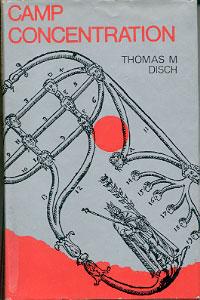
Camp Concentration is a science fiction novel by American writer Thomas M. Disch. It was first serialized in four parts in New Worlds from July to October 1967 and was published in book form in the United Kingdom in 1968, followed by a first U.S. edition in 1969.
- The Proteus Operation
James P. Hoganstandalone novel1985
similar byscience fictionour worldmid 20th century
The Proteus Operation is a science fiction alternate history novel written by James P. Hogan. The plot focuses on an Anglo-American team of soldiers and civilians sent back in time from the Nazi-dominated world of 1975 to prevent an Axis victory in World War II that was engineered by more advanced time travelers from the 21st century.
- The Triffids
series3 books1951
similar byscience fictionour world+1 more
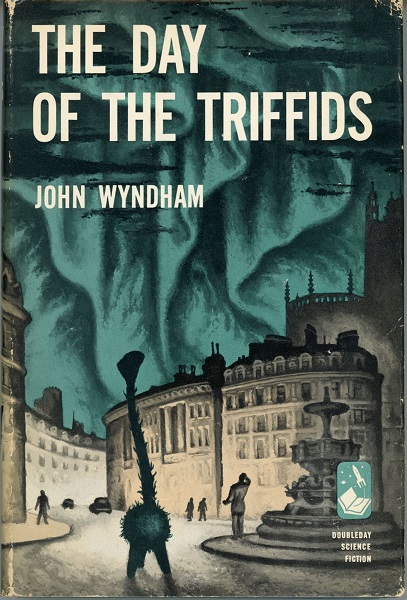
John Wyndham's The Day of the Triffids (1951) opens with a meteor-shower-like event that leaves most of Britain's population blind, throwing civilization into collapse just as triffids, an aggressive and mobile species of poisonous plant, become free to hunt the helpless survivors. Simon Clark's authorized sequel The Night of the Triffids (2001) picks up a generation later, narrated by the original protagonist's son as he confronts a new triffid-dominated world, and John Whitbourn's The Age of the Triffids extends the shared setting further still. Together the three novels form a loose post-apocalyptic trilogy built on Wyndham's original premise rather than a tightly plotted single story.
- Slave Ship
Frederik Pohlstandalone novel1957
similar byscience fictionour worldmid 20th century
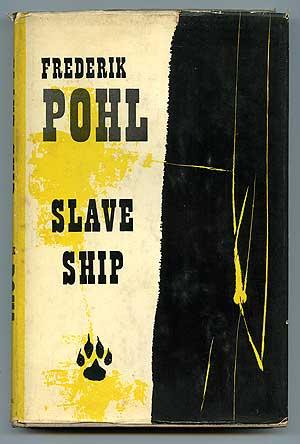
Slave Ship is a 1956 short science fiction novel by American writer Frederik Pohl, originally serialized in Galaxy. The scene is a world in the throes of a low-intensity global war, which appears to be an amplified representation of the Vietnam War, in which the U.S. was just beginning to be involved. The plot involves telepathy, speaking to animals, and, in the last few pages, an invasion by extraterrestrials.
- The Healer's War
Elizabeth Ann Scarboroughstandalone novel1988
similar byscience fictionour worldmid 20th century
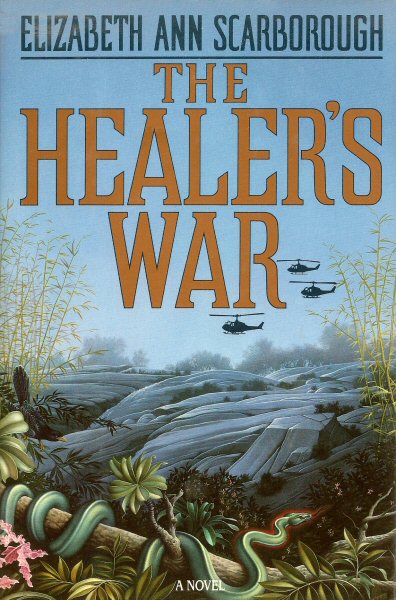
The Healer's War is a 1988 science fiction novel by American writer Elizabeth Ann Scarborough. It won the Nebula Award for Best Novel in 1989. The story is about a military nurse during the Vietnam War.
- Ossian's Ride
Fred Hoylestandalone novel1959
similar byscience fictionmid 20th century+1 more
Ossian's Ride is a science fiction novel by British astrophysicist Fred Hoyle, published in 1959.
- Sea Siege
Andre Nortonstandalone novel1957
similar byscience fictionour worldmid 20th century
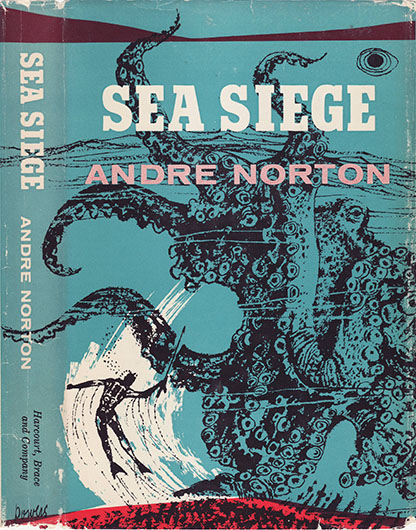
On a bleak little island in the West Indies, Griff Gunston faces many questions. Why were so many small island cruisers adrift and abandoned? Why was the sea disease that Griff's scientist father was investigating radioactive. Why were the colonies of octopi growing larger and becoming so strangely organized and daring? Before the answers can be found, civilization blanks out. An atom bomb war has left the little group isolated. A danger from the ocean floor, a new type of intelligence is prepared to seize the world for itself. (adapted from the blurb accompanying the first edition)
- The Whole Man
John Brunnerstandalone novel1964
similar byscience fictionour worldmid 20th century
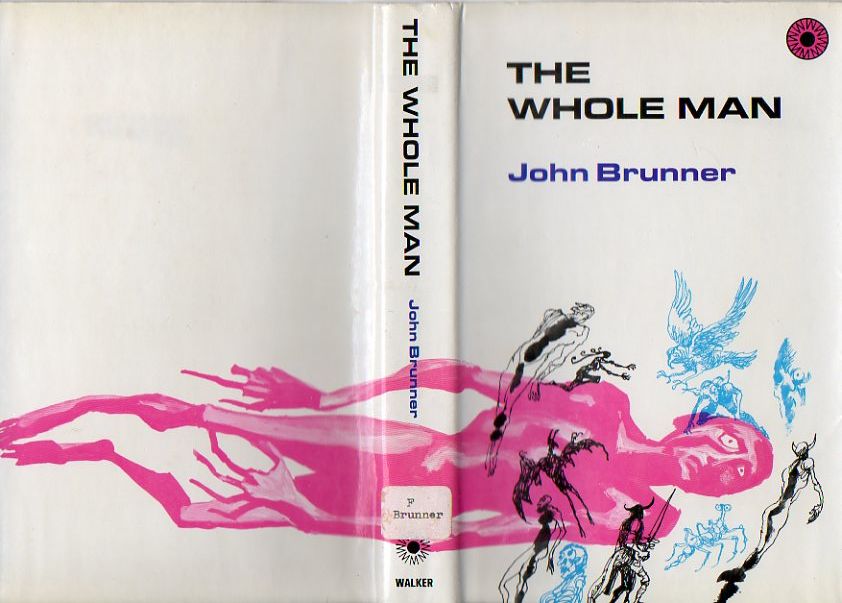
The Whole Man is a 1964 science fiction novel by John Brunner. It was nominated for a Hugo Award for Best Novel in 1965. In the UK, it was published under the title Telepathist.
- The Lincoln Hunters
Wilson Tuckerstandalone novel1958
similar byscience fictionour worldmid 20th century
The Lincoln Hunters is a 1958 science fiction novel by American writer Wilson Tucker.
- Operation Time Search
Andre Nortonstandalone novel1967
similar byscience fictionour worldmid 20th century
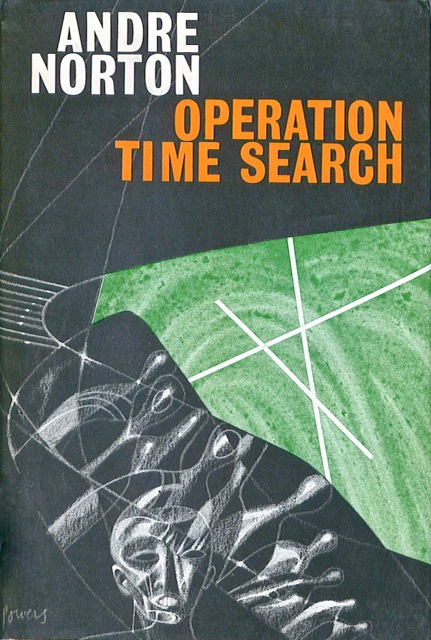
Snooping around a top-secret government installation, photographer Ray Osborne stumbled across an experimental time field. Suddenly the familiar Ohio landscape disappeared and Ray found himself transported to a prehistoric world where the dread priest of Atlantis waged a war against the Sun-born of Mu. So while the scientist of the Twentieth Century worked desperately to draw him back to the present, Ray Osborne was recruited by the people of Mu to win a war that could change the course of history, and trap him in the past forever!