Loreful
HomeDiscover
Search series, authors…⌘K
Loreful

Reading orders for SF/F series and shared universes — with your place kept in every one.

Explore

UniversesSeriesWorksAuthorsAtlas

Help

FAQAboutSite map

Account & legal

Sign inCreate accountPrivacyTerms

Data

Built on ISFDB, Wikipedia, Wikidata and Open Library. Curated reading orders carry their reasoning on the page; the rest follow publication order. Data sources & licenses

© Loreful · data: ISFDB · CC BY

More like The Third Level

anchored on:science fictionour worldmid 20th centuryshort story cyclefantasytime travel+3 more

but

Mood

The mood the book leaves you in.

  • The reading experience is propelled by journeys, exploration, and physical risk; excitement and forward momentum dominate over dread or introspection.
  • Joy and loss are deliberately mixed; the resolution grants characters something real while taking something else away, leaving warmth and sorrow together.
  • The book demands work from the reader — dense prose, difficult structure, unfamiliar ideas, or morally uncomfortable material — as part of its intended effect.
  • Grim events, cruelty, or despair dominate the atmosphere, and the book does not soften them with comfort or comic relief.
  • The atmosphere is quietly unsettling — wrongness, unease, and the uncanny pervade the book without necessarily escalating into overt horror.
  • The book is built to move the reader; character feeling is foregrounded and major scenes aim at a strong emotional response.
  • Humor is a primary aim and the prose plays for laughs — comic situations, wit, or dialogue produce sustained comedy, not occasional levity.
  • The book insists that things can improve; effort and decency are shown to matter, and the arc bends toward better outcomes even through hardship.
  • The book teaches as it goes — real facts, history, science, or craft are conveyed in enough depth that learning is part of the reading experience.
  • The book is designed to uplift and motivate, presenting perseverance or achievement in a way that invites the reader to aspire or act.
  • The overall register is cheerful and easygoing; stakes are kept gentle and the book avoids dwelling on pain or dread.
  • Withheld information drives the experience; the book sustains enigmas and secrets the reader wants resolved, whatever its genre.
  • The book is contemplative and inward-looking, giving more weight to thought, memory, and meaning than to external events.
  • The book works as comfort reading — low tension, a soothing pace, and an atmosphere the reader can unwind in.
  • Grief, loss, or melancholy set the dominant register, and the book lets sorrow stand rather than resolving it into comfort.
  • Sustained suspense is the point; the book keeps the reader braced for what happens next through danger, pressure, or impending revelation.
  • Playful invention and charm define the register — fanciful conceits, light absurdity, and a narration that delights in its own oddity.

About

What the story runs on.

  • Stories in which extraterrestrial beings are central — as characters, cultures, or the object of the plot.
  • Stories structured as a quest — a journey undertaken to find, deliver, or destroy something of great import.
  • Stories in which staying alive against nature, catastrophe, or scarcity is the central problem.
  • Stories of lovers kept apart by law, family, faith, or station, where the obstacle to love is the plot.
  • Stories in which a friendship — its making, testing, or loss — is the emotional center.
  • Stories of growing up — a young protagonist crossing from childhood into adult knowledge and responsibility.
  • Stories about who a character truly is — self-discovery, doubled lives, and the search for a self.
  • Stories about mourning — living through the death of a loved one and what loss does to the survivors.
  • Stories in which a buried family truth — hidden parentage, crimes, or shames — surfaces and reorders the present.
  • Stories driven by maneuvering for power — factions, conspiracies, and statecraft conducted in shadow.
  • Stories in which war itself is the subject — combat, occupation, and what warfare does to soldiers and civilians.
  • Stories organized around investigating a killing — the case, the clues, and the pursuit of the killer, in any genre's clothing.

Shelf

Where it sits in the library.

    • Fiction built on magic or other supernatural elements that have no scientific explanation.
    • Secondary-world fantasy at large scale, where the fate of nations or the world turns on the protagonists' struggle.
    • Fantasy set in a recognizably modern city or contemporary world where the supernatural intrudes on everyday life.
    • Fantasy that blends in horror's atmosphere and imagery, keeping a fantastical frame around grim or frightening material.
    • Action-driven fantasy following warriors or rogues with personal stakes against sorcerous threats, rather than world-spanning conflicts.
    • Fantasy set in a real historical period or a close analogue of one, with magic woven into the era.
    • Fantasy in which protagonists cross from the ordinary world into another world through a portal or similar passage.
    • Fiction that retells or reworks a traditional fairy tale in a new form or setting.
    • Fantasy drawing directly on myths, legends, and folklore, retelling them or building on their figures and logic.
    • Fantasy of ghosts, vampires, shapeshifters, psychics, and similar phenomena, usually set in an otherwise ordinary world.
    • Fiction mixing science-fictional trappings with overtly magical or impossible elements in one setting.
    • Low-stakes fantasy emphasizing comfort, community, and everyday pleasures over conflict and peril.
    • Speculative fiction of pervasive moral ambiguity, violence, and cynicism that rejects heroic conventions — fantasy and SF alike.
      • Fiction that extrapolates from science and technology — future societies, space travel, or speculative inventions — within at least nominally natural laws.
      • Science fiction of interstellar scope — starships, galactic polities, and adventure across star systems.
      • Science fiction committed to scientific rigor, where technical plausibility constrains the story.
      • Science fiction centered on armed forces and warfare, told largely from a military point of view.
      • Science fiction of networked, corporate-dominated near futures, pairing high technology with social decay.
      • Science fiction styled on nineteenth-century steam-powered technology, often in a Victorian or pseudo-Victorian setting.
      • Fiction depicting an oppressive or catastrophic society, presented as a warning.
      • Fiction set after civilization's collapse, following survivors in the ruins of the old world.
      • Fiction in which characters move between past and future, and the mechanics or consequences of that travel drive the plot.
      • Fiction exploring a world where a historical event went differently and history diverged from ours.
      • Science fiction about humanity's first encounter and communication with an alien intelligence.
      • Science fiction in which extraterrestrial forces attack or occupy Earth and humanity resists.
      • Fiction whose primary aim is to frighten or unsettle the reader through dread, menace, or the monstrous.
      • Horror of vast, indifferent, incomprehensible entities before which humanity is insignificant, in the Lovecraft tradition.
      • Horror of decaying houses, buried family secrets, and oppressive atmosphere in the Gothic literary tradition.
      • Horror centered on hauntings and the returning dead.
      • Horror located in the mind — paranoia, obsession, and unreliable perception rather than external monsters.
      • Horror built around the reanimated dead and survival amid their outbreaks.
      • Horror defined by explicit, transgressive gore that refuses to cut away from violence.
      • Speculative fiction of the strange and uncanny that resists both natural explanation and standard genre categories.
      • Fiction organized around solving a crime or puzzle, typically following an investigator toward the identification of a culprit.
      • A puzzle-first mystery that lays out clues so the culprit's identity can be deduced before the reveal.
      • Crime fiction of moral ambiguity, fatalism, and hard-edged style, set among the corrupt and the doomed.
      • A mystery following the realistic routines of police work — forensics, interviews, and case-building.
      • A gentle mystery with an amateur sleuth, a small community, and violence kept off the page.
      • A mystery set in a past era, where the investigation works within that period's methods and society.
      • Fast-paced fiction driven by imminent danger, pursuit, or high-stakes conspiracy, built to sustain tension.
      • A thriller of espionage — agents, tradecraft, and intelligence services in conflict.
      • A thriller centered on lawyers and the courtroom, where litigation carries the suspense.
      • A thriller driven by detailed contemporary or near-future technology, often military or scientific.
      • A thriller whose tension comes from mental states and manipulation between characters rather than external action.
      • Fiction whose central plot is a romantic relationship and its development toward an emotionally satisfying resolution.
      • Romance in which one or both partners are supernatural beings, blending fantasy elements into the love story.
      • A fantasy-romance hybrid in which the romantic arc and the fantasy plot carry equal weight.
      • Romance set in a past era, with courtship shaped by the period's society and manners.
      • Romance set in the present day, without supernatural or historical elements.
      • Fiction set in a real past period, where the historical setting materially shapes characters and events.
        • General and literary fiction emphasizing prose style, character interiority, or formal ambition over genre plot conventions.
        • Fiction in a realistic world where magical events occur and are treated as ordinary, in the tradition of Latin American literature.
        • Fiction that ridicules people, institutions, or society in order to criticize them.
        • Fiction of dreamlike, irrational imagery and logic that breaks from realistic representation.
        • Fiction that plays with narrative convention through metafiction, fragmentation, and self-reference.
        • Fiction propelled by journeys, exploration, and physical peril, where action and survival carry the plot.
        • Adventure fiction of ships and seafaring — naval engagements, voyages, and life at sea.
        • Fiction of the American frontier West — gunmen, ranchers, and lawmen, typically in the late nineteenth century.
        • Fiction centered on soldiers, campaigns, and the experience of warfare, historical or imagined.
          • Fiction written primarily to amuse, using comedic situations, wit, or parody as its organizing principle.
            • Multi-generational fiction following a family or dynasty across decades, with inheritance and kinship as the through-line.
              • Fiction whose world runs on explicit game mechanics — levels, stats, and skills that characters can see and exploit.
                • Fiction about costumed or superpowered heroes and their conflicts with comparable villains.

                Practical

                How long a commitment, whether it stands alone, and whether it has finished.

                Tap a chip to ask for it · tap again to rule it out · once more to clear. Numbers show what would be left.

                • Cover of Replay
                  Replay

                  Ken Grimwood · standalone novel · 1987

                  similar bysecond chanceour worldreflectivefantasytime travelscience fiction

                  Replay is a fantasy novel by American writer Ken Grimwood, first published by Arbor House in 1987. It won the 1988 World Fantasy Award for Best Novel.

                • Cover of 11/22/63
                  11/22/63

                  Stephen King · standalone novel · 2011

                  similar bysecond chancemid 20th centuryscience fictiontime travelnorth america

                  11/22/63 is a novel by American author Stephen King about a time traveler who attempts to prevent the assassination of United States President John F. Kennedy, which occurred on November 22, 1963. It is the 60th book published by Stephen King, his 49th novel, and the 42nd under his own name. The novel required considerable research to accurately portray the late 1950s and early 1960s. King commented on the amount of research it required, saying, "I've never tried to write anything like this before. It was really strange at first, like breaking in a new pair of shoes."

                • Cover of Landline
                  Landline

                  Rainbow Rowell · standalone novel · 2014

                  similar bysecond chancescience fictionreflectivetime travelnorth america

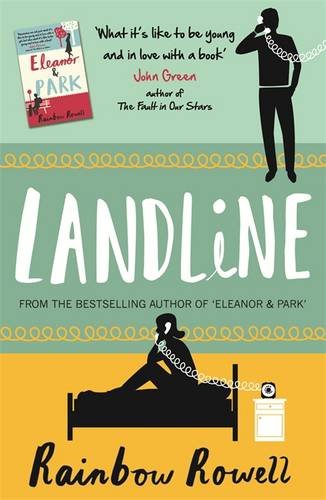
                  Landline is a 2014 American sci-fi novel by Rainbow Rowell. It tells the story of 37-year-old Georgie McCool who discovers that she is able to call her husband's 22-year-old self through his landline. Rowell stated that aspects from the novel are loosely based on her own life such as the fact that Georgie is incredibly career-driven while her husband is a stay-at-home dad. The character of Georgie McCool was named after the song Georgy Girl and the village of McCool Junction.

                • Cover of All Flesh Is Grass
                  All Flesh Is Grass

                  Clifford D. Simak · standalone novel · 1965

                  similar bymysteriousmid 20th centuryscience fictionnorth america+1 more

                  All Flesh is Grass is a science fiction novel by American author Clifford D. Simak, published in 1965. The book follows a small town in Wisconsin that is closed off from the outside world by a mysterious barrier, placed by extraterrestrial beings.

                • Cover of The Midnight World
                  The Midnight World

                  series · 2 books · 2020

                  similar bysecond chancefantasy+3 more

                • Cover of The House That Stood Still
                  The House That Stood Still

                  A. E. van Vogt · standalone novel · 1950

                  similar bymysteriousmid 20th centuryscience fictionour worldnorth america

                  A California estate lawyer takes a case involving a decaying mansion built atop a pre-Toltec stone structure, and discovers, following a secretive cult in the house, that the ancient foundation confers immortality on those who know how to use it. Drawn in through his attraction to a cult member, the lawyer learns the group possesses technology beyond its disguise, including spacecraft, and is preparing to relocate the house's stones off-world to escape a coming war. He finds himself trying to stop a catastrophe, expose an ancient secret, and win the woman's trust, all at once. A. E. van Vogt's blend of hardboiled mystery and cosmic science fiction.

                • Cover of The Man Who Fell to Earth
                  The Man Who Fell to Earth

                  Walter Tevis · standalone novel · 1963

                  similar bymid 20th centuryscience fictionour worldreflectivenorth america

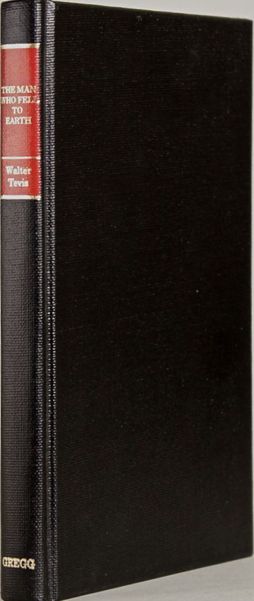
                  The Man Who Fell to Earth is a 1963 science-fiction novel by American writer Walter Tevis. Published by Gold Medal Books as a paperback original, it was Tevis's second novel, following The Hustler. The novel follows Thomas Jerome Newton, an extraterrestrial from the drought-stricken planet Anthea, who comes to Earth hoping to build a spacecraft that can save the surviving members of his species.

                • Cover of Twilight Zone Collections
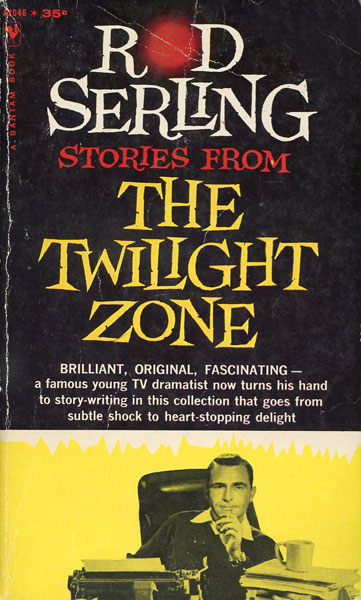
                  Twilight Zone Collections

                  series · 8 books · 1960

                  part of Twilight Zone

                  similar bymid 20th centuryour worldshort story cyclescience fiction+2 more

                • Cover of The Chronoliths
                  The Chronoliths

                  Robert Charles Wilson · standalone novel · 2001

                  similar bymysteriousscience fictionour worldtime travelnorth america+1 more

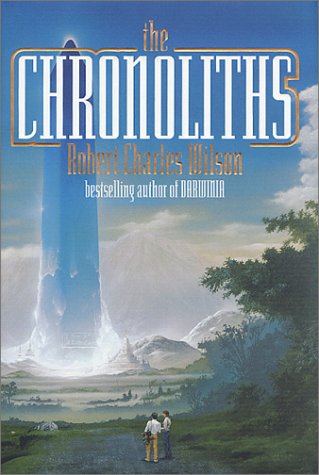
                  The Chronoliths is a 2001 science fiction novel by American-Canadian writer Robert Charles Wilson. It was nominated for the 2002 Hugo Award for Best Novel and tied for the 2002 John W. Campbell Memorial Award for Best Science Fiction Novel.

                • Cover of Rewind
                  Rewind

                  William Sleator · standalone novel · 1999

                  similar bysecond chancescience fictionour worldreflectivetime travel

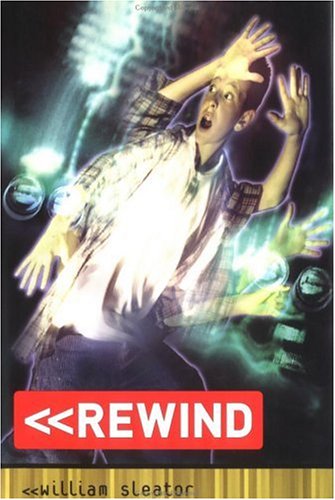
                  Rewind is a 1999 science fiction novel by American writer William Sleator that explores maturity and self-confidence.

                • Cover of The Time Keeper
                  The Time Keeper

                  Mitch Albom · standalone novel · 2012

                  similar bysecond chanceour worldreflectivefantasy

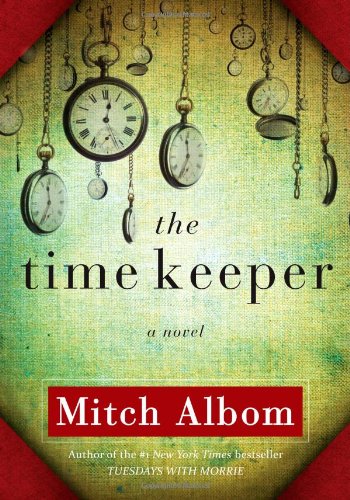
                  The Time Keeper--a compelling fable about the first man on earth to count the hours. The man who became Father Time. In Mitch Albom's newest work of fiction, the inventor of the world's first clock is punished for trying to measure God's greatest gift. He is banished to a cave for centuries and forced to listen to the voices of all who come after him seeking more days, more years. Eventually, with his soul nearly broken, Father Time is granted his freedom, along with a magical hourglass and a mission: a chance to redeem himself by teaching two earthly people the true meaning of time. He returns to our world--now dominated by the hour-counting he so innocently began--and commences a journey with two unlikely partners: one a teenage girl who is about to give up on life, the other a wealthy old businessman who wants to live forever. To save himself, he must save them both. And stop the world to do so.

                • Cover of All Our Wrong Todays
                  All Our Wrong Todays

                  Elan Mastai · standalone novel · 2017

                  similar bysecond chancescience fictiontime travelnorth america

                  All Our Wrong Todays is a 2017 science fiction novel by Canadian screenwriter Elan Mastai. It is Mastai's debut novel and was first published in February 2017 in the United States by Dutton, in Canada by Doubleday Canada, and in the United Kingdom in March 2017 by Michael Joseph. The novel is about a man from a utopia in an alternate reality who finds himself stuck in our reality after a time travel accident.

                • Cover of All This and More
                  All This and More

                  Peng Shepherd · standalone novel · 2024

                  similar bysecond chancescience fictionour worldtime travel

                  A game show uses a technology that allows contestants to revise their past lives to change their present ones.

                • Cover of Ring Around the Sun
                  Ring Around the Sun

                  Clifford D. Simak · standalone novel · 1953

                  similar bymid 20th centuryscience fictionreflectiveour worldnorth america

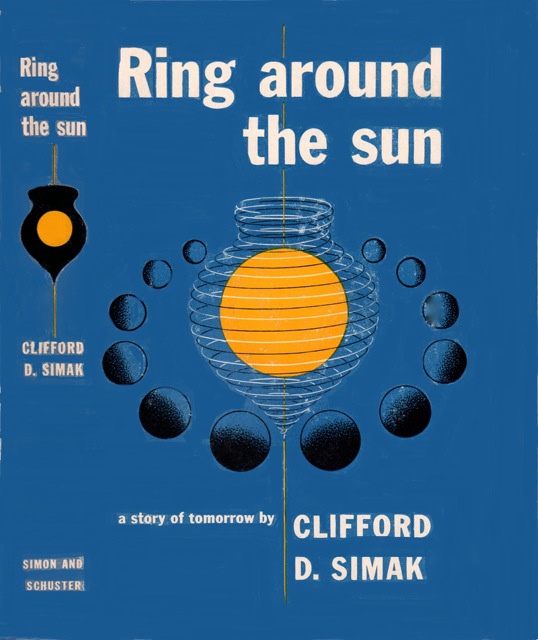
                  Ring Around the Sun is a science fiction novel by American writer Clifford D. Simak. Its anti-urban and pro-agrarian sentiments are typical of much of Simak's work.

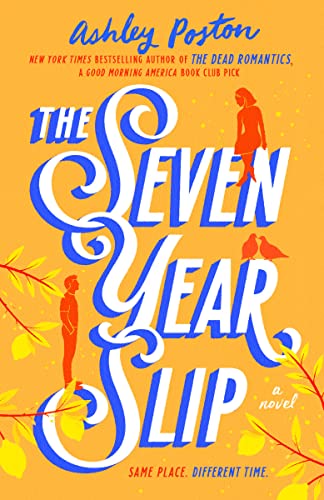
                • Cover of The Seven Year Slip
                  The Seven Year Slip

                  Ashley Poston · standalone novel · 2023

                  similar bysecond chanceour worldtime travelnorth america

                  Sometimes, the worst day of your life happens, and you have to figure out how to live after it. So Clementine forms a plan to keep her heart safe: work hard, find someone decent to love, and try to remember to chase the moon. The last one is silly and obviously metaphorical, but her aunt always told her that you needed at least one big dream to keep going. And for the last year, that plan has gone off without a hitch. Mostly. The love part is hard because she doesn’t want to get too close to anyone—she isn’t sure her heart can take it. And then she finds a strange man standing in the kitchen of her late aunt’s apartment. A man with kind eyes and a Southern drawl and a taste for lemon pies. The kind of man that, before it all, she would’ve fallen head-over-heels for. And she might again. Except, he exists in the past. Seven years ago, to be exact. And she, quite literally, lives seven years in his future. Her aunt always said the apartment was a pinch in time, a place where moments blended together like watercolors. And Clementine knows that if she lets her heart fall, she’ll be doomed. After all, love is never a matter of time—but a matter of timing.

                • Cover of A Bridge of Years
                  A Bridge of Years

                  Robert Charles Wilson · standalone novel · 1991

                  similar bysecond chancescience fictiontime travelnorth america

                  "Tom Winter thought the secluded cottage in the Pacific Northwest would be the perfect refuge--a place to nurse the wounds of lost love and happiness. But Tom soon discovers that his safe haven is the portal of a tunnel through time. At one end is the present. At the other end--New York City, 1963. His journey back to the early 1960s seems to offer him the chance to start over in a simpler, safer world. But he finds that the tunnel holds a danger far greater than anything he left behind: a human killing machine escaped from a bleak and brutal future, who will do anything to protect the secret passage that he thought was his alone. To preserve his worlds, past and present, Tom Winter must face the terrors of an unknown world to come. "--

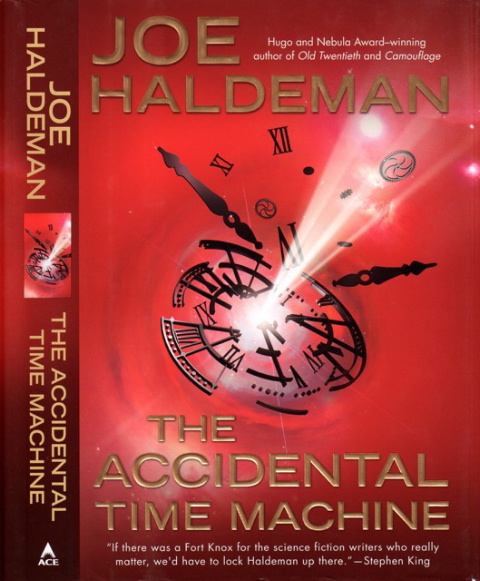
                • Cover of The Accidental Time Machine
                  The Accidental Time Machine

                  Joe Haldeman · standalone novel · 2007

                  similar byscience fictionour worldtime travelnorth america+1 more

                  "Grad-school dropout Matt Fuller is toiling as a lowly research assistant at MIT when, while measuring subtle quantum forces that relate to time changes in gravity and electromagnetic force, his calibrator turns into a time machine. With a dead-end job and a girlfriend who has left him for another man, Matt has nothing to lose taking a time machine trip himself - or so he thinks."

                • Cover of Time and Again
                  Time and Again

                  series · 2 books · 1970

                  completed

                  similar bymysteriousscience fictiontime travelnorth america+1 more

                  Time and Again (1970) follows Si Morley, a commercial artist recruited into a secret government project that sends him back to Manhattan in 1882, where he falls for a woman named Julia while weighing whether he can, or should, alter the past; Jack Finney illustrates the story with period photographs and engravings. The sequel, From Time to Time (1995), continues Si's story with a further trip into the past.

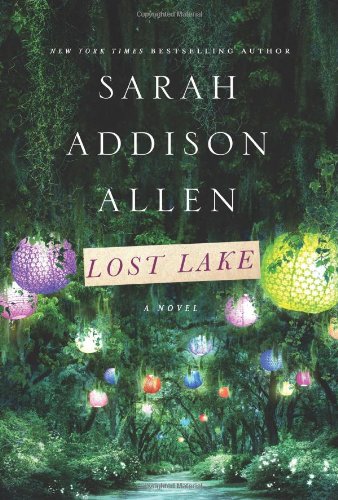
                • Cover of Lost Lake
                  Lost Lake

                  Sarah Addison Allen · standalone novel · 2014

                  similar bysecond chanceour worldfantasynorth america

                  Lost Lake is a light fantasy novel written in 2014 by Sarah Addison Allen. It was written during the author’s bout with advanced stage cancer.

                • Cover of Sweet 16
                  Sweet 16

                  Kate Brian · standalone novel · 2007

                  similar bysecond chanceour worldfantasynorth america+1 more

                  Teagan Phillips is obnoxiously rich, obnoxiously fashionable, and, this year, she's obnoxiously turning sixteen. No one's sweet sixteen party will be as glitzy, glamorous, decadent, and, well, obnoxious as Teagan's sweet sixteen party. She might single-handedly take the sweet out of sweet sixteen. In typical fashion, nothing is quite right for Teagan on the night of her sweet sixteen party. When a slew of unfortunate events unfold at what was supposed to be the sweet sixteen event of the century, she hits rock bottom, literally, by falling down the stairs into the wine cellar. When she comes to, a strange woman is standing over her. What happens next will bring Teagan back in time to when she was a sweet little girl with two parents, before her mother died and her father threw himself into his work. She'll be forced to face the choices she made that led her to be the person she is on her sixteenth birthday. And with the help of her fairy godmother (or whoever the heck the creepy woman in white is), this will be the sweetest of all sixteens.

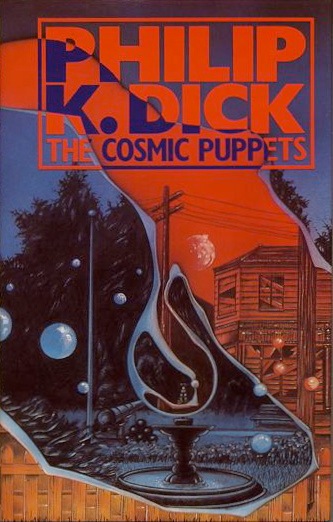
                • Cover of The Cosmic Puppets
                  The Cosmic Puppets

                  Philip K. Dick · standalone novel · 1957

                  similar bymysteriousmid 20th centuryscience fictionnorth america

                  The Cosmic Puppets is a science fiction novel by American author Philip K. Dick, published in 1957. It is a novelization of a short story initially published in the December 1956 issue of Satellite Science Fiction. The Cosmic Puppets was first published as a novel by Ace Books as one half of Ace Double D-249, bound dos-à-dos with Sargasso of Space by Andrew North .The story follows Ted Barton, a man who returns to his childhood hometown of Millgate, Virginia, only to discover that it has been erased from all official records and is now a surreal place where the laws of reality are distorted. Barton learns that the town is a battleground in a cosmic struggle between two ancient beings, a conflict that has twisted the fabric of his home and the memories of its inhabitants.

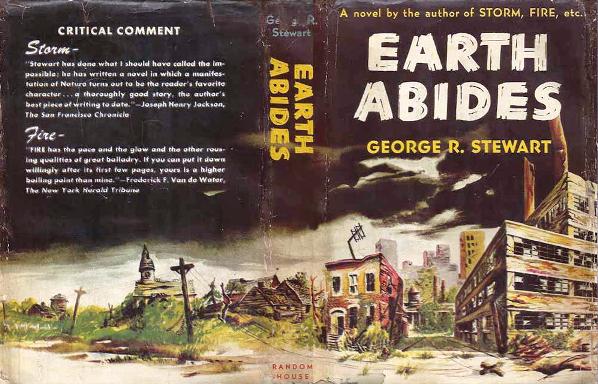
                • Cover of Earth Abides
                  Earth Abides

                  George R. Stewart · standalone novel · 1949

                  similar bymid 20th centuryscience fictionreflectivenorth america

                  The novel tells the story of the fall of civilization from deadly disease and the emergence of a new culture with simpler tools. Set in the 1940s in Berkeley, California, the story is told by Isherwood Williams, who emerges from isolation in the mountains to find almost everyone dead. en.wikipedia.org

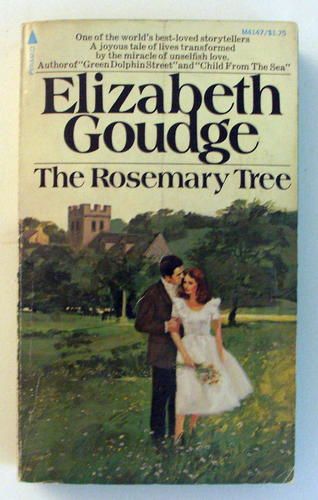
                • Cover of The Rosemary Tree
                  The Rosemary Tree

                  Elizabeth Goudge · standalone novel · 1956

                  similar bysecond chancemid 20th centuryreflective

                  Michael Stone was once a famous author. That was before he went to prison. Now, just released, he needs to get his bearings and a new beginning. It was a gray day in early April when Michael stumbled wearily into the tiny English village. Weighed down by failure and despair, the town of Silverbridge seems too offer him a quiet, rural escape from the past. Even though his heart was torn by remorse and shame, he was home at last. Kind, gentle vicar John Wentworth takes Michael under his wing, and introduces him to his family and friends. At the vicarage, John's inexplicably discontented wife Daphne brings up their daughters. Bedridden Harriet, John's former nanny, deals impatiently with a world to which she cannot actively participate. At the family home, Belmaray Manor, Great Aunt Maria is burdened by the worry of a failing estate. And at the grim little town school is fiery teacher Mary O'Hara, determined to foster change. With Michaels' arrival at Belmaray, changes began to occur in lives that had not changed for so long: the proud, self-centered beauty he had once loved was surprised into forgiveness; the quixotic bumbling vicar discovered unsuspected strength lurking behind his shyness; a sick and lonely spinster was turned away from despair, and a lovely, high-spirited young woman found her heart's desire. A story of courage and community, set in the beautiful Devonshire countryside.

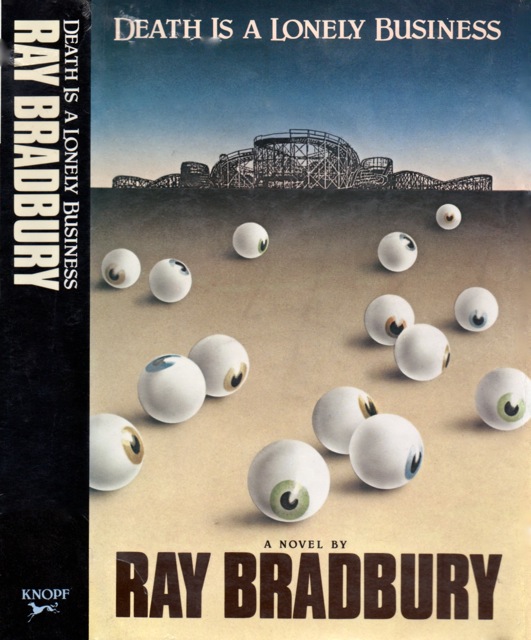
                • Cover of Death Is a Lonely Business
                  Death Is a Lonely Business

                  Ray Bradbury · standalone novel · 1985

                  similar bymysteriousmid 20th centurynorth america+1 more

                  Death Is a Lonely Business is a mystery novel by American writer Ray Bradbury, published in 1985. The story, set in 1949, is about a series of murders that happen in Venice, California, then a declining seaside community in Los Angeles where Bradbury lived from 1942 to 1950. The main character and narrator is a sensitive, modest writer, with a girlfriend studying in Mexico City. In the course of the story he meets Elmo Crumley, a detective who helps him solve the mystery behind all the semi-murders occurring among a series of eccentric characters in the forgotten town.