Loreful
HomeDiscover
Search series, authors…⌘K
Loreful

Reading orders for SF/F series and shared universes — with your place kept in every one.

Explore

UniversesSeriesWorksAuthorsAtlas

Help

FAQAboutSite map

Account & legal

Sign inCreate accountPrivacyTerms

Data

Built on ISFDB, Wikipedia, Wikidata and Open Library. Curated reading orders carry their reasoning on the page; the rest follow publication order. Data sources & licenses

© Loreful · data: ISFDB · CC BY

More like The Thousandth Hell

but

Mood

The mood the book leaves you in.

  • The reading experience is propelled by journeys, exploration, and physical risk; excitement and forward momentum dominate over dread or introspection.
  • Joy and loss are deliberately mixed; the resolution grants characters something real while taking something else away, leaving warmth and sorrow together.
  • The book demands work from the reader — dense prose, difficult structure, unfamiliar ideas, or morally uncomfortable material — as part of its intended effect.
  • Grim events, cruelty, or despair dominate the atmosphere, and the book does not soften them with comfort or comic relief.
  • The atmosphere is quietly unsettling — wrongness, unease, and the uncanny pervade the book without necessarily escalating into overt horror.
  • The book is built to move the reader; character feeling is foregrounded and major scenes aim at a strong emotional response.
  • Humor is a primary aim and the prose plays for laughs — comic situations, wit, or dialogue produce sustained comedy, not occasional levity.
  • The book insists that things can improve; effort and decency are shown to matter, and the arc bends toward better outcomes even through hardship.
  • The overall register is cheerful and easygoing; stakes are kept gentle and the book avoids dwelling on pain or dread.
  • Withheld information drives the experience; the book sustains enigmas and secrets the reader wants resolved, whatever its genre.
  • The book is contemplative and inward-looking, giving more weight to thought, memory, and meaning than to external events.
  • Grief, loss, or melancholy set the dominant register, and the book lets sorrow stand rather than resolving it into comfort.
  • Sustained suspense is the point; the book keeps the reader braced for what happens next through danger, pressure, or impending revelation.
  • Playful invention and charm define the register — fanciful conceits, light absurdity, and a narration that delights in its own oddity.

About

What the story runs on.

  • Stories in which demons or devils — infernal beings, their bargains, possessions, and hierarchies — drive the plot.
  • Stories in which angels or other celestial beings act in the world, from guardians to warring heavenly hosts.
  • Stories in which gods and deities act as characters — walking the world, meddling in mortal lives, or dying.
  • Stories structured as a quest — a journey undertaken to find, deliver, or destroy something of great import.
  • Stories built on a bargain with a dark power — wishes, contracts, and souls traded at a price that comes due.
  • Stories of lovers kept apart by law, family, faith, or station, where the obstacle to love is the plot.
  • Stories of growing up — a young protagonist crossing from childhood into adult knowledge and responsibility.
  • Stories about who a character truly is — self-discovery, doubled lives, and the search for a self.
  • Stories about mourning — living through the death of a loved one and what loss does to the survivors.
  • Stories in which belief, doubt, and religious life are the central subject, from crises of faith to life inside a religious community.
  • Stories driven by maneuvering for power — factions, conspiracies, and statecraft conducted in shadow.
  • Stories organized around investigating a killing — the case, the clues, and the pursuit of the killer, in any genre's clothing.

Shelf

Where it sits in the library.

    • Fiction built on magic or other supernatural elements that have no scientific explanation.
    • Secondary-world fantasy at large scale, where the fate of nations or the world turns on the protagonists' struggle.
    • Fantasy set in a recognizably modern city or contemporary world where the supernatural intrudes on everyday life.
    • Fantasy that blends in horror's atmosphere and imagery, keeping a fantastical frame around grim or frightening material.
    • Action-driven fantasy following warriors or rogues with personal stakes against sorcerous threats, rather than world-spanning conflicts.
    • Fantasy set in a real historical period or a close analogue of one, with magic woven into the era.
    • Fantasy in which protagonists cross from the ordinary world into another world through a portal or similar passage.
    • Fiction that retells or reworks a traditional fairy tale in a new form or setting.
    • Fantasy drawing directly on myths, legends, and folklore, retelling them or building on their figures and logic.
    • Fantasy of ghosts, vampires, shapeshifters, psychics, and similar phenomena, usually set in an otherwise ordinary world.
    • Fiction mixing science-fictional trappings with overtly magical or impossible elements in one setting.
    • Low-stakes fantasy emphasizing comfort, community, and everyday pleasures over conflict and peril.
    • Speculative fiction of pervasive moral ambiguity, violence, and cynicism that rejects heroic conventions — fantasy and SF alike.
      • Fiction that extrapolates from science and technology — future societies, space travel, or speculative inventions — within at least nominally natural laws.
      • Science fiction of interstellar scope — starships, galactic polities, and adventure across star systems.
      • Science fiction of networked, corporate-dominated near futures, pairing high technology with social decay.
      • Science fiction styled on nineteenth-century steam-powered technology, often in a Victorian or pseudo-Victorian setting.
      • Fiction depicting an oppressive or catastrophic society, presented as a warning.
      • Fiction set after civilization's collapse, following survivors in the ruins of the old world.
      • Fiction in which characters move between past and future, and the mechanics or consequences of that travel drive the plot.
      • Fiction exploring a world where a historical event went differently and history diverged from ours.
      • Science fiction about humanity's first encounter and communication with an alien intelligence.
      • Fiction whose primary aim is to frighten or unsettle the reader through dread, menace, or the monstrous.
      • Horror of vast, indifferent, incomprehensible entities before which humanity is insignificant, in the Lovecraft tradition.
      • Horror of decaying houses, buried family secrets, and oppressive atmosphere in the Gothic literary tradition.
      • Horror centered on hauntings and the returning dead.
      • Horror located in the mind — paranoia, obsession, and unreliable perception rather than external monsters.
      • Horror built around the reanimated dead and survival amid their outbreaks.
      • Speculative fiction of the strange and uncanny that resists both natural explanation and standard genre categories.
      • Fiction organized around solving a crime or puzzle, typically following an investigator toward the identification of a culprit.
      • Crime fiction of moral ambiguity, fatalism, and hard-edged style, set among the corrupt and the doomed.
      • A gentle mystery with an amateur sleuth, a small community, and violence kept off the page.
      • Fast-paced fiction driven by imminent danger, pursuit, or high-stakes conspiracy, built to sustain tension.
      • A thriller of espionage — agents, tradecraft, and intelligence services in conflict.
      • A thriller whose tension comes from mental states and manipulation between characters rather than external action.
      • Fiction whose central plot is a romantic relationship and its development toward an emotionally satisfying resolution.
      • Romance in which one or both partners are supernatural beings, blending fantasy elements into the love story.
      • A fantasy-romance hybrid in which the romantic arc and the fantasy plot carry equal weight.
      • Romance set in a past era, with courtship shaped by the period's society and manners.
      • Romance set in the present day, without supernatural or historical elements.
      • Fiction set in a real past period, where the historical setting materially shapes characters and events.
        • General and literary fiction emphasizing prose style, character interiority, or formal ambition over genre plot conventions.
        • Fiction that ridicules people, institutions, or society in order to criticize them.
        • Fiction of dreamlike, irrational imagery and logic that breaks from realistic representation.
        • Fiction that plays with narrative convention through metafiction, fragmentation, and self-reference.
        • Fiction propelled by journeys, exploration, and physical peril, where action and survival carry the plot.
        • Adventure fiction of ships and seafaring — naval engagements, voyages, and life at sea.
        • Fiction of the American frontier West — gunmen, ranchers, and lawmen, typically in the late nineteenth century.
        • Fiction written primarily to amuse, using comedic situations, wit, or parody as its organizing principle.
          • Fiction whose world runs on explicit game mechanics — levels, stats, and skills that characters can see and exploit.

          Practical

          How long a commitment, whether it stands alone, and whether it has finished.

          Tap a chip to ask for it · tap again to rule it out · once more to clear. Numbers show what would be left.

          • Cover of Stranger in a Strange Land
            Stranger in a Strange Land

            Robert A. Heinlein · standalone novel · 1961

            similar by+1 more

            Stranger in a Strange Land is a 1961 science fiction novel by the American author Robert A. Heinlein. It tells the story of Valentine Michael Smith, a human who comes to Earth in early adulthood after being born on the planet Mars and raised by Martians, and explores his interaction with and eventual transformation of Terran culture.

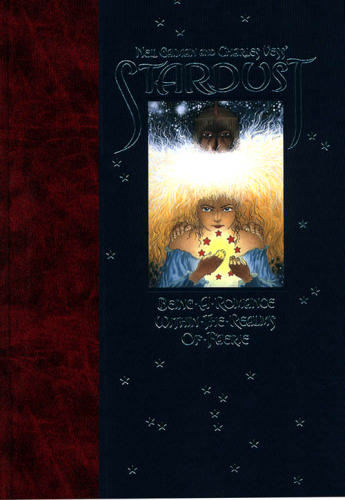
          • Cover of Stardust
            Stardust

            Neil Gaiman · standalone novel · 1998

            similar by+1 more

            Stardust is a 1999 fantasy novel by British writer Neil Gaiman, usually published with illustrations by Charles Vess. Stardust has a different tone and style from most of Gaiman's prose fiction, being consciously written in the tradition of pre-Tolkien English fantasy, following in the footsteps of authors such as Lord Dunsany and Hope Mirrlees. It is concerned with the adventures of a young man from the village of Wall, which borders the magical land of Faerie.

          • Cover of Inferno
            Inferno

            series · 2 books · 1976

            similar byafterlife & underworld

            In Inferno, Larry Niven and Jerry Pournelle send a science fiction writer to his death and drop him into a modern-dress version of Dante's nine circles of Hell, where he must reason his way toward understanding why he has been damned. The 1976 novel was nominated for both the Hugo and Nebula awards, and the authors returned to the same character decades later in a sequel, Escape from Hell. Together the two books form a self-contained pair rather than an open-ended series.

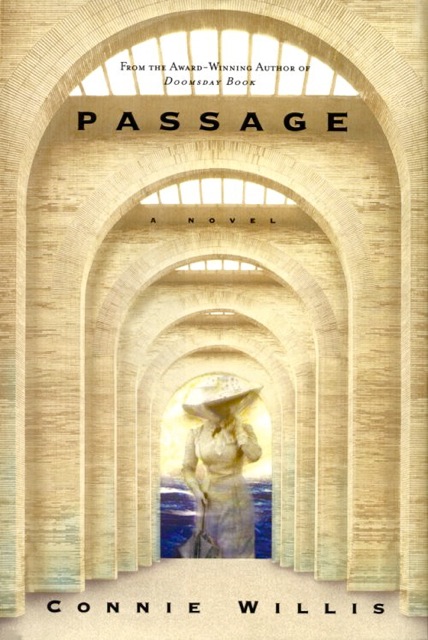
          • Cover of Passage
            Passage

            Connie Willis · standalone novel · 2001

            similar by+1 more

            Passage is a science fiction novel by Connie Willis, published in 2001. The novel won the Locus Award for Best Novel in 2002, was shortlisted for the Nebula Award in 2001, and received nominations for the Hugo, Campbell, and Clarke Awards in 2002.

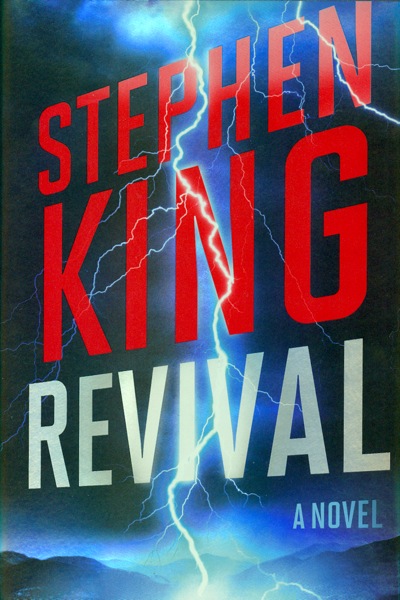
          • Cover of Revival
            Revival

            Stephen King · standalone novel · 2014

            similar by+1 more

            The protagonist details how his life keeps intersecting with that of the man he first met as the pastor of his church in childhood, whose experiments with electricity lead to mastery of a cosmic power which he uses to help people, until his obsession leads to physical and spiritual disaster for all.

          • Cover of The Lovely Bones
            The Lovely Bones

            Alice Sebold · standalone novel · 2001

            similar byafterlife & underworld

            The Lovely Bones is a 2002 novel by American writer Alice Sebold. It is the story of a teenage girl who, after being raped and murdered, watches from a personal heaven as her family and friends struggle to move on with their lives while she comes to terms with her own death. The novel received critical praise and became an instant bestseller.

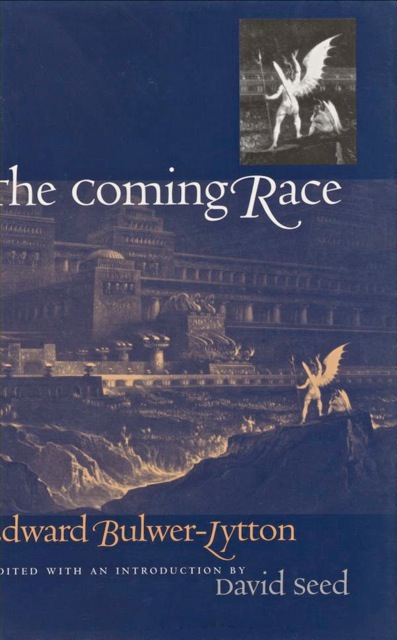
          • Cover of The Coming Race
            The Coming Race

            Edward Bulwer-Lytton · standalone novel · 1871

            similar by+1 more

            The Coming Race, an early science-fiction work, with its superman race the Vril-ya descended from the same ancestors as the great Aryan family, from which in varied streams has flowed the dominant civilization of the world spawned a occult secret society known as the Vril Society or Luminous Lodge - its philosphy and swastika symbol profoundly influenced the Nazis. Please Note: This book has been reformatted to be easy to read in true text, not scanned images that can sometimes be difficult to decipher. The Microsoft eBook has a contents page linked to the chapter headings for easy navigation. The Adobe eBook has bookmarks at chapter headings and is printable up to two full copies per year. Both versions are text searchable.

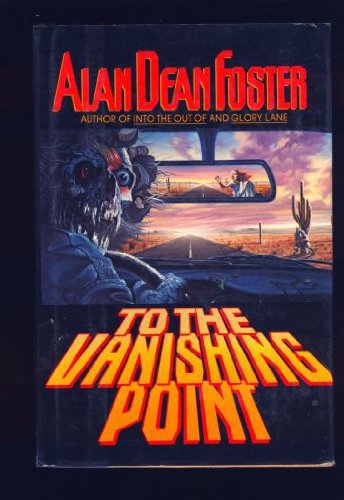
          • Cover of To the Vanishing Point
            To the Vanishing Point

            Alan Dean Foster · standalone novel · 1988

            similar by+1 more

            A family from Los Angeles on the way to a Las Vegas vacation in a rented RV pick up a hitchhiking woman who claims to be on her way to heal the Spinner who creates the threads of the various realities, who is falling under the influence of Chaos.

          • Cover of The Ka of Gifford Hillary
            The Ka of Gifford Hillary

            Dennis Wheatley · standalone novel · 1956

            similar by+1 more

            The _Ka of Gifford Hillary_ is a story concerned with the greatest of all mysteries: what happens after death? With Sir Gifford Hillary and Wing Commander Johnny Norton involved in plans to counter the might of Soviet Russia, interest soon centres on the evil Lady Ankaret and the tragedy which occurred at Longshot Hall, South Hampshire, on the night of the 9th September. A victim is struck down, and from that moment onwards the events which follow seem, at first, fantastic and unbelievable—but are later realised to be entirely logical. What does happen after death? And why should Sir Gifford find himself in prison, on trial for his life?

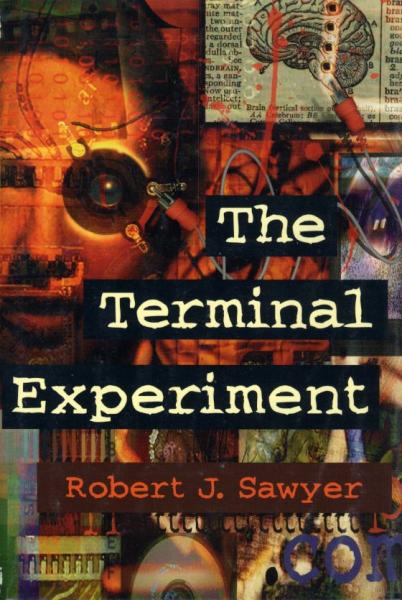
          • Cover of The Terminal Experiment
            The Terminal Experiment

            Robert J. Sawyer · standalone novel · 1995

            similar by+1 more

            The Terminal Experiment is a science fiction novel by Canadian writer Robert J. Sawyer. The book won the 1995 Nebula Award for Best Novel, and was nominated for the Hugo Award for Best Novel in 1996. Sawyer received a writer's reserve grant from the Ontario Arts Council in 1993 in support of his writing the novel.

          • Cover of Skinjacker Trilogy
            Skinjacker Trilogy

            series · 4 books · 2006

            similar byafterlife & underworld

            Everlost strands two fourteen-year-olds, Nick and Allie, killed together in a car crash, in the afterlife-adjacent realm of Everlost — a shadow world where lost children (Afterlights) linger among perfect, unbroken echoes of buildings and places the living have destroyed or torn down. Neal Shusterman's Skinjacker trilogy takes its name from Allie's rare and dangerous power to "skinjack," or possess, the bodies of the living, which she and Nick explore across Everwild and Everfound as they try to understand what Everlost actually is.

          • Cover of What Dreams May Come
            What Dreams May Come

            Richard Matheson · standalone novel · 1978

            similar byafterlife & underworld

            A man who dies and finds himself in the afterlife is concerned about the state of mind of his widow, who doesn't believe in life after death.

          • Cover of All Hallows' Eve
            All Hallows' Eve

            Charles Williams · standalone novel · 1945

            similar by+1 more

            All Hallows' Eve is the last of the seven novels of the supernatural written by Charles Williams. Published by Faber and Faber in 1945, it went through three impressions that year and another in 1947. In 1948 it was published in the US by Pellegrini & Cudahy with an introduction by T. S. Eliot. There were two later translations into Italian and Spanish.

          • Cover of Kingdom of the Wicked (Kerri Maniscalco)
            Kingdom of the Wicked (Kerri Maniscalco)

            series · 6 books · 2020

            similar by+1 more

            Kerri Maniscalco's trilogy follows Emilia, a Sicilian witch whose twin sister is murdered by a serial killer targeting witches, forcing her into an uneasy bargain with Wrath, one of the seven princes of Hell, to hunt the culprit. Kingdom of the Wicked and its sequels, Kingdom of the Cursed and Kingdom of the Feared, escalate from that investigation into a wider entanglement with the political rivalries of Hell itself. The series pairs a murder-mystery hook with a slow-burn romance between Emilia and Wrath.

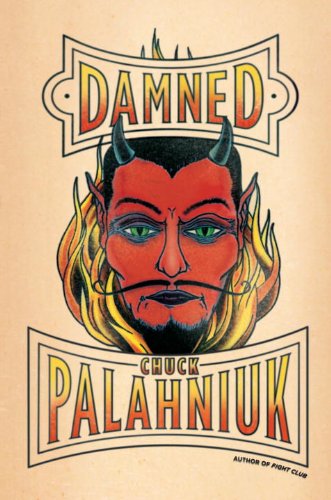
          • Cover of Damned Trilogy
            Damned Trilogy

            series · 2 books · 2011

            similar byafterlife & underworld

            Chuck Palahniuk's Damned follows Madison Spencer, a sharp-tongued thirteen-year-old who wakes up dead and navigates a bureaucratic, telemarketing-riddled Hell, phoning the living to warn them before she's through. Its sequel, Doomed, continues her afterlife story; despite the 'trilogy' label, only these two books have been published.

          • Cover of Anna Korlov
            Anna Korlov

            series · 2 books · 2011

            similar by+1 more

            Kendare Blake's YA horror duology follows Cas Lowood, who has spent three years continuing his late father's work of hunting and dispatching violent ghosts, until he meets Anna, a ghost far more dangerous, and more sympathetic, than any he's faced. Anna Dressed in Blood and its sequel Girl of Nightmares follow Cas as his professional detachment gives way to a bond that complicates everything he thought he knew about his calling.

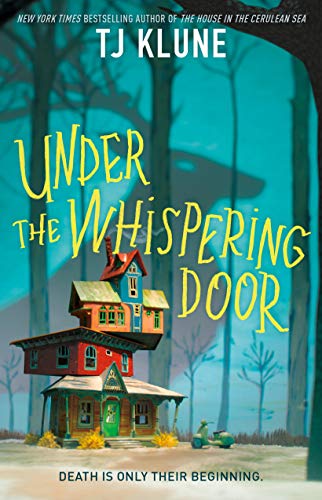
          • Cover of Under the Whispering Door
            Under the Whispering Door

            TJ Klune · standalone novel · 2021

            similar byafterlife & underworld

            A Man Called Ove meets The Good Place in Under the Whispering Door, a delightful queer love story from TJ Klune, author of the New York Times and USA Today bestseller The House in the Cerulean Sea. **Welcome to Charon's Crossing. The tea is hot, the scones are fresh, and the dead are just passing through.** When a reaper comes to collect Wallace from his own funeral, Wallace begins to suspect he might be dead. And when Hugo, the owner of a peculiar tea shop, promises to help him cross over, Wallace decides he’s definitely dead. But even in death he’s not ready to abandon the life he barely lived, so when Wallace is given one week to cross over, he sets about living a lifetime in seven days. Hilarious, haunting, and kind, Under the Whispering Door is an uplifting story about a life spent at the office and a death spent building a home.

          • Cover of Associated Shades
            Associated Shades

            series · 5 books · 1896

            completed

            similar byafterlife & underworld

            John Kendrick Bangs was an American writer, humorist, editor and satirist.

          • Cover of Katabasis
            Katabasis

            R. F. Kuang · standalone novel · 2025

            similar byafterlife & underworld

            Katabasis is a 2025 fantasy novel by American writer R. F. Kuang. It was released on August 26, 2025. The novel follows two magicians, doctoral candidates, who must venture into hell to save their thesis advisor in order to receive letters of recommendation.

          • Cover of The Great Divorce
            The Great Divorce

            C. S. Lewis · standalone novel · 1945

            similar byafterlife & underworld

            The Great Divorce is a novel by the British author C. S. Lewis, published in 1945, based on a theological dream vision of his in which he reflects on the Christian conceptions of Heaven and Hell.

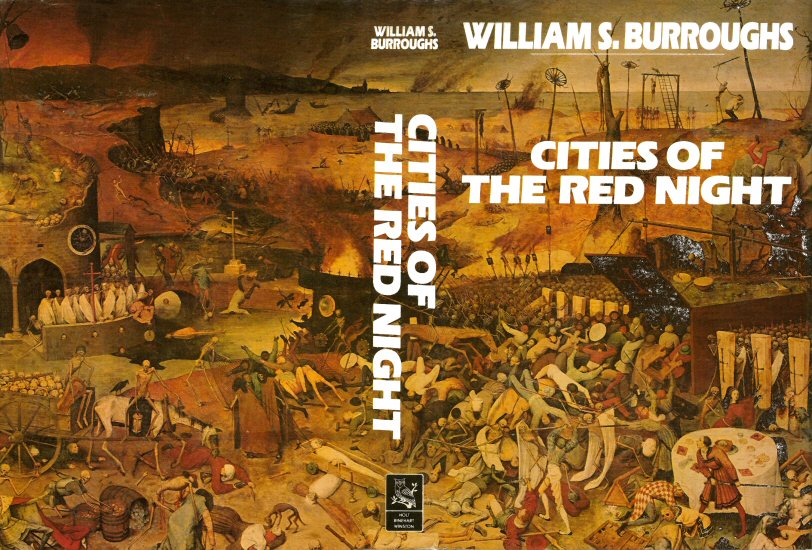
          • Cover of Cities of the Red Night
            Cities of the Red Night

            series · 3 books · 1981

            completed

            similar by+1 more

            William S. Burroughs's Cities of the Red Night opens his final trilogy with two interwoven stories: a pirate utopia loosely modeled on the historical Captain Mission, and a present-day detective's investigation into a ritual killing, both shadowed by a plague spreading from a set of lost cities. The Place of Dead Roads and The Western Lands continue in the same fragmented, cut-up-influenced style rather than a conventional through-line. The three books are linked more by recurring imagery and obsessions, control, contagion, alternate history, than by a shared cast.

          • ST
            Singapore Three

            series · 16 books · 1999

            similar by+1 more

          • Cover of Steal Across the Sky
            Steal Across the Sky

            Nancy Kress · standalone novel · 2009

            similar by+1 more

            The aliens appeared one day, built a base on the moon, and put an ad on the internet. At first, everyone thought it was a joke. But it wasn't. This is the story of three volunteers who answered that ad, and what they found on Kular A and Kular B.

          • Cover of The Taker / Immortal
            The Taker / Immortal

            series · 5 books · 2011

            similar by+1 more

            Alma Katsu's The Taker opens the Immortal trilogy (plus a linked prequel novella) when a young doctor named Luke meets a woman who reveals she is immortal, and hears how she was abandoned by a lover two centuries earlier and made eternal by a centuries-old Hungarian count who abducted her. The dark historical fantasy continues across The Reckoning and The Descent, with The Devil's Scribe serving as a prequel novella.