More like The Throwbacks
anchored on:science fictionfar futurebig city
but
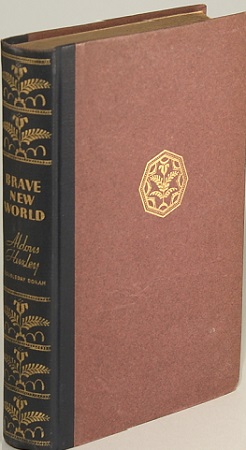
- Brave New World
series8 books1932
similar byscience fictionclass conflictfar futuredystopia+2 more
Aldous Huxley's 1932 novel imagines a future World State where reproduction, social caste, and desire are all engineered before birth, and the population is kept content through conditioning, sleep-hypnosis, and a mood-altering drug called soma. The story follows the disruption this seemingly stable order suffers when an outsider raised beyond its reach is brought into it, exposing what the society traded away for comfort and order. Some editions pair the novel with Huxley's own 1958 nonfiction essay collection, Brave New World Revisited, which reassesses the book's ideas rather than continuing its story.
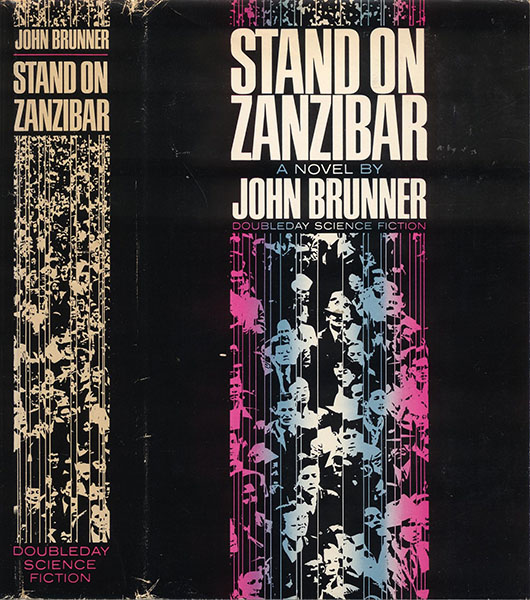
- Stand on Zanzibar
John Brunnerstandalone novel1968
similar bydarkscience fictionbig citydystopia+2 more
Stand on Zanzibar is a dystopian New Wave science fiction novel written by John Brunner and first in part published in New Worlds magazine in 1967 and in book form in 1968. The book won a Hugo Award for Best Novel at the 27th World Science Fiction Convention in 1969, as well as the 1969 BSFA Award and the 1973 Prix Tour-Apollo Award.
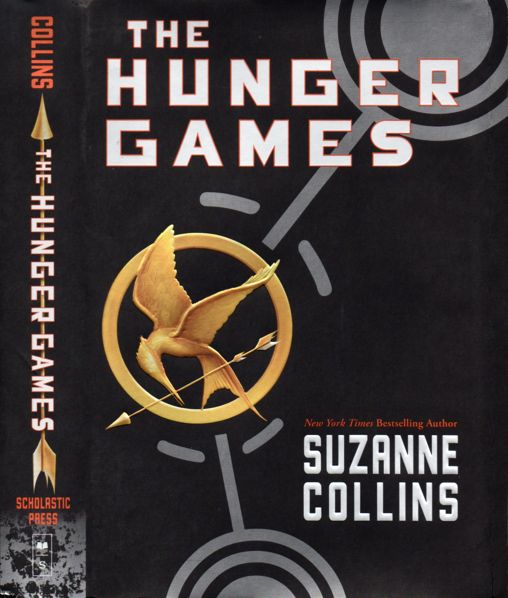
- The Hunger Games
series3 books2008
part of The Hunger Games Universe
similar bydarkscience fictionfar futuretotalitarianismdystopia
The Hunger Games is a series of young adult dystopian novels written by American author Suzanne Collins. The series consists of a trilogy that follows teenage protagonist Katniss Everdeen, as well as two prequels. The Hunger Games universe is a dystopia set in Panem, a post-apocalyptic North American country consisting of the wealthy Capitol and 12 districts in varying states of poverty. As punishment for rebellion, the Capitol hosts an annual battle royale competition called The Hunger Games. Each of the 12 districts must send two children between the ages of 12 and 18 to participate, and the last surviving child is dubbed the victor.
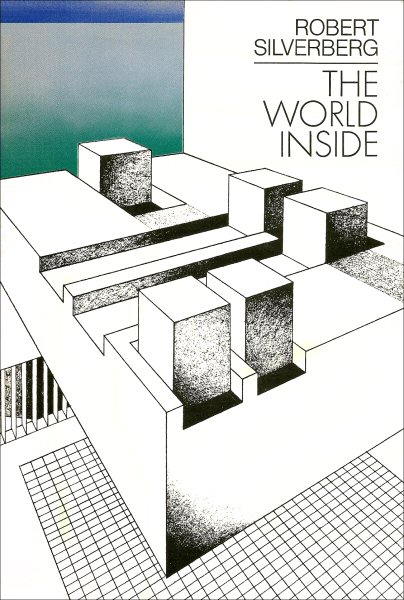
- Urban Monad
series7 books1970
similar byscience fictionfar futuredystopia+4 more
Robert Silverberg's Urban Monad sequence, gathered into the fix-up novel The World Inside (serialized in Galaxy in 1970-71 and a Hugo finalist Silverberg declined), is set inside towering high-rise arcologies -- urban monads -- built to house a wildly overpopulated future Earth. Moving between residents of one tower, the linked stories examine a tightly regulated, sexually permissive society engineered to cope with constant population growth, and the discontent that surfaces underneath it.
- The Hunger Games Universe
universe5 books2008
Start hereThe Hunger Games · Start here
similar bydarkscience fictionfar futuretotalitarianismdystopia
Panem, they call it now — a nation raised on the drowned bones of North America, a glittering Capitol ringed by twelve districts it once starved into obedience. Every year the Capitol collects its debt in children: two tributes from each district, drawn by lottery, dropped into an engineered arena, and made to kill one another on live television while the whole country is required to watch. This is the Hunger Games — entertainment, punishment, and government at once. Suzanne Collins tells it in a compact, unified body of work. The founding trilogy — The Hunger Games, Catching Fire, and Mockingjay — follows Katniss Everdeen, a girl from the coal-mining District 12 who volunteers in her sister's place and becomes something the Capitol never scripted. Two prequels reach back into the same machinery: The Ballad of Songbirds and Snakes traces a young Coriolanus Snow long before he is President, and Sunrise on the Reaping returns to District 12 a generation ahead of Katniss. Begin with the trilogy, in order — it is Katniss's voice, close and present-tense, that makes Panem breathe, and the prequels land hardest once you know how her story ends. Beneath the spectacle sits one steady, uncomfortable question: who profits when we agree to look away.
- When the Sleeper Wakes
H. G. Wellsstandalone novel1899
similar bydarkscience fictionfar futuretotalitarianismdystopia+1 more
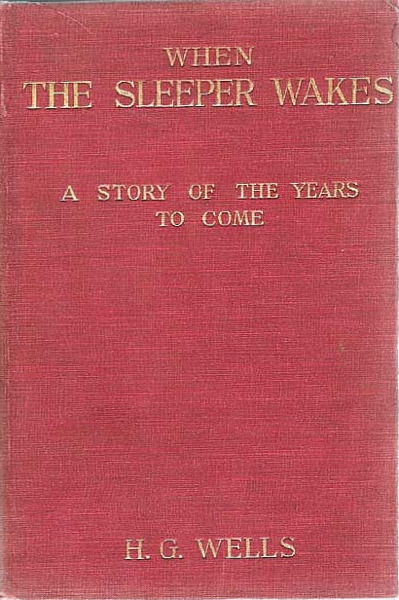
Graham, an insomniac Englishman in 1890s London, takes a course of sleep-inducing drugs and falls into a coma that lasts two centuries. He wakes in the year 2100 to find his investments have compounded, through a ruling body called the White Council, into effective ownership of most of the world's wealth and power, making him, on paper, humanity's master, and in practice, its prisoner, held under guard while the Council governs in his name. A rebel faction led by a man named Ostrog frees him, hoping to use his symbolic authority to spark an uprising against the Council. An early H. G. Wells dystopia about inherited power and manufactured consent.
- The Giver
series5 books1993
similar byscience fictionfar futuredystopia+1 more
The Giver Quartet is a series of four books about a dystopian world by American author Lois Lowry, which consists of The Giver (1993), Gathering Blue (2000), Messenger (2004), and Son (2012). The first book won the 1994 Newbery Medal and has sold more than 50 million copies. The story takes place at an unknown point of time within the future. Each book has a different protagonist but is set in the same futuristic era.
- City of Endless Night
Milo Hastingsstandalone novel1920
similar bydarkscience fictionfar futuretotalitarianismdystopia+1 more
Set in the distant future, "City of endless night" tells the story of a world where only Germany has managed to evade occupation by the League of Nations. In it's effort to remain independent, Germany has developed a strange cast society based on eugenics.
- A Clockwork Orange
series4 books1962
completed
similar bydarkscience fictiontotalitarianismbig citydystopia
Anthony Burgess's 1962 novel is narrated by Alex, a teenage gang leader in a near-future Britain gripped by a youth subculture of extreme violence, recounting his crimes in Nadsat, an invented slang blending English with Russian-derived words. After his crimes catch up with him, Alex is made the subject of a controversial state program meant to forcibly reform his behavior, and the novel uses his ordeal to question whether imposed goodness is worth the loss of free will. It is a standalone novel.
- The Jagged Orbit
John Brunnerstandalone novel1969
similar bydarkscience fictiontotalitarianismbig citydystopia+1 more
The Jagged Orbit is a science fiction novel by British writer John Brunner. It is similar to his earlier novel Stand on Zanzibar in its narrative style and dystopic outlook. It has exactly 100 titled chapters, which vary from several pages to part of one word. It was first published in 1969 with cover art by Leo and Diane Dillon, in the Ace Science Fiction Specials line issued by Ace Books.
- Sprawl Trilogy
series10 books1981
similar bydarkscience fictionbig city
The Sprawl Trilogy is William Gibson's foundational cyberpunk sequence: Neuromancer (1984), in which hacker Case is drawn into a high-stakes heist alongside an artificial intelligence and a damaged ex-soldier, followed by Count Zero (1986) and Mona Lisa Overdrive (1988), which widen the same near-future world of corporate power and networked cyberspace to new characters. Johnny Mnemonic, an early short story set in the same fictional milieu, predates the novels and introduces the courier Molly Millions before her role in the trilogy. Together these works established much of cyberpunk's visual and thematic vocabulary.
- Space Merchants
series2 books1953
completed
similar bydarkscience fictionclass conflictdystopia+1 more
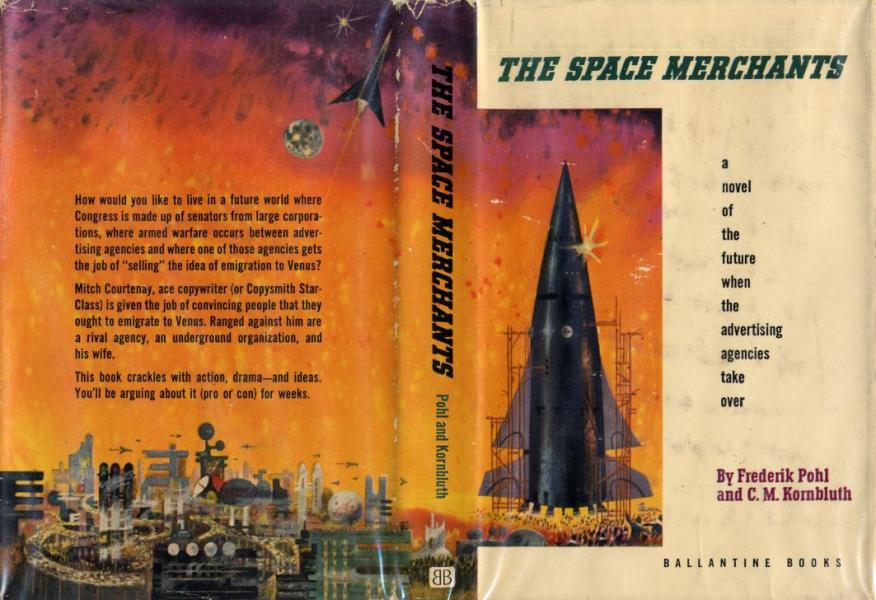
The Space Merchants (1953) is a satirical science fiction novel by Frederik Pohl and C. M. Kornbluth that follows an advertising executive navigating a future where aggressive consumer capitalism has swallowed politics and daily life. The authors reunited three decades later for a direct sequel, The Merchants' War (1984), returning to the same satirical world. Together the two books form a compact bookend pair rather than an ongoing series.
- To the Stars (Harrison)
series3 books1980
completed
similar byscience fictionfar futuredystopia+3 more
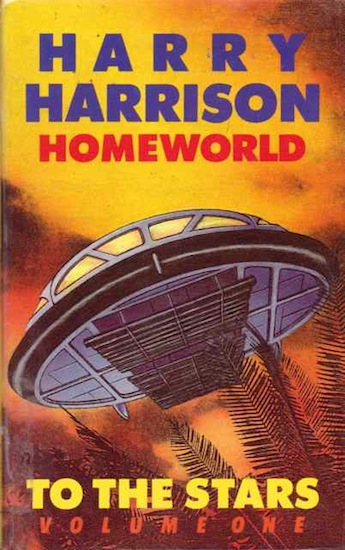
The To the Stars trilogy is a series of science fiction novels by Harry Harrison, first published in 1980 (Homeworld) and 1981. The three books were re-published in an omnibus edition in 1981.
- Earthseed
series7 books1993
similar bydarkscience fictiondystopia+1 more
Octavia E. Butler's Earthseed novels, Parable of the Sower and Parable of the Talents, follow Lauren Olamina as she survives the collapse of a climate-ravaged, near-future United States and founds a belief system built on the idea that "God is Change." The two-book series was left unfinished at Butler's death; a planned third novel, Parable of the Trickster, was never completed. Later graphic-novel adaptations retell the same two stories rather than continuing the narrative.
- The Pure Trilogy
series3 books2012
similar bydarkscience fictionfar futuredystopia+2 more
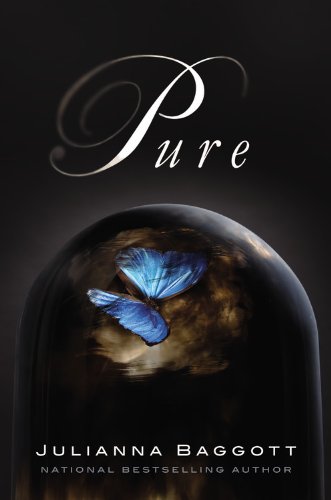
Julianna Baggott's Pure opens a post-apocalyptic trilogy set after a catastrophic detonation: Pressia, a scarred survivor with a doll's head fused to one hand, crosses paths with Partridge, a sheltered 'Pure' from the domed enclave, who is searching for his mother. Their converging stories carry the series through Fuse and Burn as the divide between the ruined outside world and the domed elite comes under increasing pressure.
- The Sheep Look Up
John Brunnerstandalone novel1972
similar bydarkscience fictionbig citydystopia+1 more
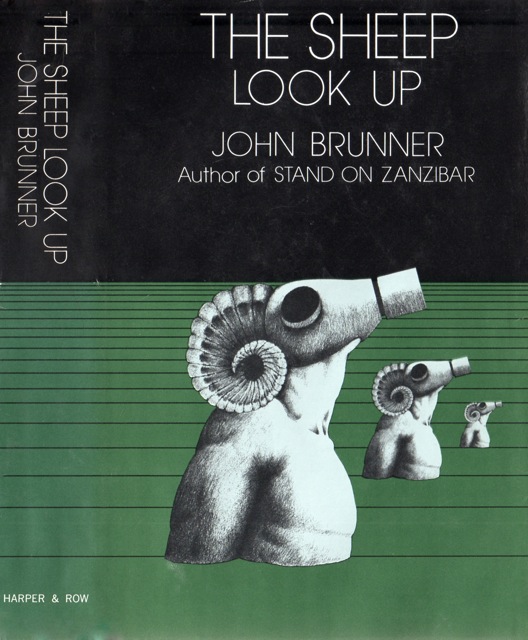
The Sheep Look Up is a 1972 dystopian science fiction novel by British author John Brunner, dealing with the deterioration of the environment in the United States. It was nominated for the 1972 Nebula Award for Best Novel.
- The Penultimate Truth
Philip K. Dickstandalone novel1964
similar bydarkscience fictionfar futuretotalitarianismdystopia
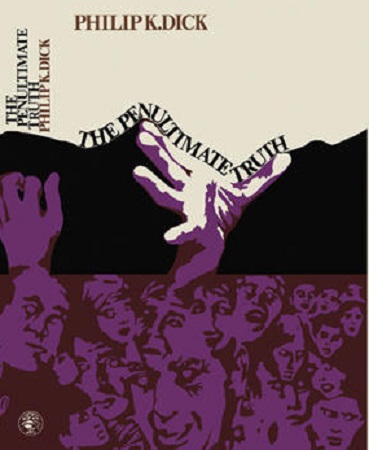
The Penultimate Truth is a 1964 science fiction novel by American writer Philip K. Dick. The story is set in a future where the bulk of humanity is kept in large underground shelters. The people are told that World War III is being fought above them, when in reality the war ended years ago. The novel is based on Dick's 1953 short story "The Defenders". Dick also drew upon two of his other short stories for the plot of the novel: "The Mold of Yancy" and "The Unreconstructed M".
- Moxyland
Lauren Beukesstandalone novel2008
similar bydarkscience fictiontotalitarianismbig citydystopia+1 more
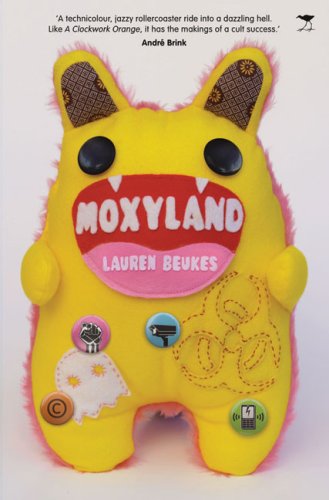
Moxyland is a cyberpunk dystopian novel written by South African author, Lauren Beukes. The book was published in 2008.
- Takeshi Kovacs
series3 books2002
similar bydarkscience fictionfar future+2 more
Takeshi Kovacs is a former elite soldier turned freelance troubleshooter in a future where human consciousness can be digitized and transferred between bodies, or sleeves, making death an inconvenience for those who can afford new ones. Richard Morgan's trilogy - Altered Carbon, Broken Angels, Woken Furies - moves Kovacs through noir-inflected mysteries on different worlds, using the resleeving premise to interrogate class, violence, and what, if anything, survives a person's original body. It became the basis for a Netflix series.
- Divergent
series10 books2011
similar byscience fictionbig citydystopia+1 more
Divergent, also known as The Divergent Series, is a series of young adult dystopian novels by American novelist Veronica Roth set in a post-apocalyptic dystopian Chicago. The trilogy consists of Divergent (2011), Insurgent (2012), and Allegiant (2013). A related book, Four (2014), presents a series of short stories told from the perspective of one of the trilogy's characters, the male love interest Tobias. A later short story, We Can Be Mended (2018), serves as an epilogue five years after the events of the trilogy, again from Tobias/Four's perspective.
- Make Room! Make Room!
Harry Harrisonstandalone novel1966
similar bydarkscience fictionclass conflictbig citydystopia
Make Room! Make Room! is a 1966 science fiction novel written by Harry Harrison exploring the consequences of both unchecked population growth on society and the hoarding of resources by a wealthy minority. It was originally serialized in Impulse magazine.
- The Last Book in the Universe
Rodman Philbrickstandalone novel2000
similar bydarkscience fictionfar futurebig citydystopia+1 more
The Last Book in the Universe is a 2000 post-apocalyptic science fiction novel by Rodman Philbrick. Set in a cyberpunk dystopia, its protagonist and narrator is a teenage boy named Spaz who has epilepsy.