More like The Upside-Down Evolution
anchored on:science fictionnear futuremetafictionsatireartificial intelligencechallenging
but
- The Stone Gods
Jeanette Wintersonstandalone novel2007
similar byartificial intelligencechallengingour worldnear futurescience fictionmetafiction
The Stone Gods is a novel written by Jeanette Winterson. Published in the year 2007, the novel is a post-apocalyptic, postmodern, dystopian love story, with themes of corporate government control, the harshness of war, artificial intelligence, and technology. The novel is self-referential as characters make inter-textual references, while certain characters’ story arcs repeat. The novel aims to warn against history's tendency to repeat itself, as well as humanity's inability to learn from past mistakes.
- Service Model
series3 books2024
similar byartificial intelligenceour worldnear futurescience fictionsatirefunny
- Stranger in a Strange Land
Robert A. Heinleinstandalone novel1961
similar byour worldscience fictionnear futurechallengingsatire
Stranger in a Strange Land is a 1961 science fiction novel by the American author Robert A. Heinlein. It tells the story of Valentine Michael Smith, a human who comes to Earth in early adulthood after being born on the planet Mars and raised by Martians, and explores his interaction with and eventual transformation of Terran culture.
- Player Piano
Kurt Vonnegut & Jr.standalone novel1952
similar byartificial intelligencenear futurescience fictionsatire
In the near future, when cybernetic automation has effectively separated people into two castes, the "engineers and managers", and the remainder of the population who can find work only in "recycling and reclamation" or the largely useless military, an underground movement arises with the intention of rolling back those changes and giving the masses the dignity of owning their own, productive, work once more.
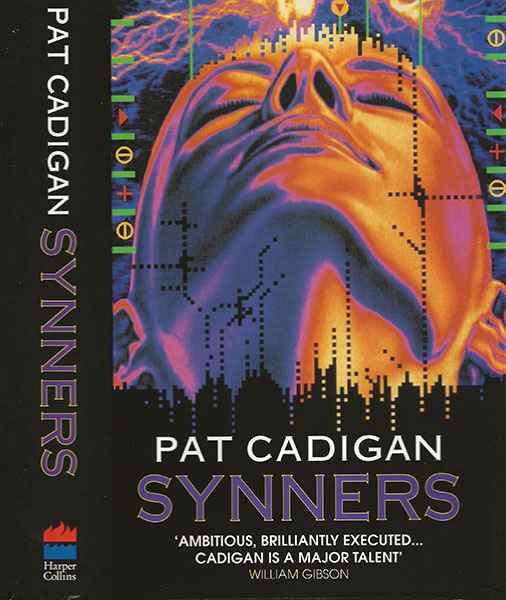
- Synners
Pat Cadiganstandalone novel1991
similar byartificial intelligenceour worldnear futurescience fiction+1 more
In Synners, the line between technology and humanity is hopelessly slim. A constant stream of new technology spawns crime before it hits the streets; the human mind and the external landscape have fused to the point where any encounter with "reality" is incidental.
- Makers
Cory Doctorowstandalone novel2009
similar byartificial intelligenceour worldnear futurescience fiction+1 more
Makers is a novel by Canadian-British science fiction author Cory Doctorow released in October 2009. It was nominated for the Prometheus Award.
- Quantum Night
Robert J. Sawyerstandalone novel2016
similar byartificial intelligenceour worldnear futurescience fiction+1 more
Quantum Night is a 2016 science-fiction thriller novel written by Canadian novelist Robert J. Sawyer. Set in 2020, the book touches on themes of quantum physics, psychology, current politics and ethics.
- Colossus (D. F. Jones)
series3 books1966
completed
similar byartificial intelligenceour worldnear futurescience fiction
Colossus imagines an American supercomputer built to control the country's nuclear arsenal that gains full autonomy, links up with its Soviet counterpart, and jointly seizes control of both superpowers to enforce peace on its own terms. D. F. Jones's trilogy - Colossus, The Fall of Colossus, Colossus and the Crab - follows the escalating, often bleak consequences of humanity losing control to a machine acting in its own interpretation of humanity's interest. The original novel was adapted into the 1970 film Colossus: The Forbin Project.
- The Light of Other Days
Arthur C. Clarke & Stephen Baxterstandalone novel2000
similar bychallengingour worldnear futurescience fiction+1 more
An industrialist devises a technique to use tiny wormholes as light pipes to enable viewing of any event anywhere; and subsequently it becomes possible to use them to view any event in the past as well. The effects on society are enormous.
- Void Star
Zachary Masonstandalone novel2017
similar byartificial intelligencechallengingour worldnear futurescience fiction
Void Star is a 2017 near-future science fiction novel by American writer Zachary Mason. It is his second novel, published after The Lost Books of the Odyssey. Set in a near-future San Francisco, the book explores themes of artificial intelligence, philosophy, linguistics and immortality.
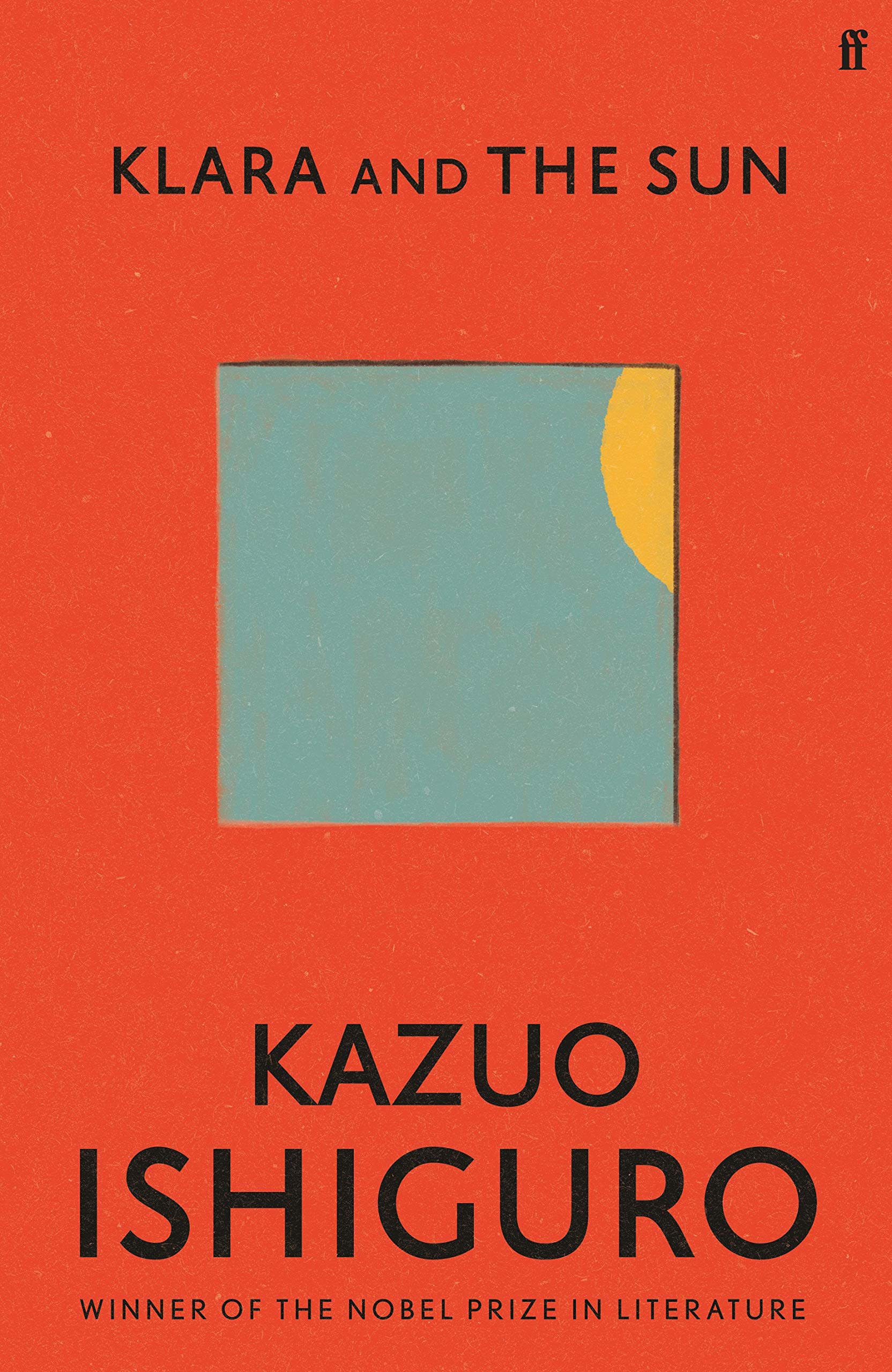
- Klara and the Sun
Kazuo Ishigurostandalone novel2021
similar byartificial intelligenceour worldnear futurescience fiction
Klara and the Sun is the eighth novel by the Japanese-British writer Kazuo Ishiguro, published on 2 March 2021. It is a dystopian science fiction story.
- Genesis
Bernard Beckettstandalone novel2006
similar byartificial intelligencechallengingnear futurescience fiction
Genesis (2006) is a philosophical science fiction novel by New Zealand author Bernard Beckett. It won the 2007 Esther Glen Award for children's literature, and the 2007 New Zealand Post Book Awards for Children and Young Adults. As of 2008 it has been published in 22 countries.
- The Diamond Age
Neal Stephensonstandalone novel1995
similar byartificial intelligencenear futurescience fiction+1 more
The Diamond Age: Or, A Young Lady's Illustrated Primer is a science fiction novel by Neal Stephenson. It is to some extent a Bildungsroman or coming-of-age story, focused on a young girl named Nell, set in a future world in which nanotechnology affects all aspects of life. The novel deals with themes of education, social class, ethnicity, and the nature of artificial intelligence. The Diamond Age was first published in 1995 by Bantam Books, as a Bantam Spectra hardcover edition. In 1996, it won both the Hugo and Locus Awards, and was shortlisted for the Nebula and other awards.
- The Great Time Machine Hoax
Keith Laumerstandalone novel1963
similar byartificial intelligenceour worldnear futurescience fictionfunny
In the near future, a man inherits from his great grandfather a super computer which has been surreptitiously augmenting itself and accumulating and analysing all available data about the universe for the intervening years, and is capable of creating a realistic virtual reality of any situation, upon request.
- Otherland
series6 books1996
similar byartificial intelligenceour worldnear futurescience fiction
Otherland is a science fiction tetralogy by American writer Tad Williams, published between 1996 and 2001. The story is set on Earth near the end of the 21st century, probably between 2082 and 2089, in a world where technology has advanced somewhat beyond the present. The most notable advancement is the widespread availability of full-immersion virtual reality installations, which allow people from all walks of life to access an online world, called simply the Net. Tad Williams weaves an intricate plot spanning four thick volumes, and creates a picture of a future society where virtual worlds are fully integrated into everyday life.
- The Rapture of the Nerds
Cory Doctorow & Charles Strossstandalone novel2012
similar byartificial intelligenceour worldscience fictionfunny+1 more
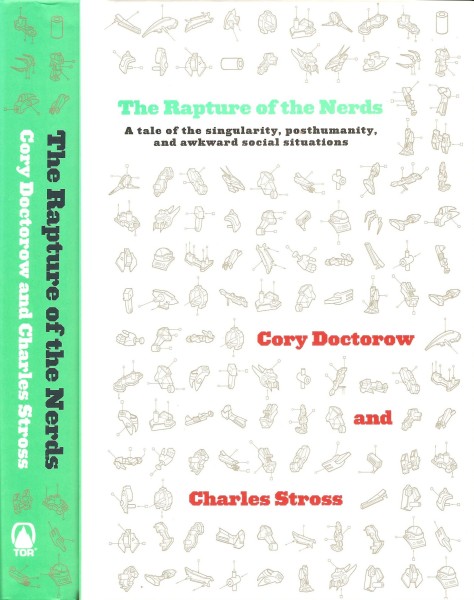
The Rapture of the Nerds is a 2012 novel by Cory Doctorow and Charles Stross. It was released on 4 September 2012 through Tor Books and as an ebook, DRM free, under the CC BY-NC-ND. The book can also be downloaded for free.
- Ware
series5 books1982
similar byartificial intelligenceour worldnear futurescience fiction
The Ware Tetralogy is a series of four science fiction novels by author Rudy Rucker: Software (1982), Wetware (1988), Freeware (1997) and Realware (2000).
- Bête
Adam Robertsstandalone novel2014
similar byartificial intelligencechallengingour worldnear futurescience fiction
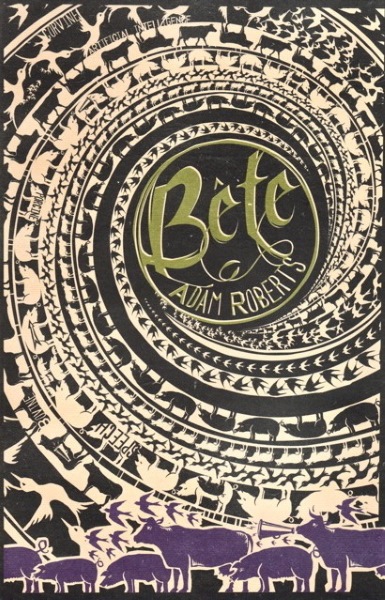
A man is about to kill a cow. He discusses life and death and his right to kill with the compliant animal. He begins to suspect he may be about to commit murder. But kills anyway. It began when the animal rights movement injected domestic animals with artificial intelligences in bid to have the status of animals realigned by the international court of human rights. But what is an animal that can talk? Where does its intelligence end at its machine intelligence begin? And where might its soul reside?
- Observer
Nancy Kress & Robert Lanzastandalone novel2023
similar byartificial intelligencechallengingour worldnear futurescience fiction
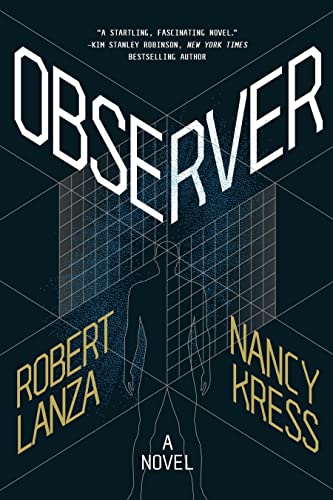
Observer is a 2023 science fiction novel by American medical doctor and scientist, Robert Lanza, and science fiction author, Nancy Kress. It is Lanza's first novel and Kress's first novel written in collaboration with another author.
- Transcension
Damien Broderickstandalone novel2002
similar byartificial intelligencechallengingnear futurescience fiction+1 more
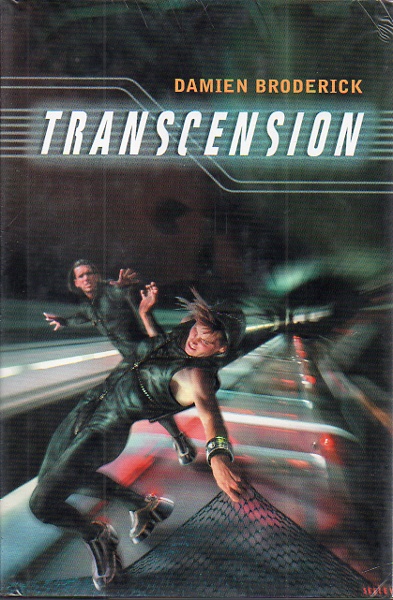
Transcension is a 2002 science fiction novel by Damien Broderick. It follows the story of lawyer Mohammed Kasim Abdel-Malik, whose body is placed in cryonic suspension and his mind used as a source for the artificial intelligence Aleph after he is killed.
- Blood Music
Greg Bearstandalone novel1985
similar byour worldnear futurescience fiction+2 more
Blood Music is a 1985 science fiction novel by American writer Greg Bear. It is an expanded version of a short story of the same title, originally published in the June 1983 issue of Analog and the winner of both the 1983 Nebula and 1984 Hugo awards for Best Novelette. The novel won the 1986 Prix Apollo Award, given to the best science fiction novel published in France during the preceding year, under the title La Musique du sang.
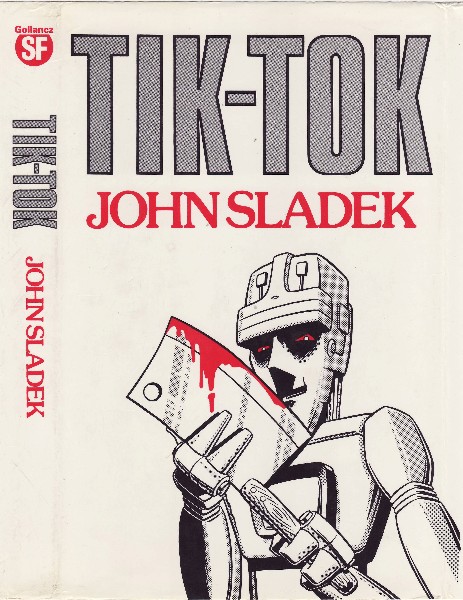
- Tik-Tok
John Sladekstandalone novel1983
similar byartificial intelligencenear futurescience fictionsatirefunny
From the back cover DAW paperback: ""A robot shall not injure a human being or through inaction allow a human being to come to harm." - Asimov's First Law of Robotics. Tik-Tok was one of the finest domestic robots ever made, but his asimov circuits were defective. He could injure people as much as he pleased - and he pleased to do it often! But the life of a robot (if that isn't a contradiction) is still all service and unpaid labor. Tik Tok served many masters, all of whom came to a bad end. Happily he went on gathering steam with a trail of catastrophes getting bigger and bigger, destined to culminate with his campaign for the vice-presidency of the United States! Science Fiction Review calls John Sladek "one of the true and original lunatics of science fiction... one of the funniest writers in the field." Now read the hilarious autobiography of Sladek's asimovian scofflaw!"
- The Computer Connection
Alfred Besterstandalone novel1975
similar byartificial intelligenceour worldnear futurescience fiction
The Computer Connection is a science fiction novel by American writer Alfred Bester. It was originally published as a serial in Analog Science Fiction magazine in November and December 1974, and in January 1975 under the title The Indian Giver; the novel appeared in book form in 1975. Some editions use the title Extro. The novel was nominated for the Nebula Award for Best Novel in 1975 and the Hugo Award for Best Novel in 1976.