Loreful
HomeDiscover
Search series, authors…⌘K
Loreful

Series-first reading tracker: what you've read, what's next, and what you're missing.

Explore

UniversesSeriesWorksAuthorsAtlas

Help

FAQAboutSite map

Account & legal

Sign inCreate accountPrivacyTerms

Data

Built on ISFDB, Wikipedia, Wikidata and Open Library. Every reading order is hand-picked, with a rationale on the page. Data sources & licenses

© Loreful · data: ISFDB · CC BY

More like The War Chief

anchored on:westernsnorth america19th centuryadventurousadventurewar

but

Mood

The mood the book leaves you in.

  • The reading experience is propelled by journeys, exploration, and physical risk; excitement and forward momentum dominate over dread or introspection.
  • Joy and loss are deliberately mixed; the resolution grants characters something real while taking something else away, leaving warmth and sorrow together.
  • The book demands work from the reader — dense prose, difficult structure, unfamiliar ideas, or morally uncomfortable material — as part of its intended effect.
  • Grim events, cruelty, or despair dominate the atmosphere, and the book does not soften them with comfort or comic relief.
  • The atmosphere is quietly unsettling — wrongness, unease, and the uncanny pervade the book without necessarily escalating into overt horror.
  • The book is built to move the reader; character feeling is foregrounded and major scenes aim at a strong emotional response.
  • Humor is a primary aim and the prose plays for laughs — comic situations, wit, or dialogue produce sustained comedy, not occasional levity.
  • The book insists that things can improve; effort and decency are shown to matter, and the arc bends toward better outcomes even through hardship.
  • The book teaches as it goes — real facts, history, science, or craft are conveyed in enough depth that learning is part of the reading experience.
  • The book is designed to uplift and motivate, presenting perseverance or achievement in a way that invites the reader to aspire or act.
  • The overall register is cheerful and easygoing; stakes are kept gentle and the book avoids dwelling on pain or dread.
  • Withheld information drives the experience; the book sustains enigmas and secrets the reader wants resolved, whatever its genre.
  • The book is contemplative and inward-looking, giving more weight to thought, memory, and meaning than to external events.
  • The book works as comfort reading — low tension, a soothing pace, and an atmosphere the reader can unwind in.
  • Grief, loss, or melancholy set the dominant register, and the book lets sorrow stand rather than resolving it into comfort.
  • Sustained suspense is the point; the book keeps the reader braced for what happens next through danger, pressure, or impending revelation.
  • Playful invention and charm define the register — fanciful conceits, light absurdity, and a narration that delights in its own oddity.

About

What the story runs on.

  • Stories in which extraterrestrial beings are central — as characters, cultures, or the object of the plot.
  • Stories about venturing into space to explore — survey missions, astronauts, and the frontier of the unknown beyond Earth.
  • Stories structured as a quest — a journey undertaken to find, deliver, or destroy something of great import.
  • Stories in which staying alive against nature, catastrophe, or scarcity is the central problem.
  • Stories of lovers kept apart by law, family, faith, or station, where the obstacle to love is the plot.
  • Stories in which a friendship — its making, testing, or loss — is the emotional center.
  • Stories of growing up — a young protagonist crossing from childhood into adult knowledge and responsibility.
  • Stories about who a character truly is — self-discovery, doubled lives, and the search for a self.
  • Stories in which a buried family truth — hidden parentage, crimes, or shames — surfaces and reorders the present.
  • Stories driven by maneuvering for power — factions, conspiracies, and statecraft conducted in shadow.
  • Stories in which war itself is the subject — combat, occupation, and what warfare does to soldiers and civilians.
  • Stories organized around investigating a killing — the case, the clues, and the pursuit of the killer, in any genre's clothing.

Shelf

Where it sits in the library.

    • Fiction built on magic or other supernatural elements that have no scientific explanation.
    • Secondary-world fantasy at large scale, where the fate of nations or the world turns on the protagonists' struggle.
    • Fantasy set in a recognizably modern city or contemporary world where the supernatural intrudes on everyday life.
    • Fantasy that blends in horror's atmosphere and imagery, keeping a fantastical frame around grim or frightening material.
    • Action-driven fantasy following warriors or rogues with personal stakes against sorcerous threats, rather than world-spanning conflicts.
    • Fantasy set in a real historical period or a close analogue of one, with magic woven into the era.
    • Fantasy in which protagonists cross from the ordinary world into another world through a portal or similar passage.
    • Fiction that retells or reworks a traditional fairy tale in a new form or setting.
    • Fantasy drawing directly on myths, legends, and folklore, retelling them or building on their figures and logic.
    • Fantasy of ghosts, vampires, shapeshifters, psychics, and similar phenomena, usually set in an otherwise ordinary world.
    • Fiction mixing science-fictional trappings with overtly magical or impossible elements in one setting.
    • Low-stakes fantasy emphasizing comfort, community, and everyday pleasures over conflict and peril.
    • Speculative fiction of pervasive moral ambiguity, violence, and cynicism that rejects heroic conventions — fantasy and SF alike.
      • Fiction that extrapolates from science and technology — future societies, space travel, or speculative inventions — within at least nominally natural laws.
      • Science fiction of interstellar scope — starships, galactic polities, and adventure across star systems.
      • Science fiction committed to scientific rigor, where technical plausibility constrains the story.
      • Science fiction centered on armed forces and warfare, told largely from a military point of view.
      • Science fiction of networked, corporate-dominated near futures, pairing high technology with social decay.
      • Science fiction styled on nineteenth-century steam-powered technology, often in a Victorian or pseudo-Victorian setting.
      • Fiction depicting an oppressive or catastrophic society, presented as a warning.
      • Fiction set after civilization's collapse, following survivors in the ruins of the old world.
      • Fiction in which characters move between past and future, and the mechanics or consequences of that travel drive the plot.
      • Fiction exploring a world where a historical event went differently and history diverged from ours.
      • Science fiction about humanity's first encounter and communication with an alien intelligence.
      • Science fiction in which extraterrestrial forces attack or occupy Earth and humanity resists.
      • Fiction whose primary aim is to frighten or unsettle the reader through dread, menace, or the monstrous.
      • Horror of vast, indifferent, incomprehensible entities before which humanity is insignificant, in the Lovecraft tradition.
      • Horror of decaying houses, buried family secrets, and oppressive atmosphere in the Gothic literary tradition.
      • Horror centered on hauntings and the returning dead.
      • Horror located in the mind — paranoia, obsession, and unreliable perception rather than external monsters.
      • Horror built around the reanimated dead and survival amid their outbreaks.
      • Horror defined by explicit, transgressive gore that refuses to cut away from violence.
      • Speculative fiction of the strange and uncanny that resists both natural explanation and standard genre categories.
      • Fiction organized around solving a crime or puzzle, typically following an investigator toward the identification of a culprit.
      • A puzzle-first mystery that lays out clues so the culprit's identity can be deduced before the reveal.
      • Crime fiction of moral ambiguity, fatalism, and hard-edged style, set among the corrupt and the doomed.
      • A mystery following the realistic routines of police work — forensics, interviews, and case-building.
      • A gentle mystery with an amateur sleuth, a small community, and violence kept off the page.
      • A mystery set in a past era, where the investigation works within that period's methods and society.
      • Fast-paced fiction driven by imminent danger, pursuit, or high-stakes conspiracy, built to sustain tension.
      • A thriller of espionage — agents, tradecraft, and intelligence services in conflict.
      • A thriller centered on lawyers and the courtroom, where litigation carries the suspense.
      • A thriller driven by detailed contemporary or near-future technology, often military or scientific.
      • A thriller whose tension comes from mental states and manipulation between characters rather than external action.
      • Fiction whose central plot is a romantic relationship and its development toward an emotionally satisfying resolution.
      • Romance in which one or both partners are supernatural beings, blending fantasy elements into the love story.
      • A fantasy-romance hybrid in which the romantic arc and the fantasy plot carry equal weight.
      • Romance set in a past era, with courtship shaped by the period's society and manners.
      • Romance set in the present day, without supernatural or historical elements.
      • Fiction set in a real past period, where the historical setting materially shapes characters and events.
        • General and literary fiction emphasizing prose style, character interiority, or formal ambition over genre plot conventions.
        • Fiction in a realistic world where magical events occur and are treated as ordinary, in the tradition of Latin American literature.
        • Fiction that ridicules people, institutions, or society in order to criticize them.
        • Fiction of dreamlike, irrational imagery and logic that breaks from realistic representation.
        • Fiction that plays with narrative convention through metafiction, fragmentation, and self-reference.
        • Fiction propelled by journeys, exploration, and physical peril, where action and survival carry the plot.
        • Adventure fiction of ships and seafaring — naval engagements, voyages, and life at sea.
        • Fiction of the American frontier West — gunmen, ranchers, and lawmen, typically in the late nineteenth century.
        • Fiction centered on soldiers, campaigns, and the experience of warfare, historical or imagined.
          • Fiction written primarily to amuse, using comedic situations, wit, or parody as its organizing principle.
            • Multi-generational fiction following a family or dynasty across decades, with inheritance and kinship as the through-line.
              • Fiction whose world runs on explicit game mechanics — levels, stats, and skills that characters can see and exploit.
                • Fiction about costumed or superpowered heroes and their conflicts with comparable villains.

                Practical

                How long a commitment, whether it stands alone, and whether it has finished.

                Tap a chip to ask for it · tap again to rule it out · once more to clear. Numbers show what would be left.

                • The War Chief

                  series · 3 books · 1927

                  completed

                  similar byadventurousnorth america19th centurywesternsadventure+1 more

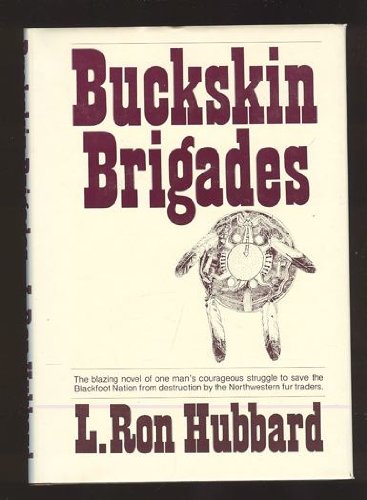
                • Buckskin Brigades

                  L. Ron Hubbard · standalone novel · 1937

                  similar byadventurousnorth america19th centurywesterns+1 more

                  Buckskin Brigades is a Western novel written by L. Ron Hubbard, first published July 30, 1937. The work was Hubbard's first hard-covered book, and his first published novel. The next year he became a contributor to Astounding Science Fiction. Winfred Blevins wrote the introduction to the book. Some sources state that as a young man, Hubbard became a blood brother to the Piegan Blackfeet Native American tribe while living in Montana, though this claim is disputed. Hubbard incorporates historical background from the Blackfeet tribe into the book.

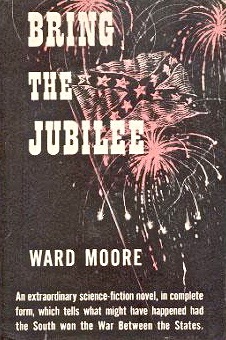
                • Bring the Jubilee

                  Ward Moore · standalone novel · 1953

                  similar bywarnorth america19th century+1 more

                  From the flaps of the Farrar, Straus and Young first edition: ""Although I am writing this in the year 1877, I was not born until 1921." So Hodge Backmaker begins his story of the harsh and curious world he lived in, a world in which the South won the Civil War and the all-powerful Confederacy dominated the poor and backward North; a North that had neither a transcontinental railroad, and where television was undreamed of. Like most Northerners, Hodge was poor - but he had ambition. A printer's handyman in 1938, he had since become an eminent historian. Hodge's special interest was the American past, when the States had been united and had seemed to be on the brink of prosperity and technical progress. And then he was offered an opportunity no historian could resist - he could go back in time. Hodge chsoe to return to a certain field near Gettysburg on a day in July, 1863... Bring the Jubilee is a novel of curious events, of adventures and reflection, of passions and comment. It at time Hodge's world, its horse-carriages and gas-lights, minibles and tinugraphs and the Great Emperors' War of 1914 faintly resembles our own, it is perhaps, because that world might well become a reality: on the battlefield of Gettysburg there is a small hill called Little Round Top. One July morning in 1863 the Confederate Army made the tactical error of not occupying this hill. It was a mistake that cost them victory in a battle which - in the view of many historians - was the turning point of the Civil War."

                • The Bandit of Hell's Bend

                  Edgar Rice Burroughs · standalone novel · 1925

                  similar byadventurousnorth america19th centurywesternsadventure

                  The Bandit of Hell's Bend is a Western fiction novel by American writer Edgar Rice Burroughs, published in serial form in the Argosy All-Story Weekly in September and October 1924. The book version was first published by A. C. McClurg on June 4, 1925.

                • Temeraire

                  series · 48 books · 2006

                  similar bywaradventurous19th century

                  Temeraire is a series of nine alternate history fantasy novels written by American author Naomi Novik. The novels follow the adventures of Captain William Laurence and his dragon, the eponymous Temeraire, and reimagine events of the Napoleonic Wars with "an air force of dragons, manned by crews of aviators". His Majesty's Dragon, the first entry in the series, won the Compton Crook Award in 2007 and was nominated for the Hugo Award for Best Novel the same year. Temeraire: In the Service of the King, an omnibus volume collecting the first three novels, won the Locus Award for Best First Novel in 2007. Temeraire was nominated for the Hugo Award for Best Series in 2017.

                • Trail of Glory

                  series · 2 books · 2005

                  completed

                  similar bywaradventurousnorth america19th century

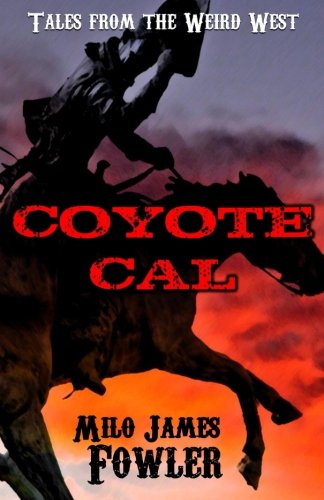
                • Coyote Cal Adventures

                  series · 10 books · 2011

                  similar byadventurousnorth america19th centurywesternsadventure

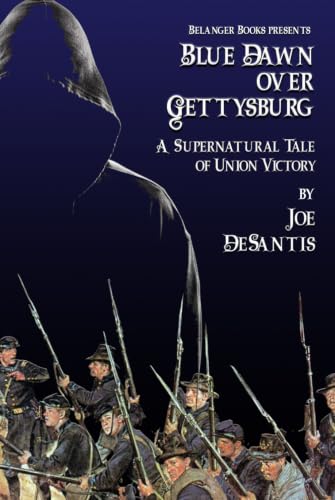
                • Blue Dawn Over Gettysburg

                  Joe DeSantis · standalone novel · 2008

                  similar bywaradventurousnorth america19th century

                  A newly turned vampire escapes from his master and tries to use his abilities to win the battle of Gettysburg and the US Civil War for the North.

                • Allan Quatermain

                  series · 25 books · 1885

                  similar byadventurous19th centuryadventure

                  Allan Quatermain is the protagonist of H. Rider Haggard's 1885 novel King Solomon's Mines, its one sequel Allan Quatermain (1887), twelve prequel novels and four prequel short stories, totalling eighteen works. An English professional big game hunter and adventurer, in film and television he has been portrayed by Richard Chamberlain, Sean Connery, Cedric Hardwicke, Patrick Swayze and Stewart Granger among others.

                • Deadwood Dick

                  series · 6 books · 2009

                  similar bynorth america19th centurywesternsadventurous+2 more

                • Collected Supernatural and Weird Fiction of Robert W. Chambers

                  series · 6 books · 1914

                  completed

                  similar bywaradventurousnorth america

                • Gettysburg / Civil War Trilogy

                  series · 3 books · 2003

                  similar bywarnorth america19th century

                  Gettysburg opens Newt Gingrich and William R. Forstchen's alternate-history trilogy imagining a Confederate victory at the battle of Gettysburg, then follows the shifted course of the Civil War across two further novels tracking the changed war's political and military fallout. The series leans on close military detail and real historical figures reimagined under altered circumstances. It was published between 2003 and 2005.

                • Drew Rennie

                  series · 2 books · 1961

                  completed

                  similar bynorth america19th centurywesterns+2 more

                  Andre Norton's Drew Rennie duology — Ride Proud, Rebel! and Rebel Spurs — is a Civil War-era historical adventure for young readers, following a young soldier through the war's final campaigns and into the postwar West. The two novels form a linked story grounded in Civil War history rather than Norton's more familiar science fiction and fantasy.

                • The Crimson Deathbringer

                  series · 1 book · 2019

                  similar bywaradventurous+1 more

                • Starship Troopers

                  Robert A. Heinlein · standalone novel · 1959

                  similar bywaradventurous

                  Starship Troopers is a military science fiction novel by American writer Robert A. Heinlein. Written in a few weeks in reaction to the US suspending nuclear tests, the story was first published as a two-part serial in The Magazine of Fantasy & Science Fiction as Starship Soldier, and published as a book by G. P. Putnam's Sons on November 5, 1959.

                • Zulu Nation

                  series · 1 book · 1892

                  similar byadventurous19th centuryadventure+1 more

                  H. Rider Haggard's Nada the Lily is set during the rise of the Zulu king Shaka, following Umslopogaas, Shaka's unacknowledged son, and his love for the celebrated beauty Nada. Haggard weaves real Zulu history and figures together with invented characters and supernatural elements, building a tragic story of forbidden love against a backdrop of war and court intrigue. It's a standalone 1892 novel rather than a series.

                • The Guns of the South

                  Harry Turtledove · standalone novel · 1992

                  similar bywarnorth america19th century

                  The Guns of the South is an alternate history science fiction novel set during the American Civil War by Harry Turtledove. It was released in the United States on September 22, 1992.

                • Blood Meridian; or, The Evening Redness in the West

                  Cormac McCarthy · standalone novel · 1985

                  similar bywarnorth america19th centurywesterns

                  "Based on incidents that took place in the southwestern United States and Mexico around 1850, this novel chronicles the crimes of a band of desperados, with a particular focus on one, "the kid," a boy of fourteen." (cited from the OCLC entry for the first edition)

                • Guild

                  Ed Gorman · standalone novel · 1987

                  similar byadventurousnorth america19th centurywesternsadventure

                  A weary bounty hunter, looking to collect his reward, rides into the dusty Dakota town of Denton one evening. He doesn't plan to stay long, until an old buddy and a beautiful woman convince him to change his mind. But some folks don't like his presence in Denton. They don't like the questions he's asking and the insinuations he's making. And they'll do everything they can to make sure he leaves mighty quick, whether it's on the back of a horse or in a narrow pine box.

                • The Boundless

                  Kenneth Oppel · standalone novel · 2014

                  similar byadventurousnorth america19th centuryadventure

                  Aboard "The Boundless," the greatest train ever built, on its maiden voyage across Canada, teenaged Will enlists the aid of a traveling circus to save the train from villains.

                • The Brethren

                  H. Rider Haggard · standalone novel · 1904

                  similar bywaradventurousadventure

                  "... a tale ... of that pregnant and mysterious epoch, when men by thousands were glad to lay down their lives for visions and spiritual hopes, could find a picture, however faint and broken, of the long war between Cross and Crescent waged among the Syrian plains and deserts. Of Christian knights and ladies also, and their loves and sufferings in England and the East; of the fearful lord of the Assassins whom the Franks called Old Man of the Mountain, and his fortress city, Masyaf. Of the great-hearted, if at times cruel Saladin and his fierce Saracens; of the rout at Hattin itself, on whose rocky height the Holy Rood was set up as a standard and captured, to be seen no more by Christian eyes; and of the last surrender, whereby the Crusaders lost Jerusalem forever." (From the Author's Note)

                • Battlesaurus

                  series · 2 books · 2015

                  similar bywaradventurous19th century+1 more

                • Terra Incognita (Kevin J. Anderson)

                  series · 4 books · 2009

                  similar bywaradventurous+1 more

                  Kevin J. Anderson's Terra Incognita trilogy is set in a fantasy world modeled on the Age of Exploration, following rival seafaring nations sending expeditions in opposite directions around their world's coastline, driven by religious conflict and the search for a fabled promised land. The Edge of the World opens the story, continuing through The Map of All Things and The Key to Creation.

                • The Spy

                  James Fenimore Cooper · standalone novel · 1821

                  similar bywarnorth america19th century

                  Alternate history, U.S. Revolutionary War.