Loreful
HomeDiscover
Search series, authors…⌘K
Loreful

Reading orders for SF/F series and shared universes — with your place kept in every one.

Explore

UniversesSeriesWorksAuthorsAtlas

Help

FAQAboutSite map

Account & legal

Sign inCreate accountPrivacyTerms

Data

Built on ISFDB, Wikipedia, Wikidata and Open Library. Curated reading orders carry their reasoning on the page; the rest follow publication order. Data sources & licenses

© Loreful · data: ISFDB · CC BY

More like This Rough Magic

anchored on:historical fantasyeuroperenaissance and early modernalternate historydemonspolitical intrigue+4 more

but

Mood

The mood the book leaves you in.

  • The reading experience is propelled by journeys, exploration, and physical risk; excitement and forward momentum dominate over dread or introspection.
  • Joy and loss are deliberately mixed; the resolution grants characters something real while taking something else away, leaving warmth and sorrow together.
  • The book demands work from the reader — dense prose, difficult structure, unfamiliar ideas, or morally uncomfortable material — as part of its intended effect.
  • Grim events, cruelty, or despair dominate the atmosphere, and the book does not soften them with comfort or comic relief.
  • The atmosphere is quietly unsettling — wrongness, unease, and the uncanny pervade the book without necessarily escalating into overt horror.
  • The book is built to move the reader; character feeling is foregrounded and major scenes aim at a strong emotional response.
  • Humor is a primary aim and the prose plays for laughs — comic situations, wit, or dialogue produce sustained comedy, not occasional levity.
  • The book insists that things can improve; effort and decency are shown to matter, and the arc bends toward better outcomes even through hardship.
  • The book teaches as it goes — real facts, history, science, or craft are conveyed in enough depth that learning is part of the reading experience.
  • The book is designed to uplift and motivate, presenting perseverance or achievement in a way that invites the reader to aspire or act.
  • The overall register is cheerful and easygoing; stakes are kept gentle and the book avoids dwelling on pain or dread.
  • Withheld information drives the experience; the book sustains enigmas and secrets the reader wants resolved, whatever its genre.
  • The book is contemplative and inward-looking, giving more weight to thought, memory, and meaning than to external events.
  • The book works as comfort reading — low tension, a soothing pace, and an atmosphere the reader can unwind in.
  • Grief, loss, or melancholy set the dominant register, and the book lets sorrow stand rather than resolving it into comfort.
  • Sustained suspense is the point; the book keeps the reader braced for what happens next through danger, pressure, or impending revelation.
  • Playful invention and charm define the register — fanciful conceits, light absurdity, and a narration that delights in its own oddity.

About

What the story runs on.

  • Stories in which extraterrestrial beings are central — as characters, cultures, or the object of the plot.
  • Stories about venturing into space to explore — survey missions, astronauts, and the frontier of the unknown beyond Earth.
  • Stories structured as a quest — a journey undertaken to find, deliver, or destroy something of great import.
  • Stories in which staying alive against nature, catastrophe, or scarcity is the central problem.
  • Stories of lovers kept apart by law, family, faith, or station, where the obstacle to love is the plot.
  • Stories in which a friendship — its making, testing, or loss — is the emotional center.
  • Stories of growing up — a young protagonist crossing from childhood into adult knowledge and responsibility.
  • Stories about who a character truly is — self-discovery, doubled lives, and the search for a self.
  • Stories in which a buried family truth — hidden parentage, crimes, or shames — surfaces and reorders the present.
  • Stories driven by maneuvering for power — factions, conspiracies, and statecraft conducted in shadow.
  • Stories in which war itself is the subject — combat, occupation, and what warfare does to soldiers and civilians.
  • Stories organized around investigating a killing — the case, the clues, and the pursuit of the killer, in any genre's clothing.

Shelf

Where it sits in the library.

    • Fiction built on magic or other supernatural elements that have no scientific explanation.
    • Secondary-world fantasy at large scale, where the fate of nations or the world turns on the protagonists' struggle.
    • Fantasy set in a recognizably modern city or contemporary world where the supernatural intrudes on everyday life.
    • Fantasy that blends in horror's atmosphere and imagery, keeping a fantastical frame around grim or frightening material.
    • Action-driven fantasy following warriors or rogues with personal stakes against sorcerous threats, rather than world-spanning conflicts.
    • Fantasy set in a real historical period or a close analogue of one, with magic woven into the era.
    • Fantasy in which protagonists cross from the ordinary world into another world through a portal or similar passage.
    • Fiction that retells or reworks a traditional fairy tale in a new form or setting.
    • Fantasy drawing directly on myths, legends, and folklore, retelling them or building on their figures and logic.
    • Fantasy of ghosts, vampires, shapeshifters, psychics, and similar phenomena, usually set in an otherwise ordinary world.
    • Fiction mixing science-fictional trappings with overtly magical or impossible elements in one setting.
    • Low-stakes fantasy emphasizing comfort, community, and everyday pleasures over conflict and peril.
    • Speculative fiction of pervasive moral ambiguity, violence, and cynicism that rejects heroic conventions — fantasy and SF alike.
      • Fiction that extrapolates from science and technology — future societies, space travel, or speculative inventions — within at least nominally natural laws.
      • Science fiction of interstellar scope — starships, galactic polities, and adventure across star systems.
      • Science fiction committed to scientific rigor, where technical plausibility constrains the story.
      • Science fiction centered on armed forces and warfare, told largely from a military point of view.
      • Science fiction of networked, corporate-dominated near futures, pairing high technology with social decay.
      • Science fiction styled on nineteenth-century steam-powered technology, often in a Victorian or pseudo-Victorian setting.
      • Fiction depicting an oppressive or catastrophic society, presented as a warning.
      • Fiction set after civilization's collapse, following survivors in the ruins of the old world.
      • Fiction in which characters move between past and future, and the mechanics or consequences of that travel drive the plot.
      • Fiction exploring a world where a historical event went differently and history diverged from ours.
      • Science fiction about humanity's first encounter and communication with an alien intelligence.
      • Science fiction in which extraterrestrial forces attack or occupy Earth and humanity resists.
      • Fiction whose primary aim is to frighten or unsettle the reader through dread, menace, or the monstrous.
      • Horror of vast, indifferent, incomprehensible entities before which humanity is insignificant, in the Lovecraft tradition.
      • Horror of decaying houses, buried family secrets, and oppressive atmosphere in the Gothic literary tradition.
      • Horror centered on hauntings and the returning dead.
      • Horror located in the mind — paranoia, obsession, and unreliable perception rather than external monsters.
      • Horror built around the reanimated dead and survival amid their outbreaks.
      • Horror defined by explicit, transgressive gore that refuses to cut away from violence.
      • Speculative fiction of the strange and uncanny that resists both natural explanation and standard genre categories.
      • Fiction organized around solving a crime or puzzle, typically following an investigator toward the identification of a culprit.
      • A puzzle-first mystery that lays out clues so the culprit's identity can be deduced before the reveal.
      • Crime fiction of moral ambiguity, fatalism, and hard-edged style, set among the corrupt and the doomed.
      • A mystery following the realistic routines of police work — forensics, interviews, and case-building.
      • A gentle mystery with an amateur sleuth, a small community, and violence kept off the page.
      • A mystery set in a past era, where the investigation works within that period's methods and society.
      • Fast-paced fiction driven by imminent danger, pursuit, or high-stakes conspiracy, built to sustain tension.
      • A thriller of espionage — agents, tradecraft, and intelligence services in conflict.
      • A thriller centered on lawyers and the courtroom, where litigation carries the suspense.
      • A thriller driven by detailed contemporary or near-future technology, often military or scientific.
      • A thriller whose tension comes from mental states and manipulation between characters rather than external action.
      • Fiction whose central plot is a romantic relationship and its development toward an emotionally satisfying resolution.
      • Romance in which one or both partners are supernatural beings, blending fantasy elements into the love story.
      • A fantasy-romance hybrid in which the romantic arc and the fantasy plot carry equal weight.
      • Romance set in a past era, with courtship shaped by the period's society and manners.
      • Romance set in the present day, without supernatural or historical elements.
      • Fiction set in a real past period, where the historical setting materially shapes characters and events.
        • General and literary fiction emphasizing prose style, character interiority, or formal ambition over genre plot conventions.
        • Fiction in a realistic world where magical events occur and are treated as ordinary, in the tradition of Latin American literature.
        • Fiction that ridicules people, institutions, or society in order to criticize them.
        • Fiction of dreamlike, irrational imagery and logic that breaks from realistic representation.
        • Fiction that plays with narrative convention through metafiction, fragmentation, and self-reference.
        • Fiction propelled by journeys, exploration, and physical peril, where action and survival carry the plot.
        • Adventure fiction of ships and seafaring — naval engagements, voyages, and life at sea.
        • Fiction of the American frontier West — gunmen, ranchers, and lawmen, typically in the late nineteenth century.
        • Fiction centered on soldiers, campaigns, and the experience of warfare, historical or imagined.
          • Fiction written primarily to amuse, using comedic situations, wit, or parody as its organizing principle.
            • Multi-generational fiction following a family or dynasty across decades, with inheritance and kinship as the through-line.
              • Fiction whose world runs on explicit game mechanics — levels, stats, and skills that characters can see and exploit.
                • Fiction about costumed or superpowered heroes and their conflicts with comparable villains.

                Practical

                How long a commitment, whether it stands alone, and whether it has finished.

                Tap a chip to ask for it · tap again to rule it out · once more to clear. Numbers show what would be left.

                • Cover of Heirs of Alexandria
                  Heirs of Alexandria

                  series · 7 books · 2002

                  similar byrenaissance and early modernpolitical intriguehistorical fantasyeuropealternate historymediterranean+3 more

                  Heirs of Alexandria is an alternate history/historical fantasy series introduced in 2002 and set primarily in the Republic of Venice in the 1530s. The books are written by three authors, Mercedes Lackey, Eric Flint and Dave Freer. The books combine elements from the styles of all three authors, such as Lackey's approach to tolerance and magic and Flint's sense of history alteration.

                • Cover of Ariosto
                  Ariosto

                  Chelsea Quinn Yarbro · standalone novel · 1980

                  similar byrenaissance and early modernpolitical intrigueadventuroushistorical fantasyeuropealternate historymediterraneanfantasy

                  Amazon: In an alternate-world Italian Renaissance where the Italian states have formed a federation, the great epic poet Ludovico Ariosto is writing a fantasy adventure set in the New World that reflects the difficulties besetting his patron, Damiano de' Medici. While the Cerrochi in Ariosto's fantasy battle the evil wizard Anatrecacciatore with the help of a heroic version of Ariosto himself, politics and skullduggery plague the Florence-based court of Italia Federata, in which Ariosto becomes enmeshed when he chooses to support the Medicis against those seeking to fracture the Italian union.

                • Cover of Age of Unreason
                  Age of Unreason

                  series · 4 books · 1998

                  similar byrenaissance and early modernpolitical intrigueadventuroushistorical fantasyeuropealternate historyfantasy

                  The Age of Unreason is a series of four novels in the historical fantasy genre written by Gregory Keyes:Newton's Cannon (1998), ISBN 1-56865-829-X A Calculus of Angels (1999), ISBN 0-7394-0260-9 Empire of Unreason (2000), ISBN 0-345-40609-5 The Shadows of God (2001), ISBN 0-345-43904-X

                • Cover of Bartimaeus
                  Bartimaeus

                  series · 4 books · 2003

                  similar bydemonspolitical intrigueadventurousalternate historyfantasy

                  The Bartimaeus Sequence is a series of young adult novels of alternate history, fantasy and magic. It was written by British writer Jonathan Stroud and consists of a trilogy published from 2003 to 2005 and a prequel novel published in 2010. The story follows the career of a teenage magician Nathaniel and a five-thousand-year-old djinni Bartimaeus, whom he has summoned and nominally controls, through the alternate history of the peak of London's domination as a magical oligarchy.

                • Cover of Alif the Unseen
                  Alif the Unseen

                  G. Willow Wilson · standalone novel · 2012

                  similar bydemonspolitical intrigueadventuroustensefantasy

                  Alif the Unseen is a 2012 cyberpunk fantasy novel by American writer G. Willow Wilson. In the novel, a Middle Eastern hacker named Alif discovers a book of djinn tales which may lead to a new age of quantum computing. The novel won the 2013 World Fantasy Award for Best Novel.

                • Cover of Popes and Phantoms
                  Popes and Phantoms

                  John Whitbourn · standalone novel · 1993

                  similar byrenaissance and early moderndemonspolitical intriguehistorical fantasyeuropemediterranean

                  From the flaps of the Gollancz first edition: As far as we know, Renaissance Italy was not like this - except in spirit - but, perhaps, it should have been... John Whitbourn Admiral Slovo was a man of his time, but of more than one dimension... In his sixteenth century, a pirate might be followed by the corpse of his victim, walking across the ocean, until putrescence claimed it. Or an interview with the Pope might be mirrored, exactly, by one with the Devil. Reality shifts could cause a King to see his capital city shimmer into another Realm entirely. Through such scenes of macabre hallucination, mayhem and murder, Slovo is a man alone, set apart by his stoic beliefs from the rigours of human fears and passions. As such, he was a valuable find for the Vehme, a clandestine, subversive society that ensnared its members from an early age, securing loyalties by the expedient methods of blackmail, bribery and barbarism. But Slovo is more than a Vehmist puppet, and whether as a brigand on the high seas, or emissary to the Borgias, or as the Pope's Machiavellian Mr Fix-it, he plots a course that suits his own ends as much as those of his paymasters. He knows that, in the words of his mentor Marcus Aurelius, 'in a brief while you will be ashes or bare bones; a name, or perhaps not even a name.' And there are few things that cannot be solved by a stiletto in the eye."

                • Cover of The Malacia Tapestry
                  The Malacia Tapestry

                  Brian W. Aldiss · standalone novel · 1976

                  similar byrenaissance and early modernpolitical intriguehistorical fantasyalternate historyfantasy

                  The Malacia Tapestry is a fantasy-historical novel by British writer Brian Aldiss, published in 1976. The story takes place in a fictional port city called Malacia, which is an alternate history version of a Renaissance city-state. It tells the story of a poor young actor named Perian de Chirolo who hopes to change his station in life so he can marry a wealthy merchant's daughter. While Malacia is considered a near-utopia, the happiness in the city belies the authoritarian rule of the powerful Supreme Council, which uses fear to prevent progress.

                • Cover of The Drawing of the Dark
                  The Drawing of the Dark

                  Tim Powers · standalone novel · 1979

                  similar byrenaissance and early modernadventuroushistorical fantasyeuropefantasy

                  Brian Duffy is a weary, aging Irish mercenary hired in Venice, for reasons he isn't given, to work as a bouncer at a Vienna inn that also happens to be Europe's oldest brewery -- one that produces a legendary dark beer only once every seven hundred years. He arrives just as the Ottoman army under Suleiman the Magnificent marches on Vienna, and just as strange visions and stranger company start converging on the inn: an old flame, her father's uncanny unfinished painting, and Duffy's mysterious employer, who has plans for him well beyond keeping the peace at closing time. Tim Powers's historical fantasy set during the 1529 siege of Vienna.

                • Cover of The Spirit Ring
                  The Spirit Ring

                  Lois McMaster Bujold · standalone novel · 1992

                  similar byrenaissance and early modernadventuroushistorical fantasyeuropefantasy

                  The Spirit Ring is a 1992 historical fantasy by Lois McMaster Bujold based on Agricola's De re metallica. It was combined with the folkloric tradition of the grateful dead and the life of Benvenuto Cellini.

                • Cover of The Monk
                  The Monk

                  Matthew Gregory Lewis · standalone novel · 1796

                  similar byrenaissance and early moderndemonstenseeurope+1 more

                  The Monk: A Romance is a Gothic novel by Matthew Gregory Lewis, published in 1796 across three volumes. Written early in Lewis's career, it was published anonymously when he was 20. It tells the story of a virtuous Catholic monk who gives in to his violent and lustful urges, setting off a chain of events that leave him damned. It is a prime example of the type of Gothic that specializes in horror.

                • Cover of Navola
                  Navola

                  Paolo Bacigalupi · standalone novel · 2024

                  similar byrenaissance and early modernpolitical intriguetensehistorical fantasyfantasy

                  "In Navola, a bustling city-state dominated by a handful of influential families, business is power, and power is everything. For generations, the di Regulai family-merchant bankers with a vast empire-has nurtured tendrils that stretch to the farthest reaches of the known world. And though they claim not to be political, their staggering wealth has bought cities and toppled kingdoms. Soon, Davico di Regulai will be expected to take the reins of power from his father and demonstrate his mastery of the games of Navolese diplomacy: knowing who to trust and who to doubt, and how to read what lies hidden behind a smile. But in Navola, strange and ancient undercurrents lurk behind the gilt and grandeur-like the fossilized dragon eye in the family's possession, a potent symbol of their raw power and a talisman that seems to be summoning Davico to act. As tensions rise and the events unfold, Davico will be tested to his limits. His fate depends on the eldritch dragon relic and on what lies buried in the heart of his adopted sister, Celia di Balcosi, whose own family was destroyed by Nalova's twisted politics. With echoes of Renaissance Italy, The Godfather, and Game of Thrones, Navola is a stunning feat of world-building and a mesmerizing depiction of drive and will"--

                • Cover of D. O. D. O. (Department of Diachronic Operations)
                  D. O. D. O. (Department of Diachronic Operations)

                  series · 2 books · 2017

                  similar bypolitical intrigueadventuroushistorical fantasyeurope+2 more

                  Neal Stephenson and Nicole Galland's D.O.D.O. novels center on the Department of Diachronic Operations, a covert U.S. government agency that discovers magic vanished from the world in the nineteenth century and sets out to use time travel to bring it back. The Rise and Fall of D.O.D.O. (2017) is followed by Master of the Revels, continuing the pair's earlier collaboration on The Mongoliad.

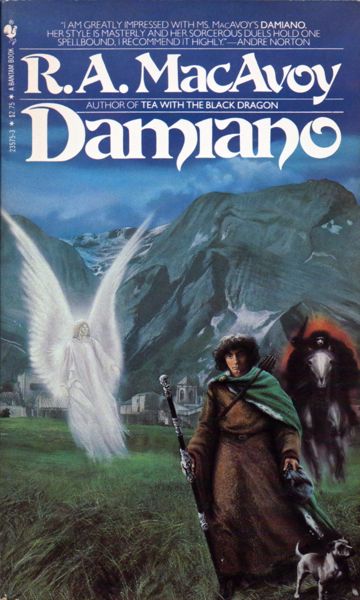
                • Cover of Damiano
                  Damiano

                  series · 3 books · 1984

                  similar bydemonsrenaissance and early moderneuropehistorical fantasyfantasy+1 more

                  Damiano follows a young alchemist and lute player in Renaissance-flavored Italy who sets out, with the help of the archangel Raphael, to bring peace to his war-torn home city, only to find that stopping a war takes more violence than his gentle magic is suited for. R. A. MacAvoy's trilogy continues through Damiano's Lute and Raphael, later collected as A Trio for Lute, and was praised for its light touch with small-scale magic set against real cruelty.

                • Cover of Night's Masque
                  Night's Masque

                  series · 3 books · 2012

                  similar byrenaissance and early modernpolitical intriguehistorical fantasy+4 more

                • Cover of Lent
                  Lent

                  Jo Walton · standalone novel · 2019

                  similar byrenaissance and early modernpolitical intriguehistorical fantasyeuropefantasy

                  "Young Girolamo's life is a series of miracles. It's a miracle that he can see demons, plain as day, and that he can cast them out with the force of his will. It's a miracle that he's friends with Pico della Mirandola, the Count of Concordia. It's a miracle that when Girolamo visits the deathbed of Lorenzo "the Magnificent," the dying Medici is wreathed in celestial light, a surprise to everyone, Lorenzo included. It's a miracle that when Charles VIII of France invades northern Italy, Girolamo meets him in the field, and convinces him to not only spare Florence but also protect it. It's a miracle than whenever Girolamo preaches, crowds swoon. It's a miracle that, despite the Pope's determination to bring young Girolamo to heel, he's still on the loose...and, now, running Florence in all but name. That's only the beginning. Because Girolamo Savanarola is not who--or what--he thinks he is. He will discover the truth about himself at the most startling possible time. And this will be only the beginning of his many lives." - publisher

                • Cover of Mircea Basarab
                  Mircea Basarab

                  series · 1 book · 2014

                  part of Cassandra Palmer

                  similar byrenaissance and early modernpolitical intriguehistorical fantasyeurope+1 more

                • Cover of The Familiar
                  The Familiar

                  Leigh Bardugo · standalone novel · 2024

                  similar byrenaissance and early moderntensehistorical fantasyeuropefantasy

                  The Familiar is a historical fantasy novel written by Leigh Bardugo, published by Flatiron Books on April 9, 2024. The novel follows Luzia Cotado, a scullion with a gift for "little miracles", who must use her magic to survive and gain favor in the royal court all while hiding the truth about her ancestry. The book is not part of a series.

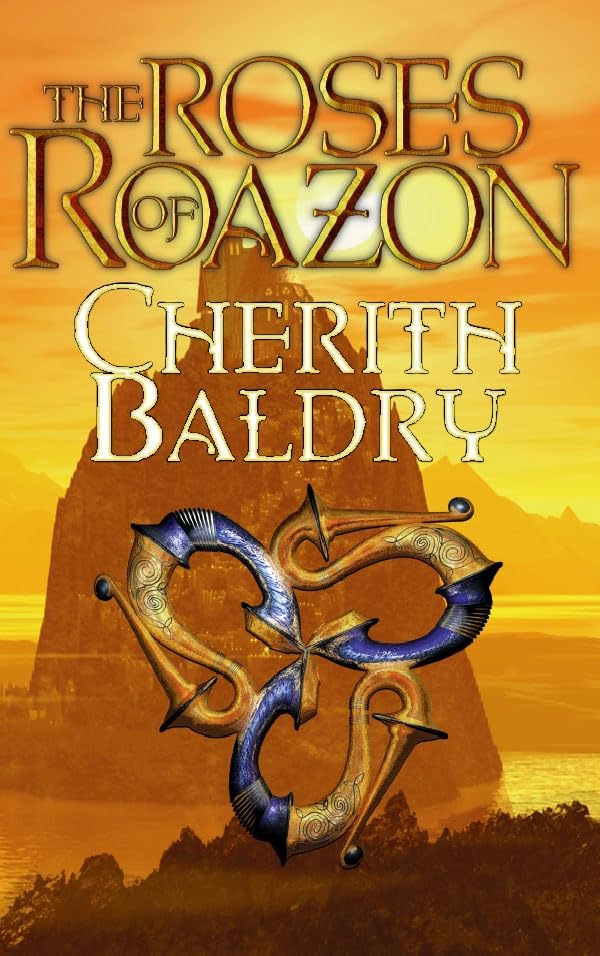
                • Cover of The Roses of Roazon
                  The Roses of Roazon

                  Cherith Baldry · standalone novel · 2004

                  similar bydemonspolitical intriguetensehistorical fantasyeuropefantasy

                  The story is set within the peaceful land of Arvorig which is governed by the newly appointed Joscelin, Duke of Roazon. Behind the throne of the dukedom, dark forces are at work that will attempt to strip Joscelin of his title and have him banished for heresy. Those who threaten to overthrow Joscelin have forgotten the ancient tale that says if a true Duke or true member of the Roazon bloodline does not hold power in Roazon, then the long banished, mysterious, demon-infested island of Autrys will once again rise and threaten all of humanity. The novel is set within a medieval French-styled society of political courtly intrigue, religious fervor, knightly chivalry, unrequited romance and generous doses of dark machinations.

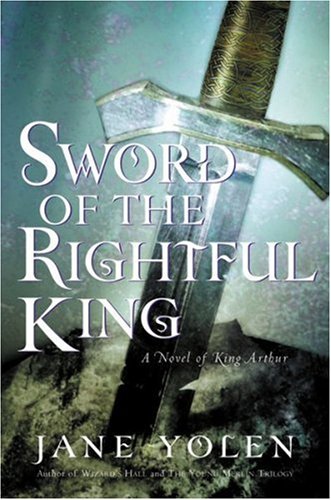
                • Cover of Sword of the Rightful King
                  Sword of the Rightful King

                  Jane Yolen · standalone novel · 2003

                  similar bypolitical intrigueadventuroustensehistorical fantasyfantasy

                  "The newly crowned King Arthur has yet to win the support of the people. Merlin must do something before the king is betrayed, or murdered, or--worst of all--gets married..."

                • Cover of Barney Custer
                  Barney Custer

                  series · 3 books · 1914

                  completed

                  similar bypolitical intrigueadventuroustenseeurope

                  Barney Custer is an American farmer from Nebraska who travels to the small European kingdom of Lutha only to discover he's the spitting image of its unstable ruler, King Leopold. Edgar Rice Burroughs's The Mad King drops him into court intrigue on the eve of World War I, as a scheming uncle's plot for the throne and a budding romance with a princess force Barney to impersonate the king he resembles. It's a standalone Ruritanian adventure rather than an ongoing series.

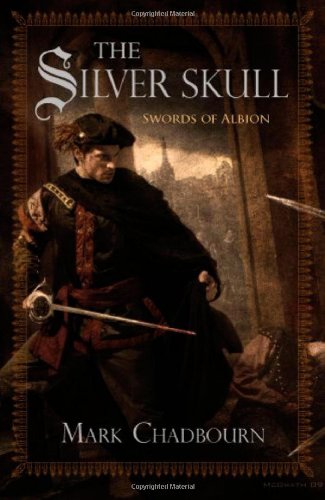
                • Cover of Swords of Albion
                  Swords of Albion

                  series · 4 books · 2007

                  similar byrenaissance and early modernpolitical intriguetensehistorical fantasy

                • Cover of Mirror Mirror
                  Mirror Mirror

                  Gregory Maguire · standalone novel · 2003

                  similar byrenaissance and early modernhistorical fantasyeuropemediterraneanfantasy

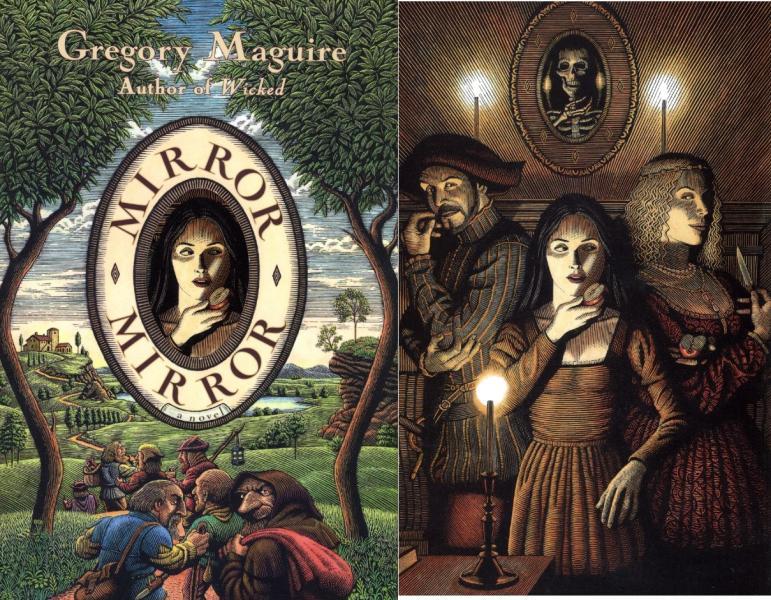
                  Mirror, Mirror is a fantasy novel by American writer Gregory Maguire, published in 2003. The novel is a revisionist version of the tale of Snow White set in rural Italy and featuring the historical Borgia family, with Lucrezia Borgia in the role of the Evil Queen.

                • Cover of The Rising World
                  The Rising World

                  series · 2 books · 2023

                  similar bypolitical intrigueadventurousdemonstensefantasy

                • TF
                  The First History

                  series · 8 books · 1999

                  similar byrenaissance and early modernhistorical fantasyeuropealternate history+3 more