More like Thoughtcrime Experiments
anchored on:science fictionfar futureshort story cyclespace explorationspace
but
- Diaspora
Greg Eganstandalone novel1997
similar byscience fictionchallengingspace explorationfar futureartificial intelligencespaceother star systems
Diaspora is a hard science fiction novel by the Australian writer Greg Egan which first appeared in print in 1997. It originated as the short story "Wang's Carpets" which originally appeared in the Greg Bear-edited anthology New Legends. The story appears as a chapter of the novel.
- Thistledown
series5 books1978
completed
similar byscience fictionspace explorationfar futurespace+2 more
- Schild's Ladder
Greg Eganstandalone novel2002
similar byscience fictionchallengingspace explorationfar futurespace+1 more
Schild's Ladder is a 2002 science fiction novel by Australian author Greg Egan. The book derives its name from Schild's ladder, a construction in differential geometry, devised by the mathematician and physicist Alfred Schild.
- A Meeting with Medusa
series2 books1971
similar byscience fictionchallengingspace explorationfar futurespaceother star systems+1 more
Arthur C. Clarke's A Meeting with Medusa follows an astronaut, badly injured in an earlier disaster, on a solo balloon expedition into Jupiter's atmosphere, where he encounters vast floating lifeforms unlike anything previously catalogued. Decades later, Stephen Baxter and Alastair Reynolds continued the story in The Medusa Chronicles, following the same protagonist across a much longer span of future history. The original novella won the 1972 Nebula Award.
- Dune
series20 books1963
part of Dune Universe
similar byscience fictionfar futureother star systems+1 more
Frank Herbert's Dune Chronicles opens with 1965's Dune, set on the desert planet Arrakis where House Atreides takes control of the only source of the vital spice melange and young Paul Atreides is pulled into a struggle over its politics and religion. Herbert carried the story forward across five further novels — Dune Messiah, Children of Dune, God Emperor of Dune, Heretics of Dune, and Chapterhouse: Dune — following Paul's line over the following millennia, before Brian Herbert and Kevin J. Anderson later extended the saga. Many other editions of these six novels are omnibus and box-set repackagings rather than separate stories.
- Blindsight / Firefall
series3 books2006
similar byscience fictionchallengingartificial intelligencespacefar future+2 more
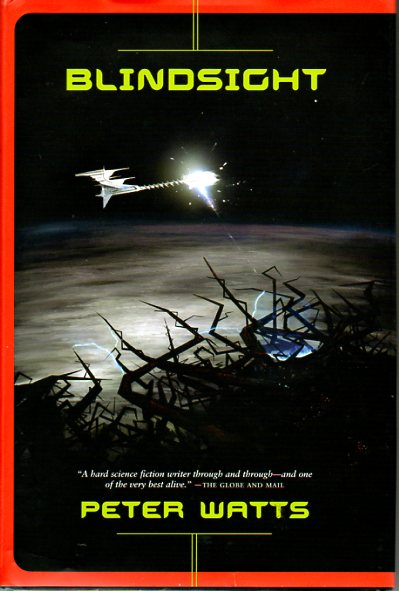
Blindsight sends a crew of radically modified posthumans (including a resurrected, genetically restored vampire) out to the Oort cloud after humanity detects an alien signal, only to make contact with something intelligent, wildly capable, and possibly not conscious at all — a first-contact story built around the question of whether self-awareness is actually useful. Peter Watts's Echopraxia is a same-timeframe "sidequel" rather than a direct sequel, following different characters through the fallout of the same first-contact event.
- Xeelee
series89 books1987
similar byscience fictionfar futurespace+3 more
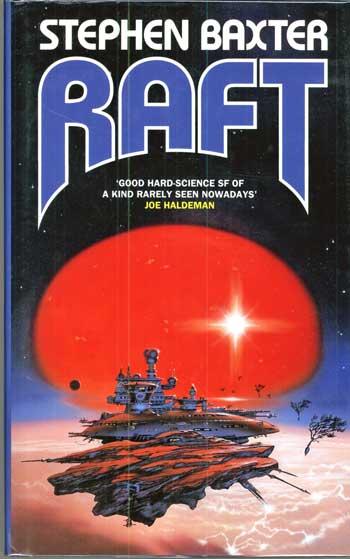
The Xeelee Sequence is a series of hard science fiction novels, novellas, and short stories written by British author Stephen Baxter. The series spans billions of years of fictional history, exploring humanity's future expansion into the universe, its intergalactic war with the Xeelee, a supremely advanced Kardashev Type V alien civilization, and the Xeelee's own conflict with dark matter entities known as Photino Birds. The Xeelee are described as symbiotic entities composed of spacetime defects, Bose–Einstein condensates, and baryonic matter.
- Children of Time
series6 books2015
similar byscience fictionfar futurespaceother star systems+3 more
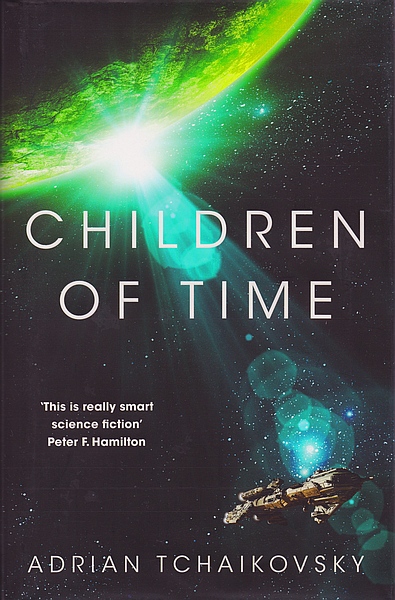
Adrian Tchaikovsky's Children of Time follows two threads: a terraformed planet where an experimental nanovirus meant to accelerate primate evolution instead uplifts a species of spiders into a technological civilization guided by the recorded personality of a human scientist, and the last survivors of Earth aboard a generation ark ship searching for a new home. The two threads collide across mismatched timescales as the ark ship's crew, cycling in and out of cryosleep, finally reach the spiders' world. It's the first of a loosely connected series that applies the same premise to different alien biologies in each subsequent book.
- Aurora
Kim Stanley Robinsonstandalone novel2015
similar byscience fictionchallengingfar futureartificial intelligenceother star systems+1 more
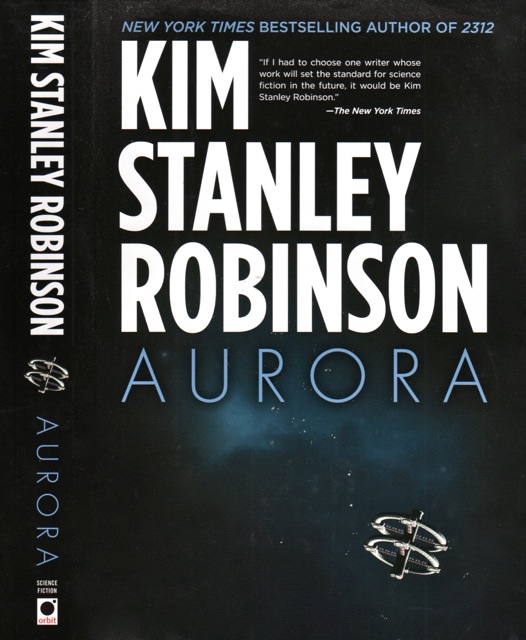
Aurora is a 2015 novel by American science fiction author Kim Stanley Robinson. The novel concerns a generation ship built in the style of a Stanford torus, traveling to Tau Ceti to start a human colony. The novel's primary narrative voice is that of the starship's artificial intelligence. Aurora was well received by critics.
- Jean le Flambeur
series3 books2010
similar byscience fictionchallengingfar futureartificial intelligencespaceother star systems
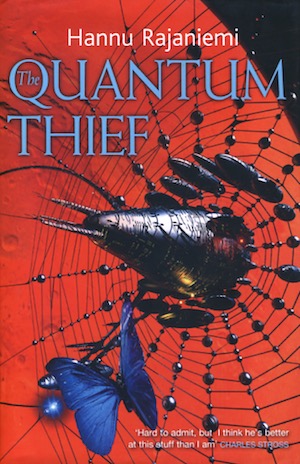
Jean le Flambeur is a master thief broken out of a virtual prison to pull off one more impossible heist, in a solar system reshaped by uploaded minds, post-human factions, and economies built on memory and privacy themselves. Hannu Rajaniemi's trilogy - The Quantum Thief, The Fractal Prince, The Causal Angel - is dense, idea-heavy hard SF that trusts readers to piece its future together from context rather than exposition.
- Singularity Sky
series2 books2003
similar byscience fictionchallengingfar futureartificial intelligencespaceother star systems
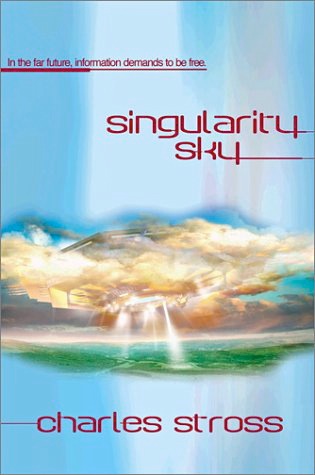
Singularity Sky and its sequel Iron Sunrise are collectively known as the Eschaton novels, after the godlike posthuman intelligence that seeded human colonies across space on the condition they never attempt time travel or threaten causality - rules tested when a low-tech colony world is destabilized by a group calling itself the Festival. Charles Stross uses the setup for a mix of space opera, economics, and diplomatic intrigue.
- Ringworld
series5 books1970
part of Known Space
similar byscience fictionspace explorationfar futurespaceother star systems
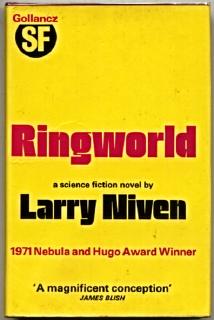
The Ringworld series is a series of science fiction novels written by American author Larry Niven. It is part of his Known Space series of stories. Its backdrop is the Ringworld, a giant artifact 3 million times the surface area of Earth circling a star. The series is composed of four standalone science fiction novels, the original award-winning book and its three sequels:1970: Ringworld 1979: The Ringworld Engineers 1996: The Ringworld Throne 2004: Ringworld's Children
- Heechee
series19 books1972
completed
similar byscience fictionspace explorationfar futurespaceother star systems
The Heechee Saga, also known as the Gateway series, is a series of science fiction novels and short stories by Frederik Pohl. The Heechee are an advanced alien race that visited the Solar System hundreds of millennia ago and then mysteriously disappeared. They left behind bases containing artifacts, including working starships, which are discovered and exploited by humanity.
- Neverness Universe
series6 books1985
similar byscience fictionfar futurespaceother star systems+2 more
- Starship Troopers
Robert A. Heinleinstandalone novel1959
similar byscience fictionfar futurespaceother star systems+1 more
Starship Troopers is a military science fiction novel by American writer Robert A. Heinlein. Written in a few weeks in reaction to the US suspending nuclear tests, the story was first published as a two-part serial in The Magazine of Fantasy & Science Fiction as Starship Soldier, and published as a book by G. P. Putnam's Sons on November 5, 1959.
- Stone
Adam Robertsstandalone novel2002
similar byscience fictionchallengingspace explorationfar futurespaceother star systems
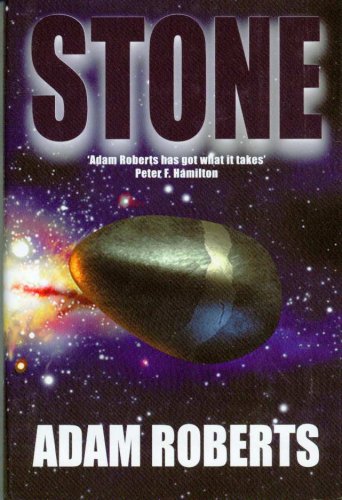
Stone, published in 2002, is a science fiction novel by the British writer Adam Roberts.
- The Golden Oecumene
series3 books2002
similar byscience fictionchallengingfar futureartificial intelligencespace+2 more
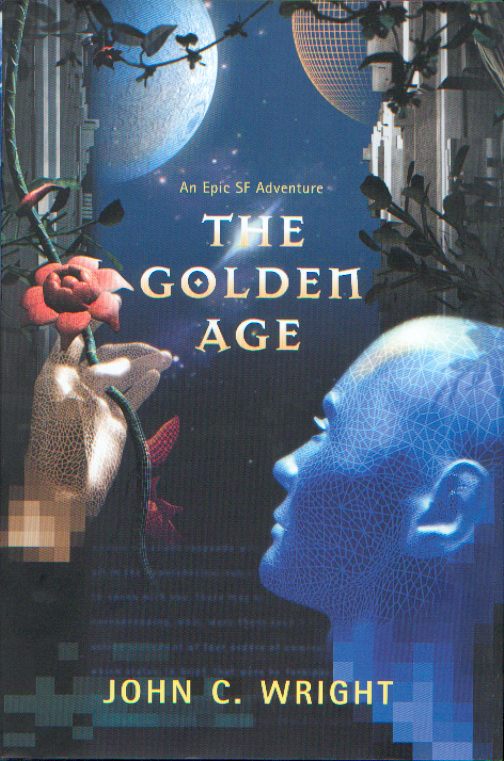
The Golden Oecumene is a science fiction trilogy by the American writer John C. Wright. It consists of three books, The Golden Age, The Phoenix Exultant and The Golden Transcendence.
- Starman Jones
Robert A. Heinleinstandalone novel1953
similar byscience fictionspace explorationfar futurespaceother star systems
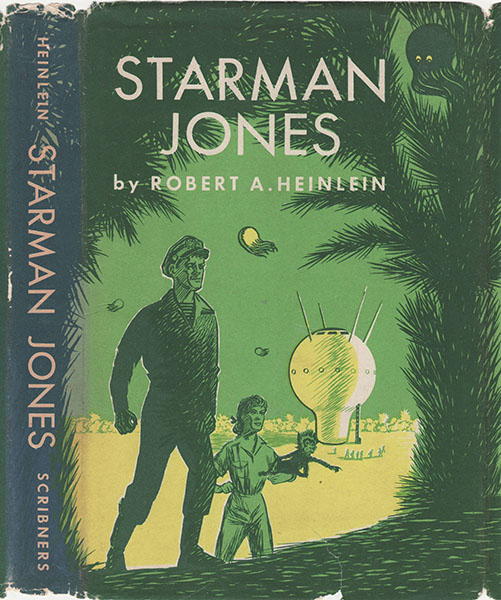
Starman Jones, a 1953 science fiction novel by Robert A. Heinlein, features a farm boy who wants to go to the stars. Charles Scribner's Sons published the book as part of the Heinlein juveniles series.
- The Gods Themselves
Isaac Asimovstandalone novel1972
similar byscience fictionchallengingfar futureother star systems+1 more
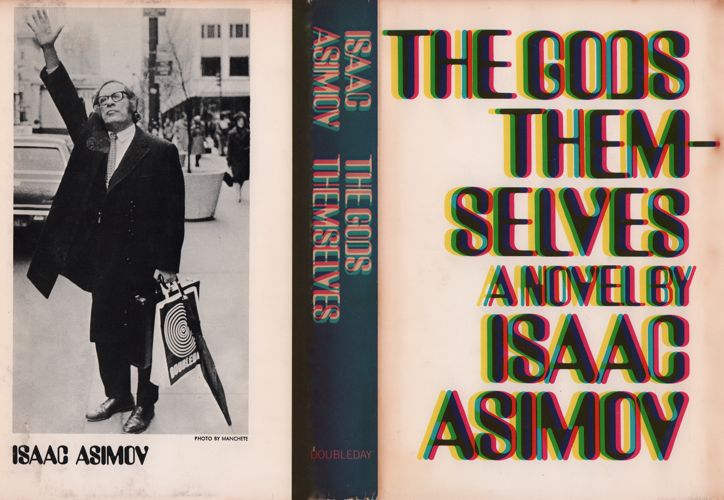
The Gods Themselves is a 1972 science fiction novel written by Isaac Asimov, and his first original novel in fifteen years. It won the Nebula Award for Best Novel in 1972, and the Hugo Award for Best Novel in 1973.
- The City and the Stars
Arthur C. Clarkestandalone novel1956
similar byscience fictionspace explorationfar futureother star systems+1 more
The City and the Stars is a science fiction novel by British writer Arthur C. Clarke, published in 1956. This novel is a complete rewrite of Clarke's earlier Against the Fall of Night, his first novel, which had been published in Startling Stories magazine in 1948 after being rejected by the editor of Astounding Science-Fiction, according to the author.
- Culture
series15 books1987
completed
part of The Culture
similar byscience fictionfar futureartificial intelligence+3 more
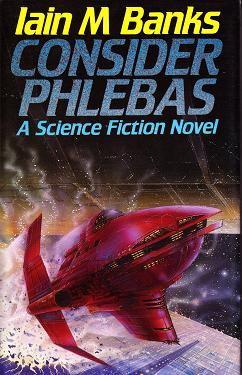
The Culture series is a science fiction series written by Scottish author Iain M. Banks and released from 1987 until 2012. The stories centre on The Culture, a utopian, post-scarcity space society of humanoid aliens and advanced superintelligent artificial intelligences living in artificial habitats spread across the Milky Way galaxy. The main themes of the series are the dilemmas that an idealistic, more-advanced civilization faces in dealing with smaller, less-advanced civilizations that do not share its ideals, and whose behaviour it sometimes finds barbaric. In some of the stories, action takes place mainly in non-Culture environments, and the leading characters are often on the fringes of the Culture, sometimes acting as agents of the Culture in its plans to civilize the galaxy. Each novel is a self-contained story with new characters, although reference is occasionally made to the events of previous novels.
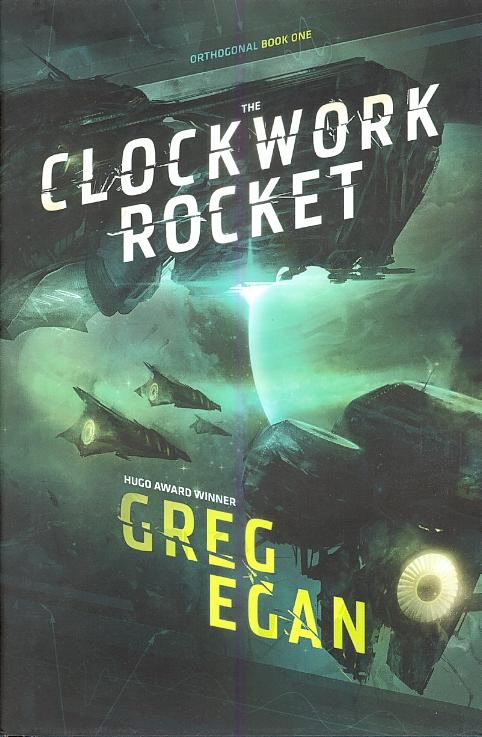
- Orthogonal
series3 books2011
similar byscience fictionchallengingspace explorationfar futureother star systems+1 more
Orthogonal is a science fiction trilogy by Australian author Greg Egan taking place in a universe where, rather than three dimensions of space and one of time, there are four fundamentally identical dimensions. While the characters in the novels always perceive three of the dimensions as space and one as time, this classification depends entirely on their state of motion, and the dimension that one observer considers to be time can be seen as a purely spatial dimension by another observer.
- Babel-17
Samuel R. Delanystandalone novel1966
similar byscience fictionfar futurespace+2 more
Babel-17 is a 1966 science fiction novel by American writer Samuel R. Delany. Published by Ace Books in May 1966, it follows Rydra Wong, a poet and linguist recruited during an interstellar war to decipher a language connected to enemy sabotage. Her investigation reveals a language that shapes thought and can make its speakers unwitting saboteurs. Through Rydra's effort to understand and revise it, the novel explores communication, perception, identity, and translation.
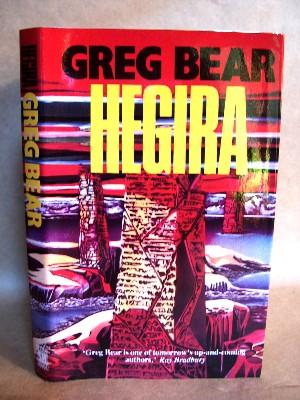
- Hegira
Greg Bearstandalone novel1979
similar byscience fictionchallengingfar futureartificial intelligencespaceother star systems
Hegira is a 1979 science fiction novel by American writer Greg Bear. It deals with themes including cyclic time, artificial intelligence, artificial life, and artificial structures of planetary scale.