More like Threshold
anchored on:science fictionfantasyidentityfaith and religionreflectiveshort story cycle
but
- Stranger in a Strange Land
Robert A. Heinleinstandalone novel1961
similar byreflectiveidentityfaith and religionscience fictionchallengingour world
Stranger in a Strange Land is a 1961 science fiction novel by the American author Robert A. Heinlein. It tells the story of Valentine Michael Smith, a human who comes to Earth in early adulthood after being born on the planet Mars and raised by Martians, and explores his interaction with and eventual transformation of Terran culture.
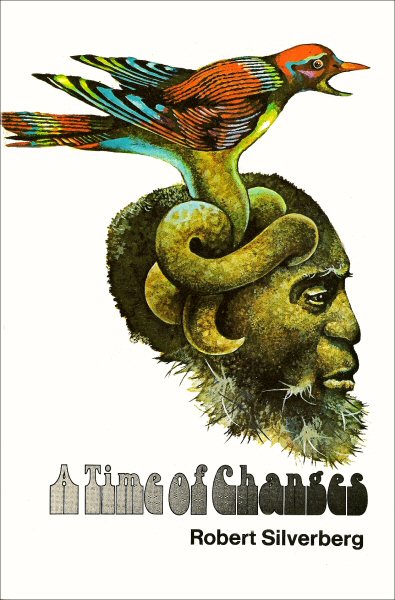
- A Time of Changes
Robert Silverbergstandalone novel1971
similar byreflectiveidentityfaith and religionscience fictionother star systems+1 more
A Time of Changes is a 1971 science fiction novel by American writer Robert Silverberg. It won the Nebula Award for that year, and was also nominated for the 1972 Hugo and Locus Awards.
- VALIS
series4 books1981
completed
similar byfaith and religionidentityreflectivescience fictionchallenging+1 more
The VALIS trilogy is a set of science fiction/philosophical novels by author Philip K. Dick which include VALIS (1981), The Divine Invasion (1981), and The Transmigration of Timothy Archer (1982). Dick's first novel about the VALIS concept originally titled "VALISystem A", was published as Radio Free Albemuth after Dick's death in 1985.
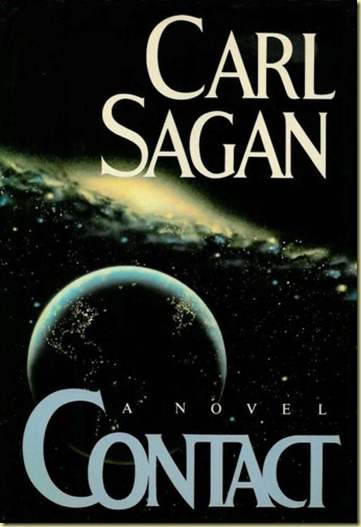
- Contact
Carl Saganstandalone novel1985
similar byreflectivefaith and religionscience fictionour world+2 more
From the front flap of the Simon and Schuster first edition: For centuries humanity has dreamed of life and intelligence beyond the Earth; for decades scientists have searched for it in every corner of the sky; for years Project Argus, a vast, sophisticated complex of radio telescopes, has listened for a signal indicating the existence, somewhere in the universe, of extraterrestrial intelligence. Then, one afternoon, the course of human history is changed, abruptly and forever. The Message, awaited for so long, its very possibility doubted by so many, arrives. Contact has been made. Life, intelligence, someone, something beyond Earth, 26 light-years away, in the vicinity of the star Vega, is calling, beaming across space a wholly unexpected message to say that we are not - have never been - alone. In Contact, Carl Sagan, whose Cosmos enthralled millions of readers and television viewers, has brilliantly employed the freedom of fiction to imagine the greatest adventure of all - humanity's first encounter with other intelligent beings. But the novel is not only about contact between humans and extraterrestrials; it is also about contact, down here on Earth, with each other and ourselves. At its center is a brilliant scientist, Eleanor Arroway, director of Project Argos, who is the first to realize that chapter one of human history is over. It is she who is instrumental in decoding the Message - and in persuading world leaders not to treat it as a threat - she who finds her own life changed by the immense challenge of responding to the Message; she who finally journeys out to experience, in circumstances at once profoundly religious and scientific, the most fateful encounter in human history.
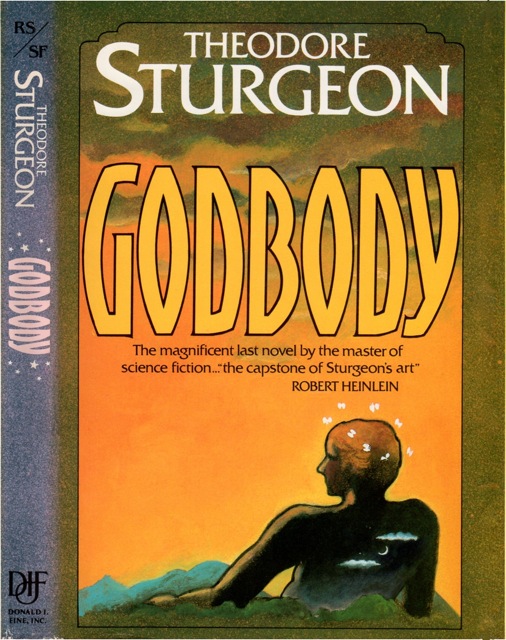
- Godbody
Theodore Sturgeonstandalone novel1986
similar byreflectiveidentityfaith and religionscience fictionour world+1 more
Godbody is a science fiction novel by American writer Theodore Sturgeon, published posthumously in 1986. A foreword, "Agape and Eros: The Art of Theodore Sturgeon", was contributed by Robert A. Heinlein and an afterword was contributed by Stephen R. Donaldson.
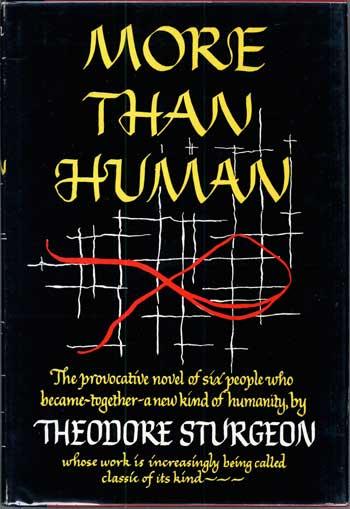
- More Than Human
Theodore Sturgeonstandalone novel1953
similar byreflectiveidentityscience fictionshort story cycleour world
More Than Human is a 1953 science fiction fix-up novel by American writer Theodore Sturgeon. It is a revision and expansion of his 1952 novella Baby Is Three, which is bracketed by two additional parts written for the novel, "The Fabulous Idiot" and "Morality". It won the 1954 International Fantasy Award, which was also given to works in science fiction. It was additionally nominated in 2004 for a "Retro Hugo" award for the year 1954. Science fiction critic and editor David Pringle included it in his book Science Fiction: The 100 Best Novels.
- Triton
Samuel R. Delanystandalone novel1976
similar byreflectiveidentityscience fictionchallengingother star systems+1 more
Trouble on Triton: An Ambiguous Heterotopia (1976) is a science fiction novel by American writer Samuel R. Delany. It was nominated for the 1976 Nebula Award for Best Novel, and was shortlisted for a retrospective James Tiptree, Jr. Award in 1995. It was originally published under the shorter title Triton.
- Venus Plus X
Theodore Sturgeonstandalone novel1960
similar byreflectiveidentityscience fictionchallenging+1 more
Charlie Johns wakes in a featureless silver room with no memory of how he got there and a watch that's inexplicably running backward. He's been brought, how and by whom is never explained to him, to Ledom, an isolated, technologically advanced society whose members are all both male and female and have done away with fixed sex roles entirely. Guides walk him through Ledom's customs and machinery while making clear he's there to judge them before he can go home. Interwoven with Charlie's tour are chapters following an ordinary mid-century American family, setting the utopia against the world it's implicitly critiquing. Theodore Sturgeon's provocative novel about gender and social design.
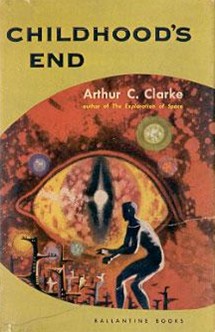
- Childhood's End
Arthur C. Clarkestandalone novel1953
similar byreflectiveidentityscience fictionour world
Childhood's End is a 1953 science fiction novel by the British author Arthur C. Clarke. The story follows a peaceful alien invasion of Earth by mysterious Overlords, whose arrival begins decades of apparent utopia under indirect alien rule, at the cost of human identity and culture.
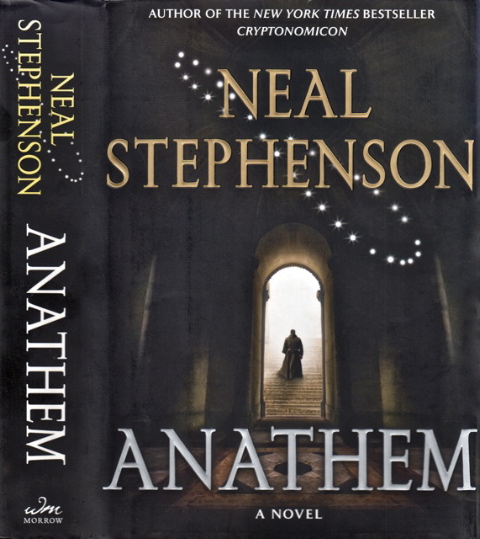
- Anathem
Neal Stephensonstandalone novel2008
similar byreflectivefaith and religionscience fictionchallenging+1 more
On a planet where quasi-monastic academic institutions have existed alongside the secular world for thousands of years, a young scholar from one such institution becomes part of a planetwide effort to muster an appropriate reaction to a shocking discovery.
- The Actual Star
Monica Byrnestandalone novel2021
similar byreflectivefaith and religionscience fictionchallenging+2 more
[Publisher:] The Actual Star takes readers on a journey over two millennia and six continents–telling three powerful tales a thousand years apart, all of them converging in the same cave in the Belizean jungle. Braided together are the stories of a pair of teenage twins who ascend the throne of a Maya kingdom; a young American woman on a trip of self-discovery in Belize; and two dangerous charismatics vying for the leadership of a new religion and racing toward a confrontation that will determine the fate of the few humans left on Earth after massive climate change. In each era, a reincarnated trinity of souls navigates the entanglements of tradition and progress, sister and stranger, and love and hate–until all of their age-old questions about the nature of existence converge deep underground, where only in complete darkness can they truly see. The Actual Star is a feast of ideas about where humanity came from, where we are now, and where we're going–and how, in every age, the same forces that drive us apart also bind us together.
- Replay
Ken Grimwoodstandalone novel1987
similar byreflectiveidentityfantasyscience fictionour world
Replay is a fantasy novel by American writer Ken Grimwood, first published by Arbor House in 1987. It won the 1988 World Fantasy Award for Best Novel.
- Dune
series20 books1963
part of Dune Universe
similar byscience fictionfaith and religionother star systems+2 more
Frank Herbert's Dune Chronicles opens with 1965's Dune, set on the desert planet Arrakis where House Atreides takes control of the only source of the vital spice melange and young Paul Atreides is pulled into a struggle over its politics and religion. Herbert carried the story forward across five further novels — Dune Messiah, Children of Dune, God Emperor of Dune, Heretics of Dune, and Chapterhouse: Dune — following Paul's line over the following millennia, before Brian Herbert and Kevin J. Anderson later extended the saga. Many other editions of these six novels are omnibus and box-set repackagings rather than separate stories.
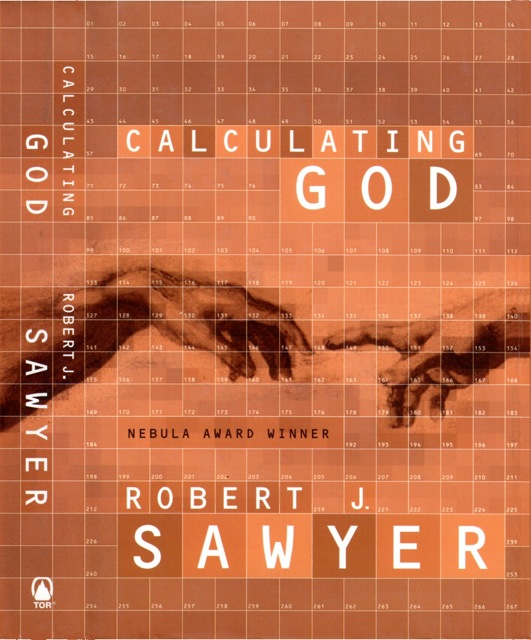
- Calculating God
Robert J. Sawyerstandalone novel2000
similar byreflectivefaith and religionscience fictionour world+1 more
Calculating God is a 2000 science fiction novel by Canadian writer Robert J. Sawyer. It takes place in the present day and describes the arrival of sentient aliens on Earth. The bulk of the novel covers the many discussions and arguments on this topic, as well as the nature of belief, religion, and science. Several planetary civilizations illustrate the logical conclusion of the Fermi paradox.
- Whileaway
series4 books1972
completed
similar byreflectivescience fictionchallenging+2 more
Joanna Russ's The Female Man (1975) is a single feminist science fiction novel, not a multi-book series, built around four women from parallel timelines with very different gender arrangements. One of them, Janet, comes from Whileaway, an all-female utopian Earth ten centuries in the future where men died out in a plague; the other three come from realities closer to Russ's own, and their collisions are used to interrogate what womanhood and equality could mean under different social rules.
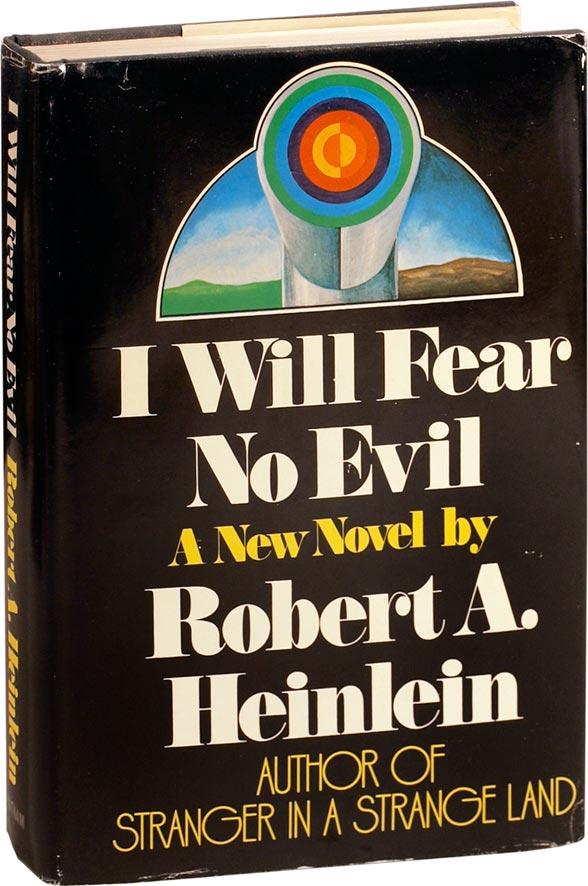
- I Will Fear No Evil
Robert A. Heinleinstandalone novel1970
similar byreflectiveidentityscience fictionour world
I Will Fear No Evil is a science fiction novel by American writer Robert A. Heinlein, originally serialised in Galaxy and published in hardcover in 1970. The title is taken from Psalm 23:4.
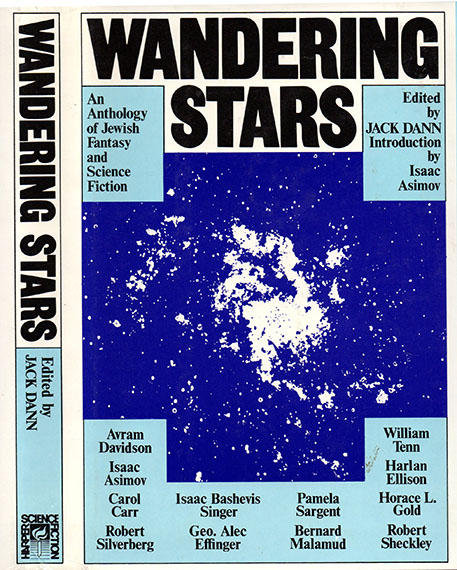
- Wandering Stars
series2 books1974
similar byfaith and religionscience fictionreflectivefantasyshort story cycle+1 more
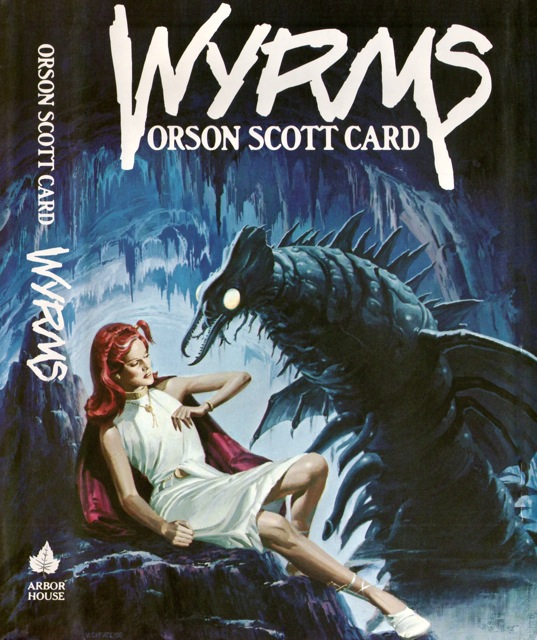
- Wyrms
Orson Scott Cardstandalone novel1987
similar byreflectiveidentityscience fictionother star systems+1 more
Wyrms (1987) is a science fiction novel by American writer Orson Scott Card. The story examines desire, wisdom, and human will. Card describes a version of the tri-partite soul, similar to that articulated by Plato in the Republic.
- Karl Glogauer
series2 books1969
similar byreflectiveidentityscience fiction+2 more
Michael Moorcock's two Karl Glogauer novels share a character rather than a plot. In Behold the Man (1969), Glogauer travels back in time seeking the historical Jesus, discovers the real man is severely disabled, and takes on the role of Christ himself, engineering his own crucifixion to fulfill the story he grew up reading. Breakfast in the Ruins (1972) recasts him across seventeen variant lives spanning 1871 to 1990, each one crueler than the last, framed around a present-day encounter in London -- using the same protagonist for a different formal experiment rather than continuing a single narrative.
- Lent
Jo Waltonstandalone novel2019
similar byreflectiveidentityfaith and religionfantasyour world
"Young Girolamo's life is a series of miracles. It's a miracle that he can see demons, plain as day, and that he can cast them out with the force of his will. It's a miracle that he's friends with Pico della Mirandola, the Count of Concordia. It's a miracle that when Girolamo visits the deathbed of Lorenzo "the Magnificent," the dying Medici is wreathed in celestial light, a surprise to everyone, Lorenzo included. It's a miracle that when Charles VIII of France invades northern Italy, Girolamo meets him in the field, and convinces him to not only spare Florence but also protect it. It's a miracle than whenever Girolamo preaches, crowds swoon. It's a miracle that, despite the Pope's determination to bring young Girolamo to heel, he's still on the loose...and, now, running Florence in all but name. That's only the beginning. Because Girolamo Savanarola is not who--or what--he thinks he is. He will discover the truth about himself at the most startling possible time. And this will be only the beginning of his many lives." - publisher
- Transcendent
series4 books2016
similar byreflectiveidentityscience fictionfantasyshort story cycle+1 more
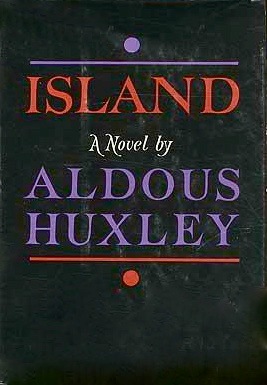
- Island
Aldous Huxleystandalone novel1962
similar byreflectivefaith and religionchallenging+2 more
Island is a 1962 utopian manifesto and novel by English writer Aldous Huxley, the author's final work before his death in 1963. Although it has a plot, the plot largely serves to further conceptual explorations rather than setting up and resolving conventional narrative tension.
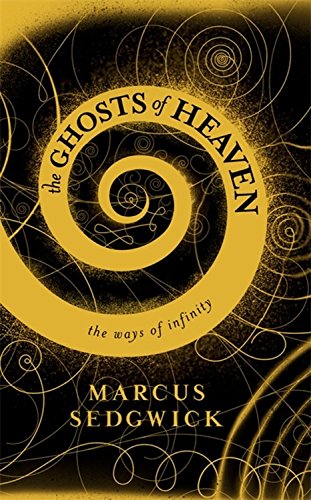
- The Ghosts of Heaven
Marcus Sedgwickstandalone novel2014
similar byreflectiveidentityscience fictionshort story cycleour world+1 more
Four linked stories of discovery and survival begin with a Paleolithic-era girl who makes the first written signs, continue with Anna, who people call a witch, then a mad twentieth-century poet who watches the ocean knowing the horrors it hides, and concluding with an astronaut on the first spaceship from Earth sent to colonize another world.