More like Timberline
anchored on:science fictionfar future
but
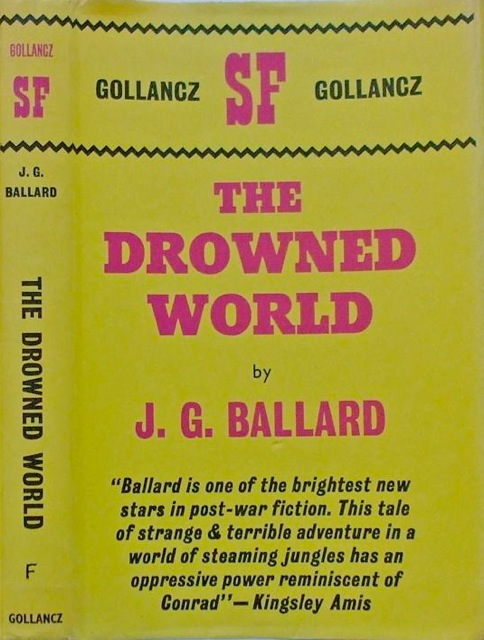
- The Drowned World
J. G. Ballardstandalone novel1962
similar byscience fictioneeriesurvivalecological collapsejungle
The Drowned World is a 1962 science fiction novel by J. G. Ballard. It first appeared in shortened form in the January 1962 issue of the UK edition of Science Fiction Adventures and was published in book form later that year by Victor Gollancz Ltd in London; an American edition followed from Berkley Medallion. Critics have grouped The Drowned World with Ballard's early science-fiction novels as part of an "ambiguous apocalypse" sequence that also includes The Drought and The Crystal World, from the period in which he was developing the ideas he described as "inner space". Set in a future in which solar radiation has melted the polar ice caps and transformed London into a flooded tropical lagoon, the novel follows biologist Robert Kerans as he becomes increasingly drawn toward the altered environment rather than toward restoring the old social order.
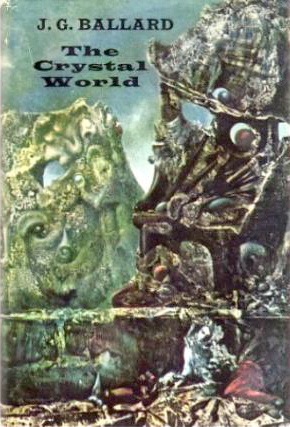
- The Crystal World
J. G. Ballardstandalone novel1966
similar byscience fictioneerieecological collapsejungle+1 more
The Crystal World is a 1966 novel by British writer J. G. Ballard. It was first published in serialized form under the title "The Equinox" in New Worlds in 1964, before appearing in hardcover from Jonathan Cape in the United Kingdom and Farrar, Straus and Giroux in the United States in 1966. Contemporary reviewers including Brian Aldiss and Judith Merril discussed the novel as a distinctive entry in Ballard’s early catastrophe fiction.
- Dune
series20 books1963
part of Dune Universe
similar byscience fictionfar future
Frank Herbert's Dune Chronicles opens with 1965's Dune, set on the desert planet Arrakis where House Atreides takes control of the only source of the vital spice melange and young Paul Atreides is pulled into a struggle over its politics and religion. Herbert carried the story forward across five further novels — Dune Messiah, Children of Dune, God Emperor of Dune, Heretics of Dune, and Chapterhouse: Dune — following Paul's line over the following millennia, before Brian Herbert and Kevin J. Anderson later extended the saga. Many other editions of these six novels are omnibus and box-set repackagings rather than separate stories.
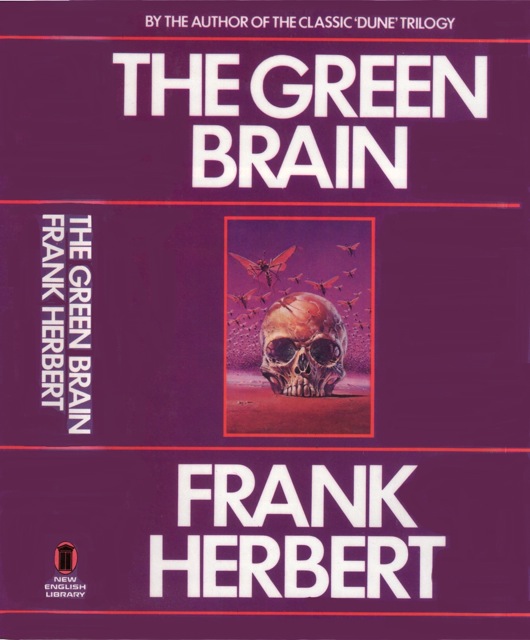
- The Green Brain
Frank Herbertstandalone novel1966
similar byscience fictionsurvivalecological collapsejungle+1 more
WorldCat: In an overpopulated world seeking living room in the jungles, the International Ecological Organization was systematically exterminating the voracious insects which made these areas uninhabitable. Using deadly foamal bombs and newly developed vibration weapons, men like Joao Martinho and his co-workers fought to clear the green hell of the Mato Grosso. But somehow those areas which had been completely cleared were becoming reinfested, despite the impenetrable vibration barriers. And tales came out of the jungles ... of insects mutated to incredible sizes ... of creatures who seemed to be men, but whose eyes gleamed with the chitinous sheen of insects. ... A fascinating examination of the fragile balance between consciousness, man and insect from one of the best-loved science fiction creators of all time.
- Hothouse
series6 books1961
completed
similar byscience fictionfar futurejungle+2 more
Hothouse is set so far in Earth's future that the sun has nearly stopped and a single vast banyan tree has swallowed most of the land, leaving a shrunken, primitive humanity struggling to survive among giant plants and insects that have taken over ecological niches animals once filled. Brian Aldiss fixed up five linked novelettes, originally serialized in 1961, into this novel; the abridged US edition appeared as The Long Afternoon of Earth, with the full text not reaching American readers until 1976. It's cited as one of the defining 'dying Earth' science fantasies.
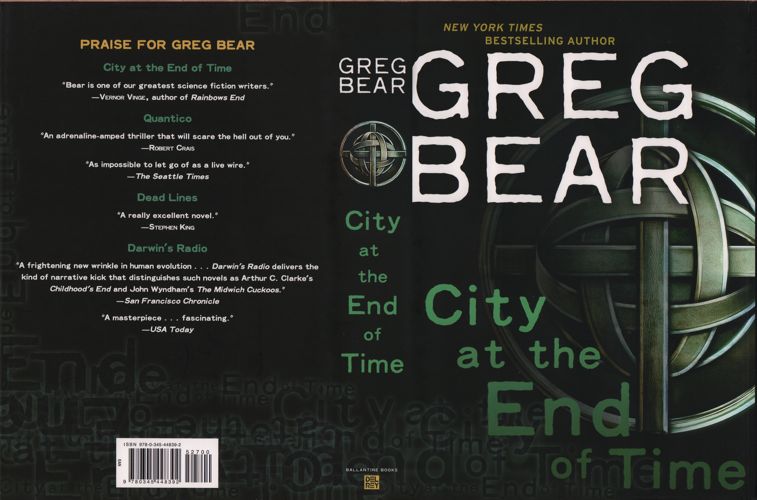
- City at the End of Time
Greg Bearstandalone novel2008
similar byscience fictioneeriefar futureecological collapse+1 more
City at the End of Time is a 2008 science fiction novel by American writer Greg Bear. It was published in August 2008 by Del Rey in the United States, and Gollancz in the United Kingdom. The story follows three drifters in present-day Seattle who are tormented by strange dreams of the Kalpa, a city one hundred trillion years in the future. The Kalpa is attempting to ward off the Typhon, an inexplicable entity that has consumed the rest of the ancient universe and broken down the laws of physics.
- Dune Universe
universe78 books1963
Start hereDune · Start here
similar byscience fictionfar future
Arrakis. Dune. The desert planet, where empire runs on a single substance: the spice melange, which folds space, prolongs life, and unlocks prescience, and which exists nowhere else in the known universe. Frank Herbert's saga is a meditation dressed as an adventure — feudal houses and a secret sisterhood, engineered messiahs and the patient ecology of a world without water, all turning on the terrible gravity of who commands the spice. It reads like scripture and schemes like a war room, ten thousand years hence, among people who have outlawed the thinking machine and made instruments of themselves instead. At its heart stand Herbert's original six — Dune, Dune Messiah, Children of Dune, God Emperor of Dune, Heretics of Dune, Chapterhouse: Dune — a single deepening arc across millennia, arguing the whole way between prophecy and free will. Around that spine his son Brian Herbert and Kevin J. Anderson have raised a vast prequel architecture: Prelude to Dune, tracing the great houses a generation before Paul; Legends of Dune, reaching back to the crusade that broke the machines; the Schools of Dune cycle on the founding of Bene Gesserit, Mentat, and Navigator; the Caladan Trilogy and Heroes of Dune filling years the originals left in shadow. Many hands, dozens of volumes, one desert. What sets Dune apart is its refusal of the simple: religion is manufactured, heroes are hazards, and the sand itself — worm, water, ecology — acts as a political power. Begin where the universe did, with Frank Herbert's Dune (1965), and read the original six in order; you need nothing else to feel the full weight. The prequels are a country to explore afterward, taken by era. Beginnings are delicate times.
- Saint Leibowitz
series6 books1955
completed
similar byscience fictionfar future+1 more
Walter M. Miller Jr.'s A Canticle for Leibowitz (1959), assembled from three novellas he had published earlier in the decade, follows the monks of a Catholic monastery in the post-nuclear American Southwest as they preserve fragments of scientific knowledge across centuries, watching civilization slowly rebuild itself and edge back toward the mistakes that destroyed it. Miller's posthumous sequel, Saint Leibowitz and the Wild Horse Woman, completed by Terry Bisson from his notes after his death and published in 1997, returns to the same abbey and its world decades later. Together the two novels form a sparse, decades-spanning series about memory, faith, and the cycles of civilization.
- The Triffids
series3 books1951
similar byscience fictionsurvival+1 more
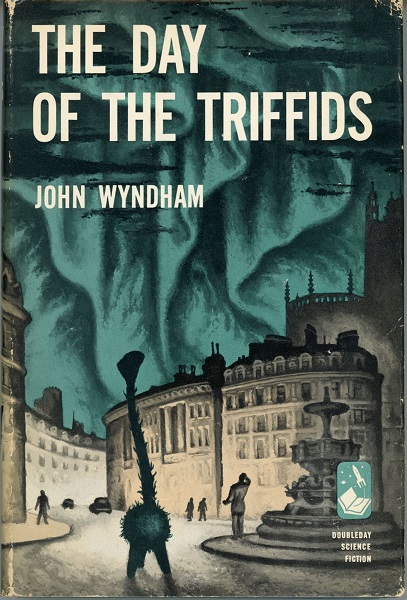
John Wyndham's The Day of the Triffids (1951) opens with a meteor-shower-like event that leaves most of Britain's population blind, throwing civilization into collapse just as triffids, an aggressive and mobile species of poisonous plant, become free to hunt the helpless survivors. Simon Clark's authorized sequel The Night of the Triffids (2001) picks up a generation later, narrated by the original protagonist's son as he confronts a new triffid-dominated world, and John Whitbourn's The Age of the Triffids extends the shared setting further still. Together the three novels form a loose post-apocalyptic trilogy built on Wyndham's original premise rather than a tightly plotted single story.
- The Giver
series5 books1993
similar byscience fictionfar future+1 more
The Giver Quartet is a series of four books about a dystopian world by American author Lois Lowry, which consists of The Giver (1993), Gathering Blue (2000), Messenger (2004), and Son (2012). The first book won the 1994 Newbery Medal and has sold more than 50 million copies. The story takes place at an unknown point of time within the future. Each book has a different protagonist but is set in the same futuristic era.
- Schild's Ladder
Greg Eganstandalone novel2002
similar byscience fictionfar futureecological collapse+1 more
Schild's Ladder is a 2002 science fiction novel by Australian author Greg Egan. The book derives its name from Schild's ladder, a construction in differential geometry, devised by the mathematician and physicist Alfred Schild.
- Southern Reach Trilogy
series4 books2014
similar byeeriescience fiction+2 more
The Southern Reach Series is a series of novels by the American author Jeff VanderMeer first published in 2014—Annihilation, Authority, Acceptance, and Absolution. The series takes its name from the secret agency that is central to the plot. In 2013, Paramount Pictures bought the movie rights for the series, and a film adaptation of Annihilation was made with Alex Garland as writer-director. The film was released in 2018. The most recent book in the series, Absolution, was released on 22 October 2024.
- Hainish
series33 books1964
completed
similar byscience fictionfar future
The Hainish Cycle consists of a number of science fiction novels and stories by Ursula K. Le Guin. The cycle is set in a future history that features civilizations of human beings on planets orbiting a number of nearby stars, including Terra ("Earth"); these humans are contacting each other for the first time and establishing diplomatic relations, as well as setting up a confederacy under the guidance of the oldest of the human worlds, the peaceful planet Hain. In this history, human beings did not evolve on Earth, but they were instead the result of interstellar colonies planted by Hain in the distant past, after which interstellar travel ceased for an extended period. Some of the human races have new genetic traits, a result of ancient Hainish experiments in genetic engineering; this includes people who can dream while awake, and a world of hermaphroditic people who only enter active sexuality once per month, not knowing which sex will manifest in them. In keeping with Le Guin's narrative approach, she uses varied social and environmental settings to explore the anthropological and sociological outcomes of human evolution in those environments. The author often discounted the characterization of a so-called "Hainish Cycle".
- A Crystal Age
W. H. Hudsonstandalone novel1887
similar byscience fictionfar futureecological collapse+1 more
"Throughout both his fiction and his nonfiction there can be detected hints of some lost (or never possible) Arcadia. A Crystal Age (1887 anon; 1906 as WHH) a quasi-Utopia set in the Far Future, is of fantasy interest for its portrait of a society of harmonious communities divided into Houses, each governed by a Mother, and of a visitor from 19th-century England who fails fatally to comprehend the pattern and Balance of this life." (underscore represents linked cross-reference) --SFE: Encyclopedia of Fantasy (1997), biographical entry by John Clute
- Borne
series3 books2017
similar byscience fictioneerie+2 more
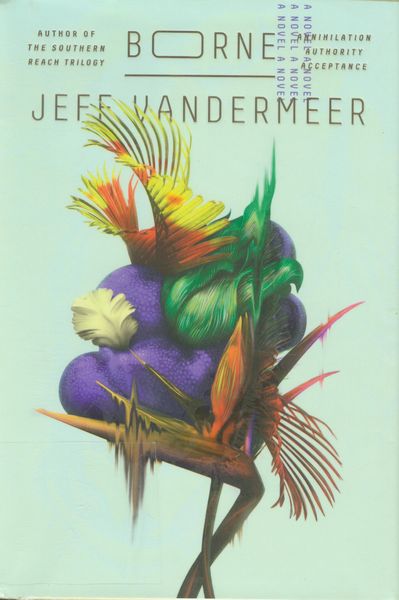
Borne is set in a ruined, biotech-poisoned city dominated by a giant flying bear named Mord, where a scavenger finds a strange organism she names Borne and raises it, only to discover it may be more dangerous - and more alive - than she expected. Jeff VanderMeer's series continues with the related novels The Strange Bird and Dead Astronauts, set in the same devastated world.
- Ice
Anna Kavanstandalone novel1967
similar byeeriescience fictionsurvivalecological collapse
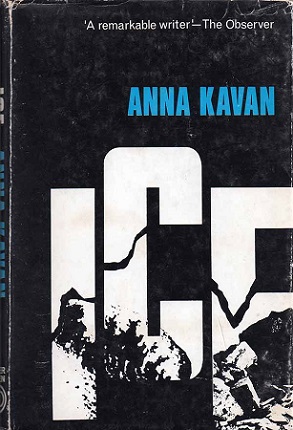
Ice is a novel by British writer Anna Kavan, published in 1967. Ice was Kavan's last work to be published before her death, the first to land her mainstream success, and remains her best-known work. Generally regarded as genre-defying, it has been labelled a work of science fiction, Nouveau roman, and slipstream fiction.
- Hive
series5 books1969
completed
similar byscience fictionfar future+1 more
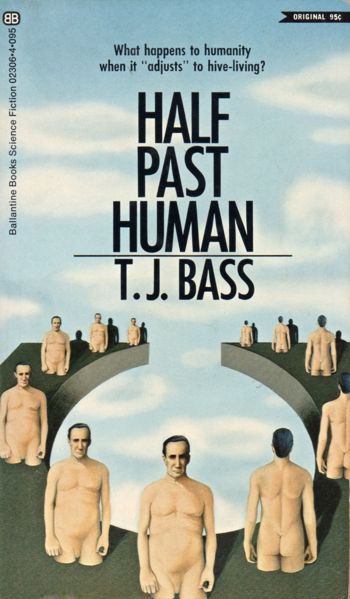
T. J. Bass's Hive novels imagine a grim, wildly overpopulated far-future Earth run by a vast hive-mind bureaucracy that treats most of humanity as disposable. Half Past Human, fixed up from two earlier stories, follows outcasts living outside the Hive's control; The Godwhale continues the setting generations later around a resurrected cyborg whale-ship.
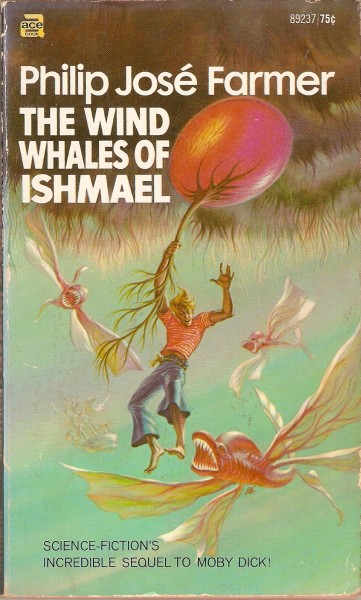
- The Wind Whales of Ishmael
Philip José Farmerstandalone novel1971
similar byscience fictionfar futuresurvival+1 more
Ishmael, lone survivor of the doomed whaling ship Pequod, falls through a rift in time and space to a future Earth--an earth that no longer has seas to sail or a safe harbor to call home.
- Thousand Worlds
series24 books1971
similar byscience fictionfar future
George R.R. Martin's Thousand Worlds is a loose future-history setting he used for several of his 1970s-80s stories and novels, encompassing human interstellar colonization and encounters with older, stranger civilizations. Dying of the Light, A Song for Lya and the novella Nightflyers are among its best-known entries, sharing background rather than continuing characters or plot.
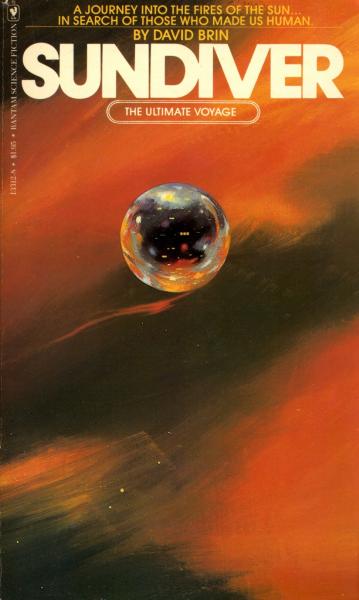
- Uplift
series5 books1980
part of Uplift Universe
similar byscience fictionfar future
David Brin's Uplift trilogy opens with Sundiver, sending human explorers into the Sun itself, then follows a dolphin-crewed starship on the run from hostile aliens in Startide Rising and a fight over the colony world Garth in The Uplift War. The books sit inside Brin's wider Uplift Universe, built on the idea that spacefaring "patron" species genetically engineer younger "client" species into full sapience, with humanity an anomaly that reached the stars without a patron of its own.
- Burl
series4 books1920
completed
similar byscience fictionsurvivalfar future+1 more
Murray Leinster's Burl sequence is set on a planet deliberately seeded with insect and plant life for later human colonization, but the follow-up mission meant to introduce animal life never arrived; over centuries the surviving flora and insects grew to monstrous size, leaving the marooned descendants of a crashed expedition to survive among ant colonies, giant wasps, and spiders. Burl, born into this stranded, near-primitive community, has to out-think these giant predators to keep his people alive. The story began as two 1920s pulp novellas and a 1953 sequel before Leinster fused all three into the single fix-up novel The Forgotten Planet.
- Hungry City Chronicles / Mortal Engines
series5 books2001
part of Mortal Engines Universe
similar byscience fictionfar futuresurvival
The Mortal Engines Quartet, also known as the Predator Cities Quartet, is a series of epic young adult science fiction novels by the English novelist and illustrator Philip Reeve. He began the first volume of the series, Mortal Engines, in the 1980s, and it was published in 2001. Reeve then published three further novels, Predator's Gold (2003), Infernal Devices (2005), and A Darkling Plain (2006).