More like Time
anchored on:science fictiontime travelour worldnear futureshort story cycleimmortality+3 more
but
- Stranger in a Strange Land
Robert A. Heinleinstandalone novel1961
similar byreflectivescience fictionidentitychallengingour worldnear future
Stranger in a Strange Land is a 1961 science fiction novel by the American author Robert A. Heinlein. It tells the story of Valentine Michael Smith, a human who comes to Earth in early adulthood after being born on the planet Mars and raised by Martians, and explores his interaction with and eventual transformation of Terran culture.
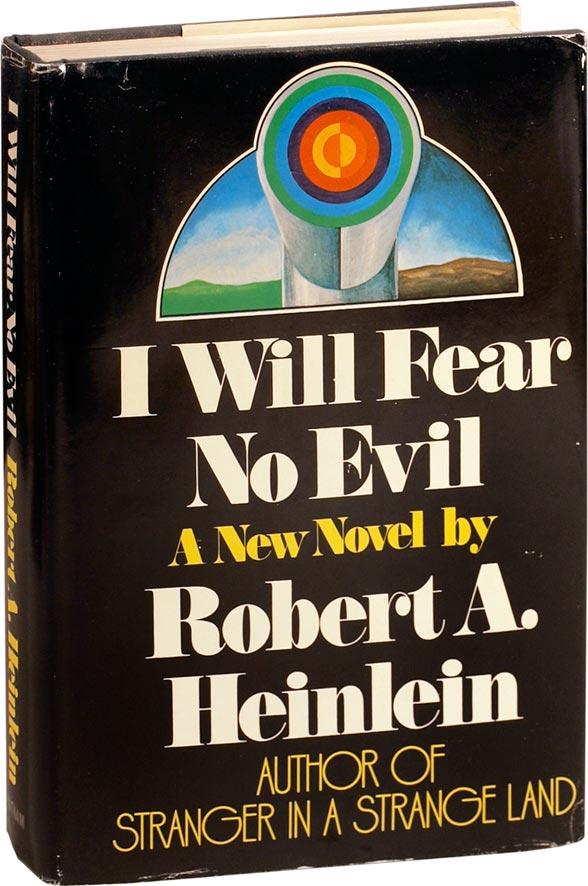
- I Will Fear No Evil
Robert A. Heinleinstandalone novel1970
similar byreflectivescience fictionimmortalityidentityour worldnear future
I Will Fear No Evil is a science fiction novel by American writer Robert A. Heinlein, originally serialised in Galaxy and published in hardcover in 1970. The title is taken from Psalm 23:4.
- Childhood's End
Arthur C. Clarkestandalone novel1953
similar byreflectiveour worldscience fictionidentitynear future
Childhood's End is a 1953 science fiction novel by the British author Arthur C. Clarke. The story follows a peaceful alien invasion of Earth by mysterious Overlords, whose arrival begins decades of apparent utopia under indirect alien rule, at the cost of human identity and culture.
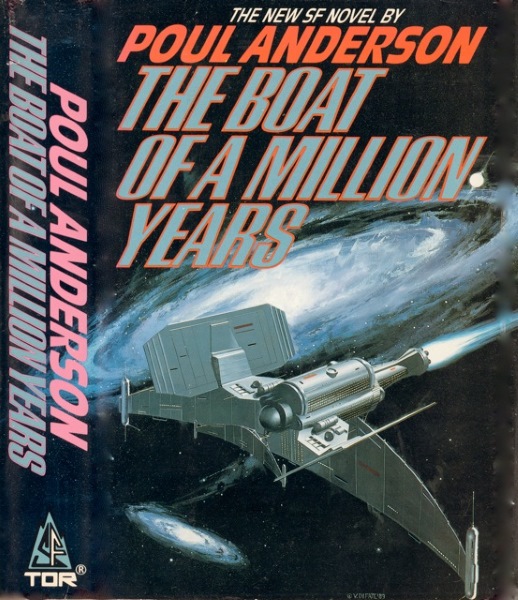
- The Boat of a Million Years
Poul Andersonstandalone novel1989
similar byreflectiveour worldscience fictionimmortalityidentity+1 more
The Boat of a Million Years is a science fiction novel by American writer Poul Anderson, first published in 1989 and nominated for the Nebula Award for Best Novel that same year. It was also nominated for the Hugo Award for Best Novel and the Prometheus Award in 1990.
- Replay
Ken Grimwoodstandalone novel1987
similar byreflectiveour worldtime travelidentityscience fictiontime loop
Replay is a fantasy novel by American writer Ken Grimwood, first published by Arbor House in 1987. It won the 1988 World Fantasy Award for Best Novel.
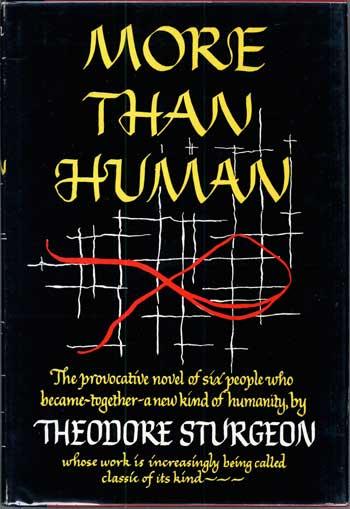
- More Than Human
Theodore Sturgeonstandalone novel1953
similar byreflectiveour worldscience fictionidentityshort story cycle
More Than Human is a 1953 science fiction fix-up novel by American writer Theodore Sturgeon. It is a revision and expansion of his 1952 novella Baby Is Three, which is bracketed by two additional parts written for the novel, "The Fabulous Idiot" and "Morality". It won the 1954 International Fantasy Award, which was also given to works in science fiction. It was additionally nominated in 2004 for a "Retro Hugo" award for the year 1954. Science fiction critic and editor David Pringle included it in his book Science Fiction: The 100 Best Novels.
- Void Star
Zachary Masonstandalone novel2017
similar byreflectiveour worldscience fictionimmortalityidentitynear futurechallenging
Void Star is a 2017 near-future science fiction novel by American writer Zachary Mason. It is his second novel, published after The Lost Books of the Odyssey. Set in a near-future San Francisco, the book explores themes of artificial intelligence, philosophy, linguistics and immortality.
- Turnabout
Margaret Peterson Haddixstandalone novel2000
similar byreflectiveour worldscience fictionimmortalityidentitynear future
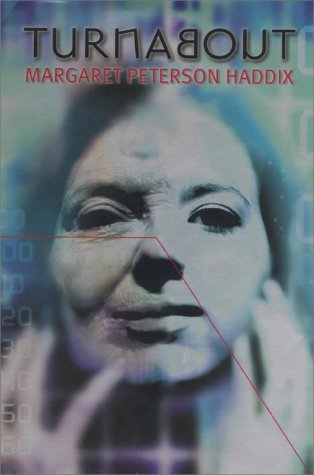
Turnabout is a novel by Margaret Peterson Haddix, set in the future. It was first published in 2000 by the Aladdin division of Simon & Schuster, Inc. The novel switches between 2002 and 2085 by chapter.
- Why Call Them Back from Heaven?
Clifford D. Simakstandalone novel1967
similar byreflectiveour worldscience fictionimmortalitynear future+1 more
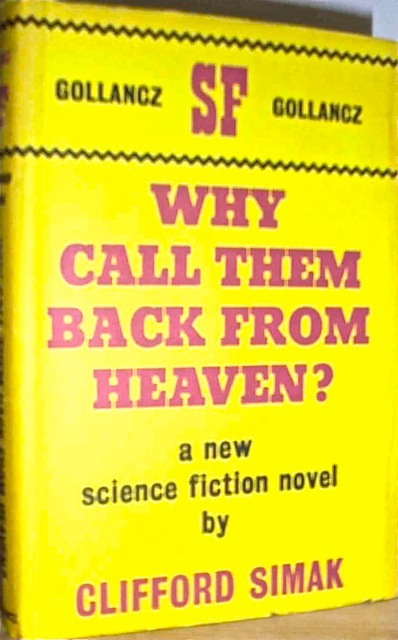
Why Call them Back From Heaven? is a 1967 science fiction novel by American writer Clifford D. Simak. It was the initial volume in the Ace Science Fiction Specials line.
- The Man Who Folded Himself
David Gerroldstandalone novel1973
similar byreflectivescience fictiontime travelidentityour worldcontemporary
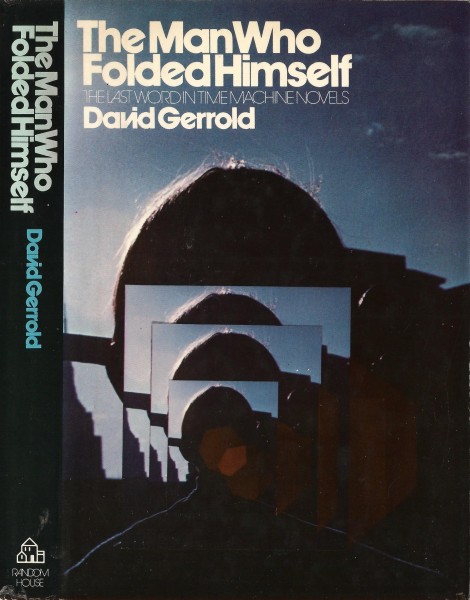
The Man Who Folded Himself is a 1973 science fiction novel by American writer David Gerrold. It was nominated for the Nebula Award for Best Novel in 1974 and the Hugo Award for Best Novel in 1974. The book explores the psychological, physical, and personal challenges that manifest when time travel is possible for a single individual at the touch of a button.
- Time Is the Simplest Thing
Clifford D. Simakstandalone novel1961
similar byreflectiveour worldscience fictionnear futuretime travel+1 more
Time Is the Simplest Thing is a science fiction novel by American writer Clifford D. Simak, first published in 1961. The story combines paranormal abilities with themes of space and time travel. The underlying theme is intolerance of ordinary people towards those with unusual abilities.
- To Live Again
Robert Silverbergstandalone novel1969
similar byreflectiveour worldscience fictionimmortalityidentity
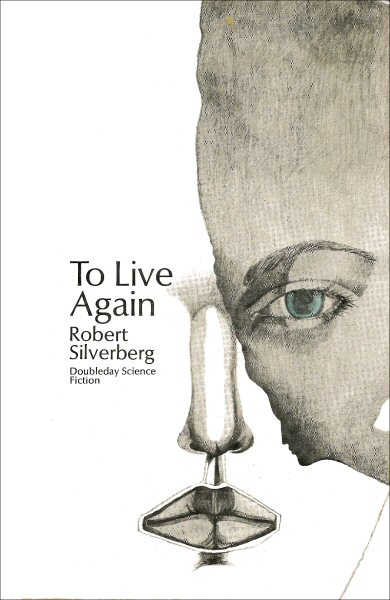
In a future where the very rich can have their personalities recorded before death and then implanted into a living host to share, or dominate, that person's mind and body, owning a recorded soul becomes the ultimate status symbol among the powerful. The practice carries real risk: a strong enough recorded personality can overwhelm its host entirely, a fate the novel calls going dybbuk. Robert Silverberg builds a society around this trade in secondhand immortality, and the people who profit, or don't survive, dealing in it. A standalone novel from Silverberg's prolific late-1960s run.
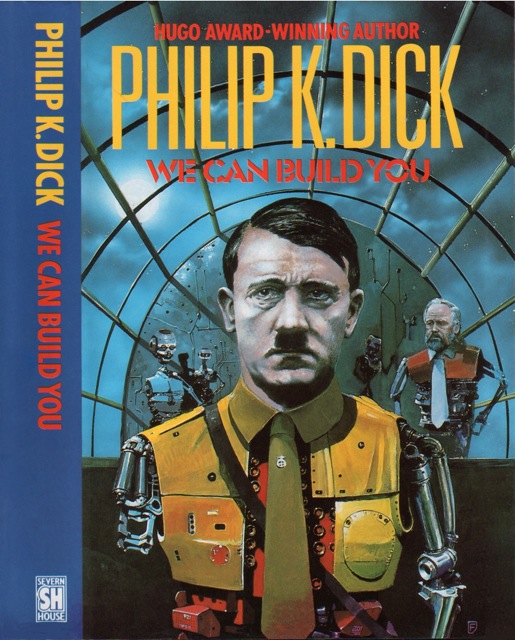
- We Can Build You
Philip K. Dickstandalone novel1972
similar byreflectiveour worldscience fictionidentitynear future
We Can Build You is a 1972 science fiction novel by American writer Philip K. Dick. Written in 1962 as The First in Our Family, it remained unpublished until appearing in serial form as A. Lincoln, Simulacrum in the November 1969 and January 1970 issues of Amazing Stories magazine, re-titled by editor Ted White. The novel was issued as a mass market paperback original by DAW Books in 1972, its final title provided by publisher Donald A. Wollheim. Its first hardcover edition was published in Italy in 1976, and Vintage issued a trade paperback in 1994.
- Never Let Me Go
Kazuo Ishigurostandalone novel2005
similar byreflectiveour worldscience fictionidentitynear future
Never Let Me Go is a 2005 science fiction novel by the British author Kazuo Ishiguro. It was shortlisted for the 2005 Man Booker Prize, for the 2006 Arthur C. Clarke Award and the 2005 National Book Critics Circle Award. Time magazine named it the best novel of 2005. It included the novel in its '100 Best English-language novels published since 1923—the beginning of TIME'. It also received an ALA Alex Award in 2006. A film adaptation directed by Mark Romanek was released in 2010.
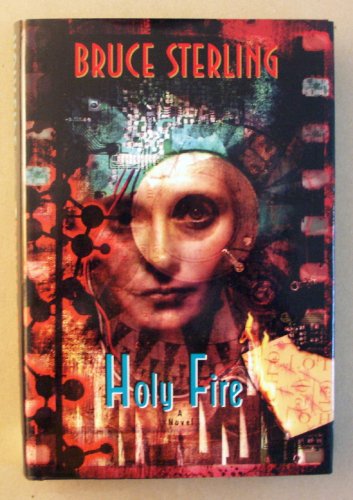
- Holy Fire
Bruce Sterlingstandalone novel1996
similar byreflectivescience fictionimmortalityidentitynear future+1 more
Holy Fire is a 1996 science fiction novel by American writer Bruce Sterling. It was nominated for the British Science Fiction Award in 1996, and for both the Hugo and Locus Awards in 1997.
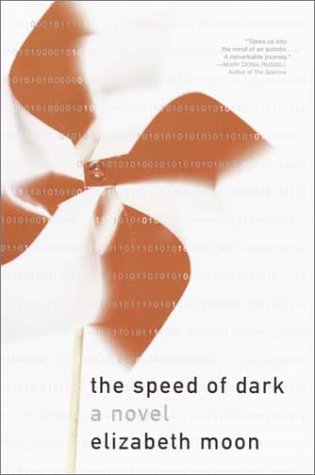
- The Speed of Dark
Elizabeth Moonstandalone novel2002
similar byreflectiveour worldscience fictionidentitynear future
From the Penguin Random House website In the near future, disease will be a condition of the past. Most genetic defects will be removed at birth; the remaining during infancy. Lou Arrendale, a high-functioning autistic adult, is a member of the lost generation, born at the wrong time to reap the rewards of medical science. He lives a low-key, independent life. But then he is offered a chance to try a brand-new experimental "cure" for his condition. With this treatment Lou would think and act and be just like everyone else. But if he was suddenly free of autism, would he still be himself? Would he still love the same classical music — with its complications and resolutions? Would he still see the same colors and patterns in the world—shades and hues that others cannot see? Most important, would he still love Marjory, a woman who may never be able to reciprocate his feelings? Now Lou must decide if he should submit to a surgery that might completely change the way he views the world ... and the very essence of who he is.
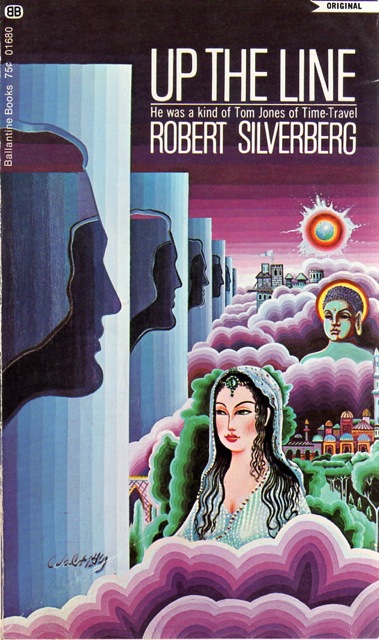
- Up the Line
Robert Silverbergstandalone novel1969
similar byour worldscience fictiontime travelidentity+1 more
Up the Line (1969) is a time travel novel by American science fiction author Robert Silverberg. The plot revolves mainly around the paradoxes brought about by time travel and is considered an example of the more sexually-permissive era of late 1960s American science-fiction, a reflection of the counterculture of its day. It was nominated for a Nebula Award for Best Novel in 1969 and a Hugo Award for Best Novel in 1970 but lost to Ursula K. Le Guin's The Left Hand of Darkness both times.
- The Light of Other Days
Arthur C. Clarke & Stephen Baxterstandalone novel2000
similar byour worldscience fictionnear futurechallengingtime travel+1 more
An industrialist devises a technique to use tiny wormholes as light pipes to enable viewing of any event anywhere; and subsequently it becomes possible to use them to view any event in the past as well. The effects on society are enormous.
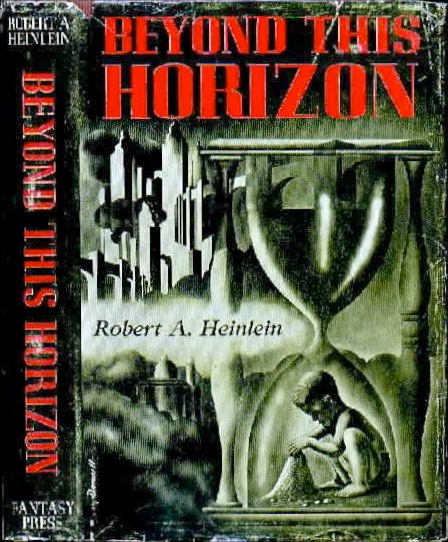
- Beyond This Horizon
Robert A. Heinleinstandalone novel1948
similar byreflectiveour worldscience fiction+2 more
From the front flap of a 2001 Baen reprint: "Utopia has been achieved. For centuries, disease, hunger, poverty, and war have been things found only in the history tapes. And applied genetics has given men and women the bodies of athletes and a lifespan of over a century. They should all have been very happy... But Hamilton Felix is bored. And he is the culmination of a star line, each of his last thirty ancestors chosen for superior genes. Hamilton is, as far as genetics can produce one, the ultimate man. And this ultimate man can see no reason why the human race should survive, and has no intention of continuing the pointless comedy. However, Hamilton's life is about to become less boring. A secret cabal of revolutionaries who find utopia not just boring, but desperately in need of leaders who know just What Needs to be Done, are planning to revolt and put themselves in charge. Knowing of Hamilton's disenchantment with the modern world, they have recruited him to join their Glorious Revolution. Big mistake! The revolutionaries are about to find out that recruiting a superman was definitely not a good idea..."
- No Enemy But Time
Michael Bishopstandalone novel1982
similar byreflectiveour worldscience fictiontime travel+1 more
No Enemy But Time is a 1982 science fiction novel by Michael Bishop. It won the 1982 Nebula Award for Best Novel, and was also nominated for the 1983 John W. Campbell Memorial Award. It was included in David Pringle's book Science Fiction: The 100 Best Novels.
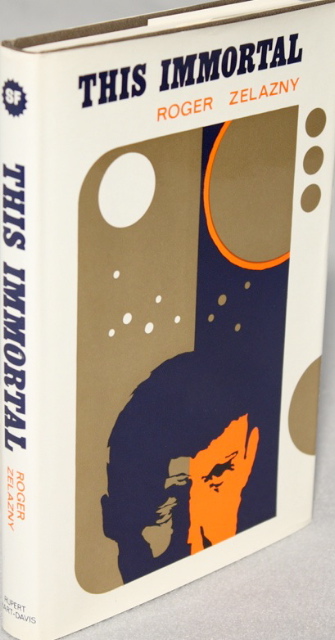
- This Immortal
series2 books1966
similar byreflectiveour worldscience fictionimmortality
This Immortal is a single science fiction novel by Roger Zelazny, expanded from his 1965 serial ...And Call Me Conrad. In a depopulated future Earth largely toured by an alien race, its long-lived, secretive protagonist Conrad Nomikos is assigned to guide and protect a visiting alien across the ruins of Greece and Egypt, uncovering old grudges and assassination plots along the way. The novel shared the 1966 Hugo Award for Best Novel with Frank Herbert's Dune.
- Mindscan
Robert J. Sawyerstandalone novel2005
similar byour worldscience fictionimmortalityidentitynear future+1 more
Transplanting his consciousness into an android body in order to escape death, Jake Sullivan falls in love with the android Karen, a situation that is further complicated when Jake's biological body takes hostages and demands its mind back.
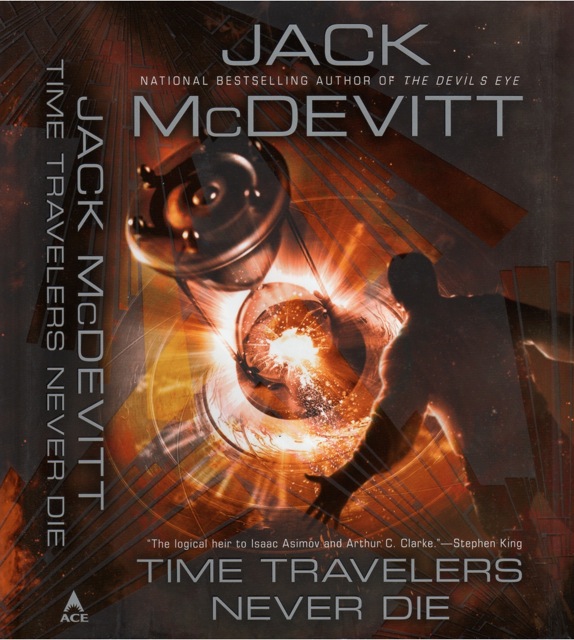
- Time Travelers Never Die
series2 books1996
similar byour worldscience fictiontime travelcontemporary+2 more
Time Travelers Never Die started life as a Jack McDevitt novella in the mid-1990s (Hugo- and Nebula-nominated) before he expanded it into a full novel over a decade later; the novella and novel are two forms of the same story rather than a sequel. It follows a small circle of people who gain access to working time travel and use it to step into the past, in McDevitt's characteristic register of curious, history-minded science fiction.
- The Dream Master
Roger Zelaznystandalone novel1966
similar byour worldscience fictionidentitynear future+1 more
The Dream Master (1966) is a science fiction novel by American writer Roger Zelazny, based on the novella He Who Shapes. Zelazny's original title was The Ides of Octember. He Who Shapes won the 1965 Nebula Award for Best Novella.