More like Timekeeper
anchored on:fantasybritish islesalternate earth19th centuryyoung adulthistorical fantasy+4 more
but
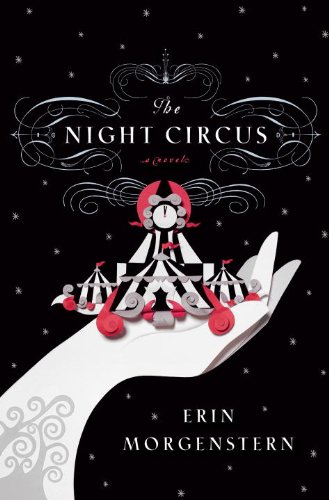
- The Night Circus
Erin Morgensternstandalone novel2011
similar byforbidden lovemysteriousfantasyhistorical fantasy+1 more
The Night Circus is a 2011 speculative fiction novel by Erin Morgenstern. It was originally written for the annual writing competition National Novel Writing Month (NaNoWriMo) over the span of three competitions. The novel has a nonlinear narrative written from multiple viewpoints.
- Red Shift
Alan Garnerstandalone novel1973
similar byforbidden lovemysteriousbritish isles+1 more
Quoting that 1978 review article by Brian Lee: Red Shift [after The Owl Service] was again about the relationship between two adolescents, but interwoven in their love story were two other strands: one about a group of Roman legionaires 'going tribal' among warring factions of the British (the parallel and the brutal language are obviously those of the Americans among the Viet Cong and the Viet Minh); the other strand is about the massacre of a village on the Welsh border during the Civil War.{{BREAK}} Undoubtedly, Red Shift is a brilliantly written and gripping book. The difficulty about it is that Garner makes no concessions to his readers (and on the book jacket he makes it clear that it is for children). It is told almost entirely in cryptic conversation with minimal clues to the identity of the speakers. He switches from strand to strand of the story without warning. The book cannot be understood and appreciated at one hasty reading. It is worth serious study, but will children persevere? In her introduction to the 1973 edition of Children's Books of the Year, critic and reviewer Elaine Moss says: Spurred on by the publication of Alan Garner's literary crossword puzzle Red Shift ... many of us asked ourselves where children's publishing should end and adult begin? For Children's Books of the Year I have drawn the line below Red Shift and excluded it ... Alan Garner, in deliberately choosing an avant-garde form, is also choosing an advanced, sophisticated audience for his book. Alan Garner himself seems to have come around to this view. This year a television adaptation of Red Shift was screened at peak viewing time with no mention of the fact that it was originally published as a children's novel. [end quotation from the review article; ellipses by Lee]
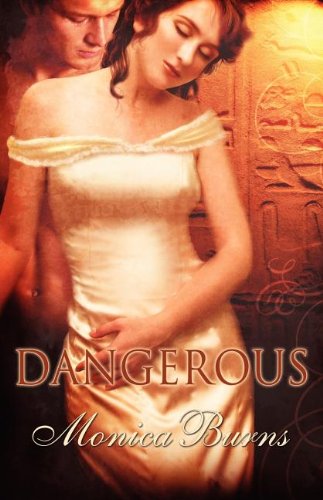
- Dangerous
Monica Burnsstandalone novel2009
similar byforbidden lovemysterious19th centurybritish isles
"His love could be the death of her. When Constance Athelson, Viscountess Westbury, hides her face to attend the Black Widows Ball, she never expected to find erotic passion in a masked stranger's arms. The torrent of lust isn't enough to drown out her dubious "gift" for seeing visions and talking to the dead. Terrified of being found out, she secures a position cataloguing archaeological artifacts for the Earl of Wyndham—where she encounters a ghost begging her to break a curse plaguing his family. Before his mysterious lover disappeared, Lucien Blakemore was tempted to throw caution aside. Yet he knows one taste of love will unleash the curse that drove his father and brother to murder their wives. When he returns home empty handed and empty hearted, he's shocked to discover his new assistant is the goddess who fled into the night. But could her presence be part of a murderous plot to unearth the location of a secret Egyptian tomb? The answer—or his doom—lies behind the desire shining in his seductress's eyes." – from this book's product page on Samhain's website as of 2016-11-06.
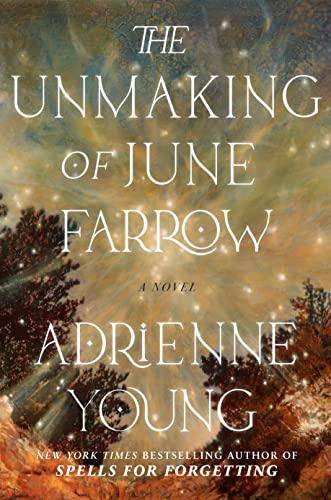
- The Unmaking of June Farrow
Adrienne Youngstandalone novel2023
similar byforbidden lovemysteriousfantasytime travel
In the small mountain town of Jasper, North Carolina, June Farrow is waiting for fate to find her. The Farrow women are known for their thriving flower farm—and the mysterious curse that has plagued their family line. The whole town remembers the madness that led to Susanna Farrow’s disappearance, leaving June to be raised by her grandmother and haunted by rumors. It’s been a year since June started seeing and hearing things that weren’t there. Faint wind chimes, a voice calling her name, and a mysterious door appearing out of nowhere—the signs of what June always knew was coming. But June is determined to end the curse once and for all, even if she must sacrifice finding love and having a family of her own. After her grandmother’s death, June discovers a series of cryptic clues regarding her mother’sdecades-old disappearance, except they only lead to more questions. But could the door she once assumed was a hallucination be the answer she’s been searching for? The next time it appears, June realizes she can touch it and walk past the threshold. And when she does, she embarks on a journey that will not only change both the past and the future, but also uncover the lingering mysteries of her small town and entangle her heart in an epic star-crossed love.
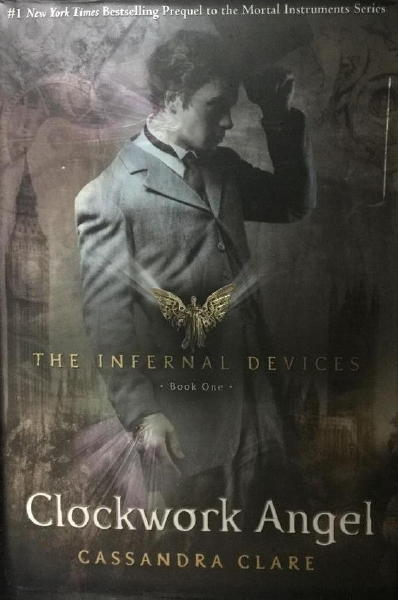
- The Infernal Devices
series5 books2010
part of The Mortal Instruments
similar by19th centurybritish islesyoung adultfantasyhistorical fantasy+1 more
The Infernal Devices is a trilogy by author Cassandra Clare, centring on a race called the Shadowhunters introduced in her The Mortal Instruments series. The trilogy is a prequel series to The Mortal Instruments series. Cassandra Clare has stated that the two series are able to be read in any order, but it is best to read them in publication order.
- All Souls
series5 books2011
similar byforbidden lovehistorical fantasyfantasy+2 more
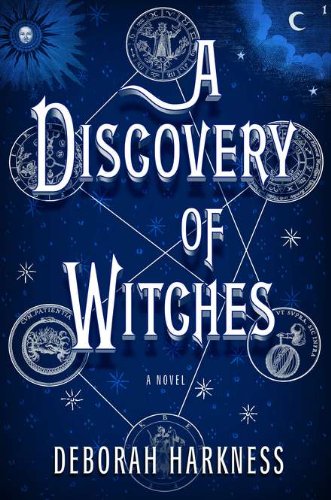
A Discovery of Witches is a 2011 historical-fantasy novel and the debut novel by American scholar Deborah Harkness. It follows Diana Bishop, a history of science professor at Yale University, as she embraces her magical blood after finding a long-thought-lost manuscript and engages in a forbidden romance with a charming vampire, Matthew Clairmont.
- The Grey Horse
R. A. MacAvoystandalone novel1987
similar byforbidden love19th centurybritish isleshistorical fantasyfantasy
Publisher's description: "Set against the colorful and magical backdrop of Ireland. It chronicles a time when the Irish people suffered under harsh English overlords who sought to destroy their culture and way of life. Into the Irish town of Carraroe, a magnificent, completely grey stallion appears. The horse brings with him the promise of better times and magical happenings, for he is actually the shaped-shifted form of Ruairi MacEibhir, journeyed to such a time of danger in order to win the hand of the woman he loves."
- The Midnight Witch
Paula Brackstonstandalone novel2014
similar byforbidden love19th centurybritish isleshistorical fantasy+1 more
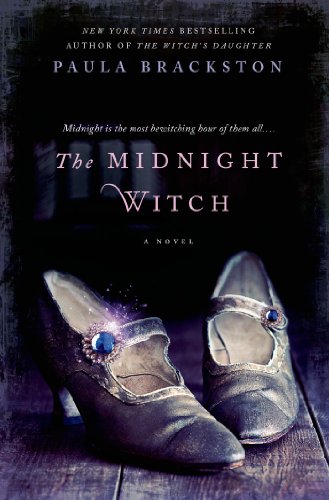
"When the sixth Duke of Radnor dies, his hapless son, Freddie, takes on his title, but it is his daughter, Lilith, who inherits his role as Head Witch of the Lazarus Coven. Raised as a witch, instructed in the art of necromancy, Lilith faces a daunting future, for the coven is threatened by a powerful group of sorcerers, the Sentinels. Nicholas Stricklend, a powerful force in the British government, is the Sentinel charged with wresting the Elixir from Lilith, and he cares not who he must crush in order to succeed. As a society beauty, engaged to another titled witch, and with a grieving mother and an unstable brother to look after, Lilith struggles to maintain her two very different existences. When she meets and falls in love with the talented artist Bram Cardale, she can no longer keep her life as a witch hidden, and she must choose between her loyalty to the coven, her duty to her family, and her love for Bram, or risk destroying everything she holds dear. Paula Brackston's debut novel, The Witch's Daughter, was the little book that could--with a captivating story, remarkable heroine, and eye-catching package, it has sold more than 130,000 copies in all formats. The Midnight Witch is another enchanting tale of love and magic, featuring her signature blend of gorgeous writing, a decadent and intriguing historical backdrop, and a headstrong and relatable heroine for which readers will cheer"--
- The Sea Lady
H. G. Wellsstandalone novel1902
similar byforbidden love19th centuryfantasybritish isles
The Sea Lady is a fantasy novel by British writer H. G. Wells, incorporating elements of a fable. It was serialized from July to December 1901 in Pearson's Magazine before being published as a volume by Methuen. The inspiration for the novel came when Wells caught a glimpse of May Nisbet, the daughter of The Times drama critic, John Ferguson Nisbet, in a bathing suit during her visit to Sandgate. Wells had agreed to pay her school fees after her father's death.
- Gemma Doyle
series4 books2003
similar by19th centuryfantasybritish islesyoung adulthistorical fantasy+1 more
The Gemma Doyle Trilogy is a trilogy of fantasy novels by American writer Libba Bray. They are told from the perspective of Gemma Doyle, a girl in the late nineteenth century. The Gemma Doyle Trilogy consists of three books: A Great and Terrible Beauty, Rebel Angels, and The Sweet Far Thing.
- The Anubis Gates
series3 books1983
similar bymysterious19th centurybritish islestime travelhistorical fantasyfantasy
The Anubis Gates is a single time-travel fantasy novel by Tim Powers, following a present-day academic who takes part in a time-travel experiment and ends up stranded in early nineteenth-century London. It won the Philip K. Dick Award in 1983 and the Science Fiction Chronicle Award the following year.
- The Twelfth Enchantment
David Lissstandalone novel2011
similar bymysterious19th centurybritish isleshistorical fantasy+1 more
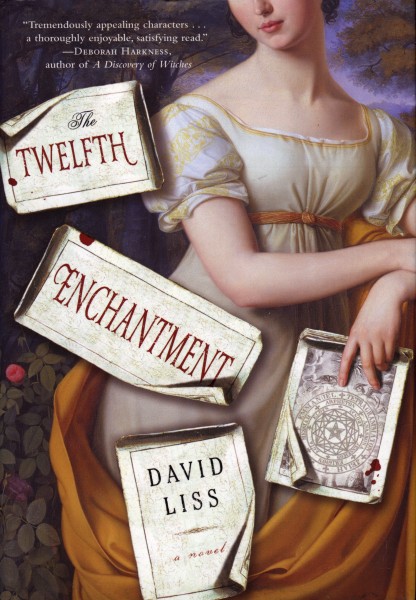
From the front flap of the Random House first edition: "Lucy Derrick is a young woman of good breeding and poor finances. After the death of her beloved father, she is forced to maintain a shabby dignity as the unwanted boarder of her tyrannical uncle, fending off marriage to a local mill owner. But just as she is on the cusp of accepting a life of misery, events take a stunning turn when a handsome stranger-the poet and notorious rake Lord Byron-arrives at her house, stricken by what seems to be a curse, and with a cryptic message for Lucy. Suddenly her unfortunate circumstances are transformed in ways at once astonishing and seemingly impossible. With the world undergoing an industrial transformation, and with England on the cusp of revolution, Lucy is drawn into a dangerous conspiracy in which her life, and her country's future, are in the balance. Inexplicably finding herself at the center of cataclysmic events, Lucy is awakened to a world once unknown to her: where magic and mortals collide, and the forces of ancient nature and modern progress are at war for the soul of England ... and the world. The key to victory may be connected to a cryptic volume whose powers of enchantment are unbounded. Now, challenged by ruthless enemies with ancient powers at their command, Lucy must harness newfound mystical skills to prevent catastrophe and preserve humanity's future. And enthralled by two exceptional men with designs on her heart, she must master her own desires to claim the destiny she deserves."
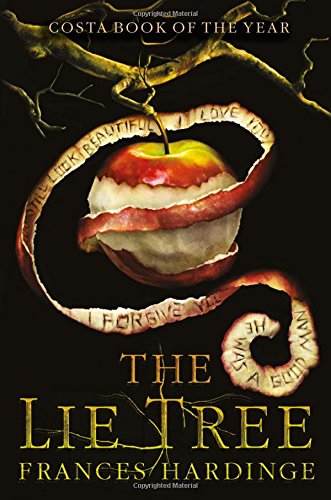
- The Lie Tree
Frances Hardingestandalone novel2015
similar bymysterious19th centuryfantasybritish isleshistorical fantasy
The Lie Tree is the seventh children's historical fantasy novel by Frances Hardinge, published in 2015 by Macmillan Publishers. The book won the 2015 Costa Book of the Year.
- Amberleigh
Carole Nelson Douglasstandalone novel1980
similar byforbidden lovemysterious19th centurybritish isles
Amazon: Amberleigh Dunne must find the key to the lethal secrets haunting a great Irish estate when she travels to Carnhaven in 1893 to aid her mysteriously distressed school chum, Elaine. From the back cover of the Jove Books first edition: Her heart was born anew... Amberleigh, with her hair of flame, had come to the St. Clare estate in Ireland to escape her grey life as a governess. Here she could become a companion to the nobly born Elaine St. Clare, an old school friend, so fragile, so innocent and so unlike her stepmother Devora, the beauty with the iron will... Amid the mists of Carnhaven... Amberleigh soon found herself bearing the shame of another woman, and uncovering the strange secrets everyone seemed to hide - from the roguish patriot Devlin Quade, to the stern and handsome Lord Davenant. Amid the intrigue, the spirited young woman was sure of one thing: that she was losing her heart to a man who would never return her love.
- The Midnight Bargain
C. L. Polkstandalone novel2020
similar byforbidden love19th centuryhistorical fantasyfantasyyoung adult
2021 World Fantasy Award Finalist for Best Novel | 2021 Nebula Award Finalist for Best Novel | 2021 FIYAHCON Ignyte Award Finalist for Best Novel | 2021 Canada Reads Finalist | NPR Best Books of 2020 | November 2020 Indie Next Pick | Apple Books: Best Books of October From the bestselling, World Fantasy Award-winning author of Witchmark comes a sweeping, romantic new fantasy set in a world reminiscent of Regency England, where women’s magic is taken from them when they marry. A sorceress must balance her desire to become the first great female magician against her duty to her family. Beatrice Clayborn is a sorceress who practices magic in secret, terrified of the day she will be locked into a marital collar that will cut off her powers to protect her unborn children. She dreams of becoming a full-fledged Magus and pursuing magic as her calling as men do, but her family has staked everything to equip her for Bargaining Season, when young men and women of means descend upon the city to negotiate the best marriages. The Clayborns are in severe debt, and only she can save them, by securing an advantageous match before their creditors come calling. In a stroke of luck, Beatrice finds a grimoire that contains the key to becoming a Magus, but before she can purchase it, a rival sorceress swindles the book right out of her hands. Beatrice summons a spirit to help her get it back, but her new ally exacts a price: Beatrice’s first kiss . . . with her adversary’s brother, the handsome, compassionate, and fabulously wealthy Ianthe Lavan. The more Beatrice is entangled with the Lavan siblings, the harder her decision becomes: If she casts the spell to become a Magus, she will devastate her family and lose the only man to ever see her for who she is; but if she marries—even for love—she will sacrifice her magic, her identity, and her dreams. But how can she choose just one, knowing she will forever regret the path not taken?
- Ada or Ardor: A Family Chronicle
Vladimir Nabokovstandalone novel1969
similar byforbidden love19th centuryalternate earthalternate history
An alternate-world novel by the celebrated author of "Lolita" in which North America is a 19th- and early 20th-century province of Russia still ruled by Tsars.
- The Last Binding
series3 books2021
similar by19th centuryhistorical fantasybritish islesfantasy+2 more
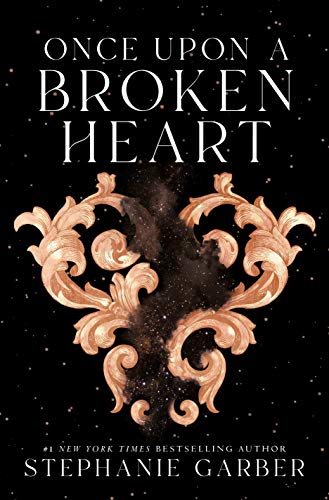
- Once Upon a Broken Heart
series4 books2021
similar byforbidden lovefantasyyoung adult+1 more
Stephanie Garber's romantasy series opens with Evangeline Fox striking a desperate bargain with the immortal Prince of Hearts, three kisses in exchange for his help stopping her true love's wedding to another woman, only to learn that bargaining with an immortal always costs more than expected. Once Upon a Broken Heart and its sequels follow the fallout of that bargain across a fairy-tale-inflected world of curses and dangerous magic.
- The Girl from Everywhere
series2 books2016
similar byforbidden lovefantasyyoung adulttime travel+2 more
- A Thousand Perfect Things
Kay Kenyonstandalone novel2013
similar byforbidden love19th centuryalternate earthhistorical fantasyalternate history
A novel based on an alternate 19th century consisting of two warring continents on an alternate earth : the scientific Anglica (England) and magical Bharata (India). A young Victorian woman and aspiring botanist journeys to Bharata where she faces a choice between two suitors and two irreconcilable realms.
- A Ghost of a Chance at Love
Terry Spearstandalone novel2011
similar byforbidden love19th centurytime travel+1 more
Lisa Welsh only wishes to leave a messy divorce behind for a couple of days stay in Salado, Texas but wakes to nightmares and a cowboy in her bed, and she has no earthly idea how he got there. But the situation gets worse when she learns she & apos;s now living in 19th Century Salado. Even more worrisome is the tall dark stranger, and everyone else in town believes she & apos;s some woman named Josephine Rogers who is supposed to be dead. Jack Stanton can & apos;t believe the clerk gave him an occupied room at the Shady Villa Inn, but worse, he was ready to ravage the woman in that bed-until he realized his mistake. Now the woman he thinks is Josephine claims to be some other woman-and though he could never abide by Josephine & apos;s fickle ways, this Lisa Welsh intrigues him like no other. Still, if she isn & apos;t Josephine, he figures he best help her find her way back to where she really belongs no matter how much he wants to keep her with him. Together, Lisa and Jack must solve the mysteries and face the troubles in their worlds or they will never be free to share the love that binds them across the ages.