More like Timeless
anchored on:science fictiontime travelcontemporaryidentitybritish islesmysterious
but
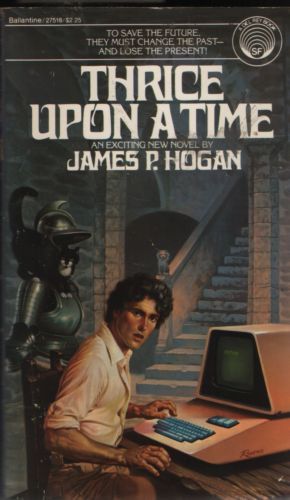
- Thrice Upon a Time
James P. Hoganstandalone novel1980
similar byidentitymysteriouscontemporarybritish islesscience fictiontime travel
Amazon: When Murdoch was summoned to his grandfather's isolated Scottish castle, he had no idea of the old man's latest discovery -- nor where it would lead him. Sir Charles, a genius in far-out physics, had found a flaw in the law of conservation of energy; in any process, an incredibly tiny increment of energy escaped -- back through time! Using this "tau" radiation, he could send messages into the past. But Murdoch discovered records of messages he knew he had never sent. Were many futures possible? Could a message from Future X alter the past -- and thus wipe out Future X? But who would be foolish enough to send a message that could eliminate his own existence?
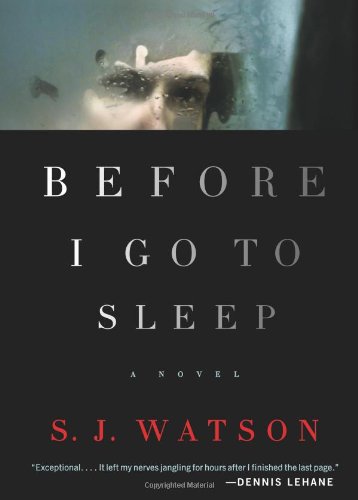
- Before I Go to Sleep
S. J. Watsonstandalone novel2011
similar byidentitymysteriouscontemporarybritish islestense
Before I Go to Sleep is the first novel by S. J. Watson, published in the spring of 2011. It became both a Sunday Times and The New York Times bestseller and has been translated into over 40 languages. It has become a bestseller in France, Canada, Bulgaria and the Netherlands. It reached number 7 on the U.S. bestseller list, the highest position for a debut novel by a British author since J. K. Rowling. The New York Times described the author as an "out-of-nowhere literary sensation". He wrote the novel between shifts whilst working as a National Health Service (NHS) audiologist.
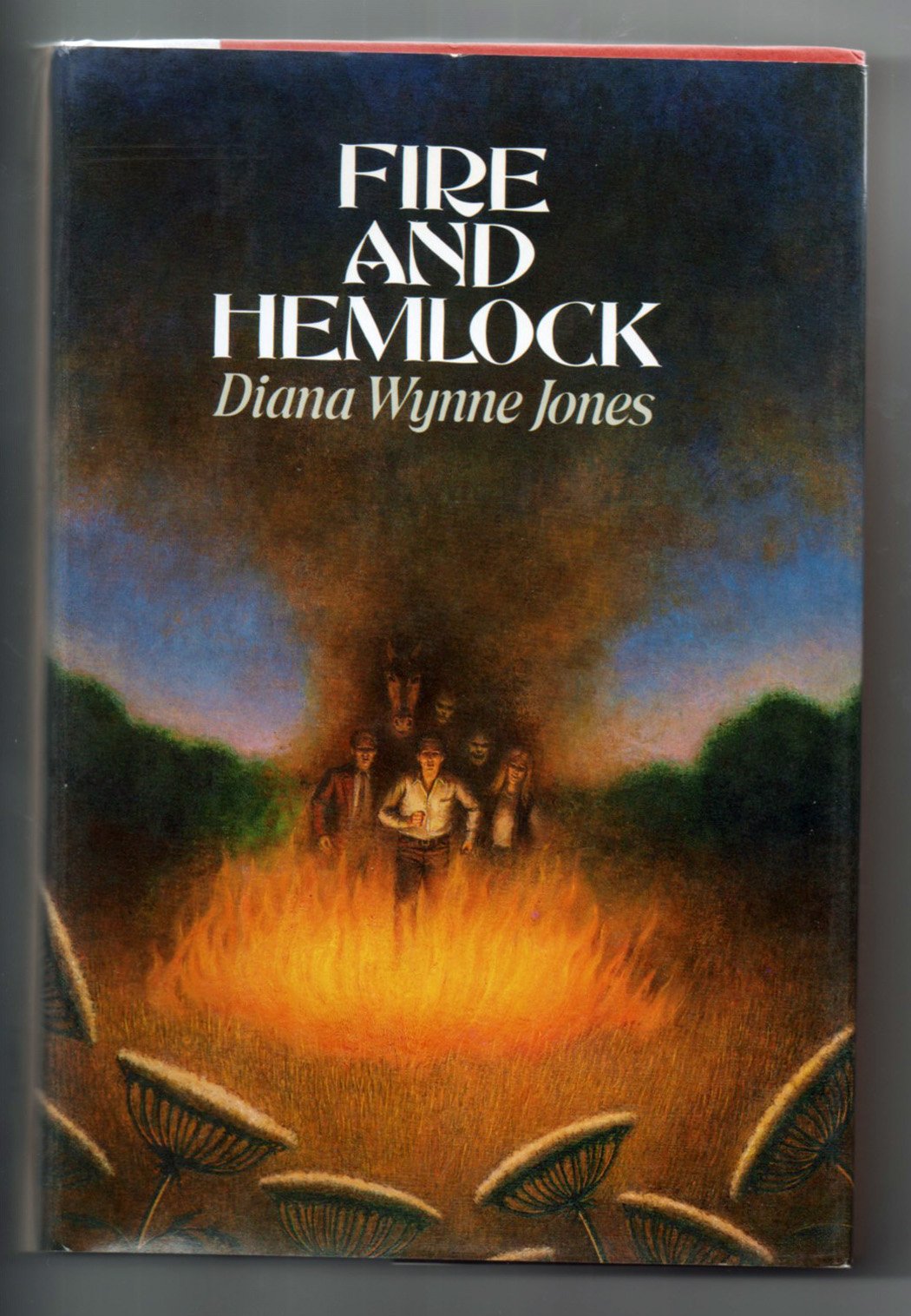
- Fire and Hemlock
Diana Wynne Jonesstandalone novel1984
similar byidentitymysteriouscontemporarybritish isles+1 more
At nineteen, Polly has two sets of sometimes overlapping, sometimes conflicting memories, the real-life ones of school days and her parents' divorce, and the heroic adventure ones that began the day she accidentally gate-crashed a funeral and met the cellist Thomas Lynn.
- Legion / Stephen Leeds
series5 books2012
similar byidentitymysteriouscontemporaryscience fiction+1 more
Legion, or the Stephen Leeds series, is a series of science fiction novellas created by American author Brandon Sanderson. Sanderson authored the first three stories : Legion, first published on August 31, 2012, Legion: Skin Deep in November 2014, and Legion: Lies of the Beholder in September 2018. Death and Faxes, co-authored by Max Epstein, David Pace, and Michael Harkins, was released in June 2022. The books have received favorable reviews.
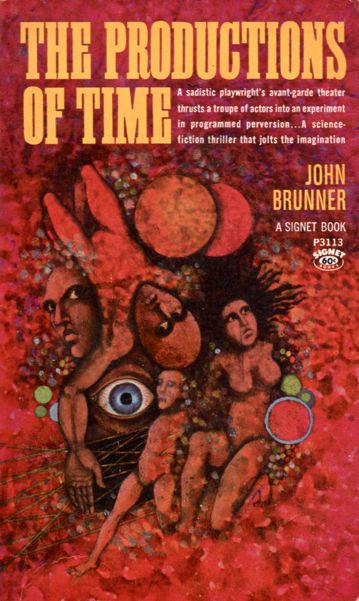
- The Productions of Time
John Brunnerstandalone novel1967
similar byidentitymysteriouscontemporaryscience fictiontime travel
The Productions of Time is a science fiction novel by English writer John Brunner, first published in The Magazine of Fantasy and Science Fiction in 1966. It appeared in book form the following year, published by Signet Books.
- Flashforward
Robert J. Sawyerstandalone novel1999
similar byidentitymysteriousscience fictiontensetime travel
Flashforward is a science fiction novel by Canadian author Robert J. Sawyer first published in 1999. The novel is set in 2009. At CERN, the Large Hadron Collider accelerator is performing a run to search for the Higgs boson. The experiment has a unique side effect; the entire human race loses their consciousness for about two minutes. During that time, nearly everyone sees themselves roughly twenty-one years and six months in the future. Each individual experiences the future through the senses of their future self. This "flashforward" results in countless deaths and accidents involving vehicles, aircraft, and any other device needing human control at the time of the experiment. The novel was adapted into the 2009 television series FlashForward.
- The Time of the Ghost
Diana Wynne Jonesstandalone novel1981
similar byidentitymysteriouscontemporarybritish isles
The Time of the Ghost is a supernatural English-language children's novel by Diana Wynne Jones, published by Macmillan in 1981. Set in the English countryside, it features a teenage ghost who is one of four sisters, and observes the family, unable to remember which one she is. She is from seven years in the future, in the aftermath of her "accident", so it is a kind of a time slip story, but she has no memories of those seven years.
- Escape from Memory
Margaret Peterson Haddixstandalone novel2003
similar byidentitymysteriouscontemporaryscience fiction+1 more
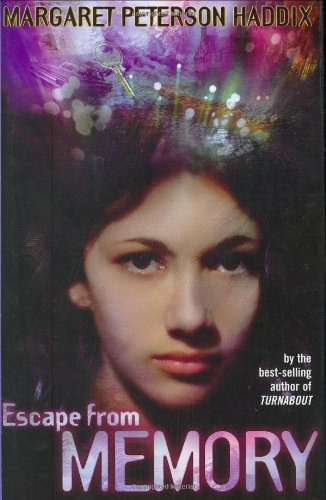
Escape from Memory is a young adult novel by Margaret Peterson Haddix. It was published in 2003 by Simon & Schuster.
- The End of Mr. Y
Scarlett Thomasstandalone novel2006
similar byidentitymysteriouscontemporarybritish islesscience fiction
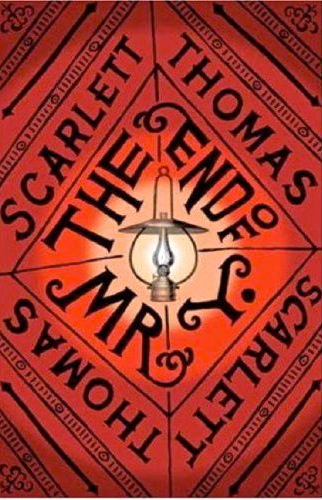
The End of Mr. Y is a novel by British author Scarlett Thomas. The book tells the story of Ariel Manto, a PhD student who has been researching the 19th century writer Thomas Lumas. She finds an extremely rare copy of Lumas' novel The End of Mr. Y in a second-hand bookshop. The book is rumoured to be cursed - everyone who has read it has died not long afterwards.
- Coils
Roger Zelazny & Fred Saberhagenstandalone novel1982
similar byidentitymysteriouscontemporaryscience fictiontense
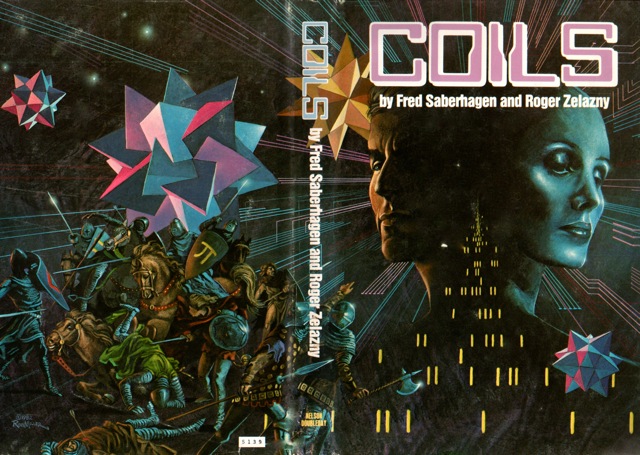
A man discovers that his memories of childhood are false, and when he begins to investigate his psychiatrist is murdered and his girlfriend is kidnapped. As his actual past begins to return to his memory, he realizes that he has the ability to mentally connect to computer circuitry, an ability he used to use for illegal advantage for the corporation which employed him, along with a small group of others with paranormal powers. He concludes that the corporation is behind all this and sets out to find and rescue his girlfriend while the corporation pursues him.
- Time Travelers Never Die
series2 books1996
similar bycontemporaryscience fictiontime travel+2 more
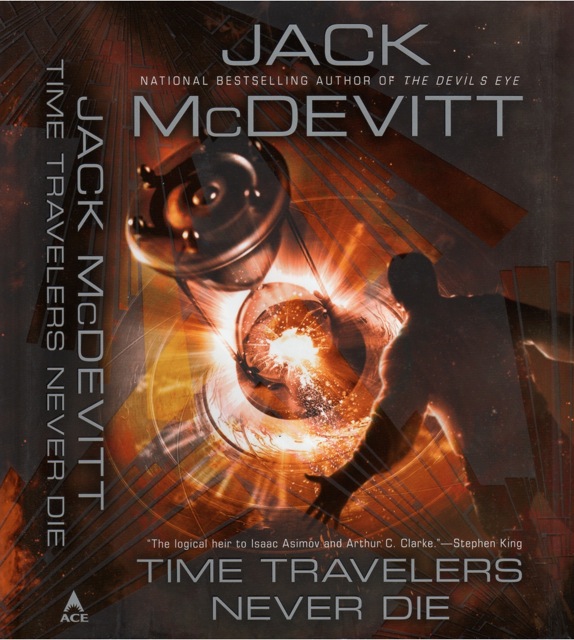
Time Travelers Never Die started life as a Jack McDevitt novella in the mid-1990s (Hugo- and Nebula-nominated) before he expanded it into a full novel over a decade later; the novella and novel are two forms of the same story rather than a sequel. It follows a small circle of people who gain access to working time travel and use it to step into the past, in McDevitt's characteristic register of curious, history-minded science fiction.
- Pastworld
Ian Beckstandalone novel2009
similar byidentitymysteriousbritish islesscience fictiontense
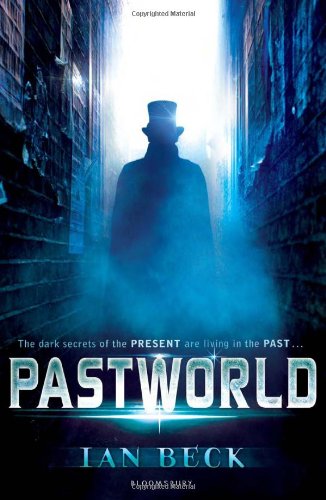
What if all of London were really an amusement park—a whole city returned to Victorian times to entertain visitors from the twenty-first century? That's the wildly original premise of Ian Beck's Pastworld, a high-stakes mystery set in a simulated past. Eve is a lifelong resident of Pastworld who doesn’t know she’s living in a theme park until a mysterious threat forces her to leave home. Caleb is a visiting tourist who finds the lawlessness of the past thrilling—until he suddenly becomes a fugitive from an antiquated justice system. And in the midst of it all, in the thick London fog a dark and deadly figure prowls, claiming victim after victim. He’s the Fantom, a creature both of the past and of the present, in whose dark purpose Caleb and Eve will find their destinies combined. Page-turning, complex, and haunting, Pastworld masterfully exposes the human experience of the past, of violence, of technology, and of entertainment.
- The Rift
Nina Allanstandalone novel2017
similar byidentitymysteriouscontemporarybritish islesscience fiction
The Rift is a 2017 literary science fiction novel by English writer Nina Allan. It was first published in July 2017 in the United Kingdom as a trade paperback by Titan Books. It is the second book of a two-book deal Allan signed with Titan in 2015; the first is the second edition of her debut novel, The Race, published in 2016.
- The Thirteenth Tale
Diane Setterfieldstandalone novel2006
similar byidentitymysteriouscontemporarybritish isles
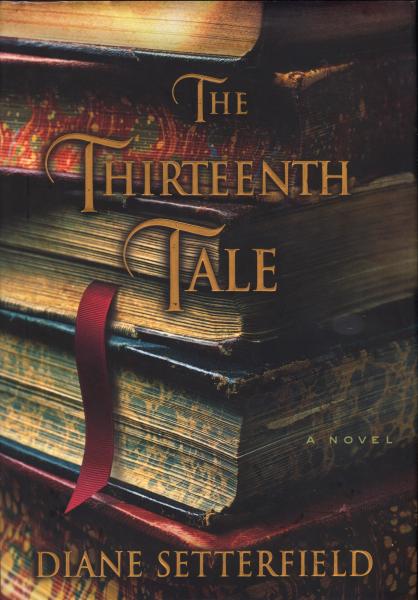
The Thirteenth Tale (2006) by Diane Setterfield is a gothic suspense novel; it was the author's debut book.
- Red Shift
Alan Garnerstandalone novel1973
similar byidentitymysteriousbritish islescontemporary
Quoting that 1978 review article by Brian Lee: Red Shift [after The Owl Service] was again about the relationship between two adolescents, but interwoven in their love story were two other strands: one about a group of Roman legionaires 'going tribal' among warring factions of the British (the parallel and the brutal language are obviously those of the Americans among the Viet Cong and the Viet Minh); the other strand is about the massacre of a village on the Welsh border during the Civil War.{{BREAK}} Undoubtedly, Red Shift is a brilliantly written and gripping book. The difficulty about it is that Garner makes no concessions to his readers (and on the book jacket he makes it clear that it is for children). It is told almost entirely in cryptic conversation with minimal clues to the identity of the speakers. He switches from strand to strand of the story without warning. The book cannot be understood and appreciated at one hasty reading. It is worth serious study, but will children persevere? In her introduction to the 1973 edition of Children's Books of the Year, critic and reviewer Elaine Moss says: Spurred on by the publication of Alan Garner's literary crossword puzzle Red Shift ... many of us asked ourselves where children's publishing should end and adult begin? For Children's Books of the Year I have drawn the line below Red Shift and excluded it ... Alan Garner, in deliberately choosing an avant-garde form, is also choosing an advanced, sophisticated audience for his book. Alan Garner himself seems to have come around to this view. This year a television adaptation of Red Shift was screened at peak viewing time with no mention of the fact that it was originally published as a children's novel. [end quotation from the review article; ellipses by Lee]
- The House on the Strand
Daphne du Maurierstandalone novel1969
similar bycontemporarybritish islestime travelscience fiction+2 more
The House on the Strand is a novel by Daphne du Maurier, first published in the UK in 1969 by Victor Gollancz, with a jacket illustration by her daughter, Flavia Tower. The US edition was published by Doubleday.
- The Multiplex Man
James P. Hoganstandalone novel1992
similar byidentitymysteriouscontemporaryscience fiction+1 more
A science fiction novel about personality transfer. An obscure Minneapolis schoolteacher wakes up in an Atlanta, Georgia hotel room in a body not his own. After making his way home he discovers that it is seven months later than his last memory and that he has been dead for six months.
- Departure
A. G. Riddlestandalone novel2014
similar bymysteriouscontemporarytime travelscience fictiontense+1 more
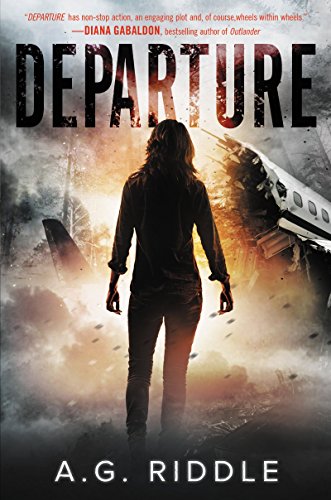
"The world's past and future rests in the hands of five unwitting strangers in this definitive edition of A. G. Riddle's time-traveling, mind-bending speculative thriller. En route to London from New York, Flight 305 suddenly loses power and crash-lands in the English countryside, plunging a group of strangers into a mysterious adventure that will have repercussions for all of humankind.Struggling to stay alive, the survivors soon realize that the world they've crashed in is very different from the one they left. But where are they? Why are they here? And how will they get back home? Five passengers seem to hold clues about what's really going on: writer Harper Lane, venture capitalist Nick Stone, German genetic researcher Sabrina Schroeder, computer scientist Yul Tan, and Grayson Shaw, the son of a billionaire philanthropist.As more facts about the crash emerge, it becomes clear that some in this group know more than they're letting on--answers that will lead Harper and Nick to uncover a far-reaching conspiracy involving their own lives. As they begin to piece together the truth, they discover they have the power to change the future and the past--to save our world. or end it. A wildly inventive and propulsive adventure full of hairpin twists, Departure is a thrilling tale that weaves together power, ambition, fate, memory, and love, from a bold and visionary talent"--
- Hexwood
Diana Wynne Jonesstandalone novel1993
similar byidentitymysteriouscontemporary+2 more
Hexwood is a 1993 fantasy/science fiction novel for young adults, written by British author Diana Wynne Jones.
- Beyond the Barrier
Damon Knightstandalone novel1964
similar byidentitymysteriousscience fictiontime traveltense
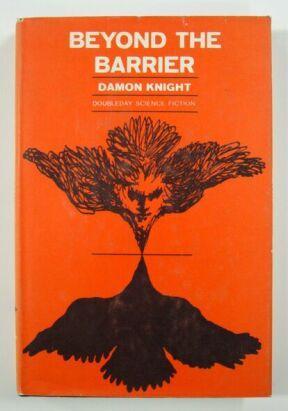
From the front flap of the Doubleday first edition: "Gordon Naismith was a physics professor at a large California university. The year was 1980, and by means of the university's duplicator he could personally teach in nine different classrooms simultaneously. Naismith was an average man in all but two respects: the reflexes were extraordinarily quick, and four years before in a plane crash he had lost all memory of his earlier life. Neither difference seemed important until one day a very unusual student in one of his classes asked a disturbing, extracurricular question: "Professor, what is a zug?" The question triggered a series of violent incidents, and soon Naismith himself, as well as the police, were beginning to wonder if the duplicator had reproduced him a tenth time. The answer lay ten thousand years in the future."
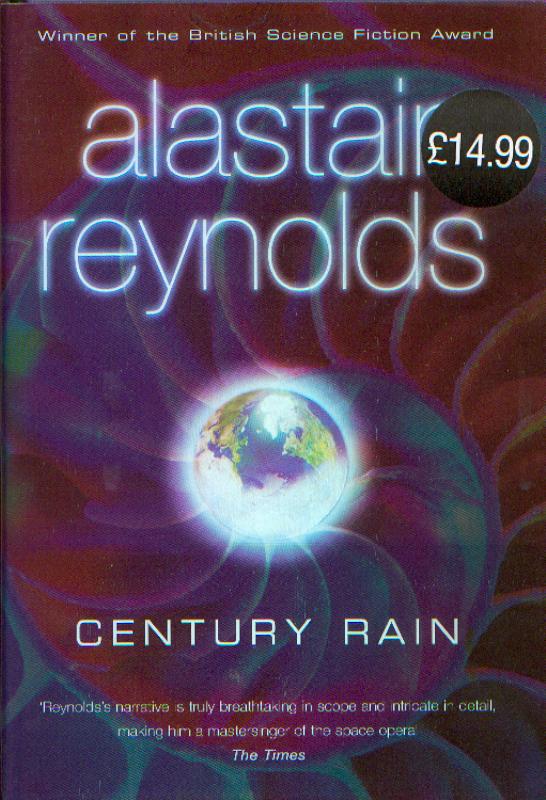
- Century Rain
Alastair Reynoldsstandalone novel2004
similar byidentitymysteriousscience fiction+2 more
Century Rain is a 2004 noir science fiction alternative history mystery novel by Welsh author Alastair Reynolds (ISBN 0-575-07436-1).
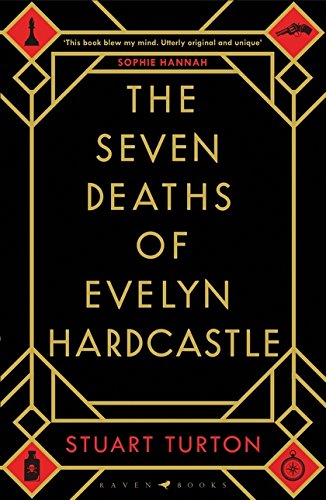
- The Seven Deaths of Evelyn Hardcastle
Stuart Turtonstandalone novel2018
similar byidentitymysteriousbritish islesscience fictiontense
The Seven Deaths of Evelyn Hardcastle is a novel by Stuart Turton which won the Best First Novel prize in the 2018 Costa Book Awards and reached number one on The Saturday Times Bestseller list.
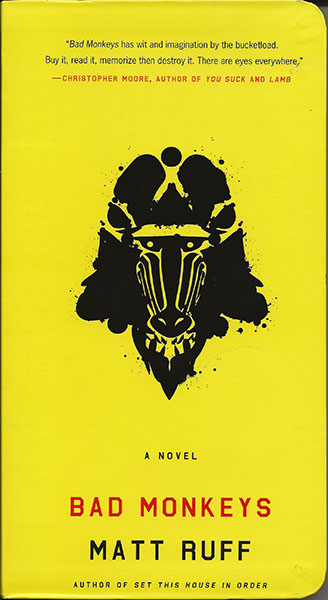
- Bad Monkeys
Matt Ruffstandalone novel2007
similar byidentitymysteriouscontemporarytense+1 more
Bad Monkeys is a 2007 psychological thriller novel by American author Matt Ruff. It received mixed reviews in national media, but was subsequently optioned for film.
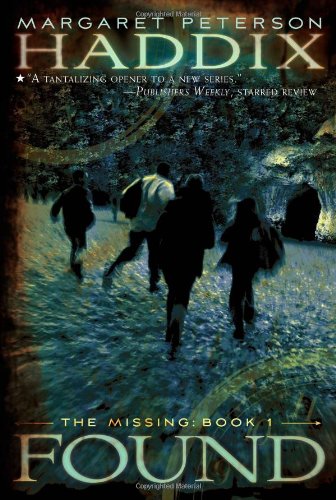
- The Missing
series10 books2008
similar byidentityscience fictiontime travelcontemporary+1 more
The Missing is a series of young adult novels written by Margaret Peterson Haddix. It tells the story of famous children from history stolen from their place in time by futuristic time travelers and accidentally sent to the 21st century as babies. Jonah Skidmore is one of the stolen children, and he, along with his non-adopted sister Katherine, must help return the missing kids to their rightful places in history and fix time before it is destroyed. The first book in the series, Found, was published on April 22, 2008. The series continued with book titles Sent, Sabotaged, Torn, Caught, Risked, and Revealed. The eighth and final book, Redeemed, was released on September 8, 2015. There are also two ebook short stories, Sought and Rescued . Haddix originally intended the series to consist of only seven books. However, she stated that she had trouble closing out the series in seven books; leading to her decision to write Redeemed.