More like TimeRiders
anchored on:science fictiontime travelyoung adultour worldadventuroustense+1 more
but
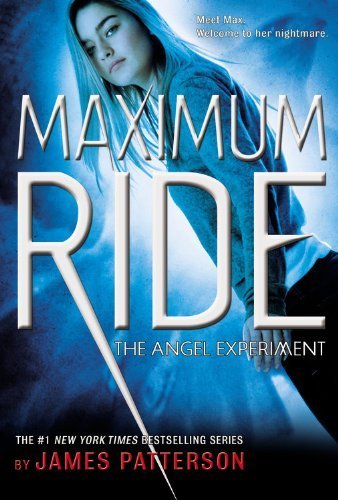
- Maximum Ride
series12 books2005
similar bysurvivaladventurousour worldyoung adultscience fiction+4 more
Maximum Ride is a series of young adult science fantasy novels by American author James Patterson. The series centers on the adventures of Maximum "Max" Ride and her family, called the Flock, who are winged human-avian hybrids created at a lab called The School. The series was inspired by Patterson's earlier novels When the Wind Blows and The Lake House, which were intended for older readers.
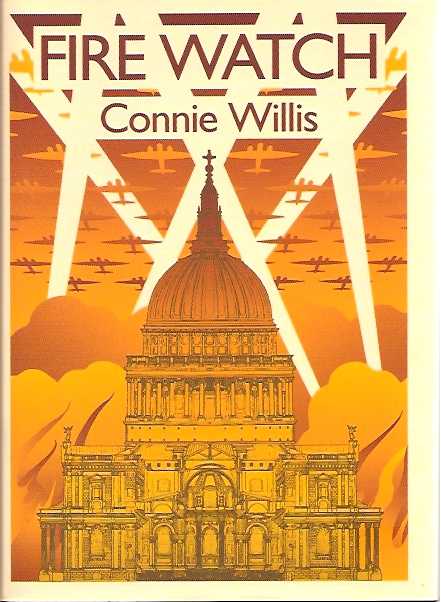
- Oxford Time Travel
series6 books1982
similar bysurvivaltensescience fictiontime traveleurope+3 more
Connie Willis's Oxford Time Travel novels are set at a near-future Oxford University where historians travel into the past as observers, constrained by a version of history that resists any change large enough to alter real events. Doomsday Book sends a medieval historian to what should be 1320 but turns out to be the Black Death year of 1348, intercut with a present-day epidemic at Oxford; To Say Nothing of the Dog returns to the same time-travel program for a lighter, Victorian-set story with different characters. The two novels share their setting and rules rather than a directly continuing plot.
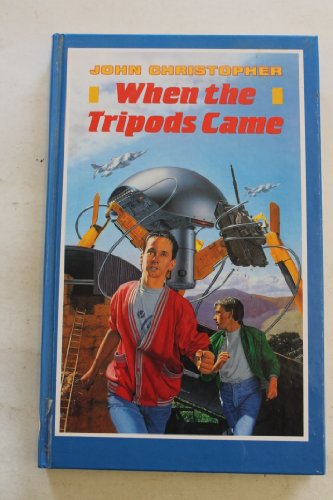
- Tripods
series4 books1967
completed
similar bytensescience fictionour worldyoung adultnear future+3 more
The Tripods is a series of young adult science fiction novels by John Christopher. The series takes place in a post-apocalyptic world where humanity is enslaved by "Tripods"—gigantic three-legged walking machines piloted by an alien race later identified as the "Masters". The first two books were the basis of a science fiction TV series, produced in the United Kingdom in the 1980s.
- Thunder
series3 books1995
similar bysurvivaladventuroustenseour worldscience fictiontime travel+2 more
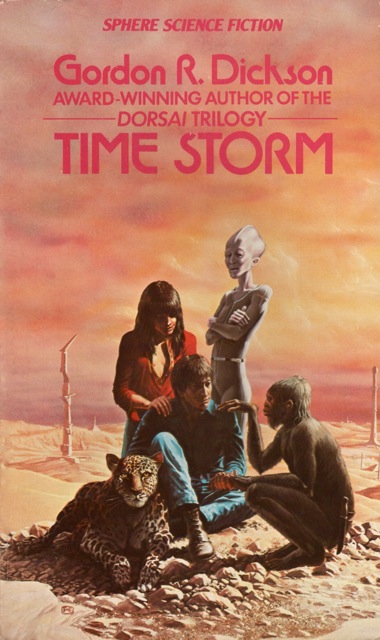
- Time Storm
Gordon R. Dicksonstandalone novel1977
similar bysurvivaladventuroustenseour worldscience fictiontime travelnear future
A time storm has devastated the Earth, and only a small fraction of humankind remains. From the rubble, three survivors form an unlikely alliance: a young man, a young woman, and a leopard. "A masterful science fiction story told by a masterful science fiction writer". -- Milwaukee Journal. A time storm strikes the Earth. The Earth remains, but different parts of the Earth are in different eras. Travel between the different zones is thought to be impossible. The main character, Marc Despard, resolves to fight the time storm. After some struggles, he assembles a small band of people, including one alien, to help him try to understand what has happened and to stop the time storm. He has 2 extraordinary relationships with a older teenaged girl who is speechless for the first part of the book (she was "struck dumb" by the time storm) and with, believe it or not, a leopard. Dickson's writing makes the extraordinary seem quite normal. Ultimately, after being harried by a Mad Max-like group of survivors, he uses a machine found in a different era of time to bring his small band of followers into the future so that he can find those who are trying to fight the time storm. He convinces those future beings that he is capable of fighting the time storm, and ultimately stops it, and gets the girl in the end.
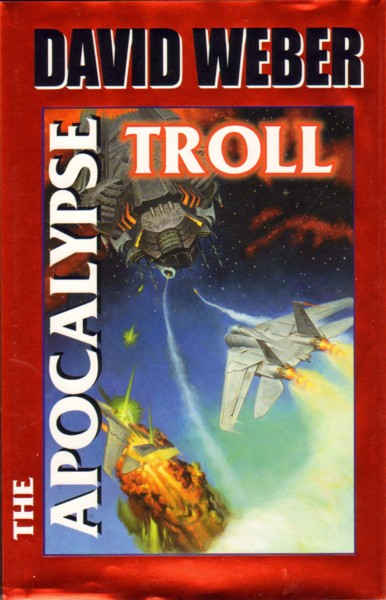
- The Apocalypse Troll
David Weberstandalone novel1999
similar byadventuroustenseour worldscience fictiontime travelcontemporarywar+1 more
The Apocalypse Troll is a novel by American writer David Weber, first published by Baen Books in January 1999. It is a story about time travel and alien invasion.
- Timeline
Michael Crichtonstandalone novel1999
similar bysurvivaladventuroustensescience fictiontime traveleuropemedieval
Timeline is a science fiction novel by American writer Michael Crichton, his twelfth under his own name and twenty-second overall, published in November 1999. It tells the story of a group of history students who travel to 14th-century France to rescue their professor. The book follows in Crichton's long history of combining science, technical details, and action in his books, this time addressing quantum and multiverse theory.
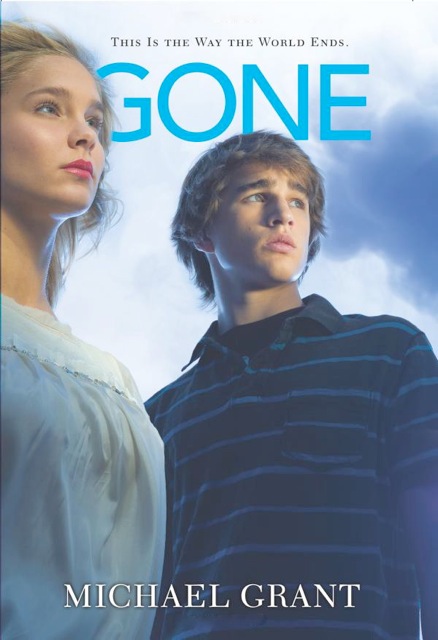
- Gone
series9 books2008
similar bysurvivaltensescience fictionyoung adultcontemporary+2 more
Michael Grant's Gone series begins when everyone aged fifteen and older vanishes without warning from a swath of the California coast, trapping the town of Perdido Beach inside an impenetrable barrier the survivors call the FAYZ. As children develop strange powers and food and order break down, Sam Temple and his rival, his twin brother Caine, become central to the fight for survival against human threats and the monstrous Gaiaphage. Six books (Gone through Light) close the original story; a follow-up Monster trilogy, set years later, follows a new outbreak of mutation-causing powers and a new generation of characters.
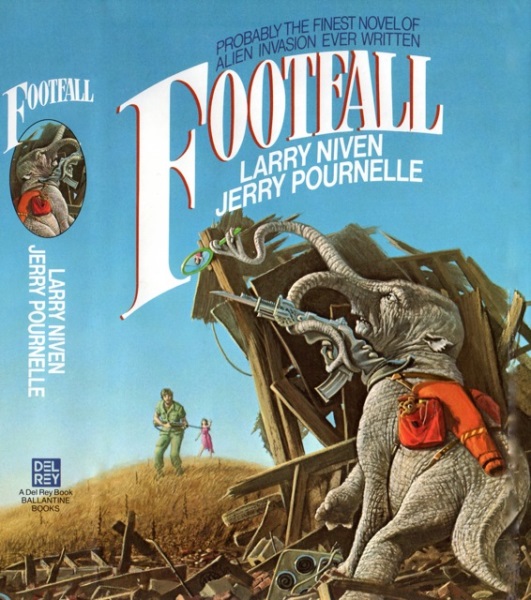
- Footfall
Larry Niven & Jerry Pournellestandalone novel1985
similar bysurvivaltenseour worldscience fictioncontemporarywar+1 more
When aliens travel to Earth from Alpha Centauri, differences between alien and human psychology result in an unprovoked invasion, and the resulting resistance results in the aliens' use of a devastating weapon.
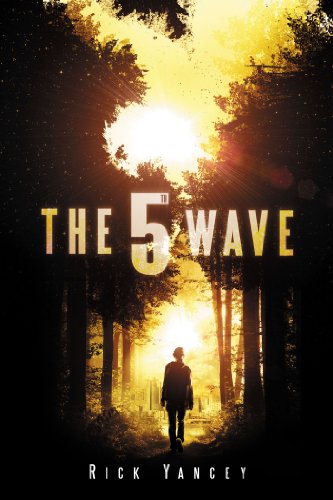
- The 5th Wave
series4 books2013
similar bysurvivaltensescience fictionyoung adultnear future+2 more
Rick Yancey's The 5th Wave opens after a series of escalating alien attacks has already devastated Earth's population and infrastructure, following sixteen-year-old survivor Cassie Sullivan as she searches for her younger brother while trying to work out who, among the remaining humans, can still be trusted. The trilogy is young-adult science fiction that treats its alien-invasion premise as a survival and paranoia story more than a war story.
- Tunnel in the Sky
Robert A. Heinleinstandalone novel1955
similar bysurvivaladventuroustensescience fictionyoung adultcoming of age
As the final test of a survivalist/explorer class, teenagers are dumped on an alien planet to use their skills while awaiting pickup. But something has gone wrong, and they find they are on their own.
- Have Space Suit - Will Travel
Robert A. Heinleinstandalone novel1958
similar bysurvivaladventuroustensescience fictionyoung adultnear future+1 more
From the back cover of the Del Rey 9th printing: "Skyjacked - Everything happened at once. One minute Kip Russell was walking about in his own backyard, testing out an old space suit and dreaming about going to the moon - and the next he was out cold and the captive of an insidious space pirate. The whole thing seemed like a very bad dream until he discovered he wasn't the only prisoner on board. Then the reality of the situation became inescapable. He - along with the daughter of a world-renowned scientist and a beautiful creature from an alien planet - had been skyjacked by a monstrous extraterrestrial and they were on their way to the Moon... a journey toward a fate worse than death!"
- Jumper
series6 books1992
similar byadventuroustensescience fictioncontemporary+4 more
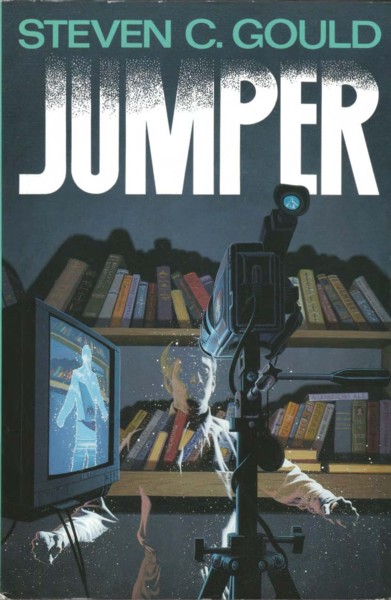
Jumper follows David Rice, a teenager who discovers he can teleport anywhere he's been and uses the power to escape an abusive home, only to find that ability alone doesn't solve the harder problems of finding his absent mother, building an honest relationship, or staying off the radar of people who'd exploit him. Steven Gould's series continues across Reflex, Impulse, and Exo, later following his and his wife's daughter as a second-generation jumper. A 2008 film loosely adapted the first novel.
- Infinity Ring
series8 books2012
similar byadventurousscience fictiontime travelour worldadventure+5 more
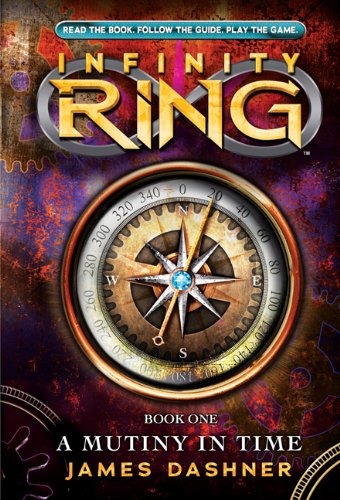
Infinity Ring is a series of young adult science fiction adventure novels written by multiple authors, including James Dashner, Lisa McMann, Matt de la Peña, Matthew J. Kirby, and Jennifer A. Nielsen, in a similar fashion to The 39 Clues. It is focused on the adventures of Dak Smyth, Sera Froste, and Riq Jones as they try to fix changes in time through time travel.
- Departure
A. G. Riddlestandalone novel2014
similar bysurvivaltenseour worldtime travelscience fictionmultiple povcontemporary
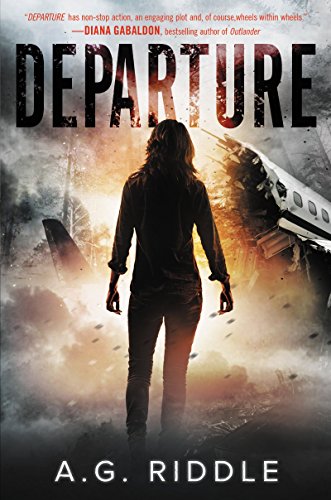
"The world's past and future rests in the hands of five unwitting strangers in this definitive edition of A. G. Riddle's time-traveling, mind-bending speculative thriller. En route to London from New York, Flight 305 suddenly loses power and crash-lands in the English countryside, plunging a group of strangers into a mysterious adventure that will have repercussions for all of humankind.Struggling to stay alive, the survivors soon realize that the world they've crashed in is very different from the one they left. But where are they? Why are they here? And how will they get back home? Five passengers seem to hold clues about what's really going on: writer Harper Lane, venture capitalist Nick Stone, German genetic researcher Sabrina Schroeder, computer scientist Yul Tan, and Grayson Shaw, the son of a billionaire philanthropist.As more facts about the crash emerge, it becomes clear that some in this group know more than they're letting on--answers that will lead Harper and Nick to uncover a far-reaching conspiracy involving their own lives. As they begin to piece together the truth, they discover they have the power to change the future and the past--to save our world. or end it. A wildly inventive and propulsive adventure full of hairpin twists, Departure is a thrilling tale that weaves together power, ambition, fate, memory, and love, from a bold and visionary talent"--
- Future Shock (Elizabeth Briggs)
series3 books2016
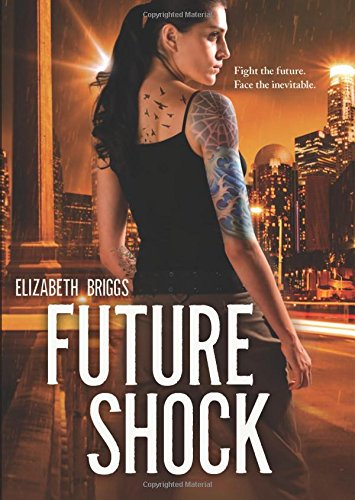
similar bytenseour worldscience fictiontime travelyoung adultnear future+3 more
- The Obernewtyn Chronicles
series9 books1987
similar byscience fictionyoung adult+6 more
The Obernewtyn Chronicles is a series of science fiction and fantasy novels by Australian author Isobelle Carmody. The series has a post apocalyptic setting and depicts a world long after its destruction by a global nuclear holocaust.
- The Caretaker Trilogy
series3 books2006
similar bytenseour worldscience fictionyoung adulttime travelcoming of agenear future+3 more
The Caretaker Trilogy is a series of science fiction thrillers with an ecological theme, written for young adults by David Klass. The first book in the series, Firestorm (2006), was the first book ever endorsed by Greenpeace and was praised by critics for its combination of entertainment value and environmental message, garnering an American Library Association (ALA) Best Book citation, a starred review from Publishers Weekly, and a favorable review by the New York Times Book Review. The story focuses on Jack Danielson, a teenager sent back from the future to save the world's oceans. Whirlwind, the second book in the Caretaker Trilogy, tells the story of Jack's efforts to save the Amazon rainforest; published in March 2008 by Farrar, Straus and Giroux. The third book in the trilogy is Timelock, published in 2009.
- Our Children's Children
Clifford D. Simakstandalone novel1974
similar bysurvivaltenseour worldscience fictiontime travelcontemporary
From the back cover of the first DAW printing: "They were our children's children, and they came one day from nowhere - walking through holes in the air into our world. By means of one-way time tunnels, they fled the ravening beasts with teeth, claws and tentacles, that reproduced like bacteria and were intelligent. They fled to escape the uncontrolled horror of their own far future, and we, their distant ancestors, housed and fed and comforted them, content in their assurance that the tunnel was securely guarded from the beasts, whatever or whoever they were. But then somebody up there slipped and the beasts were abroad..."
- The Eternal Enemy
Christopher Pikestandalone novel1993
similar bysurvivaltenseour worldscience fictiontime travelyoung adultcontemporaryprophecy
A VCR that could tape tomorrow's news. Rela has just bought herself a new VCR. She sets the machine to tape a movie she plans to show at a party she is throwing. But instead of the movie she gets the news - tomorrow's news. Soon Rela is regularly recording next week's news, even what is to happen in the far future. It's fun, at first, until she sees herself on the news. And learns that there is no future for her. But can she change destiny? Can Rela survive what is meant to be?
- Left Behind: The Kids
series40 books1998
part of Left Behind
similar bysurvivaltenseour worldscience fictionyoung adultnear future+2 more
Left Behind: The Kids is a series of young adult speculative fiction novellas based on the Left Behind series, published by Tyndale House from 1998 to 2005. Written by Jerry B. Jenkins, Tim LaHaye, with uncredited contributions from Chris Fabry, The Kids follows a group of young Christians as they experience the Rapture and Great Tribulation.
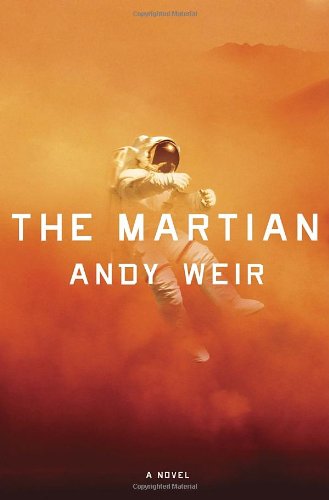
- The Martian
series2 books2012
similar bysurvivaltensescience fictionour worldnear future+1 more
Andy Weir's novel The Martian, first self-published in 2011 before a commercial re-release, follows astronaut Mark Watney after he is stranded alone on Mars when his crew presumes him dead and departs. Using scientific improvisation and dark humor, Watney works to keep himself alive long enough for a rescue to reach him. It is a single, self-contained survival story.
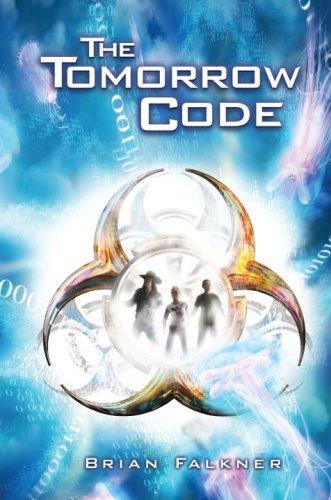
- The Tomorrow Code
Brian Falknerstandalone novel2008
similar bysurvivaladventuroustensescience fictiontime travelyoung adultnear future
THE END OF THE WORLD started quietly enough for Tane Williams and Rebecca Richards. . . .Tane and Rebecca aren't sure what to make of it--a sequence of 1s and 0s, the message looks like nothing more than a random collection of alternating digits. Working to decode it, however, Tane and Rebecca discover that the message contains lottery numbers . . . lottery numbers that win the next random draw! Suddenly Tane and Rebecca are rich, but who sent the numbers? And why? More messages follow, and slowly it becomes clear--the messages are being sent back in time from Tane and Rebecca's future. Something there has gone horribly wrong, and it's up to them to prevent it from happening. As they follow the messages' cryptic instructions, Tane and Rebecca begin to suspect the worst--that the very survival of the human race may be at stake.From the Hardcover edition.
- The Guardians of Time
series4 books2002
similar byadventuroustenseour worldtime travelyoung adultcontemporary+2 more
Guardians of Time is a trilogy of novels written by Marianne Curley. The plot of the trilogy consists of the Guardians of Time, trying to protect the past, present, and future by traveling into the past to thwart their enemies, and the Order of Chaos, who are trying to change past events to give themselves more power.