Loreful
HomeDiscover
Search series, authors…⌘K
Loreful

Reading orders for SF/F series and shared universes — with your place kept in every one.

Explore

UniversesSeriesWorksAuthorsAtlas

Help

FAQAboutSite map

Account & legal

Sign inCreate accountPrivacyTerms

Data

Built on ISFDB, Wikipedia, Wikidata and Open Library. Curated reading orders carry their reasoning on the page; the rest follow publication order. Data sources & licenses

© Loreful · data: ISFDB · CC BY

More like Timetracks

anchored on:science fictiontime travelshort story cycleour worldadventurous

but

Mood

The mood the book leaves you in.

  • The reading experience is propelled by journeys, exploration, and physical risk; excitement and forward momentum dominate over dread or introspection.
  • Joy and loss are deliberately mixed; the resolution grants characters something real while taking something else away, leaving warmth and sorrow together.
  • The book demands work from the reader — dense prose, difficult structure, unfamiliar ideas, or morally uncomfortable material — as part of its intended effect.
  • Grim events, cruelty, or despair dominate the atmosphere, and the book does not soften them with comfort or comic relief.
  • The atmosphere is quietly unsettling — wrongness, unease, and the uncanny pervade the book without necessarily escalating into overt horror.
  • The book is built to move the reader; character feeling is foregrounded and major scenes aim at a strong emotional response.
  • Humor is a primary aim and the prose plays for laughs — comic situations, wit, or dialogue produce sustained comedy, not occasional levity.
  • The book insists that things can improve; effort and decency are shown to matter, and the arc bends toward better outcomes even through hardship.
  • The book teaches as it goes — real facts, history, science, or craft are conveyed in enough depth that learning is part of the reading experience.
  • The book is designed to uplift and motivate, presenting perseverance or achievement in a way that invites the reader to aspire or act.
  • The overall register is cheerful and easygoing; stakes are kept gentle and the book avoids dwelling on pain or dread.
  • Withheld information drives the experience; the book sustains enigmas and secrets the reader wants resolved, whatever its genre.
  • The book is contemplative and inward-looking, giving more weight to thought, memory, and meaning than to external events.
  • The book works as comfort reading — low tension, a soothing pace, and an atmosphere the reader can unwind in.
  • Grief, loss, or melancholy set the dominant register, and the book lets sorrow stand rather than resolving it into comfort.
  • Sustained suspense is the point; the book keeps the reader braced for what happens next through danger, pressure, or impending revelation.
  • Playful invention and charm define the register — fanciful conceits, light absurdity, and a narration that delights in its own oddity.

About

What the story runs on.

  • Stories in which extraterrestrial beings are central — as characters, cultures, or the object of the plot.
  • Stories about venturing into space to explore — survey missions, astronauts, and the frontier of the unknown beyond Earth.
  • Stories structured as a quest — a journey undertaken to find, deliver, or destroy something of great import.
  • Stories in which staying alive against nature, catastrophe, or scarcity is the central problem.
  • Stories of lovers kept apart by law, family, faith, or station, where the obstacle to love is the plot.
  • Stories in which a friendship — its making, testing, or loss — is the emotional center.
  • Stories of growing up — a young protagonist crossing from childhood into adult knowledge and responsibility.
  • Stories about who a character truly is — self-discovery, doubled lives, and the search for a self.
  • Stories in which a buried family truth — hidden parentage, crimes, or shames — surfaces and reorders the present.
  • Stories driven by maneuvering for power — factions, conspiracies, and statecraft conducted in shadow.
  • Stories in which war itself is the subject — combat, occupation, and what warfare does to soldiers and civilians.
  • Stories organized around investigating a killing — the case, the clues, and the pursuit of the killer, in any genre's clothing.

Shelf

Where it sits in the library.

    • Fiction built on magic or other supernatural elements that have no scientific explanation.
    • Secondary-world fantasy at large scale, where the fate of nations or the world turns on the protagonists' struggle.
    • Fantasy set in a recognizably modern city or contemporary world where the supernatural intrudes on everyday life.
    • Fantasy that blends in horror's atmosphere and imagery, keeping a fantastical frame around grim or frightening material.
    • Action-driven fantasy following warriors or rogues with personal stakes against sorcerous threats, rather than world-spanning conflicts.
    • Fantasy set in a real historical period or a close analogue of one, with magic woven into the era.
    • Fantasy in which protagonists cross from the ordinary world into another world through a portal or similar passage.
    • Fiction that retells or reworks a traditional fairy tale in a new form or setting.
    • Fantasy drawing directly on myths, legends, and folklore, retelling them or building on their figures and logic.
    • Fantasy of ghosts, vampires, shapeshifters, psychics, and similar phenomena, usually set in an otherwise ordinary world.
    • Fiction mixing science-fictional trappings with overtly magical or impossible elements in one setting.
    • Low-stakes fantasy emphasizing comfort, community, and everyday pleasures over conflict and peril.
    • Speculative fiction of pervasive moral ambiguity, violence, and cynicism that rejects heroic conventions — fantasy and SF alike.
      • Fiction that extrapolates from science and technology — future societies, space travel, or speculative inventions — within at least nominally natural laws.
      • Science fiction of interstellar scope — starships, galactic polities, and adventure across star systems.
      • Science fiction committed to scientific rigor, where technical plausibility constrains the story.
      • Science fiction centered on armed forces and warfare, told largely from a military point of view.
      • Science fiction of networked, corporate-dominated near futures, pairing high technology with social decay.
      • Science fiction styled on nineteenth-century steam-powered technology, often in a Victorian or pseudo-Victorian setting.
      • Fiction depicting an oppressive or catastrophic society, presented as a warning.
      • Fiction set after civilization's collapse, following survivors in the ruins of the old world.
      • Fiction in which characters move between past and future, and the mechanics or consequences of that travel drive the plot.
      • Fiction exploring a world where a historical event went differently and history diverged from ours.
      • Science fiction about humanity's first encounter and communication with an alien intelligence.
      • Science fiction in which extraterrestrial forces attack or occupy Earth and humanity resists.
      • Fiction whose primary aim is to frighten or unsettle the reader through dread, menace, or the monstrous.
      • Horror of vast, indifferent, incomprehensible entities before which humanity is insignificant, in the Lovecraft tradition.
      • Horror of decaying houses, buried family secrets, and oppressive atmosphere in the Gothic literary tradition.
      • Horror centered on hauntings and the returning dead.
      • Horror located in the mind — paranoia, obsession, and unreliable perception rather than external monsters.
      • Horror built around the reanimated dead and survival amid their outbreaks.
      • Horror defined by explicit, transgressive gore that refuses to cut away from violence.
      • Speculative fiction of the strange and uncanny that resists both natural explanation and standard genre categories.
      • Fiction organized around solving a crime or puzzle, typically following an investigator toward the identification of a culprit.
      • A puzzle-first mystery that lays out clues so the culprit's identity can be deduced before the reveal.
      • Crime fiction of moral ambiguity, fatalism, and hard-edged style, set among the corrupt and the doomed.
      • A mystery following the realistic routines of police work — forensics, interviews, and case-building.
      • A gentle mystery with an amateur sleuth, a small community, and violence kept off the page.
      • A mystery set in a past era, where the investigation works within that period's methods and society.
      • Fast-paced fiction driven by imminent danger, pursuit, or high-stakes conspiracy, built to sustain tension.
      • A thriller of espionage — agents, tradecraft, and intelligence services in conflict.
      • A thriller centered on lawyers and the courtroom, where litigation carries the suspense.
      • A thriller driven by detailed contemporary or near-future technology, often military or scientific.
      • A thriller whose tension comes from mental states and manipulation between characters rather than external action.
      • Fiction whose central plot is a romantic relationship and its development toward an emotionally satisfying resolution.
      • Romance in which one or both partners are supernatural beings, blending fantasy elements into the love story.
      • A fantasy-romance hybrid in which the romantic arc and the fantasy plot carry equal weight.
      • Romance set in a past era, with courtship shaped by the period's society and manners.
      • Romance set in the present day, without supernatural or historical elements.
      • Fiction set in a real past period, where the historical setting materially shapes characters and events.
        • General and literary fiction emphasizing prose style, character interiority, or formal ambition over genre plot conventions.
        • Fiction in a realistic world where magical events occur and are treated as ordinary, in the tradition of Latin American literature.
        • Fiction that ridicules people, institutions, or society in order to criticize them.
        • Fiction of dreamlike, irrational imagery and logic that breaks from realistic representation.
        • Fiction that plays with narrative convention through metafiction, fragmentation, and self-reference.
        • Fiction propelled by journeys, exploration, and physical peril, where action and survival carry the plot.
        • Adventure fiction of ships and seafaring — naval engagements, voyages, and life at sea.
        • Fiction of the American frontier West — gunmen, ranchers, and lawmen, typically in the late nineteenth century.
        • Fiction centered on soldiers, campaigns, and the experience of warfare, historical or imagined.
          • Fiction written primarily to amuse, using comedic situations, wit, or parody as its organizing principle.
            • Multi-generational fiction following a family or dynasty across decades, with inheritance and kinship as the through-line.
              • Fiction whose world runs on explicit game mechanics — levels, stats, and skills that characters can see and exploit.
                • Fiction about costumed or superpowered heroes and their conflicts with comparable villains.

                Practical

                How long a commitment, whether it stands alone, and whether it has finished.

                Tap a chip to ask for it · tap again to rule it out · once more to clear. Numbers show what would be left.

                • Cover of The Goblin Reservation
                  The Goblin Reservation

                  Clifford D. Simak · standalone novel · 1968

                  similar byadventurousaliensour worldscience fictiontime travel+1 more

                  The Goblin Reservation is a 1968 science fiction novel by American writer Clifford D. Simak, featuring an educated Neanderthal, a biomechanical sabertooth tiger, aliens that move about on wheels, a man who time-travels using an unreliable device implanted in his brain, meeting a ghost, trolls, banshees, goblins, a dragon and even Shakespeare himself. The Goblin Reservation was a Hugo Award nominee in 1969 and was originally serialized in Galaxy Science Fiction magazine.

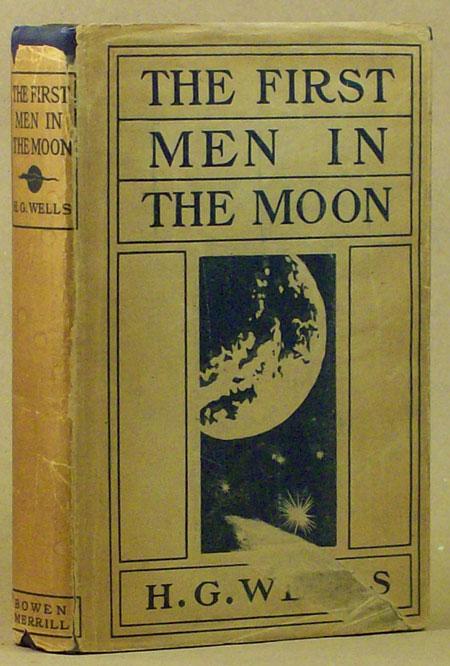
                • Cover of Cavor
                  Cavor

                  series · 2 books · 1901

                  similar byadventurousaliensspace explorationscience fiction

                  H. G. Wells's 1901 novel The First Men in the Moon is narrated by the businessman Bedford, who joins the reclusive scientist Cavor after Cavor invents cavorite, a gravity-blocking substance that carries the two men to the Moon. There they discover a vast underground civilization of insect-like Selenites, and the expedition that began as a hunt for lunar minerals turns into an encounter with an alien society. It is a standalone novel; later editions crediting Stephen Baxter add an introduction or afterword rather than a continuing story.

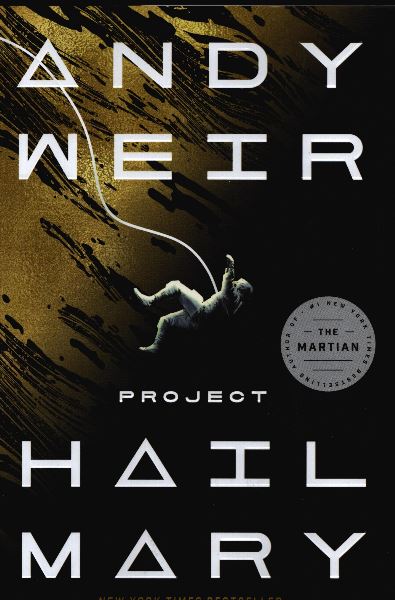
                • Cover of Project Hail Mary
                  Project Hail Mary

                  Andy Weir · standalone novel · 2021

                  similar byadventurousaliensspace explorationour worldscience fiction

                  Project Hail Mary is a 2021 hard science fiction novel by American writer Andy Weir. It centers on science teacher and former biologist Ryland Grace, who wakes up aboard a spacecraft, afflicted with amnesia.

                • Cover of Time Traders
                  Time Traders

                  series · 7 books · 1958

                  similar byadventurousscience fictiontime travel+2 more

                  The Time Traders opens Andre Norton's Cold War-flavored science fiction series, following an American agent recruited to travel into the past and counter a Soviet operation built around ancient technology unearthed from a vanished civilization. Norton, later joined by collaborators Sherwood Smith and P. M. Griffin, expanded the sequence to seven novels published between 1958 and 2002, and revised the opening book herself in 2000. Like several of Norton's other series, it treats leftover technology from a long-gone ancient culture as its central plot engine.

                • Cover of Time for the Stars
                  Time for the Stars

                  Robert A. Heinlein · standalone novel · 1956

                  similar byadventurousspace explorationscience fiction+2 more

                  Explorer spaceships need a way to communicate back to earth in a timely manner when they are light years away. When telepathy is found to have no delay, pairs of twins are hired. One twin stays on Earth to receive reports, and the other twin goes into space.

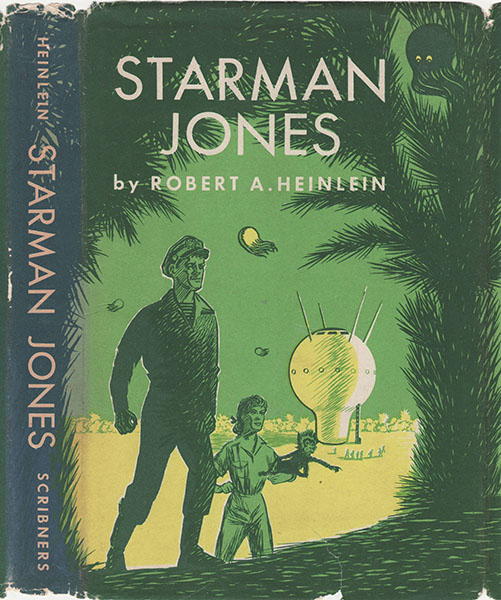
                • Cover of Starman Jones
                  Starman Jones

                  Robert A. Heinlein · standalone novel · 1953

                  similar byadventurousspace explorationscience fiction+2 more

                  Starman Jones, a 1953 science fiction novel by Robert A. Heinlein, features a farm boy who wants to go to the stars. Charles Scribner's Sons published the book as part of the Heinlein juveniles series.

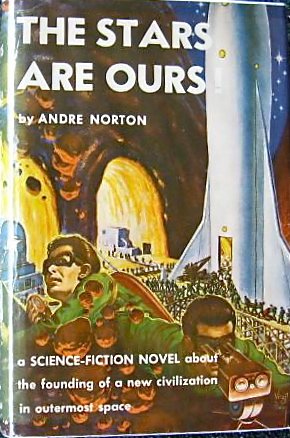
                • Cover of Pax / Astra
                  Pax / Astra

                  series · 2 books · 1954

                  completed

                  similar byadventurousscience fiction+3 more

                  Andre Norton's The Stars Are Ours! (1954) and its sequel Star Born (1957) follow a group of scientists and their families who flee a repressive future Earth to colonize a distant world they name Astra, and then the next generation, who must contend with that world's original inhabitants. Star Flight appears to be a later omnibus or reissue rather than a third original novel.

                • Cover of Ringworld
                  Ringworld

                  series · 5 books · 1970

                  part of Known Space

                  similar byadventurousaliensspace explorationscience fiction

                  The Ringworld series is a series of science fiction novels written by American author Larry Niven. It is part of his Known Space series of stories. Its backdrop is the Ringworld, a giant artifact 3 million times the surface area of Earth circling a star. The series is composed of four standalone science fiction novels, the original award-winning book and its three sequels:1970: Ringworld 1979: The Ringworld Engineers 1996: The Ringworld Throne 2004: Ringworld's Children

                • Cover of The High Crusade
                  The High Crusade

                  Poul Anderson · standalone novel · 1960

                  similar byadventurousaliensspace explorationscience fiction+1 more

                  The High Crusade is a science fiction novel by American writer Poul Anderson, about the consequences of an extraterrestrial scoutship landing in medieval England. Poul Anderson described the novel as "one of the most popular things I've ever done, going through many book editions in several languages."

                • Cover of Roadmarks
                  Roadmarks

                  Roger Zelazny · standalone novel · 1979

                  similar byadventurousour worldtime travelscience fiction

                  Roadmarks is a science fantasy novel by American author Roger Zelazny, written during the late 1970s and published in 1979.

                • Cover of Saucer
                  Saucer

                  series · 3 books · 2002

                  similar byadventurousaliensour worldscience fiction+1 more

                  Saucer is Stephen Coonts's techno-thriller trilogy beginning with Saucer (2002), continued in Saucer: The Conquest and Saucer: Savage Planet. It follows the discovery of a functioning craft buried for millennia in the Sahara desert and the test pilots and adventurers who end up flying, and fighting over, it, escalating from a buried desert secret toward wider stakes involving hostile outside interests.

                • Cover of This Immortal
                  This Immortal

                  series · 2 books · 1966

                  similar byadventurousaliensour worldscience fiction

                  This Immortal is a single science fiction novel by Roger Zelazny, expanded from his 1965 serial ...And Call Me Conrad. In a depopulated future Earth largely toured by an alien race, its long-lived, secretive protagonist Conrad Nomikos is assigned to guide and protect a visiting alien across the ruins of Greece and Egypt, uncovering old grudges and assassination plots along the way. The novel shared the 1966 Hugo Award for Best Novel with Frank Herbert's Dune.

                • Cover of Time Storm
                  Time Storm

                  Gordon R. Dickson · standalone novel · 1977

                  similar byadventurousour worldscience fictiontime travel+1 more

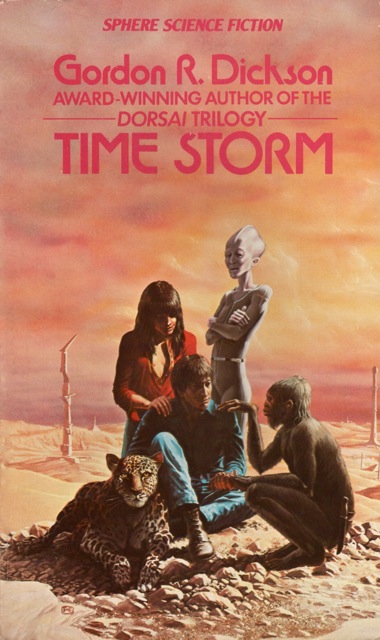
                  A time storm has devastated the Earth, and only a small fraction of humankind remains. From the rubble, three survivors form an unlikely alliance: a young man, a young woman, and a leopard. "A masterful science fiction story told by a masterful science fiction writer". -- Milwaukee Journal. A time storm strikes the Earth. The Earth remains, but different parts of the Earth are in different eras. Travel between the different zones is thought to be impossible. The main character, Marc Despard, resolves to fight the time storm. After some struggles, he assembles a small band of people, including one alien, to help him try to understand what has happened and to stop the time storm. He has 2 extraordinary relationships with a older teenaged girl who is speechless for the first part of the book (she was "struck dumb" by the time storm) and with, believe it or not, a leopard. Dickson's writing makes the extraordinary seem quite normal. Ultimately, after being harried by a Mad Max-like group of survivors, he uses a machine found in a different era of time to bring his small band of followers into the future so that he can find those who are trying to fight the time storm. He convinces those future beings that he is capable of fighting the time storm, and ultimately stops it, and gets the girl in the end.

                • Cover of Pip & Flinx
                  Pip & Flinx

                  series · 18 books · 1972

                  part of Humanx Commonwealth

                  similar byadventurousaliensscience fiction+1 more

                  The Pip & Flinx novels follow Flinx, a young man with an unusual, mysterious origin, and his ever-present animal companion Pip, across Alan Dean Foster's Humanx Commonwealth setting. Beginning with The Tar-Aiym Krang (1972) — chronologically the second entry, since Foster later filled in Flinx's earlier life — the series grew to fifteen novels published between 1972 and 2017, mixing planetary adventure with a slowly unfolding personal mystery.

                • Cover of Barsoom
                  Barsoom

                  series · 53 books · 1917

                  similar byadventurousscience fiction+1 more

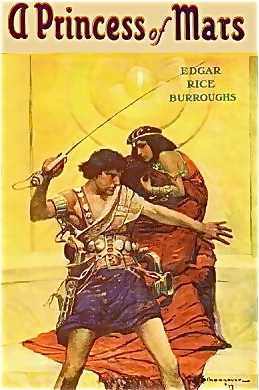
                  Barsoom is a fictional representation of the planet Mars created by American pulp fiction author Edgar Rice Burroughs. The first Barsoom tale was serialized as Under the Moons of Mars in pulp magazine The All-Story from February to July 1912 and published compiled as a novel as A Princess of Mars in 1917. It features John Carter, a late-19th-century American Confederate veteran who is mysteriously transported from Earth to the dying world of Mars where he meets and romances the beautiful Martian princess Dejah Thoris. Ten sequels followed over the next three decades, further extending his vision of Barsoom and adding other characters.

                • Cover of Whipping Star
                  Whipping Star

                  Frank Herbert · standalone novel · 1970

                  similar byadventurousaliensscience fiction+1 more

                  From Amazon: In the far future, humankind has made contact with numerous other species: Gowachin, Laclac, Wreaves, Pan Spechi, Taprisiots, and Caleban, and has helped to form the ConSentiency to govern among the species. After suffering under a tyrannous pure democracy, the sentients of the galaxy find the need for a Bureau of Sabotage (BuSab) to slow the wheels of government, thereby preventing it from legislating recklessly. BuSab is allowed to sabotage and harass the governmental, administrative, and economic powers in the ConSentiency. Private citizens must not be harassed, and vital functions of society are also exempt. Jorj X. McKie is a born troublemaker who has become one of BuSab's best agents. Drafted for the impossible task of establishing meaningful communication with an utterly alien entity who defies understanding, McKie finds himself racing against time to prevent a mad billionairess from wiping out all life in the ConSentiency.

                • Cover of The Apocalypse Troll
                  The Apocalypse Troll

                  David Weber · standalone novel · 1999

                  similar byadventurousaliensour worldscience fictiontime travel

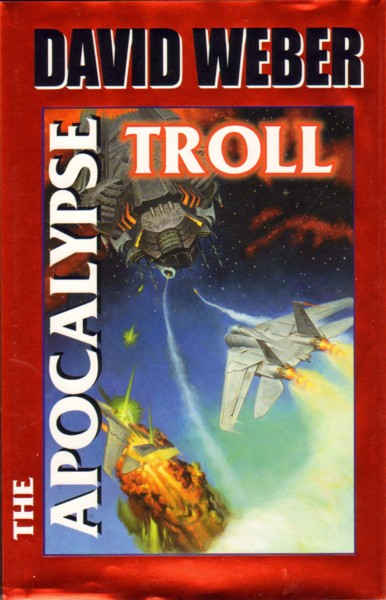
                  The Apocalypse Troll is a novel by American writer David Weber, first published by Baen Books in January 1999. It is a story about time travel and alien invasion.

                • Cover of Have Space Suit - Will Travel
                  Have Space Suit - Will Travel

                  Robert A. Heinlein · standalone novel · 1958

                  similar byadventurousaliensspace explorationscience fiction

                  From the back cover of the Del Rey 9th printing: "Skyjacked - Everything happened at once. One minute Kip Russell was walking about in his own backyard, testing out an old space suit and dreaming about going to the moon - and the next he was out cold and the captive of an insidious space pirate. The whole thing seemed like a very bad dream until he discovered he wasn't the only prisoner on board. Then the reality of the situation became inescapable. He - along with the daughter of a world-renowned scientist and a beautiful creature from an alien planet - had been skyjacked by a monstrous extraterrestrial and they were on their way to the Moon... a journey toward a fate worse than death!"

                • Cover of Childhood's End
                  Childhood's End

                  Arthur C. Clarke · standalone novel · 1953

                  similar byaliensour worldscience fiction+1 more

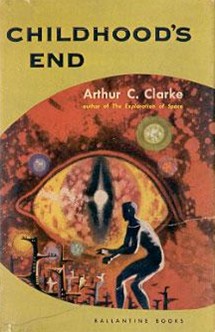
                  Childhood's End is a 1953 science fiction novel by the British author Arthur C. Clarke. The story follows a peaceful alien invasion of Earth by mysterious Overlords, whose arrival begins decades of apparent utopia under indirect alien rule, at the cost of human identity and culture.

                • Cover of Gaean
                  Gaean

                  series · 3 books · 1979

                  completed

                  similar byadventurousaliensscience fiction+1 more

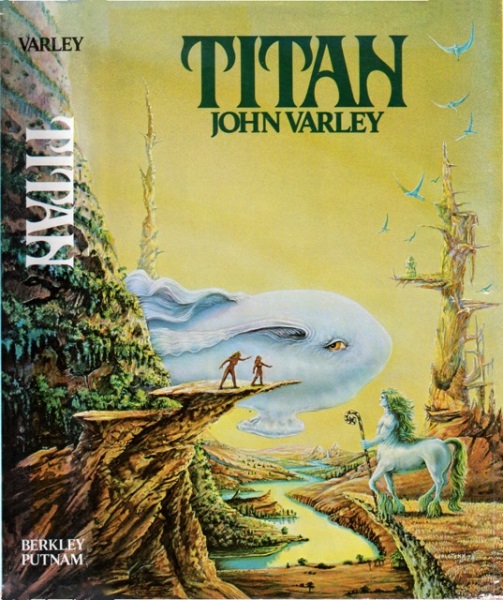
                  The Gaea Trilogy consists of three science fiction novels by John Varley. The stories tell of humanity's encounter with a living being in the shape of a 1,300 km diameter Stanford torus, inhabited by many different species, most notably the centaur-like Titanides, in orbit around the planet Saturn.

                • Cover of Uplift Universe
                  Uplift Universe

                  universe · 13 books · 1980

                  Start hereUplift · Start here

                  similar byadventurousaliensscience fiction+1 more

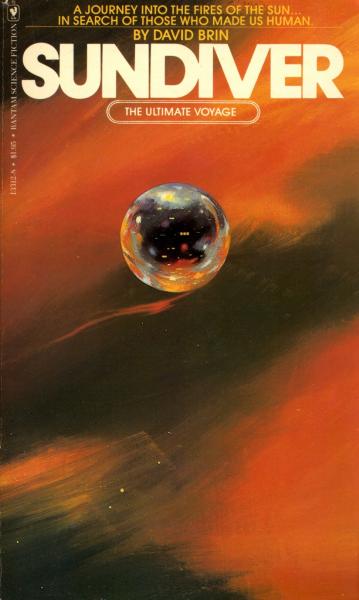
                  No species, the Galactics insist, ever climbs to sapience alone. For a billion years the elder races have "uplifted" their chosen clients — reshaping some promising animal, gene by patient gene, into a thinking being, then binding it through long ages of indenture. Patron lifts client; client one day becomes patron; and every lineage traces back through the vast Galactic Library to the vanished Progenitors who began it all. Then a ragged band of primates arrives at the stars with no patron to claim them — wolflings, self-made, an affront to a hundred thousand years of law — and worse, these humans have already started uplifting neighbors of their own: the neo-dolphins and neo-chimpanzees of Earthclan. David Brin builds this galaxy across two trilogies. The first — Sundiver, the Hugo- and Nebula-winning Startide Rising, and the Hugo-winning The Uplift War — sends an expedition into the Sun, then follows the dolphin-crewed survey ship Streaker as it flees a discovery that sets fanatical star-clans at war, and a chimp-led resistance on an invaded colony world. The second sequence, Uplift Storm — Brightness Reef, Infinity's Shore, Heaven's Reach — descends to Jijo, a forbidden world where six fallen races hide as illegal settlers, and draws every loose thread toward a reckoning. Short fiction fills the margins. This is space opera with an ecologist's conscience: teeming with invented biologies, wry cross-species banter, and real unease about what we owe the minds we make. Begin with Startide Rising — the saga's beating heart, and readable on its own — or take Sundiver first and read straight through in publication order.

                • Cover of The Colors of Space
                  The Colors of Space

                  Marion Zimmer Bradley · standalone novel · 1963

                  similar byadventurousaliensspace explorationscience fiction

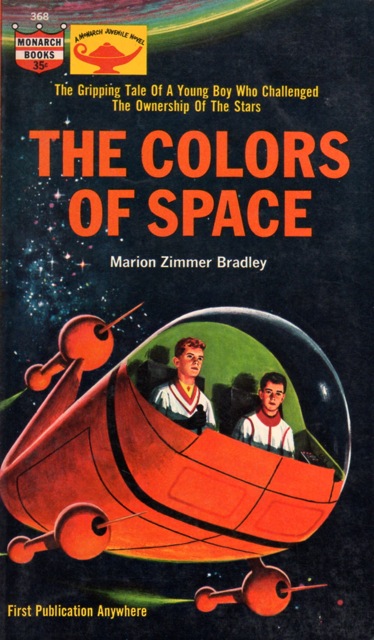
                  The Lhari seem peaceful and friendly, but they go to some lengths to protect their monopoly on faster-than-light travel. One young man is sent to discover their secrets.

                • Cover of Space Beagle
                  Space Beagle

                  series · 5 books · 1939

                  completed

                  similar byadventurousaliensspace explorationscience fiction

                  The Voyage of the Space Beagle is a 1950 fix-up novel by A. E. van Vogt, stitched together from four previously published pulp stories into a single continuous account of the exploration ship Space Beagle's encounters with a series of dangerous alien life forms. Its episodic, crew-versus-monster structure reads as a loose sequence of adventures rather than one continuous plot.

                • Cover of The Stonehenge Gate
                  The Stonehenge Gate

                  Jack Williamson · standalone novel · 2005

                  similar byadventurousspace explorationscience fiction+2 more

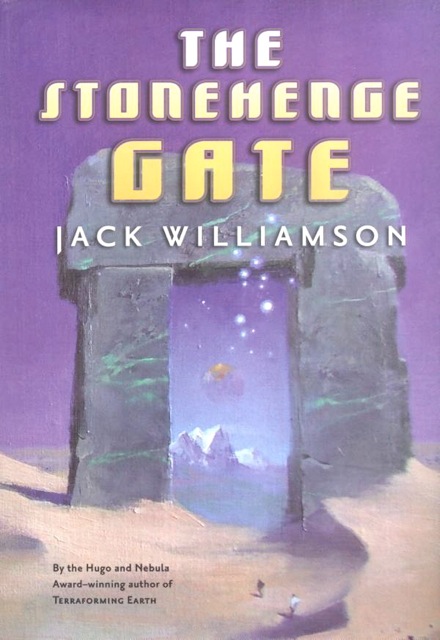
                  Stumbling on ancient stones in the Sahara Desert, four adventurous excavators and poker buddies realize that they have discovered a gateway to other worlds, from technologically advanced planets to primitive civilizations.