More like Titans
anchored on:science fictionnorth americanear futureyoung adultadventurecoming of age+2 more
but
- Have Space Suit - Will Travel
Robert A. Heinleinstandalone novel1958
similar bynear futurescience fictionadventuroustensenorth americayoung adult+1 more
From the back cover of the Del Rey 9th printing: "Skyjacked - Everything happened at once. One minute Kip Russell was walking about in his own backyard, testing out an old space suit and dreaming about going to the moon - and the next he was out cold and the captive of an insidious space pirate. The whole thing seemed like a very bad dream until he discovered he wasn't the only prisoner on board. Then the reality of the situation became inescapable. He - along with the daughter of a world-renowned scientist and a beautiful creature from an alien planet - had been skyjacked by a monstrous extraterrestrial and they were on their way to the Moon... a journey toward a fate worse than death!"
- The Thousandth Floor
series3 books2016
similar bynorth americanear futurescience fictiontenseclass conflictyoung adult+2 more
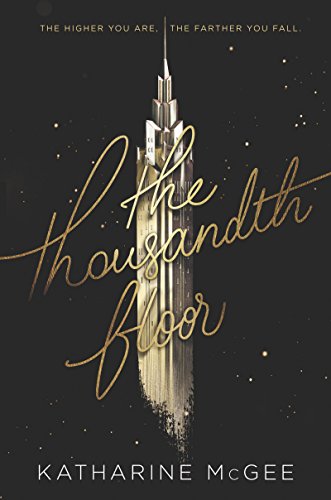
Katharine McGee's trilogy imagines Manhattan in 2118 as a single thousand-story tower housing every stratum of society, following five teenagers whose ambitions collide as they climb toward, or fall from, its highest floors. Across The Thousandth Floor, The Dazzling Heights, and The Towering Sky, addiction, surveillance, genetic privilege, and family betrayal play out as soap-opera drama in a meticulously built near-future setting.
- Z for Zachariah
Robert C. O'Brienstandalone novel1975
similar bynear futurecoming of agescience fictiontensenorth americayoung adult
Sixteen-year-old Ann Burden, on an Amish family farm in an isolated valley, believes she is the only survivor of nuclear war and nerve gas. One day a man arrives in a "safe-suit" that he and others have recently developed.
- The Star Beast
Robert A. Heinleinstandalone novel1954
similar bynear futurecoming of agescience fictionadventurousnorth americayoung adult
A talking alien pet has grown to the size of a small dinosaur. She repeatedly gets her teenage owner in trouble whenever she leaves the backyard, but he continues to care for her, as did his father and grandfather before him. When an alien delegation lands on Earth and demands custody, he fights to protect her.
- Friday
Robert A. Heinleinstandalone novel1982
similar bynorth americanear futurescience fictionadventuroustense
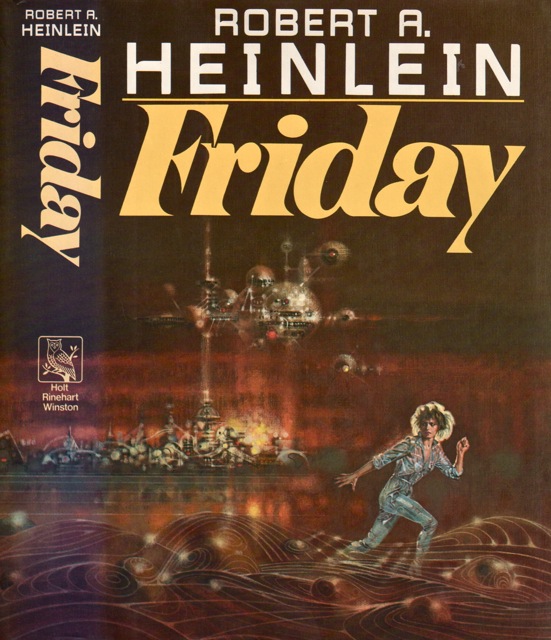
Friday is a 1982 science fiction novel by American writer Robert A. Heinlein. It is the story of a female "artificial person", the eponymous Friday, genetically engineered to be stronger, faster, smarter, and generally better than normal humans. Artificial humans are widely resented, and much of the story deals with Friday's struggle both against prejudice and to conceal her enhanced attributes from other humans. The story is set in a Balkanized 21st century, in which the nations of the North American continent have been split up into a number of smaller states.
- River Rats
Caroline Stevermerstandalone novel1992
similar bynorth americanear futurecoming of agescience fictionadventurousadventureyoung adult
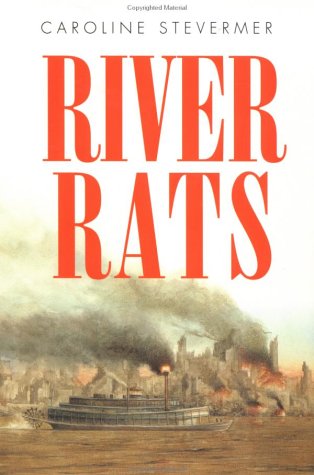
A group of young musicians ride a refurbished riverboat down the Mississippi in a post-holocaust America, encounter adventures, and change/grow up. Interesting locale and characters. Young adult style.
- Feed
M. T. Andersonstandalone novel2002
similar bynorth americanear futurecoming of agescience fictionyoung adult+1 more
Feed (2002) is a cyberpunk, satirical, dystopian, young-adult novel by M. T. Anderson, focusing on issues such as American hegemony, corporate power, consumerism, information technology, data mining, and environmental decline, with a sometimes sardonic, sometimes somber tone. From the first-person perspective of a teenaged boy, the book takes place in a near-futuristic American culture completely dominated by advertising and corporate exploitation, corresponding to the enormous popularity of internetworking brain implants called feeds.
- Ready Player One
series3 books2011
similar bynear futurescience fictionadventurous+4 more
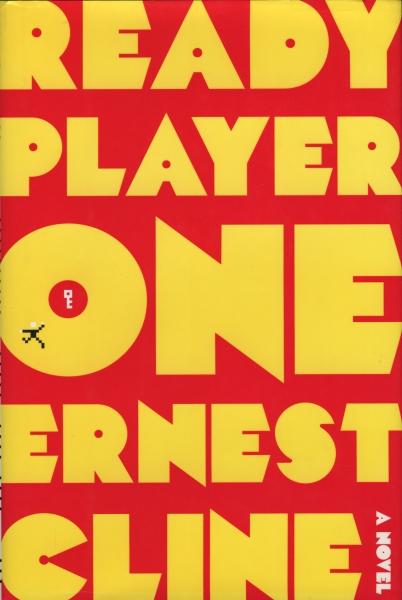
Ernest Cline's Ready Player One (2011) is set in a near-future dystopia where much of humanity escapes into the OASIS, a vast virtual-reality universe, and follows teenager Wade Watts as he chases an Easter egg hidden by the OASIS's late creator in a puzzle-based hunt worth a fortune. The 2020 sequel, Ready Player Two, picks up after Wade has gained control of the OASIS and follows him and his friends into a new quest built around a brain-computer interface the creator left behind.
- Podkayne of Mars
Robert A. Heinleinstandalone novel1963
similar bynear futurecoming of agescience fictionadventurousyoung adult
From the back cover of the Baen 1995 edition: "Meet Podkayne Fries, a thoroughly modern Martian Ms. who thinks that Earth is not really fit for habitation and that humanity evolved in the now-exploded Fifth Planet. Poddy has one goal in life, to be the first female starship captain. She has her strategy all scoped out, and with her determination, looks and I.Q. she'll get there, never you doubt! But all work and no play would make Poddy a Dull Girl, so when a chance comes her way to travel to distant Earth via Venus with her elderly uncle, Poddy jumps at it, even if it does mean having her loathsome little brother along for the trip: Travel, Adventure, the chance to cuddle up (in a nice way) with real spaceship officers and ruthlessly pump their brains - she'll have it all. What Poddy doesn't know is that "Unca Tom" is more than her warmly supportive relative: he is also the Ambassador Plenipotentiary from Mars to the Three Planets Conference (travelling not quite incognito enough) and that certain people will stop at nothing to gain control of his vote - including kidnapping and doing terrible things to sweetly innocent Poddy Fries..."
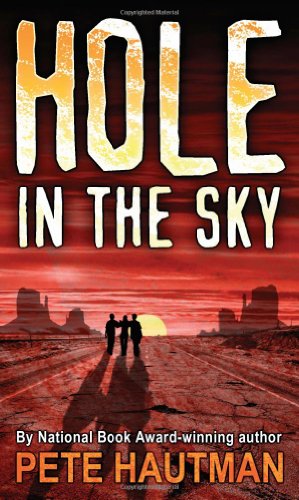
- Hole in the Sky
Pete Hautmanstandalone novel2001
similar bynorth americanear futurescience fictionadventuroustenseadventureyoung adult
"In 2028, a deadly Flu virus ravages the earth. Only one in two thousand survive the virus, and these "Survivors" are rarely left unaffected. By 2038, only 38 million people remain on Earth. Most of them live in small communities, ever fearful of outsiders who might bring the deadly Flu."Ceej Kane lives with his uncle and his Survivor sister Harryette in an abandoned hotel on the rim of the Grand Canyon. His quiet, boring life suddenly becomes a desperate adventure when Uncle and Harryette disappear. Searching for them, Ceej and his only friend, Tim, are attacked by the Kinka, a renegade band of half-mad Survivors who spread the Flu to make more of their own. Worse yet, it appears that Harryette has joined them. Fleeing deep into the Canyon, a narrow land of ghosts and ancient secrets, Ceej and Tim meet Bella, a mysterious Hopi girl. She has been searching the canyon for the Sipapuni, a mystical portal that the Hopi believe leads to another world. Tim thinks Bella is crazy, but Ceej is not so sure. Maybe there is a way out of this Flu-ravaged world. But first they must find out what happened to Uncle, and they must save Harryette from the Kinka -- if she wants to be saved.
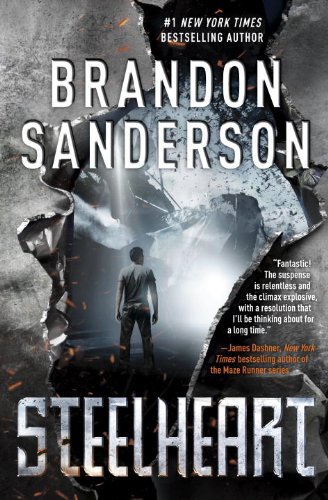
- Reckoners
series6 books2013
similar bynorth americanear futureadventurousscience fictiontenseyoung adult+1 more
The Reckoners is a series of young adult superhero novels written by American author Brandon Sanderson. The series consists of Steelheart (2013), Firefight (2015), Calamity (2016) and Lux (2021). The series depicts a post-apocalyptic world in which the appearance of an orbiting cosmic phenomenon known as Calamity has given random people superhuman powers in apparent defiance of known physical laws, turning them into "Epics". These Epics prey upon or enslave the rest of humanity, causing the collapse of traditional governments. One young man orphaned by a High Epic joins a group that is killing Epics.
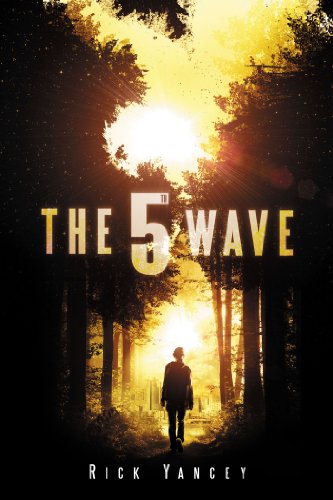
- The 5th Wave
series4 books2013
similar bynorth americascience fictiontensenear futureyoung adult+1 more
Rick Yancey's The 5th Wave opens after a series of escalating alien attacks has already devastated Earth's population and infrastructure, following sixteen-year-old survivor Cassie Sullivan as she searches for her younger brother while trying to work out who, among the remaining humans, can still be trusted. The trilogy is young-adult science fiction that treats its alien-invasion premise as a survival and paranoia story more than a war story.
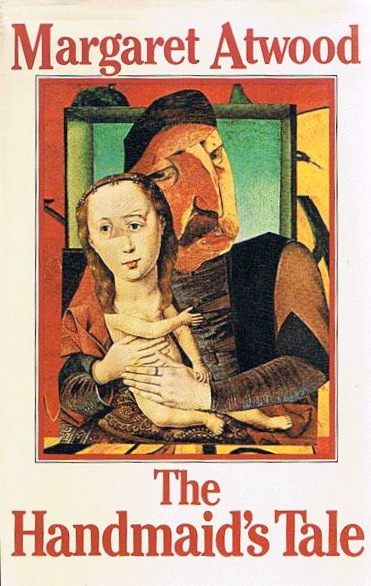
- The Handmaid's Tale
series3 books1985
similar bynorth americanear futurescience fictiontense
The Handmaid's Tale is Margaret Atwood's 1985 novel set in Gilead, a totalitarian theocracy that has overthrown the United States and forces fertile women into reproductive servitude as Handmaids; it is narrated by one such woman, Offred. Atwood returned to the world in her 2019 sequel The Testaments, set fifteen years later and narrated by three women, including the regime's Aunt Lydia. Together the two novels move from Gilead's grip on power toward the first cracks in it.
- Oath of Fealty
Larry Niven & Jerry Pournellestandalone novel1981
similar bynorth americanear futurescience fictiontenseclass conflict
Oath of Fealty is a 1981 novel by American writers Larry Niven and Jerry Pournelle, published originally by Phantasia Press, then by Timescape Books, with numerous reprints. Set in the near future, it involves an arcology, a large inhabited structure, called Todos Santos, which rises above a crime-ridden Los Angeles, California, but has little beyond casual contact with the city. The novel popularized the phrase "think of it as evolution in action", which occurs elsewhere in Niven's books. The novel anticipated the building of the Los Angeles subway. It was included in David Pringle's book Science Fiction: The 100 Best Novels.
- Ship Breaker
series3 books2010
similar byscience fictiontensenorth americanear futureyoung adult+2 more
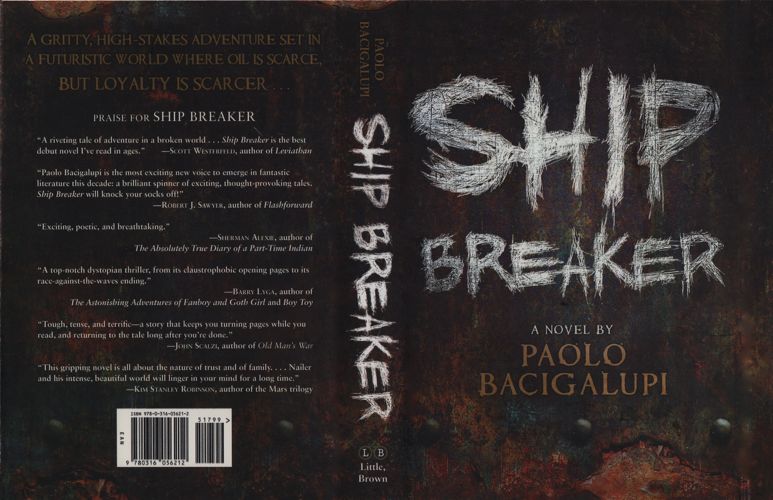
Nailer works a light-crew scavenging copper wire and scrap from beached oil tankers on a Gulf Coast reshaped by rising seas and vanished order, until a wrecked clipper ship washes ashore carrying a half-drowned girl from the wealthy world he'll never belong to. Paolo Bacigalupi's Ship Breaker follows Nailer as helping her pulls him out of his abusive father's orbit and into a much larger, more dangerous game involving her family's fortune. The sequels The Drowned Cities and Tool of War widen the same flooded, resource-scavenging future to new characters and coastlines.
- Stranger in a Strange Land
Robert A. Heinleinstandalone novel1961
similar byscience fictioncoming of agenorth americanear future
Stranger in a Strange Land is a 1961 science fiction novel by the American author Robert A. Heinlein. It tells the story of Valentine Michael Smith, a human who comes to Earth in early adulthood after being born on the planet Mars and raised by Martians, and explores his interaction with and eventual transformation of Terran culture.
- Divergent
series10 books2011
similar bynear futuretensescience fictionnorth americayoung adult+1 more
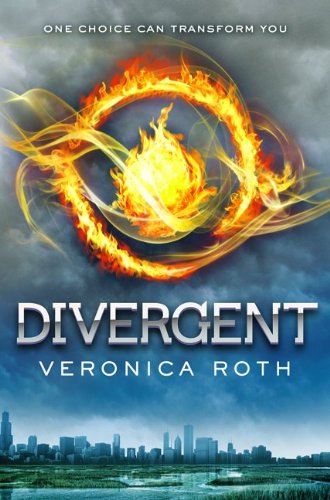
Divergent, also known as The Divergent Series, is a series of young adult dystopian novels by American novelist Veronica Roth set in a post-apocalyptic dystopian Chicago. The trilogy consists of Divergent (2011), Insurgent (2012), and Allegiant (2013). A related book, Four (2014), presents a series of short stories told from the perspective of one of the trilogy's characters, the male love interest Tobias. A later short story, We Can Be Mended (2018), serves as an epilogue five years after the events of the trilogy, again from Tobias/Four's perspective.
- Rocket Ship Galileo
Robert A. Heinleinstandalone novel1947
similar bynear futurecoming of agescience fictionadventurousyoung adult
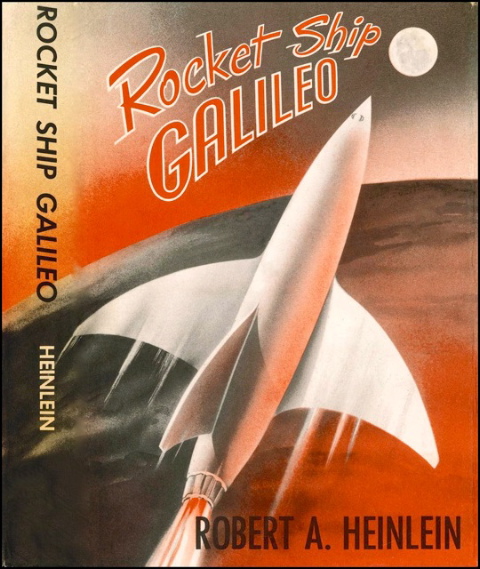
Three teenage boys do backyard experiments on powerful model rockets. An uncle who is an atomic engineer enlists them to make and fly the first rocket to the moon.
- Tripods
series4 books1967
completed
similar byscience fictiontensenear futureyoung adult+2 more
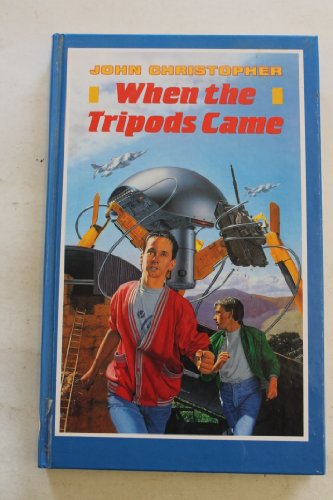
The Tripods is a series of young adult science fiction novels by John Christopher. The series takes place in a post-apocalyptic world where humanity is enslaved by "Tripods"—gigantic three-legged walking machines piloted by an alien race later identified as the "Masters". The first two books were the basis of a science fiction TV series, produced in the United Kingdom in the 1980s.
- Heavy Weather
Bruce Sterlingstandalone novel1994
similar bynorth americanear futurescience fictionadventuroustense
Set in 2031 when global climatology has significantly changed the world's weather patterns, Jane Unger "rescues" her brother Alex from a Mexican clinic and takes him to the Storm Troupe. The troupe, under the leadership of Dr. Jerry Mulcahey, chases tornadoes primarily across northern Texas, gathering data in preparation for tracking the mythical F-6 tornado.
- Tunnel in the Sky
Robert A. Heinleinstandalone novel1955
similar bycoming of agescience fictionadventuroustenseyoung adult
As the final test of a survivalist/explorer class, teenagers are dumped on an alien planet to use their skills while awaiting pickup. But something has gone wrong, and they find they are on their own.
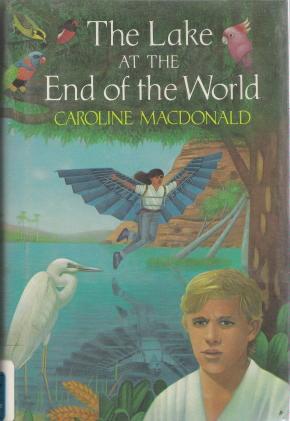
- The Lake at the End of the World
Caroline Macdonaldstandalone novel1988
similar bynear futurecoming of agescience fictiontensenorth americayoung adult
The Lake at the End of the World is a post-nuclear holocaust young adult novel published in 1988. Its author is Caroline MacDonald. Set in 2025, it tells the story of Hector, a teenage boy who has lived all his life in an underground bunker as the youngest member of a cult, who occasionally escapes the bunker to look outside, and Diana, a teenage girl who lives with her parents, apparently the only survivors of the nuclear holocaust. The story is told in part from Hector's perspective and from Diana's.
- The Door Into Summer
Robert A. Heinleinstandalone novel1957
similar bynorth americanear futurescience fictionadventurous
From the first page of the Signet 6th printing: "An electronics engineer invents a wizard robot... only to find himself shanghaied by his ruthless partner and his gold-digging fiancee. The crafty pair forces him to submit to the "long sleep" - suspended animation for thirty years. But when he wakes up in the year 2000 A.D. the inventor makes a startling discovery. He learns that it is possible now to twist time forwards or backwards. And so he returns to the past bent on a mission... of revenge."
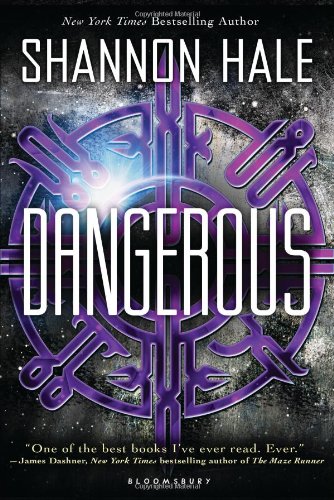
- Dangerous
Shannon Halestandalone novel2014
similar bynear futurecoming of agescience fictionadventuroustenseyoung adult
When aspiring astronaut Maisie Danger Brown, who was born without a right hand, and the other space camp students get the opportunity to do something amazing in space, Maisie must prove how dangerous she can be and how far she is willing to go to protect everything she has ever loved. - Summary from LOC entry.