Loreful
HomeDiscover
Search series, authors…⌘K
Loreful

Reading orders for SF/F series and shared universes — with your place kept in every one.

Explore

UniversesSeriesWorksAuthorsAtlas

Help

FAQAboutSite map

Account & legal

Sign inCreate accountPrivacyTerms

Data

Built on ISFDB, Wikipedia, Wikidata and Open Library. Curated reading orders carry their reasoning on the page; the rest follow publication order. Data sources & licenses

© Loreful · data: ISFDB · CC BY

More like Touching Darkness

anchored on:fantasyscience fictionpsychic powersour worldcontemporaryyoung adult+4 more

but

Mood

The mood the book leaves you in.

  • The reading experience is propelled by journeys, exploration, and physical risk; excitement and forward momentum dominate over dread or introspection.
  • Joy and loss are deliberately mixed; the resolution grants characters something real while taking something else away, leaving warmth and sorrow together.
  • The book demands work from the reader — dense prose, difficult structure, unfamiliar ideas, or morally uncomfortable material — as part of its intended effect.
  • Grim events, cruelty, or despair dominate the atmosphere, and the book does not soften them with comfort or comic relief.
  • The atmosphere is quietly unsettling — wrongness, unease, and the uncanny pervade the book without necessarily escalating into overt horror.
  • The book is built to move the reader; character feeling is foregrounded and major scenes aim at a strong emotional response.
  • Humor is a primary aim and the prose plays for laughs — comic situations, wit, or dialogue produce sustained comedy, not occasional levity.
  • The book insists that things can improve; effort and decency are shown to matter, and the arc bends toward better outcomes even through hardship.
  • The book teaches as it goes — real facts, history, science, or craft are conveyed in enough depth that learning is part of the reading experience.
  • The book is designed to uplift and motivate, presenting perseverance or achievement in a way that invites the reader to aspire or act.
  • The overall register is cheerful and easygoing; stakes are kept gentle and the book avoids dwelling on pain or dread.
  • Withheld information drives the experience; the book sustains enigmas and secrets the reader wants resolved, whatever its genre.
  • The book is contemplative and inward-looking, giving more weight to thought, memory, and meaning than to external events.
  • The book works as comfort reading — low tension, a soothing pace, and an atmosphere the reader can unwind in.
  • Grief, loss, or melancholy set the dominant register, and the book lets sorrow stand rather than resolving it into comfort.
  • Sustained suspense is the point; the book keeps the reader braced for what happens next through danger, pressure, or impending revelation.
  • Playful invention and charm define the register — fanciful conceits, light absurdity, and a narration that delights in its own oddity.

About

What the story runs on.

  • Stories in which extraterrestrial beings are central — as characters, cultures, or the object of the plot.
  • Stories structured as a quest — a journey undertaken to find, deliver, or destroy something of great import.
  • Stories in which staying alive against nature, catastrophe, or scarcity is the central problem.
  • Stories of lovers kept apart by law, family, faith, or station, where the obstacle to love is the plot.
  • Stories in which a friendship — its making, testing, or loss — is the emotional center.
  • Stories of growing up — a young protagonist crossing from childhood into adult knowledge and responsibility.
  • Stories about who a character truly is — self-discovery, doubled lives, and the search for a self.
  • Stories about mourning — living through the death of a loved one and what loss does to the survivors.
  • Stories in which a buried family truth — hidden parentage, crimes, or shames — surfaces and reorders the present.
  • Stories driven by maneuvering for power — factions, conspiracies, and statecraft conducted in shadow.
  • Stories in which war itself is the subject — combat, occupation, and what warfare does to soldiers and civilians.
  • Stories organized around investigating a killing — the case, the clues, and the pursuit of the killer, in any genre's clothing.

Shelf

Where it sits in the library.

    • Fiction built on magic or other supernatural elements that have no scientific explanation.
    • Secondary-world fantasy at large scale, where the fate of nations or the world turns on the protagonists' struggle.
    • Fantasy set in a recognizably modern city or contemporary world where the supernatural intrudes on everyday life.
    • Fantasy that blends in horror's atmosphere and imagery, keeping a fantastical frame around grim or frightening material.
    • Action-driven fantasy following warriors or rogues with personal stakes against sorcerous threats, rather than world-spanning conflicts.
    • Fantasy set in a real historical period or a close analogue of one, with magic woven into the era.
    • Fantasy in which protagonists cross from the ordinary world into another world through a portal or similar passage.
    • Fiction that retells or reworks a traditional fairy tale in a new form or setting.
    • Fantasy drawing directly on myths, legends, and folklore, retelling them or building on their figures and logic.
    • Fantasy of ghosts, vampires, shapeshifters, psychics, and similar phenomena, usually set in an otherwise ordinary world.
    • Fiction mixing science-fictional trappings with overtly magical or impossible elements in one setting.
    • Low-stakes fantasy emphasizing comfort, community, and everyday pleasures over conflict and peril.
    • Speculative fiction of pervasive moral ambiguity, violence, and cynicism that rejects heroic conventions — fantasy and SF alike.
      • Fiction that extrapolates from science and technology — future societies, space travel, or speculative inventions — within at least nominally natural laws.
      • Science fiction of interstellar scope — starships, galactic polities, and adventure across star systems.
      • Science fiction committed to scientific rigor, where technical plausibility constrains the story.
      • Science fiction centered on armed forces and warfare, told largely from a military point of view.
      • Science fiction of networked, corporate-dominated near futures, pairing high technology with social decay.
      • Science fiction styled on nineteenth-century steam-powered technology, often in a Victorian or pseudo-Victorian setting.
      • Fiction depicting an oppressive or catastrophic society, presented as a warning.
      • Fiction set after civilization's collapse, following survivors in the ruins of the old world.
      • Fiction in which characters move between past and future, and the mechanics or consequences of that travel drive the plot.
      • Fiction exploring a world where a historical event went differently and history diverged from ours.
      • Science fiction about humanity's first encounter and communication with an alien intelligence.
      • Science fiction in which extraterrestrial forces attack or occupy Earth and humanity resists.
      • Fiction whose primary aim is to frighten or unsettle the reader through dread, menace, or the monstrous.
      • Horror of vast, indifferent, incomprehensible entities before which humanity is insignificant, in the Lovecraft tradition.
      • Horror of decaying houses, buried family secrets, and oppressive atmosphere in the Gothic literary tradition.
      • Horror centered on hauntings and the returning dead.
      • Horror located in the mind — paranoia, obsession, and unreliable perception rather than external monsters.
      • Horror built around the reanimated dead and survival amid their outbreaks.
      • Horror defined by explicit, transgressive gore that refuses to cut away from violence.
      • Speculative fiction of the strange and uncanny that resists both natural explanation and standard genre categories.
      • Fiction organized around solving a crime or puzzle, typically following an investigator toward the identification of a culprit.
      • A puzzle-first mystery that lays out clues so the culprit's identity can be deduced before the reveal.
      • Crime fiction of moral ambiguity, fatalism, and hard-edged style, set among the corrupt and the doomed.
      • A mystery following the realistic routines of police work — forensics, interviews, and case-building.
      • A gentle mystery with an amateur sleuth, a small community, and violence kept off the page.
      • A mystery set in a past era, where the investigation works within that period's methods and society.
      • Fast-paced fiction driven by imminent danger, pursuit, or high-stakes conspiracy, built to sustain tension.
      • A thriller of espionage — agents, tradecraft, and intelligence services in conflict.
      • A thriller centered on lawyers and the courtroom, where litigation carries the suspense.
      • A thriller driven by detailed contemporary or near-future technology, often military or scientific.
      • A thriller whose tension comes from mental states and manipulation between characters rather than external action.
      • Fiction whose central plot is a romantic relationship and its development toward an emotionally satisfying resolution.
      • Romance in which one or both partners are supernatural beings, blending fantasy elements into the love story.
      • A fantasy-romance hybrid in which the romantic arc and the fantasy plot carry equal weight.
      • Romance set in a past era, with courtship shaped by the period's society and manners.
      • Romance set in the present day, without supernatural or historical elements.
      • Fiction set in a real past period, where the historical setting materially shapes characters and events.
        • General and literary fiction emphasizing prose style, character interiority, or formal ambition over genre plot conventions.
        • Fiction in a realistic world where magical events occur and are treated as ordinary, in the tradition of Latin American literature.
        • Fiction that ridicules people, institutions, or society in order to criticize them.
        • Fiction of dreamlike, irrational imagery and logic that breaks from realistic representation.
        • Fiction that plays with narrative convention through metafiction, fragmentation, and self-reference.
        • Fiction propelled by journeys, exploration, and physical peril, where action and survival carry the plot.
        • Adventure fiction of ships and seafaring — naval engagements, voyages, and life at sea.
        • Fiction of the American frontier West — gunmen, ranchers, and lawmen, typically in the late nineteenth century.
        • Fiction centered on soldiers, campaigns, and the experience of warfare, historical or imagined.
          • Fiction written primarily to amuse, using comedic situations, wit, or parody as its organizing principle.
            • Multi-generational fiction following a family or dynasty across decades, with inheritance and kinship as the through-line.
              • Fiction whose world runs on explicit game mechanics — levels, stats, and skills that characters can see and exploit.
                • Fiction about costumed or superpowered heroes and their conflicts with comparable villains.

                Practical

                How long a commitment, whether it stands alone, and whether it has finished.

                Tap a chip to ask for it · tap again to rule it out · once more to clear. Numbers show what would be left.

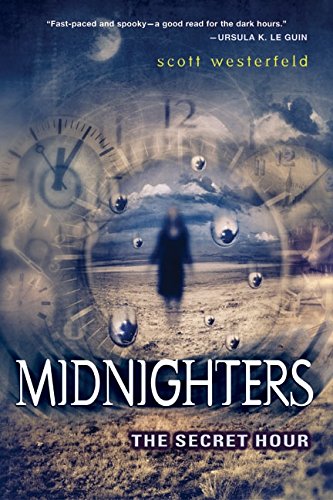
                • Cover of Midnighters
                  Midnighters

                  series · 3 books · 2004

                  similar bytensecontemporaryour worldpsychic powerscoming of agefantasyfound familyyoung adult+2 more

                  The Midnighters Trilogy is a science-fiction fantasy series written by Scott Westerfeld. It was published by Eos in 2004. It comprises three books: The Secret Hour, Touching Darkness. and Blue Noon. Over the course of the trilogy, Jessica encounters other Midnighters with whom she allies herself. The protagonists in the trilogy are the eponymous Midnighters Desdemona, Rex, Jonathan, and Melissa. The antagonists of the series are Darklings and Slithers, dangerous and powerful beings that created and live in the Blue Hour.

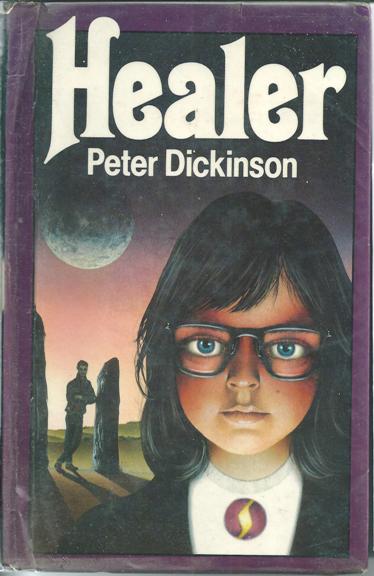
                • Cover of Healer
                  Healer

                  Peter Dickinson · standalone novel · 1983

                  similar bytenseour worldcontemporarypsychic powerscoming of agefantasy+2 more

                  Although grudgingly aware that ten-year-old Pinki has extraordinary powers to heal, sixteen-year-old Barry becomes increasingly convinced that she is an unwilling participant at the healing sessions run by her enterprising stepfather.

                • Cover of Out of the Ordinary
                  Out of the Ordinary

                  Annie Dalton · standalone novel · 1988

                  similar bytenseour worldcontemporarycoming of agefantasyyoung adulturban fantasy

                  Fifteen-year-old Molly, who lives in a turbulent, single-parent household, is asked by mysterious, otherworldly visitors to protect an enchanted child from great danger.

                • Cover of The Silver Crown
                  The Silver Crown

                  Robert C. O'Brien · standalone novel · 1968

                  similar bytenseour worldcontemporarycoming of agescience fiction+2 more

                  The Silver Crown is a children's science-fiction book by Robert C. O'Brien. Published in 1968, it was his first novel.

                • Cover of The Guardians of Time
                  The Guardians of Time

                  series · 4 books · 2002

                  similar bytenseour worldcontemporaryfantasyyoung adult+1 more

                  Guardians of Time is a trilogy of novels written by Marianne Curley. The plot of the trilogy consists of the Guardians of Time, trying to protect the past, present, and future by traveling into the past to thwart their enemies, and the Order of Chaos, who are trying to change past events to give themselves more power.

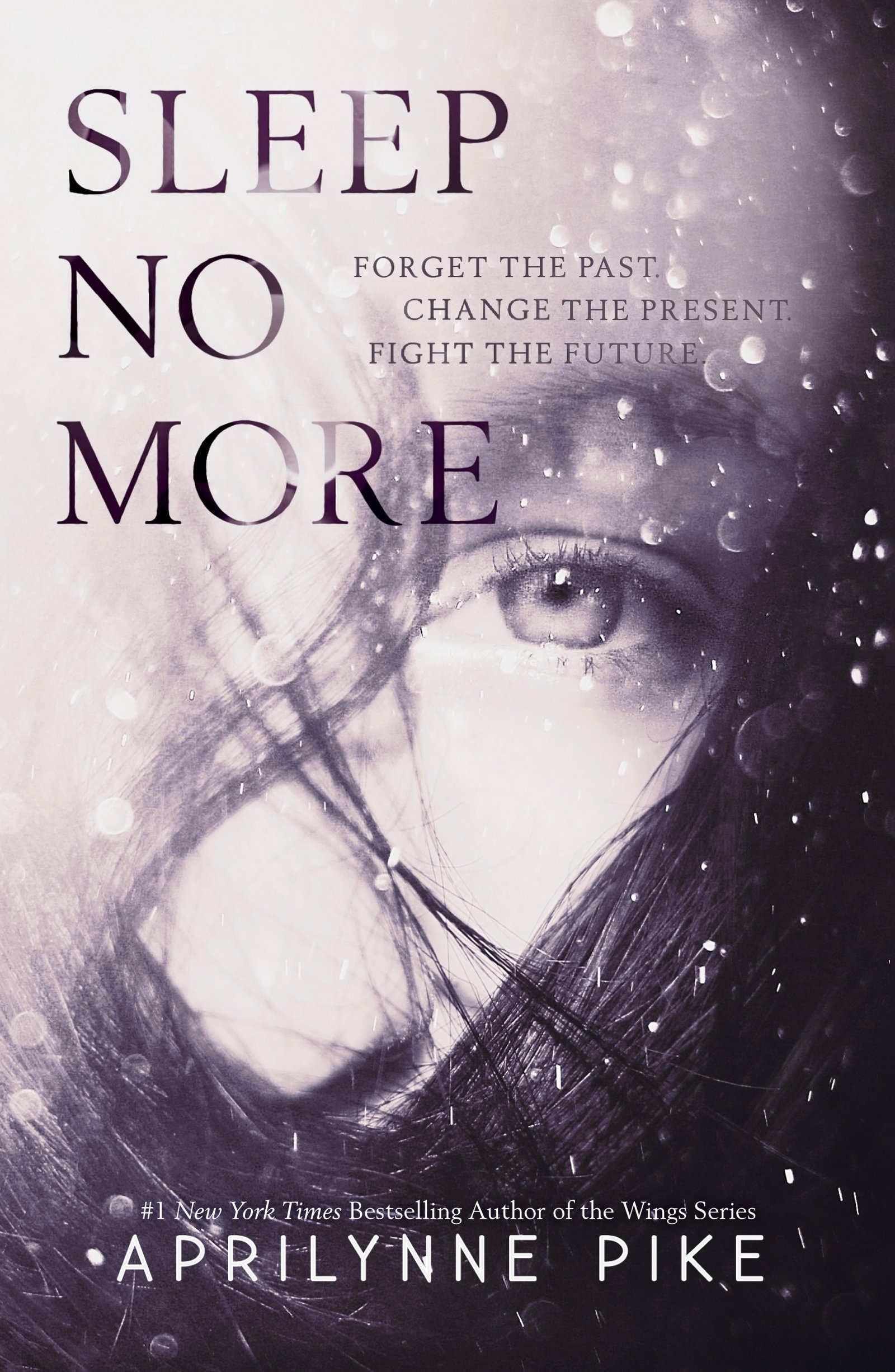
                • Cover of Sleep No More
                  Sleep No More

                  Aprilynne Pike · standalone novel · 2014

                  similar bytenseour worldcontemporarypsychic powersfantasyyoung adult+1 more

                  "Charlotte is a sixteen-year-old Oracle who is not supposed to interfere with her visions of the future, but when she foresees a classmate's murder, she realizes she must break the rules to stop the killer"-- Charlotte is a 16-yr-old Oracle who is not supposed to interfere with her visions of the future, but when she foresees a classmate's murder, she realizes she must break the rules to stop the killer. The plot contains profanity and graphic violence.

                • Cover of The Power of Stars
                  The Power of Stars

                  Louise Lawrence · standalone novel · 1972

                  similar bytenseour worldcontemporarypsychic powerscoming of agescience fictionyoung adult

                  In the writer's second science fiction novel, "an Extraterrestrial force transfixes human teenagers". --SFE3, biographical entry by John Clute "Jane is bitten by a strangely ferocious dying rabbit, and instead of rabies as you might expect she's infected with neurons from outer space ... Thus possessed, Jane zaps in turn a washing machine, the telly", and so on. --KirkusReviews.com (contemporary review, undated online, negative)

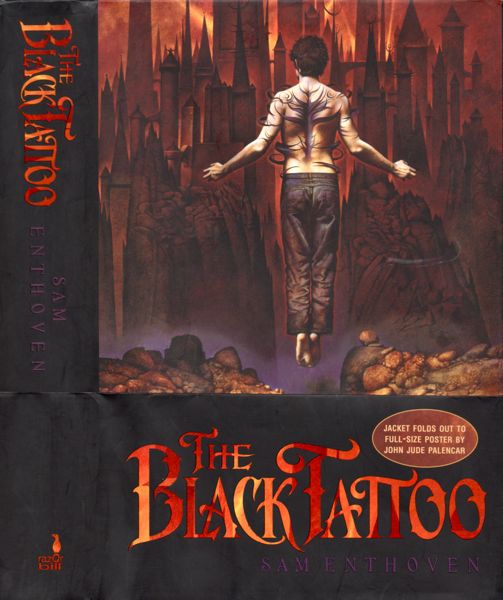
                • Cover of The Black Tattoo
                  The Black Tattoo

                  Sam Enthoven · standalone novel · 2006

                  similar bytenseour worldcontemporarycoming of agefantasyyoung adult

                  The Black Tattoo is a 2006 young adult fantasy novel by Sam Enthoven. It deals with a boy, Charlie, becoming possessed by a demon that manifests itself in the form of a black tattoo on his body.

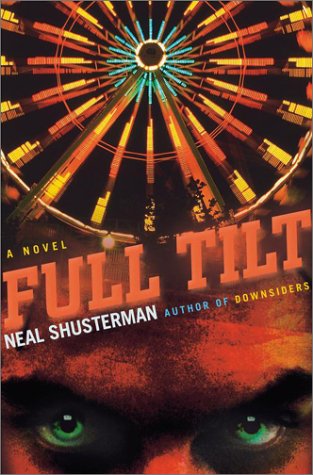
                • Cover of Full Tilt
                  Full Tilt

                  Neal Shusterman · standalone novel · 2003

                  similar bytenseour worldcontemporarycoming of agefantasyyoung adult

                  When sixteen-year-old Blake goes to a mysterious, by-invitation-only carnival he somehow knows that it could save his comatose brother, but soon learns that much more is at stake if he fails to meet the challenge presented there by the beautiful Cassandra.

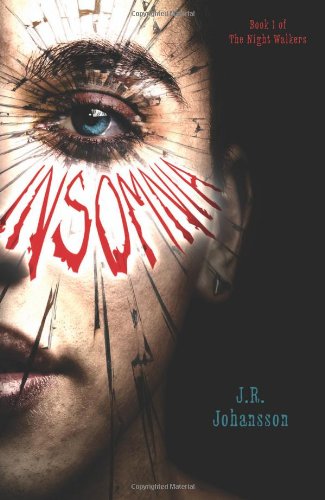
                • Cover of The Night Walkers
                  The Night Walkers

                  series · 3 books · 2013

                  similar bytenseour worldcontemporarypsychic powersyoung adultfantasy+2 more

                • Cover of Carrie
                  Carrie

                  Stephen King · standalone novel · 1974

                  similar bytensecontemporarypsychic powerscoming of age

                  In one way or another, everybody abused Carrie. This sixteen-year-old misfit was forbidden everything that was young and fun by her fanatical mother. She was teased and taunted by her classmates, misunderstood by her teachers, and given up as hopeless by almost everyone. But Carrie had a secret: She possessed terrifying telekinetic powers that could make inanimate objects move, a lighted candle fall, or a door lock. Carrie could make all kinds of startling bizarre, and malevolent things happen. (WorldCat)

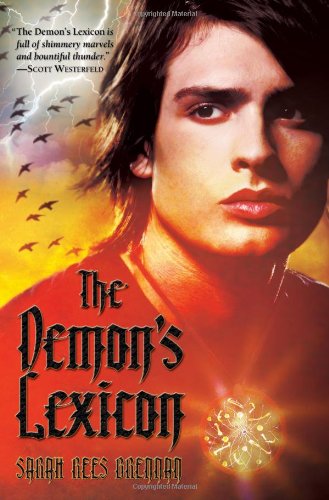
                • Cover of The Demon's Lexicon
                  The Demon's Lexicon

                  series · 3 books · 2009

                  similar bytenseour worldcontemporaryyoung adultfantasyurban fantasy+2 more

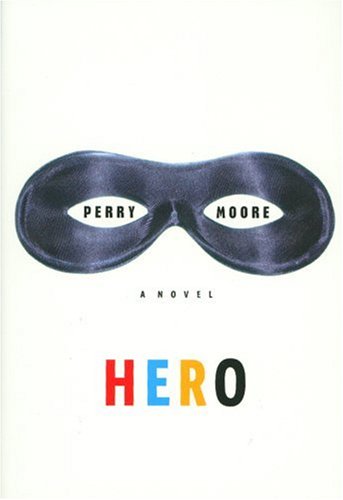
                • Cover of Hero
                  Hero

                  Perry Moore · standalone novel · 2007

                  similar bytenseour worldcontemporarycoming of ageyoung adultfantasy

                  Hero is a 2007 Lambda-winning novel, and the only novel by film producer and novelist Perry Moore. The fantasy novel is about a teenage superhero, Thom Creed, who must deal with his ex-superhero father's disgrace, his own sexuality, and a murderer stalking the world's heroes.

                • Cover of The Coldest Girl in Coldtown
                  The Coldest Girl in Coldtown

                  series · 2 books · 2009

                  similar bytenseour worldcontemporarycoming of ageyoung adultfantasy

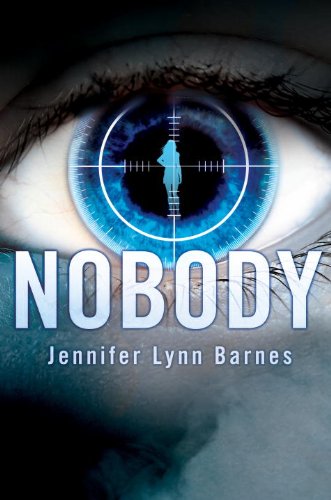
                • Cover of Nobody
                  Nobody

                  Jennifer Lynn Barnes · standalone novel · 2013

                  similar bytenseour worldcontemporarypsychic powersscience fictionyoung adult+1 more

                  Fifteen-year-old Claire Ryan has always felt invisible, always lived beyond people's notice, which causes trouble when she instantly connects with seventeen-year-old Nix, who really can become invisible and has been sent to assassinate her.

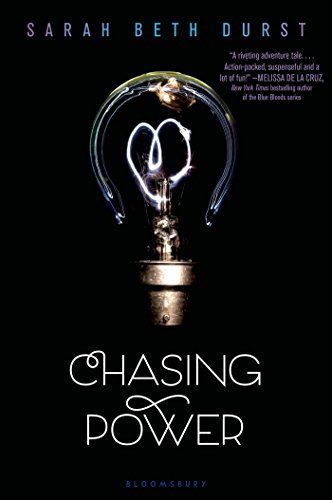
                • Cover of Chasing Power
                  Chasing Power

                  Sarah Beth Durst · standalone novel · 2014

                  similar bytenseour worldcontemporarypsychic powerscoming of agefantasyyoung adult

                  Sixteen-year-old Kayla, whose telekinetic ability allows her to be a master shoplifter with enough money to flee with her mother if her father finds them again, meets Daniel, who has the ability to teleport and needs her help to find and steal an ancient incantation that can help rescue his kidnapped mother--but may lead to great danger for Kayla.

                • Cover of Firestarter
                  Firestarter

                  Stephen King · standalone novel · 1980

                  similar bytensecontemporarypsychic powersscience fiction+1 more

                  WorldCat: Innocence and beauty ignite with evil and terror... First, a man and a woman are subjects of a top-secret government experiment designed to produce extraordinary psychic powers. Then, they are married and have a child. A daughter. Early on the daughter shows signs of a wild and horrifying force growing within her. Desperately, her parents try to train her to keep that force in check, to 'act normal'. Now the government wants its brainchild back for its own insane ends.

                • Cover of The Curse Workers
                  The Curse Workers

                  series · 3 books · 2010

                  similar bytensecontemporaryour worldyoung adultfantasyurban fantasy

                  Holly Black's Curse Workers trilogy is set in an alternate America where 'curse work' — magic that harms or transforms through touch — is illegal, enforced through gloves and Prohibition-era-style crime families. It follows Cassel Sharpe, the only non-worker in a family of con artists and workers, as he tries to stay out of his family's schemes despite his own hidden connection to their world. The series runs from White Cat through two further novels.

                • Cover of Evil Genius (Catherine Jinks)
                  Evil Genius (Catherine Jinks)

                  series · 3 books · 2005

                  similar bytenseour worldcontemporaryscience fictionyoung adult+2 more

                • Cover of The Library at Mount Char
                  The Library at Mount Char

                  Scott Hawkins · standalone novel · 2015

                  similar bytenseour worldcontemporaryfound familyfantasy+1 more

                  The Library at Mount Char is a contemporary fantasy/horror novel written by Scott Hawkins. It is his first novel.

                • Cover of Z for Zachariah
                  Z for Zachariah

                  Robert C. O'Brien · standalone novel · 1975

                  similar bytenseour worldcoming of agescience fictionyoung adult

                  Sixteen-year-old Ann Burden, on an Amish family farm in an isolated valley, believes she is the only survivor of nuclear war and nerve gas. One day a man arrives in a "safe-suit" that he and others have recently developed.

                • Cover of Scott Tyler / Shifter
                  Scott Tyler / Shifter

                  series · 3 books · 2012

                  similar byour worldcontemporaryscience fictionpsychic powersyoung adult+2 more

                • Cover of FreeKs
                  FreeKs

                  series · 3 books · 2010

                  similar bytenseour worldcontemporarypsychic powerscoming of ageyoung adult

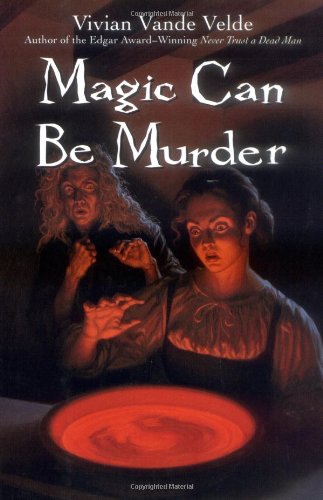
                • Cover of Magic Can Be Murder
                  Magic Can Be Murder

                  Vivian Vande Velde · standalone novel · 2000

                  similar bytenseour worldcontemporarycoming of agefantasyyoung adult

                  Set apart from other people because of their unusual abilities, Nola, a teenage witch, and her mother find themselves in great danger when Nola uses her power to call up images and witnesses a murder.