Loreful
HomeDiscover
Search series, authors…⌘K
Loreful

Reading orders for SF/F series and shared universes — with your place kept in every one.

Explore

UniversesSeriesWorksAuthorsAtlas

Help

FAQAboutSite map

Account & legal

Sign inCreate accountPrivacyTerms

Data

Built on ISFDB, Wikipedia, Wikidata and Open Library. Curated reading orders carry their reasoning on the page; the rest follow publication order. Data sources & licenses

© Loreful · data: ISFDB · CC BY

More like Toxin

anchored on:thriller & suspenseour world

but

Mood

The mood the book leaves you in.

  • The reading experience is propelled by journeys, exploration, and physical risk; excitement and forward momentum dominate over dread or introspection.
  • Joy and loss are deliberately mixed; the resolution grants characters something real while taking something else away, leaving warmth and sorrow together.
  • The book demands work from the reader — dense prose, difficult structure, unfamiliar ideas, or morally uncomfortable material — as part of its intended effect.
  • Grim events, cruelty, or despair dominate the atmosphere, and the book does not soften them with comfort or comic relief.
  • The atmosphere is quietly unsettling — wrongness, unease, and the uncanny pervade the book without necessarily escalating into overt horror.
  • The book is built to move the reader; character feeling is foregrounded and major scenes aim at a strong emotional response.
  • Humor is a primary aim and the prose plays for laughs — comic situations, wit, or dialogue produce sustained comedy, not occasional levity.
  • The book insists that things can improve; effort and decency are shown to matter, and the arc bends toward better outcomes even through hardship.
  • The book teaches as it goes — real facts, history, science, or craft are conveyed in enough depth that learning is part of the reading experience.
  • The book is designed to uplift and motivate, presenting perseverance or achievement in a way that invites the reader to aspire or act.
  • The overall register is cheerful and easygoing; stakes are kept gentle and the book avoids dwelling on pain or dread.
  • Withheld information drives the experience; the book sustains enigmas and secrets the reader wants resolved, whatever its genre.
  • The book is contemplative and inward-looking, giving more weight to thought, memory, and meaning than to external events.
  • The book works as comfort reading — low tension, a soothing pace, and an atmosphere the reader can unwind in.
  • Grief, loss, or melancholy set the dominant register, and the book lets sorrow stand rather than resolving it into comfort.
  • Sustained suspense is the point; the book keeps the reader braced for what happens next through danger, pressure, or impending revelation.
  • Playful invention and charm define the register — fanciful conceits, light absurdity, and a narration that delights in its own oddity.

About

What the story runs on.

  • Stories in which extraterrestrial beings are central — as characters, cultures, or the object of the plot.
  • Stories structured as a quest — a journey undertaken to find, deliver, or destroy something of great import.
  • Stories in which staying alive against nature, catastrophe, or scarcity is the central problem.
  • Stories of lovers kept apart by law, family, faith, or station, where the obstacle to love is the plot.
  • Stories in which a friendship — its making, testing, or loss — is the emotional center.
  • Stories of growing up — a young protagonist crossing from childhood into adult knowledge and responsibility.
  • Stories about who a character truly is — self-discovery, doubled lives, and the search for a self.
  • Stories about mourning — living through the death of a loved one and what loss does to the survivors.
  • Stories in which a buried family truth — hidden parentage, crimes, or shames — surfaces and reorders the present.
  • Stories driven by maneuvering for power — factions, conspiracies, and statecraft conducted in shadow.
  • Stories in which war itself is the subject — combat, occupation, and what warfare does to soldiers and civilians.
  • Stories organized around investigating a killing — the case, the clues, and the pursuit of the killer, in any genre's clothing.

Shelf

Where it sits in the library.

    • Fiction built on magic or other supernatural elements that have no scientific explanation.
    • Secondary-world fantasy at large scale, where the fate of nations or the world turns on the protagonists' struggle.
    • Fantasy set in a recognizably modern city or contemporary world where the supernatural intrudes on everyday life.
    • Fantasy that blends in horror's atmosphere and imagery, keeping a fantastical frame around grim or frightening material.
    • Action-driven fantasy following warriors or rogues with personal stakes against sorcerous threats, rather than world-spanning conflicts.
    • Fantasy set in a real historical period or a close analogue of one, with magic woven into the era.
    • Fantasy in which protagonists cross from the ordinary world into another world through a portal or similar passage.
    • Fiction that retells or reworks a traditional fairy tale in a new form or setting.
    • Fantasy drawing directly on myths, legends, and folklore, retelling them or building on their figures and logic.
    • Fantasy of ghosts, vampires, shapeshifters, psychics, and similar phenomena, usually set in an otherwise ordinary world.
    • Fiction mixing science-fictional trappings with overtly magical or impossible elements in one setting.
    • Low-stakes fantasy emphasizing comfort, community, and everyday pleasures over conflict and peril.
    • Speculative fiction of pervasive moral ambiguity, violence, and cynicism that rejects heroic conventions — fantasy and SF alike.
      • Fiction that extrapolates from science and technology — future societies, space travel, or speculative inventions — within at least nominally natural laws.
      • Science fiction of interstellar scope — starships, galactic polities, and adventure across star systems.
      • Science fiction committed to scientific rigor, where technical plausibility constrains the story.
      • Science fiction centered on armed forces and warfare, told largely from a military point of view.
      • Science fiction of networked, corporate-dominated near futures, pairing high technology with social decay.
      • Science fiction styled on nineteenth-century steam-powered technology, often in a Victorian or pseudo-Victorian setting.
      • Fiction depicting an oppressive or catastrophic society, presented as a warning.
      • Fiction set after civilization's collapse, following survivors in the ruins of the old world.
      • Fiction in which characters move between past and future, and the mechanics or consequences of that travel drive the plot.
      • Fiction exploring a world where a historical event went differently and history diverged from ours.
      • Science fiction about humanity's first encounter and communication with an alien intelligence.
      • Science fiction in which extraterrestrial forces attack or occupy Earth and humanity resists.
      • Fiction whose primary aim is to frighten or unsettle the reader through dread, menace, or the monstrous.
      • Horror of vast, indifferent, incomprehensible entities before which humanity is insignificant, in the Lovecraft tradition.
      • Horror of decaying houses, buried family secrets, and oppressive atmosphere in the Gothic literary tradition.
      • Horror centered on hauntings and the returning dead.
      • Horror located in the mind — paranoia, obsession, and unreliable perception rather than external monsters.
      • Horror built around the reanimated dead and survival amid their outbreaks.
      • Horror defined by explicit, transgressive gore that refuses to cut away from violence.
      • Speculative fiction of the strange and uncanny that resists both natural explanation and standard genre categories.
      • Fiction organized around solving a crime or puzzle, typically following an investigator toward the identification of a culprit.
      • A puzzle-first mystery that lays out clues so the culprit's identity can be deduced before the reveal.
      • Crime fiction of moral ambiguity, fatalism, and hard-edged style, set among the corrupt and the doomed.
      • A mystery following the realistic routines of police work — forensics, interviews, and case-building.
      • A gentle mystery with an amateur sleuth, a small community, and violence kept off the page.
      • A mystery set in a past era, where the investigation works within that period's methods and society.
      • Fast-paced fiction driven by imminent danger, pursuit, or high-stakes conspiracy, built to sustain tension.
      • A thriller of espionage — agents, tradecraft, and intelligence services in conflict.
      • A thriller centered on lawyers and the courtroom, where litigation carries the suspense.
      • A thriller driven by detailed contemporary or near-future technology, often military or scientific.
      • A thriller whose tension comes from mental states and manipulation between characters rather than external action.
      • Fiction whose central plot is a romantic relationship and its development toward an emotionally satisfying resolution.
      • Romance in which one or both partners are supernatural beings, blending fantasy elements into the love story.
      • A fantasy-romance hybrid in which the romantic arc and the fantasy plot carry equal weight.
      • Romance set in a past era, with courtship shaped by the period's society and manners.
      • Romance set in the present day, without supernatural or historical elements.
      • Fiction set in a real past period, where the historical setting materially shapes characters and events.
        • General and literary fiction emphasizing prose style, character interiority, or formal ambition over genre plot conventions.
        • Fiction in a realistic world where magical events occur and are treated as ordinary, in the tradition of Latin American literature.
        • Fiction that ridicules people, institutions, or society in order to criticize them.
        • Fiction of dreamlike, irrational imagery and logic that breaks from realistic representation.
        • Fiction that plays with narrative convention through metafiction, fragmentation, and self-reference.
        • Fiction propelled by journeys, exploration, and physical peril, where action and survival carry the plot.
        • Adventure fiction of ships and seafaring — naval engagements, voyages, and life at sea.
        • Fiction of the American frontier West — gunmen, ranchers, and lawmen, typically in the late nineteenth century.
        • Fiction centered on soldiers, campaigns, and the experience of warfare, historical or imagined.
          • Fiction written primarily to amuse, using comedic situations, wit, or parody as its organizing principle.
            • Multi-generational fiction following a family or dynasty across decades, with inheritance and kinship as the through-line.
              • Fiction whose world runs on explicit game mechanics — levels, stats, and skills that characters can see and exploit.
                • Fiction about costumed or superpowered heroes and their conflicts with comparable villains.

                Practical

                How long a commitment, whether it stands alone, and whether it has finished.

                Tap a chip to ask for it · tap again to rule it out · once more to clear. Numbers show what would be left.

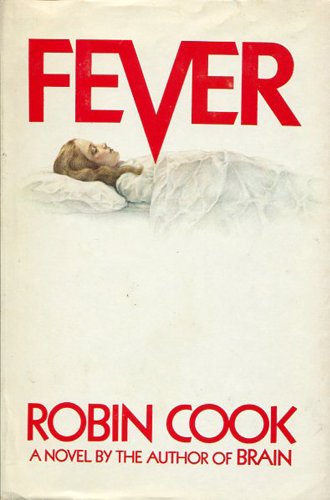
                • Cover of Fever
                  Fever

                  Robin Cook · standalone novel · 1982

                  similar bythriller & suspensetenseplague and pandemicour worldlate 20th century

                  Fever is a 1982 novel by Robin Cook and is in the category of medical thriller. It was plagiarised by Yandamuri Veerendranath into Prardhana.

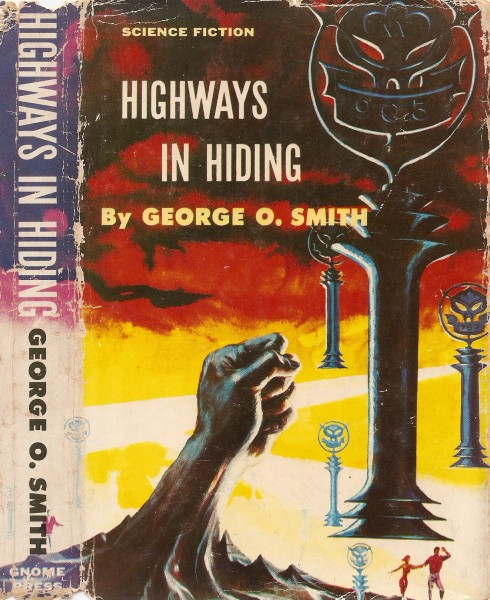
                • Cover of Highways in Hiding
                  Highways in Hiding

                  George O. Smith · standalone novel · 1956

                  similar bythriller & suspensetenseplague and pandemicour world

                  From the back cover of the first Lancer printing: "Quest impossible - Someone had stolen an important part of Steve Cornell's life. It was bad enough when his fiancee vanished. It was infinitely worse when everyone in the world insisted it couldn't have happened the way he knew it had. In a world where ESP and telepathy were normal, it was difficult to keep secrets. But Steve's search for his missing sweetheart brought him to the threshold of one of the greatest secrets of all time. And it was obvious that somebody would stop at nothing to keep him from uncovering it. What were the oddly sinister symbols along the otherwise ordinary roads? What was behind the spreading plague called Mekstrom's Disease? Why were there "blank" spots where telepathy didn't work? Who was the elusive enemy with powers even beyond those ESP had bestowed on mankind? And, most important of all... could Steve find that enemy before they made him vanish too?"

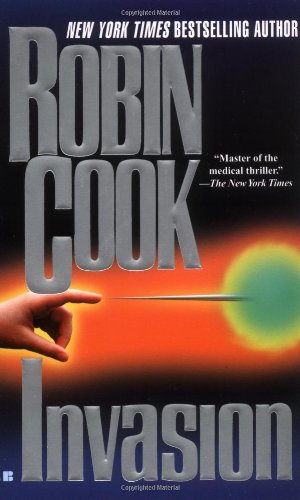
                • Cover of Invasion
                  Invasion

                  Robin Cook · standalone novel · 1997

                  similar bythriller & suspensetenseour world+2 more

                  Earth is bombarded from space by small disks which, in addition to having powerful physical armaments, when handled activate latent viral DNA which causes humans to mutate into alien beings; a small group recognize the danger and attempt to develop a biological counterweapon.

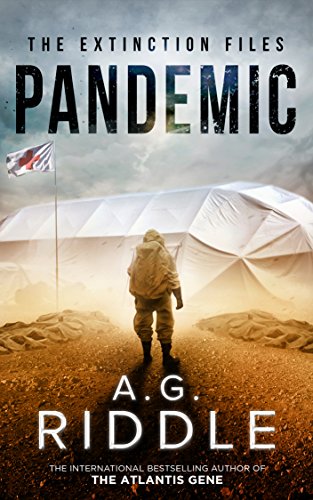
                • Cover of The Extinction Files
                  The Extinction Files

                  series · 2 books · 2017

                  similar bythriller & suspensetenseplague and pandemicour world

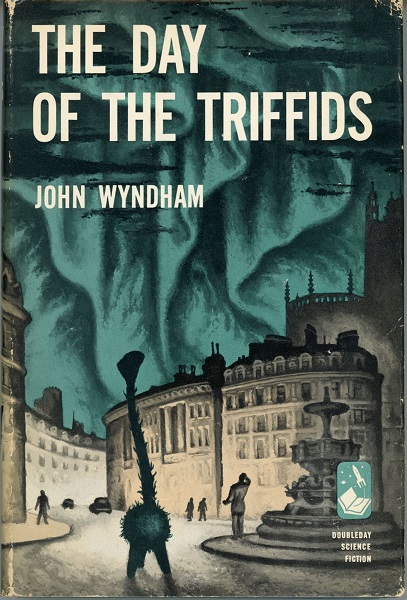
                • Cover of The Triffids
                  The Triffids

                  series · 3 books · 1951

                  similar byour worldsurvival+2 more

                  John Wyndham's The Day of the Triffids (1951) opens with a meteor-shower-like event that leaves most of Britain's population blind, throwing civilization into collapse just as triffids, an aggressive and mobile species of poisonous plant, become free to hunt the helpless survivors. Simon Clark's authorized sequel The Night of the Triffids (2001) picks up a generation later, narrated by the original protagonist's son as he confronts a new triffid-dominated world, and John Whitbourn's The Age of the Triffids extends the shared setting further still. Together the three novels form a loose post-apocalyptic trilogy built on Wyndham's original premise rather than a tightly plotted single story.

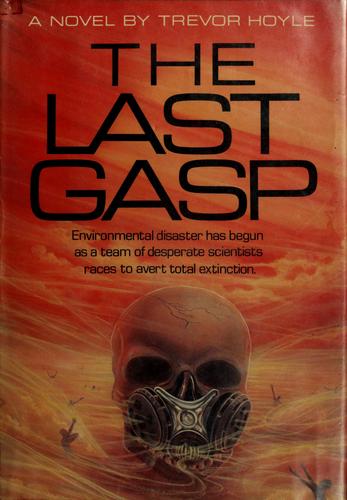
                • Cover of The Last Gasp
                  The Last Gasp

                  Trevor Hoyle · standalone novel · 1983

                  similar bythriller & suspensetenseplague and pandemicour worldsurvival

                  From the flaps of the Crown first edition: "When British marine biologist Gavin Chase stepped out into the windswept wastes at the Halley Bay antarctic research station one morning, the last thing he expected to see was a sled team coming out of nowhere carrying a half-mad, half-frozen Russian scientist babbling an incomprehensible warning. But that warning would threaten the future of the human race and force Chase to make some of the hardest decisions of his life. Months later, at a Geneva environmental conference, Chase meets Cheryl Detrick, the daughter of Theo Detrick, the grand old man of diatom research. Chase, the Detricks, and Soviet scientist Boris Stanovnik theorize that the oxygen-producing microscopic plants of the world's oceans are dying and the level of atmospheric pollutants has finally exceeded the ability of the planet's ecology to recycle them. There is also good reason to believe that the superpowers are planning to wage a new type of environmental warfare. Sooner or later there will be nothing left to breathe. So begins a race against the future. Chase and Cheryl, now lovers, struggle to avert ecological catastrophe as agents of the military-industrial complex hunt them down... and as a growing belt of unbreathable gases spreads outward from the equator, uprooting millions. Their enemies are Lloyd Madden, an insane military mastermind planning to seed the earth with poison and then repopulate it with a race of mutants, and Joseph Earl Gelstrom, a wealthy chemical manufacturer who has Cheryl's father killed to hide his involvement. But Gelstrom himself falls victim to pollution sickness, and he repents. To raise money to finance a research team, Chase must make an unholy alliance with the dying Gelstrom, but this is too much for Cheryl, who leaves him. As more and more of the world becomes uninhabitable, as industries and governments collapse and chaos reigns, as the oceans fill up with dioxin, as the climate changes and mutant life-forms encroach upon the last refuges of humankind, Chase leads a last desperate mission to find and rescue Cheryl and to lead his team of scientists to safety."

                • Cover of Jack Stapleton / Laurie Montgomery
                  Jack Stapleton / Laurie Montgomery

                  series · 8 books · 1992

                  similar bythriller & suspensetense+3 more

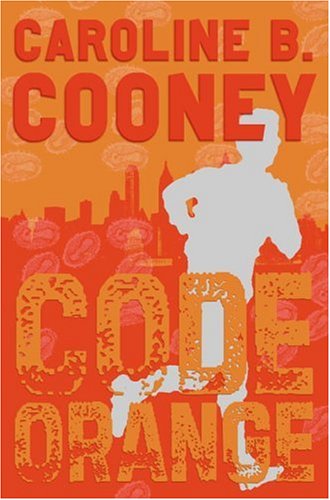
                • Cover of Code Orange
                  Code Orange

                  Caroline B. Cooney · standalone novel · 2005

                  similar bythriller & suspensetenseplague and pandemicour worldsurvival

                  Code Orange is a 2005 young adult novel by Caroline B. Cooney. The novel won a National Science Teachers Association recommendation and has been frequently used in classrooms. The Journal of Adolescent & Adult Literacy also marked the book as one of their Young Adults' Choices for 2007.

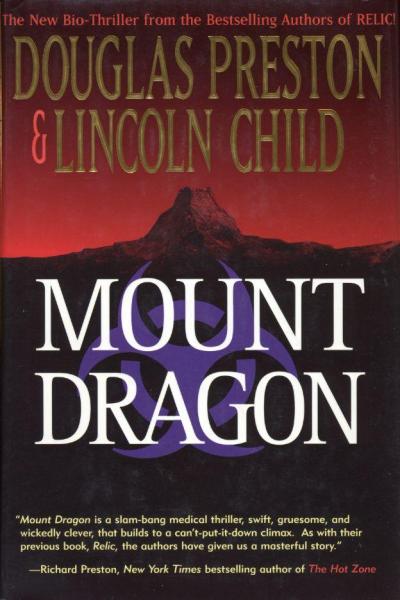
                • Cover of Mount Dragon
                  Mount Dragon

                  Lincoln Child & Douglas Preston · standalone novel · 1996

                  similar bythriller & suspensetenseplague and pandemicour world+1 more

                  A tech tycoon recruits a scientist to perfect a genetically engineered vaccine against all strains of influenza, but when he discovers a disastrous flaw he becomes the target of multiple attacks.

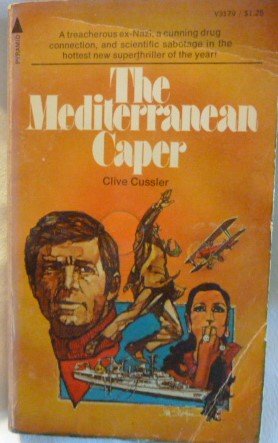
                • Cover of Dirk Pitt
                  Dirk Pitt

                  series · 12 books · 1973

                  completed

                  similar bythriller & suspensetenseour world

                  Clive Cussler's Dirk Pitt novels follow the title character, a two-fisted marine engineer and de facto field agent for the fictional National Underwater and Marine Agency, through globe-spanning adventures mixing undersea salvage, historical mystery, and international conspiracy. The run collected here spans The Mediterranean Caper (1973) through Valhalla Rising (2001), the earlier stretch of a series Cussler continued for decades with later co-authors.

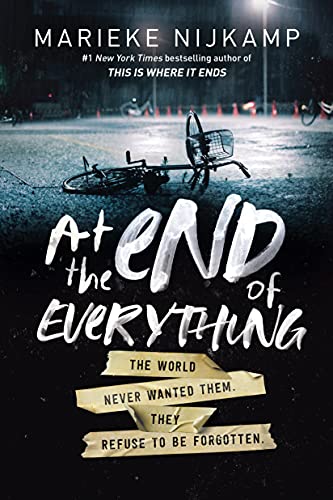
                • Cover of At the End of Everything
                  At the End of Everything

                  Marieke Nijkamp · standalone novel · 2022

                  similar bythriller & suspensetenseplague and pandemicour worldsurvival

                  The Hope Juvenile Treatment Center is ironically named. No one has hope for the delinquent teenagers who have been exiled there; the world barely acknowledges that they exist. Then the guards at Hope start acting strange. And one day…they don't show up. But when the teens band together to make a break from the facility, they encounter soldiers outside the gates. There's a rapidly spreading infectious disease outside, and no one can leave their houses or travel without a permit. Which means that they're stuck at Hope. And this time, no one is watching out for them at all. As supplies quickly dwindle and a deadly plague tears through their ranks, the group has to decide whom among them they can trust and figure out how they can survive in a world that has never wanted them in the first place.

                • Cover of The Shining Girls
                  The Shining Girls

                  Lauren Beukes · standalone novel · 2013

                  similar bythriller & suspensetenseour worldlate 20th century+1 more

                  The Shining Girls is a science fiction thriller novel by South African author Lauren Beukes. The book centers on a mysterious drifter who murders the titular "shining girls" and one victim's attempts to expose him.

                • Cover of I Am Legend
                  I Am Legend

                  Richard Matheson · standalone novel · 1954

                  similar bytenseplague and pandemicour worldsurvival

                  The last human survivor of the vampire epidemic has to maintain his defences against their onslaught, while attempting to research the cause and possibly solution to the plague. Robert Neville is the last living man on Earth... but he is not alone. Every other man, woman and child on the planet has become a vampire, and they are hungry for Neville's blood. By day he is the hunter, stalking the undead through the ruins of civilization. By night, he barricades himself in his home and prays for the dawn. How long can a man survive like this?

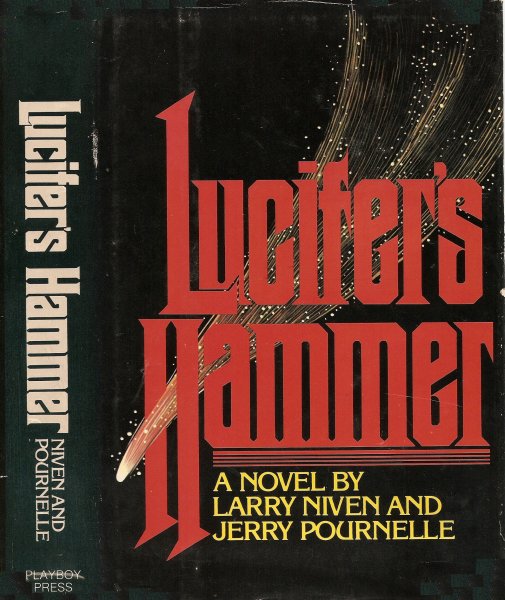
                • Cover of Lucifer's Hammer
                  Lucifer's Hammer

                  Larry Niven & Jerry Pournelle · standalone novel · 1977

                  similar bytenselate 20th centurysurvival+1 more

                  Lucifer's Hammer is a science fiction post-apocalypse-survival novel by American writers Larry Niven and Jerry Pournelle that was first published in 1977. It was nominated for the Hugo Award for Best Novel in 1978.

                • Cover of The Origin Mystery
                  The Origin Mystery

                  series · 3 books · 2013

                  similar bytenseour world+3 more

                • Cover of The Andromeda Strain
                  The Andromeda Strain

                  series · 2 books · 1969

                  similar bytenseplague and pandemicsurvival+1 more

                  Michael Crichton's 1969 novel The Andromeda Strain follows a team of scientists racing to contain a lethal extraterrestrial microorganism that crash-lands in Arizona, told in the clinical, document-driven style that helped establish the techno-thriller genre. Daniel H. Wilson's authorized 2019 sequel The Andromeda Evolution revisits the same threat five decades later. Together the two books form a two-part outbreak story separated by a fifty-year gap in publication.

                • Cover of Aftermath (Charles Sheffield)
                  Aftermath (Charles Sheffield)

                  series · 2 books · 1998

                  completed

                  similar bytenseour worldsurvival+2 more

                  Charles Sheffield's Aftermath duology opens with a near-future Earth devastated by a nearby supernova's radiation, which knocks out electronics and forces survivors to rebuild without most modern technology. Starfire continues years later as a second, larger stellar threat approaches and humanity must recover enough capability to respond. Sheffield, a physicist by training, grounds both books in hard-science consequences of the disaster rather than treating it as mere backdrop.

                • Cover of The Second Angel
                  The Second Angel

                  Philip Kerr · standalone novel · 1998

                  similar bythriller & suspensetenseplague and pandemicour world

                  Publisher's description: "A virus is decimating the population of Earth and the only defense is a blood transfusion. A plot is hatched to rob a blood bank on the moon and sell its untainted blood on the black market. An expensive operation, requiring lots of high tech, but it promises to earn a fortune."

                • Cover of Gravity
                  Gravity

                  Tess Gerritsen · standalone novel · 1999

                  similar bythriller & suspensetenseplague and pandemicsurvival

                  Medical thriller set aboard the International Space Station where astronauts are dying one by one from a mysterious disease. Dr Emma Watson is a research physician on a mission to study living organisms in space. But the mission aboard the space station turns into a nightmare.

                • Cover of The Savage Dead
                  The Savage Dead

                  Joe McKinney · standalone novel · 2013

                  similar bythriller & suspensetenseplague and pandemicour worldsurvival

                  A man-made strain of a flesh eating virus is created by a cartel. Smuggled aboard a cruise ship that is about to sail. One by one, the passengers are exposed and no one will be spared if the outbreak isn't contained. Enter Delta Force operative and his team to stop it or America and the entire world population will be finished.

                • Cover of Cell
                  Cell

                  Stephen King · standalone novel · 2006

                  similar bytenseplague and pandemicour worldsurvival

                  In Cell, King taps into readers fears of technological warfare and terrorism. Mobile phones deliver the apocalypse to millions of unsuspecting humans by wiping their brains of any humanity, leaving only aggressive and destructive impulses behind. Those without cell phones, like illustrator Clayton Riddell and his small band of "normies," must fight for survival, and their journey to find Clayton's estranged wife and young son rockets the book toward resolution.

                • Cover of World War Z
                  World War Z

                  series · 3 books · 2006

                  similar bytenseplague and pandemicour worldsurvival

                • Cover of Congo
                  Congo

                  Michael Crichton · standalone novel · 1980

                  similar bythriller & suspensetenselate 20th centurysurvival

                  WorldCat: On an expedition to return Amy, his talking gorilla, to her home in the Congo, Professor Peter Elliot is joined by others who hope to find a legendary diamond mine guarded by mutant gorillas.

                • Cover of Mortal Fear
                  Mortal Fear

                  Robin Cook · standalone novel · 1988

                  similar bythriller & suspensetenseour worldlate 20th century

                  The novel Mortal Fear by Robin Cook in 1989 deals with the issues of euthanasia hospital and increasing cost of keeping elderly people alive. The piece's villain espouses views that the elderly and incapacitated deserve to die in order to lighten the burden on the overtaxed medical system—quite contrary to the view of "do no harm" held by both the novel's main character and author.