More like Traitor Witch
anchored on:fantasy
but
- A Song of Ice and Fire
series14 books1996
part of World of Ice and Fire
similar byfantasysecondary worlddark+2 more
A Song of Ice and Fire is a series of high fantasy novels by the American author George R. R. Martin. Martin began writing the first volume, A Game of Thrones, in 1991, and published it in 1996. Martin, who originally envisioned the series as a trilogy, has released five out of seven planned volumes. The most recent entry in the series, A Dance with Dragons, was published in 2011. Since then, Martin has been working on the sixth novel, titled The Winds of Winter. A seventh novel, A Dream of Spring, is planned to follow.
- Earthsea Cycle
series18 books1964
completed
part of Earthsea
similar byfantasysecondary world
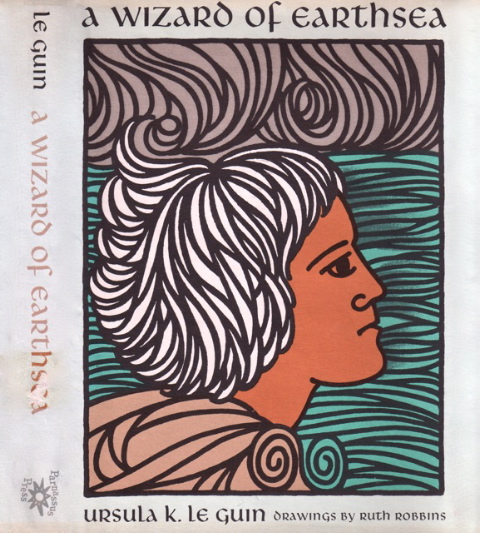
The Earthsea Cycle, also known as Earthsea, is a series of high fantasy books written by American author Ursula K. Le Guin. Beginning with A Wizard of Earthsea (1968), The Tombs of Atuan (1970), and The Farthest Shore (1972), the series was continued in Tehanu (1990), and Tales from Earthsea and The Other Wind. In 2018, all the novels and short stories were published in a single volume, The Books of Earthsea: The Complete Illustrated Edition, with artwork by Charles Vess.
- The Old Kingdom / Abhorsen milieu
series11 books1995
similar byfantasysecondary world+2 more
The Old Kingdom, or Abhorsen in North America and the UK, is a fantasy series written by Australian author Garth Nix. It originated in 1995 with the novel Sabriel and has continued in the novels Lirael (2001), Abhorsen (2003), Goldenhand (2016), and Terciel & Elinor (2021), as well as a prequel novel titled Clariel (2014). The Old Kingdom also consists of the novella The Creature in the Case (2005) and various other short fiction.
- The Nikolai Duology
series2 books2019
part of Grishaverse
similar byfantasysecondary worlddarktense+1 more
Leigh Bardugo's Nikolai Duology picks up Nikolai Lantsov and Zoya Nazyalensky from her earlier Grishaverse trilogy set in Ravka, now dealing with the kingdom's fallout as king and general, and adds Nina Zenik from the Six of Crows spin-off working a mission out of Ketterdam. King of Scars and its sequel Rule of Wolves tie together threads from across the wider Grishaverse rather than starting fresh, raising the stakes to a hidden threat inside Nikolai himself. It functions as the convergence point for Bardugo's separate Grishaverse story lines.
- The Riftwar Universe
universe44 books1982
Start hereRiftwar Saga · Start here
similar byfantasysecondary world+1 more
On the world of Midkemia a tear opens in the air itself, a rift hung between stars, and through it march the armies of an empire from another world entirely. So begins the chronicle Raymond E. Feist has kept for three decades: the tale of Pug, a castle kitchen boy apprenticed to a magician on the very day the invasion lands, and of Tomas, his friend, who inherits the armor and the ancient fury of a dead dragon-lord. Around these two the Riftwar Cycle turns, widening book by book from one besieged frontier keep into the whole history of a world of kingdoms, guilds, thieves' dens and mage-towers. The cycle runs to roughly thirty novels, gathered into arcs a newcomer can enter and finish on their own. The founding Riftwar Saga (Magician, Silverthorn, A Darkness at Sethanon) sets the board; the Serpentwar Saga, Krondor's Sons and the Conclave of Shadows carry the story down the generations; the Darkwar, Demonwar and Chaoswar sagas bring it toward its close. Crossing the rift to the rival world of Kelewan, Feist and Janny Wurts wrote the Empire trilogy, opening with Daughter of the Empire, a court intrigue told wholly from the invaders' side and for many the finest thing here. Shorter Legends of the Riftwar and the game-born Riftwar Legacy fill the corners; later still, Feist opens an altogether new world in the Firemane books. Feist writes fantasy in its most companionable key: apprentices who grow into archmages, tavern boys who become spies and dukes, a world you return to the way you return to an old inn. The mood is adventure before dread, friendship and rank and hard-won craft, wars that cost something, all of it rendered plainly and at a gallop. Begin where it began, with Magician, then follow the arcs in the order they were written, and the rift will carry you the rest of the way.
- Sun Wolf and Starhawk
series7 books1984
similar byfantasysecondary world+4 more
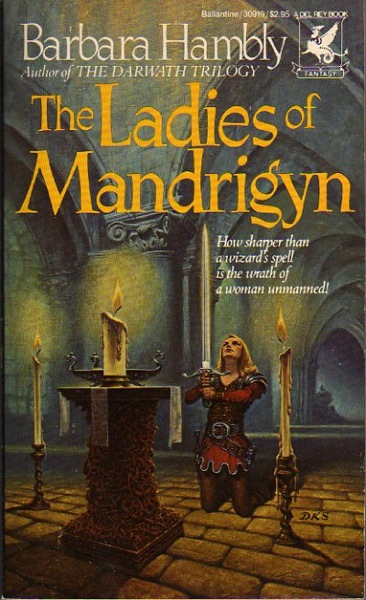
Barbara Hambly's series begins with the city of Mandrigyn conquered and its men enslaved in the mines of the wizard-king Altiokis, forcing surviving noblewoman Sheera Galernas to kidnap the mercenary captain Sun Wolf and press him into training the city's women as fighters. Sun Wolf's partnership with his lieutenant Starhawk carries across The Ladies of Mandrigyn, The Witches of Wenshar, and further volumes as both are drawn deeper into magic neither originally wanted.
- The Doomspell Trilogy
series3 books2000
similar byfantasysecondary world+3 more
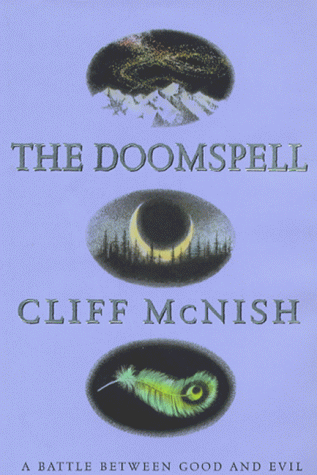
Cliff McNish is an English author of fantasy and supernatural novels for young adults. His best-known works include the 2006 ghost novel Breathe, The Silver Sequence, and The Doomspell Trilogy, which has been translated into 26 languages.
- Legacy of Orisha
series3 books2018
similar byfantasysecondary world+3 more
Tomi Adeyemi's Legacy of Orïsha trilogy opens with Children of Blood and Bone, following Zélie, a girl from a persecuted caste of former magic-users, on a quest to restore magic to a kingdom that outlawed and hunted her people. Children of Virtue and Vengeance and Children of Anguish and Anarchy continue the fallout of that restoration as new factions fight over who gets to wield the returned power. The series draws on West African mythology and languages for its magic system and setting.
- The Ancestor
series4 books2017
similar byfantasymagic schoolssecondary worlddark+1 more
The Book of the Ancestor trilogy is a series of three fantasy novels by Mark Lawrence. It comprises Red Sister (2017), Grey Sister (2018), and Holy Sister (2019). The three novels tell the story of Nona Grey, a peasant girl with mystical abilities. Red Sister was nominated for the 2018 David Gemmell Awards for Fantasy.
- The Scholomance
series3 books2020
similar byfantasymagic schoolssecondary worlddarktense
The Scholomance Trilogy is a series of three fantasy novels written by American author Naomi Novik. The books follow the adventures of Galadriel "El" Higgins during and after attending a dangerous and magical boarding school for wizards named after the magic school Scholomance from Romanian folklore.
- Shannara
universe50 books1977
Start hereWord and the Void · The very beginning of the timeline
similar byfantasysecondary world+1 more
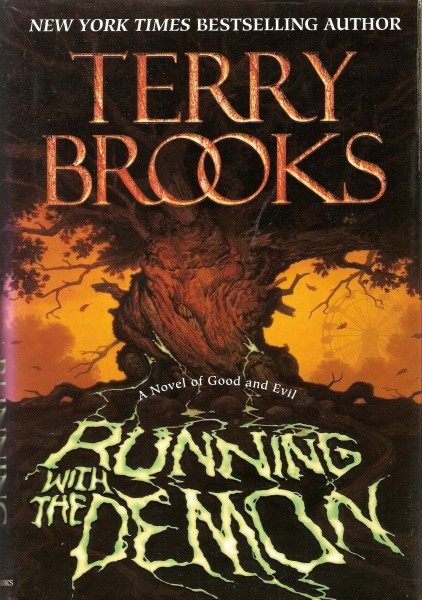
Long after the world we know has burned itself to slag in the Great Wars, the Four Lands rise green over the bones of the old age. Science is a forbidden memory; magic has come back into the world, and with it the old divisions — Men, Elves, Dwarves, Trolls, and Gnomes, each Race a splinter of what humanity became. This is the far-future Earth of Shannara, where the ruins buried beneath the soil are ours, and the only keepers of the vanished knowledge are the Druids of Paranor, who wake once a generation to meet the darkness rising again. Terry Brooks opened the Four Lands in 1977 with The Sword of Shannara and has charted its history for four decades since — a legendarium ordered not by throne but by a single bloodline, the Ohmsfords, each generation inheriting an Elfstone, a blade, or a wishsong when the age demands a hero. The original trilogy gives way to the Heritage of Shannara, the Voyage of the Jerle Shannara, the High Druid, Dark Legacy, Defenders, and the concluding Fall of Shannara; the Genesis of Shannara books reach back to the apocalypse itself, and the Word and the Void trilogy back further still, into a demon-haunted version of our own present that is the root of everything after. In 2025 Brooks passed the histories to Delilah S. Dawson to carry forward. What sets these books apart is their long memory: a world where every triumph is provisional, where the same evil returns wearing a fresh shape each age, and magic always exacts its price. The reading is warm and headlong — questing companies, old talismans, journeys across a mapped and named wilderness — shadowed by the knowledge that all of it stands on the wreckage of a former world. Enter as readers first did: with The Sword of Shannara, then onward in publication order. The chronological path, beginning with Word and the Void, rewards a second journey, once the Four Lands already feel like home.
- Cosmere
universe54 books2005
Start hereThe Final Empire · Start here
similar byfantasysecondary world+1 more
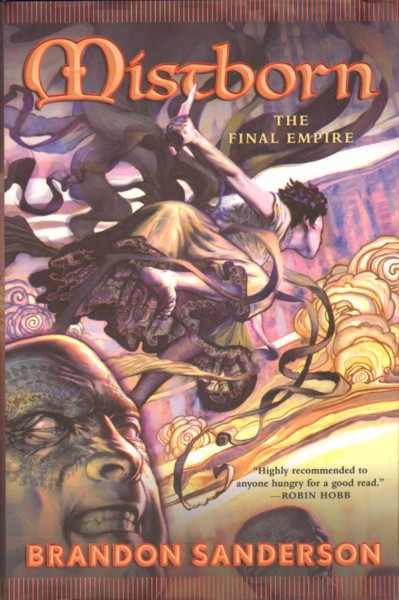
Before the worlds, there was Adonalsium, and then there was not. A god shattered into sixteen Shards of raw creative power, and those who seized them carried their fragments across the void to seed new planets, new peoples, new ways of working the impossible. The Cosmere is the one universe those Shards made: a scattering of worlds that seem, at first, to share nothing but a sky, until you notice the same law running quietly beneath each of them, and the same silent traveler passing through their margins. Every world keeps its own book and its own magic. On Scadrial, the Mistborn cycle burns metals into power: a self-contained trilogy of thieves and tyranny, followed by a second era that drags the same world into gunslinging early industry. On storm-battered Roshar, The Stormlight Archive raises its vast, ongoing epic around knights, spren, and oaths spoken aloud. Elsewhere stand the shorter keystones: Elantris, a city of fallen gods; Warbreaker, a tale of returned dead and living color; White Sand, told in graphic-novel form under the twin suns of Taldain. Threaded between them run the novellas, from Tress of the Emerald Sea and Yumi and the Nightmare Painter to The Sunlit Man and the pieces gathered in Arcanum Unbounded, where the hidden connections surface most plainly. All of it is the design of one hand, Brandon Sanderson, working a single pattern across two decades. What sets this universe apart is its faith in rules: magic here is a system, lawful and learnable, so discovery feels less like wonder handed down than like physics worked out. The cross-connections reward the patient reader, a symbol here, a name there, one immortal wanderer everywhere, but no book demands you have read another first. Newcomers do best entering through Mistborn: The Final Empire, the most self-contained doorway, or the standalone Elantris or Warbreaker; readers who prefer their epics vast can begin with The Way of Kings. The deeper links, and the novellas that expose them, wait for whenever you are ready to look.
- The Tapestry
series4 books2007
similar byfantasymagic schools+2 more
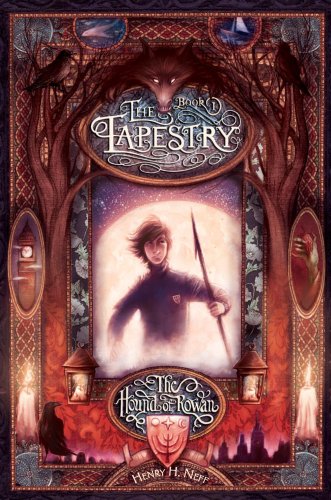
The Hound of Rowan opens Henry H. Neff's Tapestry series with Max McDaniels, a twelve-year-old who discovers a strange Celtic tapestry in a museum's secret room and finds a letter afterward directing him to Rowan Academy, a hidden school for gifted children like him. The series follows Max's education and the wider magical conflicts Rowan is drawn into across The Second Siege, The Fiend and the Forge, and The Maelstrom. Neff both wrote and illustrated the series.
- Lightbringer
series5 books2010
similar bysecondary world+3 more
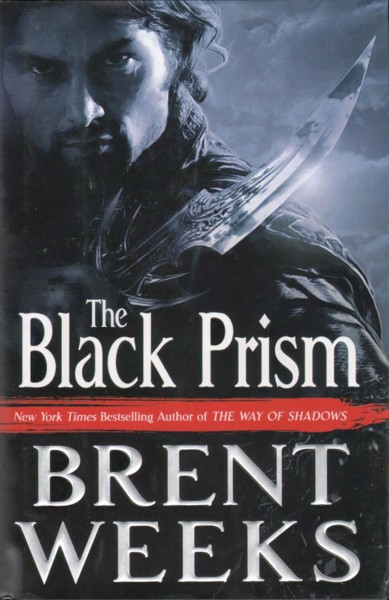
The Black Prism introduces Gavin Guile, the Prism — supreme religious and political authority over the Seven Satrapies, and the only person able to draft every color of magical light into solid, structural "luxin" — as an uprising and a hidden family secret both threaten to unravel the fragile peace he's built. Brent Weeks's five-book Lightbringer series pushes its chromaturgy magic system toward its physical and moral limits: drafters who overuse their color eventually "break the halo" and turn into monsters called wights.
- Riftwar Saga
series7 books1982
part of The Riftwar Universe
similar byfantasysecondary world+1 more
The Riftwar Saga is Raymond E. Feist's debut fantasy trilogy, opening with Magician, in which an orphaned apprentice named Pug is swept up when otherworldly invaders emerge through a dimensional rift into the frontier kingdom of Midkemia. Silverthorn and A Darkness at Sethanon carry the resulting war to its close, and the trilogy became the founding entry of Feist's much larger Riftwar Cycle.
- His Dark Materials Universe
universe13 books1995
Start hereHis Dark Materials · Start here
similar byfantasy+1 more
In a world like ours and unlike it, every human soul walks outside the body in the shape of an animal — a daemon, who speaks, who cannot be lied to, and who settles into one fixed form only when childhood ends. This is the country of His Dark Materials: a company of parallel worlds across which an invisible dust of consciousness drifts down upon the waking mind; where a Church that calls itself the Magisterium would sooner sever a child's soul than let that Dust be understood; and where a golden instrument, the alethiometer, answers true questions for anyone with the patience to read it. Philip Pullman's design stands in two trilogies and a scatter of shorter tales. His Dark Materials — Northern Lights (published in America as The Golden Compass), The Subtle Knife, and The Amber Spyglass — carries Lyra Belacqua from the rooftops of a shadow Oxford across the borders between worlds. The Book of Dust returns to that same territory: La Belle Sauvage looks back to Lyra as an infant carried through a great flood, while The Secret Commonwealth follows her grown and less certain into adulthood, with a concluding volume closing the arc. Around them sit slim companion books — Lyra's Oxford, Once Upon a Time in the North, Serpentine — and Nicholas Wright's stage adaptation, made with Pullman's blessing. The register is grave and luminous at once, its title lifted from Milton and its quarrel drawn from Blake: a story that takes the side of curiosity, love, and the physical world against any authority that would forbid them. It reads as adventure — armoured bears, aeronauts, knife-cut windows between skies — yet reasons like philosophy. Begin with Northern Lights / The Golden Compass and read the first trilogy through before turning to The Book of Dust, which deepens everything the first has already made you feel.
- Fillory
series7 books2009
similar byfantasymagic schoolssecondary world
Lev Grossman's Magicians trilogy (The Magicians, The Magician King, The Magician's Land, 2009-2014) follows Quentin Coldwater from a secretive college of magic in upstate New York into Fillory, a fantasy world he grew up reading about in a series of children's books that turns out to be real. As Quentin, his classmates, and his old friend Julia become entangled in ruling and defending Fillory, the trilogy pushes past the wish-fulfillment of a classic portal fantasy to ask what happens once getting everything you wanted stops being enough.
- Dragon Trilogies
series6 books1988
similar byfantasysecondary worldtense
The Dragon Prince and Dragon Star trilogies comprise six connected fantasy novels written by Melanie Rawn. The Dragon Prince trilogy focuses on Prince Rohan of the Desert and his Sunrunner wife, Sioned, while the Dragon Star trilogy focuses on their son, Pol. The Dragon Prince trilogy consists of novels Dragon Prince, The Star Scroll, and Sunrunner's Fire. The books in the Dragon Star trilogy are Stronghold, The Dragon Token, and Skybowl.
- The Black Magician Trilogy
series3 books2001
part of Kyralia series
similar byfantasymagic schoolssecondary world+1 more
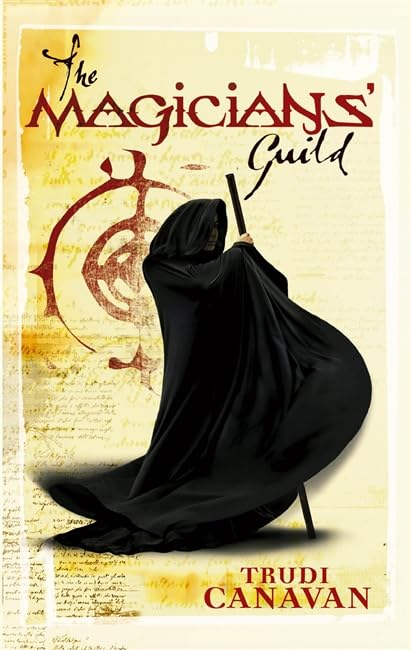
Trudi Canavan's Black Magician Trilogy (The Magicians' Guild, The Novice, The High Lord, 2001-2003) opens in the city of Imardin, where the ruling magicians' guild's annual purge of the slums goes wrong when a street girl named Sonea unknowingly shatters their protective shield with raw, untrained power. The guild must hunt her down and decide whether to control her or train her, and the trilogy follows Sonea's forced initiation into magical society and the guild's internal politics. It's Canavan's best-known trilogy and the founding story of her Kyralia setting.
- The Nicci Chronicles
series4 books2017
completed
part of Sword of Truth
similar byfantasysecondary world+2 more
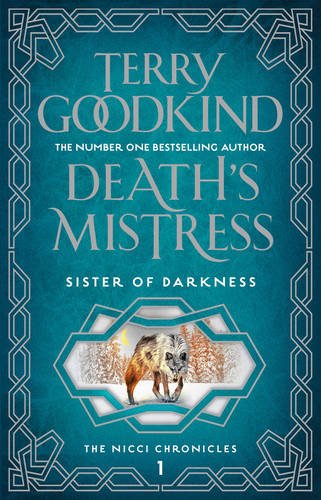
The Nicci Chronicles follows Nicci, a reformed sorceress and former antagonist from Terry Goodkind's Sword of Truth series, as she travels with the wizard Nathan Rahl through war-torn lands beyond the Old World, confronting new threats to the D'Haran Empire. The quartet, beginning with Death's Mistress, continues the larger Sword of Truth universe from Nicci's perspective.
- Six of Crows
series3 books2015
part of Grishaverse
similar byfantasysecondary worlddarktense+1 more
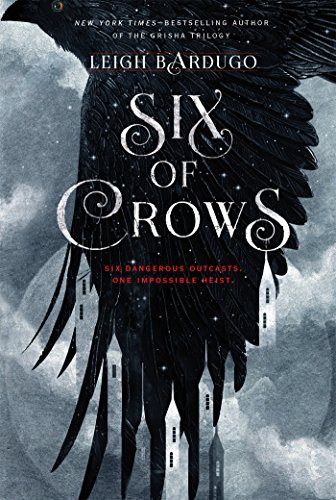
Leigh Bardugo's Six of Crows duology (2015-2016) follows a crew of six criminal teenagers in Ketterdam, a city modeled on the Dutch Republic, as they pull off a near-impossible heist and then deal with its fallout. Told from multiple points of view, the books lean on the found-family bond between the crew members as much as the caper plotting, and sit within Bardugo's wider Grishaverse alongside her Shadow and Bone books.
- Malazan Book of the Fallen
series20 books1999
part of Malazan
similar byfantasysecondary worlddark+2 more
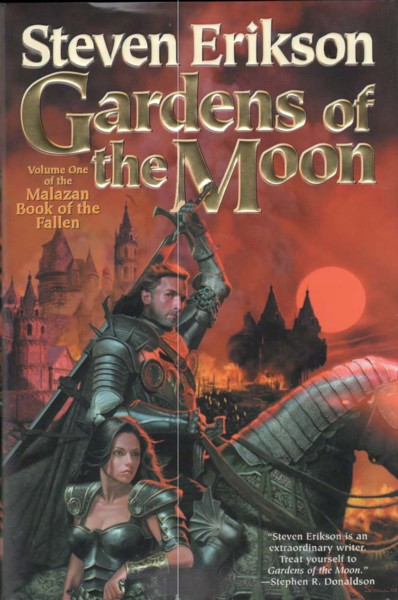
The Malazan Book of the Fallen is a series of epic fantasy novels written by the Canadian author Steven Erikson. The series, published by Bantam Books in the U.K. and Tor Books in the U.S., consists of ten volumes, beginning with Gardens of the Moon (1999) and concluding with The Crippled God (2011). Erikson's series presents the narratives of a large cast of characters spanning thousands of years across multiple continents.
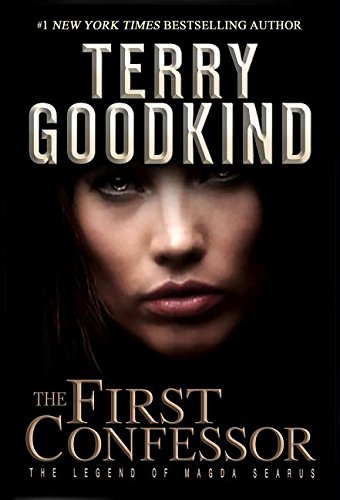
- The Legend of Magda Searus
series1 book2012
part of Sword of Truth
similar byfantasysecondary worlddark+2 more