More like Transmigration
anchored on:science fictionour worldnear futureidentity
but
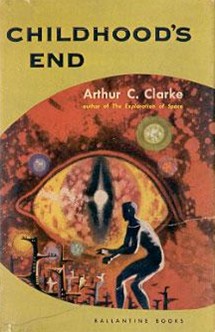
- Childhood's End
Arthur C. Clarkestandalone novel1953
similar byidentityscience fictionour worldnear future
Childhood's End is a 1953 science fiction novel by the British author Arthur C. Clarke. The story follows a peaceful alien invasion of Earth by mysterious Overlords, whose arrival begins decades of apparent utopia under indirect alien rule, at the cost of human identity and culture.
- Stranger in a Strange Land
Robert A. Heinleinstandalone novel1961
similar byidentityscience fictionnear futureour world
Stranger in a Strange Land is a 1961 science fiction novel by the American author Robert A. Heinlein. It tells the story of Valentine Michael Smith, a human who comes to Earth in early adulthood after being born on the planet Mars and raised by Martians, and explores his interaction with and eventual transformation of Terran culture.
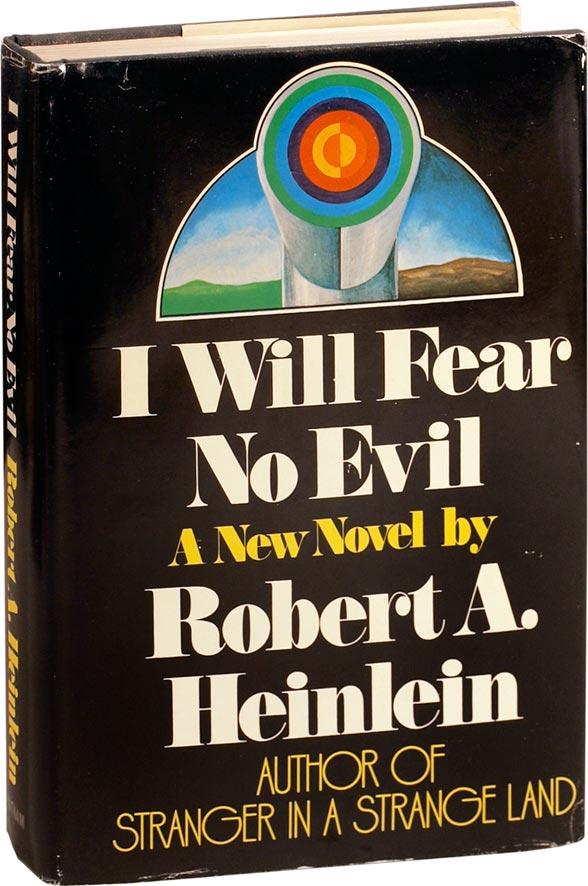
- I Will Fear No Evil
Robert A. Heinleinstandalone novel1970
similar byidentityscience fictionnear futureour world
I Will Fear No Evil is a science fiction novel by American writer Robert A. Heinlein, originally serialised in Galaxy and published in hardcover in 1970. The title is taken from Psalm 23:4.
- The Dream Master
Roger Zelaznystandalone novel1966
similar byidentityscience fictionour worldnear future
The Dream Master (1966) is a science fiction novel by American writer Roger Zelazny, based on the novella He Who Shapes. Zelazny's original title was The Ides of Octember. He Who Shapes won the 1965 Nebula Award for Best Novella.
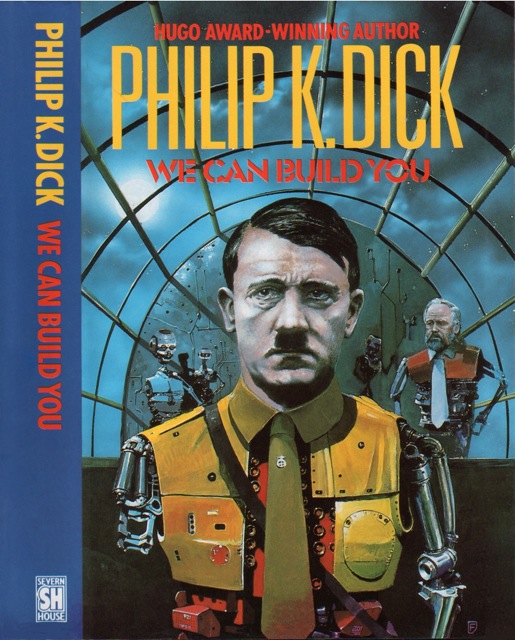
- We Can Build You
Philip K. Dickstandalone novel1972
similar byidentityscience fictionour worldnear future
We Can Build You is a 1972 science fiction novel by American writer Philip K. Dick. Written in 1962 as The First in Our Family, it remained unpublished until appearing in serial form as A. Lincoln, Simulacrum in the November 1969 and January 1970 issues of Amazing Stories magazine, re-titled by editor Ted White. The novel was issued as a mass market paperback original by DAW Books in 1972, its final title provided by publisher Donald A. Wollheim. Its first hardcover edition was published in Italy in 1976, and Vintage issued a trade paperback in 1994.
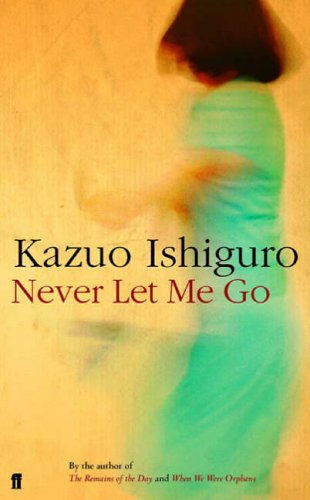
- Never Let Me Go
Kazuo Ishigurostandalone novel2005
similar byidentityscience fictionour worldnear future
Never Let Me Go is a 2005 science fiction novel by the British author Kazuo Ishiguro. It was shortlisted for the 2005 Man Booker Prize, for the 2006 Arthur C. Clarke Award and the 2005 National Book Critics Circle Award. Time magazine named it the best novel of 2005. It included the novel in its '100 Best English-language novels published since 1923—the beginning of TIME'. It also received an ALA Alex Award in 2006. A film adaptation directed by Mark Romanek was released in 2010.
- Flashforward
Robert J. Sawyerstandalone novel1999
similar byidentityscience fictionour worldnear future
Flashforward is a science fiction novel by Canadian author Robert J. Sawyer first published in 1999. The novel is set in 2009. At CERN, the Large Hadron Collider accelerator is performing a run to search for the Higgs boson. The experiment has a unique side effect; the entire human race loses their consciousness for about two minutes. During that time, nearly everyone sees themselves roughly twenty-one years and six months in the future. Each individual experiences the future through the senses of their future self. This "flashforward" results in countless deaths and accidents involving vehicles, aircraft, and any other device needing human control at the time of the experiment. The novel was adapted into the 2009 television series FlashForward.
- Blade Runner Universe
series6 books1968
similar byidentityscience fictionnear future+1 more
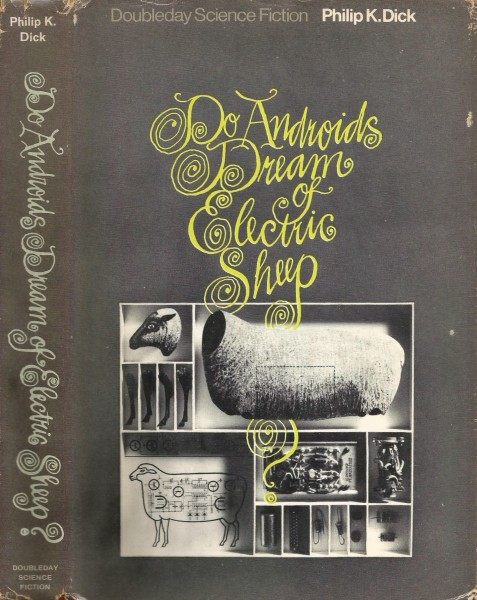
Philip K. Dick's 1968 novel Do Androids Dream of Electric Sheep? follows bounty hunter Rick Deckard as he tracks escaped androids through an irradiated, near-abandoned San Francisco, using the hunt to probe questions of empathy and what separates human from machine. The novel became the basis for Ridley Scott's 1982 film Blade Runner, and Marvel Comics later published an illustrated adaptation of that film. Together the two trace the story's path from prose original to screen and comic-page adaptation.
- The Host
Stephenie Meyerstandalone novel2008
similar byidentityscience fictionour worldnear future
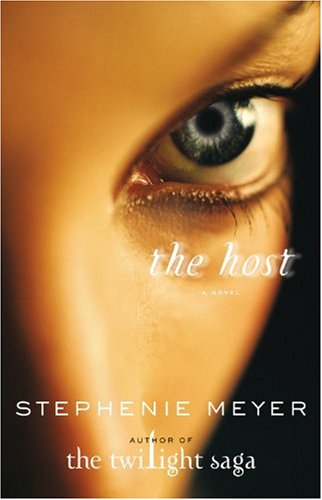
The earth has been invaded by a species that take over the minds of their human hosts while leaving their bodies intact, and most of humanity has succumbed. But Melanie Stryder refuses to fade away. Wanderer, the invading "soul" who has been given Melanie's body, knew about the challenges of living inside a human: the overwhelming emotions, the too vivid memories. But there was one difficulty Wanderer didn't expect: the former tenant of her body refusing to relinquish possession of her mind. Melanie fills Wanderer's thoughts with visions of the man Melanie loves--Jared, a human who still lives in hiding. Unable to separate herself from her body's desires, Wanderer yearns for a man she's never met. As outside forces make Wanderer and Melanie unwilling allies, they set off to search for the man they both love.--From publisher description.
- The Speed of Dark
Elizabeth Moonstandalone novel2002
similar byidentityscience fictionour worldnear future
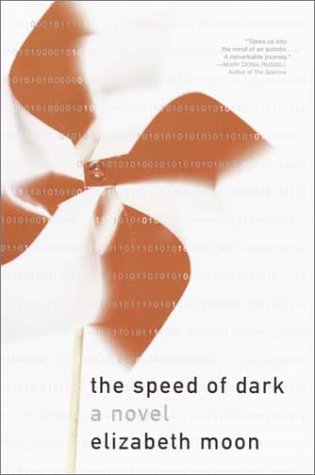
From the Penguin Random House website In the near future, disease will be a condition of the past. Most genetic defects will be removed at birth; the remaining during infancy. Lou Arrendale, a high-functioning autistic adult, is a member of the lost generation, born at the wrong time to reap the rewards of medical science. He lives a low-key, independent life. But then he is offered a chance to try a brand-new experimental "cure" for his condition. With this treatment Lou would think and act and be just like everyone else. But if he was suddenly free of autism, would he still be himself? Would he still love the same classical music — with its complications and resolutions? Would he still see the same colors and patterns in the world—shades and hues that others cannot see? Most important, would he still love Marjory, a woman who may never be able to reciprocate his feelings? Now Lou must decide if he should submit to a surgery that might completely change the way he views the world ... and the very essence of who he is.
- Shadrach in the Furnace
Robert Silverbergstandalone novel1976
similar byidentityscience fictionnear futureour world
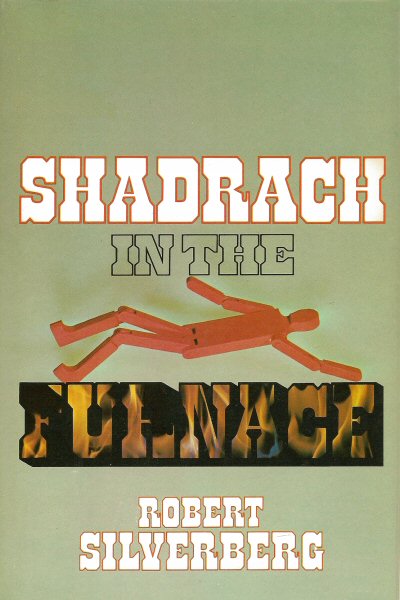
Shadrach in the Furnace is a science fiction novel by American writer Robert Silverberg, first published as a serial in Analog Science Fiction and Fact magazine in the August, September, and October 1976 issues. It was subsequently published by Bobbs Merrill in 1976. The novel was nominated in 1976 for the Nebula Award, and in 1977 for the Hugo Award.
- The Second Trip
Robert Silverbergstandalone novel1972
similar byidentityscience fictionour worldnear future
The Second Trip is a 1972 science fiction novel by American writer Robert Silverberg. Prior to its publication by Doubleday, it was published in serialized form in Amazing Stories from July to September 1971.
- More Than Human
Theodore Sturgeonstandalone novel1953
similar byidentityscience fictionour world
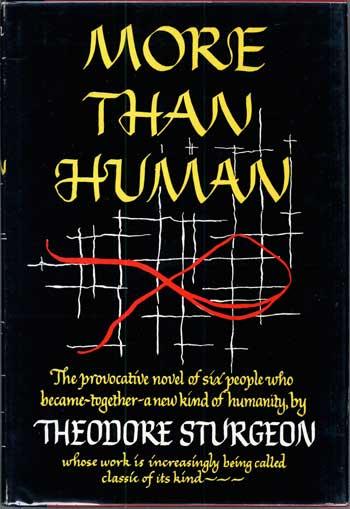
More Than Human is a 1953 science fiction fix-up novel by American writer Theodore Sturgeon. It is a revision and expansion of his 1952 novella Baby Is Three, which is bracketed by two additional parts written for the novel, "The Fabulous Idiot" and "Morality". It won the 1954 International Fantasy Award, which was also given to works in science fiction. It was additionally nominated in 2004 for a "Retro Hugo" award for the year 1954. Science fiction critic and editor David Pringle included it in his book Science Fiction: The 100 Best Novels.
- Eva
Peter Dickinsonstandalone novel1988
similar byidentityscience fictionour worldnear future
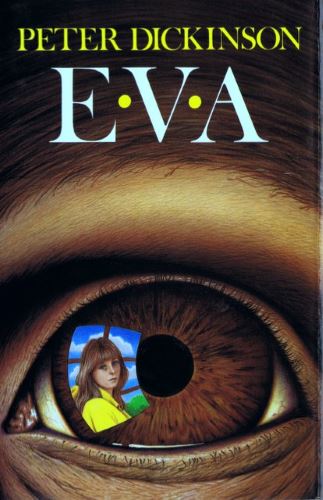
From the back cover: "Thirteen-year-old Eva wakes up in the hospital unable to remember anything since the picnic on the beach. Her mother leans over the bed and begins to explain. A traffic accident, a long coma... But there is something, Eva senses, she is not being told, some other price she must pay to be alive at all. What have they done, with their amazing medical technology, to save her?"
- Clone
Richard Cowperstandalone novel1972
similar byidentityscience fictionour worldnear future
History's first clones: Alvin, Bruce, Colin, and Desmond - Spawned in a dangerous 21st century experiment, there were brought into a world where educated apes did manual labor and the government encouraged suicide as a method of population control. Their existence as clones was unknown to anyone - even to each other - known only to their creator. But then came the strange, haunting visions, the peculiar psychic sensations that drew them closer and closer together - revealing one and for all the mysterious secret they shared that would change the world! (from the back cover of the Pocket Books edition)
- Silver Metal Lover
series2 books1981
completed
similar byidentityscience fictionour worldnear future
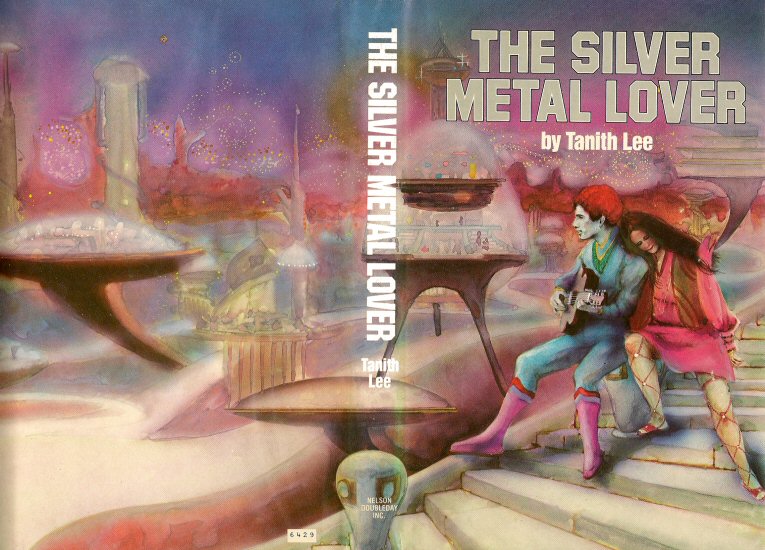
The S.I.L.V.E.R. series is a fantasy novel series by Tanith Lee. The Silver Metal Lover, published in 1981, is the first in the series. Metallic Love, published in 2005, is the second novel.
- Kiln People
David Brinstandalone novel2002
similar byidentityscience fictionour worldnear future
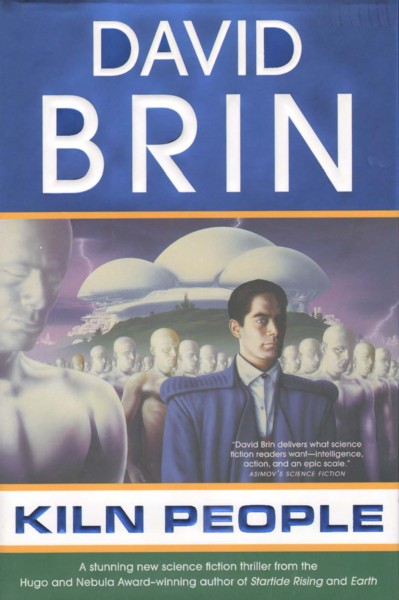
When people can just "bake" a temporary replacement body in a kiln (pottery-oven) and "upload" their conscience into it, and when it "expires" just "download" the experiences into their own mind, dangerous jobs and extreme sports lose their danger, but not their appeal.
- Gnomon
Nick Harkawaystandalone novel2017
similar byidentityscience fictionour worldnear future
Gnomon is a 2017 science fiction novel by British author Nick Harkaway. The book deals with a state that exerts ubiquitous surveillance on its population. A detective investigates a murder through unconventional methods that leads to questions about her society's very nature.
- The Twilight of Briareus
Richard Cowperstandalone novel1974
similar byidentityscience fictionour worldnear future
It took the light of the supernova Briareus Delta one hundred and thirty-two years to cross space to the Solar System. But the night it exploded in our sky was a night that would never be forgotten in the history of the world. For in that bath of cosmic particles, all things changed. Not only the weather and the flora and fauna, but humanity itself received what seemed to be its death sentence. Sterility signalled the end of man, until the strange children known as the Zeta-mutants began to appear. Richard Cowper, author of Clone and other sf novels, has produced in this new novel a gripping story of how one man coped with the terrible dilemma of his world - how he attempted to solve the problem of the girls with the amber eyes and what he did when he found out what he himself had become during The Twilight of Briarseus. (from the back cover of the DAW Books first printing)
- The Echo Wife
Sarah Gaileystandalone novel2021
similar byidentityscience fictionour worldnear future
The Echo Wife is a 2021 science fiction thriller novel by Sarah Gailey, published by Tor Books. It follows Doctor Evelyn Caldwell, an accomplished scientist researching cloning, who has discovered that her husband, Nathan, has used her research to create Martine, a clone of Evelyn who is his ideal wife. When Martine kills Nathan in self-defense, Evelyn must assist in covering up the murder.
- Eastern Standard Tribe
Cory Doctorowstandalone novel2004
similar byidentityscience fictionour worldnear future
Eastern Standard Tribe is a 2004 science fiction novel by Canadian writer Cory Doctorow. Like Doctorow's first two books, the entire text was released under a Creative Commons license on Doctorow's website, allowing the whole text of the book to be read for free and distributed without the publisher's permission.
- Hopscotch
Kevin J. Andersonstandalone novel2002
similar byidentityscience fictionour worldnear future
From the flaps of the Bantam first edition: "Suppose you could switch bodies with another person? What exciting new experiences would you choose to explore? What forbidden desires would you indulge? Suppose someone stole your life–how far would you go to get it back? From ... author Kevin J. Anderson comes a pure adrenaline thriller of hijacked identities, elusive motives, and deeply buried secrets–a disturbing, thought-provoking excursion into a sleek, hedonistic society where nothing is your own...not even your soul. Hopscotch - For a fee, Eduard Swan will swap bodies with people in distress–those facing surgeries, emotional crises, moments of unpleasantness or discomfort they can't or would rather not deal with. Eduard will experience the suffering for them. It's a lucrative business, and in a world in which no one is required to feel any pain, there is no end of clients. But someone doesn't want to play by the rules. Someone doesn't want to return his body. And, unfortunately for Eduard, that someone is one of the world's most powerful men. Now Eduard has no choice but to steal back his life. He has the perfect alibi–or so he thinks. For even in a world where you can hopscotch from body to body, you always leave a trail. And following that trail is a relentless dispenser of "justice" named Daragon, a childhood friend, now a zealous and ambitious agent of state security, who won't let old friendships stand in the way of doing his duty. When Eduard goes on the run, hounded at every turn by Daragon, his only hope is two other childhood friends: Garth, a tormented artist who gains success beyond his wildest dreams, only to discover the terrible price of fame; and Teresa, a spiritual seeker who risks losing her own body to a fanatical religious cult as she embarks on a harrowing quest to find her true identity. Moving from underground hopscotch pleasure bars to the highest enclaves of power to a seamy underworld of illegal Phantoms, ancient minds who steal younger bodies in a quest for eternal life, Eduard and his friends seek the meaning of identity in a society in which appearances mean everything–and nothing–and where everything is relative...even murder."
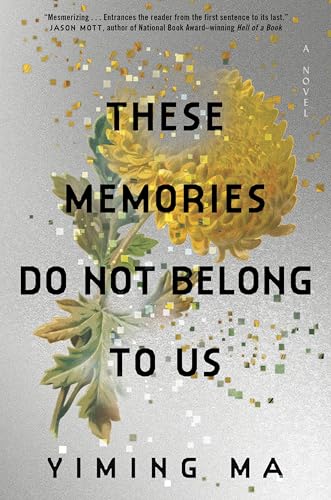
- These Memories Do Not Belong to Us
Yiming Mastandalone novel2025
similar byidentityscience fictionour worldnear future
These Memories Do Not Belong To Us is a 2025 science fiction novel by Chinese Canadian author Yiming Ma, set in a world where memories can be transferred between minds, and a reimagined China known as the Qin Empire has become the sole global superpower.