More like Triple Zero
anchored on:science fictionmilitary science fictioncloninggalactic scalefar futurewar+1 more
but
- The Saga of Seven Suns Universe
series16 books2002
similar bytensefar futuregalactic scalescience fictionwarspace opera+2 more
- Honor Harrington
series14 books1993
part of Honorverse
similar bytensefar futurescience fictionmilitary science fictionwarspace opera
David Weber's Honor Harrington novels follow the title character's rise through the Manticoran navy in the 'Honorverse,' a space-opera setting built around Age-of-Sail-style naval combat, interstellar politics and a decades-long war between rival star nations. Beginning with On Basilisk Station, the core series runs to fourteen books, alongside spin-off subseries, prequels and shared-world anthologies also set in the Honorverse. It's one of the longest-running modern military science fiction series, published by Baen.
- Vatta's War
series6 books2003
part of Vatta
similar bytensefar futurescience fictionwarmilitary science fictionspace opera
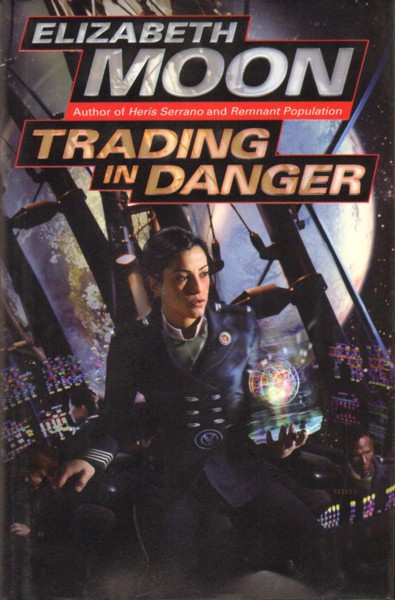
Vatta's War is a science fiction series by American writer Elizabeth Moon, comprising five books: Trading in Danger (2003), Marque and Reprisal, Engaging the Enemy (2006), Command Decision (2007), and Victory Conditions (2008). They have been characterized as military science fiction similar in style to the works of Lois McMaster Bujold, David Weber and Walter Jon Williams.
- Janissaries
series4 books1979
similar bytensefar futurescience fictionmilitary science fictionwar+1 more
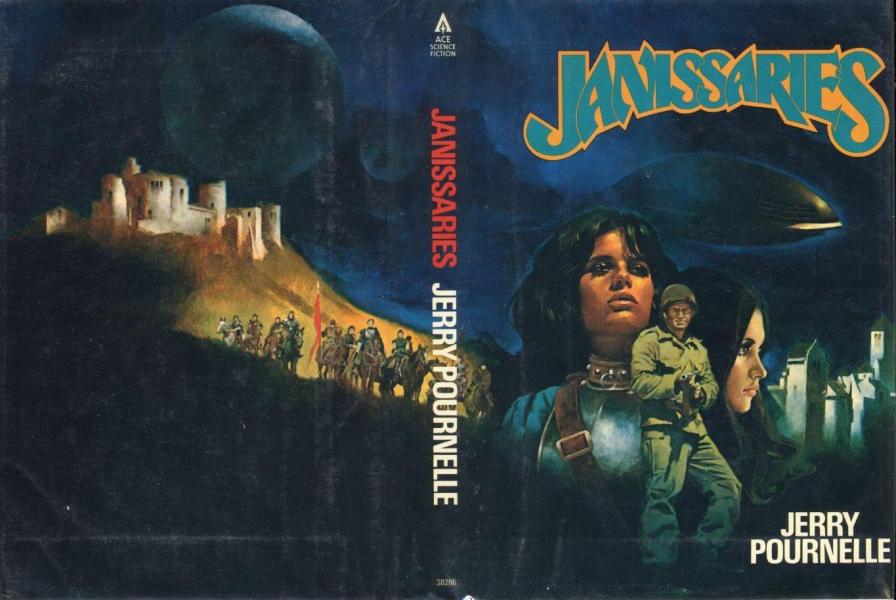
Janissaries are an American series of military and political-based science fiction novels are set in an interstellar confederation of races, in which humans are a slave race entrusted with military affairs and law enforcement. They were written by Jerry Pournelle, with Roland J. Green co-authoring the second two books.
- Man-Kzin Wars
series84 books1986
part of Known Space
similar bytensefar futurescience fictionmilitary science fictionwar+1 more
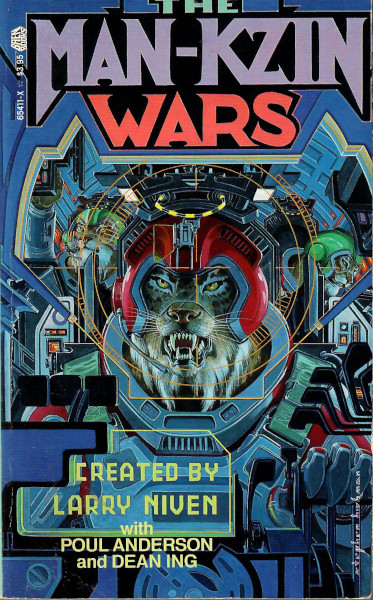
The Man–Kzin Wars is the name of a series of military science fiction anthologies as well as the name of the first book in the series. The short stories detail the eponymous conflicts between mankind and the Kzinti, set in Larry Niven's Known Space universe. However, Niven himself has written only a small number of the stories; most were written by other science fiction writers, as Niven opened this part of the Known Space to collaboration in the form of a shared universe. The cover art for the books in the series is created by Stephen Hickman.
- Conquerors
series3 books1994
similar bytensefar futurescience fictionwarmilitary science fiction+2 more
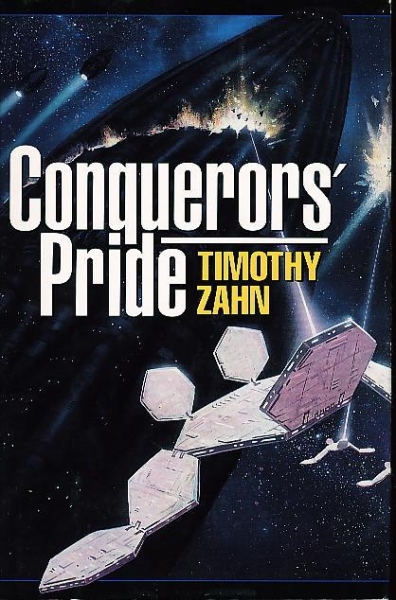
Conquerors is Timothy Zahn's military science-fiction trilogy following human fighter pilots and their commanders through an interstellar war that neither side fully understands, told across Conquerors' Pride, Conquerors' Heritage, and Conquerors' Legacy. Zahn alternates perspective between the human and alien chains of command, using the shifting viewpoints to slowly unpick why the conflict started in the first place. It's contact-and-conflict SF built around miscommunication rather than straightforward invasion.
- The Machineries of Empire
series10 books2012
similar bytensefar futurescience fictionwarmilitary science fictionspace opera+2 more
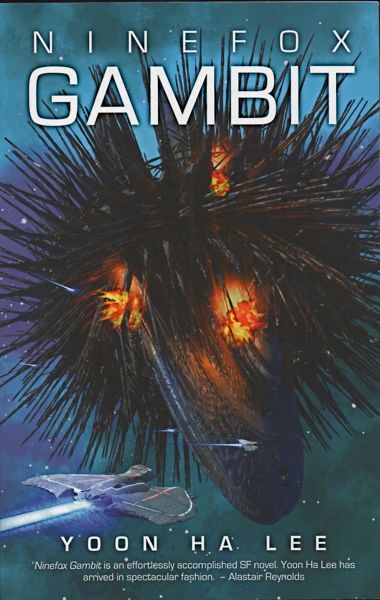
Machineries of Empire is a series of military science fiction/science fantasy/space opera novels by American writer Yoon Ha Lee and published by Solaris Books. It consists of Ninefox Gambit (2016), Raven Stratagem (2017) and Revenant Gun (2018). A collection of short stories set in the same universe, Hexarchate Stories, was published in 2019. This collection includes Glass Cannon, a novella which functions as a sequel to the original trilogy. The main trilogy follows the young infantry captain Kel Cheris and the traitorous general Shuos Jedao in a war among factions of a despotic interstellar empire, the Hexarchate, whose esoteric technology is based on the population's adherence to the imperial calendar.
- Armor
John Steakleystandalone novel1984
similar bytensefar futurescience fictionmilitary science fictionwar
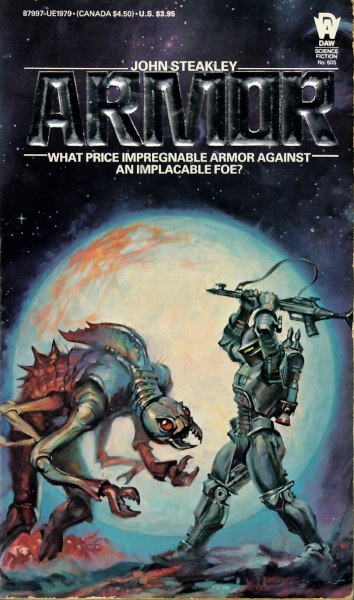
Armor is a military science fiction novel by John Steakley. It features the military use of exoskeletons and insect-like alien enemies but concentrates on the psychological effects of violence on human beings.
- Death's Head (David Gunn)
series3 books2007
similar bytensefar futurescience fictionwarmilitary science fictionspace opera+1 more
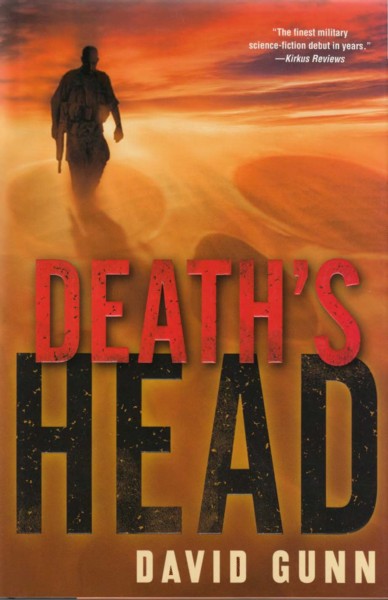
Death's Head is a noir military science fiction series written by David Gunn. The series follows the antihero Sven Tveskoeg, an ex-sergeant of The Legion, in service to the Octovian Empire.
- The Eternity Brigade
Stephen Goldinstandalone novel1980
similar bytensefar futurecloningscience fictionwarmilitary science fiction
WorldCat: Hundreds of human bodies have been placed in coffins in a military warehouse. But they are not dead, merely frozen in a cryogenic process meant to preserve an army of men to be restored to life if ever they are needed. The Earth they arise to inhabit is a world completely different from any they have known or imagined. Their only task is to fight and kill in the wars that plague the planet. They are not treated as men, but as fighting machines to be endlessly duplicated and used up. By having had their genetic patterns programmed into a computer, they are doomed to live over and over again, as part of an army that will not die and cannot escape. Yet one man is determined to break the pattern and free himself, truly believing that there must be a way out ... of eternity.
- Old Man's War
series16 books2005
similar byfar futurescience fictionwarmilitary science fictionspace opera+1 more
The Old Man's War series is a series of science fiction novels by John Scalzi. The first book in the series, Old Man's War, was first published in 2005 by Tor Books, and was nominated for the Hugo Award for Best Novel in 2006. In 2026 it was a finalist for the Hugo Award for Best Series.
- Dune Universe
universe78 books1963
Start hereDune · Start here
similar byfar futurescience fictionspace opera+1 more
Arrakis. Dune. The desert planet, where empire runs on a single substance: the spice melange, which folds space, prolongs life, and unlocks prescience, and which exists nowhere else in the known universe. Frank Herbert's saga is a meditation dressed as an adventure — feudal houses and a secret sisterhood, engineered messiahs and the patient ecology of a world without water, all turning on the terrible gravity of who commands the spice. It reads like scripture and schemes like a war room, ten thousand years hence, among people who have outlawed the thinking machine and made instruments of themselves instead. At its heart stand Herbert's original six — Dune, Dune Messiah, Children of Dune, God Emperor of Dune, Heretics of Dune, Chapterhouse: Dune — a single deepening arc across millennia, arguing the whole way between prophecy and free will. Around that spine his son Brian Herbert and Kevin J. Anderson have raised a vast prequel architecture: Prelude to Dune, tracing the great houses a generation before Paul; Legends of Dune, reaching back to the crusade that broke the machines; the Schools of Dune cycle on the founding of Bene Gesserit, Mentat, and Navigator; the Caladan Trilogy and Heroes of Dune filling years the originals left in shadow. Many hands, dozens of volumes, one desert. What sets Dune apart is its refusal of the simple: religion is manufactured, heroes are hazards, and the sand itself — worm, water, ecology — acts as a political power. Begin where the universe did, with Frank Herbert's Dune (1965), and read the original six in order; you need nothing else to feel the full weight. The prequels are a country to explore afterward, taken by era. Beginnings are delicate times.
- Dune
series20 books1963
part of Dune Universe
similar byfar futurescience fictionspace opera+2 more
Frank Herbert's Dune Chronicles opens with 1965's Dune, set on the desert planet Arrakis where House Atreides takes control of the only source of the vital spice melange and young Paul Atreides is pulled into a struggle over its politics and religion. Herbert carried the story forward across five further novels — Dune Messiah, Children of Dune, God Emperor of Dune, Heretics of Dune, and Chapterhouse: Dune — following Paul's line over the following millennia, before Brian Herbert and Kevin J. Anderson later extended the saga. Many other editions of these six novels are omnibus and box-set repackagings rather than separate stories.
- Azean Empire
series2 books1987
similar bytensefar futurescience fictionwarspace opera+2 more
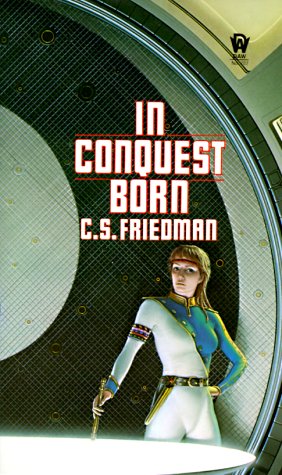
C. S. Friedman's Azean Empire novels are set in a distant-future conflict between two competing human societies, the Azeans and the Braxins, contesting interstellar dominance. In Conquest Born, her debut, works as space opera and military SF with an anthropological bent, using the two societies' opposed cultures and reproductive philosophies as the real engine of the conflict rather than just the battles themselves. The Wilding continues the same interstellar rivalry.
- Fifth Imperium
series3 books1991
similar bytensefar futurescience fictionwarspace opera+2 more
David Weber's Fifth Imperium series opens with the discovery that Earth's Moon is in fact a disguised alien starship, the Dahak, that has orbited undetected for tens of thousands of years - a relic of the fallen Fourth Imperium, a multi-star civilization destroyed while defending against the genocidal Achuultani. Mutineers' Moon follows humanity's first contact with Dahak and the mutineers still aboard it; The Armageddon Inheritance and Heirs of Empire escalate from that discovery into interstellar war and dynastic politics as humanity inherits the old empire's legacy and its enemies. The three novels were later collected as the omnibus Empire from the Ashes.
- Takeshi Kovacs
series3 books2002
similar bytensefar futurescience fictionidentity+3 more
Takeshi Kovacs is a former elite soldier turned freelance troubleshooter in a future where human consciousness can be digitized and transferred between bodies, or sleeves, making death an inconvenience for those who can afford new ones. Richard Morgan's trilogy - Altered Carbon, Broken Angels, Woken Furies - moves Kovacs through noir-inflected mysteries on different worlds, using the resleeving premise to interrogate class, violence, and what, if anything, survives a person's original body. It became the basis for a Netflix series.
- Runs in the Family
Kevin Ikenberrystandalone novel2016
similar bytensefar futuregalactic scalescience fictionmilitary science fictionwaridentity
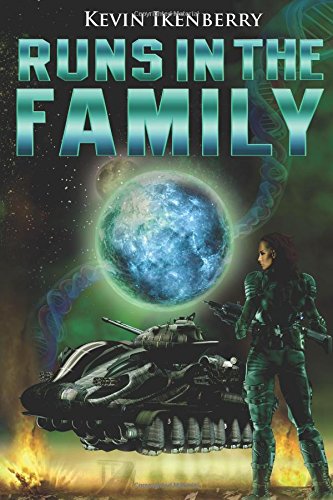
Runs in the Family by Kevin Ikenberry is a military science fiction novel about Mairin Shields, an outcast who undergoes a genetic experiment to implant her great-grandfather's combat memories, transforming her into a soldier to fight a galactic war, blending futuristic warfare with themes of identity and legacy. The story follows her journey as she learns to use her new skills, navigates military life, and confronts a familiar enemy, all while developing a relationship with an alien architect.
- Ender's Shadow
series5 books1999
part of Ender's Game Universe
similar bytensefar futurescience fictionwar+2 more
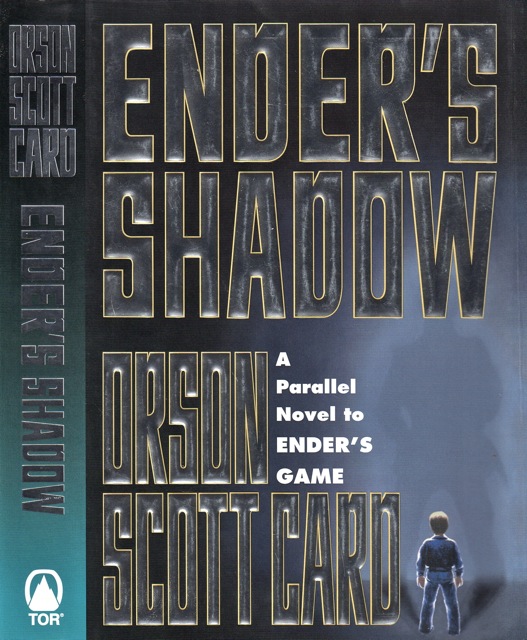
Orson Scott Card's Ender's Shadow retells the events of Ender's Game from the perspective of Bean, a physically stunted but ferociously intelligent street child recruited into the same Battle School program as Ender Wiggin. It launches the Shadow series, which follows Bean and other secondary Battle School characters into the political aftermath of the Formic Wars back on Earth, running parallel to and eventually past the timeline of Card's main Ender Quintet.
- Starfist
series18 books1997
similar bytensefar futurescience fictionmilitary science fictionwar
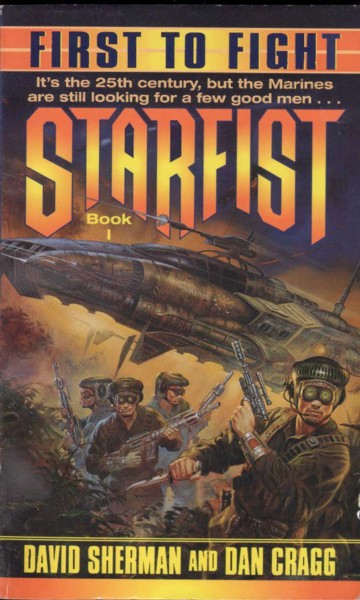
StarFist is a series of military science fiction novels written by David Sherman and Dan Cragg. The novels are set in the 25th century and are written from the viewpoint of the men of the Confederation of Human Worlds Marine Corps 34th FIST. An additional spin-off series, titled StarFist: Force Recon, by the same authors was started in 2005 with the publication of Backshot. All books were published by Del Rey Books.
- Praxis Universe
series12 books2002
similar bytensefar futurescience fictionwargalactic scalespace opera+1 more
- Empire of Man
series4 books2001
similar bytensefar futurescience fictionmilitary science fictionwarspace opera
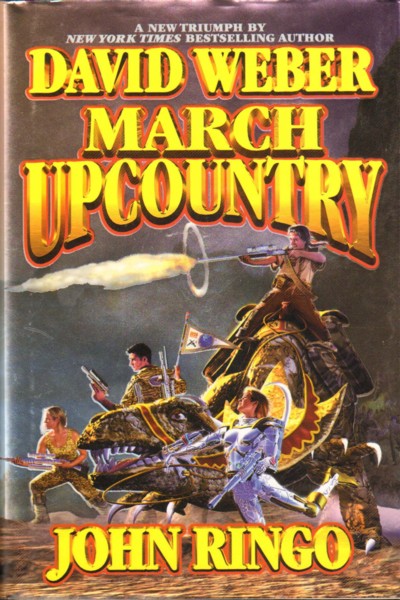
The Empire of Man is a series of science fiction books by David Weber and John Ringo published by Baen Books. It combines elements of space opera and military science fiction.
- Vatta
universe10 books2003
Start hereVatta's War · Start here
similar bytensefar futurescience fictionmilitary science fictionspace opera+1 more
Get kicked out of the Academy and the family still hands you a ship. That is the arithmetic Kylara Vatta lives by. Born into Vatta Transport, Ltd. — a dynasty of interstellar traders who reckon their honor in delivered cargo and honored contracts — Ky wants a soldier's commission and gets a merchant hull instead. Then someone starts murdering her relatives and burning the ledgers, and the daughter learns that a trade fleet, armed and angry, is its own kind of war. This is military science fiction run on a merchant's books. The core cycle, Vatta's War, moves in five volumes — Trading in Danger, Marque and Reprisal, Engaging the Enemy, Command Decision, Victory Conditions — as piracy, a sabotaged faster-than-light communications network, and a scattered family push Ky from cautious captain to fleet commander. The later duology Vatta's Peace (Cold Welcome, Into the Fire) drops her, older and decorated, into a colder survival ordeal on her own homeworld. Moon writes clean, competent, procedural: supply lines and boarding actions, chains of command, the cost of a signature on a bad contract. Expect capable women, hard decisions costed to the last credit, and space combat that respects physics and paperwork alike. Begin at the beginning — Trading in Danger — and read straight through in publication order; the arc is chronological and cumulative, no side doors required.
- Red Rising
series13 books2014
similar bytensefar futurescience fictionspace opera+2 more
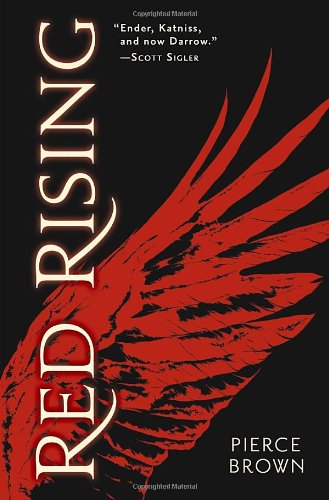
Pierce Brown's Red Rising follows Darrow, a lowborn 'Red' miner on a colonized Mars who discovers his caste's suffering is a lie sustained by the ruling Gold elite, and infiltrates their ranks to destroy the system from within. The series expands from a single-protagonist revenge story into a sprawling multi-book war across the solar system, eventually following an ensemble cast beyond Darrow alone, and combines Roman-inspired factional politics with brutal, competition-driven action set pieces.
- Naked to the Stars
Gordon R. Dicksonstandalone novel1961
similar bytensefar futurescience fictionmilitary science fictionwar
The subject of the cosmic soldier has become a matter of concern for the science fiction reader. With the award-winning success of The Forever War, and with the great classic novels of Gordon R. Dickson's genetically bred mercenaries, the Dorsai, it is clear that the role of a fighter in a universe of expanding technology and competing alien intelligences is on science fiction's orders of the day. Gordon R. Dickson has been the master of that field, and his novel, Naked to the Stars, is one of his masterpieces. Long out of print, it is the story of a star soldier who, during a battle against a non-human foe on a far planet, somehow lost sixteen hours from his memory. Discharged for the potential danger those lost hours might have programmed, Cal Truant made it his fixation to uncover the mystery buried in his mind - to find out what had happened in those missing hours - and block the peril it might present to his fellow troopers, to his war command, and to the planet for which they fought - Earth.