More like Triplicity
anchored on:science fictionour worldnear futuredystopiaalienssurvival+1 more
but
- Make Room! Make Room!
Harry Harrisonstandalone novel1966
similar bydarkour worldnear futurescience fictionsurvivaldystopiatenseecological collapse
Make Room! Make Room! is a 1966 science fiction novel written by Harry Harrison exploring the consequences of both unchecked population growth on society and the hoarding of resources by a wealthy minority. It was originally serialized in Impulse magazine.
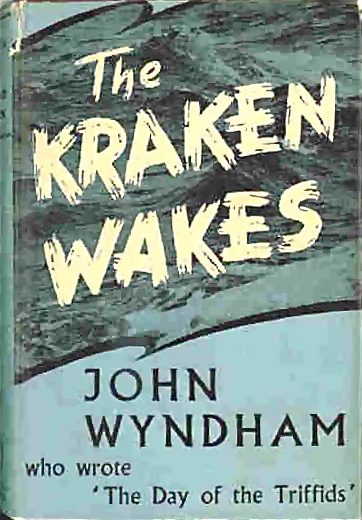
- The Kraken Wakes
John Wyndhamstandalone novel1953
similar bydarkour worldscience fictionalienssurvivaltense+1 more
" Behind a spectacular meteor shower actually hides the beginning of an invasion by a mysterious and powerful alien race. Earth's life is disrupted by the attacks of extraterrestrials whose war machines, emerging from the depths of the oceans, seem indestructible. The coalitioned forces of the whole world are worthless, powerless in the face of the indecipherable and deadly plans of a superior intelligence, capable of bringing the entire planet to the brink of catastrophe" Goodreads May 20, 2022
- The Hopkins Manuscript
R. C. Sherriffstandalone novel1939
similar bydarknear futurescience fictionsurvivalour worlddystopiatenseecological collapse
The Hopkins Manuscript is a dystopian science fiction novel by R. C. Sherriff, first published in 1939 by Victor Gollancz. In 1958 it was reissued in a revised edition as a Pan paperback under the title The Cataclysm. The novel was later republished under its original title by The Macmillan Company in 1963 and by Persephone Books in 2002.
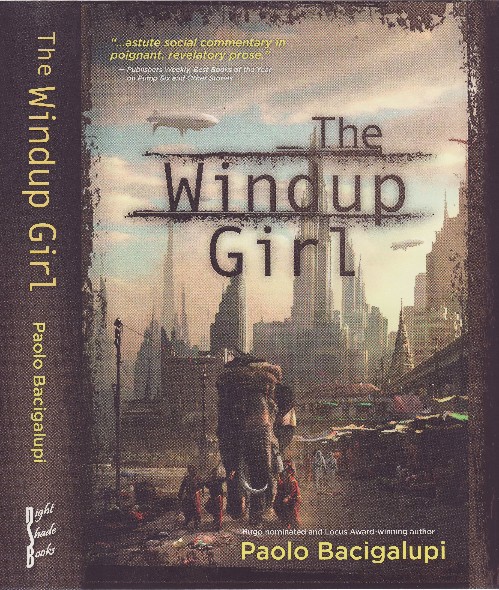
- The Windup Universe
series3 books2005
similar bydarknear futurescience fictionour worlddystopiaecological collapse+1 more
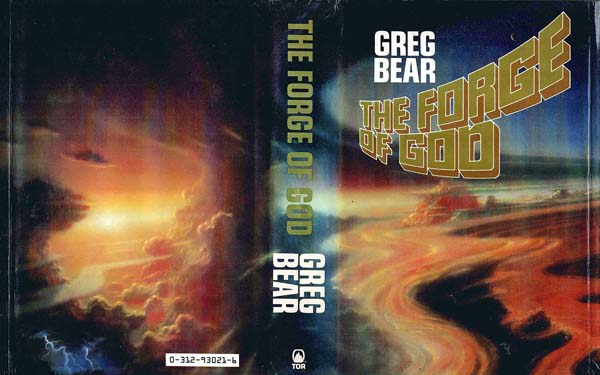
- Forge of God
series2 books1987
completed
similar bydarkscience fictionalienssurvivaltense+2 more
The Forge of God (1987) is Greg Bear's science fiction novel about Earth's discovery that it is the target of an incomprehensible, overwhelming alien attack, following scientists and ordinary people as they try to understand what is destroying the planet. Its 1992 sequel, Anvil of Stars, follows a group of young survivors sent on a mission of interstellar retaliation, continuing directly from the first book's ending.
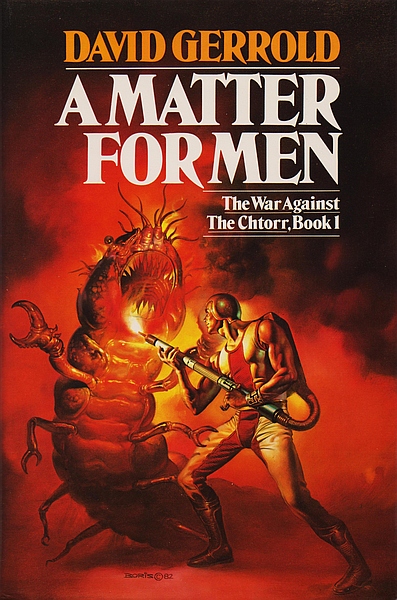
- War Against the Chtorr
series7 books1983
similar bynear futuredarkscience fictionalienssurvivaltenseecological collapse+1 more
The War Against the Chtorr is a series of science fiction novels by American writer David Gerrold. The Chtorr series was originally planned as a trilogy, but as the story became more intricate, Gerrold realized that three books would not be enough for him to tell the entire story. For a time, he was uncertain how many books there would be in the end but plans on seven. As of 2022, four books have been completed. As of 2017, a fifth and sixth were in the works, 24 years after the publication of the fourth book.
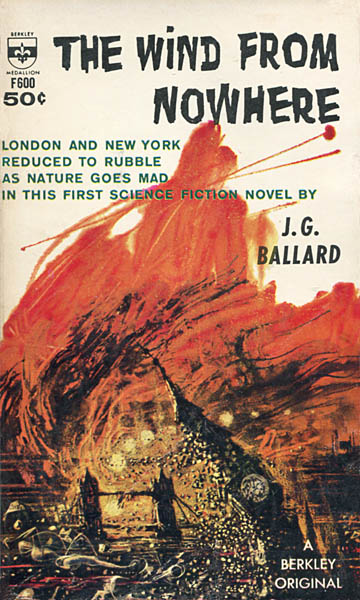
- The Wind from Nowhere
J. G. Ballardstandalone novel1962
similar bydarkour worldnear futurescience fictionsurvivaldystopiatenseecological collapse
The Wind from Nowhere is a science fiction novel by English author J. G. Ballard. Published in 1962, it was his debut novel. He had previously published only short stories.
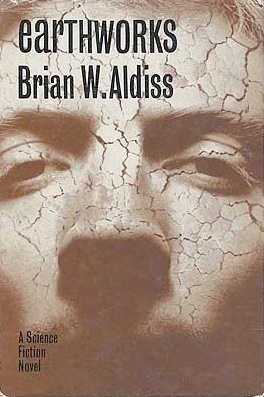
- Earthworks
Brian W. Aldissstandalone novel1965
similar bydarkour worldnear futurescience fictiondystopiatenseecological collapse
Earthworks is a 1965 dystopian science fiction novel by British science fiction author Brian Aldiss. The novel draws its premise from prevalent fears about population growth and overcrowding of the Earth.
- The Genocides
Thomas M. Dischstandalone novel1965
similar bydarkour worldnear futurescience fictionalienssurvivalecological collapse
The Genocides is a 1965 science fiction novel by American writer Thomas M. Disch, first published by Berkley Books as a Berkley Medallion paperback. It was Disch's first novel and was nominated for the Nebula Award for Best Novel for 1965.
- The Future
Naomi Aldermanstandalone novel2023
similar bydarkour worldnear futurescience fictiondystopiatenseecological collapse
The Future is a 2023 science fiction novel by English writer Naomi Alderman, published by Simon & Schuster. The novel is set in a future dystopia where the world has been altered by environmental crisis and a powerful technocracy.
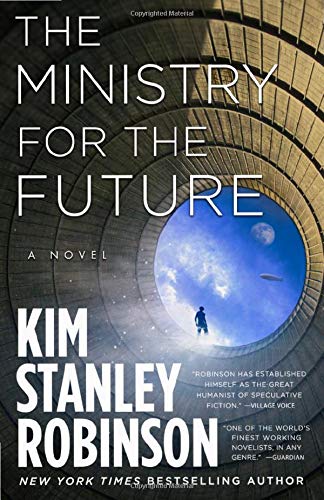
- The Ministry for the Future
Kim Stanley Robinsonstandalone novel2020
similar byour worldnear futurescience fictionsurvivaldystopiaecological collapse+1 more
The Ministry for the Future is a climate fiction novel by American science fiction writer Kim Stanley Robinson, published in 2020. Set in the near future, the novel follows a subsidiary body, established under the Paris Agreement, whose mission is to act as an advocate for the world's future generations of citizens as if their rights were as valid as the present generation's. While the ministry pursues various ambitious projects, the effects of climate change are determined to be the most consequential. The plot primarily follows Mary Murphy, the head of the titular Ministry for the Future, and Frank May, an American aid worker traumatized by experiencing a deadly heat wave in India. Many chapters are devoted to other characters' accounts of future events, as well as their ideas about ecology, economics, and other subjects.
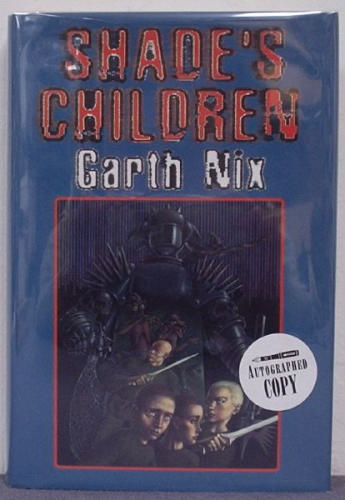
- Shade's Children milieu
series2 books1997
similar bydarknear futurescience fictionsurvivaldystopiatense+1 more
Shade's Children is set on an Earth where all adults vanished overnight fourteen years earlier, leaving children to be harvested at puberty by the machines that now run the world, unless they escape into hiding with Shade, a mysterious AI-like protector. Garth Nix's 1997 novel is a single, self-contained book rather than a series, though its bleak post-apocalyptic premise has drawn comparisons to his other work.
- The Fireman
Joe Hillstandalone novel2016
similar bydarkour worldnear futurescience fictionsurvivaltense
The Fireman is a novel set in a post-apocalyptic time by American author Joe Hill. The novel, Hill's fourth, tells the tale of a deadly spore that has infected most of the world's population. Hill first spoke of the novel in 2013 in promotional interviews for his then-new novel NOS4A2. The novel was released on May 17, 2016.
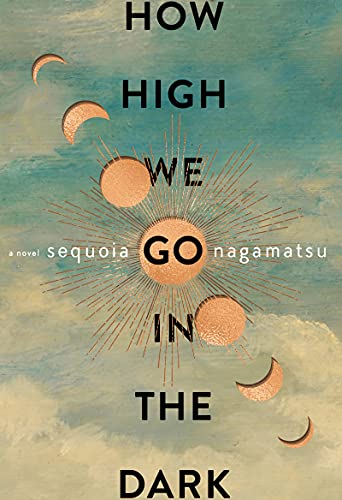
- How High We Go in the Dark
Sequoia Nagamatsustandalone novel2022
similar bydarkour worldnear futurescience fictiondystopiaecological collapse+1 more
(Robin MacArthur, in Scientific American): "[A] dystopian narrative set in the near future about an ancient virus that is uncovered by a scientist ... while she is researching melting permafrost in the Arctic."
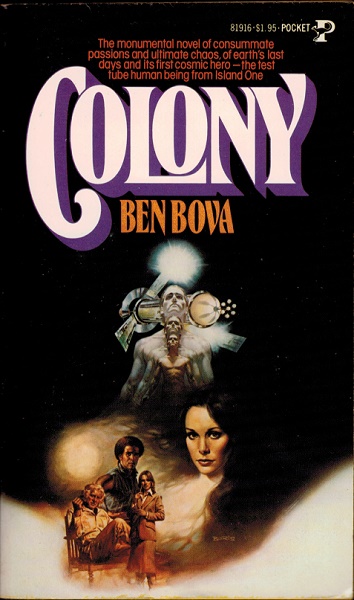
- Colony
Ben Bovastandalone novel1978
similar bynear futurescience fictionsurvivaldystopiatense+3 more
Colony continues the story Ben Bova began in Millennium, following astronaut-turned-administrator Chet Kinsman years later as the head of an orbiting space habitat that has become Earth's only real refuge from a planet buckling under overpopulation, food shortages and unrest. Getting a place in the habitat is a matter of life and death for millions who will never be chosen, and as Earth's governments grow more desperate to control or dismantle the colony outright, Kinsman has to decide how far he'll go to protect the world he's built off-world. Bova later folded both novels together into the omnibus The Kinsman Saga. Part of Ben Bova's Chet Kinsman series.
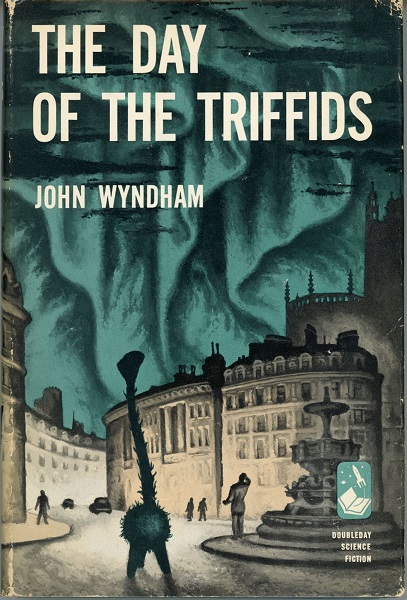
- The Triffids
series3 books1951
similar byour worlddarkscience fictionsurvival+2 more
John Wyndham's The Day of the Triffids (1951) opens with a meteor-shower-like event that leaves most of Britain's population blind, throwing civilization into collapse just as triffids, an aggressive and mobile species of poisonous plant, become free to hunt the helpless survivors. Simon Clark's authorized sequel The Night of the Triffids (2001) picks up a generation later, narrated by the original protagonist's son as he confronts a new triffid-dominated world, and John Whitbourn's The Age of the Triffids extends the shared setting further still. Together the three novels form a loose post-apocalyptic trilogy built on Wyndham's original premise rather than a tightly plotted single story.
- Earthseed
series7 books1993
similar bydarknear futurescience fictionsurvivaldystopia+1 more
Octavia E. Butler's Earthseed novels, Parable of the Sower and Parable of the Talents, follow Lauren Olamina as she survives the collapse of a climate-ravaged, near-future United States and founds a belief system built on the idea that "God is Change." The two-book series was left unfinished at Butler's death; a planned third novel, Parable of the Trickster, was never completed. Later graphic-novel adaptations retell the same two stories rather than continuing the narrative.
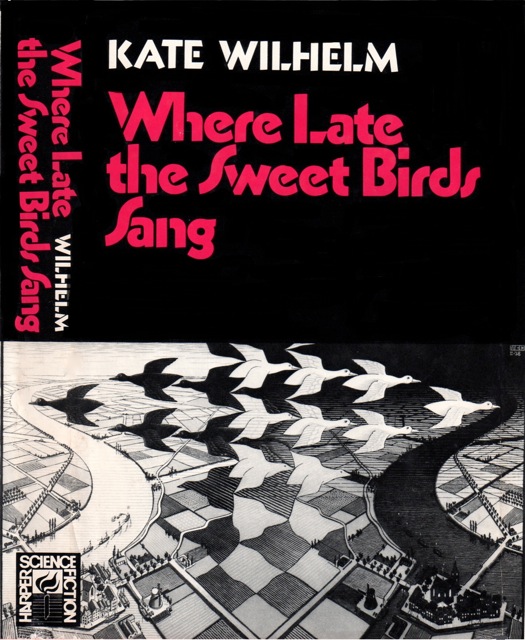
- Where Late the Sweet Birds Sang
Kate Wilhelmstandalone novel1976
similar bydarkour worldnear futurescience fictionsurvivalecological collapse
Where Late the Sweet Birds Sang is a science fiction novel by American writer Kate Wilhelm, published in 1976. The novel is composed of three parts, "Where Late the Sweet Birds Sang," "Shenandoah," and "At the Still Point," and is set in a post-apocalyptic era, a concept popular among authors who took part in the New Wave Science Fiction movement in the 1960s.
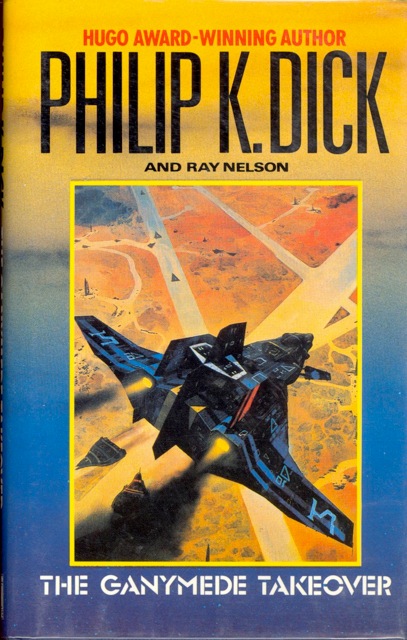
- The Ganymede Takeover
Philip K. Dick & Ray Nelsonstandalone novel1967
similar bydarkour worldnear futurescience fictionalienstense+1 more
The Ganymede Takeover is a 1967 science fiction novel by American writers Philip K. Dick and Ray Nelson. It is an alien invasion novel, and similar to Dick's earlier solo novel The Game-Players of Titan.
- Gold Fame Citrus
Claire Vaye Watkinsstandalone novel2015
similar bydarkour worldnear futurescience fictionsurvivalecological collapse+2 more
Gold Fame Citrus is a 2015 speculative fiction novel by Claire Vaye Watkins. It is her second book, but her first novel. The work received positive reviews.
- The Water Knife
Paolo Bacigalupistandalone novel2015
similar bydarknear futurescience fictionsurvivaldystopiatenseecological collapse
The Water Knife is a 2015 science fiction novel by Paolo Bacigalupi. It is Bacigalupi's sixth novel, and is based on his short story, The Tamarisk Hunter, first published in the news magazine High Country News. It takes place in the near future, where drought brought on by climate change has devastated the Southwestern United States.
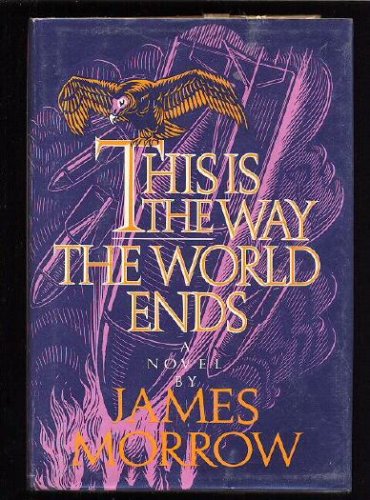
- This Is the Way the World Ends
James Morrowstandalone novel1986
similar bydarkour worldnear futurescience fictionsurvivalecological collapse+1 more
This Is the Way the World Ends is a post-apocalyptic novel by American writer James K. Morrow, published in 1986.
- I Am Legend
Richard Mathesonstandalone novel1954
similar bydarkour worldsurvivalscience fictiondystopiatense
The last human survivor of the vampire epidemic has to maintain his defences against their onslaught, while attempting to research the cause and possibly solution to the plague. Robert Neville is the last living man on Earth... but he is not alone. Every other man, woman and child on the planet has become a vampire, and they are hungry for Neville's blood. By day he is the hunter, stalking the undead through the ruins of civilization. By night, he barricades himself in his home and prays for the dawn. How long can a man survive like this?