Loreful
HomeDiscover
Search series, authors…⌘K
Loreful

Reading orders for SF/F series and shared universes — with your place kept in every one.

Explore

UniversesSeriesWorksAuthorsAtlas

Help

FAQAboutSite map

Account & legal

Sign inCreate accountPrivacyTerms

Data

Built on ISFDB, Wikipedia, Wikidata and Open Library. Curated reading orders carry their reasoning on the page; the rest follow publication order. Data sources & licenses

© Loreful · data: ISFDB · CC BY

More like Trophy

but

Mood

The mood the book leaves you in.

  • The reading experience is propelled by journeys, exploration, and physical risk; excitement and forward momentum dominate over dread or introspection.
  • Joy and loss are deliberately mixed; the resolution grants characters something real while taking something else away, leaving warmth and sorrow together.
  • The book demands work from the reader — dense prose, difficult structure, unfamiliar ideas, or morally uncomfortable material — as part of its intended effect.
  • Grim events, cruelty, or despair dominate the atmosphere, and the book does not soften them with comfort or comic relief.
  • The atmosphere is quietly unsettling — wrongness, unease, and the uncanny pervade the book without necessarily escalating into overt horror.
  • The book is built to move the reader; character feeling is foregrounded and major scenes aim at a strong emotional response.
  • Humor is a primary aim and the prose plays for laughs — comic situations, wit, or dialogue produce sustained comedy, not occasional levity.
  • The book insists that things can improve; effort and decency are shown to matter, and the arc bends toward better outcomes even through hardship.
  • The book teaches as it goes — real facts, history, science, or craft are conveyed in enough depth that learning is part of the reading experience.
  • The overall register is cheerful and easygoing; stakes are kept gentle and the book avoids dwelling on pain or dread.
  • Withheld information drives the experience; the book sustains enigmas and secrets the reader wants resolved, whatever its genre.
  • The book is contemplative and inward-looking, giving more weight to thought, memory, and meaning than to external events.
  • Grief, loss, or melancholy set the dominant register, and the book lets sorrow stand rather than resolving it into comfort.
  • Sustained suspense is the point; the book keeps the reader braced for what happens next through danger, pressure, or impending revelation.
  • Playful invention and charm define the register — fanciful conceits, light absurdity, and a narration that delights in its own oddity.

About

What the story runs on.

  • Stories centered on vampires — blood-drinking undead — whether as predators, love interests, or protagonists.
  • Stories structured as a quest — a journey undertaken to find, deliver, or destroy something of great import.
  • Stories in which staying alive against nature, catastrophe, or scarcity is the central problem.
  • Stories of growing up — a young protagonist crossing from childhood into adult knowledge and responsibility.
  • Stories about who a character truly is — self-discovery, doubled lives, and the search for a self.
  • Stories in which belief, doubt, and religious life are the central subject, from crises of faith to life inside a religious community.
  • Stories in which a buried family truth — hidden parentage, crimes, or shames — surfaces and reorders the present.
  • Stories driven by maneuvering for power — factions, conspiracies, and statecraft conducted in shadow.
  • Stories in which war itself is the subject — combat, occupation, and what warfare does to soldiers and civilians.
  • Stories set under absolute state power — dictatorship, thought control, propaganda, and life inside a police state.
  • Stories organized around investigating a killing — the case, the clues, and the pursuit of the killer, in any genre's clothing.
  • Stories following an expedition into the unknown — uncharted lands, lost cities, and the discovery or ruin waiting at the end.

Shelf

Where it sits in the library.

    • Fiction built on magic or other supernatural elements that have no scientific explanation.
    • Secondary-world fantasy at large scale, where the fate of nations or the world turns on the protagonists' struggle.
    • Fantasy set in a recognizably modern city or contemporary world where the supernatural intrudes on everyday life.
    • Fantasy that blends in horror's atmosphere and imagery, keeping a fantastical frame around grim or frightening material.
    • Fantasy set in a real historical period or a close analogue of one, with magic woven into the era.
    • Fantasy in which protagonists cross from the ordinary world into another world through a portal or similar passage.
    • Fiction that retells or reworks a traditional fairy tale in a new form or setting.
    • Fantasy drawing directly on myths, legends, and folklore, retelling them or building on their figures and logic.
    • Fantasy of ghosts, vampires, shapeshifters, psychics, and similar phenomena, usually set in an otherwise ordinary world.
    • Fiction mixing science-fictional trappings with overtly magical or impossible elements in one setting.
    • Fiction that extrapolates from science and technology — future societies, space travel, or speculative inventions — within at least nominally natural laws.
    • Science fiction of interstellar scope — starships, galactic polities, and adventure across star systems.
    • Science fiction committed to scientific rigor, where technical plausibility constrains the story.
    • Science fiction centered on armed forces and warfare, told largely from a military point of view.
    • Science fiction of networked, corporate-dominated near futures, pairing high technology with social decay.
    • Science fiction styled on nineteenth-century steam-powered technology, often in a Victorian or pseudo-Victorian setting.
    • Fiction depicting an oppressive or catastrophic society, presented as a warning.
    • Fiction set after civilization's collapse, following survivors in the ruins of the old world.
    • Fiction in which characters move between past and future, and the mechanics or consequences of that travel drive the plot.
    • Fiction exploring a world where a historical event went differently and history diverged from ours.
    • Science fiction about humanity's first encounter and communication with an alien intelligence.
    • Fiction whose primary aim is to frighten or unsettle the reader through dread, menace, or the monstrous.
    • Horror of decaying houses, buried family secrets, and oppressive atmosphere in the Gothic literary tradition.
    • Horror centered on hauntings and the returning dead.
    • Speculative fiction of the strange and uncanny that resists both natural explanation and standard genre categories.
    • Fiction organized around solving a crime or puzzle, typically following an investigator toward the identification of a culprit.
    • Crime fiction of moral ambiguity, fatalism, and hard-edged style, set among the corrupt and the doomed.
    • A mystery set in a past era, where the investigation works within that period's methods and society.
    • Fast-paced fiction driven by imminent danger, pursuit, or high-stakes conspiracy, built to sustain tension.
    • A thriller of espionage — agents, tradecraft, and intelligence services in conflict.
    • A thriller driven by detailed contemporary or near-future technology, often military or scientific.
    • A thriller whose tension comes from mental states and manipulation between characters rather than external action.
    • Fiction whose central plot is a romantic relationship and its development toward an emotionally satisfying resolution.
    • Romance in which one or both partners are supernatural beings, blending fantasy elements into the love story.
    • Romance set in a past era, with courtship shaped by the period's society and manners.
    • Romance set in the present day, without supernatural or historical elements.
    • Fiction set in a real past period, where the historical setting materially shapes characters and events.
      • General and literary fiction emphasizing prose style, character interiority, or formal ambition over genre plot conventions.
      • Fiction in a realistic world where magical events occur and are treated as ordinary, in the tradition of Latin American literature.
      • Fiction that ridicules people, institutions, or society in order to criticize them.
      • Fiction of dreamlike, irrational imagery and logic that breaks from realistic representation.
      • Fiction that plays with narrative convention through metafiction, fragmentation, and self-reference.
      • Fiction propelled by journeys, exploration, and physical peril, where action and survival carry the plot.
      • Adventure fiction of ships and seafaring — naval engagements, voyages, and life at sea.
      • Fiction of the American frontier West — gunmen, ranchers, and lawmen, typically in the late nineteenth century.
      • Fiction centered on soldiers, campaigns, and the experience of warfare, historical or imagined.
        • Fiction written primarily to amuse, using comedic situations, wit, or parody as its organizing principle.

        Practical

        How long a commitment, whether it stands alone, and whether it has finished.

        Tap a chip to ask for it · tap again to rule it out · once more to clear. Numbers show what would be left.

        • Cover of The Light of Other Days
          The Light of Other Days

          Arthur C. Clarke & Stephen Baxter · standalone novel · 2000

          similar by+1 more

          An industrialist devises a technique to use tiny wormholes as light pipes to enable viewing of any event anywhere; and subsequently it becomes possible to use them to view any event in the past as well. The effects on society are enormous.

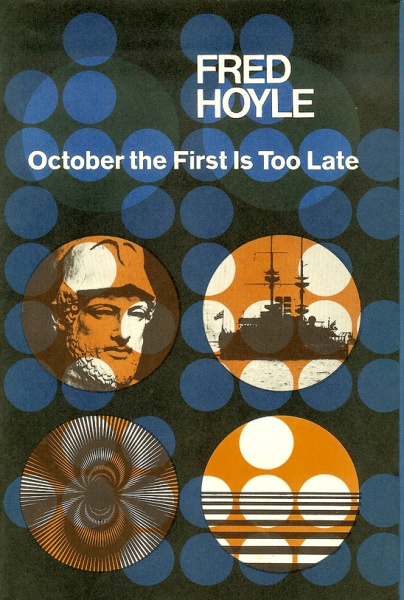
        • Cover of October the First Is Too Late
          October the First Is Too Late

          Fred Hoyle · standalone novel · 1966

          similar by+1 more

          October the First is Too Late is a science fiction novel by astrophysicist Fred Hoyle. It was first published in 1966.

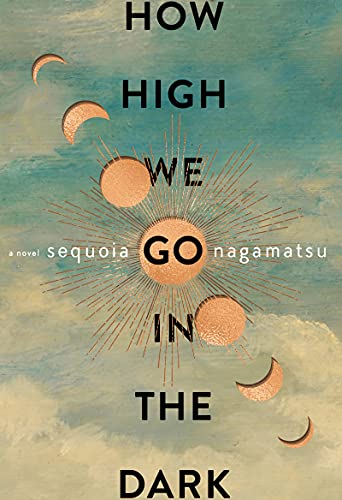
        • Cover of How High We Go in the Dark
          How High We Go in the Dark

          Sequoia Nagamatsu · standalone novel · 2022

          similar by+1 more

          (Robin MacArthur, in Scientific American): "[A] dystopian narrative set in the near future about an ancient virus that is uncovered by a scientist ... while she is researching melting permafrost in the Arctic."

        • Cover of Mother of Storms
          Mother of Storms

          John Barnes · standalone novel · 1994

          similar by+1 more

          From the flaps of the Tor first edition: "It is 2028. A strike to destroy an illegal Arctic weapons cache has a catastrophic side effect. Massive amounts of energy are liberated from the polar ice, suddenly warming the Earth's climate. In the middle of the Pacific, a gigantic hurricane thousands of miles across is forming, larger than any in human history. A storm with winds of supersonic speed. A storm that changes direction at whim. A storm that refuses to die. A storm so vast it spawns dozens more in its wake... Blinded by intrigue, expedience, and greed, the world's politicians and power brokers have ignored the killer storms threat until it is too late. Already the death toll is in the tens of millions, as it savages the Pacific coast, while its devil's brood of smaller storms are wreaking havoc across the face of the planet. While the survivors scramble for advantage, a handful of courageous men and women undertake a daring, desperate plan to save humanity from total destruction - a plan so visionary it may alter forever the future of the human race."

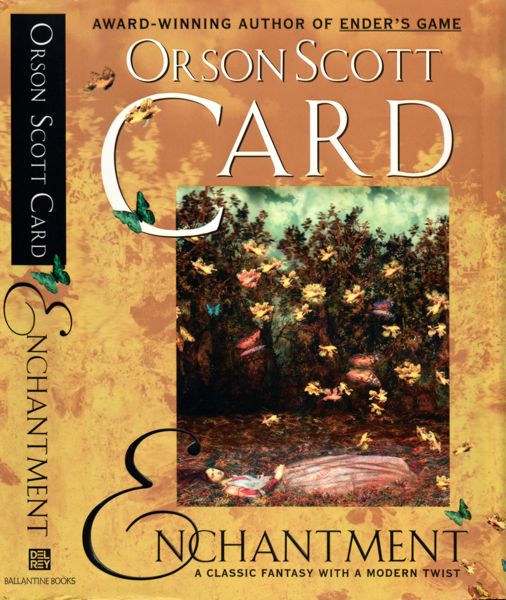
        • Cover of Enchantment
          Enchantment

          Orson Scott Card · standalone novel · 1999

          similar byeastern europe

          Enchantment is an English language fantasy novel by American writer Orson Scott Card. First published in 1999, the novel is based on the Ukrainian version of Sleeping Beauty and other folk tales. Various forms of magic, potions, and immortal deities also play an important role in the story.

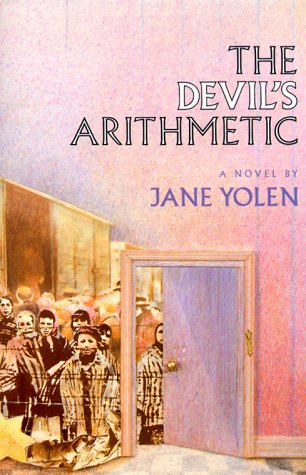
        • Cover of The Devil's Arithmetic
          The Devil's Arithmetic

          Jane Yolen · standalone novel · 1988

          similar by+1 more

          Hannah resents the traditions of her Jewish heritage until time travel places her in the middle of a small Jewish village in Nazi-occupied Poland.

        • Cover of Fairy Tale stories
          Fairy Tale stories

          series · 2 books · 1996

          similar by+1 more

        • Cover of Egg & Spoon
          Egg & Spoon

          Gregory Maguire · standalone novel · 2014

          similar by+1 more

        • Cover of Дозоры / Watch
          Дозоры / Watch

          series · 6 books · 1998

          similar byeastern europe

          Sergei Lukyanenko's Watch novels are set among the Others, humans with supernatural gifts who split into the Night Watch, policing dark forces, and the Day Watch, policing the light ones, under a truce that keeps their ancient war frozen in an uneasy bureaucratic peace. Each book follows the Night Watch magician Anton Gorodetsky through a case that keeps threatening to unbalance that truce for good. Starting in Moscow, the series expands across six novels into other cities and a wider view of how the truce actually works.

        • R
          Rusalka

          series · 6 books · 1989

          similar byeastern europe

          C. J. Cherryh's Rusalka opens a trilogy set in medieval forests near the Dnieper, drawing on Slavic folklore about the rusalka, a drowned girl transformed into a water spirit. A young wizard's uncertain magic becomes entangled with her fate as the story unfolds. Chernevog and Yvgenie continue the tale.

        • Cover of The Queen's Gambit
          The Queen's Gambit

          Walter Tevis · standalone novel · 1983

          similar byeastern europe

          The Queen's Gambit is a 1983 American novel by Walter Tevis, exploring the life of fictional female chess prodigy Beth Harmon. A bildungsroman, or coming-of-age story, it covers themes of adoption, feminism, chess, drug addiction and alcoholism. The book was adapted for the 2020 Netflix miniseries, The Queen's Gambit.

        • Cover of Winternight
          Winternight

          series · 3 books · 2017

          similar byeastern europe

          The Winternight trilogy is a series of adult historical fantasy novels written by American author Katherine Arden. The trilogy consists of The Bear and the Nightingale (2017), The Girl in the Tower (2017), and The Winter of the Witch (2019). At the beginning, the story takes place in a medieval Russian village. Vasilisa "Vasya" Petrovna has received a spiritual gift, using it to see the fantastical creatures that inhabit her village. This leads her to a conflict with the Orthodox Church who becomes convinced that she is a witch.

        • Cover of The Jonah Kit
          The Jonah Kit

          Ian Watson · standalone novel · 1975

          similar by+1 more

          The Jonah Kit is a 1975 science fiction novel by English writer Ian Watson. In 1977, The Jonah Kit won the BSFA Award for Best Novel.

        • Cover of Wolfhound Century / Vissarion Lom
          Wolfhound Century / Vissarion Lom

          series · 3 books · 2013

          similar byeastern europe

        • Cover of Swordhand
          Swordhand

          series · 2 books · 2006

          completed

          similar by+1 more

        • Cover of Bomb Light
          Bomb Light

          series · 1 book · 2024

          similar byeastern europe

        • Cover of We the Living
          We the Living

          Ayn Rand · standalone novel · 1936

          similar byeastern europe

          Semi-autobiographical story of an independent-minded girl living in poverty, hunger and oppression of early 1920s Communist Russia.

        • Cover of Deathless
          Deathless

          Catherynne M. Valente · standalone novel · 2011

          similar byeastern europe

          Deathless is an alternate history novel by American writer Catherynne M. Valente, combining the Russian fairy tale The Death of Koschei the Deathless with the events and aftermath of the Russian Revolution. The novel follows the life of Marya Morevna as she transforms from a young child witnessing the revolution to her newfound position as bride after her marriage with Koschei, Tsar of Life. The book is divided into six parts and is told primarily in the third person from the perspective of Marya Morevnan. However, it does feature other characters, such as Ivan Tsarevich.

        • Cover of Between the Wars
          Between the Wars

          series · 4 books · 1981

          similar by+1 more

          The Pyat Quartet, also known as Between the Wars, is a tetralogy of historical fiction novels by English author Michael Moorcock comprising Byzantium Endures, The Laughter of Carthage, Jerusalem Commands and The Vengeance of Rome published from 1981 to 2006.

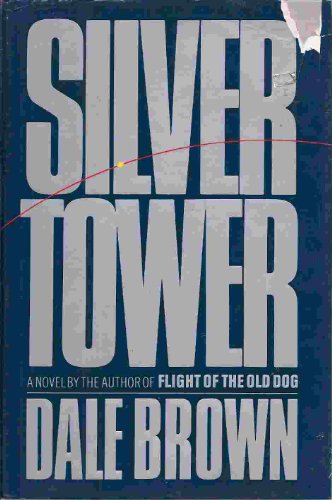
        • Cover of Silver Tower
          Silver Tower

          Dale Brown · standalone novel · 1988

          similar by+1 more

          The first permanent U.S. space station plays a pivotal role in deciding the outcome of a crisis in the Middle East.

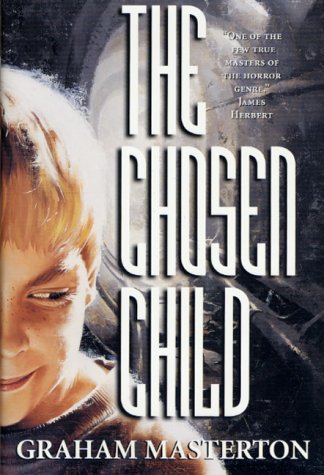
        • Cover of The Chosen Child
          The Chosen Child

          Graham Masterton · standalone novel · 1997

          similar byeastern europe

          "Sarah Leonard is an American businesswoman in charge of a major hotel chain's expansion in Poland. She's personally supervising the construction in Warsaw, because if the job doesn't come in on time and under budget, Sarah would be quickly unemployed."--Jacket.

        • Cover of The Incandescent Ones
          The Incandescent Ones

          Fred Hoyle & Geoffrey Hoyle · standalone novel · 1977

          similar by+1 more

          The Incandescent Ones is a science fiction novel by British astrophysicist Fred Hoyle and his son Geoffrey Hoyle. It was first published in 1977. The novel describes the eventful epic journey of the narrator, which seems to begin as a story of Cold War espionage but, involving life forces beyond Earth, finally leads to Jupiter.

        • Cover of Hugo Cornelius Toorop Universe
          Hugo Cornelius Toorop Universe

          series · 1 book · 1999

          similar byeastern europe

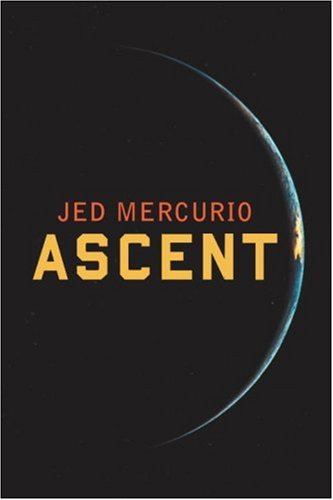
        • Cover of Ascent
          Ascent

          Jed Mercurio · standalone novel · 2007

          similar byeastern europe

          Ascent is a 2007 secret history novel by British writer Jed Mercurio. It follows the career of Yevgeni Yeremin, an orphan of Stalingrad, from his days as a MiG-15 pilot in the Korean War to his later years as a cosmonaut.