Loreful
HomeDiscover
Search series, authors…⌘K
Loreful

Reading orders for SF/F series and shared universes — with your place kept in every one.

Explore

UniversesSeriesWorksAuthorsAtlas

Help

FAQAboutSite map

Account & legal

Sign inCreate accountPrivacyTerms

Data

Built on ISFDB, Wikipedia, Wikidata and Open Library. Curated reading orders carry their reasoning on the page; the rest follow publication order. Data sources & licenses

© Loreful · data: ISFDB · CC BY

More like Tros

anchored on:historical fictionancient worldadventure

but

Mood

The mood the book leaves you in.

  • The reading experience is propelled by journeys, exploration, and physical risk; excitement and forward momentum dominate over dread or introspection.
  • Joy and loss are deliberately mixed; the resolution grants characters something real while taking something else away, leaving warmth and sorrow together.
  • The book demands work from the reader — dense prose, difficult structure, unfamiliar ideas, or morally uncomfortable material — as part of its intended effect.
  • Grim events, cruelty, or despair dominate the atmosphere, and the book does not soften them with comfort or comic relief.
  • The atmosphere is quietly unsettling — wrongness, unease, and the uncanny pervade the book without necessarily escalating into overt horror.
  • The book is built to move the reader; character feeling is foregrounded and major scenes aim at a strong emotional response.
  • Humor is a primary aim and the prose plays for laughs — comic situations, wit, or dialogue produce sustained comedy, not occasional levity.
  • The book insists that things can improve; effort and decency are shown to matter, and the arc bends toward better outcomes even through hardship.
  • The book teaches as it goes — real facts, history, science, or craft are conveyed in enough depth that learning is part of the reading experience.
  • The book is designed to uplift and motivate, presenting perseverance or achievement in a way that invites the reader to aspire or act.
  • The overall register is cheerful and easygoing; stakes are kept gentle and the book avoids dwelling on pain or dread.
  • Withheld information drives the experience; the book sustains enigmas and secrets the reader wants resolved, whatever its genre.
  • The book is contemplative and inward-looking, giving more weight to thought, memory, and meaning than to external events.
  • The book works as comfort reading — low tension, a soothing pace, and an atmosphere the reader can unwind in.
  • Grief, loss, or melancholy set the dominant register, and the book lets sorrow stand rather than resolving it into comfort.
  • Sustained suspense is the point; the book keeps the reader braced for what happens next through danger, pressure, or impending revelation.
  • Playful invention and charm define the register — fanciful conceits, light absurdity, and a narration that delights in its own oddity.

About

What the story runs on.

  • Stories in which extraterrestrial beings are central — as characters, cultures, or the object of the plot.
  • Stories about venturing into space to explore — survey missions, astronauts, and the frontier of the unknown beyond Earth.
  • Stories structured as a quest — a journey undertaken to find, deliver, or destroy something of great import.
  • Stories in which staying alive against nature, catastrophe, or scarcity is the central problem.
  • Stories of lovers kept apart by law, family, faith, or station, where the obstacle to love is the plot.
  • Stories in which a friendship — its making, testing, or loss — is the emotional center.
  • Stories of growing up — a young protagonist crossing from childhood into adult knowledge and responsibility.
  • Stories about who a character truly is — self-discovery, doubled lives, and the search for a self.
  • Stories in which a buried family truth — hidden parentage, crimes, or shames — surfaces and reorders the present.
  • Stories driven by maneuvering for power — factions, conspiracies, and statecraft conducted in shadow.
  • Stories in which war itself is the subject — combat, occupation, and what warfare does to soldiers and civilians.
  • Stories organized around investigating a killing — the case, the clues, and the pursuit of the killer, in any genre's clothing.

Shelf

Where it sits in the library.

    • Fiction built on magic or other supernatural elements that have no scientific explanation.
    • Secondary-world fantasy at large scale, where the fate of nations or the world turns on the protagonists' struggle.
    • Fantasy set in a recognizably modern city or contemporary world where the supernatural intrudes on everyday life.
    • Fantasy that blends in horror's atmosphere and imagery, keeping a fantastical frame around grim or frightening material.
    • Action-driven fantasy following warriors or rogues with personal stakes against sorcerous threats, rather than world-spanning conflicts.
    • Fantasy set in a real historical period or a close analogue of one, with magic woven into the era.
    • Fantasy in which protagonists cross from the ordinary world into another world through a portal or similar passage.
    • Fiction that retells or reworks a traditional fairy tale in a new form or setting.
    • Fantasy drawing directly on myths, legends, and folklore, retelling them or building on their figures and logic.
    • Fantasy of ghosts, vampires, shapeshifters, psychics, and similar phenomena, usually set in an otherwise ordinary world.
    • Fiction mixing science-fictional trappings with overtly magical or impossible elements in one setting.
    • Low-stakes fantasy emphasizing comfort, community, and everyday pleasures over conflict and peril.
    • Speculative fiction of pervasive moral ambiguity, violence, and cynicism that rejects heroic conventions — fantasy and SF alike.
      • Fiction that extrapolates from science and technology — future societies, space travel, or speculative inventions — within at least nominally natural laws.
      • Science fiction of interstellar scope — starships, galactic polities, and adventure across star systems.
      • Science fiction committed to scientific rigor, where technical plausibility constrains the story.
      • Science fiction centered on armed forces and warfare, told largely from a military point of view.
      • Science fiction of networked, corporate-dominated near futures, pairing high technology with social decay.
      • Science fiction styled on nineteenth-century steam-powered technology, often in a Victorian or pseudo-Victorian setting.
      • Fiction depicting an oppressive or catastrophic society, presented as a warning.
      • Fiction set after civilization's collapse, following survivors in the ruins of the old world.
      • Fiction in which characters move between past and future, and the mechanics or consequences of that travel drive the plot.
      • Fiction exploring a world where a historical event went differently and history diverged from ours.
      • Science fiction about humanity's first encounter and communication with an alien intelligence.
      • Science fiction in which extraterrestrial forces attack or occupy Earth and humanity resists.
      • Fiction whose primary aim is to frighten or unsettle the reader through dread, menace, or the monstrous.
      • Horror of vast, indifferent, incomprehensible entities before which humanity is insignificant, in the Lovecraft tradition.
      • Horror of decaying houses, buried family secrets, and oppressive atmosphere in the Gothic literary tradition.
      • Horror centered on hauntings and the returning dead.
      • Horror located in the mind — paranoia, obsession, and unreliable perception rather than external monsters.
      • Horror built around the reanimated dead and survival amid their outbreaks.
      • Horror defined by explicit, transgressive gore that refuses to cut away from violence.
      • Speculative fiction of the strange and uncanny that resists both natural explanation and standard genre categories.
      • Fiction organized around solving a crime or puzzle, typically following an investigator toward the identification of a culprit.
      • A puzzle-first mystery that lays out clues so the culprit's identity can be deduced before the reveal.
      • Crime fiction of moral ambiguity, fatalism, and hard-edged style, set among the corrupt and the doomed.
      • A mystery following the realistic routines of police work — forensics, interviews, and case-building.
      • A gentle mystery with an amateur sleuth, a small community, and violence kept off the page.
      • A mystery set in a past era, where the investigation works within that period's methods and society.
      • Fast-paced fiction driven by imminent danger, pursuit, or high-stakes conspiracy, built to sustain tension.
      • A thriller of espionage — agents, tradecraft, and intelligence services in conflict.
      • A thriller centered on lawyers and the courtroom, where litigation carries the suspense.
      • A thriller driven by detailed contemporary or near-future technology, often military or scientific.
      • A thriller whose tension comes from mental states and manipulation between characters rather than external action.
      • Fiction whose central plot is a romantic relationship and its development toward an emotionally satisfying resolution.
      • Romance in which one or both partners are supernatural beings, blending fantasy elements into the love story.
      • A fantasy-romance hybrid in which the romantic arc and the fantasy plot carry equal weight.
      • Romance set in a past era, with courtship shaped by the period's society and manners.
      • Romance set in the present day, without supernatural or historical elements.
      • Fiction set in a real past period, where the historical setting materially shapes characters and events.
        • General and literary fiction emphasizing prose style, character interiority, or formal ambition over genre plot conventions.
        • Fiction in a realistic world where magical events occur and are treated as ordinary, in the tradition of Latin American literature.
        • Fiction that ridicules people, institutions, or society in order to criticize them.
        • Fiction of dreamlike, irrational imagery and logic that breaks from realistic representation.
        • Fiction that plays with narrative convention through metafiction, fragmentation, and self-reference.
        • Fiction propelled by journeys, exploration, and physical peril, where action and survival carry the plot.
        • Adventure fiction of ships and seafaring — naval engagements, voyages, and life at sea.
        • Fiction of the American frontier West — gunmen, ranchers, and lawmen, typically in the late nineteenth century.
        • Fiction centered on soldiers, campaigns, and the experience of warfare, historical or imagined.
          • Fiction written primarily to amuse, using comedic situations, wit, or parody as its organizing principle.
            • Multi-generational fiction following a family or dynasty across decades, with inheritance and kinship as the through-line.
              • Fiction whose world runs on explicit game mechanics — levels, stats, and skills that characters can see and exploit.
                • Fiction about costumed or superpowered heroes and their conflicts with comparable villains.

                Practical

                How long a commitment, whether it stands alone, and whether it has finished.

                Tap a chip to ask for it · tap again to rule it out · once more to clear. Numbers show what would be left.

                • Cover of Tros of Samothrace
                  Tros of Samothrace

                  series · 21 books · 1925

                  completed

                  similar byancient worldhistorical fictionadventure+4 more

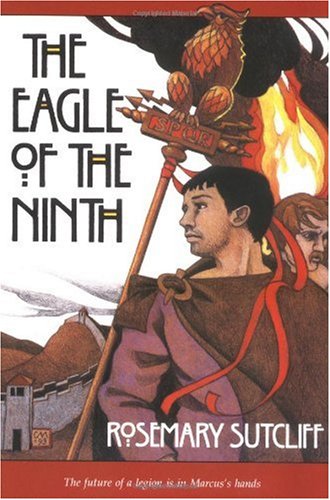
                • Cover of Marcus
                  Marcus

                  series · 4 books · 1954

                  completed

                  similar byancient worldhistorical fiction+3 more

                  Rosemary Sutcliff's linked Roman Britain novels follow several generations of one family across centuries of the Roman occupation and its aftermath, opening with The Eagle of the Ninth, in which the young centurion Marcus Aquila sets out to recover his lost father's legion standard. Later books, including The Silver Branch and The Lantern Bearers, follow his descendants through Britain's slow slide out of the Empire.

                • Cover of Ancient Egyptian
                  Ancient Egyptian

                  series · 9 books · 1993

                  similar byadventurousancient worldhistorical fiction+3 more

                  Wilbur Smith's Ancient Egypt novels open with River God (1993), narrated by the loyal eunuch slave Taita as he guides the royal family's flight from the Hyksos invasion and their eventual return to power. The series, later continued by Smith with co-author Mark Chadbourn, follows Taita and Egypt's rulers across further installments including The Seventh Scroll, Warlock, and Desert God, spanning three decades of publication.

                • Cover of Adventures of Odysseus
                  Adventures of Odysseus

                  series · 6 books · 2008

                  similar byancient worldhistorical fictionmediterranean+4 more

                • Cover of The Druid King
                  The Druid King

                  Norman Spinrad · standalone novel · 2003

                  similar bywarancient worldhistorical fictioneuropepolitical intrigue+1 more

                  The Druid King is a 2003 historical novel by American novelist Norman Spinrad. The novel is set during the Gallic Campaigns of Julius Caesar. The main protagonist of the novel is Vercingetorix and the plot follows his rise to power to become king of the Gauls and his eventual surrender to Caesar at the Battle of Alesia. The book is a novelisation of an early version of the script for Vercingétorix, la Légende du Druide Roi, a French language film.

                • Cover of The Camulod Chronicles
                  The Camulod Chronicles

                  series · 9 books · 1992

                  completed

                  similar bywarhistorical fictionancient world+3 more

                  Published in North America as the Camulod Chronicles (and elsewhere as A Dream of Eagles), Jack Whyte's series retells the Arthurian legend as grounded historical fiction, stripping away magic in favor of a plausible post-Roman Britain. Uther, the volume tracked here, centers on Uther Pendragon himself, one of the saga's recurring figures on the road to Arthur's own generation.

                • Cover of Boudica
                  Boudica

                  series · 4 books · 2003

                  similar bywarancient worldhistorical fiction+1 more

                  Manda Scott's Boudica novels reimagine the Iceni queen's life and rebellion against Roman occupation, opening with Dreaming the Eagle's account of her childhood and rise among rival British tribes before following her through the war that made her legend across three further novels.

                • Cover of I Am a Barbarian
                  I Am a Barbarian

                  Edgar Rice Burroughs · standalone novel · 1967

                  similar byadventurousancient worldhistorical fictioneurope+1 more

                  I Am a Barbarian is a historical novel by Edgar Rice Burroughs written in 1941 but was not published until after the author's death, first appearing in hardback on September 1, 1967 published by Edgar Rice Burroughs, Inc. The book was originally to have been published by Canaveral Press. When Canaveral stopped adding titles to its catalog, Edgar Rice Burroughs, Inc. took up the project. It was the first book the firm had published since Llana of Gathol, in 1948. I Am a Barbarian is one of only two historical novels Burroughs wrote. The other, The Outlaw of Torn, set in the England of King Henry III, was published in 1927.

                • Cover of Attila's Treasure
                  Attila's Treasure

                  Stephan Grundy · standalone novel · 1996

                  similar byadventurouswarancient worldhistorical fictioneurope

                  Attila's Treasure is a 1996 novel written by Stephan Grundy.

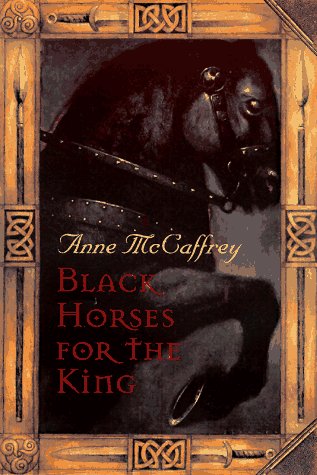
                • Cover of Black Horses for the King
                  Black Horses for the King

                  Anne McCaffrey · standalone novel · 1996

                  similar byadventurouswarancient worldhistorical fiction

                  Galwyn, son of a Roman Celt, escapes from his tyrannical uncle and joins Lord Artos, later know as King Arthur, using his talent with languages and way with horses to help secure and care for the Libyan horses that Artos hopes to use in battle against the Saxons.

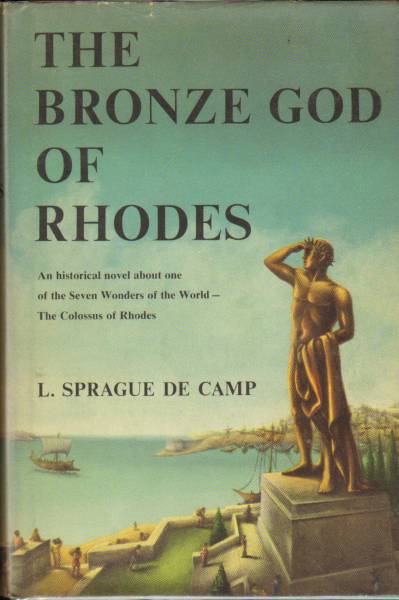
                • Cover of The Bronze God of Rhodes
                  The Bronze God of Rhodes

                  L. Sprague de Camp · standalone novel · 1960

                  similar byadventurouswarancient worldhistorical fictionpolitical intriguemediterranean

                  The Bronze God of Rhodes is a historical novel by American writer L. Sprague de Camp. It was first published in hardcover by Doubleday in 1960, and in paperback by Bantam Books in 1963. A trade paperback edition was projected by The Donning Company for 1983, but never published. The book was reissued with a new introduction by Harry Turtledove as a trade paperback and ebook by Phoenix Pick in June 2013. It is the second of de Camp's historical novels in order of writing, and fourth in internal chronology.

                • Cover of Outlander (Diana Gabaldon)
                  Outlander (Diana Gabaldon)

                  series · 26 books · 1991

                  similar by+4 more

                  Outlander is a series of historical fantasy novels by American author Diana Gabaldon. Gabaldon began the first volume of the series, Outlander, in the late 1980s; it was published in 1991. She has published nine out of a planned ten volumes. The ninth novel in the series, Go Tell the Bees That I Am Gone, was released on November 23, 2021.

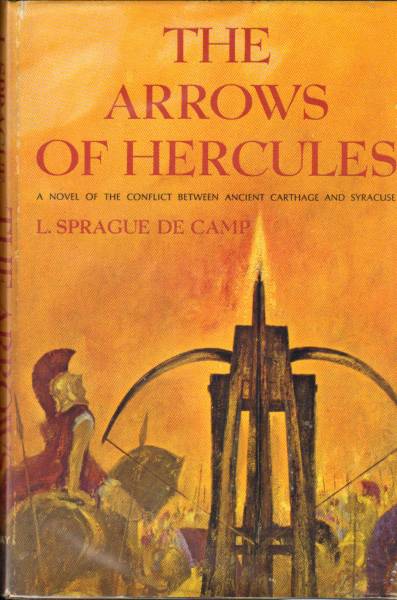
                • Cover of The Arrows of Hercules
                  The Arrows of Hercules

                  L. Sprague de Camp · standalone novel · 1965

                  similar byadventurouswarancient worldhistorical fictionpolitical intriguemediterranean

                  The Arrows of Hercules is an historical novel by American writer L. Sprague de Camp, first published in hardback by Doubleday in 1965 and in paperback by Curtis Books in 1970. The book was reissued with a new introduction by Harry Turtledove as a trade paperback and ebook by Phoenix Pick in April 2014. It is the fourth of de Camp's historical novels in order of writing, and second chronologically, set in the time of Dionysios I of Syracuse at the end of the 5th and beginning of the 4th centuries BC.

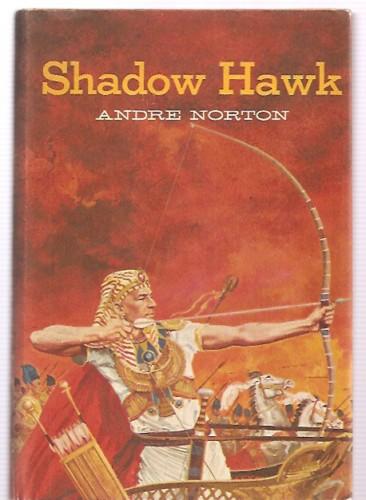
                • Cover of Shadow Hawk
                  Shadow Hawk

                  Andre Norton · standalone novel · 1960

                  similar byadventurouswarancient worldhistorical fiction

                  When his position at court is usurped by his half brother, a young Egyptian nobleman seeks to regain his standing through military victories against the enemy.

                • EU
                  Eskkar Universe

                  series · 8 books · 2007

                  similar byhistorical fictionancient world+3 more

                • Cover of The Dragonfly Pool
                  The Dragonfly Pool

                  Eva Ibbotson · standalone novel · 2008

                  similar byadventuroushistorical fictionadventureeurope+1 more

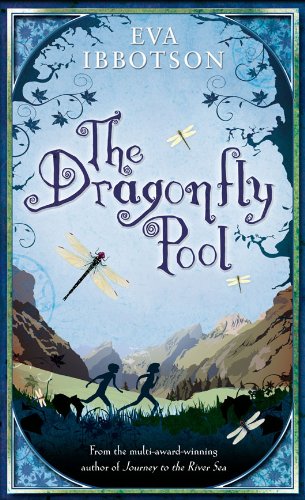
                  The Dragonfly Pool is a children's novel written by Austro-British children's writer Eva Ibbotson and illustrated by Kevin Hawkes.

                • Cover of Zulu Nation
                  Zulu Nation

                  series · 1 book · 1892

                  similar byadventuroushistorical fictionadventure+1 more

                  H. Rider Haggard's Nada the Lily is set during the rise of the Zulu king Shaka, following Umslopogaas, Shaka's unacknowledged son, and his love for the celebrated beauty Nada. Haggard weaves real Zulu history and figures together with invented characters and supernatural elements, building a tragic story of forbidden love against a backdrop of war and court intrigue. It's a standalone 1892 novel rather than a series.

                • Cover of The Grail Quest (Bernard Cornwell)
                  The Grail Quest (Bernard Cornwell)

                  series · 3 books · 2000

                  similar byadventurouswarhistorical fictioneurope+1 more

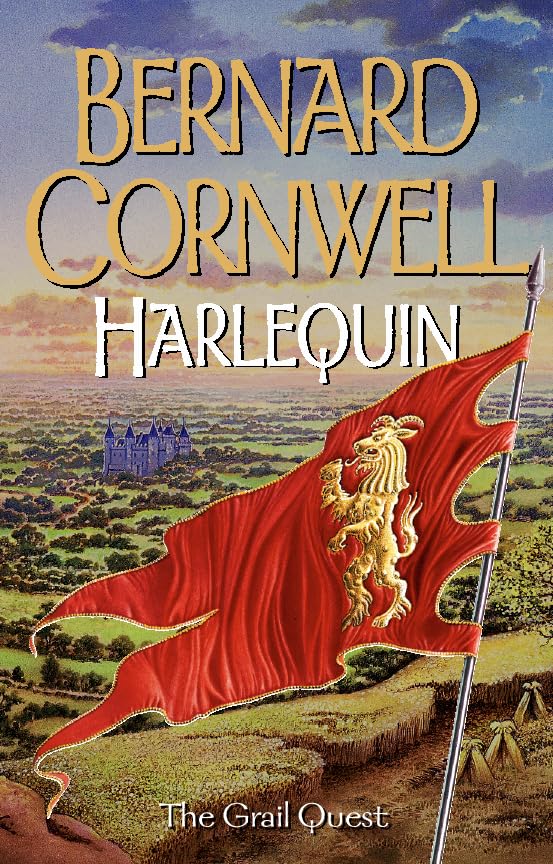
                  The Grail Quest is a historical fiction novel series written by Bernard Cornwell dealing with a 14th-century search for the Holy Grail, set during the opening stage of the Hundred Years' War.

                • Cover of The Lion of Cairo
                  The Lion of Cairo

                  Scott Oden · standalone novel · 2010

                  similar byadventurouswarancient worldhistorical fictionadventure

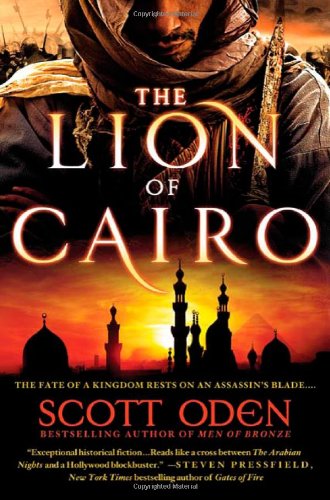
                  Scott Oden is an American writer best known for his historical novels set in Ancient Egypt and Ancient Greece. His work imitates the styles and themes of the 1930s pulps, most notably the historical fiction and fantasy of Texan author Robert E. Howard.

                • Cover of The Druids of Hibernia
                  The Druids of Hibernia

                  series · 2 books · 1991

                  similar byadventurouswarancient worldeurope+2 more

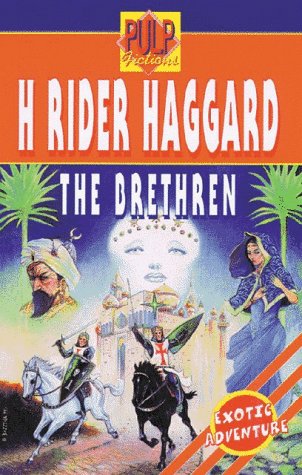
                • Cover of The Brethren
                  The Brethren

                  H. Rider Haggard · standalone novel · 1904

                  similar byadventurouswarhistorical fictionadventure+1 more

                  "... a tale ... of that pregnant and mysterious epoch, when men by thousands were glad to lay down their lives for visions and spiritual hopes, could find a picture, however faint and broken, of the long war between Cross and Crescent waged among the Syrian plains and deserts. Of Christian knights and ladies also, and their loves and sufferings in England and the East; of the fearful lord of the Assassins whom the Franks called Old Man of the Mountain, and his fortress city, Masyaf. Of the great-hearted, if at times cruel Saladin and his fierce Saracens; of the rout at Hattin itself, on whose rocky height the Holy Rood was set up as a standard and captured, to be seen no more by Christian eyes; and of the last surrender, whereby the Crusaders lost Jerusalem forever." (From the Author's Note)

                • Cover of Barney Custer
                  Barney Custer

                  series · 3 books · 1914

                  completed

                  similar byadventurouseuropepolitical intrigue+2 more

                  Barney Custer is an American farmer from Nebraska who travels to the small European kingdom of Lutha only to discover he's the spitting image of its unstable ruler, King Leopold. Edgar Rice Burroughs's The Mad King drops him into court intrigue on the eve of World War I, as a scheming uncle's plot for the throne and a budding romance with a princess force Barney to impersonate the king he resembles. It's a standalone Ruritanian adventure rather than an ongoing series.

                • Cover of The Valiant
                  The Valiant

                  series · 3 books · 2017

                  similar byancient worldhistorical fictioneurope+2 more

                • Cover of Sam Decker
                  Sam Decker

                  series · 2 books · 2010

                  similar bywar+5 more