Loreful
HomeDiscover
Search series, authors…⌘K
Loreful

Reading orders for SF/F series and shared universes — with your place kept in every one.

Explore

UniversesSeriesWorksAuthorsAtlas

Help

FAQAboutSite map

Account & legal

Sign inCreate accountPrivacyTerms

Data

Built on ISFDB, Wikipedia, Wikidata and Open Library. Curated reading orders carry their reasoning on the page; the rest follow publication order. Data sources & licenses

© Loreful · data: ISFDB · CC BY

More like Troy

anchored on:historical fictionmediterraneanancient worldshort story cyclemythic fantasygods+2 more

but

Mood

The mood the book leaves you in.

  • The reading experience is propelled by journeys, exploration, and physical risk; excitement and forward momentum dominate over dread or introspection.
  • Joy and loss are deliberately mixed; the resolution grants characters something real while taking something else away, leaving warmth and sorrow together.
  • The book demands work from the reader — dense prose, difficult structure, unfamiliar ideas, or morally uncomfortable material — as part of its intended effect.
  • Grim events, cruelty, or despair dominate the atmosphere, and the book does not soften them with comfort or comic relief.
  • The atmosphere is quietly unsettling — wrongness, unease, and the uncanny pervade the book without necessarily escalating into overt horror.
  • The book is built to move the reader; character feeling is foregrounded and major scenes aim at a strong emotional response.
  • Humor is a primary aim and the prose plays for laughs — comic situations, wit, or dialogue produce sustained comedy, not occasional levity.
  • The book insists that things can improve; effort and decency are shown to matter, and the arc bends toward better outcomes even through hardship.
  • The book teaches as it goes — real facts, history, science, or craft are conveyed in enough depth that learning is part of the reading experience.
  • The book is designed to uplift and motivate, presenting perseverance or achievement in a way that invites the reader to aspire or act.
  • The overall register is cheerful and easygoing; stakes are kept gentle and the book avoids dwelling on pain or dread.
  • Withheld information drives the experience; the book sustains enigmas and secrets the reader wants resolved, whatever its genre.
  • The book is contemplative and inward-looking, giving more weight to thought, memory, and meaning than to external events.
  • The book works as comfort reading — low tension, a soothing pace, and an atmosphere the reader can unwind in.
  • Grief, loss, or melancholy set the dominant register, and the book lets sorrow stand rather than resolving it into comfort.
  • Sustained suspense is the point; the book keeps the reader braced for what happens next through danger, pressure, or impending revelation.
  • Playful invention and charm define the register — fanciful conceits, light absurdity, and a narration that delights in its own oddity.

About

What the story runs on.

  • Stories in which extraterrestrial beings are central — as characters, cultures, or the object of the plot.
  • Stories in which gods and deities act as characters — walking the world, meddling in mortal lives, or dying.
  • Stories structured as a quest — a journey undertaken to find, deliver, or destroy something of great import.
  • Stories in which staying alive against nature, catastrophe, or scarcity is the central problem.
  • Stories of lovers kept apart by law, family, faith, or station, where the obstacle to love is the plot.
  • Stories of growing up — a young protagonist crossing from childhood into adult knowledge and responsibility.
  • Stories about who a character truly is — self-discovery, doubled lives, and the search for a self.
  • Stories about mourning — living through the death of a loved one and what loss does to the survivors.
  • Stories in which a buried family truth — hidden parentage, crimes, or shames — surfaces and reorders the present.
  • Stories driven by maneuvering for power — factions, conspiracies, and statecraft conducted in shadow.
  • Stories in which war itself is the subject — combat, occupation, and what warfare does to soldiers and civilians.
  • Stories organized around investigating a killing — the case, the clues, and the pursuit of the killer, in any genre's clothing.

Shelf

Where it sits in the library.

    • Fiction built on magic or other supernatural elements that have no scientific explanation.
    • Secondary-world fantasy at large scale, where the fate of nations or the world turns on the protagonists' struggle.
    • Fantasy set in a recognizably modern city or contemporary world where the supernatural intrudes on everyday life.
    • Fantasy that blends in horror's atmosphere and imagery, keeping a fantastical frame around grim or frightening material.
    • Action-driven fantasy following warriors or rogues with personal stakes against sorcerous threats, rather than world-spanning conflicts.
    • Fantasy set in a real historical period or a close analogue of one, with magic woven into the era.
    • Fantasy in which protagonists cross from the ordinary world into another world through a portal or similar passage.
    • Fiction that retells or reworks a traditional fairy tale in a new form or setting.
    • Fantasy drawing directly on myths, legends, and folklore, retelling them or building on their figures and logic.
    • Fantasy of ghosts, vampires, shapeshifters, psychics, and similar phenomena, usually set in an otherwise ordinary world.
    • Fiction mixing science-fictional trappings with overtly magical or impossible elements in one setting.
    • Low-stakes fantasy emphasizing comfort, community, and everyday pleasures over conflict and peril.
    • Speculative fiction of pervasive moral ambiguity, violence, and cynicism that rejects heroic conventions — fantasy and SF alike.
      • Fiction that extrapolates from science and technology — future societies, space travel, or speculative inventions — within at least nominally natural laws.
      • Science fiction of interstellar scope — starships, galactic polities, and adventure across star systems.
      • Science fiction committed to scientific rigor, where technical plausibility constrains the story.
      • Science fiction centered on armed forces and warfare, told largely from a military point of view.
      • Science fiction of networked, corporate-dominated near futures, pairing high technology with social decay.
      • Science fiction styled on nineteenth-century steam-powered technology, often in a Victorian or pseudo-Victorian setting.
      • Fiction depicting an oppressive or catastrophic society, presented as a warning.
      • Fiction set after civilization's collapse, following survivors in the ruins of the old world.
      • Fiction in which characters move between past and future, and the mechanics or consequences of that travel drive the plot.
      • Fiction exploring a world where a historical event went differently and history diverged from ours.
      • Science fiction about humanity's first encounter and communication with an alien intelligence.
      • Science fiction in which extraterrestrial forces attack or occupy Earth and humanity resists.
      • Fiction whose primary aim is to frighten or unsettle the reader through dread, menace, or the monstrous.
      • Horror of vast, indifferent, incomprehensible entities before which humanity is insignificant, in the Lovecraft tradition.
      • Horror of decaying houses, buried family secrets, and oppressive atmosphere in the Gothic literary tradition.
      • Horror centered on hauntings and the returning dead.
      • Horror located in the mind — paranoia, obsession, and unreliable perception rather than external monsters.
      • Horror built around the reanimated dead and survival amid their outbreaks.
      • Horror defined by explicit, transgressive gore that refuses to cut away from violence.
      • Speculative fiction of the strange and uncanny that resists both natural explanation and standard genre categories.
      • Fiction organized around solving a crime or puzzle, typically following an investigator toward the identification of a culprit.
      • A puzzle-first mystery that lays out clues so the culprit's identity can be deduced before the reveal.
      • Crime fiction of moral ambiguity, fatalism, and hard-edged style, set among the corrupt and the doomed.
      • A mystery following the realistic routines of police work — forensics, interviews, and case-building.
      • A gentle mystery with an amateur sleuth, a small community, and violence kept off the page.
      • A mystery set in a past era, where the investigation works within that period's methods and society.
      • Fast-paced fiction driven by imminent danger, pursuit, or high-stakes conspiracy, built to sustain tension.
      • A thriller of espionage — agents, tradecraft, and intelligence services in conflict.
      • A thriller centered on lawyers and the courtroom, where litigation carries the suspense.
      • A thriller driven by detailed contemporary or near-future technology, often military or scientific.
      • A thriller whose tension comes from mental states and manipulation between characters rather than external action.
      • Fiction whose central plot is a romantic relationship and its development toward an emotionally satisfying resolution.
      • Romance in which one or both partners are supernatural beings, blending fantasy elements into the love story.
      • A fantasy-romance hybrid in which the romantic arc and the fantasy plot carry equal weight.
      • Romance set in a past era, with courtship shaped by the period's society and manners.
      • Romance set in the present day, without supernatural or historical elements.
      • Fiction set in a real past period, where the historical setting materially shapes characters and events.
        • General and literary fiction emphasizing prose style, character interiority, or formal ambition over genre plot conventions.
        • Fiction in a realistic world where magical events occur and are treated as ordinary, in the tradition of Latin American literature.
        • Fiction that ridicules people, institutions, or society in order to criticize them.
        • Fiction of dreamlike, irrational imagery and logic that breaks from realistic representation.
        • Fiction that plays with narrative convention through metafiction, fragmentation, and self-reference.
        • Fiction propelled by journeys, exploration, and physical peril, where action and survival carry the plot.
        • Adventure fiction of ships and seafaring — naval engagements, voyages, and life at sea.
        • Fiction of the American frontier West — gunmen, ranchers, and lawmen, typically in the late nineteenth century.
        • Fiction centered on soldiers, campaigns, and the experience of warfare, historical or imagined.
          • Fiction written primarily to amuse, using comedic situations, wit, or parody as its organizing principle.
            • Multi-generational fiction following a family or dynasty across decades, with inheritance and kinship as the through-line.
              • Fiction whose world runs on explicit game mechanics — levels, stats, and skills that characters can see and exploit.
                • Fiction about costumed or superpowered heroes and their conflicts with comparable villains.

                Practical

                How long a commitment, whether it stands alone, and whether it has finished.

                Tap a chip to ask for it · tap again to rule it out · once more to clear. Numbers show what would be left.

                • Cover of The Firebrand
                  The Firebrand

                  Marion Zimmer Bradley · standalone novel · 1987

                  similar bygodswarmediterraneanancient worldmythic fantasyemotional+1 more

                  The Firebrand is a 1987 historical fantasy novel by American author Marion Zimmer Bradley. Set in the ancient city of Troy, the novel is a retelling of Homer's epic poem the Iliad. The Firebrand is written from the point of view of Kassandra, the prophet daughter of King Priam of Troy, and also features other prominent characters from Greek mythology. As in the Iliad, Kassandra foresees catastrophe for her city, but few pay heed to her warnings. In Bradley's story, Kassandra is presented as a strong and insightful woman rather than as a sufferer of insanity.

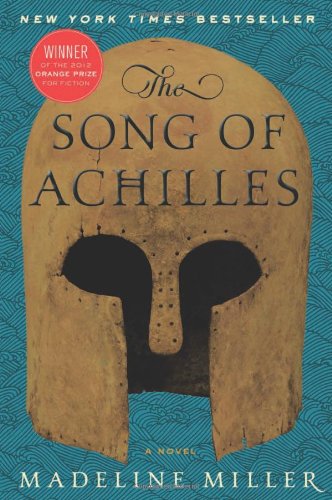
                • Cover of The Song of Achilles
                  The Song of Achilles

                  Madeline Miller · standalone novel · 2011

                  similar bywarmediterraneanancient worldhistorical fictionmythic fantasyemotional+1 more

                  The Song of Achilles is a 2011 novel by American writer Madeline Miller. Set during the Greek Heroic Age, it is a retelling of the Trojan War as told from the perspective of Patroclus. The novel follows Patroclus' relationship with Achilles, from their initial meeting to their exploits during the Trojan War, with focus on their romantic relationship. In 2012, The Song of Achilles was awarded the Orange Prize for Fiction.

                • Cover of Troy
                  Troy

                  Adèle Geras · standalone novel · 2000

                  similar bygodswarmediterraneanancient worldhistorical fictionmythic fantasyemotional

                  From the back cover of a Harcourt advance reading copy: "The siege of Troy has lasted almost ten years. Inside the walled city, food is growing scarce and the death toll is rising. From the heights of Mount Olympus, the Gods watch with interest. Bored with the endless, dreary war, Aphrodite, Goddess of Love, turns her attention to two sisters: Marpessa, who is gifted with God-sight and serves as handmaiden to Helen, the most beautiful woman in the world; and Xanthe, who is kind and loving and tends the wounded soldiers in the Blood Room. When Eros Eros fits and arrow to his bow and lets it fly, neither sister will escape its power."

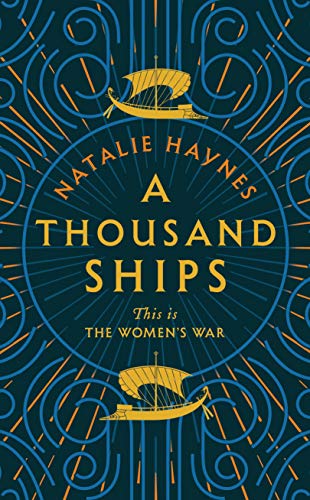
                • Cover of A Thousand Ships
                  A Thousand Ships

                  Natalie Haynes · standalone novel · 2019

                  similar byreflectivewarmediterraneanancient worldmythic fantasyhistorical fictionemotional

                  A Thousand Ships is a 2019 novel by Natalie Haynes which retells the mythology of the Trojan War from the perspective of the women involved. It was shortlisted for the 2020 Women's Prize for Fiction.

                • Cover of Lavinia
                  Lavinia

                  Ursula K. Le Guin · standalone novel · 2008

                  similar byreflectivegodsmediterraneanancient worldhistorical fictionmythic fantasy

                  Lavinia is a Locus Award-winning novel by American author Ursula K. Le Guin. Published in 2008, it was Le Guin's last novel. It is written in a first-person, self-conscious style that recounts the life of Lavinia, a minor character in Virgil's epic poem the Aeneid.

                • Cover of Stone Blind
                  Stone Blind

                  Natalie Haynes · standalone novel · 2022

                  similar byreflectivegodsmediterraneanancient worldmythic fantasyemotional

                  Stone Blind is a novel retelling the Greek myth of the gorgon Medusa. It was written by Natalie Haynes, a British classicist and writer. The book was longlisted for the Women's Prize for Fiction and nominated for best fiction book at the British Book Awards.

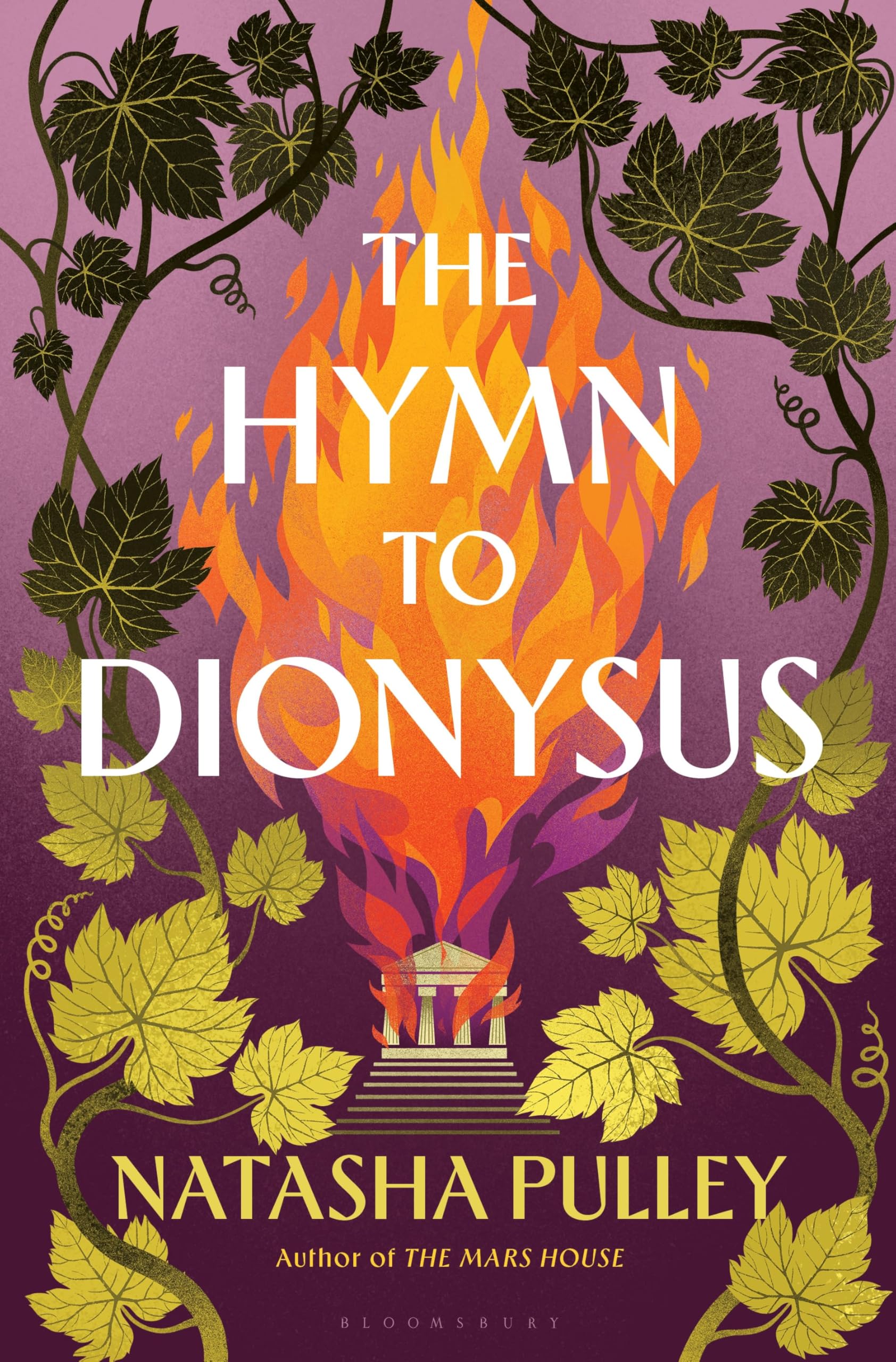
                • Cover of The Hymn to Dionysus
                  The Hymn to Dionysus

                  Natasha Pulley · standalone novel · 2025

                  similar byreflectivegodsmediterraneanancient worldmythic fantasy+1 more

                  Raised in a Greek legion, Phaidros has been taught to fight for the homeland he’s never seen and to follow his commander’s orders at all costs. But when he rescues a baby from a fire at Thebes’s palace, his commander’s orders cease to make sense: Phaidros is forced to abandon the blue-eyed boy at a temple, and to keep the baby’s existence a secret. Years later, after a strange encounter that led to the death of his battalion, Phaidros has become a training master for young soldiers. He struggles with panic attacks and flashbacks, and he is not the only one: all around him, his fellow veterans are losing their minds. Phaidros’s risk of madness is not his only problem: his life has become entangled with Thebes’s young crown prince, who wishes to escape the marriage his mother, the Queen, has chosen for him. When the prince vanishes, Phaidros is drawn into the search for him—a search that leads him to a blue-eyed witch named Dionysus, whose guidance is as wise as the events that surround him are strange. In Dionysus’s company, Phaidros witnesses sudden outbursts of riots and unrest, and everywhere Dionysus goes, rumors follow about a new god, one sired by Zeus but lost in a fire.

                • Cover of Theseus
                  Theseus

                  series · 2 books · 1958

                  completed

                  similar bymediterraneanancient worldhistorical fictionmythic fantasy+1 more

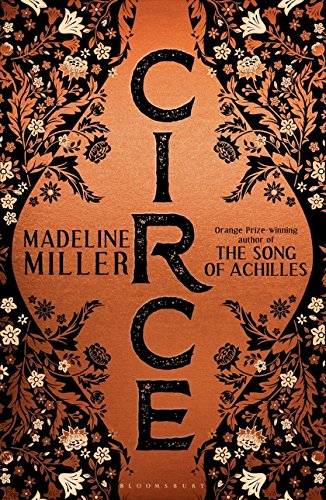
                • Cover of Circe
                  Circe

                  Madeline Miller · standalone novel · 2018

                  similar byreflectivegodsancient worldmythic fantasyemotional+1 more

                  Circe is a 2018 mythic fantasy novel by American writer Madeline Miller. Set during the Greek Heroic Age, it is an original reimagining of various Greek myths, most notably the Odyssey, as told from the perspective of the witch Circe. While drawing on characters and episodes from ancient myths, the novel invents or substantially reinterprets many aspects of Circe's biography, including Circe's encounters with mythological figures such as Hermes, the Minotaur, Jason, and Medea and ultimately, her romance with Odysseus and his son Telemachus.

                • Cover of Goddess of Yesterday
                  Goddess of Yesterday

                  Caroline B. Cooney · standalone novel · 2002

                  similar bygodswarmediterraneanancient worldmythic fantasy+1 more

                  Goddess of Yesterday is a 2002 novel by Caroline B. Cooney based on the Trojan War from Greek mythology. The book was nominated for the South Carolina Junior Book Award, and was a 2003 ALA Notable Children's Book for Older Readers

                • Cover of The Palace of Illusions
                  The Palace of Illusions

                  Chitra Banerjee Divakaruni · standalone novel · 2008

                  similar byreflectivegodswarancient worldmythic fantasyemotional

                  The Palace of Illusions: A Novel is a 2008 novel by Chitra Banerjee Divakaruni, published by Doubleday. The novel is a rendition of the Hindu epic Mahabharata as told from Draupadi's (Panchaali's) viewpoint, namely, that of a woman living in a patriarchal world.

                • Cover of Wrath Goddess Sing
                  Wrath Goddess Sing

                  Maya Deane · standalone novel · 2022

                  similar bygodswarmediterraneanancient worldmythic fantasyemotional

                  "The gods wanted blood. She fought for love. Achilles has fled her home and her vicious Myrmidon clan to live as a woman with the kallai, the transgender priestesses of Great Mother Aphrodite. When Odysseus comes to recruit the "prince" Achilles for a war against the Hittites, she prepares to die rather than fight as a man. However, her divine mother, Athena, intervenes, transforming her body into the woman's body she always longed for, and promises her everything: glory, power, fame, victory in war, and, most importantly, a child born of her own body. Reunited with her beloved cousin, Patroklos, and his brilliant wife, the sorceress Meryapi, Achilles sets out to war with a vengeance. But the gods—a dysfunctional family of abusive immortals that have glutted on human sacrifices for centuries—have woven ancient schemes more blood-soaked and nightmarish than Achilles can imagine. At the center of it all is the cruel, immortal Helen, who sees Achilles as a worthy enemy after millennia of ennui and emptiness. In love with her newfound nemesis, Helen sets out to destroy everything and everyone Achilles cherishes, seeking a battle to the death. An innovative spin on a familiar tale, this is the Trojan War unlike anything ever told, and an Achilles whose vulnerability is revealed by the people she chooses to fight...and chooses to trust." Amazon 2026-06-15

                • Cover of The Goddess of Buttercups and Daisies
                  The Goddess of Buttercups and Daisies

                  Martin Millar · standalone novel · 2015

                  similar bygodswarmediterraneanancient worldmythic fantasyhistorical fiction

                  "Aristophanes is inconsolable-his rival playwrights are hogging all the local attention, a pesky young wannabe poet won't leave him alone, his actors can't remember their lines, and his own festival sponsor seems to be conspiring against him, withholding direly needed funds for set design and, most importantly, giant phallus props. O woe, how can his latest comedy convince Athenian citizens to vote down another ten years of war against Sparta if they're too busy scoffing at the diminutive phalluses? And why does everyone in the city-state seem to be losing their minds? Wallowing in one inconvenience after another, Aristophanes is unaware that the Spartan and Athenian generals have unleashed Laet, the spirit of foolishness and bad decisions, to inspire chaos and war-mongering in Athens. To counteract Laet's influence, Athena sends Bremusa, an Amazon warrior, and Metris, an endearingly airheaded nymph (their first choice was her mother Metricia, but she grew tired of all the fighting and changed back into a river). Dashing between fantastical scenes of moody and meddlesome gods, ever-applicable political debates in the senate, backstage scrambling for the play, and glimpses of life in Ancient Greece, Martin Millar delivers another witty and comical romp for readers of all ages. "--

                • Cover of Clytemnestra
                  Clytemnestra

                  Costanza Casati · standalone novel · 2023

                  similar bygodsmediterraneanancient worldmythic fantasyhistorical fictionemotional

                  Clytemnestra is a 2023 novel, the debut novel by Costanza Casati. It is a feminist retelling of the story of Clytemnestra, a character from Greek mythology. The original Clytemnestra has been maligned for her betrayal and murder of her husband Agamemnon. Casati's novel tells Clytemnestra's story from her own perspective.

                • Cover of Till We Have Faces
                  Till We Have Faces

                  C. S. Lewis · standalone novel · 1956

                  similar byreflectivegodsancient worldmythic fantasyemotional

                  Till We Have Faces: A Myth Retold is a 1956 novel by C. S. Lewis. It is a retelling of Cupid and Psyche, based on the version in The Golden Ass by Apuleius. The myth had haunted Lewis all his life, because he believed that some of the main characters' actions were illogical. As a consequence, he chose to retell the story from the perspective of Psyche's elder sister, a highly developed character, drawing the reader into her reasoning and emotions. This was his last novel, and he considered it his most mature, written in conjunction with his wife, Joy Davidman.

                • Cover of The Foretelling
                  The Foretelling

                  Alice Hoffman · standalone novel · 2005

                  similar byreflectivewarancient worldhistorical fictionemotional

                  A coming-of-age story that pierces the soul and heals the spirit, this is the tale of the future leader of the Amazon women warriors. Rain must hold fast to her inner warrior, but she is startled and mystified by the first stirrings of mercy towards the enemy.

                • Cover of The Bronze God of Rhodes
                  The Bronze God of Rhodes

                  L. Sprague de Camp · standalone novel · 1960

                  similar bywarmediterraneanancient worldhistorical fiction+1 more

                  The Bronze God of Rhodes is a historical novel by American writer L. Sprague de Camp. It was first published in hardcover by Doubleday in 1960, and in paperback by Bantam Books in 1963. A trade paperback edition was projected by The Donning Company for 1983, but never published. The book was reissued with a new introduction by Harry Turtledove as a trade paperback and ebook by Phoenix Pick in June 2013. It is the second of de Camp's historical novels in order of writing, and fourth in internal chronology.

                • Cover of Golden Apple Trilogy
                  Golden Apple Trilogy

                  series · 3 books · 2016

                  similar byancient worldmediterraneanmythic fantasy+4 more

                • Cover of Goddess of the River
                  Goddess of the River

                  Vaishnavi Patel · standalone novel · 2024

                  similar byreflectivegodsancient worldmythic fantasyemotional

                  Goddess of the River is a 2024 novel by Vaishnavi Patel. It retells some of the events of the Mahabarata from the perspective of the goddess Ganga.

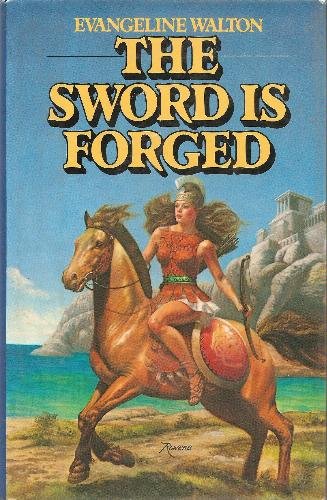
                • Cover of The Sword Is Forged
                  The Sword Is Forged

                  Evangeline Walton · standalone novel · 1983

                  similar bygodsmediterraneanancient worldhistorical fictionmythic fantasy

                  The Sword Is Forged is a 1983 historical fiction novel by Evangeline Walton. It is based on the story of Theseus and the Amazon queen Antiope from Greek mythology.

                • Cover of The World's Desire
                  The World's Desire

                  H. Rider Haggard & Andrew Lang · standalone novel · 1890

                  similar bygodsmediterraneanancient worldmythic fantasy

                  "... a continuation of the Odysseus myth. In this romance, Aphrodite compels Odysseus to leave his ruined home in Ithaca in pursuit of Helen of Troy, his love before Penelope." --VisualHaggard.org

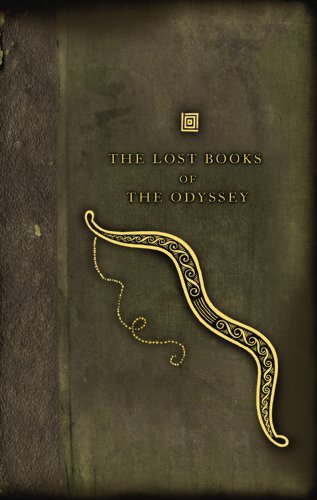
                • Cover of The Lost Books of the Odyssey
                  The Lost Books of the Odyssey

                  Zachary Mason · standalone novel · 2008

                  similar byreflectiveancient worldmediterraneanmythic fantasyshort story cycle

                  The Lost Books of the Odyssey is a 2007 novel by Zachary Mason, republished in 2010. It is a reimagination of Homer's Odyssey.

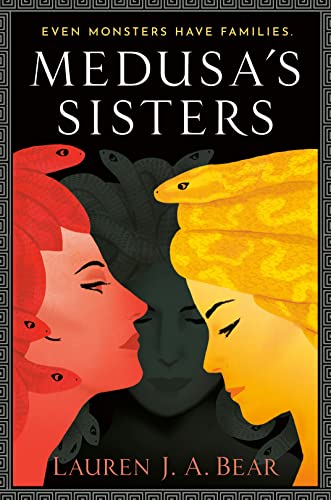
                • Cover of Medusa's Sisters
                  Medusa's Sisters

                  Lauren J. A. Bear · standalone novel · 2023

                  similar bygodsancient worldmediterraneanmythic fantasyemotional

                  "Even before they were transformed into Gorgons, Medusa and her sisters Stheno and Euryale were unique among immortals. Curious about mortals and their lives, Medusa and her sisters entered the human world in search of a place to belong, yet quickly found themselves at the perilous center of a dangerous Olympian rivalry and learned – too late – that a god's love is a violent one. Forgotten by history and diminished by poets, the other two Gorgons have never been more than horrifying hags, damned and doomed. But they were sisters first, and their journey from seaborne origins to the outskirts of the Pantheon is a journey that rests, hidden, underneath their scales. Monsters, but not monstrous, Stheno and Euryale will step into the light for the first time to tell the story of how all three sisters lived and were changed by each other, as they struggle against the inherent conflict between sisterhood and individuality, myth and truth, vengeance and peace." (titanbooks.com)

                • Cover of Alexander the Great (Mary Renault)
                  Alexander the Great (Mary Renault)

                  series · 1 book · 1972

                  completed

                  similar byreflectivewarancient worldhistorical fictionemotional