Loreful
HomeDiscover
Search series, authors…⌘K
Loreful

Reading orders for SF/F series and shared universes — with your place kept in every one.

Explore

UniversesSeriesWorksAuthorsAtlas

Help

FAQAboutSite map

Account & legal

Sign inCreate accountPrivacyTerms

Data

Built on ISFDB, Wikipedia, Wikidata and Open Library. Curated reading orders carry their reasoning on the page; the rest follow publication order. Data sources & licenses

© Loreful · data: ISFDB · CC BY

More like Tulpas

anchored on:our worldcontemporary

but

Mood

The mood the book leaves you in.

  • The reading experience is propelled by journeys, exploration, and physical risk; excitement and forward momentum dominate over dread or introspection.
  • Joy and loss are deliberately mixed; the resolution grants characters something real while taking something else away, leaving warmth and sorrow together.
  • The book demands work from the reader — dense prose, difficult structure, unfamiliar ideas, or morally uncomfortable material — as part of its intended effect.
  • Grim events, cruelty, or despair dominate the atmosphere, and the book does not soften them with comfort or comic relief.
  • The atmosphere is quietly unsettling — wrongness, unease, and the uncanny pervade the book without necessarily escalating into overt horror.
  • The book is built to move the reader; character feeling is foregrounded and major scenes aim at a strong emotional response.
  • Humor is a primary aim and the prose plays for laughs — comic situations, wit, or dialogue produce sustained comedy, not occasional levity.
  • The book insists that things can improve; effort and decency are shown to matter, and the arc bends toward better outcomes even through hardship.
  • The book teaches as it goes — real facts, history, science, or craft are conveyed in enough depth that learning is part of the reading experience.
  • The book is designed to uplift and motivate, presenting perseverance or achievement in a way that invites the reader to aspire or act.
  • The overall register is cheerful and easygoing; stakes are kept gentle and the book avoids dwelling on pain or dread.
  • Withheld information drives the experience; the book sustains enigmas and secrets the reader wants resolved, whatever its genre.
  • The book is contemplative and inward-looking, giving more weight to thought, memory, and meaning than to external events.
  • The book works as comfort reading — low tension, a soothing pace, and an atmosphere the reader can unwind in.
  • Grief, loss, or melancholy set the dominant register, and the book lets sorrow stand rather than resolving it into comfort.
  • Sustained suspense is the point; the book keeps the reader braced for what happens next through danger, pressure, or impending revelation.
  • Playful invention and charm define the register — fanciful conceits, light absurdity, and a narration that delights in its own oddity.

About

What the story runs on.

  • Stories in which extraterrestrial beings are central — as characters, cultures, or the object of the plot.
  • Stories structured as a quest — a journey undertaken to find, deliver, or destroy something of great import.
  • Stories in which staying alive against nature, catastrophe, or scarcity is the central problem.
  • Stories of lovers kept apart by law, family, faith, or station, where the obstacle to love is the plot.
  • Stories in which a friendship — its making, testing, or loss — is the emotional center.
  • Stories of growing up — a young protagonist crossing from childhood into adult knowledge and responsibility.
  • Stories about who a character truly is — self-discovery, doubled lives, and the search for a self.
  • Stories about mental unraveling — descent into madness, delusion, and minds at war with themselves.
  • Stories about mourning — living through the death of a loved one and what loss does to the survivors.
  • Stories in which a buried family truth — hidden parentage, crimes, or shames — surfaces and reorders the present.
  • Stories driven by maneuvering for power — factions, conspiracies, and statecraft conducted in shadow.
  • Stories organized around investigating a killing — the case, the clues, and the pursuit of the killer, in any genre's clothing.

Shelf

Where it sits in the library.

    • Fiction built on magic or other supernatural elements that have no scientific explanation.
    • Secondary-world fantasy at large scale, where the fate of nations or the world turns on the protagonists' struggle.
    • Fantasy set in a recognizably modern city or contemporary world where the supernatural intrudes on everyday life.
    • Fantasy that blends in horror's atmosphere and imagery, keeping a fantastical frame around grim or frightening material.
    • Action-driven fantasy following warriors or rogues with personal stakes against sorcerous threats, rather than world-spanning conflicts.
    • Fantasy set in a real historical period or a close analogue of one, with magic woven into the era.
    • Fantasy in which protagonists cross from the ordinary world into another world through a portal or similar passage.
    • Fiction that retells or reworks a traditional fairy tale in a new form or setting.
    • Fantasy drawing directly on myths, legends, and folklore, retelling them or building on their figures and logic.
    • Fantasy of ghosts, vampires, shapeshifters, psychics, and similar phenomena, usually set in an otherwise ordinary world.
    • Fiction mixing science-fictional trappings with overtly magical or impossible elements in one setting.
    • Low-stakes fantasy emphasizing comfort, community, and everyday pleasures over conflict and peril.
    • Speculative fiction of pervasive moral ambiguity, violence, and cynicism that rejects heroic conventions — fantasy and SF alike.
      • Fiction that extrapolates from science and technology — future societies, space travel, or speculative inventions — within at least nominally natural laws.
      • Science fiction of interstellar scope — starships, galactic polities, and adventure across star systems.
      • Science fiction committed to scientific rigor, where technical plausibility constrains the story.
      • Science fiction centered on armed forces and warfare, told largely from a military point of view.
      • Science fiction of networked, corporate-dominated near futures, pairing high technology with social decay.
      • Science fiction styled on nineteenth-century steam-powered technology, often in a Victorian or pseudo-Victorian setting.
      • Fiction depicting an oppressive or catastrophic society, presented as a warning.
      • Fiction set after civilization's collapse, following survivors in the ruins of the old world.
      • Fiction in which characters move between past and future, and the mechanics or consequences of that travel drive the plot.
      • Fiction exploring a world where a historical event went differently and history diverged from ours.
      • Science fiction about humanity's first encounter and communication with an alien intelligence.
      • Science fiction in which extraterrestrial forces attack or occupy Earth and humanity resists.
      • Fiction whose primary aim is to frighten or unsettle the reader through dread, menace, or the monstrous.
      • Horror of vast, indifferent, incomprehensible entities before which humanity is insignificant, in the Lovecraft tradition.
      • Horror of decaying houses, buried family secrets, and oppressive atmosphere in the Gothic literary tradition.
      • Horror centered on hauntings and the returning dead.
      • Horror located in the mind — paranoia, obsession, and unreliable perception rather than external monsters.
      • Horror built around the reanimated dead and survival amid their outbreaks.
      • Horror defined by explicit, transgressive gore that refuses to cut away from violence.
      • Speculative fiction of the strange and uncanny that resists both natural explanation and standard genre categories.
      • Fiction organized around solving a crime or puzzle, typically following an investigator toward the identification of a culprit.
      • A puzzle-first mystery that lays out clues so the culprit's identity can be deduced before the reveal.
      • Crime fiction of moral ambiguity, fatalism, and hard-edged style, set among the corrupt and the doomed.
      • A mystery following the realistic routines of police work — forensics, interviews, and case-building.
      • A gentle mystery with an amateur sleuth, a small community, and violence kept off the page.
      • A mystery set in a past era, where the investigation works within that period's methods and society.
      • Fast-paced fiction driven by imminent danger, pursuit, or high-stakes conspiracy, built to sustain tension.
      • A thriller of espionage — agents, tradecraft, and intelligence services in conflict.
      • A thriller centered on lawyers and the courtroom, where litigation carries the suspense.
      • A thriller driven by detailed contemporary or near-future technology, often military or scientific.
      • A thriller whose tension comes from mental states and manipulation between characters rather than external action.
      • Fiction whose central plot is a romantic relationship and its development toward an emotionally satisfying resolution.
      • Romance in which one or both partners are supernatural beings, blending fantasy elements into the love story.
      • A fantasy-romance hybrid in which the romantic arc and the fantasy plot carry equal weight.
      • Romance set in a past era, with courtship shaped by the period's society and manners.
      • Romance set in the present day, without supernatural or historical elements.
      • Fiction set in a real past period, where the historical setting materially shapes characters and events.
        • General and literary fiction emphasizing prose style, character interiority, or formal ambition over genre plot conventions.
        • Fiction in a realistic world where magical events occur and are treated as ordinary, in the tradition of Latin American literature.
        • Fiction that ridicules people, institutions, or society in order to criticize them.
        • Fiction of dreamlike, irrational imagery and logic that breaks from realistic representation.
        • Fiction that plays with narrative convention through metafiction, fragmentation, and self-reference.
        • Fiction propelled by journeys, exploration, and physical peril, where action and survival carry the plot.
        • Adventure fiction of ships and seafaring — naval engagements, voyages, and life at sea.
        • Fiction of the American frontier West — gunmen, ranchers, and lawmen, typically in the late nineteenth century.
        • Fiction centered on soldiers, campaigns, and the experience of warfare, historical or imagined.
          • Fiction written primarily to amuse, using comedic situations, wit, or parody as its organizing principle.
            • Multi-generational fiction following a family or dynasty across decades, with inheritance and kinship as the through-line.
              • Fiction whose world runs on explicit game mechanics — levels, stats, and skills that characters can see and exploit.
                • Fiction about costumed or superpowered heroes and their conflicts with comparable villains.

                Practical

                How long a commitment, whether it stands alone, and whether it has finished.

                Tap a chip to ask for it · tap again to rule it out · once more to clear. Numbers show what would be left.

                • Cover of Southern Reach Trilogy
                  Southern Reach Trilogy

                  series · 4 books · 2014

                  similar byeeriecontemporarymadnessour world+1 more

                  The Southern Reach Series is a series of novels by the American author Jeff VanderMeer first published in 2014—Annihilation, Authority, Acceptance, and Absolution. The series takes its name from the secret agency that is central to the plot. In 2013, Paramount Pictures bought the movie rights for the series, and a film adaptation of Annihilation was made with Alex Garland as writer-director. The film was released in 2018. The most recent book in the series, Absolution, was released on 22 October 2024.

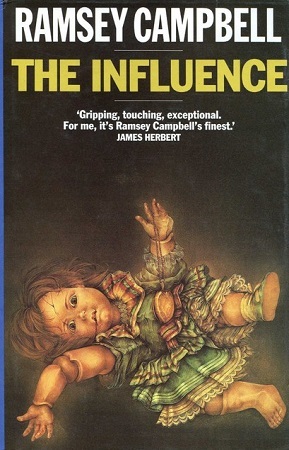
                • Cover of The Influence
                  The Influence

                  Ramsey Campbell · standalone novel · 1988

                  similar byeeriecontemporarymadnessour world+1 more

                  A young girl begins to take on the characteristics of her departed grandmother, an evil and oppressive woman.

                • Cover of Dhalgren
                  Dhalgren

                  Samuel R. Delany · standalone novel · 1975

                  similar byeeriecontemporaryidentitymadness

                  Dhalgren is a 1975 science fiction novel by American writer Samuel R. Delany. It features an extended trip to and through Bellona, a fictional city in the American Midwest cut off from the rest of the world by an unknown catastrophe. It is number 33 on the 20th Century's Greatest Hits: 100 English-Language Books of Fiction list.

                • V
                  Vision

                  N. D. Hansen-Hill · standalone novel · 2001

                  similar byeeriecontemporaryidentityour world+1 more

                  Dustin Mallory is a man trapped by the past - on a daily basis. He is no more a victim than his friends, whose reach at times extends beyond the grave, or whose thoughts take unwanted strolls through other people's minds. If the past can come forward enough to taunt Mallory's present, is there a chance he can influence it? Alter a fate that's too harsh to accept? Or will he spend the rest of his life hovering between reality and revelation? Dependent on strangers for his personal salvation? It is what he now fears most - that he has no future. That he'll become a victim of his own aberrant genes, to spend his days forever lost in visions...

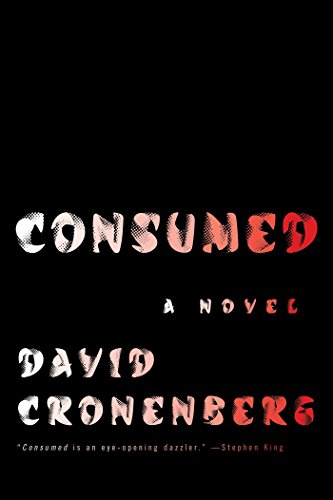
                • Cover of Consumed
                  Consumed

                  David Cronenberg · standalone novel · 2014

                  similar byeeriecontemporarymadnessour world+1 more

                  Consumed is the first novel by the Canadian filmmaker, screenwriter and actor David Cronenberg.

                • Cover of The Great Victorian Collection
                  The Great Victorian Collection

                  Brian Moore · standalone novel · 1975

                  similar byeeriecontemporaryidentitymadnessour world

                  The Great Victorian Collection, published in 1975, is a fantasy novel by Northern Irish-Canadian writer Brian Moore.It tells the story of a man who dreams that the empty parking lot he can see from his hotel window has been transformed by the arrival of a collection of priceless Victoriana on display in a vast open-air market. When he awakes he finds that he can no longer distinguish the dream from reality.

                • Cover of Mrs. God
                  Mrs. God

                  Peter Straub · standalone novel · 1990

                  similar byeeriecontemporaryour world+2 more

                  Mrs. God is a fantasy novel by American writer Peter Straub. It was first published in 1990 by Donald M. Grant, Publisher, Inc. in an edition of 1,350 copies, of which 600 copies were signed by the author and the artist, bound in quarter leather and slipcased as a deluxe edition. The novel is expanded from the short novel of the same name that appeared in Straub's collection Houses Without Doors. A trade edition hardcover was issued later.

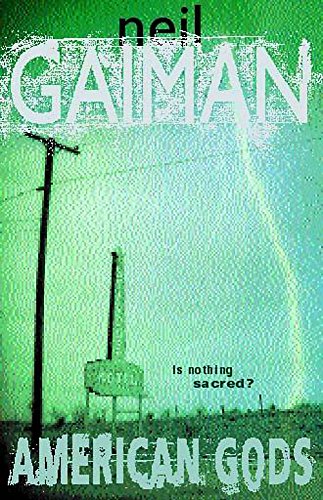
                • Cover of American Gods
                  American Gods

                  series · 10 books · 1999

                  similar bycontemporaryour world+1 more

                  Neil Gaiman's American Gods (2001) follows Shadow Moon, an ex-convict who takes a job as bodyguard to a mysterious drifter who is secretly the Norse god Odin, and is drawn into a brewing conflict between the old immigrant gods of myth and the new gods of media, technology, and modern American life. Gaiman's 2005 novel Anansi Boys is set in the same mythological world and shares the trickster god Mr. Nancy, but follows a different protagonist and story, making it a loose companion rather than a direct sequel.

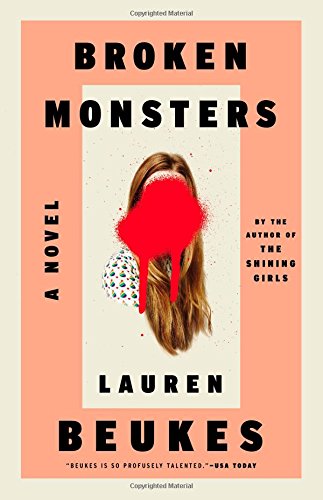
                • Cover of Broken Monsters
                  Broken Monsters

                  Lauren Beukes · standalone novel · 2014

                  similar bycontemporaryour world+2 more

                • Cover of Death in Her Hands
                  Death in Her Hands

                  Ottessa Moshfegh · standalone novel · 2020

                  similar byeeriecontemporaryidentitymadnessour world

                  Death in Her Hands is a 2020 novel by Ottessa Moshfegh.

                • Cover of Eye in the Sky
                  Eye in the Sky

                  Philip K. Dick · standalone novel · 1957

                  similar byeerieidentitymadnessour world+1 more

                  Eight visitors touring a particle-accelerator facility are caught in a catastrophic malfunction, a collapsing platform, a burst of radiation, that leaves them all unconscious. When protagonist Jack Hamilton, an engineer recently fired over Red Scare-era suspicions about his wife's politics, comes to, the world around him is subtly, then not so subtly, wrong: physics bends to fit one fellow victim's religious convictions, then to another's paranoid fears, as the group cycles through what turn out to be shared hallucinations built from each other's private belief systems. Philip K. Dick's early novel about how differently people actually see the same world.

                • Cover of We Spread
                  We Spread

                  Iain Reid · standalone novel · 2022

                  similar byeeriecontemporaryidentitymadnessour world

                  We Spread is a 2022 literary novel by Canadian writer Iain Reid. It was published in the United States on September 27, 2022, by Scout Press, and in the United Kingdom on September 29, 2022, by Scribner UK, both imprints of Simon & Schuster. The book has been described as a psychological thriller and horror fiction, and is about an elderly woman living in an assisted living facility where all is not as it appears.

                • Cover of Time Out of Joint
                  Time Out of Joint

                  Philip K. Dick · standalone novel · 1959

                  similar byeerieidentitymadnessour world

                  Time Out of Joint is a science fiction novel by American writer Philip K. Dick, first published in novel form in the United States in 1959. An abridged version was also serialised in the British science fiction magazine New Worlds Science Fiction in several installments from December 1959 to February 1960.

                • Cover of The Infinite Cage
                  The Infinite Cage

                  Keith Laumer · standalone novel · 1972

                  similar byeeriecontemporaryidentitymadnessour world

                  Synopsis from back cover: A little wisp of a man appears from who-knows-where, apparently suffering from delusions, schizophrenia, paranoia, and mental maladies not yet named. His misadventures in a hostile world would put Walter Mitty to shame for lack of imagination. He finds he has strange powers that bring him spectacular success at whatever he attempts--followed, it seems inevitably, by crushing disaster. At last, on the verge of utter despair, he stumbles onto a clue to the secret of his existence... Keith Laumer, famous for his witty novels of galaxy-hopping adventure, has created a spooky, funny, hauntingly brilliant novel that cannot be put down--and will never be forgotten-- Welcome To Adam's World

                • Cover of HARM
                  HARM

                  Brian W. Aldiss · standalone novel · 2007

                  similar byeeriecontemporaryidentitymadnessour world

                  "... a young writer of light fiction with a Muslim heritage has been arrested for no compelling reason. He is held as Prisoner B, in HARM ... and isolated. To evade this misery Prisoner B escapes - through his split personality - to a science fiction-like planet ruled by insects. But gradually the two worlds start to converge ..."

                • Cover of The Unlimited Dream Company
                  The Unlimited Dream Company

                  J. G. Ballard · standalone novel · 1979

                  similar byeeriecontemporary+2 more

                  The Unlimited Dream Company is a novel by British writer J. G. Ballard, first published in 1979. It was nominated for the John W. Campbell Memorial Award in 1980. It won the British Science Fiction Association Award in the same year.

                • Cover of VALIS
                  VALIS

                  series · 4 books · 1981

                  completed

                  similar byidentity+3 more

                  The VALIS trilogy is a set of science fiction/philosophical novels by author Philip K. Dick which include VALIS (1981), The Divine Invasion (1981), and The Transmigration of Timothy Archer (1982). Dick's first novel about the VALIS concept originally titled "VALISystem A", was published as Radio Free Albemuth after Dick's death in 1985.

                • Cover of Conjure Wife
                  Conjure Wife

                  Fritz Leiber · standalone novel · 1943

                  similar byeerieour world+2 more

                  From the front cover of the Lion first paperback: "Potions in the house... evil in the air... and a witch in his bed." From the back cover of the Lion first paperback: ""Conjure Wife... is easily the most frightening (and necessarily) the most thoroughly convincing of all modern horror stories. Its premise is that witchcraft still flourishes, or at any rate survives, an open secret among women, a closed book to men. Under the rational overlay of 20th-century civilization this sickly growth, uncultivated, unsuspected, still manages to propagate itself. Leiber develops this theme with the utmost dexterity, piling up alternate layers of the mundane and outre, until at the story's real climax, the shocker at the end of chapter 14, I am not ashamed to say that I jumped an inch out of my seat. From that point onward the story anticlimax so skillfully managed that I am not really certain I touched the slipcover again until after the last page. Leiber has never written anything better... which perhaps is all that needed to be said." Damon Knight, Science Fiction Adventures"

                • Cover of ...And the Angel with Television Eyes
                  ...And the Angel with Television Eyes

                  John Shirley · standalone novel · 2001

                  similar byeeriecontemporaryidentitymadnessour world

                  WorldCat: "As a star in a popular soap opera, Max Whitman desires to expand his acting abilities to include serious parts. A series of strange occurrences, however, sidetracks Max's ambitions and sets him on an eeries path toward insight or insanity as the boundaries of reality collapse and he receives glimpses of a hidden reality populated with monsters and heroes."

                • Cover of Beyond Black
                  Beyond Black

                  Hilary Mantel · standalone novel · 2005

                  similar byeeriecontemporaryidentitymadnessour world

                  Beyond Black is a 2005 novel by English writer Hilary Mantel. It was shortlisted for the 2006 Orange Prize for Fiction.

                • Cover of Dead Ringers
                  Dead Ringers

                  Christopher Golden · standalone novel · 2015

                  similar byeeriecontemporaryidentityour world+1 more

                  "When Tess Devlin runs into her ex-husband Nick on a Boston sidewalk, she's furious at him for pretending he doesn't know her. She calls his cell to have it out with him, only to discover that he's in New Hampshire with his current girlfriend. But if Nick's in New Hampshire...who did she encounter on the street? Frank Lindbergh's dreams have fallen apart. He wanted to get out of the grim neighborhood where he'd grown up and out of the shadow of his alcoholic father. Now both his parents are dead and he's back in his childhood home, drinking too much himself. As he sets in motion his plans for the future, he's assaulted by an intruder in his living room...an intruder who could be his twin. In an elegant hotel, Tess will find mystery and terror in her own reflection. Outside a famed mansion on Beacon Hill, people are infected with a diabolical malice...while on the streets, an eyeless man, dressed in rags, searches for a woman who wears Tess's face"--

                • Cover of Hell Hound
                  Hell Hound

                  Ken Greenhall · standalone novel · 1977

                  similar byeeriecontemporarymadnessour world+1 more

                  The story of a dog who thinks like a human. Made into the French cult film "Baxter".

                • Cover of Library of America P. K. Dick Collection
                  Library of America P. K. Dick Collection

                  series · 9 books · 1962

                  completed

                  similar by+4 more

                • Cover of The Land of Laughs
                  The Land of Laughs

                  Jonathan Carroll · standalone novel · 1980

                  similar byeeriecontemporaryidentity+1 more

                  WorldCat: Schoolteacher Thomas Abbey, unsure son of a film star, doesn't know who he is or what he wants--in life, in love, or in his relationship with the strange and intense Saxony Gardner. What he knows is that in his whole life nothing has touched him so deeply as the novels of Marshall France, a reclusive author of fabulous children's tales who died at forty-four. Now Thomas and Saxony have come to France's hometown, the dreamy Midwestern town of Galen, Missouri, to write France's biography. Warned in advance that France's family may oppose them, they're surprised to find France's daughter warmly welcoming instead. But slowly they begin to see that something fantastic and horrible is happening. The magic of Marshall France has extended far beyond the printed page...leaving them with a terrifying task to undertake.