Loreful
HomeDiscover
Search series, authors…⌘K
Loreful

Reading orders for SF/F series and shared universes — with your place kept in every one.

Explore

UniversesSeriesWorksAuthorsAtlas

Help

FAQAboutSite map

Account & legal

Sign inCreate accountPrivacyTerms

Data

Built on ISFDB, Wikipedia, Wikidata and Open Library. Curated reading orders carry their reasoning on the page; the rest follow publication order. Data sources & licenses

© Loreful · data: ISFDB · CC BY

More like Twisted Branch

anchored on:horrorour worldcontemporary

but

Mood

The mood the book leaves you in.

  • The reading experience is propelled by journeys, exploration, and physical risk; excitement and forward momentum dominate over dread or introspection.
  • Joy and loss are deliberately mixed; the resolution grants characters something real while taking something else away, leaving warmth and sorrow together.
  • The book demands work from the reader — dense prose, difficult structure, unfamiliar ideas, or morally uncomfortable material — as part of its intended effect.
  • Grim events, cruelty, or despair dominate the atmosphere, and the book does not soften them with comfort or comic relief.
  • The atmosphere is quietly unsettling — wrongness, unease, and the uncanny pervade the book without necessarily escalating into overt horror.
  • The book is built to move the reader; character feeling is foregrounded and major scenes aim at a strong emotional response.
  • Humor is a primary aim and the prose plays for laughs — comic situations, wit, or dialogue produce sustained comedy, not occasional levity.
  • The book insists that things can improve; effort and decency are shown to matter, and the arc bends toward better outcomes even through hardship.
  • The book teaches as it goes — real facts, history, science, or craft are conveyed in enough depth that learning is part of the reading experience.
  • The book is designed to uplift and motivate, presenting perseverance or achievement in a way that invites the reader to aspire or act.
  • The overall register is cheerful and easygoing; stakes are kept gentle and the book avoids dwelling on pain or dread.
  • Withheld information drives the experience; the book sustains enigmas and secrets the reader wants resolved, whatever its genre.
  • The book is contemplative and inward-looking, giving more weight to thought, memory, and meaning than to external events.
  • The book works as comfort reading — low tension, a soothing pace, and an atmosphere the reader can unwind in.
  • Grief, loss, or melancholy set the dominant register, and the book lets sorrow stand rather than resolving it into comfort.
  • Sustained suspense is the point; the book keeps the reader braced for what happens next through danger, pressure, or impending revelation.
  • Playful invention and charm define the register — fanciful conceits, light absurdity, and a narration that delights in its own oddity.

About

What the story runs on.

  • Stories in which extraterrestrial beings are central — as characters, cultures, or the object of the plot.
  • Stories structured as a quest — a journey undertaken to find, deliver, or destroy something of great import.
  • Stories in which staying alive against nature, catastrophe, or scarcity is the central problem.
  • Stories of lovers kept apart by law, family, faith, or station, where the obstacle to love is the plot.
  • Stories in which a friendship — its making, testing, or loss — is the emotional center.
  • Stories of growing up — a young protagonist crossing from childhood into adult knowledge and responsibility.
  • Stories about who a character truly is — self-discovery, doubled lives, and the search for a self.
  • Stories about mourning — living through the death of a loved one and what loss does to the survivors.
  • Stories in which a buried family truth — hidden parentage, crimes, or shames — surfaces and reorders the present.
  • Stories driven by maneuvering for power — factions, conspiracies, and statecraft conducted in shadow.
  • Stories in which war itself is the subject — combat, occupation, and what warfare does to soldiers and civilians.
  • Stories organized around investigating a killing — the case, the clues, and the pursuit of the killer, in any genre's clothing.

Shelf

Where it sits in the library.

    • Fiction built on magic or other supernatural elements that have no scientific explanation.
    • Secondary-world fantasy at large scale, where the fate of nations or the world turns on the protagonists' struggle.
    • Fantasy set in a recognizably modern city or contemporary world where the supernatural intrudes on everyday life.
    • Fantasy that blends in horror's atmosphere and imagery, keeping a fantastical frame around grim or frightening material.
    • Action-driven fantasy following warriors or rogues with personal stakes against sorcerous threats, rather than world-spanning conflicts.
    • Fantasy set in a real historical period or a close analogue of one, with magic woven into the era.
    • Fantasy in which protagonists cross from the ordinary world into another world through a portal or similar passage.
    • Fiction that retells or reworks a traditional fairy tale in a new form or setting.
    • Fantasy drawing directly on myths, legends, and folklore, retelling them or building on their figures and logic.
    • Fantasy of ghosts, vampires, shapeshifters, psychics, and similar phenomena, usually set in an otherwise ordinary world.
    • Fiction mixing science-fictional trappings with overtly magical or impossible elements in one setting.
    • Low-stakes fantasy emphasizing comfort, community, and everyday pleasures over conflict and peril.
    • Speculative fiction of pervasive moral ambiguity, violence, and cynicism that rejects heroic conventions — fantasy and SF alike.
      • Fiction that extrapolates from science and technology — future societies, space travel, or speculative inventions — within at least nominally natural laws.
      • Science fiction of interstellar scope — starships, galactic polities, and adventure across star systems.
      • Science fiction committed to scientific rigor, where technical plausibility constrains the story.
      • Science fiction centered on armed forces and warfare, told largely from a military point of view.
      • Science fiction of networked, corporate-dominated near futures, pairing high technology with social decay.
      • Science fiction styled on nineteenth-century steam-powered technology, often in a Victorian or pseudo-Victorian setting.
      • Fiction depicting an oppressive or catastrophic society, presented as a warning.
      • Fiction set after civilization's collapse, following survivors in the ruins of the old world.
      • Fiction in which characters move between past and future, and the mechanics or consequences of that travel drive the plot.
      • Fiction exploring a world where a historical event went differently and history diverged from ours.
      • Science fiction about humanity's first encounter and communication with an alien intelligence.
      • Science fiction in which extraterrestrial forces attack or occupy Earth and humanity resists.
      • Fiction whose primary aim is to frighten or unsettle the reader through dread, menace, or the monstrous.
      • Horror of vast, indifferent, incomprehensible entities before which humanity is insignificant, in the Lovecraft tradition.
      • Horror of decaying houses, buried family secrets, and oppressive atmosphere in the Gothic literary tradition.
      • Horror centered on hauntings and the returning dead.
      • Horror located in the mind — paranoia, obsession, and unreliable perception rather than external monsters.
      • Horror built around the reanimated dead and survival amid their outbreaks.
      • Horror defined by explicit, transgressive gore that refuses to cut away from violence.
      • Speculative fiction of the strange and uncanny that resists both natural explanation and standard genre categories.
      • Fiction organized around solving a crime or puzzle, typically following an investigator toward the identification of a culprit.
      • A puzzle-first mystery that lays out clues so the culprit's identity can be deduced before the reveal.
      • Crime fiction of moral ambiguity, fatalism, and hard-edged style, set among the corrupt and the doomed.
      • A mystery following the realistic routines of police work — forensics, interviews, and case-building.
      • A gentle mystery with an amateur sleuth, a small community, and violence kept off the page.
      • A mystery set in a past era, where the investigation works within that period's methods and society.
      • Fast-paced fiction driven by imminent danger, pursuit, or high-stakes conspiracy, built to sustain tension.
      • A thriller of espionage — agents, tradecraft, and intelligence services in conflict.
      • A thriller centered on lawyers and the courtroom, where litigation carries the suspense.
      • A thriller driven by detailed contemporary or near-future technology, often military or scientific.
      • A thriller whose tension comes from mental states and manipulation between characters rather than external action.
      • Fiction whose central plot is a romantic relationship and its development toward an emotionally satisfying resolution.
      • Romance in which one or both partners are supernatural beings, blending fantasy elements into the love story.
      • A fantasy-romance hybrid in which the romantic arc and the fantasy plot carry equal weight.
      • Romance set in a past era, with courtship shaped by the period's society and manners.
      • Romance set in the present day, without supernatural or historical elements.
      • Fiction set in a real past period, where the historical setting materially shapes characters and events.
        • General and literary fiction emphasizing prose style, character interiority, or formal ambition over genre plot conventions.
        • Fiction in a realistic world where magical events occur and are treated as ordinary, in the tradition of Latin American literature.
        • Fiction that ridicules people, institutions, or society in order to criticize them.
        • Fiction of dreamlike, irrational imagery and logic that breaks from realistic representation.
        • Fiction that plays with narrative convention through metafiction, fragmentation, and self-reference.
        • Fiction propelled by journeys, exploration, and physical peril, where action and survival carry the plot.
        • Adventure fiction of ships and seafaring — naval engagements, voyages, and life at sea.
        • Fiction of the American frontier West — gunmen, ranchers, and lawmen, typically in the late nineteenth century.
        • Fiction centered on soldiers, campaigns, and the experience of warfare, historical or imagined.
          • Fiction written primarily to amuse, using comedic situations, wit, or parody as its organizing principle.
            • Multi-generational fiction following a family or dynasty across decades, with inheritance and kinship as the through-line.
              • Fiction whose world runs on explicit game mechanics — levels, stats, and skills that characters can see and exploit.
                • Fiction about costumed or superpowered heroes and their conflicts with comparable villains.

                Practical

                How long a commitment, whether it stands alone, and whether it has finished.

                Tap a chip to ask for it · tap again to rule it out · once more to clear. Numbers show what would be left.

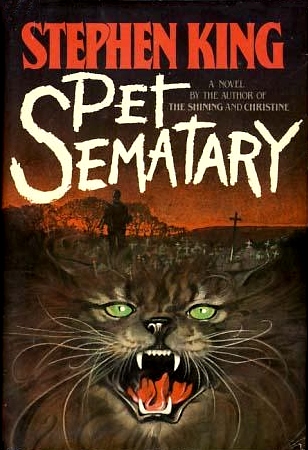
                • Cover of Pet Sematary
                  Pet Sematary

                  Stephen King · standalone novel · 1983

                  similar byhorrorgrief and losscontemporarydarkeeriesmall town+1 more

                  Pet Sematary is a 1983 horror novel by American writer Stephen King. It tells the story of a family moving to Maine and settling closer to a pet cemetery in the woods, which is home to a terrifying force that brings death and sorrow. The novel was nominated for a World Fantasy Award for Best Novel in 1984, and adapted into two films: one in 1989 and another in 2019 as well as several spinoffs.

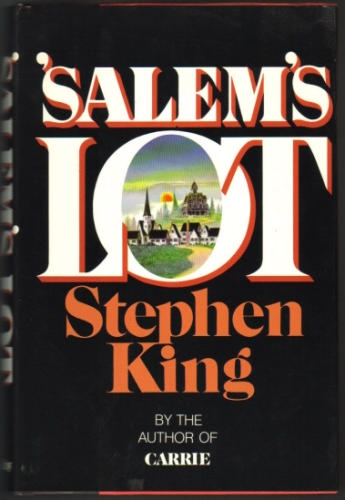
                • Cover of Jerusalem's Lot
                  Jerusalem's Lot

                  series · 3 books · 1975

                  similar byhorrorgrief and losscontemporarydarkeerieour worldsmall town

                  Stephen King's 1975 novel 'Salem's Lot follows writer Ben Mears as he returns to his childhood town of Jerusalem's Lot, Maine, only to discover that its residents are being turned into vampires by a newly arrived stranger. It transplants Gothic vampire horror into a small New England community, tracking that community's collapse under a supernatural siege. It is a single, self-contained novel.

                • Cover of If You Could See Me Now
                  If You Could See Me Now

                  Peter Straub · standalone novel · 1976

                  similar byhorrorgrief and losscontemporaryour worlddarkeerie+1 more

                  If You Could See Me Now is a horror novel by American author Peter Straub. It is his third novel and his second work of gothic or supernatural fiction. The book was published by Jonathan Cape in June 1977 – the same London publisher who published Julia in 1976. Coward, McCann & Geoghegan published an American edition also in June 1977.

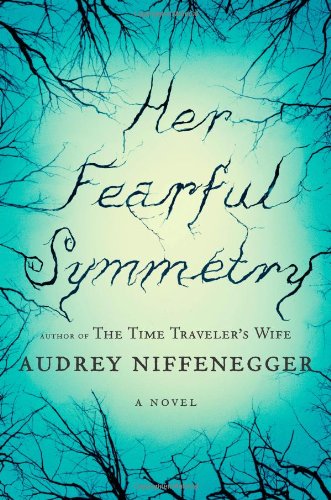
                • Cover of Her Fearful Symmetry
                  Her Fearful Symmetry

                  Audrey Niffenegger · standalone novel · 2009

                  similar byhorrorgrief and lossfamily secretscontemporaryour worldeerie+1 more

                  Her Fearful Symmetry is a horror novel by the American writer Audrey Niffenegger. The book was published on October 1, 2009 and is set in and around London's Highgate Cemetery where, after a year of research for the book, Niffenegger acted as a tour guide.

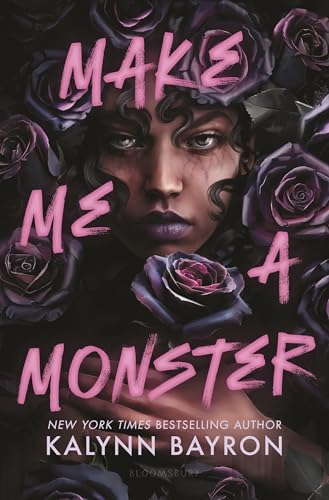
                • Cover of Make Me a Monster
                  Make Me a Monster

                  Kalynn Bayron · standalone novel · 2025

                  similar byhorrorgrief and lossfamily secretscontemporaryour worlddarkeerie+1 more

                  Meka is used to death. After all, it's the family business. As a newly certified mortician's assistant at her parents' funeral home, her days are not for the faint of heart. Luckily her boyfriend Noah isn't squeamish, and Meka is finally feeling ready to say the three little words that will change everything. But then tragedy strikes, and Meka's world is torn apart. Nothing makes sense, especially the strange things start happening. Ravens are circling her home. Strangers are following her. Someone is leaving mysterious items at her door. And worst of all . . . The dead don't seem to be staying dead. Meka thought she understood death better than anyone. Turns out, the family business is a bit more complicated than it seems. And Meka isn't the only one desperate to unearth their secrets . . . because the truth may be worth dying for.

                • Cover of The Shining
                  The Shining

                  series · 5 books · 1977

                  similar byhorrorcontemporarydark+2 more

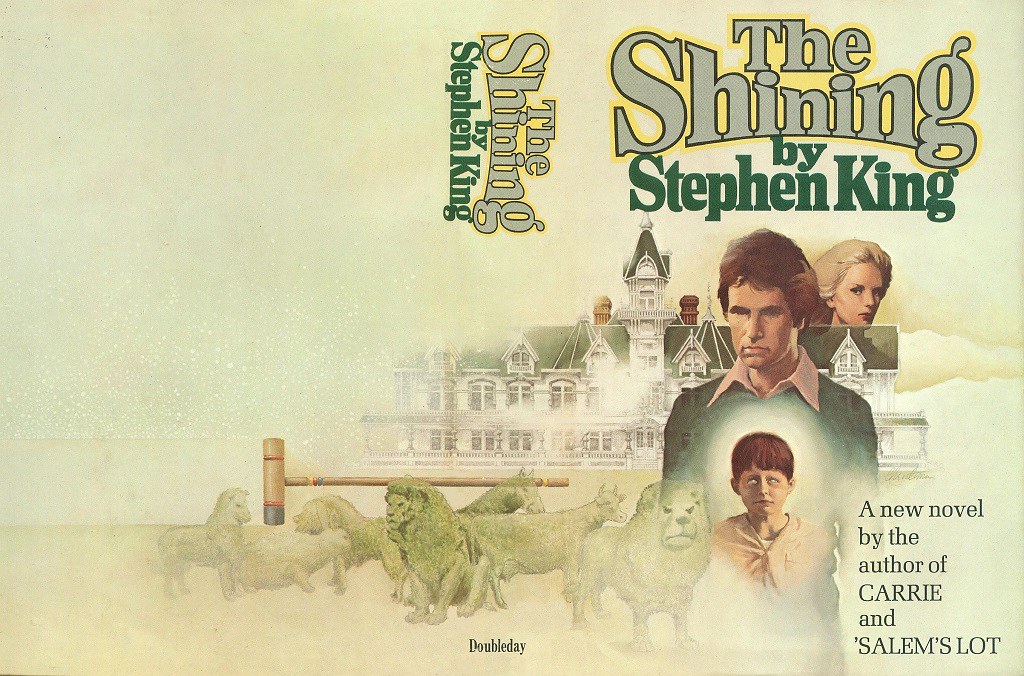
                  Stephen King's 1977 novel The Shining follows the Torrance family as winter caretakers of the isolated, malevolent Overlook Hotel, where father Jack is gradually consumed by the hotel's influence while his young son Danny's psychic "shining" draws its attention. Doctor Sleep (2013) picks up the story decades later, following Danny as an adult still marked by that childhood ordeal. Together the two form a horror duology spanning nearly forty years of real-world publication.

                • Cover of Dead Lines
                  Dead Lines

                  Greg Bear · standalone novel · 2004

                  similar byhorrorgrief and losscontemporaryour worlddarkeerie

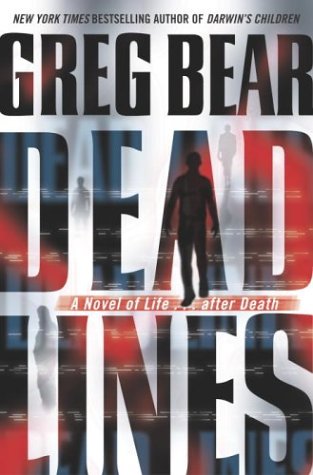
                  From the flaps of the Ballantine first edition: "For the last two years, Peter Russell has mourned the death of one of his twin daughters - who was just ten when she was murdered. Recent news of his best friend's fatal heart attack has now come as another devastating blow. Divorced, despondent, and going nowhere in his career, Peter fears his life is circling the drain. Then Trans comes along. The brainchild of an upstart telecom company, Trans is (as its name suggests) a transcendent marvel, a sleek, handheld interpersonal communication device capable of flawless operation anywhere in the world, at any time. "A cell phone, but not" - transmitting with crystal clarity across a newly discovered, never-utilized bandwidth... and poised to spark a new-technology revolution. When its creators offer Peter a position on their team, it should be a golden opportunity for him. If only he wasn't seemingly going mad. Everywhere Peter turns, inexplicable apparitions are walking before him or reaching out in torment. After a chilling encounter with his own lost child he begins to grasp the terrifying truth: Trans is a Pandora's box that has tapped into a frequency not of this world... but of the next. And now, via this open channel to oblivion, the dead have gained access to the living. For Peter, and for humankind, a long shadowy night of the soul has descended, bringing with it the stuff of a horrifying nightmare from which they may never awaken."

                • Cover of A Head Full of Ghosts
                  A Head Full of Ghosts

                  Paul Tremblay · standalone novel · 2015

                  similar byhorrorfamily secretscontemporarydarkeerie+2 more

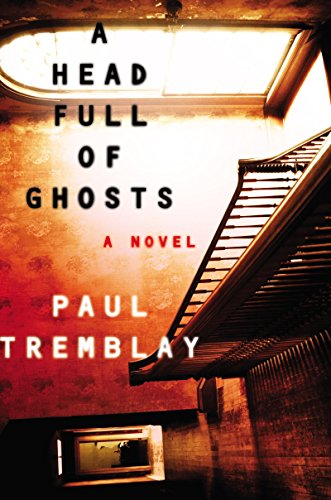
                  A Head Full of Ghosts is a 2015 horror novel by American writer Paul Tremblay. The plot involves a Massachusetts family under financial and emotional strain while their fourteen-year-old daughter, Marjorie Barrett, exhibits signs of severe mental illness. The Barretts come to believe she is possessed by a demon, and her behavior is publicized when the family stars in a reality TV show. Marjorie's younger sister, Merry Barrett, relays the experiences of her childhood fifteen years later. Themes include elements of Catholic exorcism and reality television exploitation.

                • Cover of Snowblind
                  Snowblind

                  Christopher Golden · standalone novel · 2014

                  similar byhorrorgrief and losscontemporaryeeriesmall town+2 more

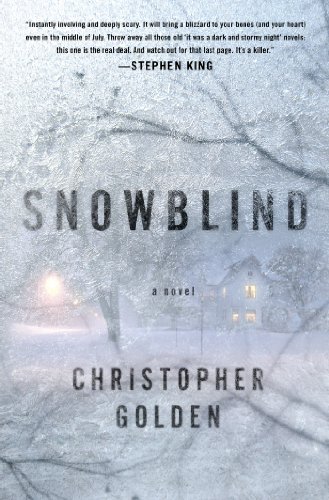
                  "SNOWBLIND is a thrilling contemporary ghost story with both horror and heart. The small New England town of Coventry is haunted by its memories of a deadly winter... in which loved ones were lost, families torn apart, and a town buried in a terrible blizzard. Now, twelve years later, the people plagued by their memories of that storm are haunted once again as a new storm approaches, promising to wreak new havoc. Old ghosts trickle back, and this storm will prove even more terrifying and deadly than the last. With richly textured characters, scarred and haunted by the ghosts of those they loved most, Snowblind reinvents the ghost story for today's world. Spellbinding in scope and rooted deeply in classic storytelling, Christopher Golden has written a chilling masterpiece that is the best work of his career and a standout supernatural thriller"--

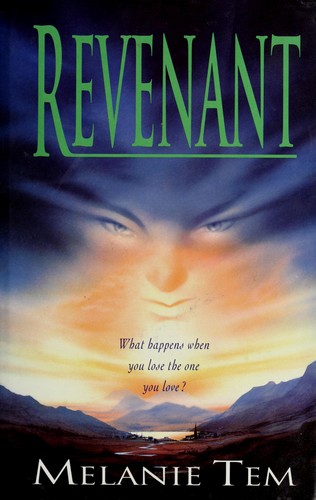
                • Cover of Revenant
                  Revenant

                  Melanie Tem · standalone novel · 1994

                  similar byhorrorcontemporaryour world+2 more

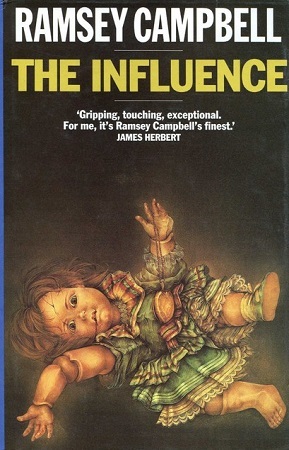
                • Cover of The Influence
                  The Influence

                  Ramsey Campbell · standalone novel · 1988

                  similar byhorrorfamily secretscontemporaryour worlddarkeerie

                  A young girl begins to take on the characteristics of her departed grandmother, an evil and oppressive woman.

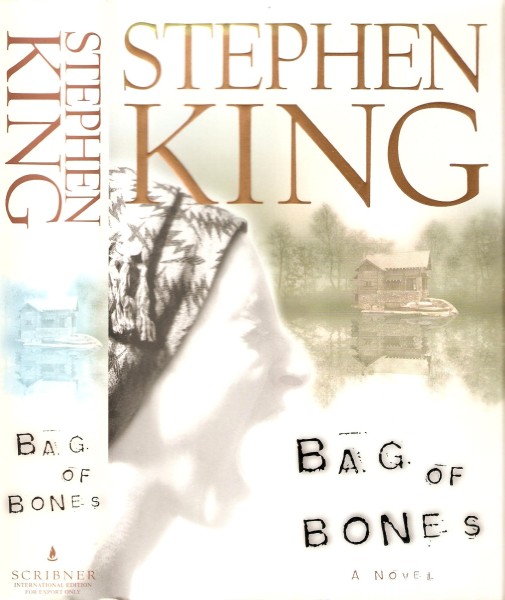
                • Cover of Bag of Bones
                  Bag of Bones

                  Stephen King · standalone novel · 1998

                  similar byhorrorgrief and losscontemporarydark+1 more

                  Bag of Bones is a 1998 horror novel by American writer Stephen King. It focuses on an author who suffers severe writer's block and delusions at an isolated lake house four years after the death of his wife. It won the 1999 Bram Stoker Award for Best Novel, the 1999 British Fantasy Award for Best Novel, and the 1999 Locus Award for Best Dark Fantasy/Horror Novel.

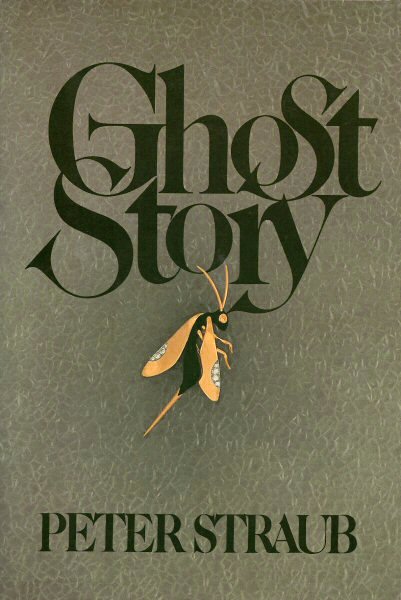
                • Cover of Ghost Story
                  Ghost Story

                  Peter Straub · standalone novel · 1979

                  similar byhorrorgrief and lossfamily secretsdarkeeriesmall town

                  Four prominent citizens of a small town in upstate New York who share guilt over something that happened in their youth are revisited late in life by a destructive evil force which uses their guilt as an opportunity to destroy them as well as the entire town.

                • Cover of The Book of Accidents
                  The Book of Accidents

                  Chuck Wendig · standalone novel · 2021

                  similar byhorrorgrief and lossfamily secretscontemporarydarkeeriesmall town

                  Long ago, Nathan lived in a house in the country with his abusive father—and has never told his family what happened there. Long ago, Maddie was a little girl making dolls in her bedroom when she saw something she shouldn’t have—and is trying to remember that lost trauma by making haunting sculptures. Long ago, something sinister, something hungry, walked in the tunnels and the mountains and the coal mines of their hometown in rural Pennsylvania. Now, Nate and Maddie Graves are married, and they have moved back to their hometown with their son, Oliver. And now what happened long ago is happening again . . . and it is happening to Oliver. He meets a strange boy who becomes his best friend, a boy with secrets of his own and a taste for dark magic. This dark magic puts them at the heart of a battle of good versus evil and a fight for the soul of the family—and perhaps for all of the world. But the Graves family has a secret weapon in this battle: their love for one another.

                • Cover of The Bell House
                  The Bell House

                  Lori Titus · standalone novel · 2015

                  similar byhorrorgrief and lossfamily secretscontemporaryour worlddarkeerie

                  "After a family tragedy, Jenna Bell McBride returns to her Father's ancestral home, a bitter half sister, and painful memories that have remained secret. What force remains tied to their family land, waiting to draw in more victims?" ― quoted from this book's product page on the Amazon.com website as of 2018-12-15.

                • Cover of The Nest
                  The Nest

                  Kenneth Oppel · standalone novel · 2015

                  similar byhorrorgrief and losscontemporaryour worldeerie+1 more

                  For some kids summer is a sun-soaked season of fun. But for Steve, it s just another season of worries. Worries about his sick newborn baby brother who is fighting to survive, worries about his parents who are struggling to cope, even worries about the wasp s nest looming ominously from the eaves. So when a mysterious wasp queen invades his dreams, offering to fix the baby, Steve thinks his prayers have been answered. All he has to do is say Yes. But yes is a powerful word. It is also a dangerous one. And once it is uttered, can it be taken back?

                • Cover of Lost Boy, Lost Girl
                  Lost Boy, Lost Girl

                  Peter Straub · standalone novel · 2003

                  similar byhorrorgrief and lossfamily secretscontemporaryour worlddarkeerie

                  A writer is investigating the mysterious suicide of his sister in law, when her son also vanishes; as the investigation closes in on a vacant house whose former occupant was a serial killer, both natural and supernatural elements are implicated.

                • Cover of Scissors
                  Scissors

                  Ray Garton · standalone novel · 2004

                  similar byhorrorfamily secretscontemporaryour worlddark+1 more

                  Tormented by nightmares of Dr. Ferguson, who did horrible things to him with scissors when he was a boy, Stuart is plunged into a new realm of terror when Dr. Ferguson returns, determined to do the same horrible things to Stuart's young son.

                • Cover of Cell
                  Cell

                  Stephen King · standalone novel · 2006

                  similar byhorrorcontemporaryour worlddark+1 more

                  In Cell, King taps into readers fears of technological warfare and terrorism. Mobile phones deliver the apocalypse to millions of unsuspecting humans by wiping their brains of any humanity, leaving only aggressive and destructive impulses behind. Those without cell phones, like illustrator Clayton Riddell and his small band of "normies," must fight for survival, and their journey to find Clayton's estranged wife and young son rockets the book toward resolution.

                • Cover of Others
                  Others

                  James Herbert · standalone novel · 1999

                  similar byhorrorcontemporaryour worlddarkeerie+1 more

                  Nicholas Dismas is a Private Investigator like no other. He carries a secret about himself to which not even he has the answer. He is hired to find a baby taken at birth and his investigation leads him to a mysterious place called "Perfect Rest." It is supposed to be a home for the elderly, but there is a lot more to this place than meets the eye. Here Dismas will discover the dark secret of the Others. And in an astonishing and spectacular finale he will resolve the enigma of his own existence. As chilling, as memorable and as timely as only James Herbert can be, Others will join the classics for which he is remembered with fear.

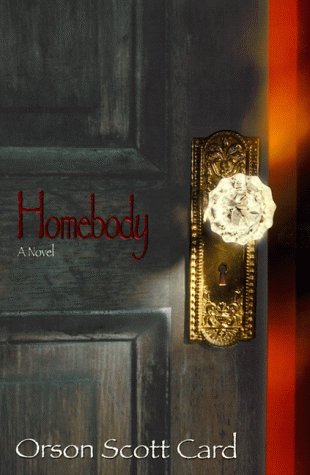
                • Cover of Homebody
                  Homebody

                  Orson Scott Card · standalone novel · 1998

                  similar byhorrorgrief and lossfamily secretscontemporarydarkeerie

                  Homebody (1998) is a horror novel by American writer Orson Scott Card. It takes place in modern-day America.

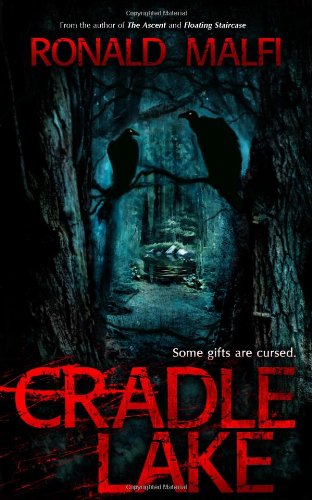
                • Cover of Cradle Lake
                  Cradle Lake

                  Ronald Malfi · standalone novel · 2013

                  similar byhorrorcontemporaryour world+2 more

                • Cover of Wildwood Road
                  Wildwood Road

                  Christopher Golden · standalone novel · 2005

                  similar byhorrorcontemporaryour worldeerie+3 more

                  Michael and Jillian Dansky seemed to have it all--a happy marriage, two successful careers, a bright future. But late one October evening, all that changed. Driving home from a Halloween masquerade, Michael momentarily nods off behind the wheel--and wakes to find nothing is the same.Standing by his car is the little girl he came within a breath of running down. She leads Michael to her "home," an empty house haunted by whispers, and sends him away with a haunting whisper of her own: "come find me." But in the weeks to follow, it's clear that someone--or some thing--doesn't want Michael to find her: ominous figures in grey coats with misshapen faces are following him everywhere. And then Jillian wakes one morning replaced by a cold, cruel, vindictive woman Michael hardly recognizes as his wife. Michael must now search not only for the lost girl, but for a way to find the Jillian he's always loved, and to do so he must return to where the nightmare began. Down an isolated lane where he'll find them, or die trying.From the Trade Paperback edition.

                • Cover of White Is for Witching
                  White Is for Witching

                  Helen Oyeyemi · standalone novel · 2009

                  similar byhorrorfamily secretscontemporaryour worlddarkeerie

                  White Is for Witching is a 2009 novel by British author Helen Oyeyemi. The novel, Oyeyemi's third, won a 2010 Somerset Maugham Award. Combining elements of ghost, vampire, and haunted house stories, White Is for Witching concerns a twin named Miranda and her relationship with the sentient, xenophobic house she inhabits. A French translation was published as Le Blanc va aux sorcières in 2011.