Loreful
HomeDiscover
Search series, authors…⌘K
Loreful

Reading orders for SF/F series and shared universes — with your place kept in every one.

Explore

UniversesSeriesWorksAuthorsAtlas

Help

FAQAboutSite map

Account & legal

Sign inCreate accountPrivacyTerms

Data

Built on ISFDB, Wikipedia, Wikidata and Open Library. Curated reading orders carry their reasoning on the page; the rest follow publication order. Data sources & licenses

© Loreful · data: ISFDB · CC BY

More like Twisted Web

anchored on:our worldspy thriller

but

Mood

The mood the book leaves you in.

  • The reading experience is propelled by journeys, exploration, and physical risk; excitement and forward momentum dominate over dread or introspection.
  • Joy and loss are deliberately mixed; the resolution grants characters something real while taking something else away, leaving warmth and sorrow together.
  • The book demands work from the reader — dense prose, difficult structure, unfamiliar ideas, or morally uncomfortable material — as part of its intended effect.
  • Grim events, cruelty, or despair dominate the atmosphere, and the book does not soften them with comfort or comic relief.
  • The atmosphere is quietly unsettling — wrongness, unease, and the uncanny pervade the book without necessarily escalating into overt horror.
  • The book is built to move the reader; character feeling is foregrounded and major scenes aim at a strong emotional response.
  • Humor is a primary aim and the prose plays for laughs — comic situations, wit, or dialogue produce sustained comedy, not occasional levity.
  • The book insists that things can improve; effort and decency are shown to matter, and the arc bends toward better outcomes even through hardship.
  • The book teaches as it goes — real facts, history, science, or craft are conveyed in enough depth that learning is part of the reading experience.
  • The book is designed to uplift and motivate, presenting perseverance or achievement in a way that invites the reader to aspire or act.
  • The overall register is cheerful and easygoing; stakes are kept gentle and the book avoids dwelling on pain or dread.
  • Withheld information drives the experience; the book sustains enigmas and secrets the reader wants resolved, whatever its genre.
  • The book is contemplative and inward-looking, giving more weight to thought, memory, and meaning than to external events.
  • The book works as comfort reading — low tension, a soothing pace, and an atmosphere the reader can unwind in.
  • Grief, loss, or melancholy set the dominant register, and the book lets sorrow stand rather than resolving it into comfort.
  • Sustained suspense is the point; the book keeps the reader braced for what happens next through danger, pressure, or impending revelation.
  • Playful invention and charm define the register — fanciful conceits, light absurdity, and a narration that delights in its own oddity.

About

What the story runs on.

  • Stories in which extraterrestrial beings are central — as characters, cultures, or the object of the plot.
  • Stories structured as a quest — a journey undertaken to find, deliver, or destroy something of great import.
  • Stories in which staying alive against nature, catastrophe, or scarcity is the central problem.
  • Stories of lovers kept apart by law, family, faith, or station, where the obstacle to love is the plot.
  • Stories in which a friendship — its making, testing, or loss — is the emotional center.
  • Stories of growing up — a young protagonist crossing from childhood into adult knowledge and responsibility.
  • Stories about who a character truly is — self-discovery, doubled lives, and the search for a self.
  • Stories about mourning — living through the death of a loved one and what loss does to the survivors.
  • Stories in which a buried family truth — hidden parentage, crimes, or shames — surfaces and reorders the present.
  • Stories driven by maneuvering for power — factions, conspiracies, and statecraft conducted in shadow.
  • Stories in which war itself is the subject — combat, occupation, and what warfare does to soldiers and civilians.
  • Stories organized around investigating a killing — the case, the clues, and the pursuit of the killer, in any genre's clothing.

Shelf

Where it sits in the library.

    • Fiction built on magic or other supernatural elements that have no scientific explanation.
    • Secondary-world fantasy at large scale, where the fate of nations or the world turns on the protagonists' struggle.
    • Fantasy set in a recognizably modern city or contemporary world where the supernatural intrudes on everyday life.
    • Fantasy that blends in horror's atmosphere and imagery, keeping a fantastical frame around grim or frightening material.
    • Action-driven fantasy following warriors or rogues with personal stakes against sorcerous threats, rather than world-spanning conflicts.
    • Fantasy set in a real historical period or a close analogue of one, with magic woven into the era.
    • Fantasy in which protagonists cross from the ordinary world into another world through a portal or similar passage.
    • Fiction that retells or reworks a traditional fairy tale in a new form or setting.
    • Fantasy drawing directly on myths, legends, and folklore, retelling them or building on their figures and logic.
    • Fantasy of ghosts, vampires, shapeshifters, psychics, and similar phenomena, usually set in an otherwise ordinary world.
    • Fiction mixing science-fictional trappings with overtly magical or impossible elements in one setting.
    • Low-stakes fantasy emphasizing comfort, community, and everyday pleasures over conflict and peril.
    • Speculative fiction of pervasive moral ambiguity, violence, and cynicism that rejects heroic conventions — fantasy and SF alike.
      • Fiction that extrapolates from science and technology — future societies, space travel, or speculative inventions — within at least nominally natural laws.
      • Science fiction of interstellar scope — starships, galactic polities, and adventure across star systems.
      • Science fiction committed to scientific rigor, where technical plausibility constrains the story.
      • Science fiction centered on armed forces and warfare, told largely from a military point of view.
      • Science fiction of networked, corporate-dominated near futures, pairing high technology with social decay.
      • Science fiction styled on nineteenth-century steam-powered technology, often in a Victorian or pseudo-Victorian setting.
      • Fiction depicting an oppressive or catastrophic society, presented as a warning.
      • Fiction set after civilization's collapse, following survivors in the ruins of the old world.
      • Fiction in which characters move between past and future, and the mechanics or consequences of that travel drive the plot.
      • Fiction exploring a world where a historical event went differently and history diverged from ours.
      • Science fiction about humanity's first encounter and communication with an alien intelligence.
      • Science fiction in which extraterrestrial forces attack or occupy Earth and humanity resists.
      • Fiction whose primary aim is to frighten or unsettle the reader through dread, menace, or the monstrous.
      • Horror of vast, indifferent, incomprehensible entities before which humanity is insignificant, in the Lovecraft tradition.
      • Horror of decaying houses, buried family secrets, and oppressive atmosphere in the Gothic literary tradition.
      • Horror centered on hauntings and the returning dead.
      • Horror located in the mind — paranoia, obsession, and unreliable perception rather than external monsters.
      • Horror built around the reanimated dead and survival amid their outbreaks.
      • Horror defined by explicit, transgressive gore that refuses to cut away from violence.
      • Speculative fiction of the strange and uncanny that resists both natural explanation and standard genre categories.
      • Fiction organized around solving a crime or puzzle, typically following an investigator toward the identification of a culprit.
      • A puzzle-first mystery that lays out clues so the culprit's identity can be deduced before the reveal.
      • Crime fiction of moral ambiguity, fatalism, and hard-edged style, set among the corrupt and the doomed.
      • A mystery following the realistic routines of police work — forensics, interviews, and case-building.
      • A gentle mystery with an amateur sleuth, a small community, and violence kept off the page.
      • A mystery set in a past era, where the investigation works within that period's methods and society.
      • Fast-paced fiction driven by imminent danger, pursuit, or high-stakes conspiracy, built to sustain tension.
      • A thriller of espionage — agents, tradecraft, and intelligence services in conflict.
      • A thriller centered on lawyers and the courtroom, where litigation carries the suspense.
      • A thriller driven by detailed contemporary or near-future technology, often military or scientific.
      • A thriller whose tension comes from mental states and manipulation between characters rather than external action.
      • Fiction whose central plot is a romantic relationship and its development toward an emotionally satisfying resolution.
      • Romance in which one or both partners are supernatural beings, blending fantasy elements into the love story.
      • A fantasy-romance hybrid in which the romantic arc and the fantasy plot carry equal weight.
      • Romance set in a past era, with courtship shaped by the period's society and manners.
      • Romance set in the present day, without supernatural or historical elements.
      • Fiction set in a real past period, where the historical setting materially shapes characters and events.
        • General and literary fiction emphasizing prose style, character interiority, or formal ambition over genre plot conventions.
        • Fiction in a realistic world where magical events occur and are treated as ordinary, in the tradition of Latin American literature.
        • Fiction that ridicules people, institutions, or society in order to criticize them.
        • Fiction of dreamlike, irrational imagery and logic that breaks from realistic representation.
        • Fiction that plays with narrative convention through metafiction, fragmentation, and self-reference.
        • Fiction propelled by journeys, exploration, and physical peril, where action and survival carry the plot.
        • Adventure fiction of ships and seafaring — naval engagements, voyages, and life at sea.
        • Fiction of the American frontier West — gunmen, ranchers, and lawmen, typically in the late nineteenth century.
        • Fiction centered on soldiers, campaigns, and the experience of warfare, historical or imagined.
          • Fiction written primarily to amuse, using comedic situations, wit, or parody as its organizing principle.
            • Multi-generational fiction following a family or dynasty across decades, with inheritance and kinship as the through-line.
              • Fiction whose world runs on explicit game mechanics — levels, stats, and skills that characters can see and exploit.
                • Fiction about costumed or superpowered heroes and their conflicts with comparable villains.

                Practical

                How long a commitment, whether it stands alone, and whether it has finished.

                Tap a chip to ask for it · tap again to rule it out · once more to clear. Numbers show what would be left.

                • Cover of Nolan Kilkenny
                  Nolan Kilkenny

                  series · 6 books · 1997

                  similar byspy thrillerour worldcontemporarythriller & suspense+4 more

                • Cover of Friday
                  Friday

                  Robert A. Heinlein · standalone novel · 1982

                  similar byadventurousgenetic engineeringnear futuretense+1 more

                  Friday is a 1982 science fiction novel by American writer Robert A. Heinlein. It is the story of a female "artificial person", the eponymous Friday, genetically engineered to be stronger, faster, smarter, and generally better than normal humans. Artificial humans are widely resented, and much of the story deals with Friday's struggle both against prejudice and to conceal her enhanced attributes from other humans. The story is set in a Balkanized 21st century, in which the nations of the North American continent have been split up into a number of smaller states.

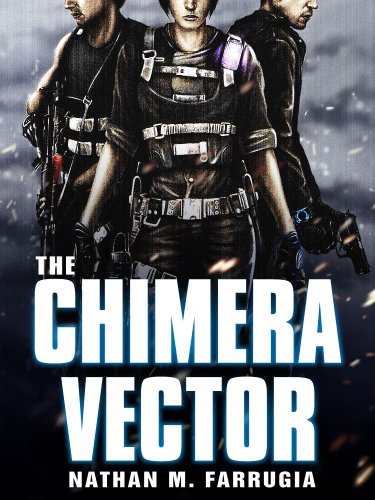
                • Cover of The Fifth Column (Nathan M. Farrugia)
                  The Fifth Column (Nathan M. Farrugia)

                  series · 4 books · 2012

                  similar bypolitical intriguetensecontemporarythriller & suspense+5 more

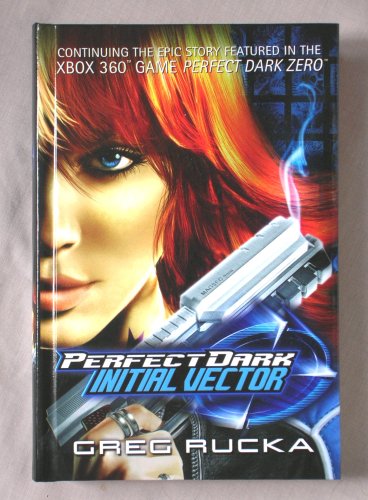
                • Cover of Perfect Dark
                  Perfect Dark

                  series · 2 books · 2005

                  similar bypolitical intrigueour worldtensethriller & suspense+3 more

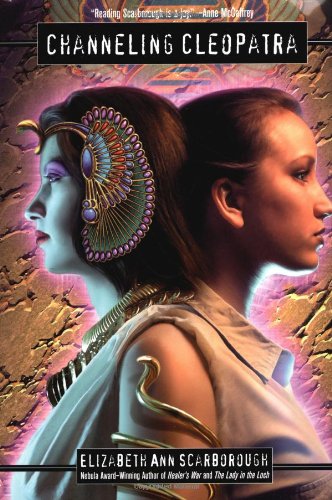
                • Cover of Cleopatra
                  Cleopatra

                  series · 2 books · 2002

                  similar byour worldtensethriller & suspense+5 more

                • Cover of Renegades (Marissa Meyer)
                  Renegades (Marissa Meyer)

                  series · 3 books · 2017

                  similar bynear futureour worldtense+3 more

                  Renegades is set in Gatlon City after a civil war between the superheroic Renegades and the villainous Anarchists, and follows Nova, a young woman with the power to put people to sleep by touch, as she infiltrates the Renegades as a spy for her uncle's Anarchists and falls for Adrian, the adopted son of the Renegades' leaders. Marissa Meyer's trilogy, continuing through Archenemies and Supernova, plays the two factions' history against the leads' divided loyalties; Meyer has said she doesn't plan to extend the series further.

                • Cover of H. I. V. E.
                  H. I. V. E.

                  series · 10 books · 2006

                  similar bynear futuretense+4 more

                  Mark Walden's series is set at H.I.V.E. (the Higher Institute of Villainous Education), a hidden academy training the next generation of criminal masterminds, following orphan genius Otto and fellow students Wing, Laura, and Shelby as they navigate the school's twisted curriculum while plotting to escape it. The premise plays school-story conventions against a supervillain backdrop across more than a dozen books.

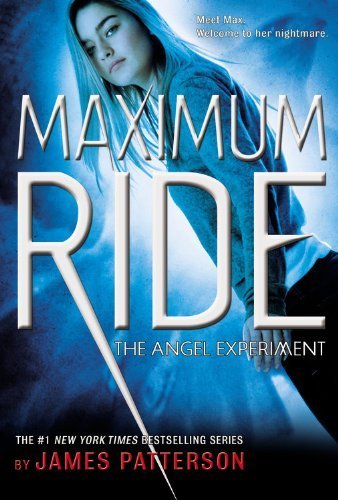
                • Cover of Maximum Ride
                  Maximum Ride

                  series · 12 books · 2005

                  similar byadventurousgenetic engineeringour world+3 more

                  Maximum Ride is a series of young adult science fantasy novels by American author James Patterson. The series centers on the adventures of Maximum "Max" Ride and her family, called the Flock, who are winged human-avian hybrids created at a lab called The School. The series was inspired by Patterson's earlier novels When the Wind Blows and The Lake House, which were intended for older readers.

                • Cover of Nexus 5
                  Nexus 5

                  series · 3 books · 2012

                  similar byour worldnear futuretense+5 more

                  Nexus opens Ramez Naam's postcyberpunk trilogy in 2040 with scientist Kaden Lane, who works on Nexus, an experimental nano-drug that lets human minds be networked and reprogrammed, and finds himself caught between government and corporate interests once the technology's implications become clear. The trilogy continues through Crux and Apex, following the same central conflict over who controls the technology. Nexus tied for Best Novel at the 2014 Prometheus Awards and Apex won the 2015 Philip K. Dick Award.

                • Cover of Galactic Milieu
                  Galactic Milieu

                  series · 10 books · 1981

                  completed

                  similar bytense+3 more

                  Galactic Milieu is a series of science fiction novels by Julian May. It is linked to her previously published series, the Saga of Pliocene Exile; and through the fantastical device of time-travel, acts as both a prequel and a sequel to this earlier series. The "Galactic Milieu" of the title is an interplanetary federation, and Earth's membership of it is a central plot concern.

                • Cover of Richard Forthrast
                  Richard Forthrast

                  series · 2 books · 2011

                  similar byour world+6 more

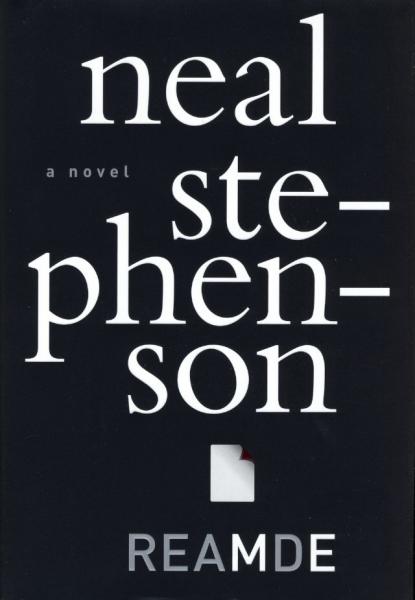
                  Neal Stephenson's Richard 'Dodge' Forthrast novels open with Reamde, a globe-spanning thriller that starts when ransomware inside an MMORPG economy pulls Richard's extended family into a real-world hostage crisis involving hackers, jihadists and Russian mobsters. The sequel Fall; or, Dodge in Hell shifts registers entirely, following Richard's digitally preserved mind after death into an afterlife simulation built from his scanned brain. The two books share a protagonist and family but differ sharply in genre and scale.

                • Cover of Snow Crash
                  Snow Crash

                  Neal Stephenson · standalone novel · 1992

                  similar byadventurouspolitical intriguenear futuretense

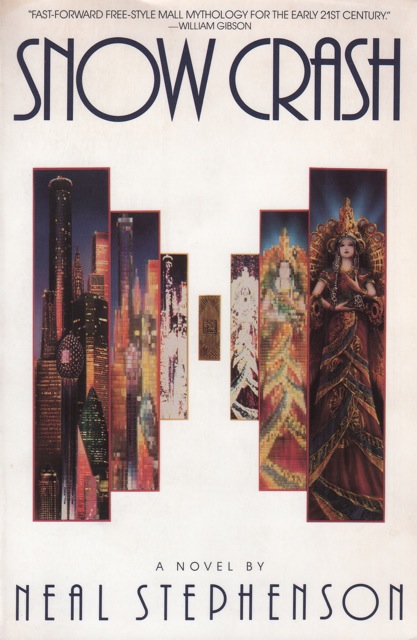
                  Snow Crash is a 1992 science fiction novel by Neal Stephenson. Like many of Stephenson's novels, its themes include history, linguistics, anthropology, archaeology, religion, computer science, politics, cryptography, memetics, and philosophy.

                • Cover of The Themis Files
                  The Themis Files

                  series · 3 books · 2015

                  similar byour worldtensecontemporary+3 more

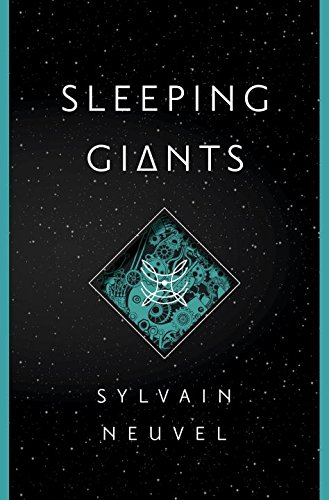
                  Sylvain Neuvel's Themis Files opens when a girl falls into a hole in South Dakota and lands on the palm of a giant metal hand buried underground; the trilogy picks up years later as she leads the team trying to determine what the hand is part of and why it's there. Sleeping Giants and its sequels are told almost entirely through interview transcripts conducted by an unnamed, evasive interrogator, giving the series a documentary, oral-history feel unusual for first-contact SF. The mystery escalates from an archaeological puzzle into a question of who else is looking for the same answer.

                • Cover of The Android's Dream
                  The Android's Dream

                  series · 2 books · 2006

                  similar byadventurouspolitical intriguegenetic engineeringnear future

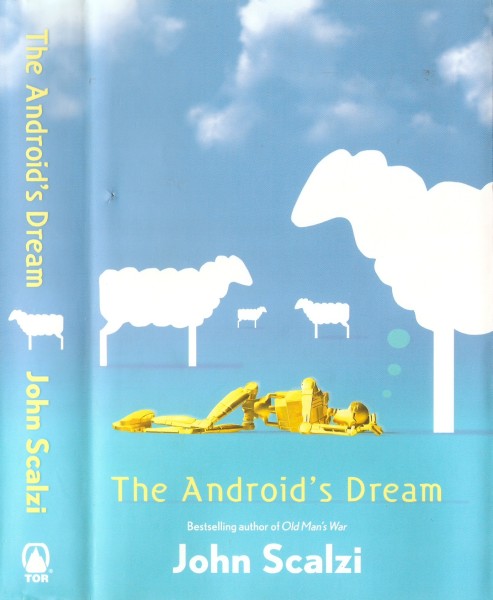
                  A minor diplomatic insult with a genetically engineered sheep breed spirals into a full interstellar crisis when the last surviving specimen of the 'Android's Dream' breed, needed for a critical ceremony with the alien Nidu, turns out to have been hunted to extinction by a Nidu faction bent on provoking war. John Scalzi's The Android's Dream follows ex-soldier Harry Creek as the hunt for a replacement leads him to Robin Baker, an ordinary woman carrying hidden sheep DNA that makes her the key to avoiding a war. It's a standalone comic space opera rather than an ongoing series.

                • Cover of Secret Histories
                  Secret Histories

                  series · 12 books · 2007

                  similar byour worldcontemporary+3 more

                • Cover of Nemesis Saga
                  Nemesis Saga

                  series · 8 books · 2012

                  similar byour worldtensecontemporarythriller & suspense+2 more

                  The Nemesis Saga is a series of six kaiju thriller novels written by American author Jeremy Robinson, featuring the massive Goddess of Vengeance Nemesis. Robinson noted that various classic kaiju films especially those featuring Godzilla and Gamera were big influences on the series.

                • Cover of Get Smart
                  Get Smart

                  series · 9 books · 1965

                  completed

                  similar byspy thrillerour world+2 more

                  Get Smart is an American comedy television series parodying the secret agent genre that had become widely popular in the first half of the 1960s with the release of the James Bond films. It was created by Mel Brooks and Buck Henry, and had its television premiere on NBC on September 18, 1965. It starred Don Adams, who was also a director on the series, as agent Maxwell Smart, Barbara Feldon as Agent 99, and Edward Platt as The Chief. Henry said that they created the show at the request of Daniel Melnick to capitalize on James Bond and Inspector Clouseau, "the two biggest things in the entertainment world today". Brooks described it as "an insane combination of James Bond and Mel Brooks comedy".

                • Cover of Patrick McLanahan
                  Patrick McLanahan

                  series · 3 books · 1989

                  similar byour worldtensetechno-thriller+4 more

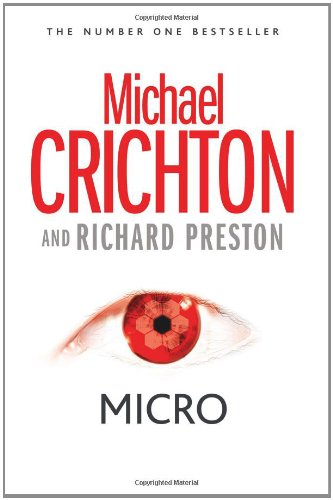
                • Cover of Micro
                  Micro

                  Michael Crichton & Richard Preston · standalone novel · 2011

                  similar byour worldgenetic engineeringtensecontemporarytechno-thriller+1 more

                  Micro is a techno-thriller novel by Michael Crichton, the seventeenth under his own name and second to be published after his death, published in 2011. Upon his death in 2008, an untitled, unfinished manuscript was found on his computer, which would become Micro. Publisher HarperCollins chose science writer Richard Preston to complete the novel from Crichton's remaining notes and research, and it was finally published in 2011. Micro followed the historical thriller Pirate Latitudes, which was also found on his computer and published posthumously in 2009.

                • Cover of Mitchell Gant
                  Mitchell Gant

                  series · 3 books · 1977

                  similar byadventurousspy thrillerour worldtensethriller & suspense+1 more

                • Cover of Spy Goddess
                  Spy Goddess

                  series · 2 books · 2005

                  completed

                  similar byadventurouscontemporary+4 more

                • Cover of The NUMA Files
                  The NUMA Files

                  series · 6 books · 2004

                  similar byadventurousour worldtensecontemporarythriller & suspense+2 more

                  Clive Cussler's NUMA Files novels follow Kurt Austin, leader of the National Underwater and Marine Agency's Special Assignments Team, and his colleague Joe Zavala, through globe-spanning adventure-thrillers mixing action, exotic locations and speculative science. Lost City finds them investigating a life-extending enzyme discovered deep in the North Atlantic, and the string of deaths and disappearances surrounding its discovery. Zero Hour, Nighthawk and the following novels continue Austin's missions, later written with Graham Brown after original co-author Paul Kemprecos.

                • Cover of Blackwing Saga
                  Blackwing Saga

                  series · 1 book · 2017

                  similar byadventurousnear future+2 more

                • Cover of The Ring of Five
                  The Ring of Five

                  series · 3 books · 2010

                  similar byadventurous+5 more