Loreful
HomeDiscover
Search series, authors…⌘K
Loreful

Reading orders for SF/F series and shared universes — with your place kept in every one.

Explore

UniversesSeriesWorksAuthorsAtlas

Help

FAQAboutSite map

Account & legal

Sign inCreate accountPrivacyTerms

Data

Built on ISFDB, Wikipedia, Wikidata and Open Library. Curated reading orders carry their reasoning on the page; the rest follow publication order. Data sources & licenses

© Loreful · data: ISFDB · CC BY

More like Typecasting

anchored on:science fictionnorth americacontemporarypolitical intrigue

but

Mood

The mood the book leaves you in.

  • The reading experience is propelled by journeys, exploration, and physical risk; excitement and forward momentum dominate over dread or introspection.
  • Joy and loss are deliberately mixed; the resolution grants characters something real while taking something else away, leaving warmth and sorrow together.
  • The book demands work from the reader — dense prose, difficult structure, unfamiliar ideas, or morally uncomfortable material — as part of its intended effect.
  • Grim events, cruelty, or despair dominate the atmosphere, and the book does not soften them with comfort or comic relief.
  • The atmosphere is quietly unsettling — wrongness, unease, and the uncanny pervade the book without necessarily escalating into overt horror.
  • The book is built to move the reader; character feeling is foregrounded and major scenes aim at a strong emotional response.
  • Humor is a primary aim and the prose plays for laughs — comic situations, wit, or dialogue produce sustained comedy, not occasional levity.
  • The book insists that things can improve; effort and decency are shown to matter, and the arc bends toward better outcomes even through hardship.
  • The book teaches as it goes — real facts, history, science, or craft are conveyed in enough depth that learning is part of the reading experience.
  • The book is designed to uplift and motivate, presenting perseverance or achievement in a way that invites the reader to aspire or act.
  • The overall register is cheerful and easygoing; stakes are kept gentle and the book avoids dwelling on pain or dread.
  • Withheld information drives the experience; the book sustains enigmas and secrets the reader wants resolved, whatever its genre.
  • The book is contemplative and inward-looking, giving more weight to thought, memory, and meaning than to external events.
  • The book works as comfort reading — low tension, a soothing pace, and an atmosphere the reader can unwind in.
  • Grief, loss, or melancholy set the dominant register, and the book lets sorrow stand rather than resolving it into comfort.
  • Sustained suspense is the point; the book keeps the reader braced for what happens next through danger, pressure, or impending revelation.
  • Playful invention and charm define the register — fanciful conceits, light absurdity, and a narration that delights in its own oddity.

About

What the story runs on.

  • Stories in which extraterrestrial beings are central — as characters, cultures, or the object of the plot.
  • Stories structured as a quest — a journey undertaken to find, deliver, or destroy something of great import.
  • Stories in which staying alive against nature, catastrophe, or scarcity is the central problem.
  • Stories of lovers kept apart by law, family, faith, or station, where the obstacle to love is the plot.
  • Stories in which a friendship — its making, testing, or loss — is the emotional center.
  • Stories of growing up — a young protagonist crossing from childhood into adult knowledge and responsibility.
  • Stories about who a character truly is — self-discovery, doubled lives, and the search for a self.
  • Stories about mourning — living through the death of a loved one and what loss does to the survivors.
  • Stories in which a buried family truth — hidden parentage, crimes, or shames — surfaces and reorders the present.
  • Stories driven by maneuvering for power — factions, conspiracies, and statecraft conducted in shadow.
  • Stories in which war itself is the subject — combat, occupation, and what warfare does to soldiers and civilians.
  • Stories organized around investigating a killing — the case, the clues, and the pursuit of the killer, in any genre's clothing.

Shelf

Where it sits in the library.

    • Fiction built on magic or other supernatural elements that have no scientific explanation.
    • Secondary-world fantasy at large scale, where the fate of nations or the world turns on the protagonists' struggle.
    • Fantasy set in a recognizably modern city or contemporary world where the supernatural intrudes on everyday life.
    • Fantasy that blends in horror's atmosphere and imagery, keeping a fantastical frame around grim or frightening material.
    • Action-driven fantasy following warriors or rogues with personal stakes against sorcerous threats, rather than world-spanning conflicts.
    • Fantasy set in a real historical period or a close analogue of one, with magic woven into the era.
    • Fantasy in which protagonists cross from the ordinary world into another world through a portal or similar passage.
    • Fiction that retells or reworks a traditional fairy tale in a new form or setting.
    • Fantasy drawing directly on myths, legends, and folklore, retelling them or building on their figures and logic.
    • Fantasy of ghosts, vampires, shapeshifters, psychics, and similar phenomena, usually set in an otherwise ordinary world.
    • Fiction mixing science-fictional trappings with overtly magical or impossible elements in one setting.
    • Low-stakes fantasy emphasizing comfort, community, and everyday pleasures over conflict and peril.
    • Speculative fiction of pervasive moral ambiguity, violence, and cynicism that rejects heroic conventions — fantasy and SF alike.
      • Fiction that extrapolates from science and technology — future societies, space travel, or speculative inventions — within at least nominally natural laws.
      • Science fiction of interstellar scope — starships, galactic polities, and adventure across star systems.
      • Science fiction committed to scientific rigor, where technical plausibility constrains the story.
      • Science fiction centered on armed forces and warfare, told largely from a military point of view.
      • Science fiction of networked, corporate-dominated near futures, pairing high technology with social decay.
      • Science fiction styled on nineteenth-century steam-powered technology, often in a Victorian or pseudo-Victorian setting.
      • Fiction depicting an oppressive or catastrophic society, presented as a warning.
      • Fiction set after civilization's collapse, following survivors in the ruins of the old world.
      • Fiction in which characters move between past and future, and the mechanics or consequences of that travel drive the plot.
      • Fiction exploring a world where a historical event went differently and history diverged from ours.
      • Science fiction about humanity's first encounter and communication with an alien intelligence.
      • Science fiction in which extraterrestrial forces attack or occupy Earth and humanity resists.
      • Fiction whose primary aim is to frighten or unsettle the reader through dread, menace, or the monstrous.
      • Horror of vast, indifferent, incomprehensible entities before which humanity is insignificant, in the Lovecraft tradition.
      • Horror of decaying houses, buried family secrets, and oppressive atmosphere in the Gothic literary tradition.
      • Horror centered on hauntings and the returning dead.
      • Horror located in the mind — paranoia, obsession, and unreliable perception rather than external monsters.
      • Horror built around the reanimated dead and survival amid their outbreaks.
      • Horror defined by explicit, transgressive gore that refuses to cut away from violence.
      • Speculative fiction of the strange and uncanny that resists both natural explanation and standard genre categories.
      • Fiction organized around solving a crime or puzzle, typically following an investigator toward the identification of a culprit.
      • A puzzle-first mystery that lays out clues so the culprit's identity can be deduced before the reveal.
      • Crime fiction of moral ambiguity, fatalism, and hard-edged style, set among the corrupt and the doomed.
      • A mystery following the realistic routines of police work — forensics, interviews, and case-building.
      • A gentle mystery with an amateur sleuth, a small community, and violence kept off the page.
      • A mystery set in a past era, where the investigation works within that period's methods and society.
      • Fast-paced fiction driven by imminent danger, pursuit, or high-stakes conspiracy, built to sustain tension.
      • A thriller of espionage — agents, tradecraft, and intelligence services in conflict.
      • A thriller centered on lawyers and the courtroom, where litigation carries the suspense.
      • A thriller driven by detailed contemporary or near-future technology, often military or scientific.
      • A thriller whose tension comes from mental states and manipulation between characters rather than external action.
      • Fiction whose central plot is a romantic relationship and its development toward an emotionally satisfying resolution.
      • Romance in which one or both partners are supernatural beings, blending fantasy elements into the love story.
      • A fantasy-romance hybrid in which the romantic arc and the fantasy plot carry equal weight.
      • Romance set in a past era, with courtship shaped by the period's society and manners.
      • Romance set in the present day, without supernatural or historical elements.
      • Fiction set in a real past period, where the historical setting materially shapes characters and events.
        • General and literary fiction emphasizing prose style, character interiority, or formal ambition over genre plot conventions.
        • Fiction in a realistic world where magical events occur and are treated as ordinary, in the tradition of Latin American literature.
        • Fiction that ridicules people, institutions, or society in order to criticize them.
        • Fiction of dreamlike, irrational imagery and logic that breaks from realistic representation.
        • Fiction that plays with narrative convention through metafiction, fragmentation, and self-reference.
        • Fiction propelled by journeys, exploration, and physical peril, where action and survival carry the plot.
        • Adventure fiction of ships and seafaring — naval engagements, voyages, and life at sea.
        • Fiction of the American frontier West — gunmen, ranchers, and lawmen, typically in the late nineteenth century.
        • Fiction centered on soldiers, campaigns, and the experience of warfare, historical or imagined.
          • Fiction written primarily to amuse, using comedic situations, wit, or parody as its organizing principle.
            • Multi-generational fiction following a family or dynasty across decades, with inheritance and kinship as the through-line.
              • Fiction whose world runs on explicit game mechanics — levels, stats, and skills that characters can see and exploit.
                • Fiction about costumed or superpowered heroes and their conflicts with comparable villains.

                Practical

                How long a commitment, whether it stands alone, and whether it has finished.

                Tap a chip to ask for it · tap again to rule it out · once more to clear. Numbers show what would be left.

                • Cover of Little Green Men
                  Little Green Men

                  Christopher Buckley · standalone novel · 1999

                  similar bypolitical intriguescience fictionfunnynorth americacontemporary

                  Little Green Men is a satirical novel by Christopher Buckley, first published in 1999. The novel follows a fictional "Inside the Beltway" talk-show host whose career and life is altered forever when he is abducted by aliens.

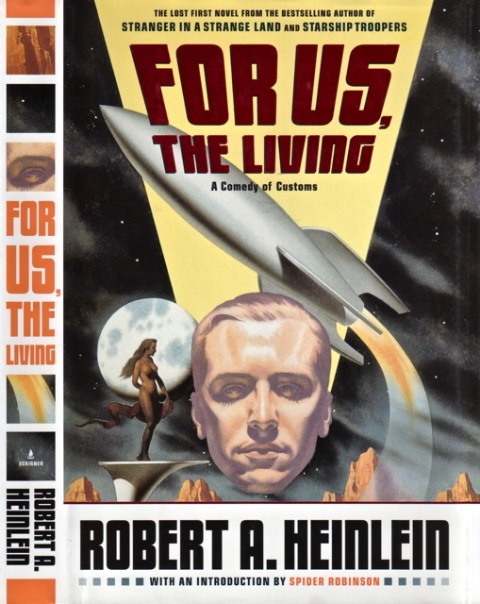
                • Cover of For Us, the Living: A Comedy of Customs
                  For Us, the Living: A Comedy of Customs

                  Robert A. Heinlein · standalone novel · 2004

                  similar bypolitical intriguescience fictionfunnynorth america

                  For Us, the Living: A Comedy of Customs is a science fiction novel by American writer Robert A. Heinlein. It was written in 1938 and published for the first time in 2003. Heinlein admirer and science fiction author Spider Robinson titled his introductory essay "RAH DNA", as he believes this first, unpublished novel formed the DNA of Heinlein's later works.

                • Cover of Brother Termite
                  Brother Termite

                  Patricia Anthony · standalone novel · 1993

                  similar bypolitical intriguescience fictionnorth americacontemporary+1 more

                  From the front flap of the Harcourt Brace first edition: "Aliens in the White House. They are in charge. First Cousin Brother Reen, chief of staff, is not happy about the rioters outside, or the graffiti by the West Wing stairs, of his secretary's brightly colored new blouse. Humans are chaotic. So many crises now, and so little time left. Germany plans to invade China, but President Womack is more interested in attending seances and ordering pizza. Cousins have been kidnapped, but all the FBI and CIA do is accuse each other. Tali and even the Sleep Master are furious with Reen. His beloved Marion still cannot forgive him for ruining her life. But Angela - Angela is Reen's greatest worry. For what world awaits her, their Cousin-human daughter, when both Cousins and humans are no more? Patricia Anthony mixes Washington politics and the numbing horror of mind control to tell a tale, at once comical and dark, of treachery, guilt, and self-sacrificing love."

                • Cover of Under the Dome
                  Under the Dome

                  Stephen King · standalone novel · 2009

                  similar bypolitical intriguescience fictionnorth americacontemporary

                  A small town in Maine finds itself suddenly cut off from the outside world by an impenetrable barrier, and the clash of personalities of the trapped people takes its inexorable devastating course.

                • Cover of Jennifer Government
                  Jennifer Government

                  Max Barry · standalone novel · 2003

                  similar bypolitical intriguescience fictionfunnynorth america

                  In the near future, where most of the English-speaking world is part of the United States, whose government has become vestigial, police departments are for hire, and corporations and their customer loyalty alliances possess almost unlimited power; a sundry cast of characters are caught up in various levels of a power struggle.

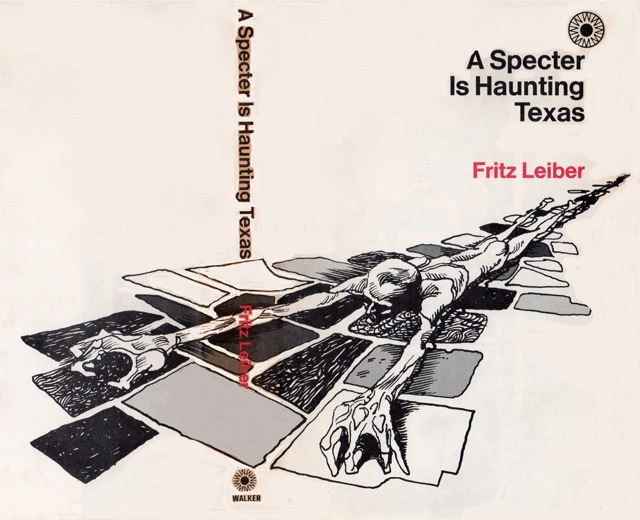
                • Cover of A Specter Is Haunting Texas
                  A Specter Is Haunting Texas

                  Fritz Leiber · standalone novel · 1968

                  similar bypolitical intriguescience fictionfunnynorth america

                  A Specter is Haunting Texas is a science fiction novel by American writer Fritz Leiber, first published as a novel in 1969. It was originally published as a three-part serial in the magazine Galaxy Science Fiction in 1968. The title appears to be based on a Karl Marx quote from The Communist Manifesto: "A spectre is haunting Europe...the spectre of communism."

                • Cover of The People's Police
                  The People's Police

                  Norman Spinrad · standalone novel · 2017

                  similar bypolitical intriguescience fictionnorth americacontemporary+1 more

                  The first American edition was preceded by the French edition by more than two years. Amazon: ... a sharp commentary on politics with an interesting twist. Martin Luther Martin is a hard-working New Orleans cop, who has come up from the gangland of Alligator Swamp through hard work. When he has to serve his own eviction notice, he decides he's had enough and agrees to spearhead a police strike. Brothel owner and entrepreneur J. B. Lafitte also finds himself in a tight spot when his whorehouse in the Garden District goes into foreclosure. Those same Fat Cats responsible for the real estate collapse after Katrina didn't differentiate between social strata or vocation. MaryLou Boudreau, aka Mama Legba, is a television star and voodoo queen--with a difference. The loa really do ride and speak through her. These three, disparate people are pulled together by a single moment in the television studio when Martin, hoping for publicity and support from the people against the banks, corporate fat cats, and corrupt politicians. But no one expects Papa Legba himself to answer, and his question changes everything. "What do you offer?"

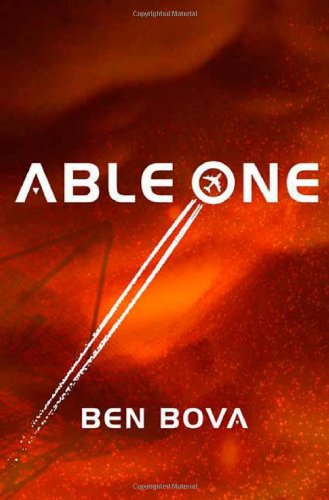
                • Cover of Able One
                  Able One

                  Ben Bova · standalone novel · 2010

                  similar bypolitical intriguescience fictionnorth americacontemporary

                  Can an experimental defense system stop North Korean missile strikes? "Able One" is a timely thrill-ride by one of science fiction's most respected novelists.

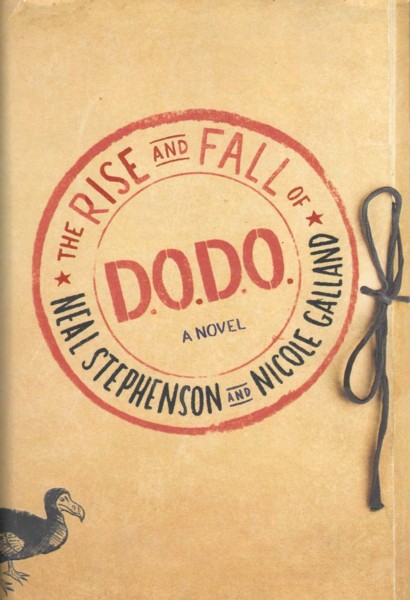
                • Cover of D. O. D. O. (Department of Diachronic Operations)
                  D. O. D. O. (Department of Diachronic Operations)

                  series · 2 books · 2017

                  similar bypolitical intriguescience fiction+1 more

                  Neal Stephenson and Nicole Galland's D.O.D.O. novels center on the Department of Diachronic Operations, a covert U.S. government agency that discovers magic vanished from the world in the nineteenth century and sets out to use time travel to bring it back. The Rise and Fall of D.O.D.O. (2017) is followed by Master of the Revels, continuing the pair's earlier collaboration on The Mongoliad.

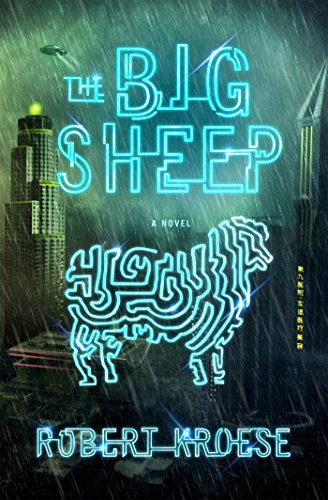
                • Cover of The Big Sheep
                  The Big Sheep

                  series · 2 books · 2016

                  similar bypolitical intriguescience fictionnorth america+1 more

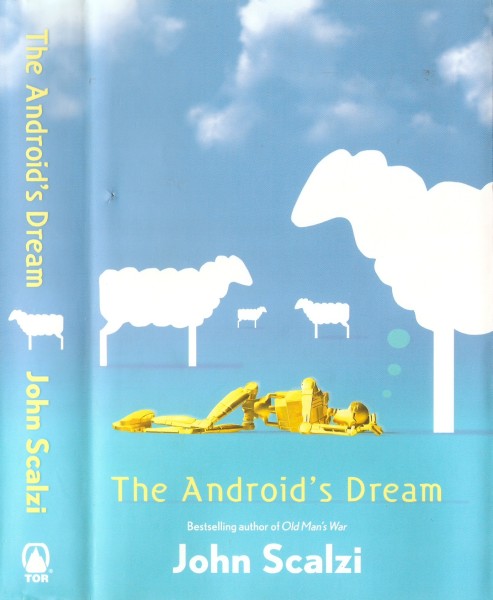
                • Cover of The Android's Dream
                  The Android's Dream

                  series · 2 books · 2006

                  similar bypolitical intriguescience fictionfunny

                  A minor diplomatic insult with a genetically engineered sheep breed spirals into a full interstellar crisis when the last surviving specimen of the 'Android's Dream' breed, needed for a critical ceremony with the alien Nidu, turns out to have been hunted to extinction by a Nidu faction bent on provoking war. John Scalzi's The Android's Dream follows ex-soldier Harry Creek as the hunt for a replacement leads him to Robin Baker, an ordinary woman carrying hidden sheep DNA that makes her the key to avoiding a war. It's a standalone comic space opera rather than an ongoing series.

                • Cover of The Yiddish Policemen's Union
                  The Yiddish Policemen's Union

                  Michael Chabon · standalone novel · 2007

                  similar bypolitical intriguescience fictionnorth americacontemporary

                  In an alternate present where Jewish refugees settled Alaska during World War II rather than Israel, homicide detective Meyer Landsman -- divorced, drinking, living in a run-down hotel -- catches a case in his own building: a former chess prodigy, shot dead beside an unfinished game. Landsman and his half-Tlingit partner Berko Shemets learn the dead man was more than he seemed, connected to a messianic movement within Sitka's Orthodox community, just as the settlement faces a countdown of its own -- its status as a federal district about to expire, everyone's future up for grabs. Michael Chabon's Hugo- and Nebula-winning noir, told as hardboiled alternate history.

                • Cover of Boomsday
                  Boomsday

                  Christopher Buckley · standalone novel · 2007

                  similar bypolitical intriguefunnynorth americacontemporary

                  Boomsday, a 2007 novel by Christopher Buckley, is a political satire about the rivalry between squandering Baby Boomers and younger generations of Americans who do not want to pay high taxes for their elders' retirement.

                • Cover of Laundry Files
                  Laundry Files

                  series · 22 books · 2004

                  similar byscience fictioncontemporary+2 more

                  The Laundry Files is a series of novels by British writer Charles Stross. They mix the genres of Lovecraftian horror, spy thriller, science fiction, and workplace humour. Their main character for the first five novels is "Bob Howard", a one-time I.T. consultant turned occult field agent. Howard is recruited to work for the Q-Division of SOE, otherwise known as "the Laundry", the British government agency which deals with occult threats. "Magic" is described as being a branch of applied computation (mathematics), therefore computers and equations are just as useful as, and perhaps more potent than, classical spellbooks, pentagrams, and sigils for the purpose of influencing ancient powers and opening gates to other dimensions. These occult struggles happen largely out of view of the public, as the Laundry seeks to keep the methods for contacting such powers under wraps. There are also elements of dry humour and satirisation of bureaucracy.

                • Cover of The Future of Another Timeline
                  The Future of Another Timeline

                  Annalee Newitz · standalone novel · 2019

                  similar bypolitical intriguescience fictionnorth americacontemporary

                  The Future of Another Timeline is a 2019 science fiction novel by Annalee Newitz. The feminist time-travel adventure follows Tess, a professional time traveler, geoscientist, and secretly a member of the Daughters of Harriet (Tubman), who are working to make the future better for women.

                • Cover of City of Cain
                  City of Cain

                  Kate Wilhelm · standalone novel · 1974

                  similar bypolitical intriguescience fictionnorth americacontemporary

                  Publisher: "Peter Roos cannot help knowing the thoughts of those around him. A rare physical condition has given him that power. Now he has ''heard'' about the government's secret plan to give up control of America to the military - to build an underground city for themselves in the event of a nuclear attack. Unfortunately for Roos, the government knows he knows. And the project's sponsors - including his senator brother - have no choice."

                • Cover of Crosstalk
                  Crosstalk

                  Connie Willis · standalone novel · 2016

                  similar byscience fictionfunnycontemporarynorth america

                  Crosstalk is a science fiction novel by Connie Willis, published in 2016. It is a romantic comedy that explores the intersection of telephones and telepathy. In a similar situation to Bellwether and Passage, the main character, Briddey Flannigan, is part of a larger institution who gets caught up in series of escalating events. Additionally, Crosstalk like Bellwether and Passage feature themes of neuroscience, communication and technology.

                • Cover of Agent to the Stars
                  Agent to the Stars

                  John Scalzi · standalone novel · 2005

                  similar byscience fictionfunnycontemporarynorth america

                  "The space-faring Yherajk have come to Earth to meet us and to begin humanity's first interstellar friendship. There's just one problem: They're hideously ugly and they smell like rotting fish. Gaining humanity's trust isn't easy when you look like a B-movie terror. The Yherajk need someone who can help them close the deal. Thomas Stein knows all about closing deals - he's one of Hollywood's hottest young agents who's just closed the biggest deal of his career. But it's one thing to sell your client when she's a hot young starlet. It's another thing entirely when your client is an entire alien species, depending on you to pull off the greatest introduction in this history of man. Stein's going to need all his smarts, all his skills, and all his wits to earn his percentage and his place in history." [Source: front dust jacket flap of Subterranean Press edition]

                • Cover of Raise the Gipper!
                  Raise the Gipper!

                  John Barnes · standalone novel · 2012

                  similar bypolitical intriguescience fictionfunnynorth americacontemporary

                  Two young political activists, and improbable friends, an Occupier and a Tea Partyist, are thrown together to save the world from a resurrected zombie Reagan, an invasion of evil space bats, and other general forces of evil.

                • Cover of Mission Earth
                  Mission Earth

                  series · 10 books · 1985

                  completed

                  similar bypolitical intriguescience fiction+1 more

                  Mission Earth is a ten-volume science fiction novel series by L. Ron Hubbard. Hubbard died three months after the publication of volume 1, and other volumes were published posthumously.

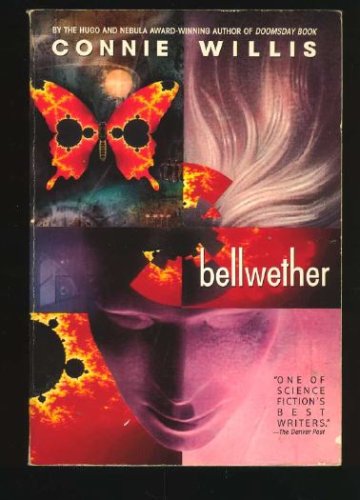
                • Cover of Bellwether
                  Bellwether

                  Connie Willis · standalone novel · 1996

                  similar byscience fictioncontemporarynorth america+1 more

                  Bellwether is a 1996 science fiction novel by Connie Willis. It was nominated for the Nebula Award for Best Novel and won the Locus Award for Best Novella in 1997.

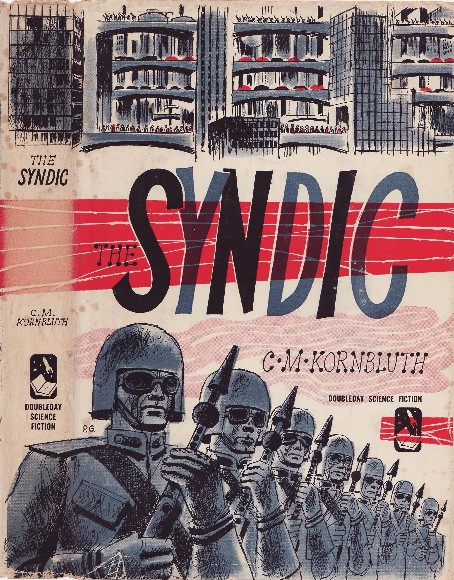
                • Cover of The Syndic
                  The Syndic

                  C. M. Kornbluth · standalone novel · 1953

                  similar bypolitical intriguescience fictionnorth america

                  From the back cover of the Bantam first paperback: "Tomorrow? Here is a shocking but realistic picture of America in the twenty-first century - a wild, chaotic America, but a very possible America. An America where people pay protection instead of taxes - where polo is played in jeeps with 50-caliber machine guns. An America full of the wonders of tomorrow driven by passions that are ageless."

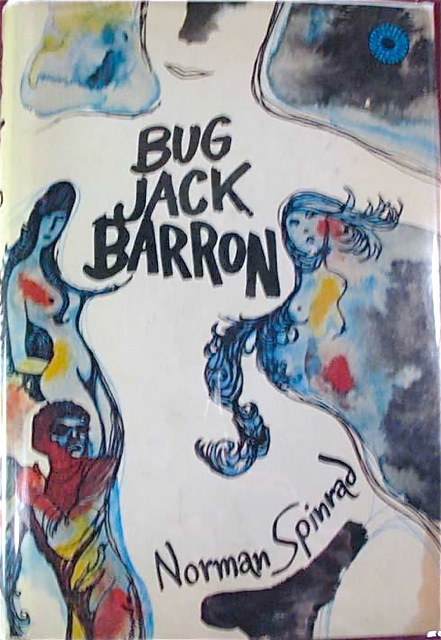
                • Cover of Bug Jack Barron
                  Bug Jack Barron

                  Norman Spinrad · standalone novel · 1969

                  similar bypolitical intriguescience fictionnorth america

                  Bug Jack Barron is a 1969 science fiction novel by American writer Norman Spinrad, first serialized in the New Worlds magazine under the editorship of Michael Moorcock. It was nominated for the 1970 Hugo Award. The novel is notable for its lyrical style and unique use of cut-up phrases. In this regard, Spinrad has cited the influence of Beat writers William S. Burroughs, Allen Ginsberg, and Jack Kerouac.

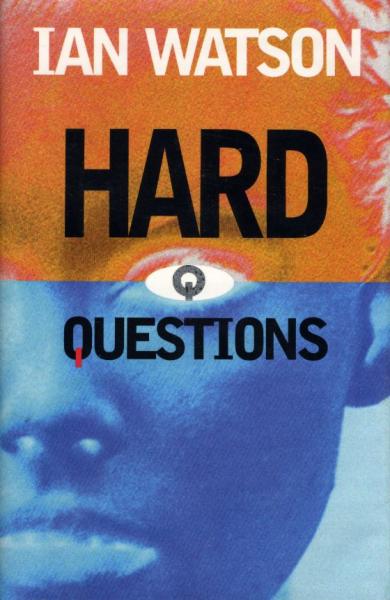
                • Cover of Hard Questions
                  Hard Questions

                  Ian Watson · standalone novel · 1996

                  similar bypolitical intriguescience fictionnorth americacontemporary

                  Meet Qua, the quantum computer with immense power capabilities that tunes into pathways in parallel universes to operate at lightning speed. But with such power comes the threat of catastrophe, and as government agents, cult disciples, and computer criminals learn what this computer is capable of, Cambridge researcher Clare Conway makes every attempt to safeguard herself and society from the realities she discovers about Qua. For all of the power this computer offers, it threatens to spark a civil war in America, a danger unlike any other that history has ever known.