More like Underdog
anchored on:near futurecyberpunkbig city
but
- Sprawl Trilogy
series10 books1981
similar bycyberpunkdarknear futurebig citytensescience fiction
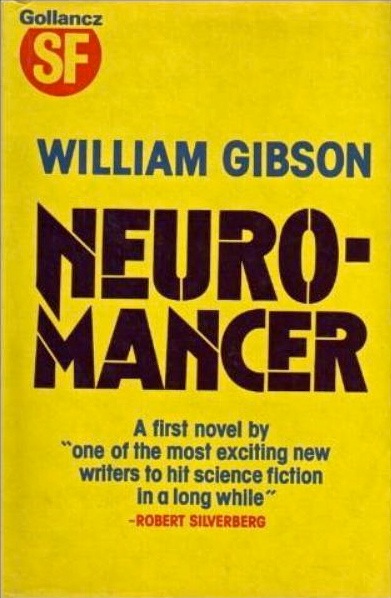
The Sprawl Trilogy is William Gibson's foundational cyberpunk sequence: Neuromancer (1984), in which hacker Case is drawn into a high-stakes heist alongside an artificial intelligence and a damaged ex-soldier, followed by Count Zero (1986) and Mona Lisa Overdrive (1988), which widen the same near-future world of corporate power and networked cyberspace to new characters. Johnny Mnemonic, an early short story set in the same fictional milieu, predates the novels and introduces the courier Molly Millions before her role in the trilogy. Together these works established much of cyberpunk's visual and thematic vocabulary.
- Moxyland
Lauren Beukesstandalone novel2008
similar bycyberpunkdarknear futurebig citysurveillancetensescience fiction+1 more
Moxyland is a cyberpunk dystopian novel written by South African author, Lauren Beukes. The book was published in 2008.
- The Supernaturalist
Eoin Colferstandalone novel2004
similar bycyberpunkdarknear futurebig citytensescience fiction+1 more
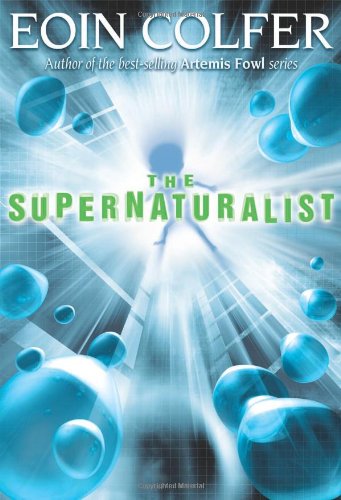
The Supernaturalist is a science fiction cyberpunk novel by Irish author Eoin Colfer. The book was influenced by film noir and other predecessors of the cyberpunk science fiction movement. Colfer has outlined plans for a sequel, Avernus.
- Bridge Trilogy
series4 books1990
similar bycyberpunknear futurebig cityscience fiction+3 more
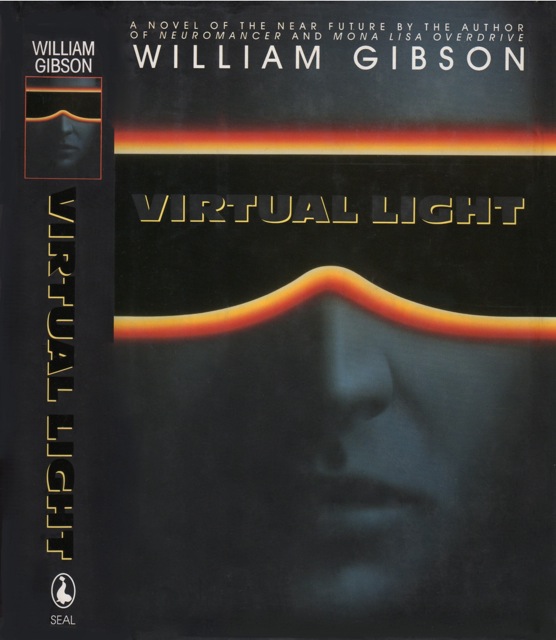
The Bridge trilogy is a series of novels by William Gibson, his second after the successful Sprawl trilogy. The trilogy comprises the novels Virtual Light (1993), Idoru (1996) and All Tomorrow's Parties (1999). A short story, "Skinner's Room", was originally composed for Visionary San Francisco, a 1990 museum exhibition exploring the future of San Francisco.
- Blade Runner Universe
series6 books1968
similar bycyberpunkdarknear futurebig cityscience fiction+1 more
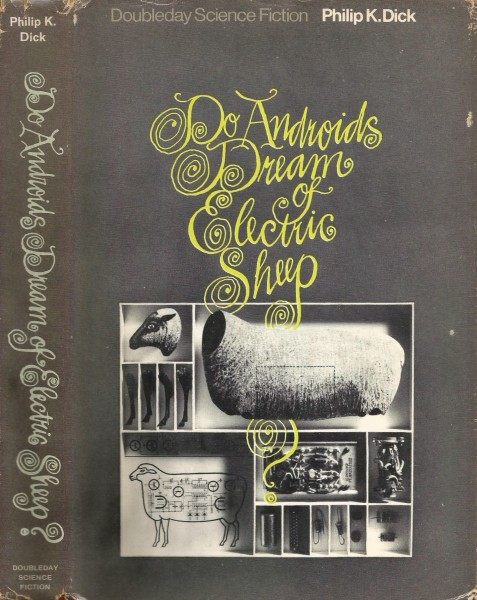
Philip K. Dick's 1968 novel Do Androids Dream of Electric Sheep? follows bounty hunter Rick Deckard as he tracks escaped androids through an irradiated, near-abandoned San Francisco, using the hunt to probe questions of empathy and what separates human from machine. The novel became the basis for Ridley Scott's 1982 film Blade Runner, and Marvel Comics later published an illustrated adaptation of that film. Together the two trace the story's path from prose original to screen and comic-page adaptation.
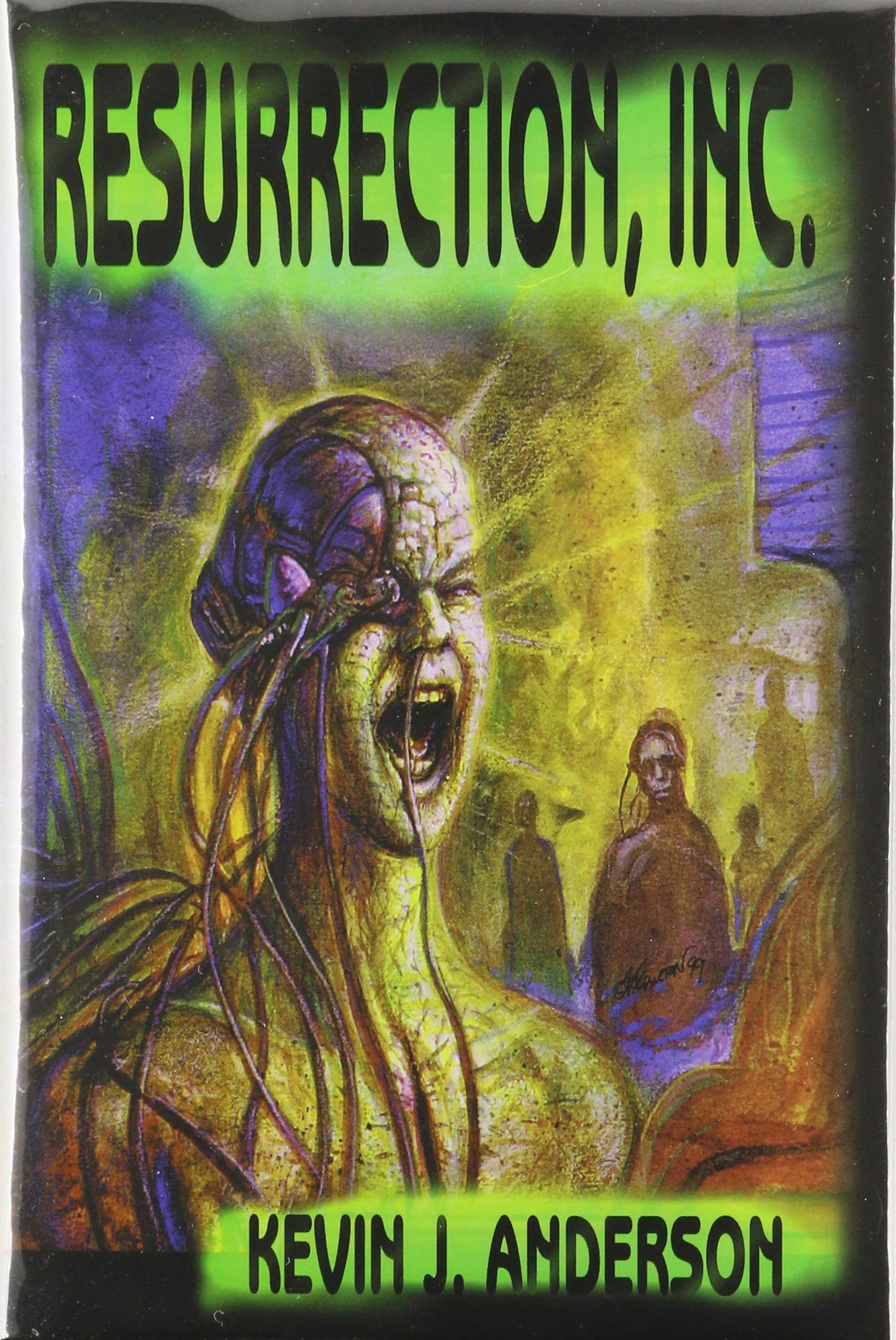
- Resurrection, Inc.
Kevin J. Andersonstandalone novel1988
similar byclass conflictcyberpunkdarknear futurebig citytensescience fiction
It is the future--and the dead walk the streets, resurrected by technology to become servants to the living. Resurrection, Inc. found a profitable way to do it: a microprocessor brain, a synthetic heart, artificial blood--and anyone with money could buy a Servant with no mind of its own, trained to obey any command. But for every Servant created a living worker was out of a job, and suddenly the profits of Resurrection, Inc. became everyone else's loss. Some take to rioting in the streets, their rampages ruthlessly ended by heavily armed Enforcers, eager for the kill. Others join the ever-growing cult of Neo-Satanism, seeking Heaven in the depths of Hell. Only one man tries to save the world. His name is Danal, and he is the last hope of the living. He is dead, but he remembers everything.
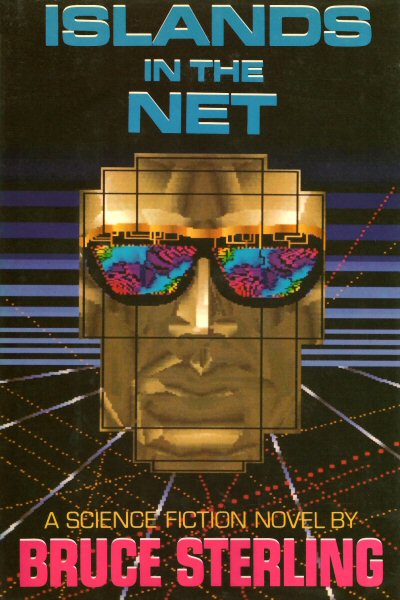
- Islands in the Net
Bruce Sterlingstandalone novel1988
similar byclass conflictcyberpunknear futuresurveillancetensescience fiction+1 more
Islands in the Net is a 1988 science fiction novel by American writer Bruce Sterling. It won the John W. Campbell Memorial Award for Best Science Fiction Novel in 1989, and was nominated for both the Hugo and Locus Awards that same year. It offers a view of an early 21st century world, apparently peaceful, with delocalised, networking corporations. The protagonist, swept up in events beyond her control, finds herself in places that are off the net, from a datahaven in Grenada, to a Singapore under terrorist attack, to the poorest and most disaster-struck parts of Africa.
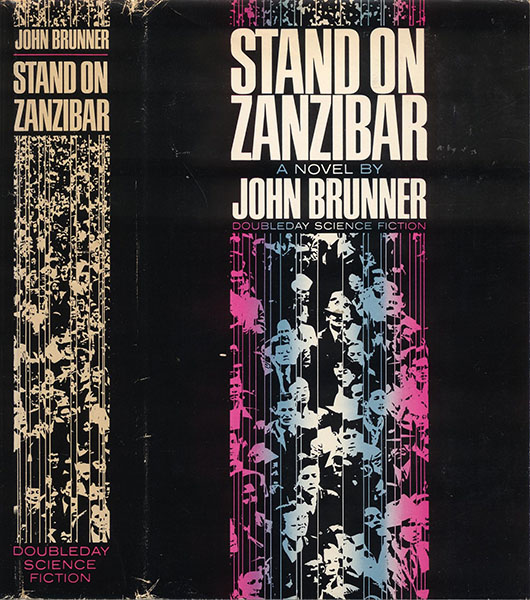
- Stand on Zanzibar
John Brunnerstandalone novel1968
similar bydarknear futurebig citysurveillancescience fiction+1 more
Stand on Zanzibar is a dystopian New Wave science fiction novel written by John Brunner and first in part published in New Worlds magazine in 1967 and in book form in 1968. The book won a Hugo Award for Best Novel at the 27th World Science Fiction Convention in 1969, as well as the 1969 BSFA Award and the 1973 Prix Tour-Apollo Award.
- Slow River
Nicola Griffithstandalone novel1995
similar byclass conflictcyberpunkdarknear futurebig cityscience fiction
Slow River is a science fiction novel by British writer Nicola Griffith, first published in 1995. It won the Nebula Award for Best Novel and the Lambda Literary Award. The novel received critical praise for its writing and setting, while its use of multiple narrative modes was criticised.
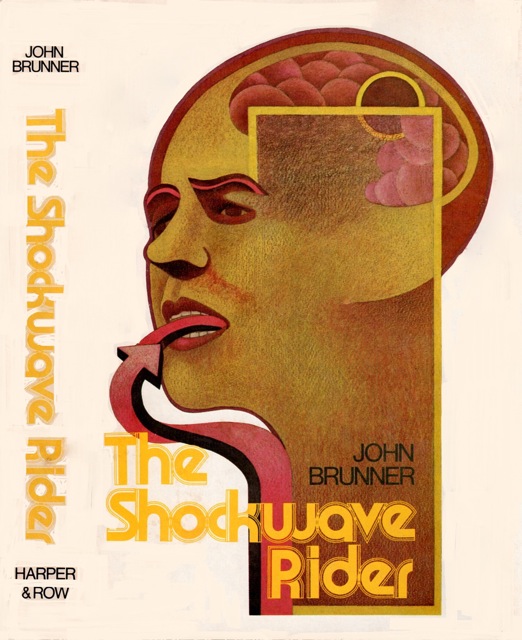
- The Shockwave Rider
John Brunnerstandalone novel1975
similar bycyberpunkdarknear futurebig citysurveillancetensescience fiction
The Shockwave Rider is a science fiction novel by John Brunner, originally published in 1975. It is notable for its hero's use of computer hacking skills to escape pursuit in a dystopian future, and for the coining of the word "worm" to describe a program that propagates itself through a computer network. It also introduces the concept of a Delphi pool, perhaps derived from the RAND Corporation's Delphi method – a prediction market on world events which bears close resemblance to DARPA's controversial and cancelled Policy Analysis Market.
- Hardwired
series3 books1986
similar bycyberpunknear futuretensescience fiction+3 more
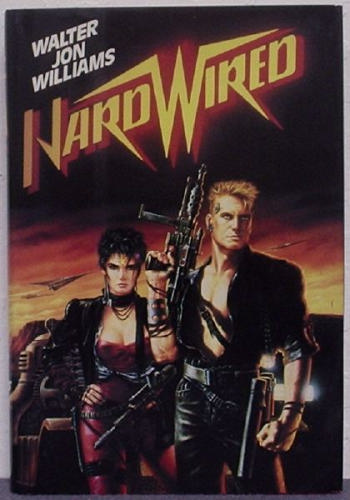
Walter Jon Williams' Hardwired (1986) is an early and influential cyberpunk novel. Voice of the Whirlwind, published three years later, is a loosely connected follow-up set in the same future, sharing its technological and political backdrop with a different cast of characters.
- Noir
K. W. Jeterstandalone novel1998
similar byclass conflictcyberpunkdarknear futurebig citytensescience fiction
Noir is a science fiction novel by American writer K. W. Jeter, published in 1998. It uses the conventions of film noir – the alienated, doomed hero, the cynical private detective, the femme fatale, universal corruption and moral breakdown – to portray a dystopian vision of capitalism run riot.
- Feed
M. T. Andersonstandalone novel2002
similar bycyberpunkdarknear futuresurveillancescience fiction+1 more
Feed (2002) is a cyberpunk, satirical, dystopian, young-adult novel by M. T. Anderson, focusing on issues such as American hegemony, corporate power, consumerism, information technology, data mining, and environmental decline, with a sometimes sardonic, sometimes somber tone. From the first-person perspective of a teenaged boy, the book takes place in a near-futuristic American culture completely dominated by advertising and corporate exploitation, corresponding to the enormous popularity of internetworking brain implants called feeds.
- Make Room! Make Room!
Harry Harrisonstandalone novel1966
similar byclass conflictdarknear futurebig citytensescience fiction
Make Room! Make Room! is a 1966 science fiction novel written by Harry Harrison exploring the consequences of both unchecked population growth on society and the hoarding of resources by a wealthy minority. It was originally serialized in Impulse magazine.
- The Diamond Age
Neal Stephensonstandalone novel1995
similar byclass conflictcyberpunknear futurebig cityscience fiction
The Diamond Age: Or, A Young Lady's Illustrated Primer is a science fiction novel by Neal Stephenson. It is to some extent a Bildungsroman or coming-of-age story, focused on a young girl named Nell, set in a future world in which nanotechnology affects all aspects of life. The novel deals with themes of education, social class, ethnicity, and the nature of artificial intelligence. The Diamond Age was first published in 1995 by Bantam Books, as a Bantam Spectra hardcover edition. In 1996, it won both the Hugo and Locus Awards, and was shortlisted for the Nebula and other awards.
- High-Rise
J. G. Ballardstandalone novel1975
similar byclass conflictdarknear futurebig citytensescience fiction
High-Rise is a 1975 novel by British writer J. G. Ballard. The story describes the disintegration of a luxury high-rise building as its affluent residents gradually descend into violent chaos. As with Ballard's previous novels Crash (1973) and Concrete Island (1974), High-Rise inquires into the ways in which modern social and technological landscapes could alter the human psyche in provocative and hitherto unexplored ways. It was adapted into a film of the same name, in 2015, by director Ben Wheatley.
- Eastern Standard Tribe
Cory Doctorowstandalone novel2004
similar bycyberpunknear futurebig citysurveillancescience fiction+2 more
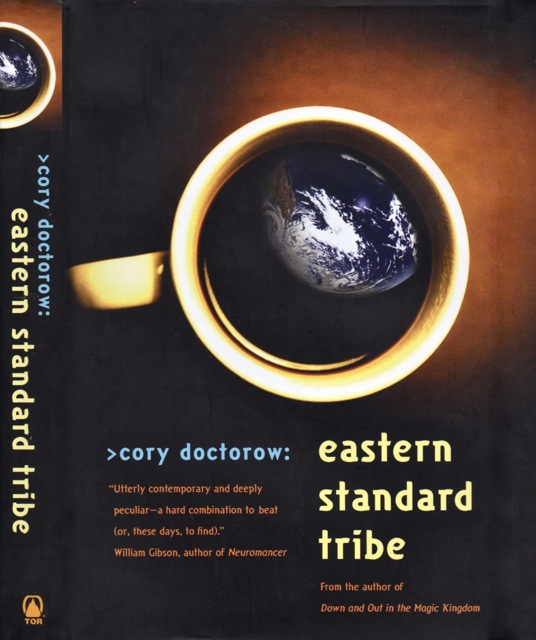
Eastern Standard Tribe is a 2004 science fiction novel by Canadian writer Cory Doctorow. Like Doctorow's first two books, the entire text was released under a Creative Commons license on Doctorow's website, allowing the whole text of the book to be read for free and distributed without the publisher's permission.
- Space Merchants
series2 books1953
completed
similar byclass conflictdarknear futurescience fiction+1 more
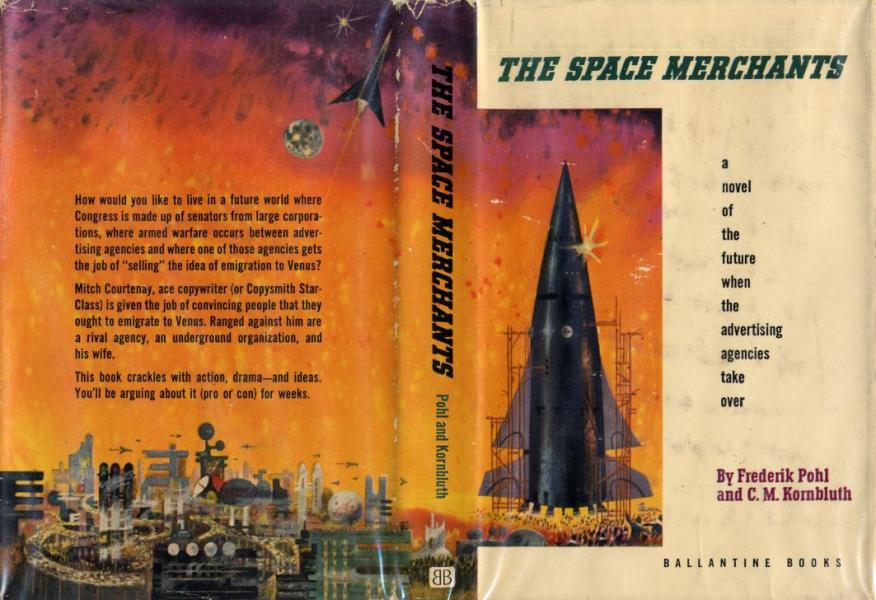
The Space Merchants (1953) is a satirical science fiction novel by Frederik Pohl and C. M. Kornbluth that follows an advertising executive navigating a future where aggressive consumer capitalism has swallowed politics and daily life. The authors reunited three decades later for a direct sequel, The Merchants' War (1984), returning to the same satirical world. Together the two books form a compact bookend pair rather than an ongoing series.
- Company Town
Madeline Ashbystandalone novel2016
similar bycyberpunkdarknear futurebig citytensescience fiction+1 more
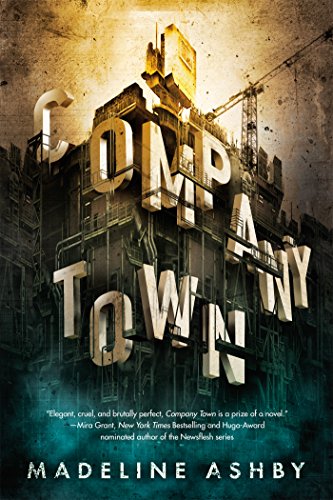
**2017 Winner of the Sunburst Award Society's Copper Cylinder Adult Award 2017 Canada Reads Finalist 2017 Locus Award Finalist for Science Fiction Novel Category 2017 Sunburst Award Finalist for Adult Fiction 2017 Aurora Awards Finalist for Best Novell** New Arcadia is a city-sized oil rig off the coast of the Canadian Maritimes, now owned by one very wealthy, powerful, byzantine family: Lynch Ltd. Hwa is of the few people in her community (which constitutes the whole rig) to forgo bio-engineered enhancements. As such, she’s the last truly organic person left on the rig–making her doubly an outsider, as well as a neglected daughter and bodyguard extraordinaire. Still, her expertise in the arts of self-defense and her record as a fighter mean that her services are yet in high demand. When the youngest Lynch needs training and protection, the family turns to Hwa. But can even she protect against increasingly intense death threats seemingly coming from another timeline? Meanwhile, a series of interconnected murders threatens the city’s stability and heightens the unease of a rig turning over. All signs point to a nearly invisible serial killer, but all of the murders seem to lead right back to Hwa’s front door. Company Town has never been the safest place to be–but now, the danger is personal. A brilliant, twisted mystery, as one woman must evaluate saving the people of a town that can’t be saved, or saving herself.
- The Jagged Orbit
John Brunnerstandalone novel1969
similar bydarknear futurebig citysurveillancescience fiction+1 more
The Jagged Orbit is a science fiction novel by British writer John Brunner. It is similar to his earlier novel Stand on Zanzibar in its narrative style and dystopic outlook. It has exactly 100 titled chapters, which vary from several pages to part of one word. It was first published in 1969 with cover art by Leo and Diane Dillon, in the Ace Science Fiction Specials line issued by Ace Books.
- The Dervish House
Ian McDonaldstandalone novel2010
similar bycyberpunknear futurebig citytensescience fiction+1 more
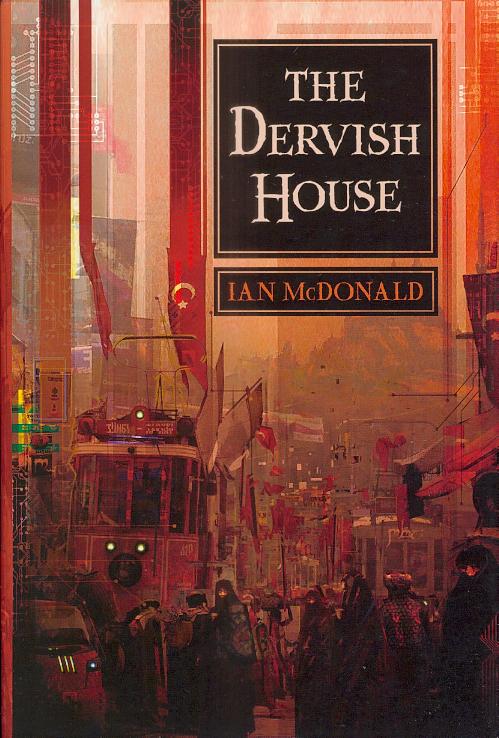
The Dervish House is a 2010 science fiction novel by British author Ian McDonald. The novel was shortlisted for the Arthur C. Clarke Award in 2011, and won the BSFA Award and the John W. Campbell Memorial Award in the same year. It was a nominee for the 2011 Hugo Award for Best Novel. The French translation La maison des derviches won the Planete-SF Blogger's Award in 2012.
- Market Forces
Richard Morganstandalone novel2004
similar byclass conflictdarknear futurebig citytensescience fiction+1 more
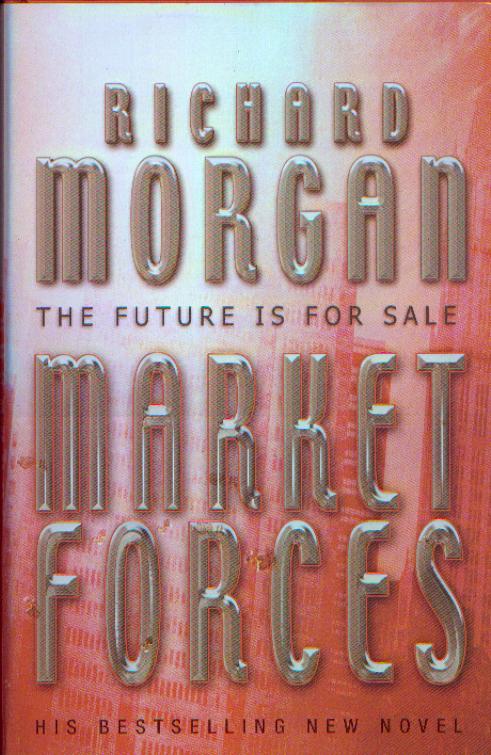
Synopsis here.