More like Undergrowth
anchored on:science fictionfar futurejungle
but
- Hothouse
series6 books1961
completed
similar byscience fictionfar futurejungle+3 more
Hothouse is set so far in Earth's future that the sun has nearly stopped and a single vast banyan tree has swallowed most of the land, leaving a shrunken, primitive humanity struggling to survive among giant plants and insects that have taken over ecological niches animals once filled. Brian Aldiss fixed up five linked novelettes, originally serialized in 1961, into this novel; the abridged US edition appeared as The Long Afternoon of Earth, with the full text not reaching American readers until 1976. It's cited as one of the defining 'dying Earth' science fantasies.
- Dune
series20 books1963
part of Dune Universe
similar byscience fictionfar futureother star systems
Frank Herbert's Dune Chronicles opens with 1965's Dune, set on the desert planet Arrakis where House Atreides takes control of the only source of the vital spice melange and young Paul Atreides is pulled into a struggle over its politics and religion. Herbert carried the story forward across five further novels — Dune Messiah, Children of Dune, God Emperor of Dune, Heretics of Dune, and Chapterhouse: Dune — following Paul's line over the following millennia, before Brian Herbert and Kevin J. Anderson later extended the saga. Many other editions of these six novels are omnibus and box-set repackagings rather than separate stories.
- Uplift
series5 books1980
part of Uplift Universe
similar byscience fictionadventurousfar futureother star systems
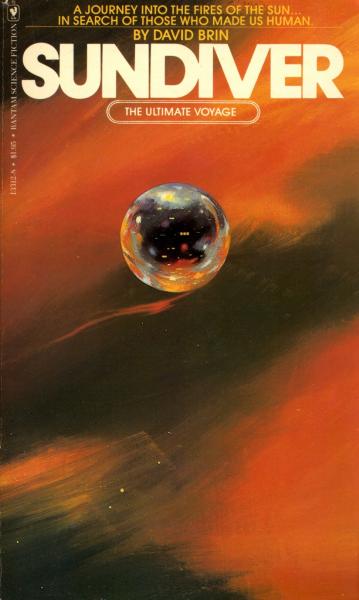
David Brin's Uplift trilogy opens with Sundiver, sending human explorers into the Sun itself, then follows a dolphin-crewed starship on the run from hostile aliens in Startide Rising and a fight over the colony world Garth in The Uplift War. The books sit inside Brin's wider Uplift Universe, built on the idea that spacefaring "patron" species genetically engineer younger "client" species into full sapience, with humanity an anomaly that reached the stars without a patron of its own.
- Hungry City Chronicles / Mortal Engines
series5 books2001
part of Mortal Engines Universe
similar byscience fictionadventurousfar futuresurvival
The Mortal Engines Quartet, also known as the Predator Cities Quartet, is a series of epic young adult science fiction novels by the English novelist and illustrator Philip Reeve. He began the first volume of the series, Mortal Engines, in the 1980s, and it was published in 2001. Reeve then published three further novels, Predator's Gold (2003), Infernal Devices (2005), and A Darkling Plain (2006).
- Dune Universe
universe78 books1963
Start hereDune · Start here
similar byscience fictionfar futureother star systems
Arrakis. Dune. The desert planet, where empire runs on a single substance: the spice melange, which folds space, prolongs life, and unlocks prescience, and which exists nowhere else in the known universe. Frank Herbert's saga is a meditation dressed as an adventure — feudal houses and a secret sisterhood, engineered messiahs and the patient ecology of a world without water, all turning on the terrible gravity of who commands the spice. It reads like scripture and schemes like a war room, ten thousand years hence, among people who have outlawed the thinking machine and made instruments of themselves instead. At its heart stand Herbert's original six — Dune, Dune Messiah, Children of Dune, God Emperor of Dune, Heretics of Dune, Chapterhouse: Dune — a single deepening arc across millennia, arguing the whole way between prophecy and free will. Around that spine his son Brian Herbert and Kevin J. Anderson have raised a vast prequel architecture: Prelude to Dune, tracing the great houses a generation before Paul; Legends of Dune, reaching back to the crusade that broke the machines; the Schools of Dune cycle on the founding of Bene Gesserit, Mentat, and Navigator; the Caladan Trilogy and Heroes of Dune filling years the originals left in shadow. Many hands, dozens of volumes, one desert. What sets Dune apart is its refusal of the simple: religion is manufactured, heroes are hazards, and the sand itself — worm, water, ecology — acts as a political power. Begin where the universe did, with Frank Herbert's Dune (1965), and read the original six in order; you need nothing else to feel the full weight. The prequels are a country to explore afterward, taken by era. Beginnings are delicate times.
- Skyward
series9 books2018
part of Cytoverse
similar byscience fictionfar futureother star systems+2 more
On the ruined world of Detritus, humanity lives underground beneath near-constant aerial bombardment from an alien force called the Krell, and Spensa Nightshade wants nothing more than to fly a starfighter, despite her father's reputation as a coward who fled battle. Brandon Sanderson's Skyward follows her fight to earn her wings and clear her father's name, uncovering secrets about her own strange abilities and the planet's buried past across Starsight, Cytonic, and Defiant. Co-author Janci Patterson contributes companion novellas that widen the view to supporting characters.
- Hello America
J. G. Ballardstandalone novel1981
similar byscience fictionadventurousfar futuresurvivalecological collapse
Hello America is a science fiction novel by British writer J. G. Ballard, published in 1981. First edition cover designed by Bill Botten. The plot follows an expedition to a North America rendered uninhabitable by an ecological disaster following an energy crisis.
- Saint Leibowitz
series6 books1955
completed
similar byscience fictionfar future+1 more
Walter M. Miller Jr.'s A Canticle for Leibowitz (1959), assembled from three novellas he had published earlier in the decade, follows the monks of a Catholic monastery in the post-nuclear American Southwest as they preserve fragments of scientific knowledge across centuries, watching civilization slowly rebuild itself and edge back toward the mistakes that destroyed it. Miller's posthumous sequel, Saint Leibowitz and the Wild Horse Woman, completed by Terry Bisson from his notes after his death and published in 1997, returns to the same abbey and its world decades later. Together the two novels form a sparse, decades-spanning series about memory, faith, and the cycles of civilization.
- The Interdependency
series3 books2017
similar byscience fictionadventurousfar future+3 more
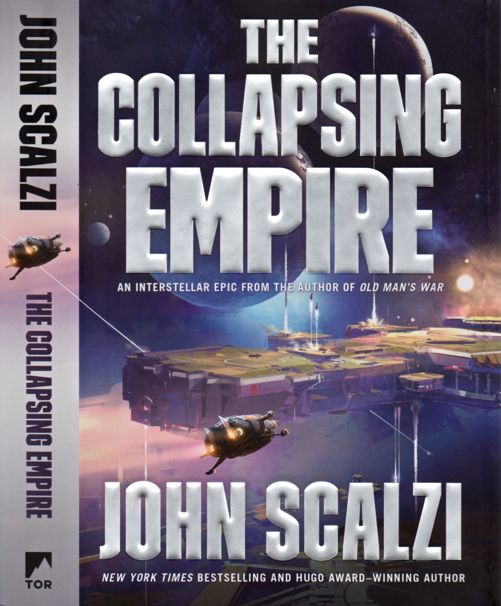
The Interdependency follows the collapse of a wormhole-linked network called the Flow that connects humanity's scattered, otherwise-uninhabitable colonies, forcing an emperox, a scientist studying the collapse, and a scheming trading family to confront a looming interstellar crisis. John Scalzi's trilogy, beginning with The Collapsing Empire, follows the political and personal fallout as the empire's foundations unravel.
- Heechee
series19 books1972
completed
similar byscience fictionfar futureother star systems+1 more
The Heechee Saga, also known as the Gateway series, is a series of science fiction novels and short stories by Frederik Pohl. The Heechee are an advanced alien race that visited the Solar System hundreds of millennia ago and then mysteriously disappeared. They left behind bases containing artifacts, including working starships, which are discovered and exploited by humanity.
- Dark Is the Sun
Philip José Farmerstandalone novel1979
similar byscience fictionfar futuresurvivalecological collapse+1 more
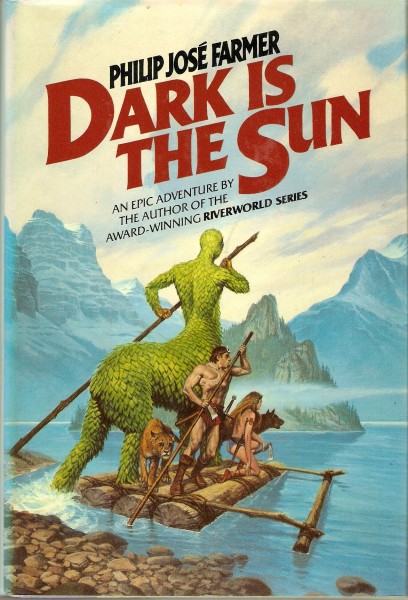
Dark Is The Sun is a science fiction novel by American writer Philip José Farmer, first published in 1979. It tells the story of the people and creatures left on Earth when the Sun is dead and the universe is heading towards the Big Crunch.
- Burl
series4 books1920
completed
similar byscience fictionsurvivalfar futureother star systems+2 more
Murray Leinster's Burl sequence is set on a planet deliberately seeded with insect and plant life for later human colonization, but the follow-up mission meant to introduce animal life never arrived; over centuries the surviving flora and insects grew to monstrous size, leaving the marooned descendants of a crashed expedition to survive among ant colonies, giant wasps, and spiders. Burl, born into this stranded, near-primitive community, has to out-think these giant predators to keep his people alive. The story began as two 1920s pulp novellas and a 1953 sequel before Leinster fused all three into the single fix-up novel The Forgotten Planet.
- The Stars My Destination
Alfred Besterstandalone novel1956
similar byscience fictionadventurousfar futuresurvivalother star systems
When a passing spaceship refuses to rescue the lone survivor from the drifting wreck of another ship, he dedicates his life to discovering who made that decision and exacting his revenge, in the process altering human history and his own character.
- Solar Queen
series7 books1955
similar byscience fictionfar future+1 more
Andre Norton's Solar Queen novels follow the crew of a free-trader starship under Captain Jellico as they scrape by hauling cargo and making first contact on the fringes of settled space. The first three books appeared in the 1950s; Norton returned to the series decades later and, from the 1990s on, completed it in collaboration with P. M. Griffin and Sherwood Smith. Across its seven novels the series keeps its ensemble trading-crew premise rather than following one continuous plot.
- Tunnel in the Sky
Robert A. Heinleinstandalone novel1955
similar byscience fictionadventurousfar futuresurvivalother star systems
As the final test of a survivalist/explorer class, teenagers are dumped on an alien planet to use their skills while awaiting pickup. But something has gone wrong, and they find they are on their own.
- Forerunner
series5 books1960
completed
similar byscience fictionfar futureother star systems+1 more
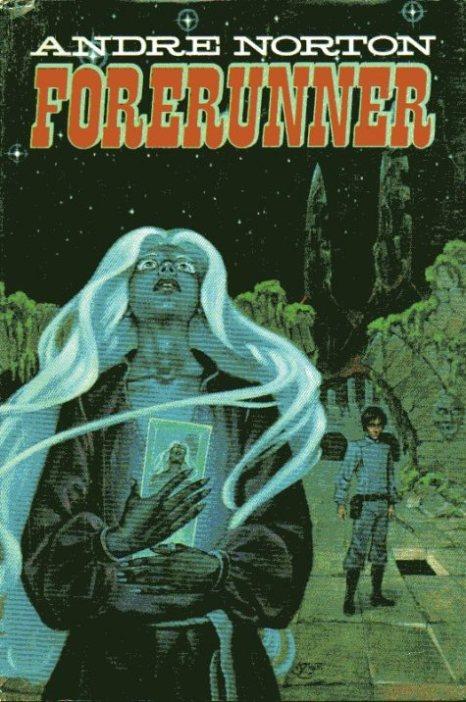
Forerunner and its sequel, Forerunner: The Second Venture, follow a young woman on an alien world who joins forces with an off-world traveler on a dangerous search for relics of a vanished, ancient civilization, hoping to find clues to how civilization itself began. It is a self-contained two-book adventure by Andre Norton rather than part of a longer sequence, later gathered as the omnibus The Forerunner Factor.
- Uplift Universe
universe13 books1980
Start hereUplift · Start here
similar byscience fictionadventurousfar futureother star systems
No species, the Galactics insist, ever climbs to sapience alone. For a billion years the elder races have "uplifted" their chosen clients — reshaping some promising animal, gene by patient gene, into a thinking being, then binding it through long ages of indenture. Patron lifts client; client one day becomes patron; and every lineage traces back through the vast Galactic Library to the vanished Progenitors who began it all. Then a ragged band of primates arrives at the stars with no patron to claim them — wolflings, self-made, an affront to a hundred thousand years of law — and worse, these humans have already started uplifting neighbors of their own: the neo-dolphins and neo-chimpanzees of Earthclan. David Brin builds this galaxy across two trilogies. The first — Sundiver, the Hugo- and Nebula-winning Startide Rising, and the Hugo-winning The Uplift War — sends an expedition into the Sun, then follows the dolphin-crewed survey ship Streaker as it flees a discovery that sets fanatical star-clans at war, and a chimp-led resistance on an invaded colony world. The second sequence, Uplift Storm — Brightness Reef, Infinity's Shore, Heaven's Reach — descends to Jijo, a forbidden world where six fallen races hide as illegal settlers, and draws every loose thread toward a reckoning. Short fiction fills the margins. This is space opera with an ecologist's conscience: teeming with invented biologies, wry cross-species banter, and real unease about what we owe the minds we make. Begin with Startide Rising — the saga's beating heart, and readable on its own — or take Sundiver first and read straight through in publication order.
- Brion Brandd
series2 books1962
completed
similar byscience fictionfar futuresurvivalother star systems+1 more
Harry Harrison's Brion Brandd books are two loosely connected science fiction adventures: Planet of the Damned (1962), a Hugo Award finalist, and its later sequel Planet of No Return. Both follow the same troubleshooting protagonist sent to defuse crises on different alien worlds, but the two stories are self-contained rather than parts of one continuous plot.
- Pax / Astra
series2 books1954
completed
similar byscience fictionadventurousfar futuresurvival+1 more
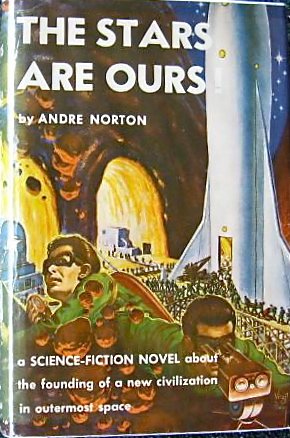
Andre Norton's The Stars Are Ours! (1954) and its sequel Star Born (1957) follow a group of scientists and their families who flee a repressive future Earth to colonize a distant world they name Astra, and then the next generation, who must contend with that world's original inhabitants. Star Flight appears to be a later omnibus or reissue rather than a third original novel.
- Maurai
series6 books1959
completed
similar byscience fictionfar futureecological collapse+1 more
The Maurai series is a series of short stories and a novel by Poul Anderson set in a resource depleted, post-apocalyptic earth several centuries in the future. The series is named after its most frequent protagonists, citizens of the Maurai Federation. The Maurai dominate the Pacific and Indian Oceans. Fearful of the social and ecological implications of a return to large-scale industrial society, they use their considerable might and covert resources to prevent other nations from developing nuclear power.
- The Drowned World
J. G. Ballardstandalone novel1962
similar byscience fictionsurvivalecological collapsejungleeerie
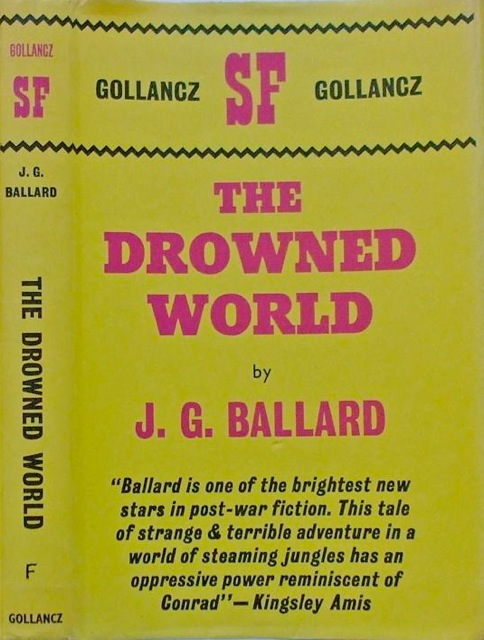
The Drowned World is a 1962 science fiction novel by J. G. Ballard. It first appeared in shortened form in the January 1962 issue of the UK edition of Science Fiction Adventures and was published in book form later that year by Victor Gollancz Ltd in London; an American edition followed from Berkley Medallion. Critics have grouped The Drowned World with Ballard's early science-fiction novels as part of an "ambiguous apocalypse" sequence that also includes The Drought and The Crystal World, from the period in which he was developing the ideas he described as "inner space". Set in a future in which solar radiation has melted the polar ice caps and transformed London into a flooded tropical lagoon, the novel follows biologist Robert Kerans as he becomes increasingly drawn toward the altered environment rather than toward restoring the old social order.
- The Companions
Sheri S. Tepperstandalone novel2003
similar byscience fictionadventurousfar futurejungleother star systems+1 more
Three planets in deep space were named by their human discoverers to reflect their environments: lush and foreboding Jungle, which swallowed up an exploratory team; Stone, phenomenally rich in rare ore; and Moss, the most enigmatic -- and dangerous -- of the trio.Joining her half-brother Paul, the famed linguist, on a two-person scientific expedition, Jewel Delis has come to Moss to observe the phenomenon of dancing light and to help decipher the strange musical "language" that accompanies it. But there are other mysteries alive on this exotic world covered in ever-shifting vegetation -- and something more than illuminations has enticed her away from a disastrously overpopulated homeworld to seek answers at the universe's unexplored edge. For Jewel herself is a question mark with a radical agenda that will put her at perilous odds with her planet's ruling powers -- and with the inscrutable alien races she encounters -- as she risks all for justice for the endangered beasts of the Earth.
- Mara and Dann
series2 books1999
completed
similar byscience fictionfar futuresurvivalecological collapse+1 more