More like Underspire
but
- The Change / The Event
series41 books1998
similar byscience fictionpost-apocalypticadventurous+4 more
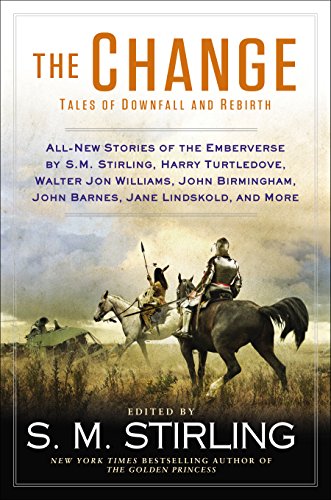
The Change: Tales of Downfall and Rebirth is a shared-world anthology of stories set in the years right after a mysterious global event instantly disables gunpowder, electricity, and combustion engines, the founding premise of S. M. Stirling's Emberverse. Sixteen different authors, coordinated by Stirling, each contribute stories set in various corners of the suddenly de-industrialized world as survivors scramble to rebuild. It's a companion volume to the Change/Emberverse novels rather than a novel itself.
- The Bone World Trilogy
series3 books2007
similar bysurvivaldarksecondary worldscience fiction+3 more
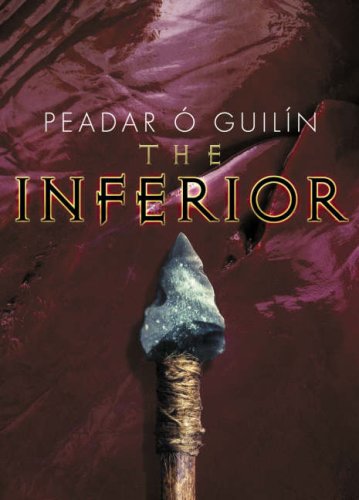
The Bone World Trilogy is a trilogy for young adults by Irish author Peadar Ó Guilín. The series has elements of science fiction and fantasy.
- The Courier's Daughter Trilogy
series3 books2012
similar bysurvivalsecondary worldscience fictiontense+3 more
The Courier's Daughter Trilogy is C. J. Redwine's YA fantasy series: Defiance (2012), Deception and Deliverance. Set in a walled, post-collapse city ruled by rigid survival laws, it follows a young woman searching for her missing father against the city's authorities and the monstrous forces beyond its walls. The trilogy follows one continuous search and its fallout across all three books.
- The Night Land
series5 books1912
similar by+3 more
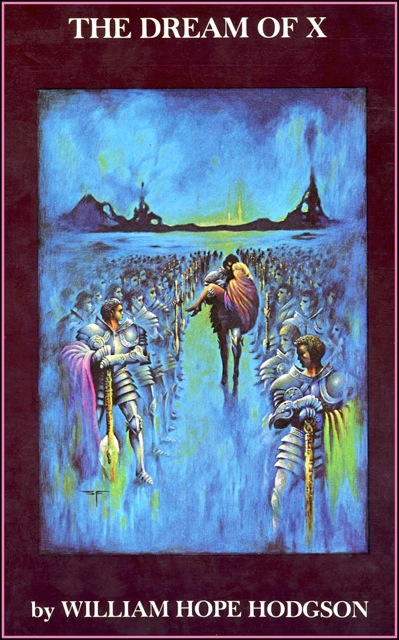
The Night Land is William Hope Hodgson's 1912 novel, set in an unimaginably distant future after the sun has died, where the last of humanity shelters inside a colossal pyramid called the Last Redoubt against unseen things that hunt in the surrounding dark. Framed as a seventeenth-century narrator's vision of that future, the story follows his far-future self on a journey out into the night to find a woman he believes is his lost love reincarnated. James Stoddard later produced The Night Land, A Story Retold (2011), a modernized retelling that adds conventional dialogue and character names to make Hodgson's dense, archaic prose more approachable.
- Mortal Engines Prequels
series3 books2009
part of Mortal Engines Universe
similar byscience fictionpost-apocalypticadventurous+4 more
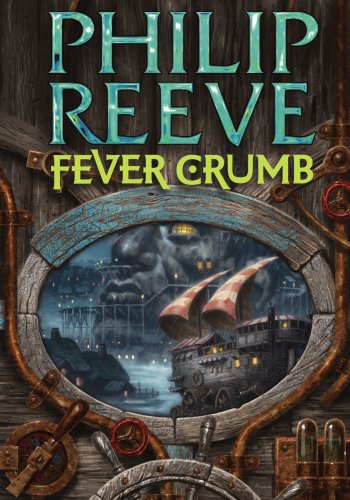
The Fever Crumb series is the title of a series of novels written by British author, Philip Reeve, and is the prequel series to his Mortal Engines Quartet. The series consists of three books: Fever Crumb (2009), A Web of Air (2010), and Scrivener's Moon (2011). The books follow a young woman known as Fever Crumb, and her adventures set around the time of the creation of the first traction cities that become prevalent in the Mortal Engines series. While Reeve stated in 2011 that he had always envisaged a quartet for the series, assuring readers of a fourth installment, by 2020 he said that "too much time has passed", making it difficult to revisit the series, and that he did not intend to finish and publish a fourth book.
- The Lost Regiment
series9 books1990
similar bysurvivalsecondary worldscience fictionmilitary science fictionwaradventuroustense
William R. Forstchen's Lost Regiment series begins with Rally Cry, in which a Civil War Union regiment is swept onto a distant world where humans transplanted from many eras and cultures are farmed as food by an alien race. Arriving with nineteenth-century gunpowder weapons and organized tactics, the regiment's survivors fight to build a defensible nation and turn the war back on their captors, a conflict that escalates across nine novels of technology, politics, and generations.
- Stephen King multiverse
universe46 books1967
Start hereThe Gunslinger · Start here
similar bydark+2 more
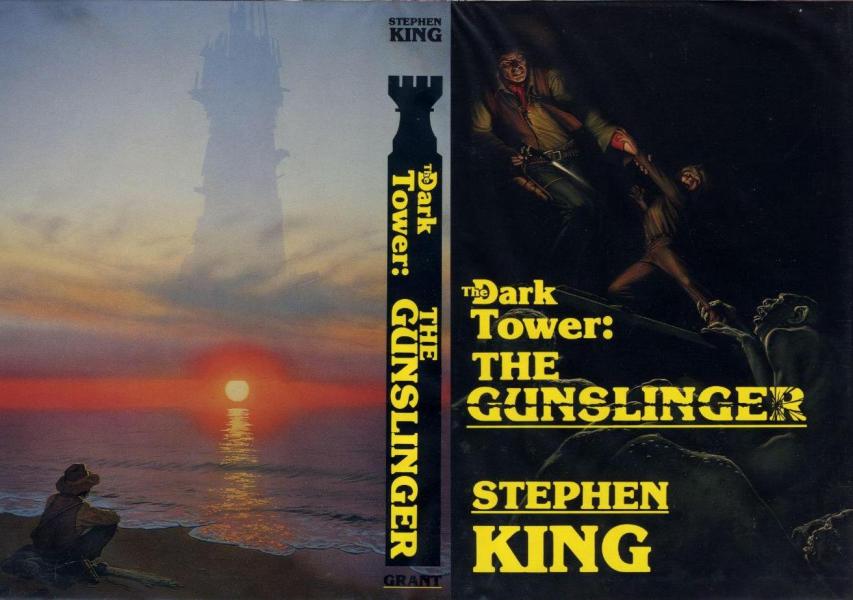
The man in black fled across the desert, and the gunslinger followed. So begins the long walk of Roland Deschain, last of an order of knight-errant pistoleers, across a land that has "moved on" — where the compass points drift, dead machines rot toward sentience, and the weave of what's real wears thin. His quest is the Dark Tower itself: a spire standing at the hub of every world that exists, the linchpin that holds all of them back from ruin. Roland's road runs eight volumes, from The Gunslinger through the closing Dark Tower, with the later, interleaved tale The Wind Through the Keyhole folding a story-within-a-story back into his youth. Along the way he draws a ka-tet — a fellowship bound by fate, not choosing — through doorways between worlds: a heroin-shackled New Yorker, a woman of two minds, a boy who dies twice. The Tower is also the secret axle around which the wider shelf of King's work turns; threads from The Stand, 'Salem's Lot and beyond wind quietly toward it. Expect a mongrel of Western, high fantasy, horror and decayed science fiction, told in a dusty, incantatory dialect all its own — ka, thankee-sai, the world that has moved on. This is King at his most mythic and most personal, a decades-spanning circle that rewards a patient reader. Begin at the beginning: The Gunslinger, then walk forward in publication order. There are other worlds than these — but this door opens first.
- Alliance-Union Universe
universe173 books1976
Start hereCompany Wars · The central sequence
similar byscience fiction+2 more
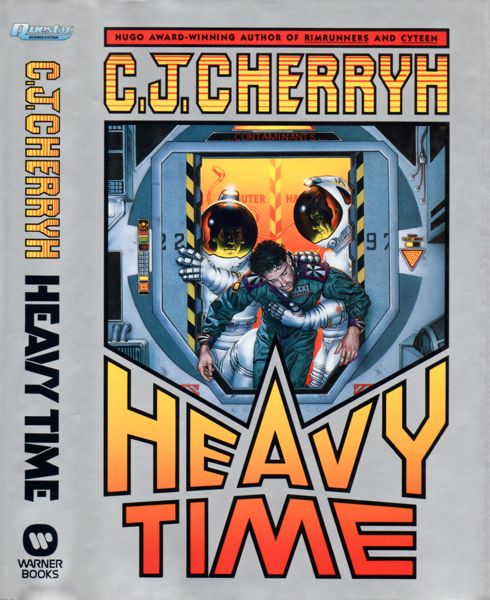
The dark between the stars belongs to no one, and everyone who lives out here knows it: the merchanter Families hauling cargo between stations that cannot feed themselves, the Earth Company clutching at colonies it can no longer supply, the Union breeding its cloned azi to settle worlds faster than birth allows. C. J. Cherryh's Alliance-Union is a future history of humankind's spread across the third and fourth millennia, told from inside the pressure — no clean empires, only stations, ships, treaties, and the people caught in the machinery of who holds the jump-points. The sequence runs from the first laborious pre-FTL stations through the Company Wars, the independence struggle that breaks over Pell in Downbelow Station (Hugo, 1981), to the genetics and cold politics of Union's homeworld in Cyteen (Hugo, 1988) and its sequel Regenesis. Around that spine cluster the merchanter novels of trader Families, the Faded Sun trilogy of human envoys among the martial alien Mri, and the Chanur books, narrated from the hierarchical, whiskered viewpoint of the hani. On the isolated world of Merovin, the Merovingen Nights anthologies open the setting to other hands — Mercedes Lackey, Janet and Chris Morris, Nancy Asire — a shared world braided into the whole. What sets it apart is intimacy at scale. Cherryh drops you without a map into a single skull and lets you assemble the politics from what that person fears and bargains for; the aliens are genuinely alien, loyalty is always provisional, and the real antagonist is usually logistics. Most books stand alone, in her words, "like real history." The surest way in is Downbelow Station — the war seen from one besieged station — then Cyteen, for the mind that shaped the other side.
- The Broken Earth
series5 books2014
similar bysurvivaldarksecondary world+2 more
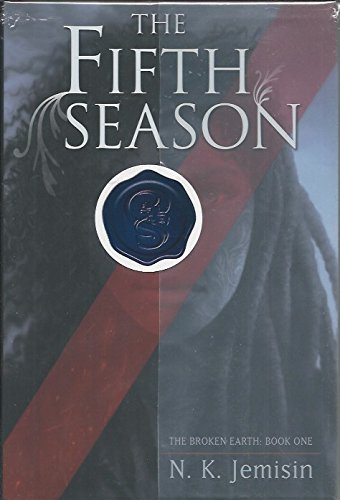
N. K. Jemisin's Broken Earth trilogy is set on the Stillness, a single supercontinent wracked every few centuries by civilization-ending climate catastrophes called Fifth Seasons. It follows orogenes, people born with the power to move earth and quell earthquakes, who are trained and controlled by the state even as they are feared and despised. The Fifth Season, the opening volume, traces three women revealed to be the same person at different stages of her life, setting up the two sequels that follow her search for her daughter after an orogene shatters the continent.
- Demon Cycle
series10 books2008
part of The Demon Cycle
similar bysecondary world+3 more
Peter V. Brett's Demon Cycle is set in a world where nightly demon attacks have driven humanity behind protective magical wards, following several point-of-view characters, including Arlen Bales and Leesha Paper, who each search for ways to fight back after centuries of retreat. The core story runs across five novels plus companion novellas.
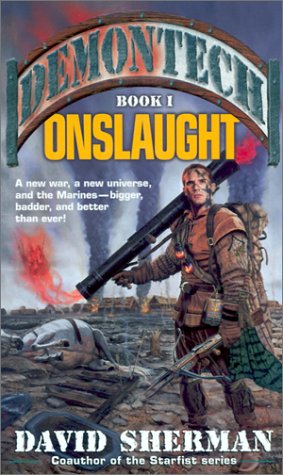
- Demontech
series7 books2002
completed
similar bysecondary worldwartense+5 more
David Sherman was an American novelist who dealt overwhelmingly with military themes at the small-unit tactical level. His experiences as a United States Marine informed his writings.
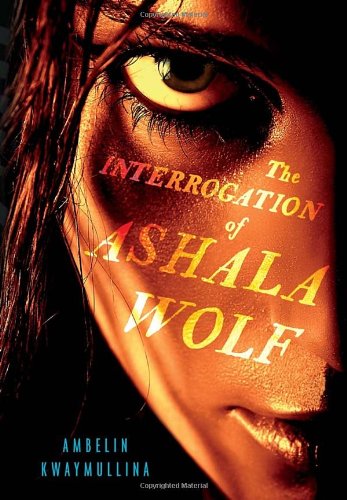
- The Tribe (Ambelin Kwaymullina)
series3 books2012
similar bysecondary worldscience fictiontense+4 more
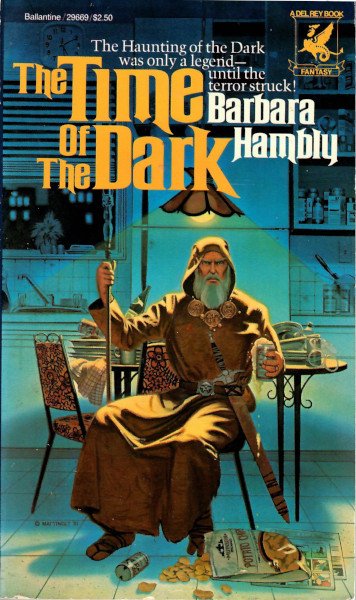
- Darwath
series7 books1982
similar bydarksecondary world+2 more
Darwath begins with two modern-day Californians pulled through a portal into a dying medieval world under siege from the Dark, shape-shifting monsters that hunt by night and are driving civilization underground. The Time of the Dark, The Walls of Air, and The Armies of Daylight make up the original trilogy; Barbara Hambly returned to the same characters decades later in Mother of Winter and Icefalcon's Quest. It's portal fantasy built around practical, unglamorous survival rather than chosen-one heroics.
- Malazan Book of the Fallen
series20 books1999
part of Malazan
similar bydarksecondary worldwar+2 more
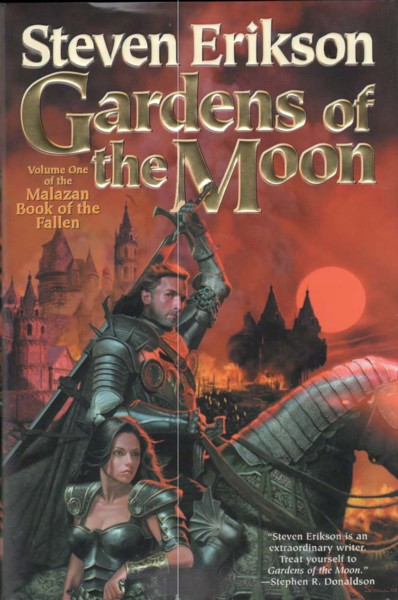
The Malazan Book of the Fallen is a series of epic fantasy novels written by the Canadian author Steven Erikson. The series, published by Bantam Books in the U.K. and Tor Books in the U.S., consists of ten volumes, beginning with Gardens of the Moon (1999) and concluding with The Crippled God (2011). Erikson's series presents the narratives of a large cast of characters spanning thousands of years across multiple continents.
- The Demon Cycle
universe18 books2008
Start hereDemon Cycle · Start here
similar bysecondary world+3 more
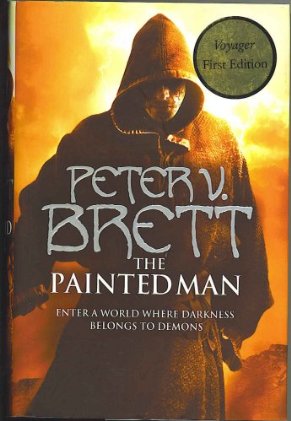
When the sun goes down, the ground breathes out murder. Mist seeps up from the Core, hardens into flame and rock and wind given teeth, and the only thing between a sleeping family and the corelings is a ring of wards — glyphs scratched in the dust that hold as long as the lines stay unbroken. Miss one stroke and you are meat by morning. This is Peter V. Brett's world: a humanity three centuries into a losing siege, huddled in the dark, waiting on a Deliverer half of them no longer believe will come. The Demon Cycle runs five volumes — The Warded Man (published in Britain as The Painted Man), The Desert Spear, The Daylight War, The Skull Throne, and The Core — following a messenger who tattoos the lost combat-wards into his own skin, a healer, a fiddler whose music turns demons aside, and a desert warlord who claims the prophecy for himself. Around them sit shorter works (Brayan's Gold, Messenger's Legacy, Barren), and beyond them the ongoing Nightfall Saga — The Desert Prince, The Hidden Queen — carrying the next generation into a war their parents did not finish. At its heart is a quarrel over faith and fire: the mannered Free Cities against fanatic, sand-hard Krasia, two would-be saviors who cannot both be right, and a lost art of war-magic that could turn prey into hunters. Begin with The Warded Man and read straight through in publication order; the novellas keep, for later, once the dark is under your skin.
- The Obernewtyn Chronicles
series9 books1987
similar bysecondary worldscience fictionpost-apocalyptic+4 more
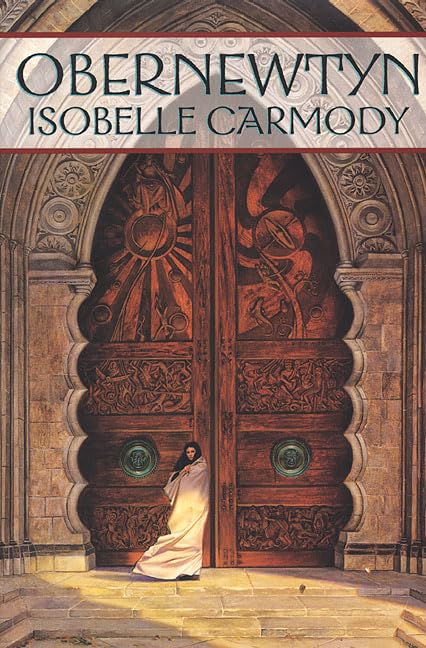
The Obernewtyn Chronicles is a series of science fiction and fantasy novels by Australian author Isobelle Carmody. The series has a post apocalyptic setting and depicts a world long after its destruction by a global nuclear holocaust.
- The Ice Schooner
Michael Moorcockstandalone novel1969
similar bysurvivaldarksecondary worldscience fictionpost-apocalyptic+1 more
The Ice Schooner is a post-apocalyptic fantasy novel by Michael Moorcock first published in 1966. It is a grimdark retelling of Moby Dick combined with elements of Joseph Conrad's sailing adventures.
- The Prison Healer
series3 books2021
similar bysecondary worldtense+3 more
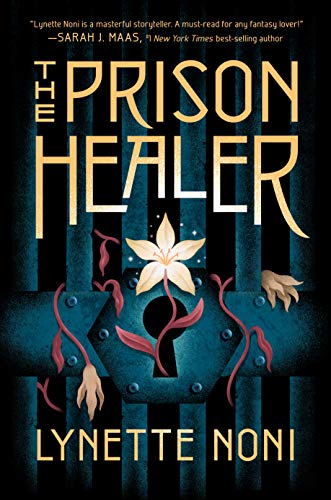
Lynette Noni's YA trilogy follows Kiva Meridan, a teenage healer imprisoned in the brutal death camp of Zalindov, who is forced to stand trial by combat in another prisoner's place when a mysterious rebel movement upends the prison's order. The Prison Healer, The Gilded Cage, and The Blood Traitor follow Kiva out of the prison and into a wider conflict over the kingdom's throne, testing where her loyalties actually lie. It sits in the current wave of grim, trial-driven YA fantasy.
- The Hunger Games Universe
universe5 books2008
Start hereThe Hunger Games · Start here
similar bysurvivaldarkscience fictiontense+2 more
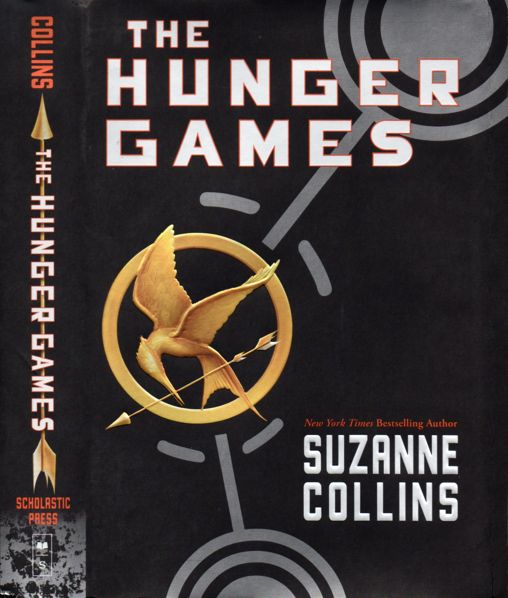
Panem, they call it now — a nation raised on the drowned bones of North America, a glittering Capitol ringed by twelve districts it once starved into obedience. Every year the Capitol collects its debt in children: two tributes from each district, drawn by lottery, dropped into an engineered arena, and made to kill one another on live television while the whole country is required to watch. This is the Hunger Games — entertainment, punishment, and government at once. Suzanne Collins tells it in a compact, unified body of work. The founding trilogy — The Hunger Games, Catching Fire, and Mockingjay — follows Katniss Everdeen, a girl from the coal-mining District 12 who volunteers in her sister's place and becomes something the Capitol never scripted. Two prequels reach back into the same machinery: The Ballad of Songbirds and Snakes traces a young Coriolanus Snow long before he is President, and Sunrise on the Reaping returns to District 12 a generation ahead of Katniss. Begin with the trilogy, in order — it is Katniss's voice, close and present-tense, that makes Panem breathe, and the prequels land hardest once you know how her story ends. Beneath the spectacle sits one steady, uncomfortable question: who profits when we agree to look away.