Loreful
HomeDiscover
Search series, authors…⌘K
Loreful

Reading orders for SF/F series and shared universes — with your place kept in every one.

Explore

UniversesSeriesWorksAuthorsAtlas

Help

FAQAboutSite map

Account & legal

Sign inCreate accountPrivacyTerms

Data

Built on ISFDB, Wikipedia, Wikidata and Open Library. Curated reading orders carry their reasoning on the page; the rest follow publication order. Data sources & licenses

© Loreful · data: ISFDB · CC BY

More like Unity

anchored on:historical fictioneuroperenaissance and early modern

but

Mood

The mood the book leaves you in.

  • The reading experience is propelled by journeys, exploration, and physical risk; excitement and forward momentum dominate over dread or introspection.
  • Joy and loss are deliberately mixed; the resolution grants characters something real while taking something else away, leaving warmth and sorrow together.
  • The book demands work from the reader — dense prose, difficult structure, unfamiliar ideas, or morally uncomfortable material — as part of its intended effect.
  • Grim events, cruelty, or despair dominate the atmosphere, and the book does not soften them with comfort or comic relief.
  • The atmosphere is quietly unsettling — wrongness, unease, and the uncanny pervade the book without necessarily escalating into overt horror.
  • The book is built to move the reader; character feeling is foregrounded and major scenes aim at a strong emotional response.
  • Humor is a primary aim and the prose plays for laughs — comic situations, wit, or dialogue produce sustained comedy, not occasional levity.
  • The book insists that things can improve; effort and decency are shown to matter, and the arc bends toward better outcomes even through hardship.
  • The book teaches as it goes — real facts, history, science, or craft are conveyed in enough depth that learning is part of the reading experience.
  • The book is designed to uplift and motivate, presenting perseverance or achievement in a way that invites the reader to aspire or act.
  • The overall register is cheerful and easygoing; stakes are kept gentle and the book avoids dwelling on pain or dread.
  • Withheld information drives the experience; the book sustains enigmas and secrets the reader wants resolved, whatever its genre.
  • The book is contemplative and inward-looking, giving more weight to thought, memory, and meaning than to external events.
  • The book works as comfort reading — low tension, a soothing pace, and an atmosphere the reader can unwind in.
  • Grief, loss, or melancholy set the dominant register, and the book lets sorrow stand rather than resolving it into comfort.
  • Sustained suspense is the point; the book keeps the reader braced for what happens next through danger, pressure, or impending revelation.
  • Playful invention and charm define the register — fanciful conceits, light absurdity, and a narration that delights in its own oddity.

About

What the story runs on.

  • Stories in which extraterrestrial beings are central — as characters, cultures, or the object of the plot.
  • Stories structured as a quest — a journey undertaken to find, deliver, or destroy something of great import.
  • Stories in which staying alive against nature, catastrophe, or scarcity is the central problem.
  • Stories of lovers kept apart by law, family, faith, or station, where the obstacle to love is the plot.
  • Stories in which a friendship — its making, testing, or loss — is the emotional center.
  • Stories of growing up — a young protagonist crossing from childhood into adult knowledge and responsibility.
  • Stories about who a character truly is — self-discovery, doubled lives, and the search for a self.
  • Stories in which a buried family truth — hidden parentage, crimes, or shames — surfaces and reorders the present.
  • Stories driven by maneuvering for power — factions, conspiracies, and statecraft conducted in shadow.
  • Stories about rising against rulers — uprisings, resistance movements, and revolutions and their aftermaths.
  • Stories in which war itself is the subject — combat, occupation, and what warfare does to soldiers and civilians.
  • Stories organized around investigating a killing — the case, the clues, and the pursuit of the killer, in any genre's clothing.

Shelf

Where it sits in the library.

    • Fiction built on magic or other supernatural elements that have no scientific explanation.
    • Secondary-world fantasy at large scale, where the fate of nations or the world turns on the protagonists' struggle.
    • Fantasy set in a recognizably modern city or contemporary world where the supernatural intrudes on everyday life.
    • Fantasy that blends in horror's atmosphere and imagery, keeping a fantastical frame around grim or frightening material.
    • Action-driven fantasy following warriors or rogues with personal stakes against sorcerous threats, rather than world-spanning conflicts.
    • Fantasy set in a real historical period or a close analogue of one, with magic woven into the era.
    • Fantasy in which protagonists cross from the ordinary world into another world through a portal or similar passage.
    • Fiction that retells or reworks a traditional fairy tale in a new form or setting.
    • Fantasy drawing directly on myths, legends, and folklore, retelling them or building on their figures and logic.
    • Fantasy of ghosts, vampires, shapeshifters, psychics, and similar phenomena, usually set in an otherwise ordinary world.
    • Fiction mixing science-fictional trappings with overtly magical or impossible elements in one setting.
    • Low-stakes fantasy emphasizing comfort, community, and everyday pleasures over conflict and peril.
    • Speculative fiction of pervasive moral ambiguity, violence, and cynicism that rejects heroic conventions — fantasy and SF alike.
      • Fiction that extrapolates from science and technology — future societies, space travel, or speculative inventions — within at least nominally natural laws.
      • Science fiction of interstellar scope — starships, galactic polities, and adventure across star systems.
      • Science fiction committed to scientific rigor, where technical plausibility constrains the story.
      • Science fiction centered on armed forces and warfare, told largely from a military point of view.
      • Science fiction of networked, corporate-dominated near futures, pairing high technology with social decay.
      • Science fiction styled on nineteenth-century steam-powered technology, often in a Victorian or pseudo-Victorian setting.
      • Fiction depicting an oppressive or catastrophic society, presented as a warning.
      • Fiction set after civilization's collapse, following survivors in the ruins of the old world.
      • Fiction in which characters move between past and future, and the mechanics or consequences of that travel drive the plot.
      • Fiction exploring a world where a historical event went differently and history diverged from ours.
      • Science fiction about humanity's first encounter and communication with an alien intelligence.
      • Science fiction in which extraterrestrial forces attack or occupy Earth and humanity resists.
      • Fiction whose primary aim is to frighten or unsettle the reader through dread, menace, or the monstrous.
      • Horror of vast, indifferent, incomprehensible entities before which humanity is insignificant, in the Lovecraft tradition.
      • Horror of decaying houses, buried family secrets, and oppressive atmosphere in the Gothic literary tradition.
      • Horror centered on hauntings and the returning dead.
      • Horror located in the mind — paranoia, obsession, and unreliable perception rather than external monsters.
      • Horror built around the reanimated dead and survival amid their outbreaks.
      • Horror defined by explicit, transgressive gore that refuses to cut away from violence.
      • Speculative fiction of the strange and uncanny that resists both natural explanation and standard genre categories.
      • Fiction organized around solving a crime or puzzle, typically following an investigator toward the identification of a culprit.
      • A puzzle-first mystery that lays out clues so the culprit's identity can be deduced before the reveal.
      • Crime fiction of moral ambiguity, fatalism, and hard-edged style, set among the corrupt and the doomed.
      • A mystery following the realistic routines of police work — forensics, interviews, and case-building.
      • A gentle mystery with an amateur sleuth, a small community, and violence kept off the page.
      • A mystery set in a past era, where the investigation works within that period's methods and society.
      • Fast-paced fiction driven by imminent danger, pursuit, or high-stakes conspiracy, built to sustain tension.
      • A thriller of espionage — agents, tradecraft, and intelligence services in conflict.
      • A thriller centered on lawyers and the courtroom, where litigation carries the suspense.
      • A thriller driven by detailed contemporary or near-future technology, often military or scientific.
      • A thriller whose tension comes from mental states and manipulation between characters rather than external action.
      • Fiction whose central plot is a romantic relationship and its development toward an emotionally satisfying resolution.
      • Romance in which one or both partners are supernatural beings, blending fantasy elements into the love story.
      • A fantasy-romance hybrid in which the romantic arc and the fantasy plot carry equal weight.
      • Romance set in a past era, with courtship shaped by the period's society and manners.
      • Romance set in the present day, without supernatural or historical elements.
      • Fiction set in a real past period, where the historical setting materially shapes characters and events.
        • General and literary fiction emphasizing prose style, character interiority, or formal ambition over genre plot conventions.
        • Fiction in a realistic world where magical events occur and are treated as ordinary, in the tradition of Latin American literature.
        • Fiction that ridicules people, institutions, or society in order to criticize them.
        • Fiction of dreamlike, irrational imagery and logic that breaks from realistic representation.
        • Fiction that plays with narrative convention through metafiction, fragmentation, and self-reference.
        • Fiction propelled by journeys, exploration, and physical peril, where action and survival carry the plot.
        • Adventure fiction of ships and seafaring — naval engagements, voyages, and life at sea.
        • Fiction of the American frontier West — gunmen, ranchers, and lawmen, typically in the late nineteenth century.
        • Fiction centered on soldiers, campaigns, and the experience of warfare, historical or imagined.
          • Fiction written primarily to amuse, using comedic situations, wit, or parody as its organizing principle.
            • Multi-generational fiction following a family or dynasty across decades, with inheritance and kinship as the through-line.
              • Fiction whose world runs on explicit game mechanics — levels, stats, and skills that characters can see and exploit.
                • Fiction about costumed or superpowered heroes and their conflicts with comparable villains.

                Practical

                How long a commitment, whether it stands alone, and whether it has finished.

                Tap a chip to ask for it · tap again to rule it out · once more to clear. Numbers show what would be left.

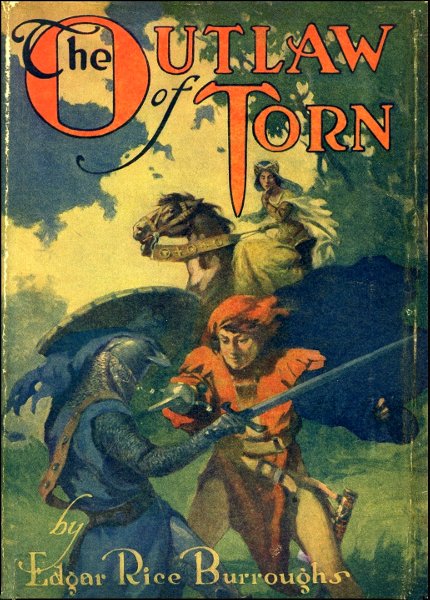
                • Cover of The Outlaw of Torn
                  The Outlaw of Torn

                  Edgar Rice Burroughs · standalone novel · 1927

                  similar byhistorical fictionadventurousrebellion and revolutioneuropetenseadventure

                  Raised from childhood by a vengeful royal fencing master who wants him turned into a weapon against the English crown, Norman of Torn grows up in 13th-century England knowing only combat and contempt for the nobility. By nineteen he leads the kingdom's largest band of outlaws and carries a king's ransom on his head, yet a priest's influence has left him with a streak of chivalry. Amid rebellion against King Henry III, Norman joins Simon de Montfort's rebels, and finds himself drawn to de Montfort's daughter despite a startling resemblance to the crown prince. An early adventure novel from Edgar Rice Burroughs.

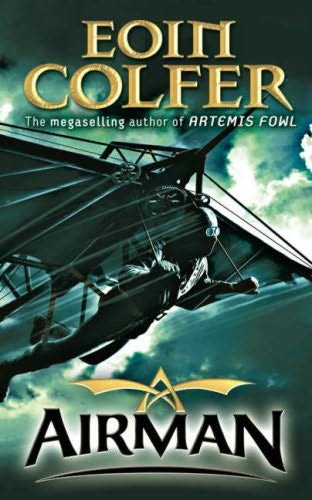
                • Cover of Airman
                  Airman

                  Eoin Colfer · standalone novel · 2008

                  similar byhistorical fictionadventurousrevengeeuropetenseadventure

                  Airman, by Eoin Colfer, is a best-selling historical adventure novel set in the 19th century. It was released in the UK, Ireland and US in January 2008. The novel was shortlisted for the 2009 Carnegie Medal.

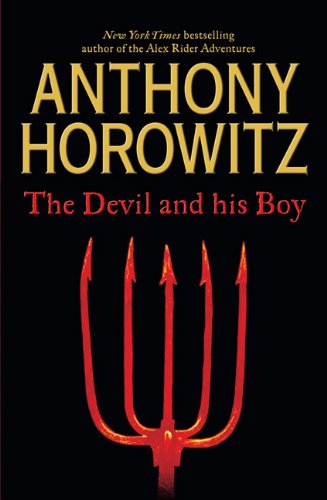
                • Cover of The Devil and His Boy
                  The Devil and His Boy

                  Anthony Horowitz · standalone novel · 1998

                  similar byhistorical fictionadventurouseuroperenaissance and early modernadventure

                  The Devil and His Boy is a 1998 young adult novel by Anthony Horowitz. The book is set in Tudor times and follows the adventures of a young boy as he meets several influential people from that time period.

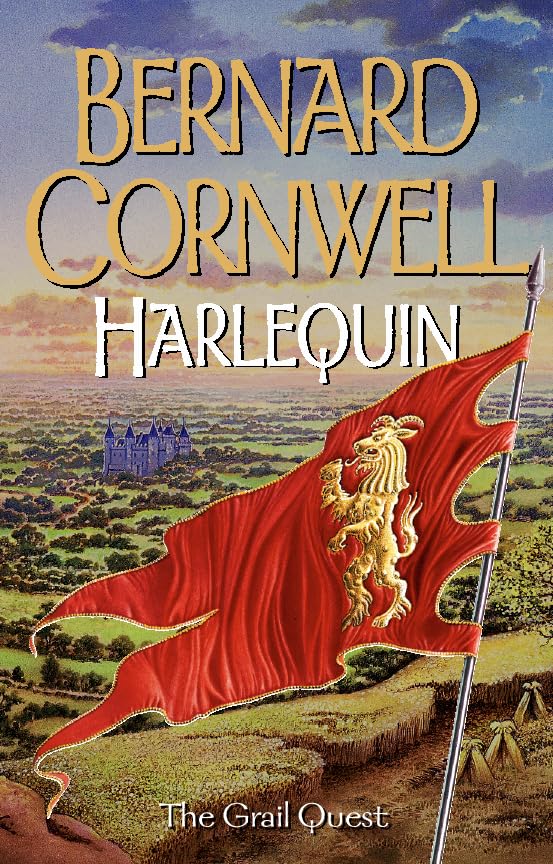
                • Cover of The Grail Quest (Bernard Cornwell)
                  The Grail Quest (Bernard Cornwell)

                  series · 3 books · 2000

                  similar byhistorical fictionadventurouseuropetense+2 more

                  The Grail Quest is a historical fiction novel series written by Bernard Cornwell dealing with a 14th-century search for the Holy Grail, set during the opening stage of the Hundred Years' War.

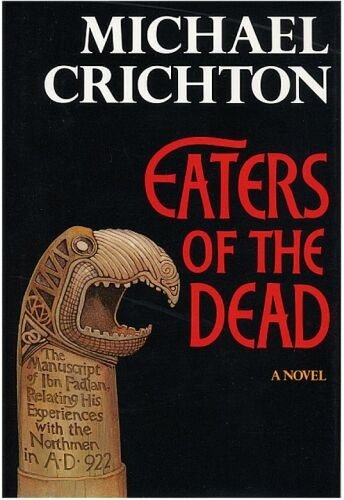
                • Cover of Eaters of the Dead
                  Eaters of the Dead

                  Michael Crichton · standalone novel · 1976

                  similar byhistorical fictioneuropetenseadventure+1 more

                  Eaters of the Dead: The Manuscript of Ibn Fadlan Relating His Experiences with the Northmen in AD 922 is a 1976 novel by Michael Crichton, the fourth novel under his own name and his 14th overall. The story is about a 10th-century Muslim Arab who travels with a group of Vikings to their settlement.

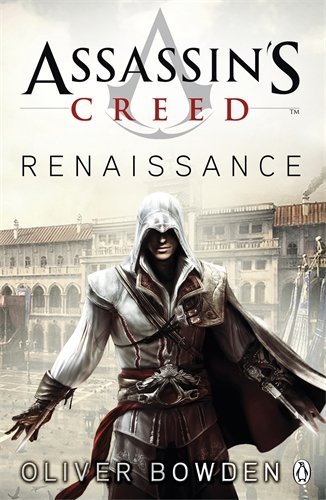
                • Cover of Assassin's Creed (Oliver Bowden)
                  Assassin's Creed (Oliver Bowden)

                  series · 8 books · 2009

                  part of Assassin's Creed Universe

                  similar byhistorical fictiontenseadventure+5 more

                • TB
                  The Baroque Cycle

                  series · 11 books · 2003

                  similar byhistorical fictioneuroperenaissance and early modern+1 more

                  The Baroque Cycle is a series of novels by American writer Neal Stephenson. It was published in three volumes containing eight books in 2003 and 2004. The story follows the adventures of a sizable cast of characters living amidst some of the central events of the late 17th and early 18th centuries in Europe, Africa, Asia, and Central America. Despite featuring a literary treatment consistent with historical fiction, Stephenson has characterized the work as science fiction, because of the presence of some anomalous occurrences and the work's particular emphasis on themes relating to science and technology. The sciences of cryptology and numismatics feature heavily in the series, as they do in some of Stephenson's other works.

                • Cover of King Raven
                  King Raven

                  series · 3 books · 2006

                  similar byhistorical fictionadventurousrebellion and revolution+2 more

                  The King Raven Trilogy is a series of historical novels by American writer Stephen R. Lawhead, based on the Robin Hood legend. Lawhead relocates Robin Hood from Sherwood Forest in Nottingham to Wales, and sets the story in the late eleventh century, after the Battle of Hastings and to coincide with the Norman invasion of Wales and the struggles the Cymry (Welsh) people against the Normans, and the political intrigue of medieval Britain. The trilogy consists of three books named Hood, Scarlet, and Tuck. The King Raven series continued his themes of reimagining popular mythology into more authentic and gritty settings, which began with his Pendragon Cycle.

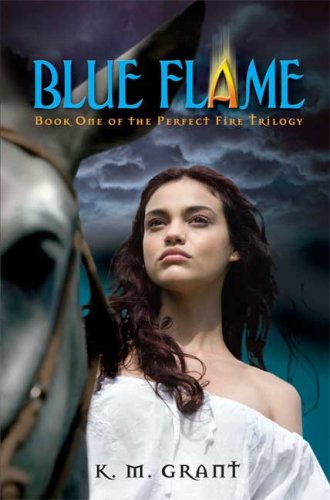
                • Cover of Perfect Fire Trilogy
                  Perfect Fire Trilogy

                  series · 3 books · 2008

                  similar byhistorical fictioneuropetense+3 more

                • TL
                  The Lady of Blossholme

                  H. Rider Haggard · standalone novel · 1909

                  similar byhistorical fictionadventurouseuroperenaissance and early modernrebellion and revolutionpolitical intrigue

                  The Lady of Blossholme is a 1909 historical novel by H. Rider Haggard. It is set during the time of Henry VIII, and features the Pilgrimage of Grace.

                • Cover of The Celtic Crusades
                  The Celtic Crusades

                  series · 3 books · 1998

                  similar byhistorical fictionadventurouseurope+2 more

                • Cover of Felix
                  Felix

                  series · 3 books · 1977

                  completed

                  similar byhistorical fictionadventurouseuropeadventure+1 more

                • Cover of Pirate Latitudes
                  Pirate Latitudes

                  Michael Crichton · standalone novel · 2009

                  similar byadventuroushistorical fictionrenaissance and early moderntenseadventure

                  Pirate Latitudes is an action-adventure novel by Michael Crichton, the sixteenth novel to be published under his own name and first to be published after his death, concerning 17th-century piracy in the Caribbean. HarperCollins published the book posthumously on November 26, 2009. The story stars the fictional privateer Captain Charles Hunter who, hired by Jamaica's governor Sir James Almont, plots to raid a Spanish galleon for its treasure.

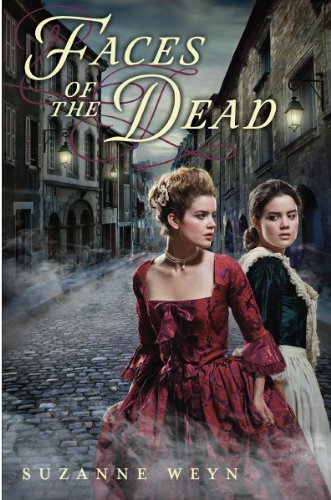
                • Cover of Faces of the Dead
                  Faces of the Dead

                  Suzanne Weyn · standalone novel · 2014

                  similar byhistorical fictionadventurouseuroperebellion and revolutiontenseadventure

                  Sheltered Princess Marie-Thérèse Charlotte is determined to understand the Revolution that is sweeping France, so she switches places with a chambermaid and sneaks out of the palace--but even with a street-wise companion, Henri, the streets of Paris are a dangerous place.

                • Cover of Montezuma's Daughter
                  Montezuma's Daughter

                  H. Rider Haggard · standalone novel · 1893

                  similar byhistorical fictionadventurousrenaissance and early modernadventure

                  Montezuma's Daughter, first published in 1893, is a novel by the Victorian adventure writer H. Rider Haggard.

                • Cover of The Red Necklace
                  The Red Necklace

                  series · 2 books · 2007

                  similar byadventurouseuroperebellion and revolution+3 more

                • Cover of Agnes de Chastillon
                  Agnes de Chastillon

                  series · 4 books · 1971

                  similar byadventurouseuroperenaissance and early modern+3 more

                  Dark Agnes de Chastillon is a fictional character created by Robert E. Howard and the protagonist of three stories set in 16th century France, which were not printed until long after the author's death.

                • Cover of The Blanket of the Dark
                  The Blanket of the Dark

                  John Buchan · standalone novel · 1931

                  similar byhistorical fictionrenaissance and early moderntensepolitical intrigue+1 more

                  The Blanket of the Dark is a 1931 historical novel by the Scottish author John Buchan. The novel is set in the early part of the reign of Henry VIII, and explores the possible consequences had the Tudors been overthrown by a rightful descendant of Edward III.

                • Cover of Barney Custer
                  Barney Custer

                  series · 3 books · 1914

                  completed

                  similar byadventurouseuropetensepolitical intrigue+1 more

                  Barney Custer is an American farmer from Nebraska who travels to the small European kingdom of Lutha only to discover he's the spitting image of its unstable ruler, King Leopold. Edgar Rice Burroughs's The Mad King drops him into court intrigue on the eve of World War I, as a scheming uncle's plot for the throne and a budding romance with a princess force Barney to impersonate the king he resembles. It's a standalone Ruritanian adventure rather than an ongoing series.

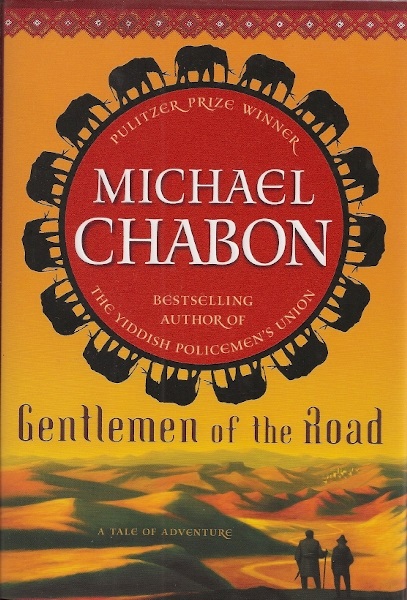
                • Cover of Gentlemen of the Road
                  Gentlemen of the Road

                  Michael Chabon · standalone novel · 2007

                  similar byhistorical fictionadventurousrebellion and revolutionadventure

                  Gentlemen of the Road is a 2007 serial novel by American author Michael Chabon. It is a "swashbuckling adventure" set in the khaganate of Khazaria around AD 950. It follows two Jewish bandits who become embroiled in a rebellion and a plot to restore a displaced Khazar prince to the throne.

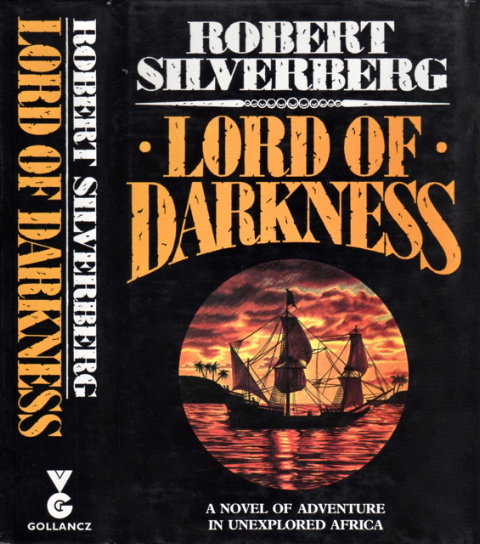
                • Cover of Lord of Darkness
                  Lord of Darkness

                  Robert Silverberg · standalone novel · 1983

                  similar byhistorical fictionadventurousrenaissance and early modernadventure

                  Amazon: Set in the 17th century and based on a true-life historical figure, this novel is a swashbuckling tale of exotic lands, romance, and hair-raising adventures. Andrew Battell is a buccaneer on a British ship when he is taken prisoner by Portuguese pirates. Injured and ailing, Andrew is brought to the west coast of Africa where his only solace is Dona Teresa, a young woman who nurses him back to health. Once his health is restored, Andrew's only hope to return home is to first serve his Portuguese masters, but it is a hope that dwindles as he is pulled further and further into the interior of the continent, into the land of the Jaqqa—the region's most fierce and feared cannibal tribe—overseen by the powerful Lord of Darkness. Survival means becoming one with the Jaqqa; if he can endure their gruesome rites and initiations.

                • Cover of Ruritania
                  Ruritania

                  series · 4 books · 1894

                  completed

                  similar byadventurouseuropepolitical intrigueadventure+3 more

                • Cover of The Conqueror's Trilogy
                  The Conqueror's Trilogy

                  series · 3 books · 2016

                  similar byhistorical fictionrenaissance and early moderneuropetensepolitical intrigue

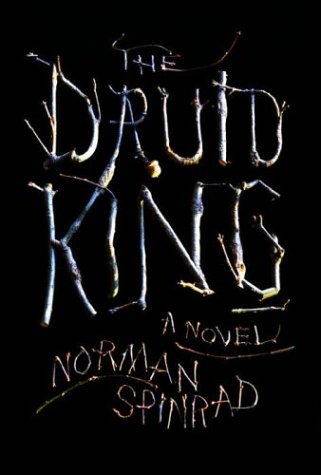
                • Cover of The Druid King
                  The Druid King

                  Norman Spinrad · standalone novel · 2003

                  similar byhistorical fictioneuropepolitical intrigue+1 more

                  The Druid King is a 2003 historical novel by American novelist Norman Spinrad. The novel is set during the Gallic Campaigns of Julius Caesar. The main protagonist of the novel is Vercingetorix and the plot follows his rise to power to become king of the Gauls and his eventual surrender to Caesar at the Battle of Alesia. The book is a novelisation of an early version of the script for Vercingétorix, la Légende du Druide Roi, a French language film.