Loreful
HomeDiscover
Search series, authors…⌘K
Loreful

Reading orders for SF/F series and shared universes — with your place kept in every one.

Explore

UniversesSeriesWorksAuthorsAtlas

Help

FAQAboutSite map

Account & legal

Sign inCreate accountPrivacyTerms

Data

Built on ISFDB, Wikipedia, Wikidata and Open Library. Curated reading orders carry their reasoning on the page; the rest follow publication order. Data sources & licenses

© Loreful · data: ISFDB · CC BY

More like Unknown

anchored on:fantasyurban fantasyour worldcontemporarypolitical intriguetense

but

Mood

The mood the book leaves you in.

  • The reading experience is propelled by journeys, exploration, and physical risk; excitement and forward momentum dominate over dread or introspection.
  • Joy and loss are deliberately mixed; the resolution grants characters something real while taking something else away, leaving warmth and sorrow together.
  • The book demands work from the reader — dense prose, difficult structure, unfamiliar ideas, or morally uncomfortable material — as part of its intended effect.
  • Grim events, cruelty, or despair dominate the atmosphere, and the book does not soften them with comfort or comic relief.
  • The atmosphere is quietly unsettling — wrongness, unease, and the uncanny pervade the book without necessarily escalating into overt horror.
  • The book is built to move the reader; character feeling is foregrounded and major scenes aim at a strong emotional response.
  • Humor is a primary aim and the prose plays for laughs — comic situations, wit, or dialogue produce sustained comedy, not occasional levity.
  • The book insists that things can improve; effort and decency are shown to matter, and the arc bends toward better outcomes even through hardship.
  • The book teaches as it goes — real facts, history, science, or craft are conveyed in enough depth that learning is part of the reading experience.
  • The book is designed to uplift and motivate, presenting perseverance or achievement in a way that invites the reader to aspire or act.
  • The overall register is cheerful and easygoing; stakes are kept gentle and the book avoids dwelling on pain or dread.
  • Withheld information drives the experience; the book sustains enigmas and secrets the reader wants resolved, whatever its genre.
  • The book is contemplative and inward-looking, giving more weight to thought, memory, and meaning than to external events.
  • The book works as comfort reading — low tension, a soothing pace, and an atmosphere the reader can unwind in.
  • Grief, loss, or melancholy set the dominant register, and the book lets sorrow stand rather than resolving it into comfort.
  • Sustained suspense is the point; the book keeps the reader braced for what happens next through danger, pressure, or impending revelation.
  • Playful invention and charm define the register — fanciful conceits, light absurdity, and a narration that delights in its own oddity.

About

What the story runs on.

  • Stories in which extraterrestrial beings are central — as characters, cultures, or the object of the plot.
  • Stories structured as a quest — a journey undertaken to find, deliver, or destroy something of great import.
  • Stories in which staying alive against nature, catastrophe, or scarcity is the central problem.
  • Stories of lovers kept apart by law, family, faith, or station, where the obstacle to love is the plot.
  • Stories in which a friendship — its making, testing, or loss — is the emotional center.
  • Stories of growing up — a young protagonist crossing from childhood into adult knowledge and responsibility.
  • Stories about who a character truly is — self-discovery, doubled lives, and the search for a self.
  • Stories about mourning — living through the death of a loved one and what loss does to the survivors.
  • Stories in which a buried family truth — hidden parentage, crimes, or shames — surfaces and reorders the present.
  • Stories driven by maneuvering for power — factions, conspiracies, and statecraft conducted in shadow.
  • Stories in which war itself is the subject — combat, occupation, and what warfare does to soldiers and civilians.
  • Stories organized around investigating a killing — the case, the clues, and the pursuit of the killer, in any genre's clothing.

Shelf

Where it sits in the library.

    • Fiction built on magic or other supernatural elements that have no scientific explanation.
    • Secondary-world fantasy at large scale, where the fate of nations or the world turns on the protagonists' struggle.
    • Fantasy set in a recognizably modern city or contemporary world where the supernatural intrudes on everyday life.
    • Fantasy that blends in horror's atmosphere and imagery, keeping a fantastical frame around grim or frightening material.
    • Action-driven fantasy following warriors or rogues with personal stakes against sorcerous threats, rather than world-spanning conflicts.
    • Fantasy set in a real historical period or a close analogue of one, with magic woven into the era.
    • Fantasy in which protagonists cross from the ordinary world into another world through a portal or similar passage.
    • Fiction that retells or reworks a traditional fairy tale in a new form or setting.
    • Fantasy drawing directly on myths, legends, and folklore, retelling them or building on their figures and logic.
    • Fantasy of ghosts, vampires, shapeshifters, psychics, and similar phenomena, usually set in an otherwise ordinary world.
    • Fiction mixing science-fictional trappings with overtly magical or impossible elements in one setting.
    • Low-stakes fantasy emphasizing comfort, community, and everyday pleasures over conflict and peril.
    • Speculative fiction of pervasive moral ambiguity, violence, and cynicism that rejects heroic conventions — fantasy and SF alike.
      • Fiction that extrapolates from science and technology — future societies, space travel, or speculative inventions — within at least nominally natural laws.
      • Science fiction of interstellar scope — starships, galactic polities, and adventure across star systems.
      • Science fiction committed to scientific rigor, where technical plausibility constrains the story.
      • Science fiction centered on armed forces and warfare, told largely from a military point of view.
      • Science fiction of networked, corporate-dominated near futures, pairing high technology with social decay.
      • Science fiction styled on nineteenth-century steam-powered technology, often in a Victorian or pseudo-Victorian setting.
      • Fiction depicting an oppressive or catastrophic society, presented as a warning.
      • Fiction set after civilization's collapse, following survivors in the ruins of the old world.
      • Fiction in which characters move between past and future, and the mechanics or consequences of that travel drive the plot.
      • Fiction exploring a world where a historical event went differently and history diverged from ours.
      • Science fiction about humanity's first encounter and communication with an alien intelligence.
      • Science fiction in which extraterrestrial forces attack or occupy Earth and humanity resists.
      • Fiction whose primary aim is to frighten or unsettle the reader through dread, menace, or the monstrous.
      • Horror of vast, indifferent, incomprehensible entities before which humanity is insignificant, in the Lovecraft tradition.
      • Horror of decaying houses, buried family secrets, and oppressive atmosphere in the Gothic literary tradition.
      • Horror centered on hauntings and the returning dead.
      • Horror located in the mind — paranoia, obsession, and unreliable perception rather than external monsters.
      • Horror built around the reanimated dead and survival amid their outbreaks.
      • Horror defined by explicit, transgressive gore that refuses to cut away from violence.
      • Speculative fiction of the strange and uncanny that resists both natural explanation and standard genre categories.
      • Fiction organized around solving a crime or puzzle, typically following an investigator toward the identification of a culprit.
      • A puzzle-first mystery that lays out clues so the culprit's identity can be deduced before the reveal.
      • Crime fiction of moral ambiguity, fatalism, and hard-edged style, set among the corrupt and the doomed.
      • A mystery following the realistic routines of police work — forensics, interviews, and case-building.
      • A gentle mystery with an amateur sleuth, a small community, and violence kept off the page.
      • A mystery set in a past era, where the investigation works within that period's methods and society.
      • Fast-paced fiction driven by imminent danger, pursuit, or high-stakes conspiracy, built to sustain tension.
      • A thriller of espionage — agents, tradecraft, and intelligence services in conflict.
      • A thriller centered on lawyers and the courtroom, where litigation carries the suspense.
      • A thriller driven by detailed contemporary or near-future technology, often military or scientific.
      • A thriller whose tension comes from mental states and manipulation between characters rather than external action.
      • Fiction whose central plot is a romantic relationship and its development toward an emotionally satisfying resolution.
      • Romance in which one or both partners are supernatural beings, blending fantasy elements into the love story.
      • A fantasy-romance hybrid in which the romantic arc and the fantasy plot carry equal weight.
      • Romance set in a past era, with courtship shaped by the period's society and manners.
      • Romance set in the present day, without supernatural or historical elements.
      • Fiction set in a real past period, where the historical setting materially shapes characters and events.
        • General and literary fiction emphasizing prose style, character interiority, or formal ambition over genre plot conventions.
        • Fiction in a realistic world where magical events occur and are treated as ordinary, in the tradition of Latin American literature.
        • Fiction that ridicules people, institutions, or society in order to criticize them.
        • Fiction of dreamlike, irrational imagery and logic that breaks from realistic representation.
        • Fiction that plays with narrative convention through metafiction, fragmentation, and self-reference.
        • Fiction propelled by journeys, exploration, and physical peril, where action and survival carry the plot.
        • Adventure fiction of ships and seafaring — naval engagements, voyages, and life at sea.
        • Fiction of the American frontier West — gunmen, ranchers, and lawmen, typically in the late nineteenth century.
        • Fiction centered on soldiers, campaigns, and the experience of warfare, historical or imagined.
          • Fiction written primarily to amuse, using comedic situations, wit, or parody as its organizing principle.
            • Multi-generational fiction following a family or dynasty across decades, with inheritance and kinship as the through-line.
              • Fiction whose world runs on explicit game mechanics — levels, stats, and skills that characters can see and exploit.
                • Fiction about costumed or superpowered heroes and their conflicts with comparable villains.

                Practical

                How long a commitment, whether it stands alone, and whether it has finished.

                Tap a chip to ask for it · tap again to rule it out · once more to clear. Numbers show what would be left.

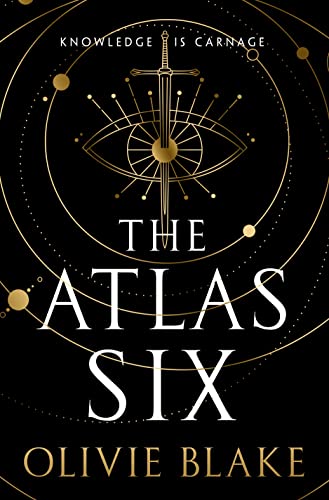
                • Cover of Atlas (Olivie Blake)
                  Atlas (Olivie Blake)

                  series · 3 books · 2020

                  similar byour worldcontemporarypolitical intriguefantasy+3 more

                  Olivie Blake's Atlas trilogy follows six magical scholars recruited into a secretive society that grants near-limitless magical resources in exchange for a mortal cost only revealed after they've already committed. The Atlas Paradox and The Atlas Complex escalate the group's rivalries and the price of the power they've been given. The series began as a self-published web serial before its traditional re-release.

                • Cover of Meredith Gentry
                  Meredith Gentry

                  series · 10 books · 2000

                  similar bycontemporarypolitical intrigueurban fantasyour world+2 more

                  The Merry Gentry series is a series of urban fantasy novels by New York Times bestselling author Laurell K. Hamilton. The series is told through the lens of the titular character Meredith "Merry" Gentry, a faerie princess turned private investigator in a world where faeries exist and are known to the general public. The first book in the series, A Kiss of Shadows, was released by Del Rey on October 3, 2000. There are currently nine books in the series.

                • Cover of Alchemy of Secrets
                  Alchemy of Secrets

                  series · 1 book · 2025

                  similar bytensecontemporaryfantasyurban fantasy+1 more

                  Alchemy of Secrets follows Holland St. James, a young woman convinced that magic is real, who tracks down a local urban legend called the Watch Man and is told she will die at midnight the next day unless she finds an ancient object called the Alchemical Heart. Pulled into a hidden magical Los Angeles alongside a stranger who claims her missing sister sent him to protect her, Holland has to work out who is lying to her before the clock runs out. Stephanie Garber wrote it as a standalone 2025 novel rather than the start of a numbered series.

                • Cover of Deception Point
                  Deception Point

                  Dan Brown · standalone novel · 2001

                  similar bytenseour worldcontemporarypolitical intrigue

                  Deception Point is a 2001 mystery-thriller novel by American author Dan Brown. It is Brown's third novel. It was published by Simon & Schuster.

                • Cover of Digital Fortress
                  Digital Fortress

                  Dan Brown · standalone novel · 1998

                  similar bytenseour worldcontemporarypolitical intrigue

                  Digital Fortress is a techno-thriller novel written by American author Dan Brown and published in 1998 by St. Martin's Press. The book explores the theme of government surveillance of electronically stored information on the private lives of citizens, and the possible civil liberties and ethical implications of using such technology.

                • Cover of Дозоры / Watch
                  Дозоры / Watch

                  series · 6 books · 1998

                  similar bytensecontemporarypolitical intrigueurban fantasyfantasy

                  Sergei Lukyanenko's Watch novels are set among the Others, humans with supernatural gifts who split into the Night Watch, policing dark forces, and the Day Watch, policing the light ones, under a truce that keeps their ancient war frozen in an uneasy bureaucratic peace. Each book follows the Night Watch magician Anton Gorodetsky through a case that keeps threatening to unbalance that truce for good. Starting in Moscow, the series expands across six novels into other cities and a wider view of how the truce actually works.

                • Cover of The Curse Workers
                  The Curse Workers

                  series · 3 books · 2010

                  similar bytensecontemporaryurban fantasyour worldfantasy

                  Holly Black's Curse Workers trilogy is set in an alternate America where 'curse work' — magic that harms or transforms through touch — is illegal, enforced through gloves and Prohibition-era-style crime families. It follows Cassel Sharpe, the only non-worker in a family of con artists and workers, as he tries to stay out of his family's schemes despite his own hidden connection to their world. The series runs from White Cat through two further novels.

                • Cover of The Cure
                  The Cure

                  Douglas E. Richards · standalone novel · 2013

                  similar bytenseour worldcontemporary+2 more

                  A young woman, Erin Palmer, witnesses a psychopath murder her parents and sister. The bloody trauma propels her into a scientific career. She is studying the microbiology of the psychopathic brain, and is on a quest to discover the DNA which engenders the cerebral disease. Teaming up with a powerful but eccentric billionaire, she at last isolates the deadly DNA and is on the verge of finding a cure. But things and people are not what they seem. Both the young man she thinks she loves and the tycoon who has befriended her have a sinister side she did not understand. Erin is ensnared in a global conspiracy which may culminate in humanity's utter destruction.

                • Cover of Out of the Ordinary
                  Out of the Ordinary

                  Annie Dalton · standalone novel · 1988

                  similar bytenseour worldcontemporaryfantasyurban fantasy

                  Fifteen-year-old Molly, who lives in a turbulent, single-parent household, is asked by mysterious, otherworldly visitors to protect an enchanted child from great danger.

                • Cover of The Demon's Lexicon
                  The Demon's Lexicon

                  series · 3 books · 2009

                  similar bytenseour worldcontemporaryurban fantasyfantasy

                • Cover of The Merchant Princes
                  The Merchant Princes

                  series · 14 books · 2004

                  similar bytensecontemporarypolitical intrigueour world+1 more

                  The Merchant Princes is a science fantasy and alternate history series of nine novels by British writer Charles Stross. In the series, there exist a number of parallel worlds, all of which are on the same geographical Earth but with different societies at different points of development. Members of a certain bloodline can travel between these worlds along with their immediate possessions. The series largely follows Miriam Beckstein, a technology journalist raised in a familiar "normal" Earth, who discovers she was born in a parallel world and is a member of this bloodline. She quickly becomes entangled in political maneuvering and assassination plots with her estranged family. Miriam uses modern technology and investigative journalism to attempt to stay a step ahead.

                • Cover of State of Fear
                  State of Fear

                  Michael Crichton · standalone novel · 2004

                  similar bytenseour worldcontemporarypolitical intrigue

                  State of Fear is a 2004 techno-thriller novel by Michael Crichton, his fourteenth under his own name and twenty-fourth overall, in which eco-terrorists plot mass murder to publicize the danger of global warming.

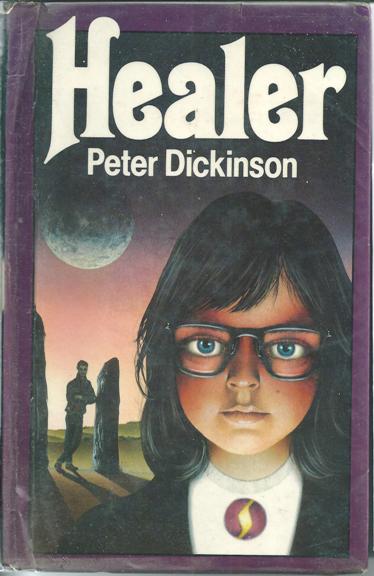
                • Cover of Healer
                  Healer

                  Peter Dickinson · standalone novel · 1983

                  similar bytenseour worldcontemporaryfantasy+1 more

                  Although grudgingly aware that ten-year-old Pinki has extraordinary powers to heal, sixteen-year-old Barry becomes increasingly convinced that she is an unwilling participant at the healing sessions run by her enterprising stepfather.

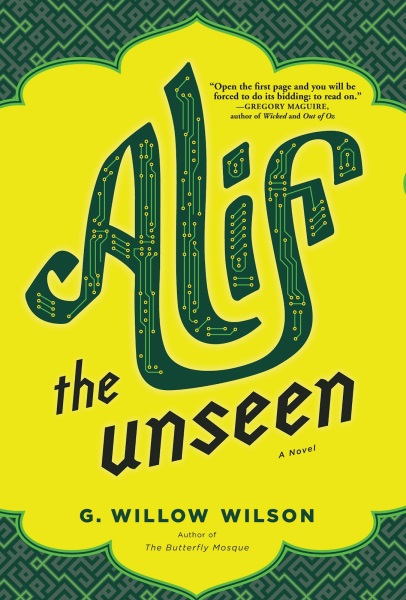
                • Cover of Alif the Unseen
                  Alif the Unseen

                  G. Willow Wilson · standalone novel · 2012

                  similar bytensecontemporarypolitical intriguefantasyurban fantasy

                  Alif the Unseen is a 2012 cyberpunk fantasy novel by American writer G. Willow Wilson. In the novel, a Middle Eastern hacker named Alif discovers a book of djinn tales which may lead to a new age of quantum computing. The novel won the 2013 World Fantasy Award for Best Novel.

                • Cover of Sunshine
                  Sunshine

                  Robin McKinley · standalone novel · 2003

                  similar bytenseour worldcontemporaryfantasy

                  From the front flap of the Berkley HB first edition: "There are places in the world where darkness rules, where it's unwise to walk. Sunshine knew that. But there hadn't been any trouble out at the lake for years, and she needed a place to be alone for a while. Unfortunately, she wasn't alone. She never heard them coming. Of course you don't, when they're vampires. They took her clothes and sneakers. They dressed her in a long red gown. And they shackled her to the wall of an abandoned mansion - within easy reach of a figure stirring in the moonlight. She knows that he is a vampire. She knows that she's to be his dinner, and that when he is finished with her, she will be dead. Yet, as dawn breaks, she finds that he has not attempted to harm her. And now it is he who needs her to help him survive the day..."

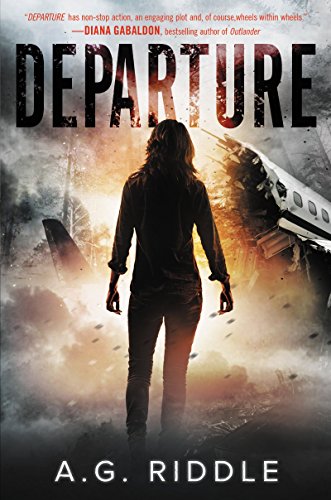
                • Cover of Departure
                  Departure

                  A. G. Riddle · standalone novel · 2014

                  similar bytenseour worldcontemporarypolitical intrigue

                  "The world's past and future rests in the hands of five unwitting strangers in this definitive edition of A. G. Riddle's time-traveling, mind-bending speculative thriller. En route to London from New York, Flight 305 suddenly loses power and crash-lands in the English countryside, plunging a group of strangers into a mysterious adventure that will have repercussions for all of humankind.Struggling to stay alive, the survivors soon realize that the world they've crashed in is very different from the one they left. But where are they? Why are they here? And how will they get back home? Five passengers seem to hold clues about what's really going on: writer Harper Lane, venture capitalist Nick Stone, German genetic researcher Sabrina Schroeder, computer scientist Yul Tan, and Grayson Shaw, the son of a billionaire philanthropist.As more facts about the crash emerge, it becomes clear that some in this group know more than they're letting on--answers that will lead Harper and Nick to uncover a far-reaching conspiracy involving their own lives. As they begin to piece together the truth, they discover they have the power to change the future and the past--to save our world. or end it. A wildly inventive and propulsive adventure full of hairpin twists, Departure is a thrilling tale that weaves together power, ambition, fate, memory, and love, from a bold and visionary talent"--

                • Cover of Rose Madder
                  Rose Madder

                  Stephen King · standalone novel · 1995

                  similar bytenseour worldcontemporaryfantasy

                  Rose Madder is a horror/fantasy novel by American writer Stephen King, published in 1995. It deals with the effects of domestic violence and, unusually for a King novel, relies for its fantastic element on Greek mythology. In his memoir, On Writing, King states that Rose Madder and Insomnia are "stiff, trying-too-hard novels."

                • Cover of Fiend
                  Fiend

                  Alma Katsu · standalone novel · 2025

                  similar bytenseour worldcontemporaryfantasy+1 more

                  Imagine if the Sackler family had a demon at their beck and call. The Berisha family runs one of the largest import-export companies in the world, and they’ve always been lucky. Their rivals suffer strokes. Inconvenient buildings catch on fire. Earthquakes swallow up manufacturing plants, destroying harmful evidence. Things always seem to work out for the Berishas. They’re blessed. At least that is what Zef, the patriarch, has always told his three children. And each of them knows their place in the family—Dardan, as the only male heir, must prepare to take over as keeper of the Berisha secrets, Maris’s most powerful contribution, much to her dismay, will be to marry strategically, and Nora’s job, as the youngest, is to just stay out of the way. But when things stop going as planned, and the family blessing starts looking more like a curse, the Berishas begin to splinter, each hatching their own secret scheme. They didn’t get to be one of the richest families in the world without spilling a little blood, but this time, it might be their own.

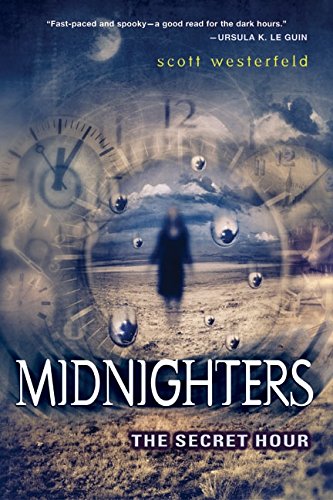
                • Cover of Midnighters
                  Midnighters

                  series · 3 books · 2004

                  similar bytensecontemporaryfantasyour worldurban fantasy

                  The Midnighters Trilogy is a science-fiction fantasy series written by Scott Westerfeld. It was published by Eos in 2004. It comprises three books: The Secret Hour, Touching Darkness. and Blue Noon. Over the course of the trilogy, Jessica encounters other Midnighters with whom she allies herself. The protagonists in the trilogy are the eponymous Midnighters Desdemona, Rex, Jonathan, and Melissa. The antagonists of the series are Darklings and Slithers, dangerous and powerful beings that created and live in the Blue Hour.

                • Cover of The Library at Mount Char
                  The Library at Mount Char

                  Scott Hawkins · standalone novel · 2015

                  similar bytenseour worldcontemporaryfantasy+1 more

                  The Library at Mount Char is a contemporary fantasy/horror novel written by Scott Hawkins. It is his first novel.

                • Cover of Red Letter Days
                  Red Letter Days

                  series · 2 books · 2005

                  completed

                  similar bytenseour worldcontemporary+2 more

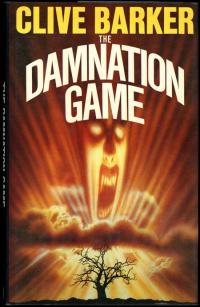
                • Cover of The Damnation Game
                  The Damnation Game

                  Clive Barker · standalone novel · 1985

                  similar bytenseour worldcontemporaryfantasy

                  Marty Strauss is a compulsive gambler fresh out of prison when he's hired as bodyguard for Joseph Whitehead, a reclusive tycoon whose fortune and continued existence trace back to a bargain struck decades earlier, during World War II, with a man named Mamoulian. That bargain is coming due: Mamoulian, who commands powers reaching well past death, wants what he's owed, and Whitehead's household -- his wife, his daughter Carys, his previous bodyguard -- is caught in the middle of a decades-old debt finally being called in. Marty, out of his depth from the start, finds himself the only one willing to stand against Mamoulian. Clive Barker's first novel.

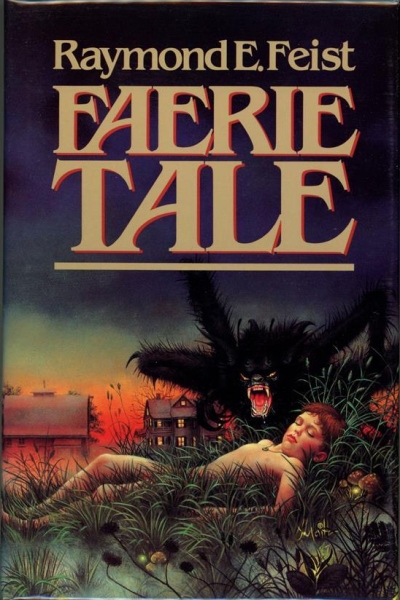
                • Cover of Faerie Tale
                  Faerie Tale

                  Raymond E. Feist · standalone novel · 1988

                  similar bytensecontemporaryurban fantasyfantasy

                  Faerie Tale is a supernatural thriller, falling within the subgenre of contemporary fantasy, by American writer Raymond E. Feist, first published in 1988.

                • Cover of The Guardians of Time
                  The Guardians of Time

                  series · 4 books · 2002

                  similar bytenseour worldcontemporaryfantasy

                  Guardians of Time is a trilogy of novels written by Marianne Curley. The plot of the trilogy consists of the Guardians of Time, trying to protect the past, present, and future by traveling into the past to thwart their enemies, and the Order of Chaos, who are trying to change past events to give themselves more power.