Loreful
HomeDiscover
Search series, authors…⌘K
Loreful

Reading orders for SF/F series and shared universes — with your place kept in every one.

Explore

UniversesSeriesWorksAuthorsAtlas

Help

FAQAboutSite map

Account & legal

Sign inCreate accountPrivacyTerms

Data

Built on ISFDB, Wikipedia, Wikidata and Open Library. Curated reading orders carry their reasoning on the page; the rest follow publication order. Data sources & licenses

© Loreful · data: ISFDB · CC BY

More like Utopia

anchored on:literary & generalsatireotherworldrenaissance and early modernframe storyfaith and religion+3 more

but

Mood

The mood the book leaves you in.

  • The reading experience is propelled by journeys, exploration, and physical risk; excitement and forward momentum dominate over dread or introspection.
  • Joy and loss are deliberately mixed; the resolution grants characters something real while taking something else away, leaving warmth and sorrow together.
  • The book demands work from the reader — dense prose, difficult structure, unfamiliar ideas, or morally uncomfortable material — as part of its intended effect.
  • Grim events, cruelty, or despair dominate the atmosphere, and the book does not soften them with comfort or comic relief.
  • The atmosphere is quietly unsettling — wrongness, unease, and the uncanny pervade the book without necessarily escalating into overt horror.
  • The book is built to move the reader; character feeling is foregrounded and major scenes aim at a strong emotional response.
  • Humor is a primary aim and the prose plays for laughs — comic situations, wit, or dialogue produce sustained comedy, not occasional levity.
  • The book insists that things can improve; effort and decency are shown to matter, and the arc bends toward better outcomes even through hardship.
  • The book teaches as it goes — real facts, history, science, or craft are conveyed in enough depth that learning is part of the reading experience.
  • The book is designed to uplift and motivate, presenting perseverance or achievement in a way that invites the reader to aspire or act.
  • The overall register is cheerful and easygoing; stakes are kept gentle and the book avoids dwelling on pain or dread.
  • Withheld information drives the experience; the book sustains enigmas and secrets the reader wants resolved, whatever its genre.
  • The book is contemplative and inward-looking, giving more weight to thought, memory, and meaning than to external events.
  • The book works as comfort reading — low tension, a soothing pace, and an atmosphere the reader can unwind in.
  • Grief, loss, or melancholy set the dominant register, and the book lets sorrow stand rather than resolving it into comfort.
  • Sustained suspense is the point; the book keeps the reader braced for what happens next through danger, pressure, or impending revelation.
  • Playful invention and charm define the register — fanciful conceits, light absurdity, and a narration that delights in its own oddity.

About

What the story runs on.

  • Stories in which extraterrestrial beings are central — as characters, cultures, or the object of the plot.
  • Stories structured as a quest — a journey undertaken to find, deliver, or destroy something of great import.
  • Stories in which staying alive against nature, catastrophe, or scarcity is the central problem.
  • Stories of lovers kept apart by law, family, faith, or station, where the obstacle to love is the plot.
  • Stories of growing up — a young protagonist crossing from childhood into adult knowledge and responsibility.
  • Stories about who a character truly is — self-discovery, doubled lives, and the search for a self.
  • Stories about mourning — living through the death of a loved one and what loss does to the survivors.
  • Stories in which belief, doubt, and religious life are the central subject, from crises of faith to life inside a religious community.
  • Stories in which a buried family truth — hidden parentage, crimes, or shames — surfaces and reorders the present.
  • Stories driven by maneuvering for power — factions, conspiracies, and statecraft conducted in shadow.
  • Stories in which war itself is the subject — combat, occupation, and what warfare does to soldiers and civilians.
  • Stories organized around investigating a killing — the case, the clues, and the pursuit of the killer, in any genre's clothing.

Shelf

Where it sits in the library.

    • Fiction built on magic or other supernatural elements that have no scientific explanation.
    • Secondary-world fantasy at large scale, where the fate of nations or the world turns on the protagonists' struggle.
    • Fantasy set in a recognizably modern city or contemporary world where the supernatural intrudes on everyday life.
    • Fantasy that blends in horror's atmosphere and imagery, keeping a fantastical frame around grim or frightening material.
    • Action-driven fantasy following warriors or rogues with personal stakes against sorcerous threats, rather than world-spanning conflicts.
    • Fantasy set in a real historical period or a close analogue of one, with magic woven into the era.
    • Fantasy in which protagonists cross from the ordinary world into another world through a portal or similar passage.
    • Fiction that retells or reworks a traditional fairy tale in a new form or setting.
    • Fantasy drawing directly on myths, legends, and folklore, retelling them or building on their figures and logic.
    • Fantasy of ghosts, vampires, shapeshifters, psychics, and similar phenomena, usually set in an otherwise ordinary world.
    • Fiction mixing science-fictional trappings with overtly magical or impossible elements in one setting.
    • Low-stakes fantasy emphasizing comfort, community, and everyday pleasures over conflict and peril.
    • Speculative fiction of pervasive moral ambiguity, violence, and cynicism that rejects heroic conventions — fantasy and SF alike.
      • Fiction that extrapolates from science and technology — future societies, space travel, or speculative inventions — within at least nominally natural laws.
      • Science fiction of interstellar scope — starships, galactic polities, and adventure across star systems.
      • Science fiction committed to scientific rigor, where technical plausibility constrains the story.
      • Science fiction centered on armed forces and warfare, told largely from a military point of view.
      • Science fiction of networked, corporate-dominated near futures, pairing high technology with social decay.
      • Science fiction styled on nineteenth-century steam-powered technology, often in a Victorian or pseudo-Victorian setting.
      • Fiction depicting an oppressive or catastrophic society, presented as a warning.
      • Fiction set after civilization's collapse, following survivors in the ruins of the old world.
      • Fiction in which characters move between past and future, and the mechanics or consequences of that travel drive the plot.
      • Fiction exploring a world where a historical event went differently and history diverged from ours.
      • Science fiction about humanity's first encounter and communication with an alien intelligence.
      • Science fiction in which extraterrestrial forces attack or occupy Earth and humanity resists.
      • Fiction whose primary aim is to frighten or unsettle the reader through dread, menace, or the monstrous.
      • Horror of vast, indifferent, incomprehensible entities before which humanity is insignificant, in the Lovecraft tradition.
      • Horror of decaying houses, buried family secrets, and oppressive atmosphere in the Gothic literary tradition.
      • Horror centered on hauntings and the returning dead.
      • Horror located in the mind — paranoia, obsession, and unreliable perception rather than external monsters.
      • Horror built around the reanimated dead and survival amid their outbreaks.
      • Horror defined by explicit, transgressive gore that refuses to cut away from violence.
      • Speculative fiction of the strange and uncanny that resists both natural explanation and standard genre categories.
      • Fiction organized around solving a crime or puzzle, typically following an investigator toward the identification of a culprit.
      • A puzzle-first mystery that lays out clues so the culprit's identity can be deduced before the reveal.
      • Crime fiction of moral ambiguity, fatalism, and hard-edged style, set among the corrupt and the doomed.
      • A mystery following the realistic routines of police work — forensics, interviews, and case-building.
      • A gentle mystery with an amateur sleuth, a small community, and violence kept off the page.
      • A mystery set in a past era, where the investigation works within that period's methods and society.
      • Fast-paced fiction driven by imminent danger, pursuit, or high-stakes conspiracy, built to sustain tension.
      • A thriller of espionage — agents, tradecraft, and intelligence services in conflict.
      • A thriller centered on lawyers and the courtroom, where litigation carries the suspense.
      • A thriller driven by detailed contemporary or near-future technology, often military or scientific.
      • A thriller whose tension comes from mental states and manipulation between characters rather than external action.
      • Fiction whose central plot is a romantic relationship and its development toward an emotionally satisfying resolution.
      • Romance in which one or both partners are supernatural beings, blending fantasy elements into the love story.
      • A fantasy-romance hybrid in which the romantic arc and the fantasy plot carry equal weight.
      • Romance set in a past era, with courtship shaped by the period's society and manners.
      • Romance set in the present day, without supernatural or historical elements.
      • Fiction set in a real past period, where the historical setting materially shapes characters and events.
        • General and literary fiction emphasizing prose style, character interiority, or formal ambition over genre plot conventions.
        • Fiction in a realistic world where magical events occur and are treated as ordinary, in the tradition of Latin American literature.
        • Fiction that ridicules people, institutions, or society in order to criticize them.
        • Fiction of dreamlike, irrational imagery and logic that breaks from realistic representation.
        • Fiction that plays with narrative convention through metafiction, fragmentation, and self-reference.
        • Fiction propelled by journeys, exploration, and physical peril, where action and survival carry the plot.
        • Adventure fiction of ships and seafaring — naval engagements, voyages, and life at sea.
        • Fiction of the American frontier West — gunmen, ranchers, and lawmen, typically in the late nineteenth century.
        • Fiction centered on soldiers, campaigns, and the experience of warfare, historical or imagined.
          • Fiction written primarily to amuse, using comedic situations, wit, or parody as its organizing principle.
            • Multi-generational fiction following a family or dynasty across decades, with inheritance and kinship as the through-line.
              • Fiction whose world runs on explicit game mechanics — levels, stats, and skills that characters can see and exploit.
                • Fiction about costumed or superpowered heroes and their conflicts with comparable villains.

                Practical

                How long a commitment, whether it stands alone, and whether it has finished.

                Tap a chip to ask for it · tap again to rule it out · once more to clear. Numbers show what would be left.

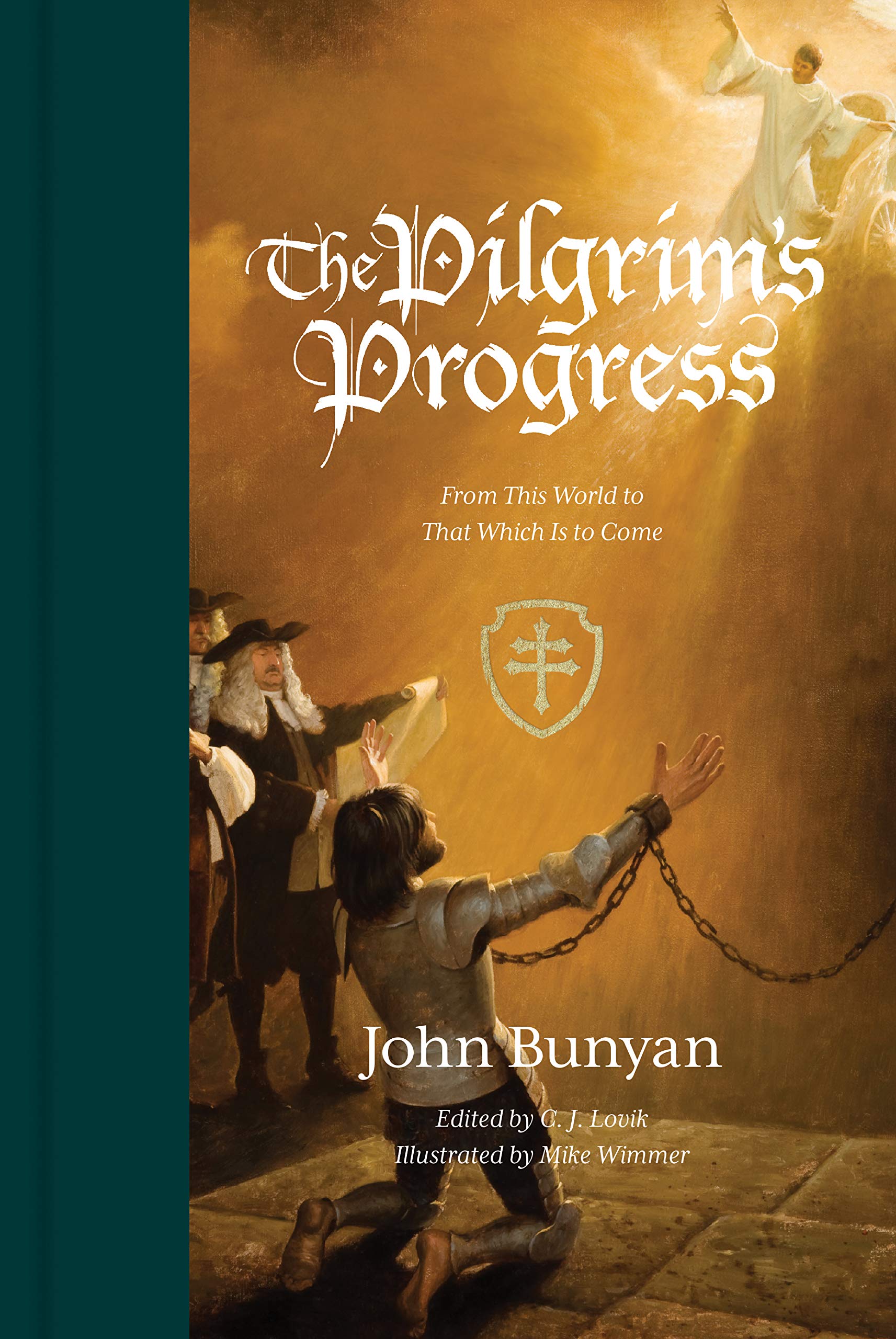
                • Cover of The Pilgrim's Progress
                  The Pilgrim's Progress

                  John Bunyan · standalone novel · 1678

                  similar byreflectivefaith and religionrenaissance and early modernliterary & generalotherworld

                  The Pilgrim's Progress from This World, to That Which Is to Come is a 1678 Christian allegory written by the English nonconformist preacher John Bunyan. It is commonly regarded as one of the most significant works of Protestant devotional literature and of wider early modern English literature. It has been translated into more than 200 languages and has never been out of print. It appeared in Dutch in 1681, in German in 1703 and in Swedish in 1727. The first North American edition was issued in 1681. It has also been cited as the first novel written in English. According to literary editor Robert McCrum, "there's no book in English, apart from the Bible, to equal Bunyan's masterpiece for the range of its readership, or its influence on writers as diverse as William Hogarth, C. S. Lewis, Nathaniel Hawthorne, Herman Melville, Charles Dickens, Louisa May Alcott, George Bernard Shaw, William Thackeray, Charlotte Brontë, Mark Twain, John Steinbeck and Enid Blyton." The lyrics of the hymn "To be a Pilgrim" are based on the novel.

                • Cover of Lent
                  Lent

                  Jo Walton · standalone novel · 2019

                  similar byreflectivefaith and religionpolitical intriguerenaissance and early modernliterary & general

                  "Young Girolamo's life is a series of miracles. It's a miracle that he can see demons, plain as day, and that he can cast them out with the force of his will. It's a miracle that he's friends with Pico della Mirandola, the Count of Concordia. It's a miracle that when Girolamo visits the deathbed of Lorenzo "the Magnificent," the dying Medici is wreathed in celestial light, a surprise to everyone, Lorenzo included. It's a miracle that when Charles VIII of France invades northern Italy, Girolamo meets him in the field, and convinces him to not only spare Florence but also protect it. It's a miracle than whenever Girolamo preaches, crowds swoon. It's a miracle that, despite the Pope's determination to bring young Girolamo to heel, he's still on the loose...and, now, running Florence in all but name. That's only the beginning. Because Girolamo Savanarola is not who--or what--he thinks he is. He will discover the truth about himself at the most startling possible time. And this will be only the beginning of his many lives." - publisher

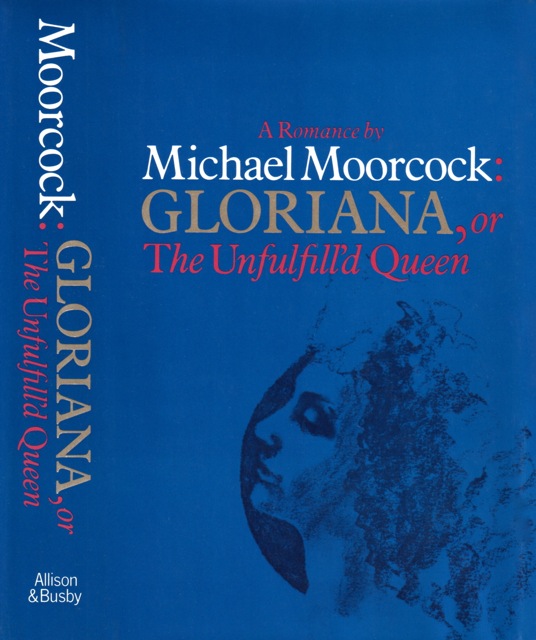
                • Cover of Gloriana, or, the Unfulfill'd Queen
                  Gloriana, or, the Unfulfill'd Queen

                  Michael Moorcock · standalone novel · 1978

                  similar byreflectivepolitical intriguerenaissance and early modernliterary & generalbritish isles

                  Gloriana, or The Unfulfill'd Queen is a work of literary fantasy by British novelist Michael Moorcock. It was first published in 1978 and has remained in print ever since.

                • EO
                  Eloisa: Or, a Series of Original Letters

                  Jean-Jacques Rousseau · standalone novel · 1761

                  similar byreflectiverenaissance and early modernpolitical intrigueliterary & generalbritish isles+1 more

                  The love between Julie d'Étange and her private teacher St Preux, made impossible because of their relative stations, leads to a dead-end. Julie eventually marries old M. de Wolmar, who acquaints them with his Utopian estate, characteristic of the Age of enlightenment.

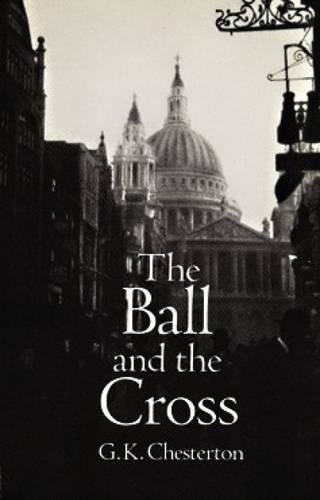
                • Cover of The Ball and the Cross
                  The Ball and the Cross

                  G. K. Chesterton · standalone novel · 1909

                  similar byreflectivefaith and religionliterary & generalsatirebritish isles

                  The Ball and the Cross is a novel by G. K. Chesterton. The title refers to a more worldly and rationalist worldview, represented by a ball or sphere, and the cross representing Christianity. The first chapters of the book were serialized from 1905 to 1906 with the completed work published in 1909.

                • Cover of Stranger in a Strange Land
                  Stranger in a Strange Land

                  Robert A. Heinlein · standalone novel · 1961

                  similar byreflectivefaith and religionsatire

                  Stranger in a Strange Land is a 1961 science fiction novel by the American author Robert A. Heinlein. It tells the story of Valentine Michael Smith, a human who comes to Earth in early adulthood after being born on the planet Mars and raised by Martians, and explores his interaction with and eventual transformation of Terran culture.

                • Cover of Life of Pi
                  Life of Pi

                  Yann Martel · standalone novel · 2001

                  similar byreflectivefaith and religionliterary & generalframe story

                  Life of Pi is a Canadian philosophical novel by Yann Martel published in 2001. The protagonist is Piscine Molitor "Pi" Patel, an Indian boy from Pondicherry, who explores issues of spirituality and metaphysics from an early age. After a shipwreck, he survives 227 days while stranded on a lifeboat in the Pacific Ocean with a Bengal tiger named Richard Parker, raising questions about the nature of reality and how it is perceived and told.

                • Cover of The Scarlet Letter
                  The Scarlet Letter

                  Nathaniel Hawthorne · standalone novel · 1850

                  similar byreflectivefaith and religionrenaissance and early modernliterary & general

                  In 17th-century Puritan Boston, Massachusetts of 1642-1649, a woman conceives a daughter through an adulterous affair, then struggles to create a new life of repentance and dignity.

                • Cover of Erewhon
                  Erewhon

                  series · 4 books · 1872

                  completed

                  similar byreflectiveliterary & generalsatire+1 more

                • Cover of Lost Horizon
                  Lost Horizon

                  James Hilton · standalone novel · 1933

                  similar byreflectivefaith and religionliterary & general

                  Lost Horizon is a 1933 novel by the English writer James Hilton. The book was adapted into a film, also called Lost Horizon, in 1937 by director Frank Capra; and a musical film remake in 1973 by producer Ross Hunter with music by Burt Bacharach. It is the origin of Shangri-La, a fictional utopian lamasery located high in the mountains of Tibet.

                • Cover of Messiah
                  Messiah

                  Gore Vidal · standalone novel · 1954

                  similar byfaith and religionpolitical intrigueliterary & generalsatire

                  Messiah is a satirical novel by Gore Vidal, first published in 1954 in the United States by E.P. Dutton. It is the story of the creation of a new religion, Cavism, which quickly comes to replace the established but failing Christian religion.

                • Cover of Pavane
                  Pavane

                  series · 9 books · 1966

                  completed

                  similar byreflectivefaith and religionbritish isles+1 more

                  Keith Roberts' Pavane (1968) is a single fix-up novel built from linked stories rather than a multi-book series: in an alternate 20th century where Elizabeth I was assassinated and Spain conquered England, the Catholic Church suppresses Protestantism and keeps technology frozen at a steam-powered, feudal level. The interconnected stories follow different Dorset families across generations as long-suppressed dissent against Church rule begins to stir.

                • Cover of Light of the World
                  Light of the World

                  series · 2 books · 2013

                  similar byreflectivefaith and religionpolitical intriguebritish isles

                • Cover of Island
                  Island

                  Aldous Huxley · standalone novel · 1962

                  similar byreflectivefaith and religionliterary & general

                  Island is a 1962 utopian manifesto and novel by English writer Aldous Huxley, the author's final work before his death in 1963. Although it has a plot, the plot largely serves to further conceptual explorations rather than setting up and resolving conventional narrative tension.

                • Cover of The Malacia Tapestry
                  The Malacia Tapestry

                  Brian W. Aldiss · standalone novel · 1976

                  similar byreflectivepolitical intriguerenaissance and early modern

                  The Malacia Tapestry is a fantasy-historical novel by British writer Brian Aldiss, published in 1976. The story takes place in a fictional port city called Malacia, which is an alternate history version of a Renaissance city-state. It tells the story of a poor young actor named Perian de Chirolo who hopes to change his station in life so he can marry a wealthy merchant's daughter. While Malacia is considered a near-utopia, the happiness in the city belies the authoritarian rule of the powerful Supreme Council, which uses fear to prevent progress.

                • Cover of Screwtape
                  Screwtape

                  series · 2 books · 1942

                  completed

                  similar byreflectivefaith and religionsatire

                  C.S. Lewis's Screwtape Letters (1942) is a Christian satirical novel told as 31 letters from a senior devil, Screwtape, coaching his inexperienced nephew Wormwood on how to corrupt the soul of an ordinary British man known only as 'the Patient.' Lewis added a slim sequel, Screwtape Proposes a Toast (1959), an after-dinner speech in which Screwtape skewers trends in modern education and society; the two are usually published together.

                • Cover of The History of Rasselas, Prince of Abissinia
                  The History of Rasselas, Prince of Abissinia

                  Samuel Johnson · standalone novel · 1759

                  similar byreflectivefaith and religionrenaissance and early modernliterary & general

                  The History of Rasselas, Prince of Abissinia, originally titled The Prince of Abissinia: A Tale, though often abbreviated to Rasselas, is an apologue about bliss and ignorance by Samuel Johnson. The book's original working title was "The Choice of Life". The book was first published in April 1759 in England. Early readers considered Rasselas to be a work of philosophical and practical importance and critics often remark on the difficulty of classifying it as a novel.

                • Cover of Midnight's Children
                  Midnight's Children

                  Salman Rushdie · standalone novel · 1980

                  similar byreflectivepolitical intrigueliterary & general

                  WorldCat: The life of a man born at the moment of India's independence becomes inextricably linked to that of his nation and is a whirlwind of disasters and triumphs that mirror modern India's course.

                • Cover of The Good Man Jesus and the Scoundrel Christ
                  The Good Man Jesus and the Scoundrel Christ

                  Philip Pullman · standalone novel · 2009

                  similar byreflectivefaith and religionliterary & general

                  Philip Pullman retells the gospel story with one change: Mary gives birth to twin sons, not one. Jesus grows into the moral teacher and healer familiar from scripture, while his brother, given the name Christ, watches from the sidelines, recording and reshaping his brother's story with an eye toward the institution he believes should be built on it. As Jesus preaches humility and doubt, Christ is drawn into a bargain with a mysterious stranger who wants his account shaped into something more useful for the church that will one day claim to speak for both of them. Part of Canongate's Myth series, Pullman's short, provocative reworking of the New Testament.

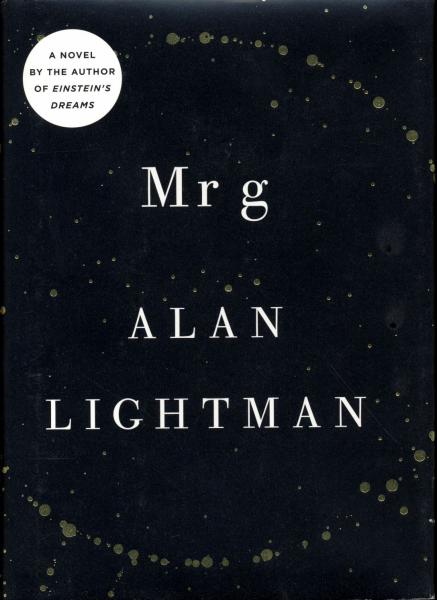
                • Cover of Mr g: A Novel About the Creation
                  Mr g: A Novel About the Creation

                  Alan Lightman · standalone novel · 2012

                  similar byreflectivefaith and religionliterary & generalotherworld

                  Mr g is a 2012 novel by Alan Lightman. The book was released on January 24, 2012, by Pantheon Books and the book is narrated by Mr g as he describes the process of creation.

                • Cover of A Modern Utopia
                  A Modern Utopia

                  H. G. Wells · standalone novel · 1905

                  similar byreflectivepolitical intrigueliterary & general+1 more

                  Two travelers, an unnamed narrator and his skeptical companion, find themselves transported to a parallel world: a planet identical to Earth in geography and even population, down to duplicates of everyone they know, but shaped by a different history. There they examine a global order run by a voluntary elite called the Samurai, who try to hold together progress and stability without the coercion Wells thought inevitable in the utopias that came before his. Framed less as a story than as a philosophical travelogue, it is Wells's own argument with the utopian tradition, tested through the world he invents to make it.

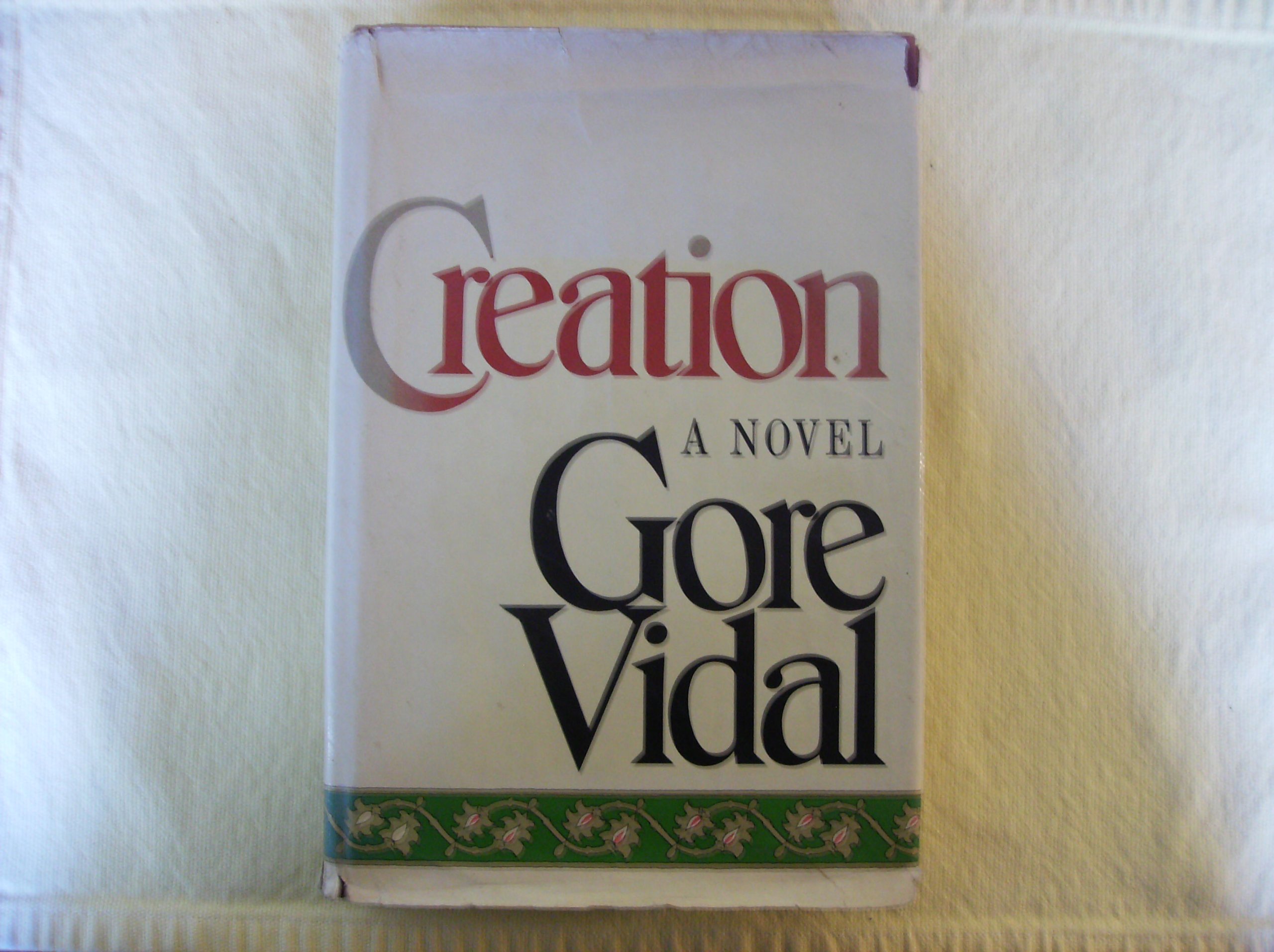
                • Cover of Creation
                  Creation

                  Gore Vidal · standalone novel · 1981

                  similar byreflectivefaith and religionpolitical intrigueliterary & general

                  Creation is an epic historical fiction novel by Gore Vidal published in 1981. In 2002 he published a restored version, reinstating four chapters that a previous editor had cut and adding a brief foreword explaining what had happened and why he had restored the cut chapters.

                • Cover of Unclay
                  Unclay

                  T. F. Powys · standalone novel · 1931

                  similar byreflectivefaith and religionliterary & generalbritish isles

                  Unclay is an allegorical novel written by English writer T. F. Powys, first published in 1931. This was the last novel published during Powys' life.

                • Cover of The House of Defence
                  The House of Defence

                  E. F. Benson · standalone novel · 1906

                  similar byreflectivefaith and religionliterary & generalsatire+1 more

                  "The House of Defence is of especial interest in that it is written in defense of Christian Science and is the first popular novel openly advocating the doctrines of Mrs. Eddy." --The Church School Journal, Vol 39 (1907), p. 104, on the early volumes of the ANA series "All of the followers of Mrs. Eddy will adore this book for it is full of the practices and cures of Christian Science; ... Some persons who read this book will believe that Eugene Benson has perpetrated one of the most brilliant satires of recent years." --Louisville Courier-Journal, 1906-10-06 p. 5, first and last lines of brief review See also the titles of faux news stories, above.