More like Vaneglory
anchored on:science fictionour world
but
- Brave New World
series8 books1932
similar byscience fictionclass conflictfar futuredystopia+4 more
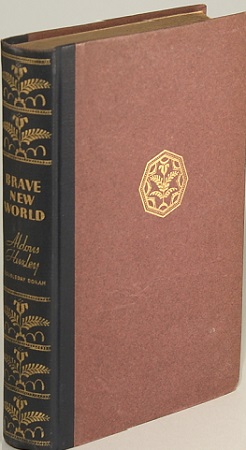
Aldous Huxley's 1932 novel imagines a future World State where reproduction, social caste, and desire are all engineered before birth, and the population is kept content through conditioning, sleep-hypnosis, and a mood-altering drug called soma. The story follows the disruption this seemingly stable order suffers when an outsider raised beyond its reach is brought into it, exposing what the society traded away for comfort and order. Some editions pair the novel with Huxley's own 1958 nonfiction essay collection, Brave New World Revisited, which reassesses the book's ideas rather than continuing its story.
- Stand on Zanzibar
John Brunnerstandalone novel1968
similar byscience fictionchallenginggenetic engineeringour worlddarkdystopia+1 more
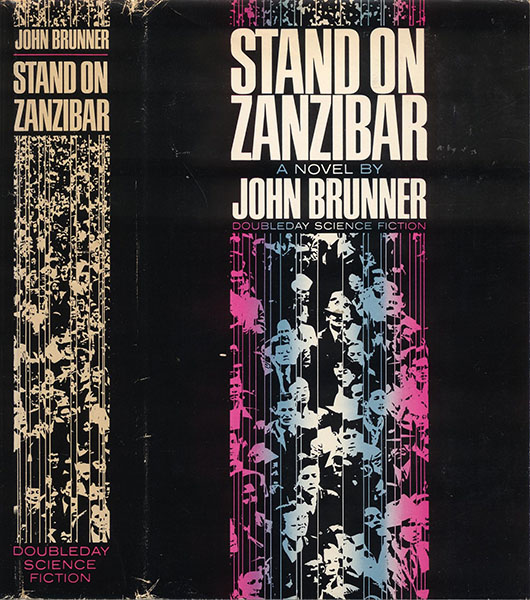
Stand on Zanzibar is a dystopian New Wave science fiction novel written by John Brunner and first in part published in New Worlds magazine in 1967 and in book form in 1968. The book won a Hugo Award for Best Novel at the 27th World Science Fiction Convention in 1969, as well as the 1969 BSFA Award and the 1973 Prix Tour-Apollo Award.
- The Eyes of Heisenberg
Frank Herbertstandalone novel1966
similar byscience fictiongenetic engineeringclass conflictour worldfar futuredark
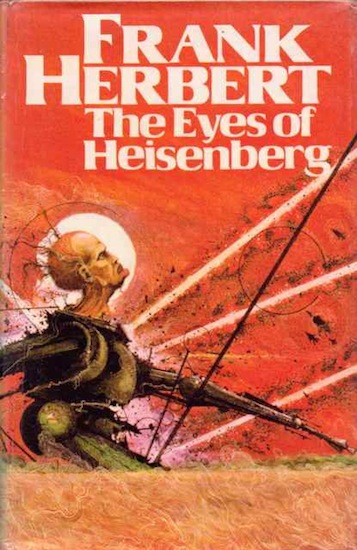
Tens of thousands of years in the future, Earth is ruled by the Optimen, a genetically engineered aristocracy that has made itself functionally immortal, while ordinary people, the Folk, live under strict reproductive control. When Harvey and Lizbeth Durant arrive to have their embryo genetically screened, the examining doctor finds something in the child no one has seen in a very long time: real potential for both fertility and life span, traits the Optimen have arrogated to themselves. Rather than destroy the embryo as policy demands, the doctor hesitates, setting off a chain of surveillance, suspicion and resistance. A tightly wound Frank Herbert thriller about genetic caste and rebellion.
- Dune
series20 books1963
part of Dune Universe
similar byscience fictionfar future+2 more
Frank Herbert's Dune Chronicles opens with 1965's Dune, set on the desert planet Arrakis where House Atreides takes control of the only source of the vital spice melange and young Paul Atreides is pulled into a struggle over its politics and religion. Herbert carried the story forward across five further novels — Dune Messiah, Children of Dune, God Emperor of Dune, Heretics of Dune, and Chapterhouse: Dune — following Paul's line over the following millennia, before Brian Herbert and Kevin J. Anderson later extended the saga. Many other editions of these six novels are omnibus and box-set repackagings rather than separate stories.
- Evolution
Stephen Baxterstandalone novel2002
similar byscience fictiongenetic engineeringour worldfar future+1 more
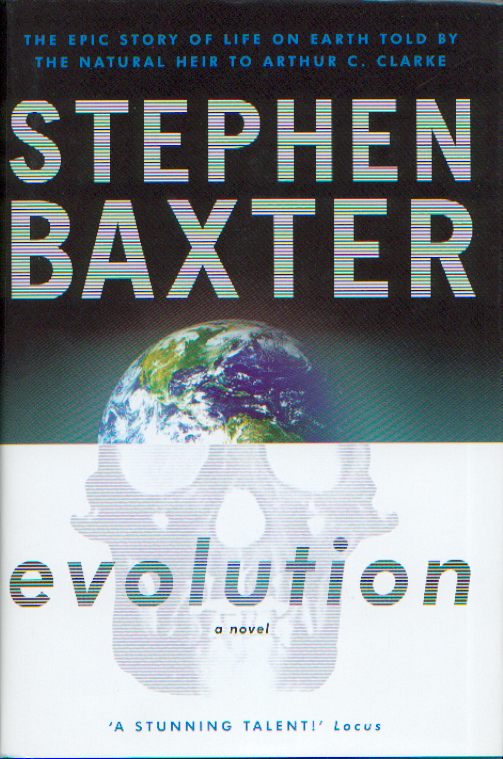
Evolution is a collection of short stories that work together to form an episodic science fiction novel by author Stephen Baxter. It follows 565 million years of human evolution, from shrewlike mammals 65 million years in the past to the ultimate fate of humanity and its descendants, both biological and non-biological, 500 million years in the future.
- Blood Music
Greg Bearstandalone novel1985
similar byscience fictiongenetic engineeringour worlddark+1 more
Blood Music is a 1985 science fiction novel by American writer Greg Bear. It is an expanded version of a short story of the same title, originally published in the June 1983 issue of Analog and the winner of both the 1983 Nebula and 1984 Hugo awards for Best Novelette. The novel won the 1986 Prix Apollo Award, given to the best science fiction novel published in France during the preceding year, under the title La Musique du sang.
- The Pure Trilogy
series3 books2012
similar byscience fictionour worldfar futuredarkdystopia+2 more
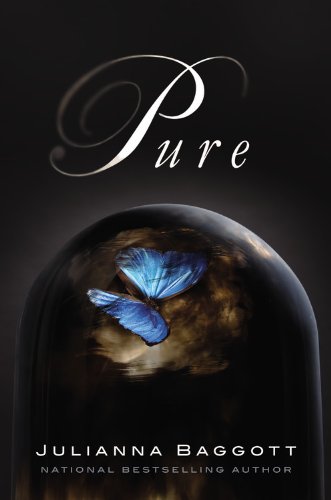
Julianna Baggott's Pure opens a post-apocalyptic trilogy set after a catastrophic detonation: Pressia, a scarred survivor with a doll's head fused to one hand, crosses paths with Partridge, a sheltered 'Pure' from the domed enclave, who is searching for his mother. Their converging stories carry the series through Fuse and Burn as the divide between the ruined outside world and the domed elite comes under increasing pressure.
- Down There in Darkness
George Turnerstandalone novel1999
similar byscience fictionchallenginggenetic engineeringour worldfar futuredarkdystopia+1 more
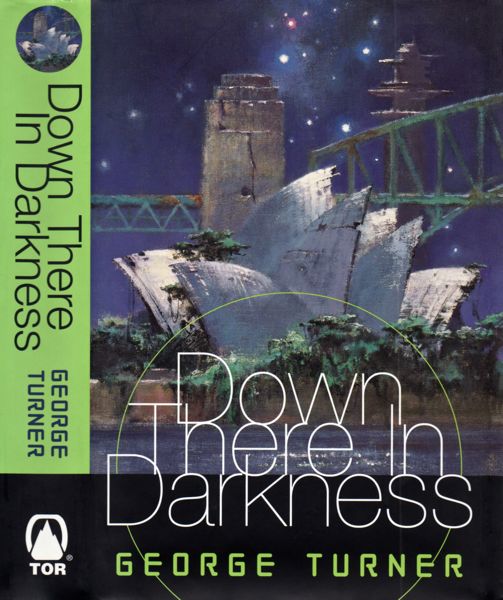
From the flaps of the Tor first edition: This novel chronicles the future destruction and eventual rebirth of human civilization. It is linked to the future world of both Beloved Son and Drowning Towers, as well as others of his works. About a hundred years in the future, two men, one of them a policeman, are investigating a death involving a large international genetic engineering corporation. They become bothersome to the corporate owners and are taken out of action not by being killed but by being put to sleep for hundreds of years. But this may be a fate worse than death. They awaken to a distant future in which contemporary industrial civilization has been "cleansed" from the earth and what humanity survives is learning to live a very low-technology lifestyle, being bred eugenically to this life. The cleansing was done on purpose, an international plot by the rich and powerful who in fact rule the world - and who, in this distant future, are dying off. This is a complex and morally tortuous vision, and Turner's characters find it nearly impossible to adapt without killing someone, perhaps even themselves.
- When the Sleeper Wakes
H. G. Wellsstandalone novel1899
similar byscience fictionour worldfar futuredarkdystopia+1 more
Graham, an insomniac Englishman in 1890s London, takes a course of sleep-inducing drugs and falls into a coma that lasts two centuries. He wakes in the year 2100 to find his investments have compounded, through a ruling body called the White Council, into effective ownership of most of the world's wealth and power, making him, on paper, humanity's master, and in practice, its prisoner, held under guard while the Council governs in his name. A rebel faction led by a man named Ostrog frees him, hoping to use his symbolic authority to spark an uprising against the Council. An early H. G. Wells dystopia about inherited power and manufactured consent.
- Beyond This Horizon
Robert A. Heinleinstandalone novel1948
similar byscience fictiongenetic engineeringour worldfar futuredystopia
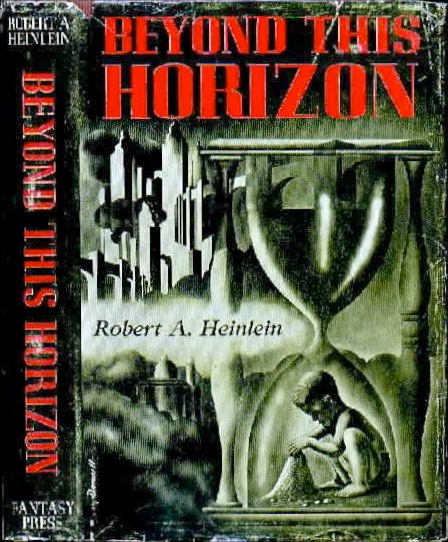
From the front flap of a 2001 Baen reprint: "Utopia has been achieved. For centuries, disease, hunger, poverty, and war have been things found only in the history tapes. And applied genetics has given men and women the bodies of athletes and a lifespan of over a century. They should all have been very happy... But Hamilton Felix is bored. And he is the culmination of a star line, each of his last thirty ancestors chosen for superior genes. Hamilton is, as far as genetics can produce one, the ultimate man. And this ultimate man can see no reason why the human race should survive, and has no intention of continuing the pointless comedy. However, Hamilton's life is about to become less boring. A secret cabal of revolutionaries who find utopia not just boring, but desperately in need of leaders who know just What Needs to be Done, are planning to revolt and put themselves in charge. Knowing of Hamilton's disenchantment with the modern world, they have recruited him to join their Glorious Revolution. Big mistake! The revolutionaries are about to find out that recruiting a superman was definitely not a good idea..."
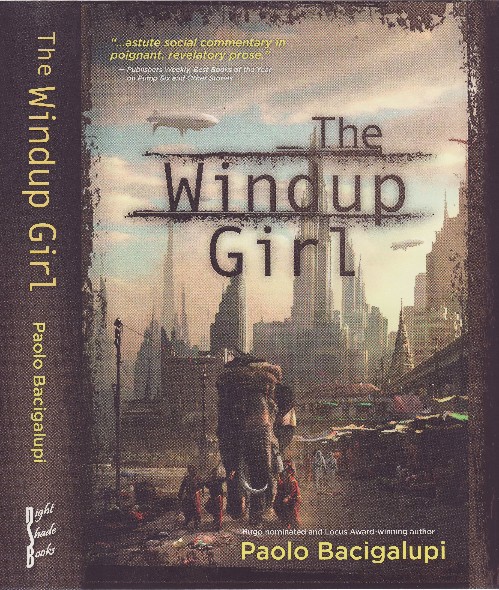
- The Windup Universe
series3 books2005
similar byscience fictiongenetic engineeringour worlddarkdystopia+1 more
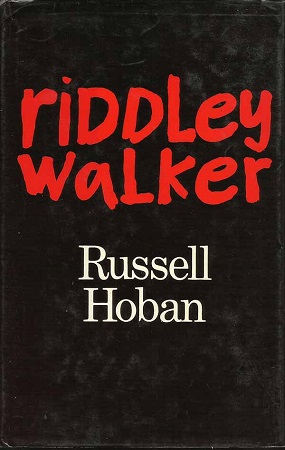
- Riddley Walker
Russell Hobanstandalone novel1980
similar byscience fictionchallengingour worldfar futuredark
WorldCat: Composed in an English which has never been spoken and laced with a storytelling tradition that predates the written word, RIDDLEY WALKER is the world waiting for us at the bitter end of the nuclear road. It is desolate, dangerous and harrowing, and a modern masterpiece.
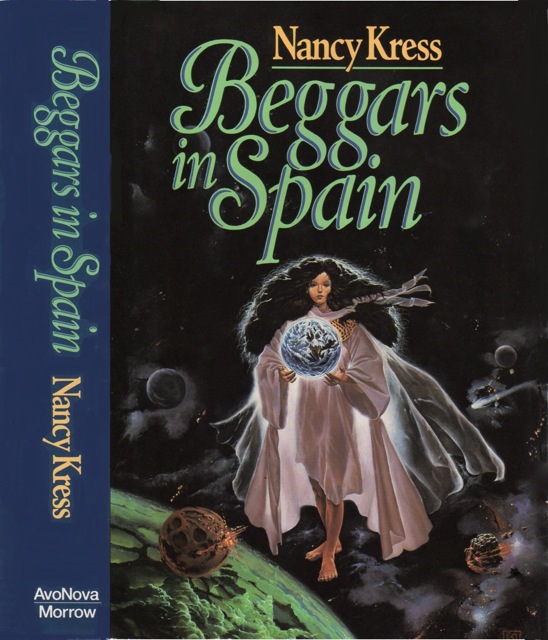
- Sleepless
series5 books1991
similar byscience fictiongenetic engineeringclass conflict+1 more
Genetic engineering produces a small class of 'Sleepless' children who never need to sleep and grow up smarter, healthier, and more capable than everyone else, and Nancy Kress's Beggars in Spain follows one of them, Leisha Camden, as ordinary 'Sleepers' come to resent and fear what the Sleepless represent. The novel uses the divide to ask hard questions about what a society owes people it considers unproductive, and what the gifted owe everyone else. Beggars and Choosers and Beggars Ride carry the same conflict forward across the following decades as the Sleepless gain real power.
- Oath of Fealty
Larry Niven & Jerry Pournellestandalone novel1981
similar byscience fictionclass conflictour worlddystopia+1 more
Oath of Fealty is a 1981 novel by American writers Larry Niven and Jerry Pournelle, published originally by Phantasia Press, then by Timescape Books, with numerous reprints. Set in the near future, it involves an arcology, a large inhabited structure, called Todos Santos, which rises above a crime-ridden Los Angeles, California, but has little beyond casual contact with the city. The novel popularized the phrase "think of it as evolution in action", which occurs elsewhere in Niven's books. The novel anticipated the building of the Los Angeles subway. It was included in David Pringle's book Science Fiction: The 100 Best Novels.
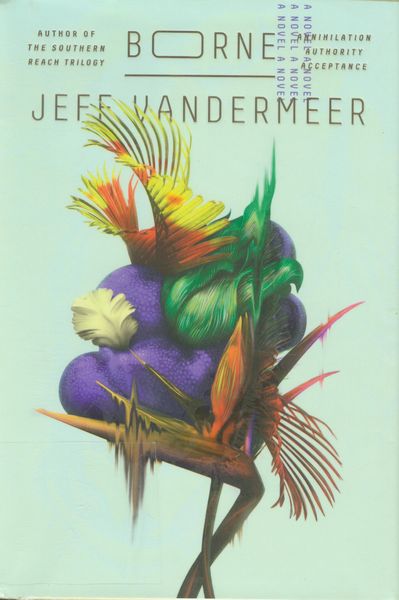
- Borne
series3 books2017
similar byscience fictiongenetic engineeringdark+3 more
Borne is set in a ruined, biotech-poisoned city dominated by a giant flying bear named Mord, where a scavenger finds a strange organism she names Borne and raises it, only to discover it may be more dangerous - and more alive - than she expected. Jeff VanderMeer's series continues with the related novels The Strange Bird and Dead Astronauts, set in the same devastated world.
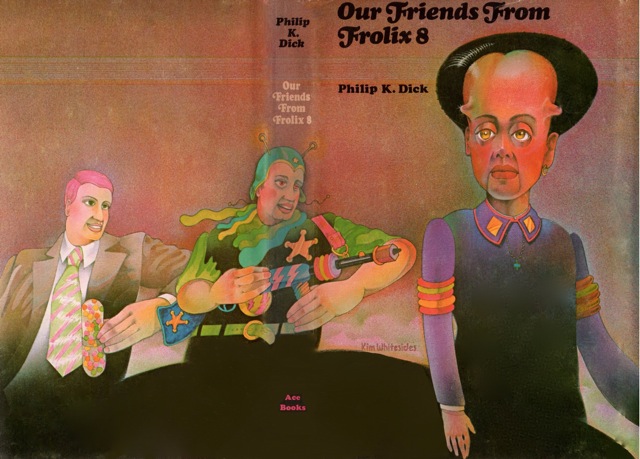
- Our Friends from Frolix 8
Philip K. Dickstandalone novel1970
similar byscience fictionclass conflictour worldfar futuredystopia+1 more
Our Friends from Frolix 8 is a science fiction novel by American writer Philip K. Dick. It was written from 1968 to 1969 and was published in 1970 by Ace Books. The novel is set in the 22nd century, when humanity is ruled by mutated humans, "New Men" and "Unusuals", while normal "Old Men" are discriminated against. The story follows Nick Appleton, a low-class Old Man worker who becomes a subversive to the system, and Willis Gram, the Unusual ruler of the Earth. Separately, resistance leader Thors Provoni has left the planet to find an ally to the Old Men, finally returning with an alien from far away in space. The novel is best known for a single scene where the characters discuss the dead body of God having been found in space.
- Pandora
series4 books1966
similar byscience fictionfar future+3 more
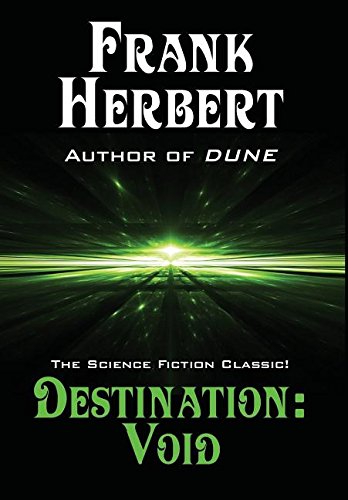
The Pandora Sequence opens with Frank Herbert's solo novel Destination: Void, in which a starship crew must jury-rig a working artificial consciousness after their vessel's control systems fail. Bill Ransom co-writes the three novels that follow, carrying the survivors to the world Pandora, where they must contend with both a manipulative machine intelligence and the planet's own hostile ecology. Across its four books the series moves from a claustrophobic ship-bound crisis to a generations-long struggle over faith, control, and survival on a dangerous new world.
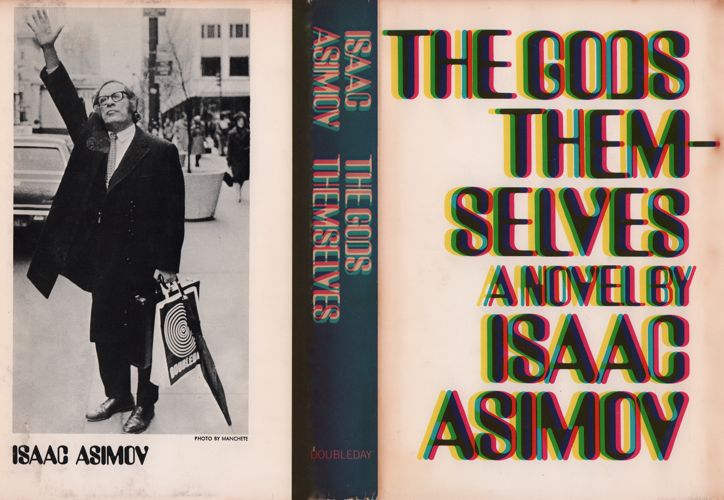
- The Gods Themselves
Isaac Asimovstandalone novel1972
similar byscience fictionchallengingfar future+1 more
The Gods Themselves is a 1972 science fiction novel written by Isaac Asimov, and his first original novel in fifteen years. It won the Nebula Award for Best Novel in 1972, and the Hugo Award for Best Novel in 1973.
- Camp Concentration
Thomas M. Dischstandalone novel1968
similar byscience fictionchallenginggenetic engineeringour worlddark
Camp Concentration is a science fiction novel by American writer Thomas M. Disch. It was first serialized in four parts in New Worlds from July to October 1967 and was published in book form in the United Kingdom in 1968, followed by a first U.S. edition in 1969.
- A Clockwork Orange
series4 books1962
completed
similar byscience fictionchallengingour worlddarkdystopia
Anthony Burgess's 1962 novel is narrated by Alex, a teenage gang leader in a near-future Britain gripped by a youth subculture of extreme violence, recounting his crimes in Nadsat, an invented slang blending English with Russian-derived words. After his crimes catch up with him, Alex is made the subject of a controversial state program meant to forcibly reform his behavior, and the novel uses his ordeal to question whether imposed goodness is worth the loss of free will. It is a standalone novel.
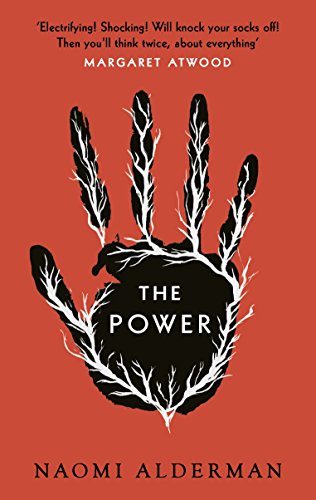
- The Power
Naomi Aldermanstandalone novel2016
similar byscience fictionchallengingclass conflictour worlddarkdystopia
The Power is a 2016 science fiction novel by the British writer Naomi Alderman. Its central premise is of women developing the ability to release electrical jolts from their fingers, which allows them to become the dominant sex. In 2017, it won the Baileys Women's Prize for Fiction.
- Urban Monad
series7 books1970
similar byscience fictionfar futuredystopia+3 more
Robert Silverberg's Urban Monad sequence, gathered into the fix-up novel The World Inside (serialized in Galaxy in 1970-71 and a Hugo finalist Silverberg declined), is set inside towering high-rise arcologies -- urban monads -- built to house a wildly overpopulated future Earth. Moving between residents of one tower, the linked stories examine a tightly regulated, sexually permissive society engineered to cope with constant population growth, and the discontent that surfaces underneath it.
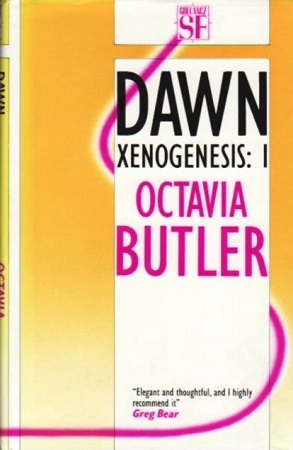
- Xenogenesis / Lilith's Brood
series4 books1987
completed
similar byscience fictiongenetic engineeringfar future+2 more
Lilith's Brood, previously known as the Xenogenesis Trilogy, is a collection of three science fiction works by Octavia E. Butler: Dawn, Adulthood Rites, and Imago.
- Terra Ignota
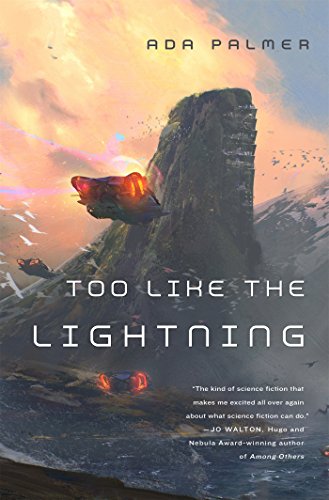
series4 books2016
similar byscience fictionchallengingour worldfar future
Terra Ignota is a quartet of science fiction and philosophical novels by the American author Ada Palmer. The series consists of Too Like the Lightning (2016), Seven Surrenders (2017), The Will to Battle (2017), and Perhaps the Stars (2021). After three centuries of a global near-utopia, a minor crime and a miracle child begin to unravel the social system and lead the world to technologically advanced total war. The first three books cover the events leading up to the war and the final book covers the war itself. The novels have won several awards, including a 2017 Compton Crook Award. The first novel was a finalist for the 2017 Hugo Award for Best Novel, and the series as a whole was a finalist for the 2022 Hugo Award for Best Series.