More like Vanguard
anchored on:science fictionmilitary science fictionwarfar futurespace colonizationsurvival+4 more
but
- Honor Harrington
series14 books1993
part of Honorverse
similar bytensefar futurescience fictionmilitary science fictionwarspace+1 more
David Weber's Honor Harrington novels follow the title character's rise through the Manticoran navy in the 'Honorverse,' a space-opera setting built around Age-of-Sail-style naval combat, interstellar politics and a decades-long war between rival star nations. Beginning with On Basilisk Station, the core series runs to fourteen books, alongside spin-off subseries, prequels and shared-world anthologies also set in the Honorverse. It's one of the longest-running modern military science fiction series, published by Baen.
- Man-Kzin Wars
series84 books1986
part of Known Space
similar bytensefar futurescience fictionmilitary science fictionwarspace+1 more
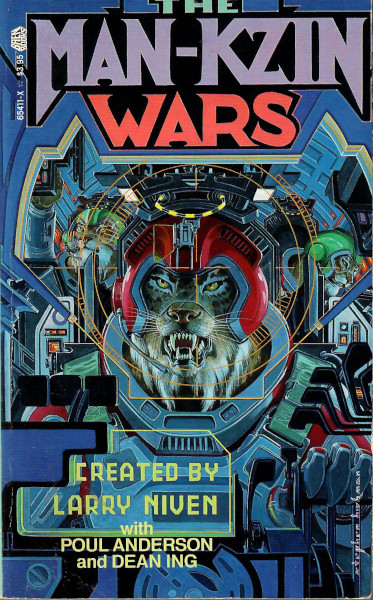
The Man–Kzin Wars is the name of a series of military science fiction anthologies as well as the name of the first book in the series. The short stories detail the eponymous conflicts between mankind and the Kzinti, set in Larry Niven's Known Space universe. However, Niven himself has written only a small number of the stories; most were written by other science fiction writers, as Niven opened this part of the Known Space to collaboration in the form of a shared universe. The cover art for the books in the series is created by Stephen Hickman.
- Janissaries
series4 books1979
similar bytensefar futurewarscience fictionmilitary science fictionadventurous+1 more
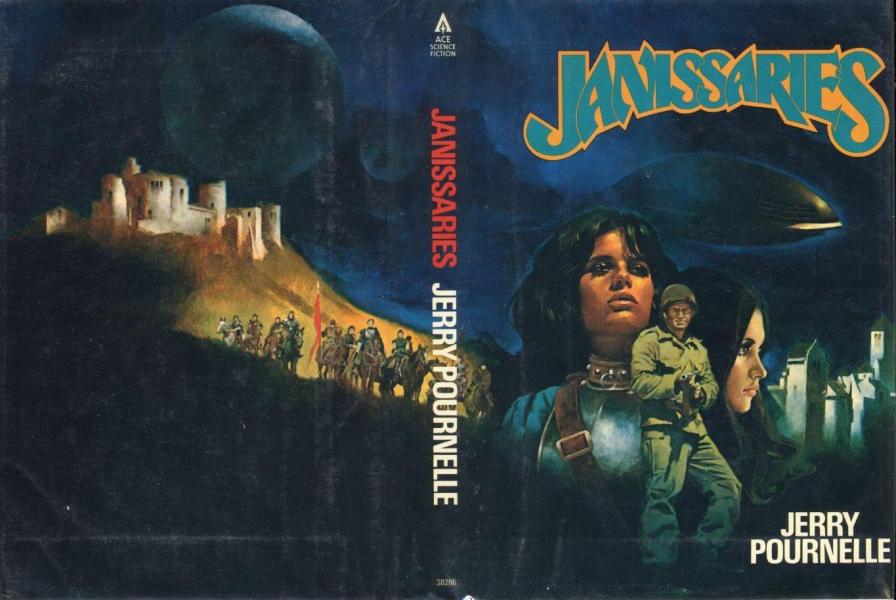
Janissaries are an American series of military and political-based science fiction novels are set in an interstellar confederation of races, in which humans are a slave race entrusted with military affairs and law enforcement. They were written by Jerry Pournelle, with Roland J. Green co-authoring the second two books.
- Vatta's War
series6 books2003
part of Vatta
similar bytensefar futurescience fictionmilitary science fictionwaradventurousspace
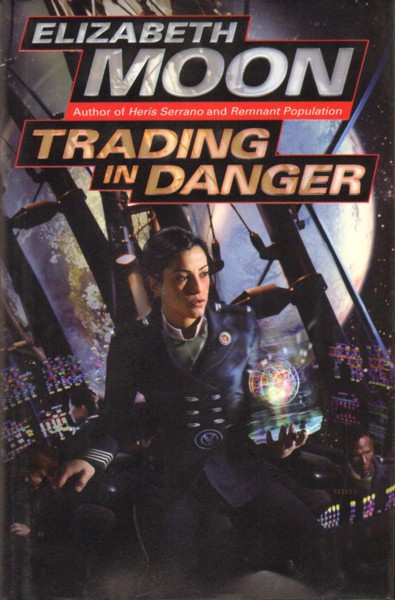
Vatta's War is a science fiction series by American writer Elizabeth Moon, comprising five books: Trading in Danger (2003), Marque and Reprisal, Engaging the Enemy (2006), Command Decision (2007), and Victory Conditions (2008). They have been characterized as military science fiction similar in style to the works of Lois McMaster Bujold, David Weber and Walter Jon Williams.
- Old Man's War
series16 books2005
similar byfar futurescience fictionmilitary science fictionadventurouswarspace+2 more
The Old Man's War series is a series of science fiction novels by John Scalzi. The first book in the series, Old Man's War, was first published in 2005 by Tor Books, and was nominated for the Hugo Award for Best Novel in 2006. In 2026 it was a finalist for the Hugo Award for Best Series.
- Company Wars
series7 books1981
part of Alliance-Union Universe
similar bytensefar futurescience fictionspace+4 more
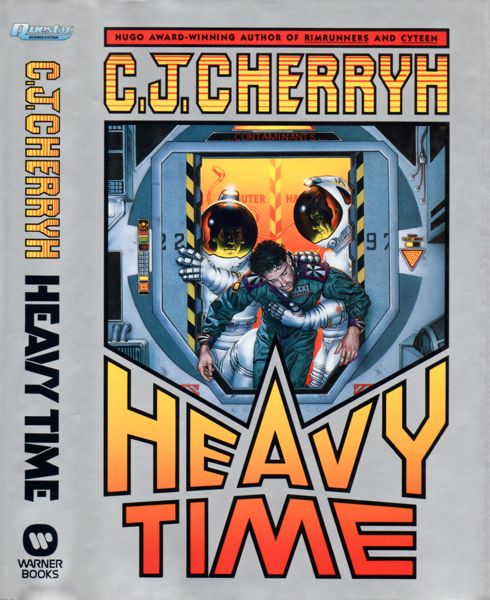
Company Wars gathers the novels C. J. Cherryh set during the breakaway conflict between Earth's colonial Company and the newly independent Union, within her wider Alliance-Union future history. Anchored by the Hugo Award-winning Downbelow Station, the books follow different ships, stations, and crews caught on either side, from merchanter traders to military spacers, rather than a single continuing cast. Read in any order, they build up a picture of the political and economic pressure that reshapes Cherryh's larger Alliance-Union universe.
- Siobhan Dunmoore
series9 books2014
similar bytensefar futurescience fictionmilitary science fictionwarspace+2 more
Eric Thomson's Siobhan Dunmoore novels follow the title character, a starship captain in a human interstellar navy, as she takes on progressively higher commands amid escalating war and political rot within her own military. The series has run to nine core novels since 2014 plus collected omnibus editions.
- Empire of Man
series4 books2001
similar byfar futuretensescience fictionmilitary science fictionsurvivalwaradventurous
The Empire of Man is a series of science fiction books by David Weber and John Ringo published by Baen Books. It combines elements of space opera and military science fiction.
- Vatta
universe10 books2003
Start hereVatta's War · Start here
similar byfar futuretensescience fictionmilitary science fictionadventurousspace+2 more
Get kicked out of the Academy and the family still hands you a ship. That is the arithmetic Kylara Vatta lives by. Born into Vatta Transport, Ltd. — a dynasty of interstellar traders who reckon their honor in delivered cargo and honored contracts — Ky wants a soldier's commission and gets a merchant hull instead. Then someone starts murdering her relatives and burning the ledgers, and the daughter learns that a trade fleet, armed and angry, is its own kind of war. This is military science fiction run on a merchant's books. The core cycle, Vatta's War, moves in five volumes — Trading in Danger, Marque and Reprisal, Engaging the Enemy, Command Decision, Victory Conditions — as piracy, a sabotaged faster-than-light communications network, and a scattered family push Ky from cautious captain to fleet commander. The later duology Vatta's Peace (Cold Welcome, Into the Fire) drops her, older and decorated, into a colder survival ordeal on her own homeworld. Moon writes clean, competent, procedural: supply lines and boarding actions, chains of command, the cost of a signature on a bad contract. Expect capable women, hard decisions costed to the last credit, and space combat that respects physics and paperwork alike. Begin at the beginning — Trading in Danger — and read straight through in publication order; the arc is chronological and cumulative, no side doors required.
- Starfist
series18 books1997
similar byfar futuretensescience fictionmilitary science fictionwaradventurousspace
StarFist is a series of military science fiction novels written by David Sherman and Dan Cragg. The novels are set in the 25th century and are written from the viewpoint of the men of the Confederation of Human Worlds Marine Corps 34th FIST. An additional spin-off series, titled StarFist: Force Recon, by the same authors was started in 2005 with the publication of Backshot. All books were published by Del Rey Books.
- Space Beagle
series5 books1939
completed
similar byfar futuretensescience fictionadventurousspacespaceship+1 more
The Voyage of the Space Beagle is a 1950 fix-up novel by A. E. van Vogt, stitched together from four previously published pulp stories into a single continuous account of the exploration ship Space Beagle's encounters with a series of dangerous alien life forms. Its episodic, crew-versus-monster structure reads as a loose sequence of adventures rather than one continuous plot.
- Providence
Max Barrystandalone novel2020
similar bytensefar futurescience fictionsurvivalwarmilitary science fictionspacespaceship
Providence is the sixth novel by Australian science fiction author Max Barry. It was published in March 2020 by Putnam.
- Starship Troopers
Robert A. Heinleinstandalone novel1959
similar byfar futurewarmilitary science fictionscience fictionadventurousspace
Starship Troopers is a military science fiction novel by American writer Robert A. Heinlein. Written in a few weeks in reaction to the US suspending nuclear tests, the story was first published as a two-part serial in The Magazine of Fantasy & Science Fiction as Starship Soldier, and published as a book by G. P. Putnam's Sons on November 5, 1959.
- Star Wolf
series5 books1972
similar bytensefar futurescience fictionwarmilitary science fictionspacespaceship+2 more
The Star Wolf series is a series of science fiction novels by American writer David Gerrold, centred on the starship Star Wolf and its crew. The Star Wolf is a "Liberty Ship", officially designated the LS-1187. Plagued by misfortune throughout the series, without any confirmed kills to its credit, it was denied a name by Command.
- Nicholas Seafort
series7 books1994
completed
similar bytensefar futurescience fictionmilitary science fictionwarspace+2 more
The Seafort Saga is a series of science fiction novels written by American author David Feintuch. The novels are set from the late 22nd century to the mid-23rd century and relate the adventures of Nicholas Seafort, an officer in the (fictional) UNNS| United Nations Naval Service. The series is a collection of personal accounts, usually from the perspective of Nicholas Seafort, describing Seafort's adventures, beginning as a lowly midshipman, to the elected leader of earth, and finally to the captain of the UNNS flagship Olympiad. Although most books in the series are told from a single perspective, usually Seafort's, Voices of Hope is a collection of accounts from several sources: Seafort's son, PT, the son of a friend of Seafort's, and a transient boy named Pook. Additionally, Children of Hope is narrated by Randy Carr, the son of a close friend of Seafort.
- The Extra Man
E. C. Tubbstandalone novel1954
similar bytensefar futurewarscience fictionsurvivalmilitary science fictionadventurousspace
The galaxy is at war between the oxygen-breathing Terran Federation of worlds and the Ginzoes, chlorine-breathing aliens. An Earth ship is captured in battle by the Ginzoes, and its crew learns that the aliens have a newly developed catalyst. This can liberate chlorine from the sea -which, for the Ginzoes, would convert Terran worlds into suitable environments. The catalyst will be used unless the Terran Federation declares peace within fifty days. Fifty days to save Mankind...or fifty days to doom!
- Freehold
William C. Dietzstandalone novel1987
similar bytensefar futurescience fictionspace colonizationsurvivalwarmilitary science fictionadventurous
Colonel Stell and his band of mercenaries yearn for a place to call home. To them Freehold is like a bright diamond in the vast universe. But its desert conditions, economic instability, social disarray, and political turmoil render the planet perfect for takeover. Willing to fight anything that stands in their way, Colonel Stell and his small crew contend with all who seek to dominate their planet, even vast interstellar empires. Their success will not be determined by their size but by their resolution to create creating a home for themselves.
- Fifth Imperium
series3 books1991
similar bytensefar futurescience fictionadventurousspacewar+1 more
David Weber's Fifth Imperium series opens with the discovery that Earth's Moon is in fact a disguised alien starship, the Dahak, that has orbited undetected for tens of thousands of years - a relic of the fallen Fourth Imperium, a multi-star civilization destroyed while defending against the genocidal Achuultani. Mutineers' Moon follows humanity's first contact with Dahak and the mutineers still aboard it; The Armageddon Inheritance and Heirs of Empire escalate from that discovery into interstellar war and dynastic politics as humanity inherits the old empire's legacy and its enemies. The three novels were later collected as the omnibus Empire from the Ashes.
- Slow Train to Arcturus
Eric Flint & Dave Freerstandalone novel2008
similar bytensefar futurescience fictionsurvivaladventurousspacespaceship+1 more
Sending a spaceship to rendezvous with an enormous vessel made up of a series of globular habitats approaching its star system, the aliens find a savage race calling themselves "humans" who promptly slaughter the exploration team, except for a single survivor who escapes to another habitat, where he finds more friendly humans whose help he requires to get back to his own ship.
- RCN
series15 books1998
completed
similar byfar futuretensescience fictionmilitary science fictionadventurouswarspace+1 more
David Drake's RCN series follows Daniel Leary, an officer in the Republic of Cinnabar Navy, and Adele Mundy, a librarian who moonlights as a spy, across a run of standalone-but-connected novels beginning with With the Lightnings. Drake and reviewers alike have framed it as an SF version of Patrick O'Brian's Aubrey/Maturin novels, and it plays that way: political intrigue and shipboard command dynamics carry as much weight as the space battles. It's more character-driven than Drake's harder-edged Hammer's Slammers work.
- Conquerors
series3 books1994
similar bytensefar futurescience fictionwarmilitary science fictionadventurousspace
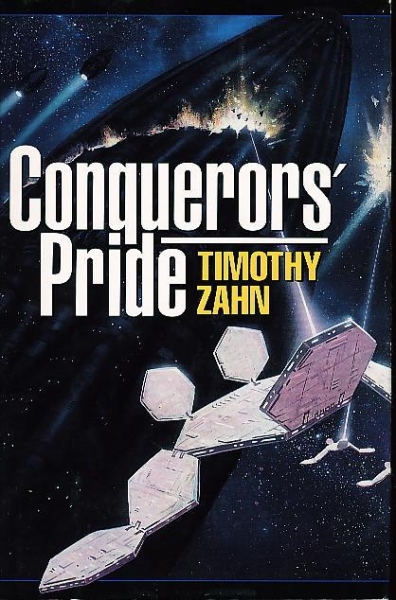
Conquerors is Timothy Zahn's military science-fiction trilogy following human fighter pilots and their commanders through an interstellar war that neither side fully understands, told across Conquerors' Pride, Conquerors' Heritage, and Conquerors' Legacy. Zahn alternates perspective between the human and alien chains of command, using the shifting viewpoints to slowly unpick why the conflict started in the first place. It's contact-and-conflict SF built around miscommunication rather than straightforward invasion.
- Guardian of Night
Tony Danielstandalone novel2012
similar bytensefar futurescience fictionwarmilitary science fictionadventurousspacespaceship
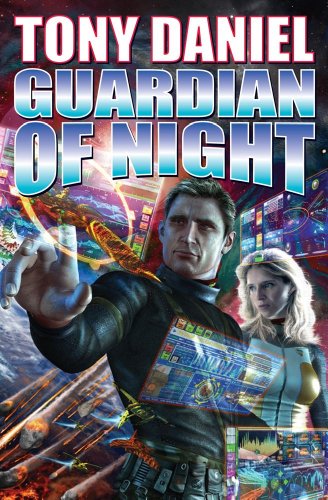
"Captain Arid Ricimer, an alien starship commander with integrity and a clever plan, attempts to defect to Earth with his officers and entire spaceship, a vessel that mounts a superweapon of almost unimaginable power. He's pursured by his former fleet, a force that has already devastated Earth and is poised to wipe out humanity from existence. Now Arid, along with his human allies, Captain Jim Coalbridge and alien analyst Lieutenant Commander Griff Leher must face down the forces of a tyrannical star empire"--
- Steel Walls and Dirt Drops
Alan Blackstandalone novel2014
similar bytensefar futurewarscience fictionmilitary science fictionadventurousspacespaceship+1 more
The new commander of the 1392nd Allied Protective Expeditionary Services is Hamisha Ann McPherson and this is her first command of anything larger than a squad. She is a larger-than-life combat veteran and a bonafide war hero. She knows combat. She also knows that combat is one thing and that command is a warthog of a different and dubious color. This unit's last commander retired in the saddle leaving his unit to unravel and fend for themselves. Their assigned space forces transport captain is less than no help at all. Combat is on the horizon and even the veteran APES doubt they will be ready for what is coming. All Misha can do is crack a few heads, kick some backsides and see what happens. Her APES might live through the next battle if she is successful. If not...
- Hero!
Dave Duncanstandalone novel1991
similar bytensefar futurespace colonizationwarscience fictionmilitary science fictionadventurousspace
Space opera at its finest and most action-filled, from the bestselling author of fantasy quests, epic tales and swashbuckling adventures.Vaun, born a peasant in the stinking mud flats of Ult, a thriving colony planet, claws his way to survival and fame by becoming the toughest young officer in the Space Patrol. A veteran of the brutal training academy, he seizes opportunities as they arise, leading the first ship out against a surprise attack by the mysterious Brotherhood. He returns to a hero's welcome as the Brotherhood ship falls to the surface of his home planet in shattered pieces.The Brotherhood is elsewhere unstoppable, though, as neighboring plants, one by one, fall silent, conquered. And then, the Patrol detects a huge spacecraft launched from one of the now-silent worlds and headed for Ult. Facing a challenge greater than he can truly hope to overcome, Vaun nonetheless sets out to save Ult for a second time...