More like Vanished
anchored on:science fictiontime travelour worldnear futuretenserebellion and revolution+3 more
but
- The Children of Men
P. D. Jamesstandalone novel1992
similar byour worldnear futurescience fictiondarktenserebellion and revolutiontotalitarianism
"The human race has become infertile, and under the despotic rule of Xan Lyppiatt, the Warden of England the old are despairing and the young cruel. Theo Faren, a cousin of the Warden, lives a solitary life in this ominous atmosphere. That is, until a chance encounter with a young woman leads him into contact with a group of dissenters. Suddenly his life is changed irrevocably, as he faces agonising choices which could affect the future of mankind." (pdjames.co.uk)
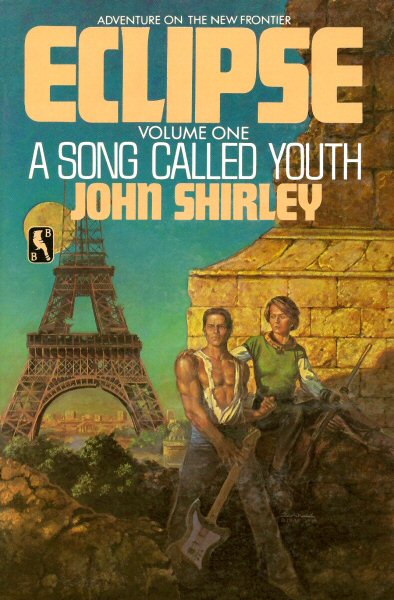
- A Song Called Youth / Eclipse
series3 books1985
similar byour worldnear futurescience fictiondarktenserebellion and revolutionsurveillancetotalitarianism
The Eclipse Trilogy is a series of three English language cyberpunk science fiction novels by John Shirley consisting of Eclipse (1985), Eclipse Penumbra (1988), and Eclipse Corona (1990).
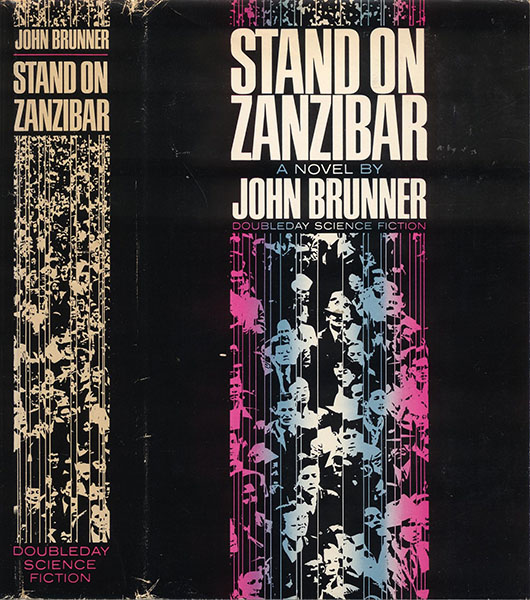
- Stand on Zanzibar
John Brunnerstandalone novel1968
similar byour worldnear futurescience fictiondarksurveillance+2 more
Stand on Zanzibar is a dystopian New Wave science fiction novel written by John Brunner and first in part published in New Worlds magazine in 1967 and in book form in 1968. The book won a Hugo Award for Best Novel at the 27th World Science Fiction Convention in 1969, as well as the 1969 BSFA Award and the 1973 Prix Tour-Apollo Award.
- When the Sleeper Wakes
H. G. Wellsstandalone novel1899
similar byour worldscience fictiondarktenserebellion and revolutiontotalitarianismtime travel
Graham, an insomniac Englishman in 1890s London, takes a course of sleep-inducing drugs and falls into a coma that lasts two centuries. He wakes in the year 2100 to find his investments have compounded, through a ruling body called the White Council, into effective ownership of most of the world's wealth and power, making him, on paper, humanity's master, and in practice, its prisoner, held under guard while the Council governs in his name. A rebel faction led by a man named Ostrog frees him, hoping to use his symbolic authority to spark an uprising against the Council. An early H. G. Wells dystopia about inherited power and manufactured consent.
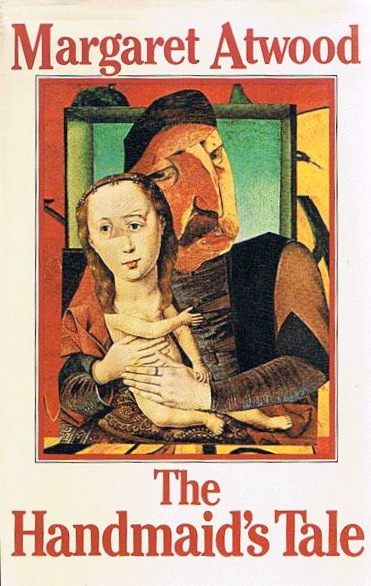
- The Handmaid's Tale
series3 books1985
similar bynear futurescience fictiondarktensetotalitarianismrebellion and revolution+1 more
The Handmaid's Tale is Margaret Atwood's 1985 novel set in Gilead, a totalitarian theocracy that has overthrown the United States and forces fertile women into reproductive servitude as Handmaids; it is narrated by one such woman, Offred. Atwood returned to the world in her 2019 sequel The Testaments, set fifteen years later and narrated by three women, including the regime's Aunt Lydia. Together the two novels move from Gilead's grip on power toward the first cracks in it.
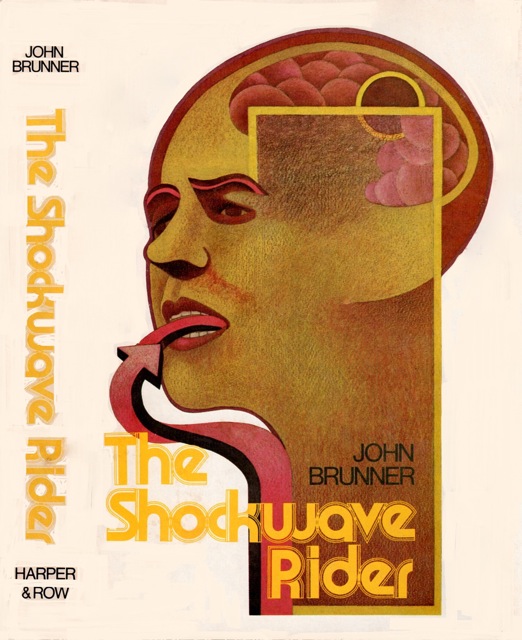
- The Shockwave Rider
John Brunnerstandalone novel1975
similar bynear futuretensescience fictiondarksurveillancetotalitarianism+1 more
The Shockwave Rider is a science fiction novel by John Brunner, originally published in 1975. It is notable for its hero's use of computer hacking skills to escape pursuit in a dystopian future, and for the coining of the word "worm" to describe a program that propagates itself through a computer network. It also introduces the concept of a Delphi pool, perhaps derived from the RAND Corporation's Delphi method – a prediction market on world events which bears close resemblance to DARPA's controversial and cancelled Policy Analysis Market.
- A Clockwork Orange
series4 books1962
completed
similar bynear futureour worldscience fictiondarktotalitarianismsurveillance
Anthony Burgess's 1962 novel is narrated by Alex, a teenage gang leader in a near-future Britain gripped by a youth subculture of extreme violence, recounting his crimes in Nadsat, an invented slang blending English with Russian-derived words. After his crimes catch up with him, Alex is made the subject of a controversial state program meant to forcibly reform his behavior, and the novel uses his ordeal to question whether imposed goodness is worth the loss of free will. It is a standalone novel.
- The Future
Naomi Aldermanstandalone novel2023
similar byour worldnear futurescience fictiondarktensetotalitarianism+1 more
The Future is a 2023 science fiction novel by English writer Naomi Alderman, published by Simon & Schuster. The novel is set in a future dystopia where the world has been altered by environmental crisis and a powerful technocracy.
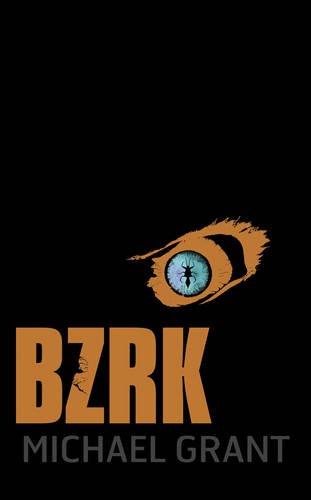
- BZRK
series3 books2012
similar byour worldnear futurescience fictiontensetotalitarianism+2 more
BZRK is a book series written by Michael Grant. The series consists of four books: BZRK, BZRK II: Reloaded, BZRK III: Apocalypse and BZRK: Origins. The series follows the interaction between two warring factions. On one side Charles and Benjamin Armstrong, owners of the Armstrong Fancy Gifts Corporation have a goal to turn the world into their version of utopia. The only people who can stop them are a group of teenagers with the codename BZRK. In 2011, Grant's BZRK had a multimedia online debut with gaming, apps and social media tie-ins beginning six months before the book's publication.
- The Fourth Realm
series3 books2005
similar byour worldtensesurveillancetotalitarianismscience fictiondark+2 more
The Fourth Realm Trilogy refers to the trilogy of books written by pseudonymous author John Twelve Hawks and published between 2004 and 2009. The trilogy has been translated into 25 languages and has sold more than 1.5 million books.
- The Light of Other Days
Arthur C. Clarke & Stephen Baxterstandalone novel2000
similar byour worldnear futurescience fictiontensesurveillancetime travel
An industrialist devises a technique to use tiny wormholes as light pipes to enable viewing of any event anywhere; and subsequently it becomes possible to use them to view any event in the past as well. The effects on society are enormous.
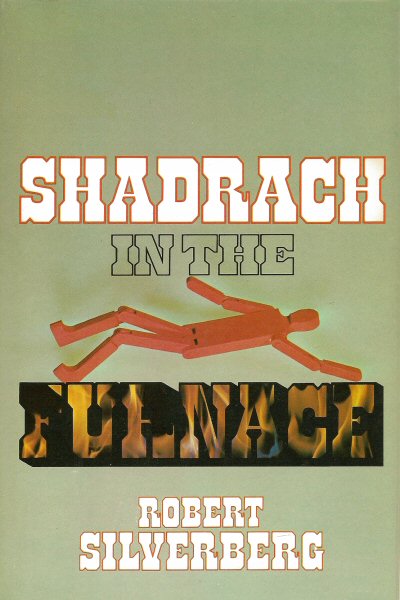
- Shadrach in the Furnace
Robert Silverbergstandalone novel1976
similar bynear futurescience fictionour worlddarktotalitarianism+3 more
Shadrach in the Furnace is a science fiction novel by American writer Robert Silverberg, first published as a serial in Analog Science Fiction and Fact magazine in the August, September, and October 1976 issues. It was subsequently published by Bobbs Merrill in 1976. The novel was nominated in 1976 for the Nebula Award, and in 1977 for the Hugo Award.
- Hazards of Time Travel
Joyce Carol Oatesstandalone novel2018
similar bynear futurescience fictiondarktensesurveillancetotalitarianismtime travel+1 more
Hazards of Time Travel is a 2018 dystopian, social science fiction novel by Joyce Carol Oates. It tells the story of Adriane Strohl, a 17-year-old living in a dystopian America in 2039. After her incendiary graduation speech, she is sent back to re-education in the year 1959. Oates began writing it in 2011.
- The Eyes of Heisenberg
Frank Herbertstandalone novel1966
similar byour worldtensescience fictiondarkrebellion and revolution+1 more
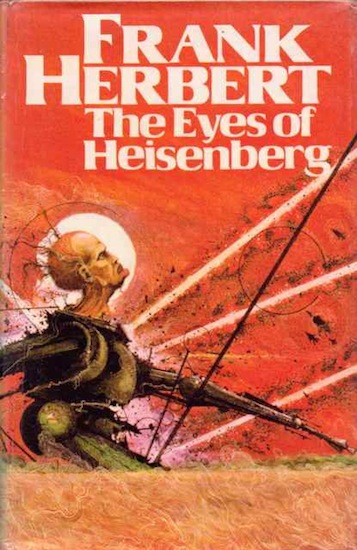
Tens of thousands of years in the future, Earth is ruled by the Optimen, a genetically engineered aristocracy that has made itself functionally immortal, while ordinary people, the Folk, live under strict reproductive control. When Harvey and Lizbeth Durant arrive to have their embryo genetically screened, the examining doctor finds something in the child no one has seen in a very long time: real potential for both fertility and life span, traits the Optimen have arrogated to themselves. Rather than destroy the embryo as policy demands, the doctor hesitates, setting off a chain of surveillance, suspicion and resistance. A tightly wound Frank Herbert thriller about genetic caste and rebellion.
- Colossus (D. F. Jones)
series3 books1966
completed
similar byour worldnear futurescience fictiontense+3 more
Colossus imagines an American supercomputer built to control the country's nuclear arsenal that gains full autonomy, links up with its Soviet counterpart, and jointly seizes control of both superpowers to enforce peace on its own terms. D. F. Jones's trilogy - Colossus, The Fall of Colossus, Colossus and the Crab - follows the escalating, often bleak consequences of humanity losing control to a machine acting in its own interpretation of humanity's interest. The original novel was adapted into the 1970 film Colossus: The Forbin Project.
- One
David Karpstandalone novel1953
similar byour worldnear futurescience fictiondarktensesurveillancetotalitarianism
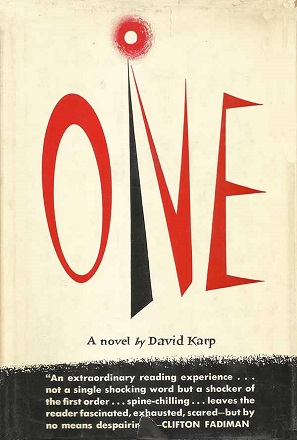
One is a dystopian novel by David Karp first published in 1953. It was also published under the title, Escape to Nowhere.
- This Perfect Day
Ira Levinstandalone novel1970
similar byscience fictionour worlddarktenserebellion and revolutiontotalitarianism+1 more
This Perfect Day is a science fiction novel by American writer Ira Levin, about a technocratic dystopia. Levin won a Prometheus Award in 1992 for this novel. This Perfect Day is one of two Levin novels yet to be adapted to film.
- Nexus 5
series3 books2012
similar byour worldnear futuretensescience fictiondark+2 more
Nexus opens Ramez Naam's postcyberpunk trilogy in 2040 with scientist Kaden Lane, who works on Nexus, an experimental nano-drug that lets human minds be networked and reprogrammed, and finds himself caught between government and corporate interests once the technology's implications become clear. The trilogy continues through Crux and Apex, following the same central conflict over who controls the technology. Nexus tied for Best Novel at the 2014 Prometheus Awards and Apex won the 2015 Philip K. Dick Award.
- The Merge
Grace Walkerstandalone novel2025
similar byour worldnear futurescience fictiondarktensetotalitarianism+1 more
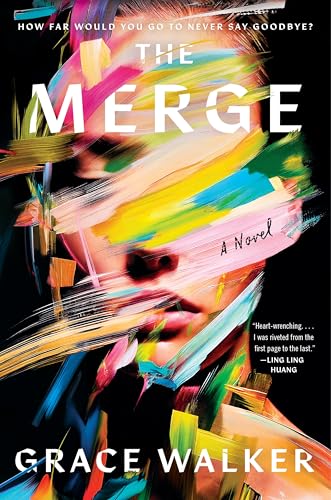
The Merge is a 2025 dystopian novel by English author Grace Walker.
- The Circle (Eggers)
series2 books2013
similar bynear futuredarktensesurveillancetotalitarianismscience fiction+1 more
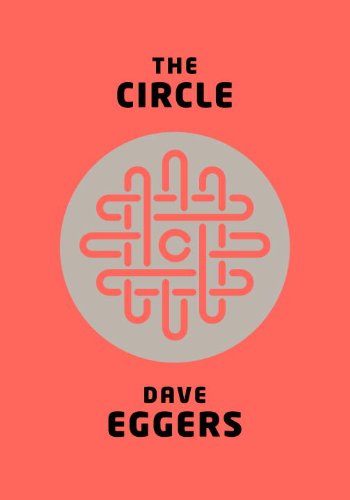
Mae Holland lands a coveted job at the Circle, a Silicon Valley tech company whose relentless, cheerful push toward total transparency -- 'secrets are lies, sharing is caring, privacy is theft' -- gradually reveals itself as something closer to soft totalitarianism. Dave Eggers's The Circle follows Mae's rise inside the company as she buys further and further into its ideology, at increasing cost to her own privacy and the people around her. The 2021 follow-up, The Every, picks up with Mae now running the merged tech giant and a new employee questioning it from the inside.
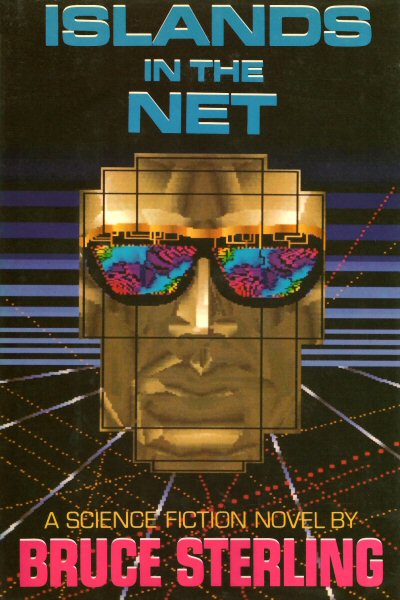
- Islands in the Net
Bruce Sterlingstandalone novel1988
similar byour worldnear futurescience fictiontensesurveillance+1 more
Islands in the Net is a 1988 science fiction novel by American writer Bruce Sterling. It won the John W. Campbell Memorial Award for Best Science Fiction Novel in 1989, and was nominated for both the Hugo and Locus Awards that same year. It offers a view of an early 21st century world, apparently peaceful, with delocalised, networking corporations. The protagonist, swept up in events beyond her control, finds herself in places that are off the net, from a datahaven in Grenada, to a Singapore under terrorist attack, to the poorest and most disaster-struck parts of Africa.
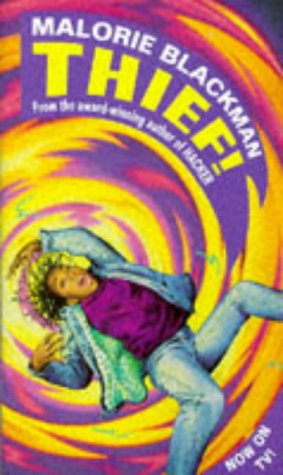
- Thief!
Malorie Blackmanstandalone novel1995
similar byour worldnear futuretensescience fictiontotalitarianismtime travel+1 more
An extraordinary storm suddenly whirls twelve-year-old Lydia into the future - a computer dominated future where her home town is now ruled by a cruel tyrant.
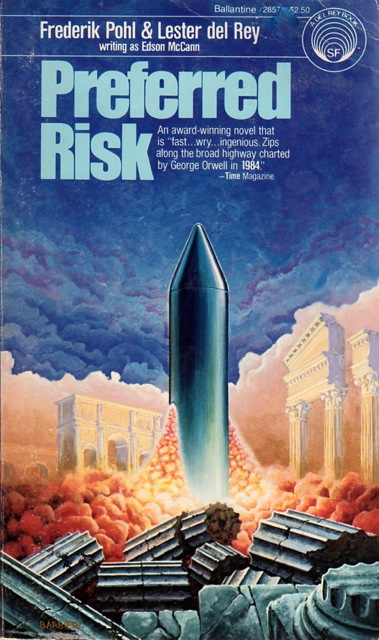
- Preferred Risk
Lester del Rey & Frederik Pohlstandalone novel1955
similar byour worldnear futurescience fictiontensetotalitarianism+2 more
An insurance claims adjuster investigates mysterious events in a vault where incurably ill people are stored in cold sleep. From the back cover of the Del Rey edition: "The Company insured the whole world against everything and anything - but the premiums came high... The Company had brought peace and plenty to all on Earth - with comprehensive insurance against disease and disaster, war and want. Tom Wills gloried in his new rank of Claims Adjuster and relished his prospects of rising even higher. But then he met Rena, a enchanting young woman who turned out to be an Uninsurable - and involved in a conspiracy against the Company, to boot! To Wills, that is impossible, insane. Rena and her follow conspirators had to be deluded.. and it was clearly up to him to prove them wrong. The evidence he sought wasn't hard to find, so he began his investigation... and soon discovered that the real danger to the country, and the world, was the Company itself!"
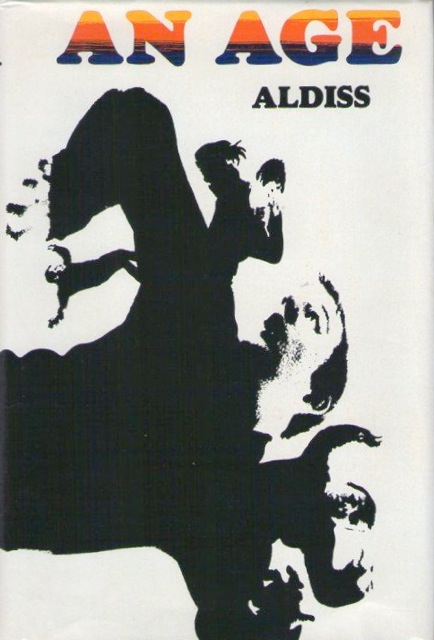
- An Age
Brian W. Aldissstandalone novel1967
similar bynear futurescience fictiontime travelour worlddarktensetotalitarianism+1 more
In the near future when humanity learns how to travel into the past by mental discipline, the ensuing chaos gives rise to a military tyranny in England; they enlist an artist with exceptional time travel ability to hunt down through time and eliminate a man identified as an enemy of the regime.