More like Venators
anchored on:grimdarkscience fictionunderground & cavesfar futuredarkcyberpunk+6 more
but
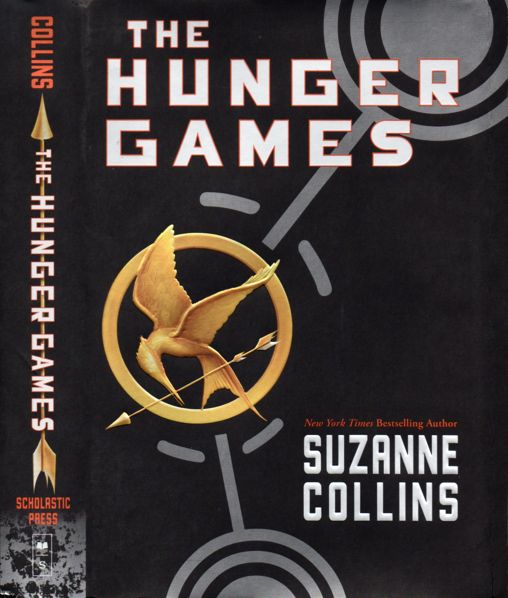
- The Hunger Games
series3 books2008
part of The Hunger Games Universe
similar byfar futuredarktensescience fictionsurvival
The Hunger Games is a series of young adult dystopian novels written by American author Suzanne Collins. The series consists of a trilogy that follows teenage protagonist Katniss Everdeen, as well as two prequels. The Hunger Games universe is a dystopia set in Panem, a post-apocalyptic North American country consisting of the wealthy Capitol and 12 districts in varying states of poverty. As punishment for rebellion, the Capitol hosts an annual battle royale competition called The Hunger Games. Each of the 12 districts must send two children between the ages of 12 and 18 to participate, and the last surviving child is dubbed the victor.
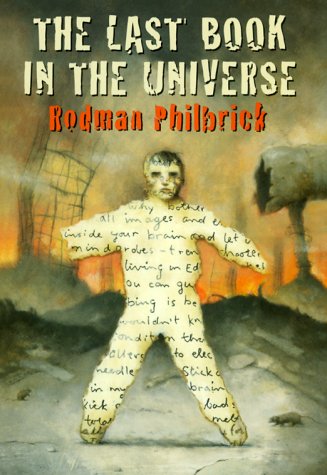
- The Last Book in the Universe
Rodman Philbrickstandalone novel2000
similar byfar futuredarktensescience fictionsurvivalcyberpunkbig city+1 more
The Last Book in the Universe is a 2000 post-apocalyptic science fiction novel by Rodman Philbrick. Set in a cyberpunk dystopia, its protagonist and narrator is a teenage boy named Spaz who has epilepsy.
- The Status Civilization
Robert Sheckleystandalone novel1960
similar byfar futuredarktensescience fictionsurvivalclass conflict
"Will Barrent had no memory of his crime ... but he found himself shipped across space to a brutal prison-planet. On Omega, his only chance to advance himself -- and stay alive -- is to commit an endless series of violent crimes. The average inmate's life expectancy from time of arrival is three years. Can Barrett survive, escape, and return to Earth to clear his name?" - From the cover of the 2007 Wildside paperback edition.
- The Hunger Games Universe
universe5 books2008
Start hereThe Hunger Games · Start here
similar byfar futuredarktensescience fictionsurvival
Panem, they call it now — a nation raised on the drowned bones of North America, a glittering Capitol ringed by twelve districts it once starved into obedience. Every year the Capitol collects its debt in children: two tributes from each district, drawn by lottery, dropped into an engineered arena, and made to kill one another on live television while the whole country is required to watch. This is the Hunger Games — entertainment, punishment, and government at once. Suzanne Collins tells it in a compact, unified body of work. The founding trilogy — The Hunger Games, Catching Fire, and Mockingjay — follows Katniss Everdeen, a girl from the coal-mining District 12 who volunteers in her sister's place and becomes something the Capitol never scripted. Two prequels reach back into the same machinery: The Ballad of Songbirds and Snakes traces a young Coriolanus Snow long before he is President, and Sunrise on the Reaping returns to District 12 a generation ahead of Katniss. Begin with the trilogy, in order — it is Katniss's voice, close and present-tense, that makes Panem breathe, and the prequels land hardest once you know how her story ends. Beneath the spectacle sits one steady, uncomfortable question: who profits when we agree to look away.
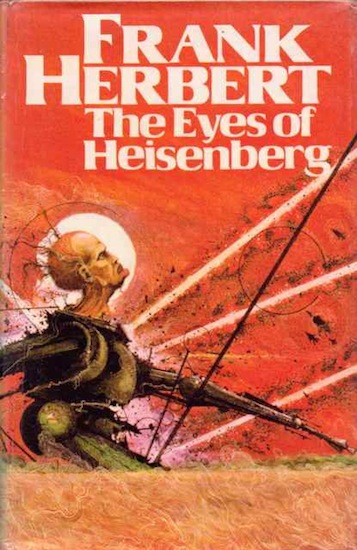
- The Eyes of Heisenberg
Frank Herbertstandalone novel1966
similar byfar futuredarktensescience fictionclass conflict
Tens of thousands of years in the future, Earth is ruled by the Optimen, a genetically engineered aristocracy that has made itself functionally immortal, while ordinary people, the Folk, live under strict reproductive control. When Harvey and Lizbeth Durant arrive to have their embryo genetically screened, the examining doctor finds something in the child no one has seen in a very long time: real potential for both fertility and life span, traits the Optimen have arrogated to themselves. Rather than destroy the embryo as policy demands, the doctor hesitates, setting off a chain of surveillance, suspicion and resistance. A tightly wound Frank Herbert thriller about genetic caste and rebellion.
- The Exile Waiting
Vonda N. McIntyrestandalone novel1975
similar byfar futuredarktensescience fictionsurvivalunderground & caves
From the front flap of the Gollancz first printing: The time is the distant future and Earth has been rendered uninhabitable for much of the year by terrible storms during which its only city, Center, constructed around a natural cave system, is closed off from the outside. Mischa, a young thief whose capabilities are enhanced by hereditary mutation, is trying to escape with her drug-addicted brother from the dominance of her uncle. So when a starship arrives commanded by the twin alien pseudosibs, Subone and Subtwo, Mischa seizes her chance. She is soon assigned for training to Jan Hikaru, who quickly realises that Mischa has immense abilities. All goes well until Subone, in a moment of cruelty, lures Mischa's brother into a fight and then kills him. Mischa attacks Subone and both she and Jan have to flee the wrath of the brothers and take refuge n the deep cave system underneath the city.
- Takeshi Kovacs
series3 books2002
similar byfar futuredarktensescience fictioncyberpunk+1 more
Takeshi Kovacs is a former elite soldier turned freelance troubleshooter in a future where human consciousness can be digitized and transferred between bodies, or sleeves, making death an inconvenience for those who can afford new ones. Richard Morgan's trilogy - Altered Carbon, Broken Angels, Woken Furies - moves Kovacs through noir-inflected mysteries on different worlds, using the resleeving premise to interrogate class, violence, and what, if anything, survives a person's original body. It became the basis for a Netflix series.
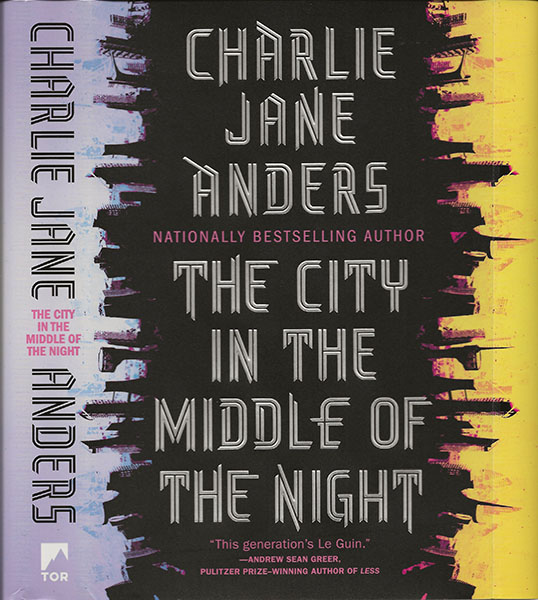
- The City in the Middle of the Night
Charlie Jane Andersstandalone novel2019
similar byfar futuredarktensescience fictionsurvivalbig city
The City In the Middle of the Night is a 2019 climate-fiction novel by Charlie Jane Anders. It is set on a tidally locked planet, where human life, surrounded by hostile alien life, is mostly divided between two archetypically different urban sites. The main story focuses on two characters whose actions take them outside of the cities.
- City at World's End
Edmond Hamiltonstandalone novel1951
similar byfar futuredarktensescience fictionsurvival
An experimental atomic weapons test in small-town America goes catastrophically wrong, hurling the entire town of Middletown, buildings, streets and all, untold ages into Earth's future, to a time when the sun is dying and humanity's last city struggles on beneath a darkening sky. Cut off from everything and everyone they knew, the townspeople have to find a way to survive in a world that has nothing left to spare for latecomers. Edmond Hamilton's novel strands a slice of mid-century America at the literal end of the world.
- Make Room! Make Room!
Harry Harrisonstandalone novel1966
similar bydarktensescience fictionsurvivalclass conflictbig city
Make Room! Make Room! is a 1966 science fiction novel written by Harry Harrison exploring the consequences of both unchecked population growth on society and the hoarding of resources by a wealthy minority. It was originally serialized in Impulse magazine.
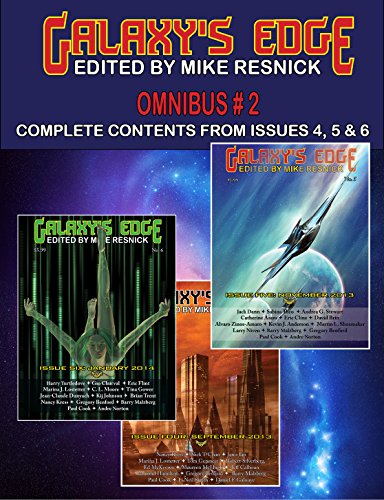
- Galaxy's Edge: Omnibus
series2 books1961
completed
similar byfar futurescience fictionsurvivalunderground & caves+3 more
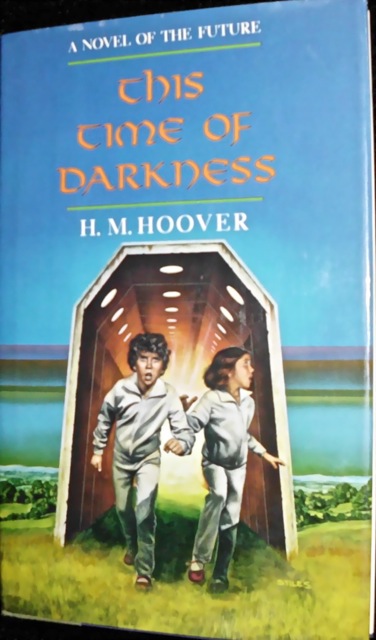
- This Time of Darkness
H. M. Hooverstandalone novel1980
similar byfar futuredarktensescience fictionunderground & cavessurvival
WorldCat: Although both know it is forbidden, Amy and Axel hope that by following the countless ramps leading upward they can escape from their filthy subterranean world.
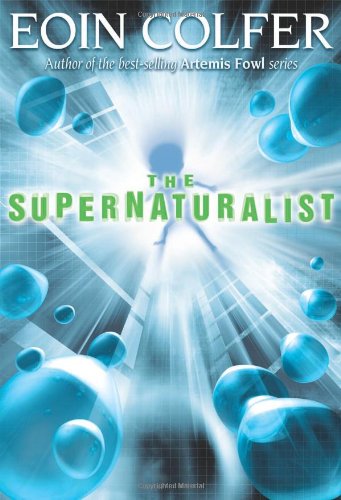
- The Supernaturalist
Eoin Colferstandalone novel2004
similar bydarktensescience fictionsurvivalcyberpunkbig city+1 more
The Supernaturalist is a science fiction cyberpunk novel by Irish author Eoin Colfer. The book was influenced by film noir and other predecessors of the cyberpunk science fiction movement. Colfer has outlined plans for a sequel, Avernus.
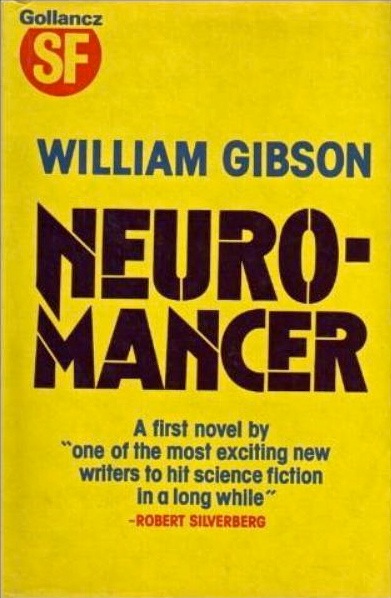
- Sprawl Trilogy
series10 books1981
similar bytensedarkscience fictioncyberpunkbig city
The Sprawl Trilogy is William Gibson's foundational cyberpunk sequence: Neuromancer (1984), in which hacker Case is drawn into a high-stakes heist alongside an artificial intelligence and a damaged ex-soldier, followed by Count Zero (1986) and Mona Lisa Overdrive (1988), which widen the same near-future world of corporate power and networked cyberspace to new characters. Johnny Mnemonic, an early short story set in the same fictional milieu, predates the novels and introduces the courier Molly Millions before her role in the trilogy. Together these works established much of cyberpunk's visual and thematic vocabulary.
- When the Sleeper Wakes
H. G. Wellsstandalone novel1899
similar byfar futuredarktensescience fiction+1 more
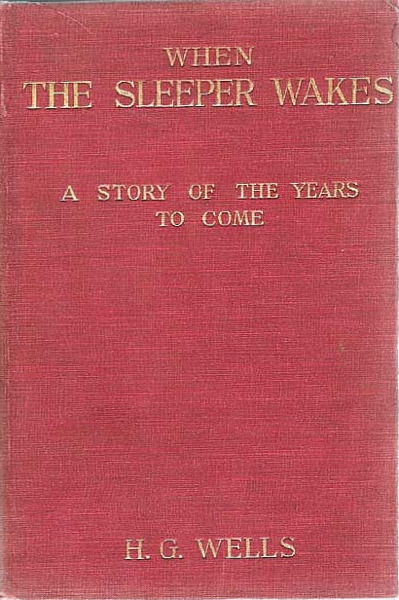
Graham, an insomniac Englishman in 1890s London, takes a course of sleep-inducing drugs and falls into a coma that lasts two centuries. He wakes in the year 2100 to find his investments have compounded, through a ruling body called the White Council, into effective ownership of most of the world's wealth and power, making him, on paper, humanity's master, and in practice, its prisoner, held under guard while the Council governs in his name. A rebel faction led by a man named Ostrog frees him, hoping to use his symbolic authority to spark an uprising against the Council. An early H. G. Wells dystopia about inherited power and manufactured consent.
- The Dosadi Experiment
Frank Herbertstandalone novel1977
similar byfar futuretensescience fictionsurvival+1 more
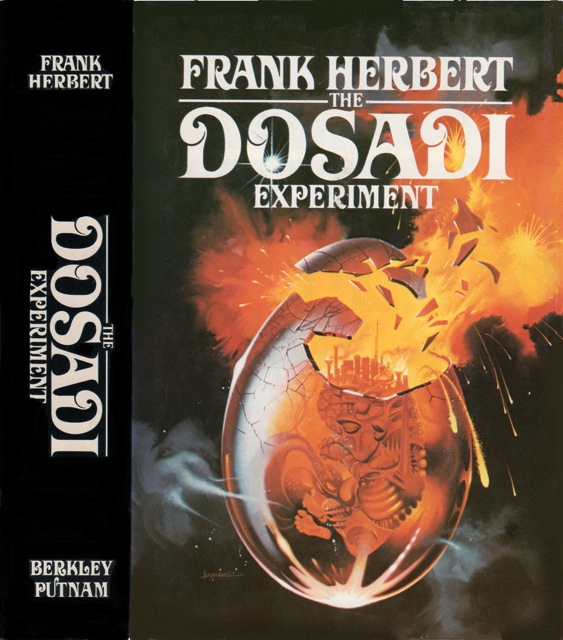
From the flaps of the Berkley Putnam first edition: "In his first new work of science fiction since the best-selling Children of Dune, Frank Herbert returns to his world of Whipping Star, and involves Jorj X. McKie, Saboteur Extraordinary, in a new intrigue. In Whipping Star, McKie discovered that some of the stars in the universe are actually intelligent, super-powerful beings, and was able to befriend one of them, the star Alcyone - affectionately known as Fannie Mae. As The Dosadi Experiment opens, McKie is assigned to investigate the planet Dosadi, which is isolated from the rest of the galaxy by a "god-wall," a barrier set up by one of the intelligent stars. Dosadi is rumored to be an experimental planet, and the experimenters are the froglike Gowachin, whose culture is founded upon a strange legal system in which McKie is the only human ever trained. He learns that humans and Gowachin have been placed on Dosadi, without their consent, for an experiment that could last centuries: an experiment in extreme overcrowding. But this monstrous plot is apparently out of control, and it seems the Gowachin may be prepared to destroy Dosadi rather than expose its secret, thus breaking the peace among the races, and starting the first interstellar war. But this is just the beginning. When McKie finally reaches Dosadi he discovers that the Dosadis have taken control of their own evolution and produced a competitive, highly evolved elite, of both humans and Gowachin, who have been able to extrapolate the existence of a universe beyond the god-wall and hate whoever has imprisoned them like this. They plan to break out and avenge themselves on the galaxy."
- The Pure Trilogy
series3 books2012
similar byfar futuredarktensescience fiction+2 more
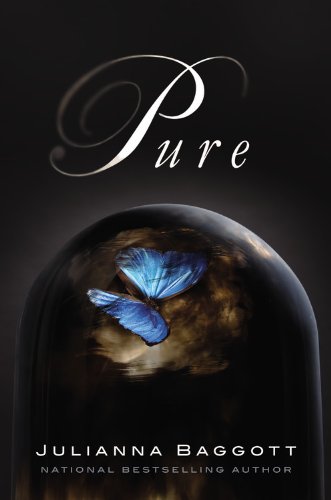
Julianna Baggott's Pure opens a post-apocalyptic trilogy set after a catastrophic detonation: Pressia, a scarred survivor with a doll's head fused to one hand, crosses paths with Partridge, a sheltered 'Pure' from the domed enclave, who is searching for his mother. Their converging stories carry the series through Fuse and Burn as the divide between the ruined outside world and the domed elite comes under increasing pressure.
- Red Rising
series13 books2014
similar byfar futuretensescience fictiondarkclass conflict
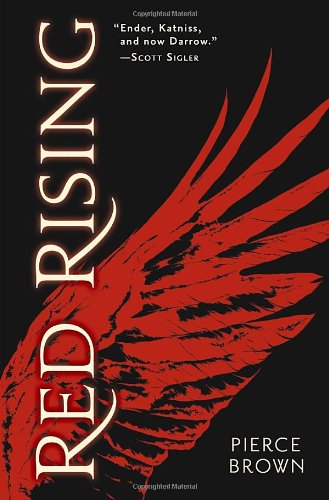
Pierce Brown's Red Rising follows Darrow, a lowborn 'Red' miner on a colonized Mars who discovers his caste's suffering is a lie sustained by the ruling Gold elite, and infiltrates their ranks to destroy the system from within. The series expands from a single-protagonist revenge story into a sprawling multi-book war across the solar system, eventually following an ensemble cast beyond Darrow alone, and combines Roman-inspired factional politics with brutal, competition-driven action set pieces.
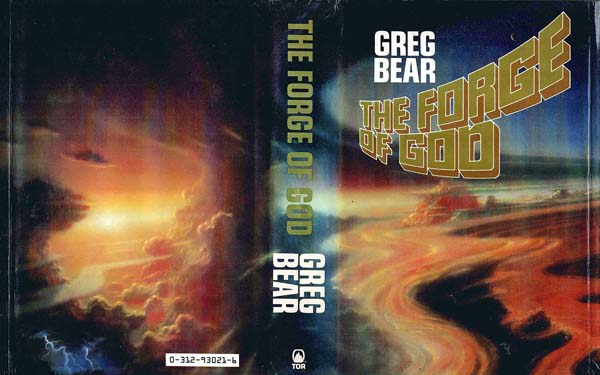
- Forge of God
series2 books1987
completed
similar bydarktensescience fictionsurvival+1 more
The Forge of God (1987) is Greg Bear's science fiction novel about Earth's discovery that it is the target of an incomprehensible, overwhelming alien attack, following scientists and ordinary people as they try to understand what is destroying the planet. Its 1992 sequel, Anvil of Stars, follows a group of young survivors sent on a mission of interstellar retaliation, continuing directly from the first book's ending.
- Cowl
Neal Asherstandalone novel2004
similar byfar futuredarktensescience fictionsurvival
In the far future, the Heliothane Dominion is triumphant in the solar system, after a bitter war with their Umbrathane progenitors. But some of the Umbrathane have escaped into the distant past, where they can position themselves to wreak havoc across time and undo their defeat. The most fanatical of them is the superhuman Cowl, more monstrous than any of the creatures outside his prehistoric redoubt. Cowl sends his terrifying hyperdimensional pet, the torbeast, hunting through all the timelines for human specimens. It sheds its scales - each one an organic time machine - where its master orders. Anyone who picks one up is dragged back to the dawn of time, where Cowl awaits. Then the beast can feed, growing ever larger... In our own near-future, Tack is one of U-gov’s programmable killers. When a scale latches onto him, his doom seems inevitable, but the Heliothane have other ideas: they can use Tack against Cowl. Tack is no stranger to violence, but the Heliothane, hardened in their struggle for humanity’s very existence, have much to teach him. He will need it all for his encounter with Cowl.Once one of Tack’s targets, Polly escaped with her life when a torbeast scale snatched her. Now, like Tack, she must learn fast as she is dragged back to Day Zero. To cheat death again, she will have to help him save the human race.
- The Ice Schooner
Michael Moorcockstandalone novel1969
similar byfar futuredarksurvivalgrimdarkscience fiction
The Ice Schooner is a post-apocalyptic fantasy novel by Michael Moorcock first published in 1966. It is a grimdark retelling of Moby Dick combined with elements of Joseph Conrad's sailing adventures.
- The Fade
Chris Woodingstandalone novel2007
similar byfar futuredarktensescience fictionunderground & cavessurvival
A subterranean world of vast caverns, underground seas, crystalline forests. A civilisation born of darkness, living in darkness, protected by shadows. On the moon of Callespa, in a hostile binary system, humankind has adapted to the bizarre environment - the majority live underground in vast cavern cities illuminated by shinestones, while a minority brave the sunlight on the surface. The human race has splintered into tribes and for many years the nations of Eskara and the Gurta have been at war, a battle fought back and forth through vast subterranean chambers. Massima Leithka Orna is an assassin, spy and soldier bonded for life to the Clan Caracassa. During a brutal battle her forces are betrayed and her husband is killed. Taken prisoner to a Gurta fortress, Orna lives only to escape and find her son, now serving on the front lines.
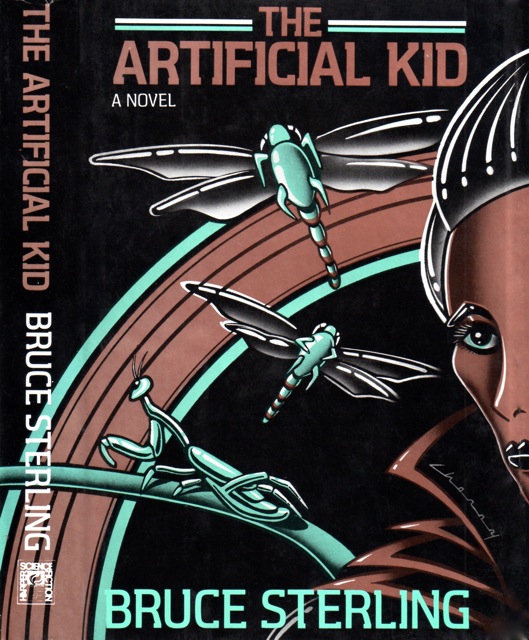
- The Artificial Kid
Bruce Sterlingstandalone novel1980
similar byfar futuredarkscience fictionclass conflictcyberpunk+1 more
WorldCat: A popular home-video star and ultimate warrior on a planet dangerously divided by class and wealth distinctions discovers the lethal truth about his world and its origins in this satiric science fiction masterwork Founded centuries ago by the enigmatic genius Moses Moses, the planet Reverie can either be heaven or hell, depending on whether you live on or above it.
- City of Bohane
Kevin Barrystandalone novel2011
similar bydarktensescience fictionclass conflictorganized crimebig city
City of Bohane is the debut novel by Ireland's Kevin Barry. The book is set in the year 2053, in a world with minimal technology. It received largely positive reviews and won the 2013 International Dublin Literary Award.