Loreful
HomeDiscover
Search series, authors…⌘K
Loreful

Reading orders for SF/F series and shared universes — with your place kept in every one.

Explore

UniversesSeriesWorksAuthorsAtlas

Help

FAQAboutSite map

Account & legal

Sign inCreate accountPrivacyTerms

Data

Built on ISFDB, Wikipedia, Wikidata and Open Library. Curated reading orders carry their reasoning on the page; the rest follow publication order. Data sources & licenses

© Loreful · data: ISFDB · CC BY

More like Version Control

anchored on:science fictionnorth americacontemporarytime travelliterary & generalidentity+2 more

but

Mood

The mood the book leaves you in.

  • The reading experience is propelled by journeys, exploration, and physical risk; excitement and forward momentum dominate over dread or introspection.
  • Joy and loss are deliberately mixed; the resolution grants characters something real while taking something else away, leaving warmth and sorrow together.
  • The book demands work from the reader — dense prose, difficult structure, unfamiliar ideas, or morally uncomfortable material — as part of its intended effect.
  • Grim events, cruelty, or despair dominate the atmosphere, and the book does not soften them with comfort or comic relief.
  • The atmosphere is quietly unsettling — wrongness, unease, and the uncanny pervade the book without necessarily escalating into overt horror.
  • The book is built to move the reader; character feeling is foregrounded and major scenes aim at a strong emotional response.
  • Humor is a primary aim and the prose plays for laughs — comic situations, wit, or dialogue produce sustained comedy, not occasional levity.
  • The book insists that things can improve; effort and decency are shown to matter, and the arc bends toward better outcomes even through hardship.
  • The book teaches as it goes — real facts, history, science, or craft are conveyed in enough depth that learning is part of the reading experience.
  • The book is designed to uplift and motivate, presenting perseverance or achievement in a way that invites the reader to aspire or act.
  • The overall register is cheerful and easygoing; stakes are kept gentle and the book avoids dwelling on pain or dread.
  • Withheld information drives the experience; the book sustains enigmas and secrets the reader wants resolved, whatever its genre.
  • The book is contemplative and inward-looking, giving more weight to thought, memory, and meaning than to external events.
  • The book works as comfort reading — low tension, a soothing pace, and an atmosphere the reader can unwind in.
  • Grief, loss, or melancholy set the dominant register, and the book lets sorrow stand rather than resolving it into comfort.
  • Sustained suspense is the point; the book keeps the reader braced for what happens next through danger, pressure, or impending revelation.
  • Playful invention and charm define the register — fanciful conceits, light absurdity, and a narration that delights in its own oddity.

About

What the story runs on.

  • Stories in which extraterrestrial beings are central — as characters, cultures, or the object of the plot.
  • Stories structured as a quest — a journey undertaken to find, deliver, or destroy something of great import.
  • Stories in which staying alive against nature, catastrophe, or scarcity is the central problem.
  • Stories of lovers kept apart by law, family, faith, or station, where the obstacle to love is the plot.
  • Stories in which a friendship — its making, testing, or loss — is the emotional center.
  • Stories of growing up — a young protagonist crossing from childhood into adult knowledge and responsibility.
  • Stories about who a character truly is — self-discovery, doubled lives, and the search for a self.
  • Stories about mourning — living through the death of a loved one and what loss does to the survivors.
  • Stories in which a buried family truth — hidden parentage, crimes, or shames — surfaces and reorders the present.
  • Stories driven by maneuvering for power — factions, conspiracies, and statecraft conducted in shadow.
  • Stories in which war itself is the subject — combat, occupation, and what warfare does to soldiers and civilians.
  • Stories organized around investigating a killing — the case, the clues, and the pursuit of the killer, in any genre's clothing.

Shelf

Where it sits in the library.

    • Fiction built on magic or other supernatural elements that have no scientific explanation.
    • Secondary-world fantasy at large scale, where the fate of nations or the world turns on the protagonists' struggle.
    • Fantasy set in a recognizably modern city or contemporary world where the supernatural intrudes on everyday life.
    • Fantasy that blends in horror's atmosphere and imagery, keeping a fantastical frame around grim or frightening material.
    • Action-driven fantasy following warriors or rogues with personal stakes against sorcerous threats, rather than world-spanning conflicts.
    • Fantasy set in a real historical period or a close analogue of one, with magic woven into the era.
    • Fantasy in which protagonists cross from the ordinary world into another world through a portal or similar passage.
    • Fiction that retells or reworks a traditional fairy tale in a new form or setting.
    • Fantasy drawing directly on myths, legends, and folklore, retelling them or building on their figures and logic.
    • Fantasy of ghosts, vampires, shapeshifters, psychics, and similar phenomena, usually set in an otherwise ordinary world.
    • Fiction mixing science-fictional trappings with overtly magical or impossible elements in one setting.
    • Low-stakes fantasy emphasizing comfort, community, and everyday pleasures over conflict and peril.
    • Speculative fiction of pervasive moral ambiguity, violence, and cynicism that rejects heroic conventions — fantasy and SF alike.
      • Fiction that extrapolates from science and technology — future societies, space travel, or speculative inventions — within at least nominally natural laws.
      • Science fiction of interstellar scope — starships, galactic polities, and adventure across star systems.
      • Science fiction committed to scientific rigor, where technical plausibility constrains the story.
      • Science fiction centered on armed forces and warfare, told largely from a military point of view.
      • Science fiction of networked, corporate-dominated near futures, pairing high technology with social decay.
      • Science fiction styled on nineteenth-century steam-powered technology, often in a Victorian or pseudo-Victorian setting.
      • Fiction depicting an oppressive or catastrophic society, presented as a warning.
      • Fiction set after civilization's collapse, following survivors in the ruins of the old world.
      • Fiction in which characters move between past and future, and the mechanics or consequences of that travel drive the plot.
      • Fiction exploring a world where a historical event went differently and history diverged from ours.
      • Science fiction about humanity's first encounter and communication with an alien intelligence.
      • Science fiction in which extraterrestrial forces attack or occupy Earth and humanity resists.
      • Fiction whose primary aim is to frighten or unsettle the reader through dread, menace, or the monstrous.
      • Horror of vast, indifferent, incomprehensible entities before which humanity is insignificant, in the Lovecraft tradition.
      • Horror of decaying houses, buried family secrets, and oppressive atmosphere in the Gothic literary tradition.
      • Horror centered on hauntings and the returning dead.
      • Horror located in the mind — paranoia, obsession, and unreliable perception rather than external monsters.
      • Horror built around the reanimated dead and survival amid their outbreaks.
      • Horror defined by explicit, transgressive gore that refuses to cut away from violence.
      • Speculative fiction of the strange and uncanny that resists both natural explanation and standard genre categories.
      • Fiction organized around solving a crime or puzzle, typically following an investigator toward the identification of a culprit.
      • A puzzle-first mystery that lays out clues so the culprit's identity can be deduced before the reveal.
      • Crime fiction of moral ambiguity, fatalism, and hard-edged style, set among the corrupt and the doomed.
      • A mystery following the realistic routines of police work — forensics, interviews, and case-building.
      • A gentle mystery with an amateur sleuth, a small community, and violence kept off the page.
      • A mystery set in a past era, where the investigation works within that period's methods and society.
      • Fast-paced fiction driven by imminent danger, pursuit, or high-stakes conspiracy, built to sustain tension.
      • A thriller of espionage — agents, tradecraft, and intelligence services in conflict.
      • A thriller centered on lawyers and the courtroom, where litigation carries the suspense.
      • A thriller driven by detailed contemporary or near-future technology, often military or scientific.
      • A thriller whose tension comes from mental states and manipulation between characters rather than external action.
      • Fiction whose central plot is a romantic relationship and its development toward an emotionally satisfying resolution.
      • Romance in which one or both partners are supernatural beings, blending fantasy elements into the love story.
      • A fantasy-romance hybrid in which the romantic arc and the fantasy plot carry equal weight.
      • Romance set in a past era, with courtship shaped by the period's society and manners.
      • Romance set in the present day, without supernatural or historical elements.
      • Fiction set in a real past period, where the historical setting materially shapes characters and events.
        • General and literary fiction emphasizing prose style, character interiority, or formal ambition over genre plot conventions.
        • Fiction in a realistic world where magical events occur and are treated as ordinary, in the tradition of Latin American literature.
        • Fiction that ridicules people, institutions, or society in order to criticize them.
        • Fiction of dreamlike, irrational imagery and logic that breaks from realistic representation.
        • Fiction that plays with narrative convention through metafiction, fragmentation, and self-reference.
        • Fiction propelled by journeys, exploration, and physical peril, where action and survival carry the plot.
        • Adventure fiction of ships and seafaring — naval engagements, voyages, and life at sea.
        • Fiction of the American frontier West — gunmen, ranchers, and lawmen, typically in the late nineteenth century.
        • Fiction centered on soldiers, campaigns, and the experience of warfare, historical or imagined.
          • Fiction written primarily to amuse, using comedic situations, wit, or parody as its organizing principle.
            • Multi-generational fiction following a family or dynasty across decades, with inheritance and kinship as the through-line.
              • Fiction whose world runs on explicit game mechanics — levels, stats, and skills that characters can see and exploit.
                • Fiction about costumed or superpowered heroes and their conflicts with comparable villains.

                Practical

                How long a commitment, whether it stands alone, and whether it has finished.

                Tap a chip to ask for it · tap again to rule it out · once more to clear. Numbers show what would be left.

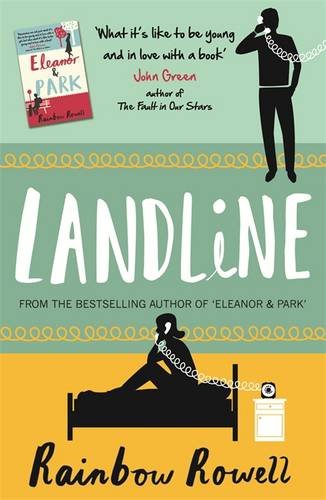
                • Cover of Landline
                  Landline

                  Rainbow Rowell · standalone novel · 2014

                  similar byidentitycontemporaryreflectivenorth americascience fictiontime travel+1 more

                  Landline is a 2014 American sci-fi novel by Rainbow Rowell. It tells the story of 37-year-old Georgie McCool who discovers that she is able to call her husband's 22-year-old self through his landline. Rowell stated that aspects from the novel are loosely based on her own life such as the fact that Georgie is incredibly career-driven while her husband is a stay-at-home dad. The character of Georgie McCool was named after the song Georgy Girl and the village of McCool Junction.

                • Cover of Dying Inside
                  Dying Inside

                  Robert Silverberg · standalone novel · 1972

                  similar byidentitycontemporaryreflectivenorth americascience fictionbig city

                  Dying Inside is a 1972 science fiction novel by American writer Robert Silverberg. It was first serialized in Galaxy in 1972 and published in book form by Charles Scribner's Sons later that year. The novel follows David Selig, a middle-aged telepath in contemporary New York City, as the mind-reading ability that has shaped his life begins to disappear.

                • Cover of The Colorado Kid
                  The Colorado Kid

                  Stephen King · standalone novel · 2005

                  similar byidentitycontemporarymysteriousreflectivenorth america

                  The Colorado Kid is a mystery novel by American writer Stephen King, published by the Hard Case Crime imprint in 2005. The book was initially issued in one paperback-only edition by the specialty crime and mystery publishing house. King's next novel for Hard Case Crime was Joyland, which was published in June 2013. Hard Case Crime reissued The Colorado Kid in an illustrated paperback edition in May 2019.

                • Cover of Dhalgren
                  Dhalgren

                  Samuel R. Delany · standalone novel · 1975

                  similar byidentitycontemporaryscience fictionnorth americaliterary & generalbig city

                  Dhalgren is a 1975 science fiction novel by American writer Samuel R. Delany. It features an extended trip to and through Bellona, a fictional city in the American Midwest cut off from the rest of the world by an unknown catastrophe. It is number 33 on the 20th Century's Greatest Hits: 100 English-Language Books of Fiction list.

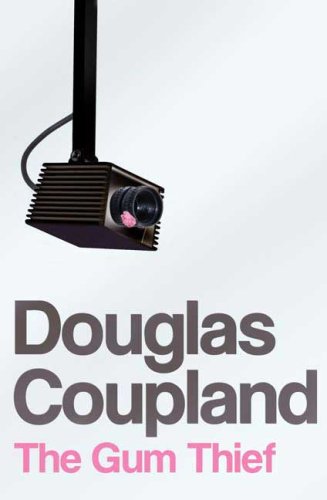
                • Cover of The Gum Thief
                  The Gum Thief

                  Douglas Coupland · standalone novel · 2007

                  similar byidentitycontemporaryreflectivenorth americaliterary & generalbig city

                  The Gum Thief is Canadian author Douglas Coupland's twelfth novel. It was published on September 25, 2007 , by Random House Canada in Canada and Bloomsbury Publishing in the United States.

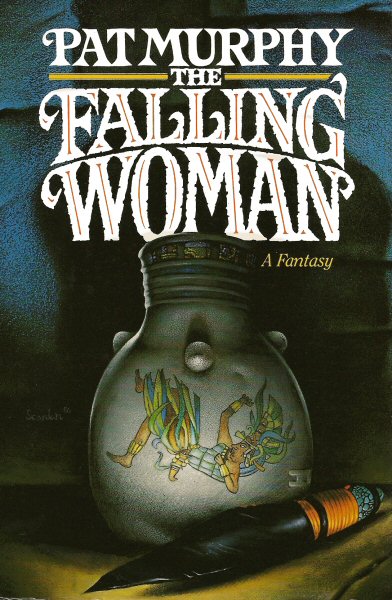
                • Cover of The Falling Woman
                  The Falling Woman

                  Pat Murphy · standalone novel · 1986

                  similar byidentitycontemporaryreflectivenorth americaliterary & general+1 more

                  The Falling Woman is a 1986 contemporary psychological fantasy novel by Pat Murphy. The book won the Nebula Award for Best Novel in 1987.

                • Cover of Flowers for Algernon
                  Flowers for Algernon

                  Daniel Keyes · standalone novel · 1966

                  similar byidentitycontemporarynorth americascience fiction

                  A man with a low IQ becomes the subject of an experimental medical procedure which raises his IQ well over genius level.

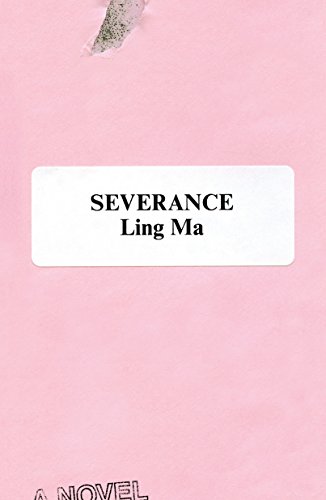
                • Cover of Severance
                  Severance

                  Ling Ma · standalone novel · 2018

                  similar byidentitycontemporaryreflectivenorth americascience fictionliterary & general

                  Severance is a 2018 post-apocalyptic novel by Chinese American author Ling Ma. It follows Candace Chen, an unfulfilled Bible product coordinator, before and after an incurable infection slowly obliterates global civilization. Severance explores themes of nostalgia, modern office culture, monotony, and intimate relationships. The novel, Ma's debut, won the 2018 Kirkus Prize for Fiction and was included on many prominent Best Books of 2018 lists.

                • Cover of Stranger in a Strange Land
                  Stranger in a Strange Land

                  Robert A. Heinlein · standalone novel · 1961

                  similar byidentityreflectivescience fictionnorth america

                  Stranger in a Strange Land is a 1961 science fiction novel by the American author Robert A. Heinlein. It tells the story of Valentine Michael Smith, a human who comes to Earth in early adulthood after being born on the planet Mars and raised by Martians, and explores his interaction with and eventual transformation of Terran culture.

                • Cover of Free Live Free
                  Free Live Free

                  Gene Wolfe · standalone novel · 1984

                  similar byidentitycontemporarymysteriousscience fictionliterary & generalbig city

                  Free Live Free is a novel by American writer Gene Wolfe, first published in 1984.

                • Cover of Man in the Dark
                  Man in the Dark

                  Paul Auster · standalone novel · 2008

                  similar byidentitycontemporaryreflectivenorth americaliterary & general+1 more

                  An insomniac makes up a story about a man transported to an alternate reality in which a US civil war erupted after the 2000 election.

                • Cover of The Robber Bride
                  The Robber Bride

                  Margaret Atwood · standalone novel · 1993

                  similar byidentitycontemporaryreflectivenorth americaliterary & general

                  The Robber Bride is a novel by Canadian writer Margaret Atwood, first published by McClelland and Stewart in 1993.

                • Cover of The Man Who Folded Himself
                  The Man Who Folded Himself

                  David Gerrold · standalone novel · 1973

                  similar byidentitycontemporaryreflectivescience fictiontime travel

                  The Man Who Folded Himself is a 1973 science fiction novel by American writer David Gerrold. It was nominated for the Nebula Award for Best Novel in 1974 and the Hugo Award for Best Novel in 1974. The book explores the psychological, physical, and personal challenges that manifest when time travel is possible for a single individual at the touch of a button.

                • Cover of The Tragedy of Arthur
                  The Tragedy of Arthur

                  Arthur Phillips · standalone novel · 2011

                  similar byidentitycontemporarymysteriousreflectivenorth americaliterary & general

                  The Tragedy of Arthur is a 2011 novel by the American author Arthur Phillips. The narrative concerns the publication of a recently discovered Arthurian play attributed to William Shakespeare, which the main narrator, "Arthur Phillips", believes to be a forgery produced by his father. It was published by Random House.

                • Cover of The Rift
                  The Rift

                  Nina Allan · standalone novel · 2017

                  similar byidentitycontemporarymysteriousreflectivescience fictionliterary & general

                  The Rift is a 2017 literary science fiction novel by English writer Nina Allan. It was first published in July 2017 in the United Kingdom as a trade paperback by Titan Books. It is the second book of a two-book deal Allan signed with Titan in 2015; the first is the second edition of her debut novel, The Race, published in 2016.

                • Cover of Hard Landing
                  Hard Landing

                  Algis Budrys · standalone novel · 1993

                  similar byidentitycontemporaryreflectivenorth americascience fiction

                  When an alien spacecraft crashes into a swamp on the US Atlantic coast, the fates of the humanoid surviving crew members are described as they separate and attempt to avoid discovery by blending into the American public.

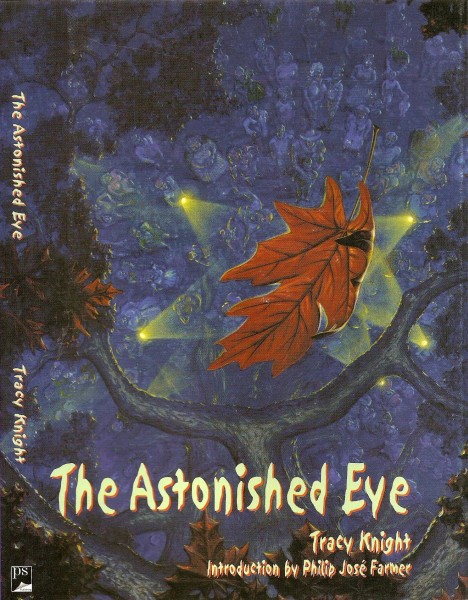
                • Cover of The Astonished Eye
                  The Astonished Eye

                  Tracy Knight · standalone novel · 2001

                  similar byidentitycontemporarymysteriousnorth americascience fiction+1 more

                  From the front flap of the PS Publishing 500 copy HB edition: "When a UFO crash-lands in Elderton, Illinois, which reporter should The Astonished Eye, one of the country's most infamous tabloid newspapers, send to investigate? Why, Ben Savitch, of course! After all, he was born in this backwater town and that might just give him the edge when it comes to finding out the truth. And he might finally realize a shot-glass of fame and meaning in his otherwise lacklustre career. But what starts as a search for the perfect Eye story quickly transforms into something more momentous than Savitch ever could have imagined. The mystery of a stranded extraterrestrial pales in comparison to the powerful yet fragile magic that already exists in Elderton: Almo Parrish can infallibly predict the first autumn leaf to fall each year, and believes he is the last surviving Munchkin from the Wizard of Oz movie; Chandler Quinn can build or repair anything, including otherworldly machines; little Vida Proust lumbers around town because the gentle inhabitants of Elderton are too polite to tell her the truth of her existence (or lack thereof); and poor Frank Shepard is a flickering wraith of a man, a reanimated superhero who has forgotten how to fly. As Savitch pursues his story, his homecoming coincides with unthinkable events that not only threaten the town's tranquility, but also alter each intersecting life and transform the very fabric of reality itself."

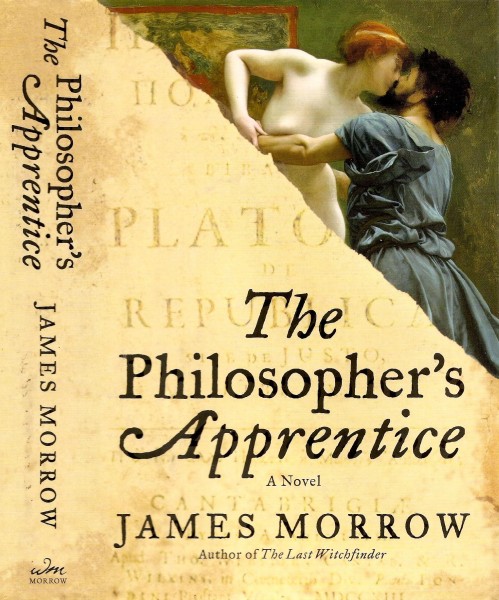
                • Cover of The Philosopher's Apprentice
                  The Philosopher's Apprentice

                  James Morrow · standalone novel · 2008

                  similar byidentitycontemporaryscience fictionnorth americaliterary & general+1 more

                  Brilliant philosopher, Mason Ambrose, is approached by a representative of billionaire geneticist Dr. Edwina Sabacthani, who makes him an offer no starving ethicist could refuse. Born and bred on Isla de Sangre, a private island off the Florida coast, Edwina's daughter, Londa, has recently survived a freak accident that destroyed both her memory and her sense of right and wrong. Londa's soul, in short, is an empty vessel - and it will be Mason's job to fill it. Londa proves a vivacious young woman who quickly captivates her new teacher as he attempts to recalibrate her moral compass. But there's trouble in this tropical paradise. Mason soon learns that he isn't the only private tutor on Isla de Sangre, nor is Londa the only child in residence whose conscience is a blank slate. Undaunted, Mason continues to instruct Londa, hoping that she can lead a normal life when she eventually ventures forth into human society. His apprentice, however, has a different agenda. Her head crammed with lofty ideals, Londa undertakes to remake our fallen world in her own image - by any and all means necessary.

                • Cover of Alias Grace
                  Alias Grace

                  Margaret Atwood · standalone novel · 1996

                  similar byidentitymysteriousreflectivenorth americaliterary & general

                  Alias Grace is a historical fiction novel by Canadian writer Margaret Atwood. First published in 1996 by McClelland & Stewart, it won the Giller Prize and was shortlisted for the Booker Prize.

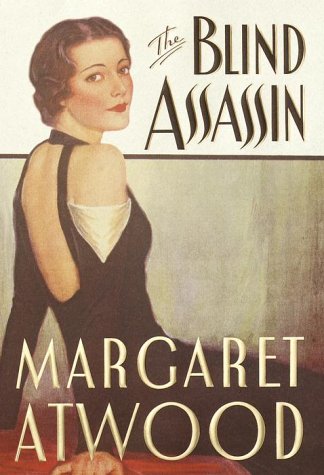
                • Cover of The Blind Assassin
                  The Blind Assassin

                  Margaret Atwood · standalone novel · 2000

                  similar byidentitymysteriousreflectivenorth americaliterary & general+1 more

                  "Considerable sf content is also concealed in her Booker Prize-winning The Blind Assassin (2000), a novel whose conventional twentieth-century Canadian frame story of thwarted and secret-ridden family life is folded around a very extensive, and in many ways much more interesting science-fictional Pulp magazine adventure (after which the novel is named)." - {{SFE}}'s author page (2021-10-30)

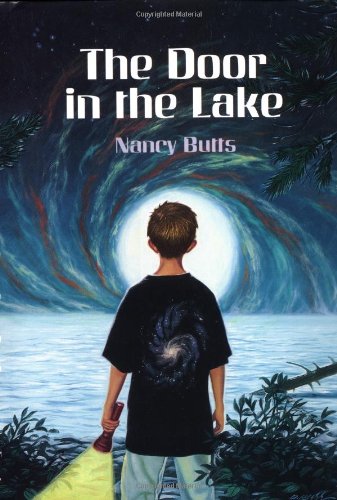
                • Cover of The Door in the Lake
                  The Door in the Lake

                  Nancy Butts · standalone novel · 1998

                  similar byidentitycontemporarymysteriousscience fictionnorth americatime travel

                  The Door in the Lake is a children's science fiction novel by Nancy Butts, first published in 1997. It is a story about loss of time and identity.

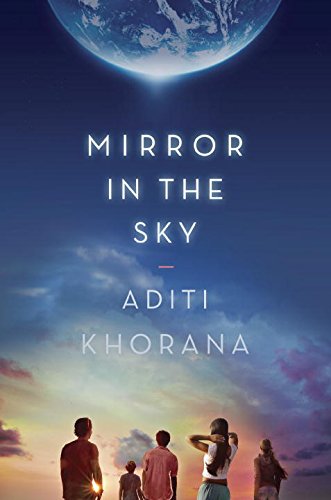
                • Cover of Mirror in the Sky
                  Mirror in the Sky

                  Aditi Khorana · standalone novel · 2016

                  similar byidentitycontemporaryreflectivenorth americascience fictionliterary & general+1 more

                  For Tara Krishnan, navigating Brierly, the academically rigorous prep school she attends on scholarship, feels overwhelming and impossible. Her junior year begins in the wake of a startling discovery: A message from an alternate Earth, light years away, is intercepted by NASA. This means that on another planet, there is another version of Tara, a Tara who could be living better, burning brighter, because of tiny differences in her choices.

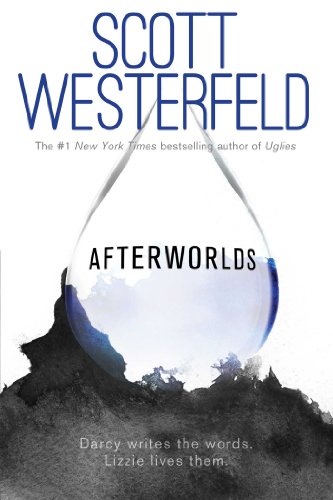
                • Cover of Afterworlds
                  Afterworlds

                  Scott Westerfeld · standalone novel · 2014

                  similar byidentitycontemporaryreflectivenorth americaliterary & generalbig city

                  Alternates between a realistic story of a young author writing a "young adult Hindu paranormal romance" novel in New York City and chapters from that novel.

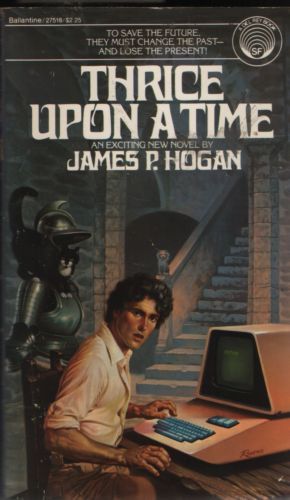
                • Cover of Thrice Upon a Time
                  Thrice Upon a Time

                  James P. Hogan · standalone novel · 1980

                  similar byidentitycontemporarymysteriousscience fictiontime travel

                  Amazon: When Murdoch was summoned to his grandfather's isolated Scottish castle, he had no idea of the old man's latest discovery -- nor where it would lead him. Sir Charles, a genius in far-out physics, had found a flaw in the law of conservation of energy; in any process, an incredibly tiny increment of energy escaped -- back through time! Using this "tau" radiation, he could send messages into the past. But Murdoch discovered records of messages he knew he had never sent. Were many futures possible? Could a message from Future X alter the past -- and thus wipe out Future X? But who would be foolish enough to send a message that could eliminate his own existence?